Books by Joost Jongerden
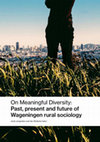
On Meaningful Diversity: Past, present and future of Wageningen rural sociology reflects on 75 ye... more On Meaningful Diversity: Past, present and future of Wageningen rural sociology reflects on 75 years of rural sociology at Wageningen University, the Netherlands. This anniversary book provides a kaleidoscopic overview of the exciting diversity and theoretical depth of the work of the Rural Sociology Group. In addition to introducing key concepts and research approaches and discussing how these have evolved over time, the book also provides an up-to-date overview of current studies and future agendas. Taken together, the contributions to this book highlight the defining characteristics of the Wageningen rural sociology approach: people’s everyday realities as located in time and space, the investigation of meaningful diversity through empirical and comparative research, and an emphasis on the critical and engaged positioning of the researcher. A timely contribution to the disciplinary literature, this book is a must-read for anyone interested in the history and current issues in rural sociology and the challenges it is taking up in the 21st century.
Routledge, 2021
This Handbook discusses the new political and social realities in Turkey from a range of perspect... more This Handbook discusses the new political and social realities in Turkey from a range of perspectives, emphasizing both changes as well as continuities. Contextualizing recent developments, the chapters, written by experts in their fields, combine analytical depth with a broad overview.
In the last few years alone, Turkey has experienced a failed coup attempt; a prolonged state of emergency; the development of a presidential system based on the supreme power of the head of state; a crackdown on traditional and new media, universities and civil society organizations; the detention of journalists, mayors and members of parliament; the establishment of political tutelage over the judiciary; and a staggering economic crisis. It has also terminated talks with the Kurdistan Workers Party (PKK); intervened in and occupied mountainous border areas in northern Iraq to fight that organization; occupied Afrin and strips of territory in northern Syria; intervened in Libya; articulated an assertive transnational politics toward “kin” across the world; strained its relations with the European Union and the US, while developing relations with Russia; flirted with China’s intercontinental Belt and Road Initiative; and carved out a presence in Africa, to name just a few of the most recent developments.
This volume provides a comprehensive and wide-ranging overview of the making of modern Turkey. It is a key reference for students and scholars interested in political economy, security studies, international relations and Turkish studies.
Table of Contents
1. Introduction
Joost Jongerden
2. Politics and ideology: party and opposition in the late Ottoman and early Republican period
James Ryan
3.Violence against the Kurds in the Turkish Republic
Uğur Ümit Üngör & Ayhan Işık
4. Remaking Turkey’s Polity and Cultural Landscapes
Zeynep Kezer
5. Refugees of the 1923 population exchange between Turkey and Greece: Greek efforts for integration and assimilation
Eleni Kyramargiou
6. The Making of a National City: From Mezre to Elazığ
Ali Sipahi
7. Populism in Turkey: From a political style to a model for global politics?
Asım Karaömerlioğlu
8. Turkish secular nationalism as religion
Ferhat Kentel
9. Parties and Politics in Turkey
Elise Massicard
10. Civil-Military Relations in Turkey: Patterns and Possibilities
Burak Bilgehan Özpek
11. Coups and state-formation in Turkey
Nikos Christofis
12. Constitutions and Political System
Ergun Özbudun
13. Competitive Authoritarianism in Turkey under the AKP Rule
Berk Esen
14. Politics of Truth and Post-Truth
Hakkı Taş
15. Kurdish Politics in Turkey
Cengiz Gunes
16. Turkish Nationalism and Patriarchy
Simten Coşar
17. Youth Politics
Ayça Alemdaroglu
18. Tracing the Reverse History of Homosexuality from Ottoman Empire to Contemporary Turkey: From Acceptance to Discrimination
Ceylan Engin & Zeynep Özbarlas
19. Mad Patriots: Militarized Masculinities and Nation Building in Contemporary Turkish Novels
Çimen Günay-Erkol
20. Contemporary Cinema of Turkey: Being and Becoming
Gönül Dönmez-Colin
21. Musical Diversity and the Struggle for Identities
Martin Greve
22. The Political Economy of Turkey in the Last Two Centuries
Bora Selçuk & Murat Öztürk
23. Turkey’s Kurdish Question in the Era of Neoliberalism
Veli Yadirgi
24. "Concrete" steps towards modernization: Dam-, state-, and nation-building in southeastern Turkey
Arda Bilgen
25. Political Economy of Environmental Conflicts in Turkey: From the Bergama Resistance to the Gezi Protests and Beyond
Murat Arsel, Fikret Adaman & Bengi Akbulut
26. Agriculture and Rural Life in Turkey
Murat Öztürk, Joost Jongerden & Andy Hilton
27. The Layers of an Onion: Food and Nation in Turkey
John William Day
28. Migration from Rural Anatolia to Metropolitan Cities
Tahire Erman
29. The Architecture of Dispossession, Disaster, and Emergency in Urban Turkey
Eray Çaylı
30. Civilizing Space: Addressing disorder in rural and urban landscapes
Joost Jongerden
31. Social Movements and Urban Activism in Turkey
Christopher Houston
32. Religious Movements in Turkey
Ceren Lord
33. The Quest for Cultural Power: Islamism, Culture and Art in Turkey
Özgür Yaren, Cenk Saraçoğlu and Irmak Karademir-Hazır
34. Media as Hyper-Social and Activists as Critical Generators in Contemporary Turkey
Asli Telli Aydemir
35. Turkey’s responses to refugees: past and present
Ahmet İçduygu & Damla B. Aksel
36. "Turkey is Bigger than Turkey": Diaspora-building and the transnational politics of the Turkish State
Banu Şenay
37. Turkey and the West: Dealignment in Contemporary Times
Sinan Ciddi
38. Turkey and the Middle East
Michael M. Gunter
39. Turkey’s ‘Novel’ Enterprising and Humanitarian Foreign Policy and Africa
Pinar Akpinar

Beyond Nationalism and the Nation-State: Radical Approaches to Nation
Routledge, 2021
This book centers on one fundamental question: is it possible to imagine a progressive sense of n... more This book centers on one fundamental question: is it possible to imagine a progressive sense of nation? Rooted in historic and contemporary social struggles, the chapters in this collection examine what a progressive sense of nation might look like, with authors exploring the theory and practice of the nation beyond nationalism.
The book is written against the background of rising authoritarian-nationalist movements globally over the last few decades, where many countries have witnessed the dramatic escalation of ethnic-nationalist parties impacting and changing mainstream politics and normalizing anti-immigration, anti-democratic and Islamophobic discourse. This volume discusses viable alternatives for nationalism, which is inherently exclusionary, exploring the possibility of a type of nation-based politics which does not follow the principles of nationalism.
With its focus on nationalism, politics and social struggles, this book will be of great interest to students and scholars of political and social sciences.

This volume gives a thorough and comprehensive analysis of the Kurdish issue in Turkey from a spa... more This volume gives a thorough and comprehensive analysis of the Kurdish issue in Turkey from a spatial perspective that takes into account geographical variations in identity formation, exclusion and political mobilisation.
Although analysis of Turkey’s Kurdish issue from a spatial perspective is not new, spatial analyses are still relatively scarce. More often than not, Kurdish studies consist of time-centred work. In this book, the attention is shifted from outcome-oriented analysis of transformation in time towards a spatial analysis. The authors in this book discuss the spatial production of home, identity, work, in short, of being in the world. The contributions are based on the tacit avowal that the Kurdish question, in addition to being a question of group rights, is also one of spatial relations. By asking a different set of questions, this book examines; which spatial strategies have been employed to deal with Kurds? Which spatial strategies are developed by Kurds to deal with state, and with the neo-liberal turn? How are these strategies absorbed and what counter-strategies are developed, both in cities populated by the Kurds in south-eastern Turkey and in other regions?
Emphasizing that identity or place, its particularity or uniqueness, arises from social practices and social relations, this book is essential reading for scholars and researchers working in Kurdish and Turkish Studies, Urban and Rural Studies and Politics more broadly.
PKK üzerine yazilar
Kürt çalışmaları konusunda önde gelen uzmanlardan biri olan saygın bir akademisyen 3-4 yıl önce b... more Kürt çalışmaları konusunda önde gelen uzmanlardan biri olan saygın bir akademisyen 3-4 yıl önce bir Avrupa üniversitesinde verdiği seminerin sonunda biraz sinik tarzda sorulan şu soruyla karşılaştı: ‘Ne olacak bu PKK’nin hali? Geleceği var mı?’ Artık emeklilik yaşına da gelmiş olan yılların profesörünün ilk cümlesi pek de ‘akademik’ sayılmazdı doğrusu: ‘PKK is a miracle’ (‘PKK bir mucize’). Ardından da ‘PKK’nin hep baş aşağı gittiği düşünülen süreçlerin ardından bir çıkış yaptığını’ ekledi. Görev yaptığı sıradaki meşhur basını bilgilendirme toplantılarında Max Weber’den yaptığı alıntılar nedeni ile ‘entelektüel’ diye nitelendirilen eski Genelkurmay Başkanı İlker Başbuğ’dan da geçen yıl benzer bir açıklama geldi: ‘PKK şanslı bir örgüt bana göre. Çünkü konjonktürel şartlar hep lehine gerçekleşen ve istifade edebilen bir örgüt’.
Toplum ve Teknoloji adlı derleme içinde yer alan çalışmalar genel okuyucuyu eleştirel bir teknolo... more Toplum ve Teknoloji adlı derleme içinde yer alan çalışmalar genel okuyucuyu eleştirel bir teknoloji teorisiyle tanıştıracaktır. Kitap, teknolojilerin tarafsız araç ya da alet değil, toplumsal süreçlerin ve siyasi mücadelelerin ürünü olduğu iddiasını geliştirmektedir. Toplumsal mücadelelerin teknoloji üzerindeki etkileri, zamanımızda nükleer teknoloji ve biyoteknoloji gibi- belli teknolojilere karşı direnişlerde yansımaktadır. Diğer yandan topluma yalnızca direnmek değil, yaratıcı olmak ve alternatifler tasarlama ve geliştirme faaliyetine girişmek de düşmektedir. Bu kitap eleştirel bir teknoloji inşası teorilerini tartışırken bir yandan da başarılı direniş ve alternatif tasarlanması ve geliştirilmesinde toplumsal ve siyasal yaratıcılık örneklerini de paylaşmaktadır.
Bu kitabın yazarları, teknolojilerin, ister hoşlanalım ister benimsemeyelim, sonunda bize dayatılacak kendilerine ait bir mantığı olduğu fikrini reddetmektedirler. Onlar, teknolojilerin çıkarlar ve toplumsal ilişkilerce şekillendirildiği ve teknolojilerin siyasal niteliklere sahip olduğu iddiasında bulunmaktadırlar. Yine informatik ve biyoteknolojideki gelişmelere gönderme yaparak teknolojik gelişiminin bir toplumsal ve siyasal mücadele alanı olduğunu ve sivil toplum örgütlerinin bu gelişmeler üzerinde fark yaratabileceklerini, alternatiflerin şekillendirilmesine katkıda bulunabileceklerini gösteriyorlar. Bu kitaptaki katkılar yalnızca belli teknolojilere direnişin araştırma gündemlerini yeniden biçimlenmirmesi ile sınırlı değil, tekno-eylemcilerin ve küresel adalet ağlarının demokrasi pratiklerinin gelişimine ve bunların da teknolojilerin gelişimine katkı sağladığını da göstermektedir.
Nationalisms and Politics in Turkey, Political Islam, Kemalism and the Kurdish Issue
This book examines some of the most pressing issues facing the Turkish political establishment, i... more This book examines some of the most pressing issues facing the Turkish political establishment, in particular the issues of political Islam, and Kurdish and Turkish nationalisms. The authors explore the rationales of the main political actors in Turkey in order to increase our understanding of the ongoing debates over the secularist character of the Turkish Republic and over Turkey’s longstanding Kurdish issue.
Original contributions from respected scholars in the field of Turkish and Kurdish studies provide us with many insights into the social and political fabric of Turkey, exploring Turkey’s secularist establishment, the ruling AKP government, the Kurdistan Worker’s Party and the Institutions of the European Union. While the focus of concern in this book is with the social agents of contemporary politics in Turkey, the convictions they have and the strategies they employ, historical dimensions are also integrated in their analyses. In its approach, the book makes an important contribution to a widening investigation into the making of politics in the contemporary world.
Incorporating the importance of the growing transnational connections between Turkey and Europe, this book is particularly relevant in the light of the ongoing negotiations over Turkey’s membership to the European Union, and will be of interest to scholars interested in Turkish studies, Kurdish studies and Middle Eastern Politics.
The Settlement Issue in Turkey and the Kurds: an analysis of spatial policies, modernity and war
In seeking to understand village evacuation in the Kurdistan region of Turkey in the 1980s and 19... more In seeking to understand village evacuation in the Kurdistan region of Turkey in the 1980s and 1990s, this book focuses on the spatial aspects of the armed conflict. It tries to explain how settlement and resettlement policies and practices in Turkey have been part of a larger project of political and cultural engineering, based on a revision of a classical understanding of modernity as reflected in the work of Durkheim, Mauss, and Tönnies. This interdisciplinary perspective has allowed contributions from sociology to the political sciences and from history to social geography
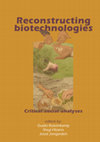
The main subject of this publication is the co-creation of society and biotechnology. The authors... more The main subject of this publication is the co-creation of society and biotechnology. The authors do not treat society and biotechnology as separate domains, instead they consider technologies as socially constructed. The main focus of this publication is on agro-biotechnologies and the contributors present perspectives for reconstruction both from and in 'the North' and 'the South'.
Reconstructing biotechnologies offers a range of critical social analyses confronting the actuality of biotechnology with the potentialities of its social reconstruction. In doing that, the book develops and merges literature from four different disciplines, namely (i) critical theory and its analyses of technology and power, (ii) political economy, critically assessing the interrelationship between economy, politics and technology, (iii) social constructivism, which holds that technology is the product of agency and knowledge systems, and (iv) the analysis of rural society and agrarian technologies in rural sociology.
Reconstructing biotechnologies introduces exciting approaches and examples into the social reshaping of biotechnologies. It brings together critical examinations of contemporary biotechnology development and puts forward possible alternatives written by critical scholars. The contributions in this publication are for students and scholars in a wide range of disciplines such as social and political sciences, science and technology studies, and development studies.
The editors of the book are associated with the Social Sciences Department of Wageningen University in the Netherlands and the Graduate School of Economics of Kyoto University in Japan. They have published extensively on social and political theory and biotechnology.
Türkiye'de İskan Sorunu ve Kürtler. Modernite, Savaş ve Mekan Politikaları üzerine bir Çözümleme
Turkey's Alevi Enigma: A Comprehensive Overview
This volume discusses how the multifaceted reality of Turkey's Alevis impinges on society and pol... more This volume discusses how the multifaceted reality of Turkey's Alevis impinges on society and politics in contemporary Turkey. The book provides readers with a vigorous discussion of the origins and history of the Alevis, examines their ethnic identity and cultural representation, as well as appraising their political life and the effect that this had on Turkey's polity, the Turkish Left and the Kurdish National Movement, and upon the emergence of civil society. It analyses Alevi cultural manifestations and even looks at how Alevi diaspora communities in Europe effect Turkey in various ways. The book therefore provides readers with a convenient handbook of an important group that is largely unknown in the West - Turkey's Alevis.
Papers by Joost Jongerden
Studies in Ethnicity and Nationalism, 2026
This article examines the Turkish state's Village Guard system, revived in the 1980s as part of i... more This article examines the Turkish state's Village Guard system, revived in the 1980s as part of its counterinsurgency strategy against the Kurdistan Workers Party (PKK). While often framed as a defensive militia, the Village Guards became central to the state's exceptional governance in Kurdistan, both facilitating military control and enabling significant socioeconomic and demographic transformation. Drawing on scholarship on paramilitarism and fieldwork in the village of İslamköy, the article offers a relational perspective that understands the Village Guards not merely as instruments of state violence, but as active political actors who reshaped local power dynamics, gained access to land and resources and reconfigured rural livelihoods. It argues that paramilitary mobilisation in Kurdistan reflects complex, locally embedded power relations rather than tribalism or state repression alone.
Geoforum, 2025
Read the full article here: https://www.sciencedirect.com/science/article/pii/S0016718525000661
... more Read the full article here: https://www.sciencedirect.com/science/article/pii/S0016718525000661
Abstract
Embodying the paradox of being essential yet unprotected, undocumented migrant agri-workers navigate a terrain of precarious in-betweenness. Policy-making affords little urgency to addressing their routine exploitation or facilitating dignified solutions for their working and living conditions. Focusing on seasonal migrant workers in the strawberry fields of Lepe (Huelva, Spain), this article examines how temporality structures endurance, agency, and vulnerability.
Drawing on four months of ethnographic fieldwork—including participant observation, informal conversations, and semi-structured interviews—this study reveals how workers endure exploitation in expectation of future documentation through arraigo policies. However, the temporal horizon of arraigo not only sustains individual endurance but also dampens collective resistance, rendering precarity a structured condition rather than a momentary hardship. Because arraigo systematically encourages endurance over resistance, precarity becomes a long-term structural reality, with temporality actively shaping workers’ vulnerabilities. This process individualises what is essentially a shared struggle, further sedating collective action and reinforcing exploitation. While migrants in Lepe internalise temporality as a survival strategy, disruptions—such as withheld contracts—demonstrate the limits of endurance and trigger resistance.
This study advances scholarship on migrant precarity by shifting the focus from spatial or economic dimensions to the performative construction of sequential time as a mechanism that both sustains and constrains migrant agency. In highlighting how European agricultural policies prioritise productivity while obscuring labour exploitation, these findings underscore the need for interventions addressing both the legal limbo of undocumented workers and the temporal structures that sustain their vulnerability.
The Contrapuntal, 2025
In a packed conference hall, a delegation of three returning from the prison island of Imrali rea... more In a packed conference hall, a delegation of three returning from the prison island of Imrali read out Abdullah Öcalan’s call for a political solution to the Kurdish issue. Earlier that day, the members of the pro-Kurdish Peoples’ Equality and Democracy Party (DEM) Sirri Süreyya Önder, Pervin Buldan, and Ahmet Türk had met with the imprisoned leader of the Kurdistan Workers Party (PKK) and discussed the statement he would make. In media coverage of the event, the emphasis was placed on Öcalan’s call for an end to the armed struggle and dissolvement of the PKK. In fact, Öcalan did not only address the PKK; he also called on the state to enable a political solution to the Kurdish issue and asked his followers to mobilize support for a peace process.
Commentaries, 2024
This paper examines the Kurdistan Workers Party's (PKK) municipal politics in the late 1970s thro... more This paper examines the Kurdistan Workers Party's (PKK) municipal politics in the late 1970s through the lens of citizenship politics. The article introduces two concepts-activist citizenship and fugitive citizenship to analyse the PKK's mobilisation in this period, before the 1980 military coup in Turkey. Activist citizenship challenges the restrictive boundaries of state-sanctioned citizenship, while fugitive citizenship creates alternative political spaces for marginalized groups. Both concepts highlight how individuals and groups, such as the PKK, can assert their political agency in contexts where they are denied formal citizenship. The research questions linear understandings of the PKK's emergence as a political movement inevitably destined to become an insurgent movement.
Third World Quarterly, 2024
This article examines the colonial homogenising policies of the Syrian Ba’ath regime and the subs... more This article examines the colonial homogenising policies of the Syrian Ba’ath regime and the subsequent decolonisation processes that led to the emergence of Rojava as a pluriverse. In 1963, the Ba’ath regime implemented nation-state colonialism in the predominantly Kurdish region, using agricultural modernisation as a tool for its colonisation efforts. This modernisation bolstered the central state, perpetuated the underdevelopment of the region as a periphery, and asserted control through the settlement and distribution of land to Arab families loyal to the regime. Following the regime’s collapse in Rojava in 2012, the communities that comprise the Autonomous Administration of North and East Syria (AANES) dismantled the colonial agricultural system. They developed a decentralised governance and agrarian development approach, referred to here as the decolonisation of agriculture. Based on interviews and fieldwork in the region, this article explores the interplay between agricultural development and colonial politics, as well as the critical role of agriculture in the broader struggle for decolonisation. We conclude that in the anti-colonial struggle, people and the rhizomatic governance structures they develop challenge colonial submission to the central state, exploring life beyond the nation-state, which is crucial for a decolonial shift.
On May 15, students at Wageningen University pitched their tents on campus to demand the severanc... more On May 15, students at Wageningen University pitched their tents on campus to demand the severance of ties with higher education and research institutions in Israel. The executive board responded with calls for 'dialogue' and the creation of a 'safe space.' The underlying assumption is that if people on "both sides" engage in dialogue, the ongoing conflict in Palestine and Israel could be resolved. To facilitate such dialogue, the university claims it must create safe spaces for opposing views to converge. However, the dialogue argument is built on three fallacies.
Frustrated Nationalism: nationalism and National Indetity in the TwentyFirst Century, 2023
This chapter explores the relationship between Kurdish political actors and the concepts of natio... more This chapter explores the relationship between Kurdish political actors and the concepts of nation, state, and nation-state. Initially, it delves into the Kurdish issue, tracing its roots to the disintegration and breakdown of empires, leading to the development of culturally restrictive political spaces where Kurdish identity became a target for destruction. Subsequently, within this context, Kurdish political actors began expressing the desire for a state of their own by asserting the right to self-determination. However, as will be discussed, tensions arose between Kurdish claims and varying exclusive definitions of the right to self-determination that emerged in the 20th century. Lastly, a novel understanding of self-determination as societal empowerment is critically assessed in the context of the politics of the Kurdistan Workers Party PKK (Partiya Karkêren Kurdistan).


Uploads
Books by Joost Jongerden
In the last few years alone, Turkey has experienced a failed coup attempt; a prolonged state of emergency; the development of a presidential system based on the supreme power of the head of state; a crackdown on traditional and new media, universities and civil society organizations; the detention of journalists, mayors and members of parliament; the establishment of political tutelage over the judiciary; and a staggering economic crisis. It has also terminated talks with the Kurdistan Workers Party (PKK); intervened in and occupied mountainous border areas in northern Iraq to fight that organization; occupied Afrin and strips of territory in northern Syria; intervened in Libya; articulated an assertive transnational politics toward “kin” across the world; strained its relations with the European Union and the US, while developing relations with Russia; flirted with China’s intercontinental Belt and Road Initiative; and carved out a presence in Africa, to name just a few of the most recent developments.
This volume provides a comprehensive and wide-ranging overview of the making of modern Turkey. It is a key reference for students and scholars interested in political economy, security studies, international relations and Turkish studies.
Table of Contents
1. Introduction
Joost Jongerden
2. Politics and ideology: party and opposition in the late Ottoman and early Republican period
James Ryan
3.Violence against the Kurds in the Turkish Republic
Uğur Ümit Üngör & Ayhan Işık
4. Remaking Turkey’s Polity and Cultural Landscapes
Zeynep Kezer
5. Refugees of the 1923 population exchange between Turkey and Greece: Greek efforts for integration and assimilation
Eleni Kyramargiou
6. The Making of a National City: From Mezre to Elazığ
Ali Sipahi
7. Populism in Turkey: From a political style to a model for global politics?
Asım Karaömerlioğlu
8. Turkish secular nationalism as religion
Ferhat Kentel
9. Parties and Politics in Turkey
Elise Massicard
10. Civil-Military Relations in Turkey: Patterns and Possibilities
Burak Bilgehan Özpek
11. Coups and state-formation in Turkey
Nikos Christofis
12. Constitutions and Political System
Ergun Özbudun
13. Competitive Authoritarianism in Turkey under the AKP Rule
Berk Esen
14. Politics of Truth and Post-Truth
Hakkı Taş
15. Kurdish Politics in Turkey
Cengiz Gunes
16. Turkish Nationalism and Patriarchy
Simten Coşar
17. Youth Politics
Ayça Alemdaroglu
18. Tracing the Reverse History of Homosexuality from Ottoman Empire to Contemporary Turkey: From Acceptance to Discrimination
Ceylan Engin & Zeynep Özbarlas
19. Mad Patriots: Militarized Masculinities and Nation Building in Contemporary Turkish Novels
Çimen Günay-Erkol
20. Contemporary Cinema of Turkey: Being and Becoming
Gönül Dönmez-Colin
21. Musical Diversity and the Struggle for Identities
Martin Greve
22. The Political Economy of Turkey in the Last Two Centuries
Bora Selçuk & Murat Öztürk
23. Turkey’s Kurdish Question in the Era of Neoliberalism
Veli Yadirgi
24. "Concrete" steps towards modernization: Dam-, state-, and nation-building in southeastern Turkey
Arda Bilgen
25. Political Economy of Environmental Conflicts in Turkey: From the Bergama Resistance to the Gezi Protests and Beyond
Murat Arsel, Fikret Adaman & Bengi Akbulut
26. Agriculture and Rural Life in Turkey
Murat Öztürk, Joost Jongerden & Andy Hilton
27. The Layers of an Onion: Food and Nation in Turkey
John William Day
28. Migration from Rural Anatolia to Metropolitan Cities
Tahire Erman
29. The Architecture of Dispossession, Disaster, and Emergency in Urban Turkey
Eray Çaylı
30. Civilizing Space: Addressing disorder in rural and urban landscapes
Joost Jongerden
31. Social Movements and Urban Activism in Turkey
Christopher Houston
32. Religious Movements in Turkey
Ceren Lord
33. The Quest for Cultural Power: Islamism, Culture and Art in Turkey
Özgür Yaren, Cenk Saraçoğlu and Irmak Karademir-Hazır
34. Media as Hyper-Social and Activists as Critical Generators in Contemporary Turkey
Asli Telli Aydemir
35. Turkey’s responses to refugees: past and present
Ahmet İçduygu & Damla B. Aksel
36. "Turkey is Bigger than Turkey": Diaspora-building and the transnational politics of the Turkish State
Banu Şenay
37. Turkey and the West: Dealignment in Contemporary Times
Sinan Ciddi
38. Turkey and the Middle East
Michael M. Gunter
39. Turkey’s ‘Novel’ Enterprising and Humanitarian Foreign Policy and Africa
Pinar Akpinar
The book is written against the background of rising authoritarian-nationalist movements globally over the last few decades, where many countries have witnessed the dramatic escalation of ethnic-nationalist parties impacting and changing mainstream politics and normalizing anti-immigration, anti-democratic and Islamophobic discourse. This volume discusses viable alternatives for nationalism, which is inherently exclusionary, exploring the possibility of a type of nation-based politics which does not follow the principles of nationalism.
With its focus on nationalism, politics and social struggles, this book will be of great interest to students and scholars of political and social sciences.
Although analysis of Turkey’s Kurdish issue from a spatial perspective is not new, spatial analyses are still relatively scarce. More often than not, Kurdish studies consist of time-centred work. In this book, the attention is shifted from outcome-oriented analysis of transformation in time towards a spatial analysis. The authors in this book discuss the spatial production of home, identity, work, in short, of being in the world. The contributions are based on the tacit avowal that the Kurdish question, in addition to being a question of group rights, is also one of spatial relations. By asking a different set of questions, this book examines; which spatial strategies have been employed to deal with Kurds? Which spatial strategies are developed by Kurds to deal with state, and with the neo-liberal turn? How are these strategies absorbed and what counter-strategies are developed, both in cities populated by the Kurds in south-eastern Turkey and in other regions?
Emphasizing that identity or place, its particularity or uniqueness, arises from social practices and social relations, this book is essential reading for scholars and researchers working in Kurdish and Turkish Studies, Urban and Rural Studies and Politics more broadly.
Bu kitabın yazarları, teknolojilerin, ister hoşlanalım ister benimsemeyelim, sonunda bize dayatılacak kendilerine ait bir mantığı olduğu fikrini reddetmektedirler. Onlar, teknolojilerin çıkarlar ve toplumsal ilişkilerce şekillendirildiği ve teknolojilerin siyasal niteliklere sahip olduğu iddiasında bulunmaktadırlar. Yine informatik ve biyoteknolojideki gelişmelere gönderme yaparak teknolojik gelişiminin bir toplumsal ve siyasal mücadele alanı olduğunu ve sivil toplum örgütlerinin bu gelişmeler üzerinde fark yaratabileceklerini, alternatiflerin şekillendirilmesine katkıda bulunabileceklerini gösteriyorlar. Bu kitaptaki katkılar yalnızca belli teknolojilere direnişin araştırma gündemlerini yeniden biçimlenmirmesi ile sınırlı değil, tekno-eylemcilerin ve küresel adalet ağlarının demokrasi pratiklerinin gelişimine ve bunların da teknolojilerin gelişimine katkı sağladığını da göstermektedir.
Original contributions from respected scholars in the field of Turkish and Kurdish studies provide us with many insights into the social and political fabric of Turkey, exploring Turkey’s secularist establishment, the ruling AKP government, the Kurdistan Worker’s Party and the Institutions of the European Union. While the focus of concern in this book is with the social agents of contemporary politics in Turkey, the convictions they have and the strategies they employ, historical dimensions are also integrated in their analyses. In its approach, the book makes an important contribution to a widening investigation into the making of politics in the contemporary world.
Incorporating the importance of the growing transnational connections between Turkey and Europe, this book is particularly relevant in the light of the ongoing negotiations over Turkey’s membership to the European Union, and will be of interest to scholars interested in Turkish studies, Kurdish studies and Middle Eastern Politics.
Reconstructing biotechnologies offers a range of critical social analyses confronting the actuality of biotechnology with the potentialities of its social reconstruction. In doing that, the book develops and merges literature from four different disciplines, namely (i) critical theory and its analyses of technology and power, (ii) political economy, critically assessing the interrelationship between economy, politics and technology, (iii) social constructivism, which holds that technology is the product of agency and knowledge systems, and (iv) the analysis of rural society and agrarian technologies in rural sociology.
Reconstructing biotechnologies introduces exciting approaches and examples into the social reshaping of biotechnologies. It brings together critical examinations of contemporary biotechnology development and puts forward possible alternatives written by critical scholars. The contributions in this publication are for students and scholars in a wide range of disciplines such as social and political sciences, science and technology studies, and development studies.
The editors of the book are associated with the Social Sciences Department of Wageningen University in the Netherlands and the Graduate School of Economics of Kyoto University in Japan. They have published extensively on social and political theory and biotechnology.
Papers by Joost Jongerden
Abstract
Embodying the paradox of being essential yet unprotected, undocumented migrant agri-workers navigate a terrain of precarious in-betweenness. Policy-making affords little urgency to addressing their routine exploitation or facilitating dignified solutions for their working and living conditions. Focusing on seasonal migrant workers in the strawberry fields of Lepe (Huelva, Spain), this article examines how temporality structures endurance, agency, and vulnerability.
Drawing on four months of ethnographic fieldwork—including participant observation, informal conversations, and semi-structured interviews—this study reveals how workers endure exploitation in expectation of future documentation through arraigo policies. However, the temporal horizon of arraigo not only sustains individual endurance but also dampens collective resistance, rendering precarity a structured condition rather than a momentary hardship. Because arraigo systematically encourages endurance over resistance, precarity becomes a long-term structural reality, with temporality actively shaping workers’ vulnerabilities. This process individualises what is essentially a shared struggle, further sedating collective action and reinforcing exploitation. While migrants in Lepe internalise temporality as a survival strategy, disruptions—such as withheld contracts—demonstrate the limits of endurance and trigger resistance.
This study advances scholarship on migrant precarity by shifting the focus from spatial or economic dimensions to the performative construction of sequential time as a mechanism that both sustains and constrains migrant agency. In highlighting how European agricultural policies prioritise productivity while obscuring labour exploitation, these findings underscore the need for interventions addressing both the legal limbo of undocumented workers and the temporal structures that sustain their vulnerability.