Books by joseba gabilondo
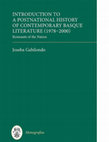
Rochester, NY: Tamesis Books, 2019.
This is a collection of essays written between 1994 and 20... more Rochester, NY: Tamesis Books, 2019.
This is a collection of essays written between 1994 and 2002, and originally published in Basque (2006). It is also the first book to deploy systematically contemporary theory (poststructuralism, feminism, queer theory…) to analyze Basque literature and to give a historical thesis (based on the ideas of national allegory, double consciousness, and globalization), rather than random philological data, about the way Basque literature has developed. It also contains an epilogue on recent literature (2002-2017). The introduction written specifically for the book (2004) represents the most detailed elaboration of postnationalism in Hispanic studies, which also criticizes Habermas and shows how Deleuze and Guattari’s definition of minor literature is hegemonic-majoritary (Eurocentric). It also contains a critique of postcolonial theory’s disregard for minority languages. The book still contains the only critical analysis of the work of Bernardo Atxaga and his calculated program (will to power) to situate himself at the center of the Basque canon. This book was the first to raise issues such as the canon, masculinity (masochism), hegemony, queerness, hybridity, desire, motherhood and female exile, historical memory, national allegory, neoliberalism, etc. The field was mainly dominated by philological and sociological analysis when this book came out and stirred much controversy. Some of the authors I study are Itxaro Borda, Lourdes Oñederra, Jaione Osoro, Bernardo Atxaga, Ramon Saizarbitoria, Andu Lertxundi, Joxean Sagastizabal, Gabriel Aresti, Arantxa Urretabizkaia, Arantxa Iturbe, Laura Mintegi, Aingeru Epaltza, etc.
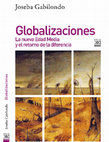
Madrid: Akal, 2019. En contra de la mayoría de debates sobre la continuidad, superación o unive... more Madrid: Akal, 2019. En contra de la mayoría de debates sobre la continuidad, superación o universalidad de la modernidad en la globalización, este libro propone, en lo que podría ser una inversión estratégica de La genealogía moral de Nietzsche, remplazar la modernidad con la Edad Media, como referencia histórica central e inevitable, para pensar nuestro presente global. Así, este ensayo esboza un análisis genealógico completo de la referencia a la que tantos autores recurren pero que ninguno elabora de forma sistemática: el hecho de que vivimos en una nueva Edad Media global.
El nuestro es un presente global que cada vez se define más claramente por dos procesos o eventos simultáneos que solo podemos pensar como eminentemente medievales. Por una parte, la polarización de clases sociales sigue aumentando de forma inusitada y sin precedentes históricos de similar escala. La misma está dando lugar a una oligarquía aristocrática que intenta subsumir al resto de la población en una nueva no-clase, cuya condición es la precariedad y para la que solo tenemos términos medievales como pueblo, vulgo, plebs, etc. (Baja Edad Media, XI-XV). Esta polarización social, a su vez, está dando lugar a formas políticas de populismo que cada día parecen más duraderas e históricas pero que la izquierda sigue desdeñando, con limitadas excepciones.
Por otra parte, y en contra de las denuncias iniciales de la Escuela de Frankfurt y sus seguidores sobre la homogeneización consumista generada por el capitalismo, se puede constatar hoy día una multiplicación irreducible de la diversidad social y cultural, desde el fundamentalismo religioso y étnico al tribalismo urbano y de Internet, que, a su vez, excede y deja ver los arcaicos y nuevos límites del capitalismo. Ello apunta a un paisaje post-multiculturalista de diversidad irreducible que hace imposible cualquier forma de política universalista (Alta Edad Media, V-X). De ahí que, en vez de “globalización”, en singular, o de “altermundismo”, demasiado simétrico a la globalización hegemónica a la que se contrapone, este ensayo caracterice nuestro presente como un momento medieval de globalizaciones múltiples que exceden el capitalismo y se contraponen a una nueva aristocracia incipiente desde su irreducible diferencialidad.
En otras palabras, este ensayo propone un análisis diferente que ofrezca una salida al pensamiento de la izquierda, tanto socialdemócrata como marxista, presa y víctima de los límites de una ontología y teleología modernas, que la avocan, irónicamente, a una proclamación muy medieval de la universalidad insuperable y cuasi-religiosa del capitalismo.
En vez de incitar al pánico moderno sobre el “final de las luces”, este ensayo, en su aproximación critico-teórica, se atreve a captar parte de la irreducible complejidad medieval de nuestro presente global: desde la nueva obesidad como signo de hambre de clases precarizadas a los efectos anticapitalistas de la sexualidad LGBT incluso en su giro conservador hacia el matrimonio burgués; desde las nuevas alegorías globales (Juego de tronos, El señor de los anillos, los reality shows, etc.) al estado de excepción global; desde la violencia postdemocrática de género y raza al antropoceno; desde la biopolítica y gubernamentalidad clásica a la tanatopolítica generalizada. En esta contra-genealogía nietzscheana, se intenta explorar nuestro paisaje medieval donde la moral del amo vuelve a querer imponerse frente a un “vulgo” diverso e irreducible que está abocado a una precariedad que se convierte en nueva forma de política y resistencia. Así, esta otra genealogía empieza en el presente y deconstruye históricamente la modernidad para llegar a un pasado medieval que también incluye al sujeto no-moderno-europeo y por tanto refleja nuestro presente. Desde este nuevo horizonte neomedieval, el libro explica la estructura, antagonismo, y lucha entre grupos, a través del postmarxismo y el psicoanálisis, y apunta a lo que se puede caracterizar como una nueva política post-laclauana global, cuyo eje es el deseo consumista y la sublimación populista.
Para terminar, este ensayo presenta un mapa contemporáneo medieval cuyo último horizonte es apocalíptico y “premoderno”. Así, el momento más medieval de nuestro presente se da en el trasfondo y, por eso, se discute al final del ensayo: el antropoceno, o era ecológica creada por la humanidad, la cual no parece tener salidas modernas tecnológicas o utópicas, solo medievales y apocalípticas: desastre, ruina, plaga, etc. Por lo cual, el ensayo también presenta, al final, una salida medieval a dicho horizonte ecológico de apocalipsis.
Premio Unamuno 2015. Originalmente publicado en euskara.
Tafalla: Txalaparta, 2017.
Lansing: Barbaroak, 2016.
An open access book also available on paper at amazon.com for $12... more Lansing: Barbaroak, 2016.
An open access book also available on paper at amazon.com for $12. Feel free to comment and suggest changes. [email protected]
Bilbao: University of the Basque Country Press, 2013. English translation in progress
Articles by joseba gabilondo
eHumanista 50 (2022): 106-117
Pandemia: Cambio de agenda en filosofía, 2020
Pandemia: Cambio de agenda en filosofía. Ed. José Luis Villacañas. Madrid: Biblioteca Nueva, 2020... more Pandemia: Cambio de agenda en filosofía. Ed. José Luis Villacañas. Madrid: Biblioteca Nueva, 2020. 143-66.
.
Jakin, 2020
Konspiranoinegazionismoa oinarrizko politika bezala Europako ezker ilustratu eta arrazoizaleak C... more Konspiranoinegazionismoa oinarrizko politika bezala Europako ezker ilustratu eta arrazoizaleak COVID-19 birusaren eta horren kudeaketaren inguruan hedatu diren diskurtso konspiratzaile, paranoiko eta negazionisten irrazionaltasunari (konspiranoinegazionismoari) erantzun kartesiar bat kontrajartzea erabaki du, irrazionaltasun hori eskuinak sustatu duela argudiatuz. Alabaina, azken mende osoan gertatu den bezala, kontrajartze eta kondena razionalista ezkertiar horrek azkenean gutxiengo ilustratu eta arranditsu baten erantzun efektugabe eta indargabea izaten amaitu du, berriro ere ezkerraren politika talde gutxituen dinamikara murriztuz eta jende gehiengoaren babesa galduz. Ironikoki, koronabirusaren 'egia' aldarrikatzea jende edo herri (populu) gehiengoaren aurka («Datuak dira garrantzitsu! Datuetan dago egia! Zientziari eutsi behar diogu!»), 1968tik ezkerrak egin duen hutsegite orokorrago baten azken errepikapena baino ez da. Alegia, razionalismo ezkertiar hori «ezkerrak ez du oraindik alternatiba konbentzigarririk»
International Journal of Zizek Studies, 2020
International Journal of Zizek Studies. 14.1 (2020): 1-21.
Bong Joon Ho's Parasite has been globa... more International Journal of Zizek Studies. 14.1 (2020): 1-21.
Bong Joon Ho's Parasite has been globally praised for presenting a new perspective on class conflict and for placing the precarious working class at its center. Prestigious awards such the Palme d'Or at the Cannes Festival or the unprecedented Oscar for the Best Film (for a film in a language other than English) only corroborate this global consensus. But I think it's the opposite. Parasite is an overworked and convoluted narrative about the impossibility of overcoming, dismantling, or exiting neoliberal capitalism. Literally, the South Korean film is a cinematic version of Fredric Jameson's infamous dictum that "it is easier to imagine the end of the world than to imagine the end of capitalism." Therefore, the interesting thing to analyze is how we all have enjoyed globally, in almost ecclesiastical communion, our last cinematic surrender to the ideology of late capitalism. And at that, it must be admitted, Bong Joon Ho's film is a work of genius.
Parasite is also a pertinent departure point to revisit some of Žižek’s theories on the issue of neoliberalism’s global fantasies and on Lacan’s four discourses. In order to do so, it will be necessary to reflect on the visibility of another global event: the revolts that have taken place throughout the world after 2008 (henceforth “post-2008 revolts”), and more specifically after the Arab Spring of 2011.
Basque Cinema: History of an In/ Visibility, 2020
from Marti-Olivella, Jaume (2020). Basque Cinema: History of an In/
Visibility. Lansing, MI: Barb... more from Marti-Olivella, Jaume (2020). Basque Cinema: History of an In/
Visibility. Lansing, MI: Barbaroak. 595-659.
Periphērica 1.1 (2019): 141-88., 2019
This article analyzes costumbrismo as the first literary genre to develop the notion of postimper... more This article analyzes costumbrismo as the first literary genre to develop the notion of postimperial nostalgia in nineteenth-century Spain. The article argues that a postimperialist analysis of this literature can shed light on the rather, idiosyncratic history of nineteenth-century Spanish literature (literature of manners and historical novel > almost no realism > naturalism). It also establishes the bases for a more cultural and political understanding of nostalgia and modernity in Spain and the Hispanic Atlantic as well as the (postmodern) Global North, so that Spanish nationalism is redefined as an (in-different) postimperial discourse about colonial loss. More theoretically, the article aims at redefining nineteenth-century Spanish history in Lacanian terms by arguing that Spain as a nation is simply an imaginary formation of a symbolic • Gabilondo
Perspetivas críticas sobre os estudos ibéricos. Ed. Cristina Martínez Tejero e Santiago Pérez Isasi. Venice: Edizioni Ca’Foscari. pp. 89-113., 2019
Perspetivas críticas sobre os estudos ibéricos Cristina Martínez Tejero, Santiago Pérez Isasi (ed... more Perspetivas críticas sobre os estudos ibéricos Cristina Martínez Tejero, Santiago Pérez Isasi (editado por) © 2019 Cristina Martínez Tejero, Santiago Pérez Isasi per il testo | para o texto © 2019 Edizioni Ca' Foscari -Digital Publishing per la presente edizione | para esta edição c b This work is licensed under a Creative Commons Attribution 4.0 International License.
Catalonia, Iberia and Europe, 2019
“The Iberian Disavowal of Imperialism and Globalization from the 19th to the 21st Century.” Cata... more “The Iberian Disavowal of Imperialism and Globalization from the 19th to the 21st Century.” Catalonia, Iberia and Europe. David Duarte and Giangiacomo Vale, eds. Rome: Aracne Editrice, 2019. 23-54.
This article studies the Peninsular internalization of North-European imperialist historiography in the XIX th and the way in which the resulting nationalist Iberian historiograpy founded itself on the nationalist disavowal of such imperialism. The article also analyzes the way in which the Iberian disavowal of North-European imperialism founds a nationalist ontology of a Iberian confederacy or polysystem of nation (state)s, which leads, in turn, to its disavowal of globalization, as the latter creates a neoliberal fracture at the core of the Iberian nation-states. The aritcle ends with an analysis of Basque literature and film to show that Basque culture, due to its historical fracture, disavows the Iberian frame and, instead, by avowing globalization, seeks (unsuccesfully) alternatives in the form of travel narratives to North Europe.The article studies Katixa Agirre's novel Wait until it Clears Up (2015) as well as Jon Garaño and Aitor Arregi's film The Giant (2017).
Transatlantic Studies: Latin America, Iberia, and Africa., 2019
Transatlantic Studies: Latin America, Iberia, and Africa. Eds. Sebastiaan Faber et al. Liverpool:... more Transatlantic Studies: Latin America, Iberia, and Africa. Eds. Sebastiaan Faber et al. Liverpool: Liverpool University Press, 2019. 43-55.
According to Giorgio Agamben (1998, 2005), the state of exception and the concentration camp are political technologies internal to North European modernity, which reveal the latter's perverse telos and truth in the Nazi holocaust. Agamben does not stand alone, as he continues a modern Eurocentric intellectual tradition that dates back to Walter Benjamin and Carl Schmidt. Yet, from an Atlantic Hispanic position, one could argue the opposite, that is to say, that these intellectual theories on the concentration camp and the state of exception hide, rather than reveal, the history of a non-North European Atlantic modernity, by situating politics and history inside a putative self-enclosed modern Northern Europe. This intellectual tradition ultimately legitimizes the modern ontology of Europe (i.e. the existence of a capitalist Europe void of colonial history). This article is a first attempt to elaborate a Hispanic reading and relocation of Europe and modernity in an Atlantic space-time that is neither European nor modern, and can be denominated "Atlantic transmodernity" (Dussel 2012). The goal is not to refashion a more problematic Europe and modernity, even in a postcolonial fashion, by provincializing it (Chakrabarty 2000), but rather to create a new geopolitical space, the Hispanic Atlantic, and a temporality, an Atlantic transmodernity, that turns the idea of Europe-modernity into an ideological effect produced by the geopolitics of the Atlantic. In order to do so, I will concentrate, on the one hand, on nineteenth-century Spanish history of the state of exception, and, on the other, on the not-so-well-known history of the inception of the concentration camp in Cuba between 1896 and 1898.
Arizona Journal of Hispanic Cultural Studies 21 (2017): 187-214., 2017
This article centers on the 1975-2011 period and the events of the 15M in order to redefine popul... more This article centers on the 1975-2011 period and the events of the 15M in order to redefine populism as the political organization of a heterogeneous social reality that emerges from Spain's postimperial history. The period is redefined as the Second Restoration and furthermore, the 15M and its political aftermath is not presented as a break but rather as its continuation. The article offers a new analysis of populism based on a politics of affect where the leader is central. The film Ocho apellidos vascos is studied, next to celebrities/leaders Belén Esteban and Pablo Iglesias. Finally, the article attempts a historical analysis of neoliberalism and its Spanish elite, la gente guapa.
Erabakitzeko eskubidea, botere eragilea, burujabetza. Ed. Mitxelko Uranga. Bilbao: Sorzain, 2017. 107-45., 2017
Re-routing Galician Studies. Multidisciplinary Perspectives. Eds. Benita Sampedro and José Antonio Losada. New York: Macmillan Palgrave, 2017. 165-78., 2017
This chapter studies the work of Manuel Fraga as that of the greatest ghostly writer of recent Ga... more This chapter studies the work of Manuel Fraga as that of the greatest ghostly writer of recent Galician literature. In psychoanalytical terms, he is its main referent: The master signifier of the agency that regulates the symbolic order of Galicia. Literary history’s refusal to engage with Fraga has always had the effect of generating his repeated return and haunting, as he defined the continuation of Francoism by other means in Galicia, and more generally, in Spain. This chapter further argues that Fraga managed to advance a postnationalist history and theory of Galician literature and culture, which instead of highlighting the oppression inflicted by Spanish imperialism/colonialism, created a non-democratic‚ populist‚ and affective unity of Galicia’s history and future as universal (thus, reworking the Francoist “Spanish universalism through unity”). It concludes that in the 1990s and 2000s, the nationalist left in Galicia‚ due to its rationalist politics‚ did not take seriously the politics of affect in its historical complexity and thus enabled Fraga’s hegemony.
Objetivo Independencia. , 2016
“Lógicas de la politica postindentitaria y postleninista: masoquismo e independencia subordinada ... more “Lógicas de la politica postindentitaria y postleninista: masoquismo e independencia subordinada neoliberal.” Objetivo Independencia. Ed. Andoni Olariaga et al. Tafalla: Txalaparta, 2016. 375-404



Uploads
Books by joseba gabilondo
This is a collection of essays written between 1994 and 2002, and originally published in Basque (2006). It is also the first book to deploy systematically contemporary theory (poststructuralism, feminism, queer theory…) to analyze Basque literature and to give a historical thesis (based on the ideas of national allegory, double consciousness, and globalization), rather than random philological data, about the way Basque literature has developed. It also contains an epilogue on recent literature (2002-2017). The introduction written specifically for the book (2004) represents the most detailed elaboration of postnationalism in Hispanic studies, which also criticizes Habermas and shows how Deleuze and Guattari’s definition of minor literature is hegemonic-majoritary (Eurocentric). It also contains a critique of postcolonial theory’s disregard for minority languages. The book still contains the only critical analysis of the work of Bernardo Atxaga and his calculated program (will to power) to situate himself at the center of the Basque canon. This book was the first to raise issues such as the canon, masculinity (masochism), hegemony, queerness, hybridity, desire, motherhood and female exile, historical memory, national allegory, neoliberalism, etc. The field was mainly dominated by philological and sociological analysis when this book came out and stirred much controversy. Some of the authors I study are Itxaro Borda, Lourdes Oñederra, Jaione Osoro, Bernardo Atxaga, Ramon Saizarbitoria, Andu Lertxundi, Joxean Sagastizabal, Gabriel Aresti, Arantxa Urretabizkaia, Arantxa Iturbe, Laura Mintegi, Aingeru Epaltza, etc.
El nuestro es un presente global que cada vez se define más claramente por dos procesos o eventos simultáneos que solo podemos pensar como eminentemente medievales. Por una parte, la polarización de clases sociales sigue aumentando de forma inusitada y sin precedentes históricos de similar escala. La misma está dando lugar a una oligarquía aristocrática que intenta subsumir al resto de la población en una nueva no-clase, cuya condición es la precariedad y para la que solo tenemos términos medievales como pueblo, vulgo, plebs, etc. (Baja Edad Media, XI-XV). Esta polarización social, a su vez, está dando lugar a formas políticas de populismo que cada día parecen más duraderas e históricas pero que la izquierda sigue desdeñando, con limitadas excepciones.
Por otra parte, y en contra de las denuncias iniciales de la Escuela de Frankfurt y sus seguidores sobre la homogeneización consumista generada por el capitalismo, se puede constatar hoy día una multiplicación irreducible de la diversidad social y cultural, desde el fundamentalismo religioso y étnico al tribalismo urbano y de Internet, que, a su vez, excede y deja ver los arcaicos y nuevos límites del capitalismo. Ello apunta a un paisaje post-multiculturalista de diversidad irreducible que hace imposible cualquier forma de política universalista (Alta Edad Media, V-X). De ahí que, en vez de “globalización”, en singular, o de “altermundismo”, demasiado simétrico a la globalización hegemónica a la que se contrapone, este ensayo caracterice nuestro presente como un momento medieval de globalizaciones múltiples que exceden el capitalismo y se contraponen a una nueva aristocracia incipiente desde su irreducible diferencialidad.
En otras palabras, este ensayo propone un análisis diferente que ofrezca una salida al pensamiento de la izquierda, tanto socialdemócrata como marxista, presa y víctima de los límites de una ontología y teleología modernas, que la avocan, irónicamente, a una proclamación muy medieval de la universalidad insuperable y cuasi-religiosa del capitalismo.
En vez de incitar al pánico moderno sobre el “final de las luces”, este ensayo, en su aproximación critico-teórica, se atreve a captar parte de la irreducible complejidad medieval de nuestro presente global: desde la nueva obesidad como signo de hambre de clases precarizadas a los efectos anticapitalistas de la sexualidad LGBT incluso en su giro conservador hacia el matrimonio burgués; desde las nuevas alegorías globales (Juego de tronos, El señor de los anillos, los reality shows, etc.) al estado de excepción global; desde la violencia postdemocrática de género y raza al antropoceno; desde la biopolítica y gubernamentalidad clásica a la tanatopolítica generalizada. En esta contra-genealogía nietzscheana, se intenta explorar nuestro paisaje medieval donde la moral del amo vuelve a querer imponerse frente a un “vulgo” diverso e irreducible que está abocado a una precariedad que se convierte en nueva forma de política y resistencia. Así, esta otra genealogía empieza en el presente y deconstruye históricamente la modernidad para llegar a un pasado medieval que también incluye al sujeto no-moderno-europeo y por tanto refleja nuestro presente. Desde este nuevo horizonte neomedieval, el libro explica la estructura, antagonismo, y lucha entre grupos, a través del postmarxismo y el psicoanálisis, y apunta a lo que se puede caracterizar como una nueva política post-laclauana global, cuyo eje es el deseo consumista y la sublimación populista.
Para terminar, este ensayo presenta un mapa contemporáneo medieval cuyo último horizonte es apocalíptico y “premoderno”. Así, el momento más medieval de nuestro presente se da en el trasfondo y, por eso, se discute al final del ensayo: el antropoceno, o era ecológica creada por la humanidad, la cual no parece tener salidas modernas tecnológicas o utópicas, solo medievales y apocalípticas: desastre, ruina, plaga, etc. Por lo cual, el ensayo también presenta, al final, una salida medieval a dicho horizonte ecológico de apocalipsis.
Premio Unamuno 2015. Originalmente publicado en euskara.
An open access book also available on paper at amazon.com for $12. Feel free to comment and suggest changes. [email protected]
Articles by joseba gabilondo
.
Bong Joon Ho's Parasite has been globally praised for presenting a new perspective on class conflict and for placing the precarious working class at its center. Prestigious awards such the Palme d'Or at the Cannes Festival or the unprecedented Oscar for the Best Film (for a film in a language other than English) only corroborate this global consensus. But I think it's the opposite. Parasite is an overworked and convoluted narrative about the impossibility of overcoming, dismantling, or exiting neoliberal capitalism. Literally, the South Korean film is a cinematic version of Fredric Jameson's infamous dictum that "it is easier to imagine the end of the world than to imagine the end of capitalism." Therefore, the interesting thing to analyze is how we all have enjoyed globally, in almost ecclesiastical communion, our last cinematic surrender to the ideology of late capitalism. And at that, it must be admitted, Bong Joon Ho's film is a work of genius.
Parasite is also a pertinent departure point to revisit some of Žižek’s theories on the issue of neoliberalism’s global fantasies and on Lacan’s four discourses. In order to do so, it will be necessary to reflect on the visibility of another global event: the revolts that have taken place throughout the world after 2008 (henceforth “post-2008 revolts”), and more specifically after the Arab Spring of 2011.
Visibility. Lansing, MI: Barbaroak. 595-659.
This article studies the Peninsular internalization of North-European imperialist historiography in the XIX th and the way in which the resulting nationalist Iberian historiograpy founded itself on the nationalist disavowal of such imperialism. The article also analyzes the way in which the Iberian disavowal of North-European imperialism founds a nationalist ontology of a Iberian confederacy or polysystem of nation (state)s, which leads, in turn, to its disavowal of globalization, as the latter creates a neoliberal fracture at the core of the Iberian nation-states. The aritcle ends with an analysis of Basque literature and film to show that Basque culture, due to its historical fracture, disavows the Iberian frame and, instead, by avowing globalization, seeks (unsuccesfully) alternatives in the form of travel narratives to North Europe.The article studies Katixa Agirre's novel Wait until it Clears Up (2015) as well as Jon Garaño and Aitor Arregi's film The Giant (2017).
According to Giorgio Agamben (1998, 2005), the state of exception and the concentration camp are political technologies internal to North European modernity, which reveal the latter's perverse telos and truth in the Nazi holocaust. Agamben does not stand alone, as he continues a modern Eurocentric intellectual tradition that dates back to Walter Benjamin and Carl Schmidt. Yet, from an Atlantic Hispanic position, one could argue the opposite, that is to say, that these intellectual theories on the concentration camp and the state of exception hide, rather than reveal, the history of a non-North European Atlantic modernity, by situating politics and history inside a putative self-enclosed modern Northern Europe. This intellectual tradition ultimately legitimizes the modern ontology of Europe (i.e. the existence of a capitalist Europe void of colonial history). This article is a first attempt to elaborate a Hispanic reading and relocation of Europe and modernity in an Atlantic space-time that is neither European nor modern, and can be denominated "Atlantic transmodernity" (Dussel 2012). The goal is not to refashion a more problematic Europe and modernity, even in a postcolonial fashion, by provincializing it (Chakrabarty 2000), but rather to create a new geopolitical space, the Hispanic Atlantic, and a temporality, an Atlantic transmodernity, that turns the idea of Europe-modernity into an ideological effect produced by the geopolitics of the Atlantic. In order to do so, I will concentrate, on the one hand, on nineteenth-century Spanish history of the state of exception, and, on the other, on the not-so-well-known history of the inception of the concentration camp in Cuba between 1896 and 1898.