Publications by Joseph Kopta
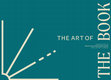
The Art of the Book: Treasures from the Special Collections Research Center, Temple University Libraries, 2024
The exhibition The Art of the Book: Treasures from the Special Collections Research Center, Templ... more The exhibition The Art of the Book: Treasures from the Special Collections Research Center, Temple University Libraries, showcases a variety of artworks housed in the Special Collections Research Center at Temple University's Charles Library. Organized through a curatorial collaboration between graduate students from the Tyler School of Art and Architecture, the exhibition and this catalogue examine how the format of the book has been treated across time and geography. A key question at the heart of this exhibition is, what constitutes a book? The diverse examples featured in this show challenge our preconceived notions and expand our definitions of this type of object. Melding illustration, painting, object-making, calligraphy, and storytelling, the objects featured in The Art of the Book transmit a robust sense of the time and place in which they were created. Many of these books function as repositories of memory that simultaneously reflect the values, history, and available technologies of the particular cultural moment in which they were created. The thematic groupings of these treasures display the variety of ways in which artists from across the globe have dealt with similar subject matter and content.
The aesthetic qualities of Byzantine Gospel Lectionaries in Middle Byzantine times, afforded by t... more The aesthetic qualities of Byzantine Gospel Lectionaries in Middle Byzantine times, afforded by their material construction, fostered an intermedial relationship with the architectural interiors of the churches and chapels where they were used in sacred liturgies. In particular, Byzantine book makers employed discreet reflective materials—particularly albumen and gold—that engendered an aesthetic of liquidity. If we center materiality and aesthetic considerations of the Byzantine Gospel Lectionary, building upon art history’s so-called “material turn”, we can come closer to understanding something of the poetry of the Byzantine manuscript as part of an affective experience—one that was shiny, shimmering, and fluid.
Grove Encyclopedia of Medieval Art and Architecture, 2012
Digital Humanities Projects by Joseph Kopta
A Look at a Book
A Look at a Book is a collaborative program between the Art History Department at the Tyler Schoo... more A Look at a Book is a collaborative program between the Art History Department at the Tyler School of Art and Architecture and the Special Collections Research Center (SCRC), Temple University Libraries. It has been organized by Prof. Joseph Kopta, Assistant Professor of Instruction, Art History, and Kimberly Tully, Curator of Rare Books, SCRC.
In this public series, we explore the wonderful collection of rare books, manuscripts, zines, and artists’ books from Temple’s Special Collections Research Center. Each week, via Zoom, scholars from the Tyler School of Art or Architecture or guest scholars will open a different artifact from the collection, flip through its pages, and share the knowledge within. This virtual series is open to the public, and occurs regularly during the academic year.
View past episodes here: https://www.stellaonline.art/look-book
In this public series, we explore the wonderful collection of rare books, manuscripts, zines, and artists’ books from Temple’s Special Collections Research Center. Each week, via Zoom, scholars from the Tyler School of Art or Architecture or guest scholars will open a different artifact from the collection, flip through its pages, and share the knowledge within. This virtual series is open to the public, and occurs regularly during the academic year.
View past episodes here: https://www.stellaonline.art/look-book
Beth Shean After Antiquity
Dissertation by Joseph Kopta
Syllabi by Joseph Kopta
HAD-590I (Combined UG/Grad)
On-site study of mosaics, painting, architecture, and sculpture of Ve... more HAD-590I (Combined UG/Grad)
On-site study of mosaics, painting, architecture, and sculpture of Venice is the primary purpose of this course. Classes held on site alternate with lectures and discussions that place material in its art historical context. Students explore Byzantine, Gothic, Renaissance, Baroque examples at many locations that show in one place the rich visual materials of all these periods, as well as materials and works acquired through conquest or collection. Students will carry out visually-and historically-based assignments in Venice. Upon return to New York, graduate students will submit a paper researched in Venice. The Marciana and Querini Stampalia libraries are available to all students, and those doing graduate work also have access to the Cini Foundation Library. Class meetings (refer to calendar) include lectures at the Università Internazionale dell' Arte (UIA) and on-site visits to churches, architectural landmarks, and museums of Venice. This course is taught in English.
On-site study of mosaics, painting, architecture, and sculpture of Venice is the primary purpose of this course. Classes held on site alternate with lectures and discussions that place material in its art historical context. Students explore Byzantine, Gothic, Renaissance, Baroque examples at many locations that show in one place the rich visual materials of all these periods, as well as materials and works acquired through conquest or collection. Students will carry out visually-and historically-based assignments in Venice. Upon return to New York, graduate students will submit a paper researched in Venice. The Marciana and Querini Stampalia libraries are available to all students, and those doing graduate work also have access to the Cini Foundation Library. Class meetings (refer to calendar) include lectures at the Università Internazionale dell' Arte (UIA) and on-site visits to churches, architectural landmarks, and museums of Venice. This course is taught in English.
This course aims to consider the historical phenomenon of image destruction, using several instan... more This course aims to consider the historical phenomenon of image destruction, using several instances of iconoclasm as case studies. The course will address the destruction of images and art in three distinct modes: audiences or groups attacking art; artists attacking art; and art that uses destruction to tell new stories. Students will explore instances of religious, political, philosophical, and artistic image destruction. The first two-thirds of the course will investigate the historical period of Byzantine Iconoclasm in the Mediterranean from the seventh to ninth centuries, when images were systematically destroyed after official imperial policy in two phases. Students will study the motivations, attitudes, and documentation of this period, as well as the effects upon art itself-particularly changes in iconography, style, and reception. The final third of the course will consider the ways that the Byzantine phenomenon intersects with other historical instances of image destruction, including Medieval Islamic attitudes to images; Buddhist ritual dissolution ceremonies of art and architecture; Protestant image destruction in Early Modern Europe; political image destruction of the French Revolution; and artistic interventions of the twentieth and twenty-first centuries. Ultimately, this course will help students define the power that art has had, and continues to have, on varying individuals and groups. Writing assignments will encourage students to consider historically specific instances of image destruction or modification and develop their writing skills as arts professionals.
Book & Exhibition Reviews by Joseph Kopta
Bibliotheca Dantesca, 2022