Books by Justin Begley
PSMEMM, 2022
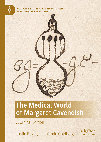
This book is the first transcription and extensive commentary on a fascinating but almost entirel... more This book is the first transcription and extensive commentary on a fascinating but almost entirely overlooked manuscript compilation of medical recipes and letters, which is held in the University of Nottingham. Collected by the Marquess and Marchioness of Newcastle, William and Margaret Cavendish, during the 1640s and 1650s, this manuscript features letters of advice, recipes, and sundry philosophical and medical reflections by some of the most formidable and influential physicians, philosophers, and courtly scholars of the early seventeenth century. These include “Europe’s physician” Theodore de Mayerne, the adventurer and courtier Kenelm Digby, and the natural philosopher, poet, and playwright Margaret Cavendish. While the transcription and accompanying annotations will allow a diverse array of readers to appreciate the manuscript for the first time, the introduction situates the Cavendishes’ recipe collecting habits, medical preoccupations, natural philosophical views, and politics within their social, cultural, and philosophical contexts, and draws out some of the most significant implications of this important document.
Papers by Justin Begley
Centaurus, 2023
The present article is the first to investigate in any detail the plant–animal analogies that are... more The present article is the first to investigate in any detail the plant–animal analogies that are integral to Nehemiah Grew's Anatomy of Plants (1682). It focuses on three analogies that Grew used (either productively or critically) to produce novel accounts of vegetative processes: those between sperm and pollen, blood and sap, and mouths and roots. I suggest that Grew's analogical approach and specific mappings allowed him, on the one hand, to “see” plant features and functions that other botanists had overlooked, and, on the other, to determine when the analogies that other botanists deployed did not convincingly describe observable phenomena. On this basis, I argue, he was able to present what he, and several contemporaries, considered to be more accurate accounts of the nature of the vegetative parts and processes in question. More broadly, the article seeks to show that the analogical and observational were complementary aspects of Grew's method, and that, far from hindering his empirical endeavour, his analogies were crucial to it.
Revue d'histoire des sciences, 2024
In this paper, I demonstrate the extent to which Margaret Cavendish’s early account of matter in ... more In this paper, I demonstrate the extent to which Margaret Cavendish’s early account of matter in Philosophicall Fancies (1653) and Philosophical and Physical Opinions (1655) had its roots in the medical tradition, against a recent expression of scepticism towards my “reading of Cavendish’s general matter theory as deriving from this medical tradition.” I argue that Cavendish drew dynamically on both Galenic and chymical ideas in these early works as she forged a substance theory according to which nature is composed of sensitive and rational spirits that are extracts of dull matter. Yet I go on to show that medical ideas had less of a bearing on her later natural philosophy, as presented in Observations upon Experimental Philosophy (1666) and Grounds of Natural Philosophy (1668). In these, her last two philosophical publications, she disregarded spirits in favour of the more general “matter,” and posited that even motionless matter (as opposed only to moving spirits) possesses knowledge and life.
Ambix, 2024
This article focuses on a curious manuscript treatise in the British Library, Harley MS 6940, whi... more This article focuses on a curious manuscript treatise in the British Library, Harley MS 6940, which the learned physician Samuel Bispham composed for the English patron and horseman William Cavendish (1593-1676), most likely in the mid-1640s. Sitting somewhere between a practical medical recipe book and theoretical chymical treatise, while being peppered with traditional causal explanations and Galenic precautions, Harley MS 6940 testifies to the erosion of the entrenched dichotomy between chymical and Galenic medicine in the mid-seventeenth century. Harley MS 6940 also lays bare how a learned physician used (and taught the use of) practice to confirm and sometimes challenge his learning, offering a counterpoint to recent scholarship that underscores the learning that apothecaries used to shore up their practice. Produced at the behest of a leading Royalist who sought both to acquire techniques for distilling and fermenting herbs and to advance his knowledge of chymical conceptions of spirits, seeds, and salts, the manuscript allows us to appreciate that the chymical art animated a broader set of individuals than the historiography often implies.
Encyclopedia of Early Modern Philosophy and the Sciences, eds. D. Jalobeanu and C.T. Wolfe (Springer), 2022
What is a non-human animal? During the early modern period, definitions ranged from an ensouled c... more What is a non-human animal? During the early modern period, definitions ranged from an ensouled creature that exists between humans and plants on the scale of nature to a soulless but finely constructed automaton. Particularly fierce disputes erupted over whether animals are rational, sensitive, or language-using, and the ascribed attributes were widely thought to have a bearing on ethical questions. Is it acceptable to hunt animals? To eat them? Kick them? Experiment on them for the amelioration of human health and knowledge? This entry delves into these issues. It begins with a brief overview of Renaissance perspectives on the status of animals and René Descartes’ attempt to upend them, then turns to Pierre Gassendi’s and Henry More’s head-on refutations of Descartes, and proceeds to the less direct responses of other major early modern philosophers including Kenelm Digby, Margaret Cavendish, Baruch Spinoza, and Gottfried Wilhelm Leibniz. Finally, I look at debates about animal anatomy and their implications for attitudes towards consuming animals, with a focus on Gassendi and the responses to him from John Wallis and Edward Tyson, concluding with a broader overview of perspectives on animal ethics, with reference to Nicolas Malebranche, John Locke, and David Hume.
Il bosco: Biodiversità, diritti e culture dal medioevo al nostro tempo, ed. by Alessandra Dattero (Viella), 2022
N.B: Copia ad uso personale. È vietata la riproduzione (totale o parziale) dell'opera con qualsia... more N.B: Copia ad uso personale. È vietata la riproduzione (totale o parziale) dell'opera con qualsiasi mezzo effettuata e la sua messa a disposizione di terzi, sia in forma gratuita sia a pagamento.
L'Esprit Créateur, 2022
This article explores some of the analogies that botanists in England and France developed betwee... more This article explores some of the analogies that botanists in England and France developed between c. 1670-1720 to demonstrate that plants reproduce sexually. By delving into the contributions of several botanists -- including Nehemiah Grew, John Ray, Samuel Morland, and Patrick Blair -- I seek to show that plant sexuality was neither the singular discovery of Rudolf Jakob Camerarius, as practicing botanists have often supposed, nor a monolithic stance that provided an obvious taxonomical foundation. I further argue that while Carl Linnaeus eventually came to base his taxonomical system on the marital status of plants, earlier botanists, following in the footsteps of Grew, mostly analogized plants to "lower" animals. As a result, I propose that even the most flamboyant among them, Sébastien Vaillant, largely avoided the charges of immorality and irreligion that beset Linnaeus.
Perspectives on Science, 2020
The focus of this paper is a fascinating but hitherto unstudied 1742 manuscript treatise by Johan... more The focus of this paper is a fascinating but hitherto unstudied 1742 manuscript treatise by Johannes Daniel Schlichting (1705-1765) titled "Sapientiæ Problema" that contains something extremely rare in the mid-eighteenth century: a full-blown speculative cosmogony. As this article reveals, Schlichting developed a distinctive vital liquid matter in an effort to account for the generation of all natural bodies and combat the stamina-based theories that were dominant in his day. He hoped that his treatise would be published in the Philosophical Transactions of the Royal Society, but an accompanying abridgment by the FRS Henry Baker (1698-1774) strongly implies that Schlichting's speculative bent and desire to divulge causal explanations were unacceptable to the English-man and generally ill-suited to the intellectual climate of mid-century England.
Annals of Science, 2020
The phenomenon of ‘plant sleep’ – whereby vegetables rhythmically open and close their leaves or ... more The phenomenon of ‘plant sleep’ – whereby vegetables rhythmically open and close their leaves or petals in daily cycles – has been a continual source of fascination for those with botanical interests, from the Portuguese physician Cristóbal Acosta and the Italian naturalist Prospero Alpini in the sixteenth century to Percy Bysshe Shelley and Charles Darwin in the nineteenth. But it was in 1757 that the topic received its earliest systemic treatment on English shores with the prodigious author, botanist, actor, and Royal Society critic John Hill’s The Sleep of Plants, and Cause of Motion in the Sensitive Plant. As the present article aims to illustrate, Hill and his respondents used this remarkable behaviour, exhibited by certain plants, as a lens through which to reassess the nature of vegetables, and to address pressing questions of wider natural philosophical import, particularly the degree of continuity between the structures and functions of plants and animals and whether similar mechanisms necessarily account for related movements in different life forms. These disputes, this paper contends, also had profound methodological implications regarding the proper way to conduct experiments, the extent to which it was acceptable to extrapolate from observations, and the status of causal explanations.
Vegetative Powers: The Roots of Life in Ancient, Medieval and Early Modern Natural Philosophy, eds. Fabrizio Baldassarri and Andreas Blank (Springer), 2021
This paper traces how the seventeenth-century poet, playwright, and natural philosopher, Margaret... more This paper traces how the seventeenth-century poet, playwright, and natural philosopher, Margaret Cavendish, developed her ideas on plant life in three major publications: her 1655 Philosophical and Physical Opinions, 1664 Philosophical Letters, and 1666 Observations Upon Experimental Philosophy. As I seek to demonstrate, Cavendish's mostly overlooked ruminations on vegetality were indispensable to her formation of a substance theory according to which matter is endowed with life, vitality, knowledge, and, in her mature works, perceptivity. Over the course of this paper, I also suggest that her visions of matter and plant life were largely grounded in Galenic and Aristotelian insights that she extracted and adapted from a range of sources, not least from William Harvey's field-changing writings on the circulation of blood and the generation of animals. In building upon this material, Cavendish was driven to uphold the innate livelihood of plants against mechanical accounts and to champion a "natural" mode of classification that focussed on the diversity of plant attributes rather than foregrounding specific features that humans deemed valuable or significant.
Intellectual History Review, 2017
This essay explores an unstudied compendium to Margaret Cavendish’s 1655 Philosophical and Physic... more This essay explores an unstudied compendium to Margaret Cavendish’s 1655 Philosophical and Physical Opinions that was composed by the learned physician, plant anatomist, and secretary of the Royal Society, Nehemiah Grew. Despite the growing body of scholarship on Cavendish, minimal attention has been dedicated to her early reception. But studying this compendium provides some fascinating insights into how one of the foremost thinkers of her day read, emended, and manipulated her ideas. I propose that Grew turned to Cavendish’s work when developing his substance theory in the years leading up to the publication of his 1682 The Anatomy of Plants, but that shifting intellectual tides led him to critique her version of material vitalism in his 1701 Cosmologia Sacra. Supported by a transcription of the compendium as an appendix, this article also sheds light on the role that early modern pedagogical techniques and memory tools played in shaping concepts of matter and mind.
Keywords: Nehemiah Grew, Margaret Cavendish, Commonplace Book; Spirits; Soul; Scala Naturae
English Literary Renaissance, 2023
Scholars have often situated the atomic ideas in Margaret Cavendish’s Poems, and Fancies (1653) i... more Scholars have often situated the atomic ideas in Margaret Cavendish’s Poems, and Fancies (1653) in relation to Lucy Hutchinson’s contemporaneous manuscript translation of the Roman poet Lucretius’ epic, De rerum natura, which articulates the principles of the ancient Greek atomist Epicurus. On the whole, these works have been read as expressions of the radical, materialistic impulses of both authors. Yet whereas at least some have taken Hutchinson’s denunciation of Lucretius’ “wicked pernitious doctrines” seriously, Cavendish is widely assumed to have embraced them. This essay begins by arguing that Cavendish was never a committed atomist. It suggests, instead, that her aim in Poems, and Fancies was to give atomism a fair hearing upon reading Josuah Sylvester’s Devine Weekes and Workes (1605), which entertained other ancient natural philosophies but rejected Epicureanism out of hand. I then turn to Cavendish’s appraisal of Epicurean ethics. In contrast to Sylvester, who linked Epicureanism with debauchery, Cavendish, I argue, sided with Pierre Gassendi’s more positive depiction of Epicurean ethics as compatible with Christianity. I conclude that the views found in Poems, and Fancies were far less philosophically and theologically heterodox than is usually supposed, and, indeed, that they were in many ways more orthodox than those of Hutchinson.
The Seventeenth Century, 2019
The starting point of this article is an understudied piece of critical exegesis from 1657 titled... more The starting point of this article is an understudied piece of critical exegesis from 1657 titled Humble Reflections Upon Some Passages of the Right Honorable the Lady Marchionesse of Newcastles Olio. An obscure Englishwoman named Susan Du Verger composed this 164-page text to refute a 3-page essay on “A Monastical life” by the prolific poet, playwright, and philosopher, Margaret Cavendish. While there is now a substantial body of work on nuns and convents, this research largely overlooks how early modern women engaged with these topics in a scholarly manner. Along with elucidating the gamut of relevant patristic and ecclesiastical histories that were available in the English and French vernaculars, Humble Reflections provides a prompt for investigating Cavendish’s ideas on ecclesiastical order, ceremonies, and toleration. I propose that Cavendish refused to grace Du Verger with a direct response because her polemic disregarded the unofficial codes of conduct—friendship, transnational community, and inter-confessional co-existence—that were supposed to maintain peace within the Republic of Letters. In conclusion, this essay displays that Cavendish was actually a great admirer of monasticism, though not so much for its role in the spread of Christianity as for its place in the development of natural philosophy.
The Review of English Studies, 2018
This article investigates a hitherto unstudied copy of De vita … Guilielmi ducis Novo-Castrensis ... more This article investigates a hitherto unstudied copy of De vita … Guilielmi ducis Novo-Castrensis (1668)—a Latin translation of The Life of William Cavendish (1667) by Margaret Cavendish (1623?-1673)—that Arthur Annesley (1614-1686), the First Earl of Anglesey, has heavily annotated. While Annesley owned the largest private library in seventeenth-century Britain, his copy of De vita is by far the most densely glossed of his identifiable books, with no fewer than 61 Latin and Greek annotations, not to mention numerous corrections and non-verbal markers. By studying Annesley’s careful treatment of De vita, this essay makes an intervention into the burgeoning fields of reading and library history along with neo-Latin studies. I propose that Annesley filled the margins of De vita with quotations from Latin poets, scholars, philosophers, and historians—rather than his personal views—in a bid to form a politically impartial outlook on the British Civil Wars that was attuned to broader historical or even mythological trends.
Helsinki Yearbook of Intellectual History, 2020
This volume is the fi rst issue of the Yearbook of the Helsinki Centre for Intellectual History. ... more This volume is the fi rst issue of the Yearbook of the Helsinki Centre for Intellectual History. Written by a team of international scholars, it brings together a varied collection of essays. The seventeen chapters of this book shed new light on the changing shape of moral and political inquiry in early-modern Europe and engage with the contemporary relevance of the study of intellectuals, ideas and intellectual patterns over time.
KWI-BLOG, 2024
One doesn’t have to look far today to encounter a vast array of information about supposedly life... more One doesn’t have to look far today to encounter a vast array of information about supposedly life-altering diets. What went into the body similarly fascinated – if not obsessed– the increasingly literate and health-conscious men and women of seventeenth-century England. Chief among them, this blog post highlights, was the renowned polymath Sir Thomas Browne. Browne stood out for his time, we will see, in that he extolled vegetarianism principally on health grounds even when discussing biblical abstinence from meat-eating. In downplaying the sacrificial component of the act in favour of a more secular perspective, he highlighted the role that scripture could play in inspiring and validating a broader reformation of eating habits that equally reflected the changing priorities of the time.
Conference Papers by Justin Begley
Extract from conference paper on "Humours, Mixtures, and Corpuscles" at the Institutio Santoriana... more Extract from conference paper on "Humours, Mixtures, and Corpuscles" at the Institutio Santoriana Fondazione Comel in Pisa.



Uploads
Books by Justin Begley
Papers by Justin Begley
Keywords: Nehemiah Grew, Margaret Cavendish, Commonplace Book; Spirits; Soul; Scala Naturae
Conference Papers by Justin Begley