PhD Thesis by Kaj Ahlsved

Ahlsved, Kaj. 2017. Musik och sport : En analys av musikanvändning, ljudlandskap, identitet och dramaturgi i samband med lagsportevenemang. Åbo Akademi.
I approach music at sports events as an example of “music in our everyday life”, by which I refer to music that one has not necessarily chosen to listen to in situations driven by something other than listening to music. Viewed from this perspective, music during sporting events is connected to discussions about the ubiquitous music of our everyday life.
My research perspective is influenced by the central ethnomusicological idea of viewing music as culture, which ultimately implies studying musical practices as well. My research is influenced by cultural musicology (the cultural study of music), soundscape studies, and ethnomusicology. These are methodologically connected by fieldwork, as in experiencing the culture out in the field. I have concentrated on male teams in ice hockey, football, and pesäpallo (“Finnish baseball”),which are sports that do not presuppose music, but music frames the sport in a cultural context. The empirical material analysed in the dissertation consists of fieldwork diaries, interviews, sound recordings, and different types of video recordings (own recordings, tv-broadcasts and YouTube videos); as well as recorded songs, media texts (books, newspapers, social media etc.), and enquiries.
In the first article ”Det är hemmaplansfavör!” Strukturerna i tre sporters ljudlandskap studerade ur ett hi-fi/lo-fi–perspektiv [“It is home-field advantage!” The structures of three sports soundscapes studied from a hi-fi/lo-fi–perspective] I study the structures of three sports soundscapes, namely ice hockey, football, and pesäpallo, by applying central soundscape theories from R. Murray Schafer (1977) and Barry Truax (1984) on my own empirical material.
The second article Let’s play hockey. Ishockeymusikens funktioner [Let’s play hockey. The functions of ice hockey music] is an analysis of the functions of ice hockey music. The material used in the article is the result of fieldwork during ice hockey teams HIFK’s, Jokerit’s, and HC TPS’s home games.
In the third article The cultural practice of localizing mediated sports music I study mediaization processes, such as the practices and processes that facilitate the localization of media disseminated music. The material for the study comes from many sporting contexts and via unique material on the use of marching music I shed light on how old military marches are ascribed new meanings within the context of Ostrobothnian football culture.
In the fourth article Musik, ishockeylejon och konstruerandet av en nationell gemenskap [Music, ice hockey lions, and the construction of a national community] identity construction is studied from a national perspective. I study the music culture related to the Finnish national men’s ice hockey team and argue that the national team represent an imagined community. The use of music, particularly the new music that is produced preceding the men’s World Championships, is viewed as a form of banal nationalism that makes the nation present in everyday life.
My research shows that the problematization of so-called ubiquitous music, which in earlier research has been discussed in relation to active and passive listening, is in sporting contexts supplemented by yet another complex aspect. The use of music, played by sport DJs, in sporting contexts does not only strive to make the soundscape more pleasant, the aim of the music can also be to activate the audience to make own sound. In sporting contexts there can exist culturally meaningful rituals which are carried out to the music and are connected with identity construction. The music of the sports arena does not merely reflect, rather, it can support the construction of identities, as it becomes a part of cultural practices in local or national sporting communities.
TV-productions often focus on fans and supporters, which play the ideal role that supporters are supposed to act out. The audience behaviour and sound not only creates the atmosphere of the event but also authenticates the event as something great, important, and deeply engaging. While the study shows how the sounds created by the audience and the audience’s active participation are important for the atmosphere of the event this is not solely unproblematic since it also includes playing more music, which in worst case scenarios can cause cacophonic situations.
Lectio praecursoria: Musik och sport: En analys av musikanvändning, ljudlandskap, identitet och dramaturgi i samband med lagsportevenemang.
Musiikin suunta, 2018
Published online in Musiikin Suunta 1/2018.
Edited books by Kaj Ahlsved
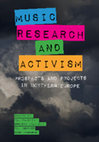
The book suggests that we are experiencing an activist turn in music research, evidenced by the growing number of projects and publications discussing inequalities in musical practices and the impact music research can have on these inequalities. This idea is explored in a series of position papers and contemplative texts, where music researchers, music educators, and artistic researchers reflect on how their work and the position they occupy as professionals in society serves eco-social justice and equity. What is the point of studying and teaching music in an age of ecocide, neo(liberal)-colonialism, rampant racial inequities, persistent gender identity and sexual orientation discrimination? What does social and ecological responsibility and sustainability mean in music research?
The idea for the book was conceived within the context of Suoni, a non-profit independent research association in Finland founded as a self-organizing and independent network for scholars interested in exploring methods, pedagogics, practices and action for eco-social equity in relation to music and music research.
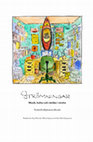
-- Kaj Ahlsved & Inka-Maria Nyman: Inledning
POPULÄRMUSIKALISKA STRÖMNINGAR I EN GLOBAL VÄRLD
-- Bruce Johnson: World Music: Whose World?
-- Martin Cloonan: Power to the People?: Reflections on being a Popular Music Scholar
-- Pirkko Moisala: Populärmusiken, språket och musikers ställning på Grönland
MUSIK OCH MÄNNISKOR ÖVER STAD, LAND OCH VATTEN
-- Gunnar Ternhag: Christlieb Lithander – den musikaliske bergsfiskalen
-- Jonas Lundblad: Bereden väg för ett upplyst protestantiskt rike: politik, nationalism och apokalyptik i Frans Michael Franzéns adventspsalm
-- Owe Ronström: Musik och öighet: musiklivet i Visby under 1800-talet
-- Vesa Kurkela: Viihteen suurvallan houkutukset: metropolien varietee ja sen heijastumat Helsingissä 1900-luvun vaihteessa
-- Camilla Hambro: Edvard Griegs konsertuvertyr I höst, opus 11
MUSIK, KULTUR OCH IDENTITETER I STÄNDIG RÖRELSE
-- Niklas Nyqvist: Johan Erik Taklax – spelmanslåtar i förändring
-- Kaarina Kilpiö: “Powerful unifying sound motif”: constructing Finland-Swedishness through sound in two 1950s short films
-- Kim Ramstedt: Tankar kring språk, ras och svenskspråkiga mediers inramning av hiphop i Finland
TABULA GRATULATORIA
![Research paper thumbnail of Musiken som förändringskraft: Manifest för aktivistisk musikforskning [Music as a tool for social change: A manifesto for activist music research / Swedish version]](https://attachments.academia-assets.com/58022957/thumbnails/1.jpg)
Ed. by Susanna Välimäki, Sini Mononen & Kaj Ahlsved, Dec 18, 2018
Forskningsföreningen Suoni rf bedriver aktivistisk och obunden musikforskning. I boken reflekterar föreningens medlemmar över sitt samhällsorienterade forskarskap och presenterar möjligheter för samhälleling och praxisorienterad musikforskning i den finländska musikkulturen.
Bokens författare är musikforskare som utöver sitt forskarskap bl.a. verkar som fria författare, kritiker, radio- och tv-producenter, föreningsaktiva, lärare, dj:n, miljöaktivister och i många andra roller knutna till folkbildning, publikarbete och sakkunniguppdrag. De förenas av en vilja att studera verkligheten genom musik, att arbeta för rättvisa musikaliska praktiker och genom musikforskning kämpa för en bättre värld.
ENGLISH ABSTRACT
This book outlines starting points for activist, i.e., societally critical, praxis oriented and rebellious music research.
The risk society and world of crises in the 21st century require activist research that examines the questions of social and environmental justice and aims for social change. At the same time, the funding for education, universities and research are constantly cut. How do musicologists respond to these challenges?
The members of the independent Research Society Suoni (ry) reflect their ideas about and plans for activist music research. The authors of the book are Finnish music researchers who in addition to their work as researchers, and as linked to that, work as free authors, music and art critics, radio and TV program producers, teachers, DJs, environmental activists, and in other expert positions related to music and arts, public education, audience development, and civil activism.
The authors share a desire to study reality via music, to transform musical practices socially and environmentally more just and sustainable, and to fight for a better world with music and music research.
Contents:
(1) Susanna Välimäki, Juha Torvinen & Sini Mononen: Introduction: Activist music research //
(2) Sini Mononen: Researcher-critic: Art criticism as activism //
(3) Susanna Välimäki: Researcher in radio and television: How and why talk to people about music? //
(4) Kim Ramstedt: Researcher-dj as a cultural mediator: Music and the promotion of equality //
(5) Susanna Välimäki: Researcher at festivals and orchestras: Audience development, societal activism and critical thinking //
(6) Saijaleena Rantanen: Researcher as a history teller: Whose music are we talking about? //
(7) Juha Torvinen: Researcher as an environmental activist: Theses on music researcher's relation to nature //
(8) Kaj Ahlsved: Researcher as media actor, public educator and music pedagogue: Prospects and challenges of social responsibility //
(9) Sini Mononen: Researcher-actor: Praxis oriented institutional criticism //
(10) Sini Mononen & Susanna Välimäki: The ABC of activist music research
![Research paper thumbnail of Musiikki muutosvoimana: Aktivistisen musiikintutkimuksen manifesti [Music as a tool for social change: A manifesto for activist music research]](https://attachments.academia-assets.com/57951273/thumbnails/1.jpg)
Ed. by Sini Mononen & Susanna Välimäki, Dec 8, 2018
The risk society and world of crises in the 21st century require activist research that examines the questions of social and environmental justice and aims for social change. At the same time, the funding for education, universities and research are constantly cut. How do musicologists respond to these challenges?
The members of the independent Research Society Suoni (ry) reflect their ideas about and plans for activist music research.
The authors of the book are Finnish music researchers who in addition to their work as researchers, and as linked to that, work as free authors, music and art critics, radio and TV program producers, teachers, DJs, environmental activists, and in other expert positions related to music and arts, public education, audience development, and civil activism. The authors share a desire to study reality via music, to transform musical practices socially and environmentally more just and sustainable, and to fight for a better world with music and music research.
The manifesto is edited by Sini Mononen & Susanna Välimäki. Contents:
(1) Susanna Välimäki, Juha Torvinen & Sini Mononen: Introduction: Activist music research //
(2) Sini Mononen: Researcher-critic: Art criticism as activism
(3) Susanna Välimäki: Researcher in radio and television: How and why talk to people about music? //
(4) Kim Ramstedt: Researcher-dj as a cultural mediator: Music and the promotion of equality //
(5) Susanna Välimäki: Researcher at festivals and orchestras: Audience development, societal activism and critical thinking //
(6) Saijaleena Rantanen: Researcher as a history teller: Whose music are we talking about? //
(7) Juha Torvinen: Researcher as an environmental activist: Theses on music researcher's relation to nature //
(8) Kaj Ahlsved: Researcher as media actor, public educator and music pedagogue: Prospects and challenges of social responsibility //
(9) Sini Mononen: Researcher-actor: Praxis oriented institutional criticism //
(10) Sini Mononen & Susanna Välimäki: The ABC of activist music research //
ABSTRACT IN FINNISH
Tämä kokoomateos esittelee aktivistisen musiikintutkimuksen lähtökohtia.
2000-luvun kriisimaailma vaatii yhteiskunnallisesti ja ympäristöllisesti kantaa ottavaa ja muutokseen pyrkivää toiminnallista tutkimusta. Samalla valtio leikkaa koulutuksen, yliopistojen ja tutkimuksen rahoitusta. Miten musiikkitieteilijä vastaa näihin haasteisiin?
Aktivistista musiikintutkimusta harjoittavan, riippumattoman Tutkimusyhdistys Suoni ry:n jäsenet pohtivat kirjassa yhteiskunnallisesti asennoitunutta tutkijuuttaan sekä hahmottelevat yhteiskunnallisen ja toiminnallisen musiikintutkimuksen mahdollisuuksia suomalaisessa musiikkikulttuurissa.
Kirjan tekijät ovat musiikintutkijoita, jotka toimivat tutkijuuden ohella muun muassa vapaina kirjoittajina, kriitikoina, radio- ja tv-ohjelmien tekijöinä, järjestöaktiiveina, opettajina, dj:nä, ympäristöaktivisteina sekä muissa kansanvalistuksen, yleisötyön ja asiantuntijan tehtävissä. Heitä yhdistää halu tutkia todellisuutta musiikin avulla, muuttaa musiikillisia käytäntöjä yhteiskunnallisesti oikeudenmukaisemmiksi ja taistella musiikintutkimuksen keinoin paremman maailman puolesta.
Articles and book chapters by Kaj Ahlsved
Sivuutetut soinnit: Näkökulmia musiikin historian tutkimukseen Suomessa (toim. Kaarina Kilpiö & Saijaleena Rantanen), 2025
Music, Research, and Activism. Prospects and Projects in Northern Europe, 2025
Sport in Society, 2025
Svensk tidskrift för musikforskning – Swedish Journal of Music Research, 2024
Based on material consisting of 85 pieces of sheet music for piano (marches, polkas, waltzes, popular songs [“Swedish schlager”] etc.), the article shows that the music was both intended for domestic music making and was also arranged to be played by orchestras at private and public events as part of the sports life. These musical arrangements brought the music closer to the context it purports to describe or be dedicated to. At the turn of the century, many of the composers seem to have had personal interest in sports or a connection to the sports associations. From the 1920s onwards sports became an increasingly common theme for popular songs, while interest in the publication of instrumental piano music dedicated to sports associations declined.
Puls – musik- och dansetnologisk tidskrift., 2021
This article aims to explore how printed texts such as song texts and texts in periodicals, illustrate and influence musical praxis in the case of the multi-sport organization Idrottsföreningen Kamraterna Helsingfors (HIFK) in Helsinki. The club is rooted within the cultural context of the Swedish-speaking minority of Finland (the so-called “Finland-Swedes”) but with connections to the IFK-movement in Sweden. The late nineteenth and twentieth-century mass movements, including the singing and sports movements, were crucial in fostering healthy habits and the construction of national cohesion in Finland. As a result of the democratization of printed texts many of the newly founded organisations and sports clubs had their own periodical. I argue that the texts have been influential in shaping musical praxis that upholds and constructs community belonging and reflect good comradeship, and during the 1920s the HIFK’s musical activities, especially the melodies chosen for the songs, also manifest the club’s Finnish-Swedish heritage. The study is theoretically informed by studies of the socio-historical role of music and sports. Empirically the research draws on texts published in the periodicals Kamraten and Helsingforskamraten.
Musiikki ja merkityksenanto. Juhlakirja Susanna Välimäelle. Toim. Sini Mononen, Janne Palkisto, Inka Rantakallio. Helsinki: Tutkimusyhdistys ry. , 2020
Made in Finland. Studies in Popular Music. (eds. Toni-Matti Karjalainen & Kimi Kärki). Routledge, 2020
Musiikki, 2016
Music, ice hockey Lions and the construction of a national community
In Finland the men’s Ice Hockey World Championship has evolved into a yearly carnival that unites the Finns like no other sport or musical spectacle. Annually, new music in the form of “fight songs” is dedicated to the Finnish men’s national ice hockey team (“The Lions”), and these songs constitute the main material for this study. The songs have been complemented by interviews, a questionnaire and fieldwork conducted at international ice hockey games. On the basis of this material I argue that the Lions represent an imagined community (Anderson 1992) and the songs are a form of banal nationalism (Billig 1995) that contribute to the construction of “us”, an imagined community that, on a symbolic level, “fights” other nations. By studying the songs used in association with the Lions, I explore how nationalism is constructed through mediated music during ice hockey world championships in Finland. The findings are also related to the cultural consequences of digitalization.
In the course of the research, I have distinguished different categories of processes in which the nation can be imagined musically. These include the use of the national anthem and established patriotic compositions, which are intended to pay national honour to the players. These patriotic songs contrast in function with newly written non-ceremonial songs of a more playful, carnevalesque character. These playful tournament songs have successfully penetrated the media landscape in everyday situations. The non-ceremonial songs can be divided into official songs, which are sanctioned by the national Finnish Ice Hockey Association, and unofficial songs, which have come to represent the Lions through media practice and its preferential right of interpretation. Finally, as a form of participatory culture the members of the community can themselves create and re-recreate the cultural products (in unofficial songs and mash-ups) with which the community can be both imagined and commented upon.
Etnomusikologian vuosikirja, 2016
Musiikki, 2016
Music surrounds us in our everyday life and sport events are no exceptions. Music at sport arenas are a part of the ubiquitous musics we don’t always notice, although the music affects us and structures the event in a fundamental way. Most of the academic research on the soundscape of sport has focused on the sounds of the crowd. The aim of this article is to illustrate how recorded music is used during an ice hockey game in the Finnish ice hockey league for men, the so-called “Liiga”. With material from ethnography conducted at live games and interviews with ice hockey DJs and other personnel, this article studies the different functions ice hockey music has during an ice hockey event. The article also studies for which purposes the music is chosen and adapted, and discusses the relationship between the DJs expectations and the audience reactions on
the music.
The study shows how the sounds created by the audience and the audience’s active participation are important for the atmosphere of the event. Recorded music, so called foreground music (Sterne 1997; 2013), is used to fill empty spaces in the soundscape, and prevents the audience to be exposed to silence. The music played by the DJ is also adapted to the ice hockey context by foregrounding characteristic parts of popular songs or songs perceived by the supporters as their “own”. This is done with the intention to activate the crowd (to make more sound). The recorded music can also create a sense of stability and belonging: especially songs that are perceived as “own” shape and uphold affective relationship to the team. What makes the Finnish ice hockey soundscape especially complex is the influence from European soccer culture. This influence, manifested by chanting supporter groups in the stands, is not solely unproblematic, since they, in addition to the DJ, compete for the attention of the crowd.
Etnomusikologian vuosikirja, 2013
Editorials by Kaj Ahlsved
Ikuisessa kriisissä? Etnomusikologian suunta elää
Etnomusikologian vuosikirja, 2022