Synopsis
Tai chi is China's most famous martial art, known for its gentle flowing movements and yin-yang philosophy — described as 'meditation in motion,' inscribed by UNESCO in 2020.
Overview
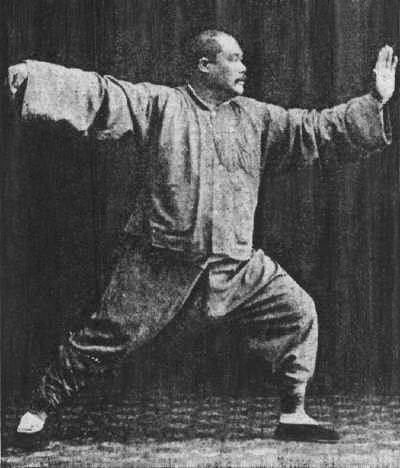
Taijiquan (太极拳, Tàijíquán), commonly known in English as Tai Chi or Tai Chi Chuan, is one of the most widely practiced Chinese martial arts, renowned worldwide for its slow, gentle, and flowing movements. Originally developed for combat and self-defense, tai chi has evolved into a comprehensive practice encompassing fitness, health cultivation, meditation, and competitive sport. Hundreds of millions of people practice tai chi worldwide, and it has been described as "meditation in motion."
In 2020, taijiquan was inscribed on UNESCO's Representative List of the Intangible Cultural Heritage of Humanity, cementing its status as an important cultural symbol of Chinese civilization.
The core philosophy of tai chi derives from the Chinese concept of Taiji — the dynamic interplay of yin and yang. Through slow, fluid movements coordinated with deep breathing, practitioners learn to achieve a state of "overcoming hardness with softness" and "deflecting a thousand pounds with four ounces."
Historical Origins
The earliest well-documented practice of tai chi dates to the late Ming and early Qing dynasties (late 16th to 17th century) in Chen Village (Chenjiagou), Wen County, Henan Province. According to the Chen family genealogy, Chen Wangting (c. 1600–1680), a ninth-generation member of the Chen family, combined inherited martial arts techniques with Taoist daoyin (guiding and pulling) and tunna (breathing) exercises in his later years, creating the prototype of tai chi.
A widely circulated legend attributes the creation of tai chi to the Song Dynasty Taoist monk Zhang Sanfeng. According to the story, Zhang Sanfeng observed a fight between a snake and a crane at Mount Wudang and was inspired to develop a martial art based on softness overcoming hardness. While this account lacks reliable historical evidence, it has had profound influence in martial arts fiction and popular culture.
In the mid-19th century, tai chi began to spread beyond the Chen family. Yang Luchan (1799–1872) from Yongnian, Hebei Province, traveled to Chen Village to study the art and later taught it to nobility in Beijing, bringing tai chi to national prominence. Yang adapted the originally vigorous form into a gentler version suited to his students' physical conditions, laying the foundation for Yang-style tai chi.
Five Major Schools
Modern tai chi derives primarily from five traditional schools:
Chen Style: The oldest school of tai chi, passed down through generations of the Chen family in Chen Village. Chen style retains more martial combat characteristics, combining hard and soft movements with variations in speed, including explosive "fa jin" techniques. Representative masters include Chen Changxing and Chen Fake.
Yang Style: Developed by Yang Luchan and his grandson Yang Chengfu (1883–1936). Yang style is the most widely practiced tai chi style in the world today, characterized by expansive, slow, and gentle movements. Yang Chengfu's 85-form/108-form routine is the classic Yang style sequence.
Wu (Hao) Style: Founded by Wu Yuxiang (1812–1880). Wu (Hao) style features compact, small-frame movements with emphasis on internal energy cultivation, guided by the principle of "leading qi with the mind, moving the body with qi."
Wu Style: Developed by Quan You (1834–1902) and his son Wu Jianquan (1870–1942). Wu style is known for its soft, yielding techniques, with movements that appear angled but maintain central balance. Its flexible footwork makes it suitable for practitioners of all ages.
Sun Style: Created by Sun Lutang (1860–1933), who synthesized the essence of Xingyi Quan, Bagua Zhang, and tai chi. Sun style is characterized by agile footwork with advancing and retreating steps that follow each other, earning it the nickname "living-step tai chi."
Training Methods
Tai chi practice encompasses several components:
Forms (套路): The core practice of tai chi — a pre-choreographed sequence of continuous movements. Different schools have different form variations, including the simplified 24-form and the 42-form competition routine.
Pushing Hands (推手): A two-person training method where partners maintain arm contact to sense each other's force direction and changes, developing the skills of "listening jin" (ting jin) and "neutralizing jin" (hua jin). Pushing hands serves as the bridge between form practice and martial application.
Standing Meditation (站桩, Zhan Zhuang): A foundational tai chi exercise involving holding specific postures while standing, designed to cultivate internal energy (qi) and structural awareness.
Health Benefits
Modern medical research has confirmed numerous health benefits of tai chi practice:
- Improved Balance: Significantly reduces fall risk in elderly practitioners
- Enhanced Cardiovascular Function: Gentle aerobic exercise suitable for all ages
- Stress Reduction: Meditation-like movement reduces anxiety and depression
- Improved Joint Flexibility: Beneficial as complementary therapy for arthritis
- Boosted Immunity: Long-term practice improves overall immune function
Both the World Health Organization (WHO) and the American Medical Association (AMA) recommend tai chi as an ideal exercise for older adults.
Practical Information
| Item | Details |
|---|---|
| Origin | Chen Village (Chenjiagou), Wen County, Henan |
| Founding Period | Late Ming to early Qing (17th century) |
| UNESCO Heritage | Inscribed in 2020 |
| Global Practitioners | Hundreds of millions worldwide |
| Recommended for Beginners | 24-Form Simplified Tai Chi |
| Best Practice Time | Early morning (6:00-8:00 AM) |
| Practice Venues | Parks, plazas, or indoors |
Global Influence
Today, tai chi has become one of the most popular Chinese martial arts globally. Tai chi schools can be found in major cities across North America, Europe, Southeast Asia, and Australia. Many hospitals and rehabilitation centers worldwide incorporate tai chi as a complementary therapy.
The inscription of taijiquan on UNESCO's Intangible Cultural Heritage list in 2020 marked a milestone in this ancient art's journey to the world stage. Tai chi is not merely an exercise — it is a philosophy of life, teaching practitioners to find inner peace and harmony amidst the fast pace of modern living.
References
- Wikipedia - Tai chi
- UNESCO - Taijiquan (Intangible Cultural Heritage, 2020)
- Baidu Baike - 太极拳
- Davis, Paul - The Tai Chi Manual
- Wen County Taijiquan Network
Stills & Gallery
Comments (0)