Papers by Leah Modigliani
Journal of Curatorial Studies, 2024
Leah Modigliani's Counter Revanchist Art in the Global City (2024) is an engaging study of more t... more Leah Modigliani's Counter Revanchist Art in the Global City (2024) is an engaging study of more than a dozen public artworks, performances, events and protest actions that employ walls, blockades and barricades to respond to corporate and state assault on public space. Surveying artworks and protest actions in Mexico, China, Ukraine, the United States and the United Kingdom largely since the mid-1990s, Modigliani analyses these works using ideas from political theory, critical geography and visual studies, creating a highly rewarding history of public art, performance and protest as forms of creative action. This book centres around three primary case studies: artworks by Lin Yilin, Santiago Sierra, Heather Peak and Ian Morison; protest actions by Euromaiden, Greenham Common; and protestors against the Dakota Access Pipeline. All employ aesthetic strategies that she situates in an art historical context. Broadly, all these artworks and actions are framed in relation to 'revanchism', a term that translates as 'revenge' in modern French and is also used by critical geographers to describe a right-wing retaking of the city through gentrification and forms of populist nationalism. As a concept, revanchism reflects the erosion of gains made by labour movements and socialist political parties in the mid-twentieth century and the continued commodification of experience and the taking of the commons by corporate and state interests. Revanchism is the revenge of the wealthy, enacted through neoliberal economic policies, against the rights of the poor and the working class.
Material Culture Review / Revue de la culture matérielle, 2025
Review of my book by Christina Ionescu
Review of Leah Modigliani’s Counter Revanchist Art in the Global City: Walls, Blockades, and Barricades as Repertoires of Creative Action
ASAP Review, 2025
This is a review of my book by Shannon Constantine.
Spiritually overqualified: Robert Rauschenberg and ‘The Happy Apocalypse’ commission
Burlington Contemporary, 2025
The Happy Apocalypse (1999), a lesser-known and unrealised commission by Robert Rauschenberg (192... more The Happy Apocalypse (1999), a lesser-known and unrealised commission by Robert Rauschenberg (1925–2008) for the Padre Pio Pilgrimage Church in San Giovanni Rotondo, is a prescient vision of the climate emergency. For the project, Rauschenberg planned to print a collage on a large curtain at the entrance to the recently built church, designed by Renzo Piano (b.1937), which combined images of human-made monuments and natural disasters. At the centre of the design was a satellite dish, intended to usher in the faithful. In this article, Rauschenberg’s Happy Apocalypse is discussed in relation to his integration of spiritual and secular themes, the Y2K doomsday predictions of 1999 and the reality of contemporary weather events.
Prefix Photo , 2013
Jeff Wall's photographs are analyzed in relationship to feminist art theory.
Mapping Meaning the Journal, 2019
Whether theorized as a puncture in one’s emotional life, as a mediation compelling or protecting ... more Whether theorized as a puncture in one’s emotional life, as a mediation compelling or protecting from empathic response, as an indexical trace, or as manifestation of ideological construct, photographs are most often understood as evocative markers of the past; evidence of lost loves or labors. However, as Kaja Silverman has recently reminded us, photographs also present viewers with an image they can relate to now, an image analogous to our own condition. In this paper Leah Modigliani discusses her process of using historic photographs and texts as raw material for new creative works that engage new audiences in critical discourses about history and politics.
Cuadernos de Arte, 2018
Interview between artist/art historian Leah Modigliani and art historian Carla Macchiavello about... more Interview between artist/art historian Leah Modigliani and art historian Carla Macchiavello about Modigliani's work. In Spanish, followed by an English translation.
Pastelegram, 2016
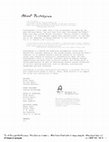
Friends, permit me to say that I believe you are mistaken. True, there is
no actual disorder to y... more Friends, permit me to say that I believe you are mistaken. True, there is
no actual disorder to your way of life; but it has entered deeply into other
men’s minds. See what is preparing itself amongst the working classes,
who, I grant, are not yet breaking down your doors. No doubt they are
not disturbed by social passions, properly so called, to the same extent
that they have been; but can you not see that their passions, instead of
social, have become political?3 Do you not see that they are gradually
forming opinions and ideas that are destined not only to upset this or
that law, ministry, or even form of government, but society itself, until the
foundations upon which it rests today crumble into sand, ready to be mixed
anew into structures you cannot even imagine, yet alone fund?4 Are you not
able to hear what they say to themselves each day because of the plethora
of voices always on the horizon, none seemingly more immanent than the
next, each one canceling out what the other seems to say?
Anarchist Studies, 2015
The Snake and the Falcon is an adapted version of Emma Goldman’s 1933 speech ‘AnAnarchist Looks a... more The Snake and the Falcon is an adapted version of Emma Goldman’s 1933 speech ‘AnAnarchist Looks at Life’, edited to conform to contemporary parlance and inclusive of contemporary political references. Goldman’s message of believing in a freedom unencumbered by dogma and financial servitude remains relevant nearly eighty-five years later and inspires anew. A work of personal reflection and political quotation, this new text cannot easily be characterised as art or scholarship, but nonetheless exists
as labour in the present and begs for continuity with such labours of the past. Readers are challenged to imagine whether they, as artists and intellectuals, are the snake or the falcon in the twenty-first century parable suggested by Goldman’s ongoing speech act, itself an appropriation of Gorky’s poetics. If the snake represents an acceptance of the
world as-is, and the falcon is the image of a risky and idealistic drive towards a better future, the text asks: What work does our collective labour perform? What work does criticism do? What can art be?
C: International Contemporary Art,, 2012
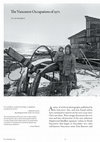
Rather than being idiosyncratic local memories, the Vancouver occupations of 1971 proved to be ac... more Rather than being idiosyncratic local memories, the Vancouver occupations of 1971 proved to be actions connecting the past to the present in salient ways. Urban landscape is emerging as the central visual imagery of global contemporary politics, as youth, savvy to the existing ideological connections between land and power, attempt to take the landscape back in political protest over global austerity measures. Vancouver artists have become known for mining local history for the subjects of their artworks for many decades, so it's not surprising to find representations of the "politics of urban conflict" in their work. When artists associated with vanguard art production use strategies of political reenactment in the construction of their artworks, they raise questions about whether or not these works have the potential to generate political agency in their viewers.
C: International Contemporary Art, 2011
In the many papers and presentations given by a range of artists and historians over three days, ... more In the many papers and presentations given by a range of artists and historians over three days, the already referenced "centre vs. periphery" debate proved as resilient as ever, as did historians' continued interest in conceptual artists' use of networking and mapping. More relevant to this essay, however, was the notable self-conscious awareness of a younger generation of art historians that their subjects - the artists themselves, who are now in their late sixties and early seventies - were there in the audience to hear themselves spoken about, and if necessary, to offer an alternative version to those being proffered by their junior peers. That the latter was a subtext of the whole event is evident in the abstract of a talk given by artist Paul Woodrow, which addressed the ethical stakes of "getting things 'right'": "Writing about the past becomes an aesthetic of the impossible since representation inevitably fails to represent those who were present in the past." Woodrow went on to characterize his recollections of his participation in the 70s art scene of Calgary as those based on faulty memories and a privileged and biased point of view - recollections that thereby contribute to what he called "the creation of a fiction."
Books by Leah Modigliani
Counter Revanchist Art in the Global City Walls, Blockades, and Barricades as Repertoires of Creative Action, 2024
Book Abstract:
Through analyses of public artworks that have taken the form of blockades and bar... more Book Abstract:
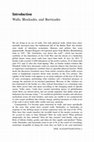
Through analyses of public artworks that have taken the form of blockades and barricades since the 1990s, this book theorises artists’ responses to global inequities as cultural manifestations of counter-revanchism in diverse urban centres.
This book is the first to analyse artworks as forms of counter-revanchism in the context of the rise of the global city. How do artists channel the global spatial conflicts of the 21st century through their behaviours, actions, and constructions in and on the actually existing conditions of the street? What does it mean for artists—the very symbol of freedom of personal expression—to shut down space? To refuse entry? To block others’ passage? The late critical geographer Neil Smith’s influential writing on the revanchist city is used as a theoretical frame for understanding how contemporary artists engender the public sphere through their work in public urban spaces. Each chapter is a case study that analyses artworks that have taken the form of walls and barricades in China, USA, UK, Ukraine, and Mexico. In doing so, the author draws upon diverse fields including art history, geography, philosophy, political science, theatre studies, and urban studies to situate the art in a broader context of the humanities with the aim of modelling interdisciplinary research grounded in an ethics of solidarity with global social justice work. Collectively these case studies reveal how artists’ local responses to urban revanchism since the end of the Cold War are productive reorientations of social relations and harbingers of worlds to come.
By using plain language and avoiding excessive academic jargon, the book is accessible to a wide variety of readers. It will appeal to scholars and graduate students in the fields of studio art, modern and contemporary art history, performance studies, visual culture, and visual studies; especially in relation to those interested in conceptual practices, performance art, site-specificity, public art, political activism, and socially engaged art. Cultural geographers and urban theorists interested in the social and political ramifications of temporary and everyday urbanism will also find the analysis of artworks relevant to their own studies.
Counter Revanchist Art in the Global City Walls, Blockades, and Barricades as Repertoires of Creative Action , 2024
Introduction from Counter Revanchist Art in the Global City
Walls, Blockades, and Barricades as R... more Introduction from Counter Revanchist Art in the Global City
Walls, Blockades, and Barricades as Repertoires of Creative Action (Routledge, 2024). 9781032195117
Book Abstract: Through analyses of public artworks that have taken the form of blockades and barricades since the 1990s, this book theorises artists’ responses to global inequities as cultural manifestations of counter-revanchism in diverse urban centres.
This book is the first to analyse artworks as forms of counter-revanchism in the context of the rise of the global city. How do artists channel the global spatial conflicts of the 21st century through their behaviours, actions, and constructions in and on the actually existing conditions of the street? What does it mean for artists—the very symbol of freedom of personal expression—to shut down space? To refuse entry? To block others’ passage? The late critical geographer Neil Smith’s influential writing on the revanchist city is used as a theoretical frame for understanding how contemporary artists engender the public sphere through their work in public urban spaces. Each chapter is a case study that analyses artworks that have taken the form of walls and barricades in China, USA, UK, Ukraine, and Mexico. In doing so, the author draws upon diverse fields including art history, geography, philosophy, political science, theatre studies, and urban studies to situate the art in a broader context of the humanities with the aim of modelling interdisciplinary research grounded in an ethics of solidarity with global social justice work. Collectively these case studies reveal how artists’ local responses to urban revanchism since the end of the Cold War are productive reorientations of social relations and harbingers of worlds to come.
By using plain language and avoiding excessive academic jargon, the book is accessible to a wide variety of readers. It will appeal to scholars and graduate students in the fields of studio art, modern and contemporary art history, performance studies, visual culture, and visual studies; especially in relation to those interested in conceptual practices, performance art, site-specificity, public art, political activism, and socially engaged art. Cultural geographers and urban theorists interested in the social and political ramifications of temporary and everyday urbanism will also find the analysis of artworks relevant to their own studies.
Manchester University Press, 2018
Engendering an avant-garde is the first book to comprehensively examine the origins of Vancouver ... more Engendering an avant-garde is the first book to comprehensively examine the origins of Vancouver photo-conceptualism in its regional context between 1968 and 1990. Employing discourse analysis of texts written by and about artists, feminist critique and settler-colonial theory, the book discusses the historical transition from artists' creation of 'defeatured landscapes' between 1968-71 to their cinematographic photographs of the late 1970s and the backlash against such work by other artists in the late 1980s. It is the first study to provide a structural account for why the group remains all-male. It accomplishes this by demonstrating that the importation of a European discourse of avant-garde activity, which assumed masculine social privilege and public activity, effectively excluded women artists from membership.
Note: Introduction only


Uploads
Papers by Leah Modigliani
no actual disorder to your way of life; but it has entered deeply into other
men’s minds. See what is preparing itself amongst the working classes,
who, I grant, are not yet breaking down your doors. No doubt they are
not disturbed by social passions, properly so called, to the same extent
that they have been; but can you not see that their passions, instead of
social, have become political?3 Do you not see that they are gradually
forming opinions and ideas that are destined not only to upset this or
that law, ministry, or even form of government, but society itself, until the
foundations upon which it rests today crumble into sand, ready to be mixed
anew into structures you cannot even imagine, yet alone fund?4 Are you not
able to hear what they say to themselves each day because of the plethora
of voices always on the horizon, none seemingly more immanent than the
next, each one canceling out what the other seems to say?
as labour in the present and begs for continuity with such labours of the past. Readers are challenged to imagine whether they, as artists and intellectuals, are the snake or the falcon in the twenty-first century parable suggested by Goldman’s ongoing speech act, itself an appropriation of Gorky’s poetics. If the snake represents an acceptance of the
world as-is, and the falcon is the image of a risky and idealistic drive towards a better future, the text asks: What work does our collective labour perform? What work does criticism do? What can art be?
Books by Leah Modigliani
Through analyses of public artworks that have taken the form of blockades and barricades since the 1990s, this book theorises artists’ responses to global inequities as cultural manifestations of counter-revanchism in diverse urban centres.
This book is the first to analyse artworks as forms of counter-revanchism in the context of the rise of the global city. How do artists channel the global spatial conflicts of the 21st century through their behaviours, actions, and constructions in and on the actually existing conditions of the street? What does it mean for artists—the very symbol of freedom of personal expression—to shut down space? To refuse entry? To block others’ passage? The late critical geographer Neil Smith’s influential writing on the revanchist city is used as a theoretical frame for understanding how contemporary artists engender the public sphere through their work in public urban spaces. Each chapter is a case study that analyses artworks that have taken the form of walls and barricades in China, USA, UK, Ukraine, and Mexico. In doing so, the author draws upon diverse fields including art history, geography, philosophy, political science, theatre studies, and urban studies to situate the art in a broader context of the humanities with the aim of modelling interdisciplinary research grounded in an ethics of solidarity with global social justice work. Collectively these case studies reveal how artists’ local responses to urban revanchism since the end of the Cold War are productive reorientations of social relations and harbingers of worlds to come.
By using plain language and avoiding excessive academic jargon, the book is accessible to a wide variety of readers. It will appeal to scholars and graduate students in the fields of studio art, modern and contemporary art history, performance studies, visual culture, and visual studies; especially in relation to those interested in conceptual practices, performance art, site-specificity, public art, political activism, and socially engaged art. Cultural geographers and urban theorists interested in the social and political ramifications of temporary and everyday urbanism will also find the analysis of artworks relevant to their own studies.
Walls, Blockades, and Barricades as Repertoires of Creative Action (Routledge, 2024). 9781032195117
Book Abstract: Through analyses of public artworks that have taken the form of blockades and barricades since the 1990s, this book theorises artists’ responses to global inequities as cultural manifestations of counter-revanchism in diverse urban centres.
This book is the first to analyse artworks as forms of counter-revanchism in the context of the rise of the global city. How do artists channel the global spatial conflicts of the 21st century through their behaviours, actions, and constructions in and on the actually existing conditions of the street? What does it mean for artists—the very symbol of freedom of personal expression—to shut down space? To refuse entry? To block others’ passage? The late critical geographer Neil Smith’s influential writing on the revanchist city is used as a theoretical frame for understanding how contemporary artists engender the public sphere through their work in public urban spaces. Each chapter is a case study that analyses artworks that have taken the form of walls and barricades in China, USA, UK, Ukraine, and Mexico. In doing so, the author draws upon diverse fields including art history, geography, philosophy, political science, theatre studies, and urban studies to situate the art in a broader context of the humanities with the aim of modelling interdisciplinary research grounded in an ethics of solidarity with global social justice work. Collectively these case studies reveal how artists’ local responses to urban revanchism since the end of the Cold War are productive reorientations of social relations and harbingers of worlds to come.
By using plain language and avoiding excessive academic jargon, the book is accessible to a wide variety of readers. It will appeal to scholars and graduate students in the fields of studio art, modern and contemporary art history, performance studies, visual culture, and visual studies; especially in relation to those interested in conceptual practices, performance art, site-specificity, public art, political activism, and socially engaged art. Cultural geographers and urban theorists interested in the social and political ramifications of temporary and everyday urbanism will also find the analysis of artworks relevant to their own studies.
Note: Introduction only