Books by Louis Liebenberg
CyberTracker, 2021
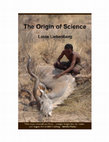
In this book I will address one of the great mysteries of human evolution: How did the human mind... more In this book I will address one of the great mysteries of human evolution: How did the human mind evolve the ability to develop science?
The art of tracking may well be the origin of science. Science may have evolved more than a hundred thousand years ago with the evolution of modern hunter-gatherers. Scientific reasoning may therefore be an innate ability of the human mind. This may have far-reaching implications for self-education and tracking science.
The implication of this theory is that anyone, regardless of their level of education, whether or not they can read or write, regardless of their cultural background, can make a contribution to science. Kalahari trackers have been employed in modern scientific research using GPS-enabled handheld computers and have co-authored scientific papers. Tracking scientists have made fundamental contributions to science. From a simple observation of a bird captured on a smart phone through to a potential Einstein, some may be better than others, but everyone can participate in science.
Today humanity is becoming increasingly dependent on science and technology for survival, from our dependence on information technology through to solving problems related to energy production, food production, health, climate change and biodiversity conservation. Involving everyone in science may be crucial for the survival of humanity over the next hundred years.
Scientific reasoning was part of hunter-gatherer culture, along with music, storytelling and other aspects of their culture. Science and art should be an integral part of human culture, as it has been for more than a hundred thousand years.
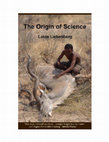
"In this book I will address one of the great mysteries of human evolution: How did the human min... more "In this book I will address one of the great mysteries of human evolution: How did the human mind evolve the ability to develop science?
The art of tracking may well be the origin of science. Science may have evolved more than a hundred thousand years ago with the evolution of modern hunter-gatherers. Scientific reasoning may therefore be an innate ability of the human mind. This may have far-reaching implications for self-education and citizen science.
The implication of this theory is that anyone, regardless of their level of education, whether or not they can read or write, regardless of their cultural background, can make a contribution to science. Kalahari Bushmen trackers have been employed in modern scientific research using GPS-enabled handheld computers and have co-authored scientific papers. Citizen scientists have made fundamental contributions to science. From a simple observation of a bird captured on a smart phone through to a potential Einstein, some may be better than others, but everyone can participate in science.
Today humanity is becoming increasingly dependent on science and technology for survival, from our dependence on information technology through to solving problems related to energy production, food production, health, climate change and biodiversity conservation. Involving citizens in science may be crucial for the survival of humanity over the next hundred years.
Scientific reasoning was part of hunter-gatherer culture, along with music, storytelling and other aspects of their culture. Science and art should be an integral part of human culture, as it has been for more than a hundred thousand years."
Endorsements
“This is an extraordinary book. Louis Liebenberg, our intrepid and erudite
guide, gives us a fascinating view of a people and a way of life that have much
to say about who we are, but which soon will vanish forever. His data are
precious, his stories are gripping, and his theory is a major insight into the
nature and origins of scientific thinking, and thus of what makes us unique as a
species.” Steven Pinker, Harvard College Professor of Psychology, Harvard
University, and author of How the Mind Works.
“Louis Liebenberg’s argument about the evolution of scientific thinking is
highly original and deeply important.” Daniel E. Lieberman, Professor of
Human Evolutionary Biology at Harvard University.
“Although many theories of human brain evolution have been offered over the
years, Louis Liebenberg’s is refreshingly straightforward.” PsycCRITIQUES.
“The Origin of Science is a stunningly wide-ranging, original, and important
book.” Peter Carruthers, Professor of Philosophy, University of Maryland,
and author of The Architecture of the Mind.
Practical Tracking: a Guide to following Footprints and Finding Animals
Page 1. PRACTICAL PRACTICAL Louis Liebenberg Adriaan Louw & Mark Elbroch TRACKING TRACKIN... more Page 1. PRACTICAL PRACTICAL Louis Liebenberg Adriaan Louw & Mark Elbroch TRACKING TRACKING A Guide to Following Footprints & Finding Animals Page 2. PRACTICAL TRACKING A Guide to Following Footprints ...
A photographic guide to tracks and tracking in Southern Africa
... Page 6. INTRODUCTION: THE ART OF TRACKING Tracking may well be among the oldest of the scienc... more ... Page 6. INTRODUCTION: THE ART OF TRACKING Tracking may well be among the oldest of the sciences. ... Habits: An excellent swimmer. Food: Forages in freshwater pools for crabs and mussels, frogs, fish, birds and their eggs. ...
Papers by Louis Liebenberg

National Park suffered ongoing criminal attacks on visitors. Criminal attacks included armed robb... more National Park suffered ongoing criminal attacks on visitors. Criminal attacks included armed robbery, assault of visitors and rape. Due to the remoteness of the area, the police and park rangers were unable to apprehend suspects. Only by tracking suspects and using the CyberTracker to plot their movements, was it possible to plan successful operations to catch the criminals. The CyberTracker monitoring programme has proven very successful in reducing and preventing attacks on visitors. After several arrests in 2004, there have been no reported attacks on visitors. A number of attempted attacks have been prevented during the period of 2005 to 2007. In the past a spate of criminal attacks started up again following a quiet period after the arrest of suspects. To prevent this from happening in the future, ongoing training has been provided to ensure the integrity and safety of the area. A number of field rangers in Noordhoek are being trained in the use of the CyberTracker and as part ...
A field guide to the animal tracks of southern Africa
... gardens where the spoor of animals in captivity have been studied: Bloemfontein Zoological Ga... more ... gardens where the spoor of animals in captivity have been studied: Bloemfontein Zoological Gardens; Johannesburg Zoological Gardens; National Zoological Gardens; Natal Zoological Gardens; Queens Park Zoological Gardens, East London; Hartebeespoortdam Snake and ...
National parks, nature reserves and rural development
The Art of Tracking. The Origin of Science
The South African Archaeological Bulletin, 1990
... The art of tracking: The origin of science. Post a Comment. CONTRIBUTORS: Author: Liebenberg,... more ... The art of tracking: The origin of science. Post a Comment. CONTRIBUTORS: Author: Liebenberg, Louis. PUBLISHER: D. Philip (Claremont, South Africa). SERIES TITLE: YEAR: 1990. PUB TYPE: Book (ISBN 0864861311 ). VOLUME/EDITION: PAGES (INTRO/BODY): x, 176 p. ...
Louis Liebenberg discusses how CyberTracker software is helping a community in Botswana to monito... more Louis Liebenberg discusses how CyberTracker software is helping a community in Botswana to monitor and manage local wildlife resources
Citizen Science: Theory and Practice, 2021
The sector model of functional zoning was identified in 2016 on the basis of an analysis of the d... more The sector model of functional zoning was identified in 2016 on the basis of an analysis of the distribution of facilities in St. Petersburg, Samara (Russia) and refined on the basis of a sectoral administrative-territorial division scheme adopted in Minsk (Belarus) and Moscow (Russia) (2020). This study explains the mechanism of differentiated distribution of objects that is found in different cities and at different scales from the estate planning to the level of geopolitics. This step is necessary to integrate the sector model of functional zoning into the theoretical apparatus of modern architecture. In animals, this mechanism is defined as magnetic sensation. The implementation of the "magnetic feeling" in human activities for the development of the space of a large city has its own specifics, taking into account both natural-scientific factors, and issues of perception and cognitive processes. In world practice, this description is undertaken for the first time. As the first factor of the "structuring effect" of a certain central object (area, green zone, water body) on the surrounding buildings, the authors accept the natural-scientific factor of gravity. The authors adhere to the point of view that a certain symbolic meaning, which is somehow fixed in culture, arises with respect to the degree of illumination, position in the sky, and the direction of movement of the Sun. These values arise on the basis of the relative positions of the analyzed territory, planet Earth and the Sun. The second factor is the person's ability to perceive these influences and the intuitive ability to correlate them, as well as the purpose of the placed objects with the types of activities identified in philosophy and determined by the daily cycle. The result of the joint action of these two abilities is the assignment of certain objects with a greater degree of probability to certain sectors. The need to take into account two additional administrativeterritorial units (central, as well as placed outside the sector model) determines the transition from a purely sector model to an integer ten-element functional topological model. In this regard, the development of a sector model of functional zoning is accompanied by an appeal to ten-element models of a generalized description of extremely complex processes that are found in antiquity similarly to the sources of the sector model of functional zoning.
Biological Conservation, 2016
In 1996 we developed an Icon User Interface design for handheld computers that enabled non-litera... more In 1996 we developed an Icon User Interface design for handheld computers that enabled non-literate trackers to enter complex data. When employed in large numbers over extended periods of time, trackers can gather large quantities of complex, rich biodiversity data that cannot be gathered in any other way. One significant result in the Congo was that data collected by trackers made it possible to alert health authorities to outbreaks of Ebola in wild animal populations, weeks before they posed a risk to humans. Trackers can also play a critical role in preventing the decimation of large mammal fauna due to poaching. Collectively, the seven case studies reviewed in this paper demonstrate the richness and complexity of scientific data contributed by community-based citizen science. Furthermore, trackers can also make novel contributions to science, demonstrated by scientific papers co-authored by trackers. This may have far-reaching implications for the development of an inclusive citizen science. Community-based tracking can significantly contribute to large-scale, long-term monitoring of biodiversity on a worldwide basis. However, community-based citizen science in developing countries will require international support to be sustainable.

Integrating Traditional Knowledge with Computer Science for the Conservation of Biodiversity
The art of tracking, as practised by San hunter-gatherers of the Kalahari, may well be the origin... more The art of tracking, as practised by San hunter-gatherers of the Kalahari, may well be the origin of science. Trackers gain a detailed understanding of animal behaviour through the interpretation of tracks and signs. In this way much information can be obtained that would otherwise remain unknown, especially on the behaviour of rare and nocturnal species that are not often seen. The best trackers, however, are found in hunter-gatherer communities with oral traditions and cannot read or write. The authors have developed a hand-held field computer with a user interface that enables trackers who cannot read or write to record all their observations. Computer visualisation allows scientists to analyse data collected by trackers. At a time when hunting with bows and arrows are declining, the art of tracking can be revitalised and developed into a new science with many practical applications in the conservation of biodiversity. The Art of Tracking: The Origin of Science The art of trackin...
The Origin of Science: On the Evolutionary Roots of Science and its Implications for Self-Education and Citizen Science
ABSTRACT A New Vision of Science In this book I will address one of the great mysteries of human ... more ABSTRACT A New Vision of Science In this book I will address one of the great mysteries of human evolution: How did the human mind evolve the ability to develop science? The art of tracking may well be the origin of science. Science may have evolved more than a hundred thousand years ago with the evolution of modern hunter-gatherers. Scientific reasoning may therefore be an innate ability of the human mind. This may have far-reaching implications for self-education and citizen science. The implication of this theory is that anyone, regardless of their level of education, whether or not they can read or write, regardless of their cultural background, can make a contribution to science. Kalahari Bushmen trackers have been employed in modern scientific research using GPS-enabled handheld computers and have co-authored scientific papers. Citizen scientists have made fundamental contributions to science. From a simple observation of a bird captured on a smart phone through to a potential Einstein, some may be better than others, but everyone can participate in science. Today humanity is becoming increasingly dependent on science and technology for survival, from our dependence on information technology through to solving problems related to energy production, food production, health, climate change and biodiversity conservation. Involving citizens in science may be crucial for the survival of humanity over the next hundred years. Scientific reasoning was part of hunter-gatherer culture, along with music, storytelling and other aspects of their culture. Science and art should be an integral part of human culture, as it has been for more than a hundred thousand years.
Using technology to get children back in touch with nature
ABSTRACT Background/Question/Methods Children in developed countries are spending more and more t... more ABSTRACT Background/Question/Methods Children in developed countries are spending more and more time indoors in front of televisions, playing computer games, or surfing the Internet. In a fundamental way technology is alienating children from nature. This is resulting in what has been termed an emerging “nature-deficit disorder”. This paper will look at how technology can be used to reverse this trend. Results/Conclusions Educational projects such as BioKIDS in Michigan have been using PDAs with GPS loaded with CyberTracker software to enable fifth-graders to record and identify animals in their schoolyard. In these inquiry-focusing activities technologies such as CyberTracker are used to promote conceptual understanding of science and scientific reasoning. In the BioKIDS activities CyberTracker is used to gather data, summarize data, and provide tangible evidence of species location and characteristics. With the launch of the Apple iPhone, Smart Phones are rapidly becoming mainstream – soon every kid will have a Smart Phone. Using Smart Phones to collect data in Citizen Science projects, the “Gameboy” factor can be used to bring children back in touch with nature.
Rhino tracking with the CyberTracker field computer
Pachyderm, Dec 1, 1999
To interpret animal tracks the tracker must have a sophisticated understanding of animal behaviou... more To interpret animal tracks the tracker must have a sophisticated understanding of animal behaviour. There is in principle no limit to the level of sophistication to which a tracker can develop his or her expertise (Liebenberg, 1990a,b). Apart from knowledge based on direct obser- ...
There is a paradox in human evolution: It was once assumed not only that rational science origina... more There is a paradox in human evolution: It was once assumed not only that rational science originated with the ancient Greek philosophic schools, but that the belief systems of prehistoric huntergatherers were dominated by superstitions and irrational beliefs. If this was the case, then how did the human mind evolve the ability to do scientific reasoning if scientific reasoning was not required for hunter-gather survival? A similar (albeit broader) paradox led the 19th century naturalist Alfred Russel Wallace to conclude that the human brain could not be the product of undirected evolution because "Natural selection could only have endowed savage man with a brain a few degrees superior to that of an ape, whereas he actually possesses one very little inferior to that of a philosopher." 1 The 20th century anthropologist Sherwood Washburn reframed the paradox when he pointed out that the same brain that has been adapted for the needs of hunter-gatherer subsistence today deals with the subtleties of modern mathematics and physics. 2 More recently, psychologist Steven Pinker has noted that Wallace's paradox of the apparent evolutionary uselessness of human intelligence is a central problem of psychology, biology, and the scientific worldview, 3 while biologist Edward O. Wilson regards it as "the great mystery of human evolution: how to account for calculus and Mozart." 4 This apparent paradox may be resolved if it is assumed that at least some of the first anatomically modern hunter-gatherers were capable of scientific reasoning, and that the intellectual requirements of modern science were, at least among the most intelligent members of hunter-gatherer bands, a necessity for the survival of hunter-gatherer societies. The first creative science, practiced by possibly some of the earliest members of Homo sapiens who had modern brains and intellects, may have been the tracking of game animals. Tracking is a science that fundamentally requires the same intellectual abilities as a modern science such as physics. 5 (With "modern hunter-gatherers" and "modern intellects," the term "modern" is used in the archaeological sense of the word, as when archaeologists and anthropologists refer to "anatomically modern humans" to mean our species. With "modern science" and "modern View publication stats View publication stats
The Art of Tracking Tbe Origin of Science
Category Archives: The Origin of Science



Uploads
Books by Louis Liebenberg
The art of tracking may well be the origin of science. Science may have evolved more than a hundred thousand years ago with the evolution of modern hunter-gatherers. Scientific reasoning may therefore be an innate ability of the human mind. This may have far-reaching implications for self-education and tracking science.
The implication of this theory is that anyone, regardless of their level of education, whether or not they can read or write, regardless of their cultural background, can make a contribution to science. Kalahari trackers have been employed in modern scientific research using GPS-enabled handheld computers and have co-authored scientific papers. Tracking scientists have made fundamental contributions to science. From a simple observation of a bird captured on a smart phone through to a potential Einstein, some may be better than others, but everyone can participate in science.
Today humanity is becoming increasingly dependent on science and technology for survival, from our dependence on information technology through to solving problems related to energy production, food production, health, climate change and biodiversity conservation. Involving everyone in science may be crucial for the survival of humanity over the next hundred years.
Scientific reasoning was part of hunter-gatherer culture, along with music, storytelling and other aspects of their culture. Science and art should be an integral part of human culture, as it has been for more than a hundred thousand years.
The art of tracking may well be the origin of science. Science may have evolved more than a hundred thousand years ago with the evolution of modern hunter-gatherers. Scientific reasoning may therefore be an innate ability of the human mind. This may have far-reaching implications for self-education and citizen science.
The implication of this theory is that anyone, regardless of their level of education, whether or not they can read or write, regardless of their cultural background, can make a contribution to science. Kalahari Bushmen trackers have been employed in modern scientific research using GPS-enabled handheld computers and have co-authored scientific papers. Citizen scientists have made fundamental contributions to science. From a simple observation of a bird captured on a smart phone through to a potential Einstein, some may be better than others, but everyone can participate in science.
Today humanity is becoming increasingly dependent on science and technology for survival, from our dependence on information technology through to solving problems related to energy production, food production, health, climate change and biodiversity conservation. Involving citizens in science may be crucial for the survival of humanity over the next hundred years.
Scientific reasoning was part of hunter-gatherer culture, along with music, storytelling and other aspects of their culture. Science and art should be an integral part of human culture, as it has been for more than a hundred thousand years."
Endorsements
“This is an extraordinary book. Louis Liebenberg, our intrepid and erudite
guide, gives us a fascinating view of a people and a way of life that have much
to say about who we are, but which soon will vanish forever. His data are
precious, his stories are gripping, and his theory is a major insight into the
nature and origins of scientific thinking, and thus of what makes us unique as a
species.” Steven Pinker, Harvard College Professor of Psychology, Harvard
University, and author of How the Mind Works.
“Louis Liebenberg’s argument about the evolution of scientific thinking is
highly original and deeply important.” Daniel E. Lieberman, Professor of
Human Evolutionary Biology at Harvard University.
“Although many theories of human brain evolution have been offered over the
years, Louis Liebenberg’s is refreshingly straightforward.” PsycCRITIQUES.
“The Origin of Science is a stunningly wide-ranging, original, and important
book.” Peter Carruthers, Professor of Philosophy, University of Maryland,
and author of The Architecture of the Mind.
Papers by Louis Liebenberg