Papers by M. Chris Manning

The Wider Picture: Parallel Evidence in America and Australia
Physical Evidence for Ritual Acts, Sorcery and Witchcraft in Christian Britain, 2015
Tracing British magical practices in colonial and post-colonial American and Australian communiti... more Tracing British magical practices in colonial and post-colonial American and Australian communities provides a valuable means of exploring the migration experience in the past, which in turn helps us to look with a new perspective on the continuation of folk magic in Britain. Which practices continued in settler communities? Which did not? And why? The assumption might be that people took their entire ‘toolkit’ of apotropaic knowledge and practices, just as they continued to maintain other aspects of their former local, regional and national domestic lives. As Malcolm Gaskill puts it in his recent book, How the English became Americans, early migrants determinedly perpetuated their Englishness ‘in homes, possessions, dress, communication, law and culture. Even regional English styles and customs were exported to America. Novice settlers were ready to endanger their lives, but not their sense of themselves.’1 We know that the fear of witches migrated with American colonialists; the seventeenth-century trial records bear ample witness. The newspapers and folklore records further demonstrate how two hundred years later witchcraft was still widely feared and counter-witchcraft measures continued to be practised amongst long established European-American communities, as well as amongst the millions of new immigrants that poured into the country from across Europe.2
Magic, Religion, and Ritual in Historical Archaeology
Historical Archaeology, 2014
This introductory article explores the complex and overlapping concepts of magic, religion, and r... more This introductory article explores the complex and overlapping concepts of magic, religion, and ritual, and the ways in which archaeologists’ understanding of these concepts informs the interpretation of the material record. A discussion of the development of an historical archaeology of ritual highlights current controversies and deficiencies in the discipline, notably assumptions regarding race and ethnicity. An overview of the themes and topics addressed in the articles in this thematic issue, and their relevance to the broader field of historical archaeology, concludes the paper.
Historical Archaeology, 2014
The competition of pastry business especially in Bandung is in rapid progress. Kartika Sari is on... more The competition of pastry business especially in Bandung is in rapid progress. Kartika Sari is one of the popular pastries brand in Bandung. Kartika Sari's pastry which is start from small medium enterprise has growth and well known by domestic tourist as one of the most wanted pastry in Bandung. One of the reason is because the owner start to apply the marketing elements correctly in their entrepeneurship. In other words, an integration between entrepreneurship and marketing (entrepreneurial marketing) has created an effectiveness in competition. However, the presence of competitors' brands with various packaging, heterogenous prices and different level of brand awareness could potentially affect the brand loyalty of domestic tourist to Kartika Sari's pastry brand. The purpose of this study is to determine the impact of packaging, price fairness and brand awareness to brand loyalty toward domestic tourist at Kartika Sari Bandung. The grand theory that used for the basis research were packaging, price and brand. The research method was descriptive method with quantitative research that processed by the regression model analysis techniques. The population study was domestic tourist whom were shopping at Kartika Sari Bandung. The technique of collecting data using questionnaires that distributed to a sample of 150 domestic tourist and who meet the eligibility rate of questionnaires was 110. The results showed that the packaging, the price fairness and brand awareness have significant positive impact to brand loyalty whether in parsial or simultanously. It means more quality in packaging tend to increase the brand loyalty of domestic tourist to Kartika Sari, more fairness in price tend to increase the brand loyalty of domestic tourist to Kartika Sari and the higher of brand awarness, result higher brand loyalty.
The Wider Picture: Parallel Evidence in America and Australia
Physical Evidence for Ritual Acts, Sorcery and Witchcraft in Christian Britain, 2015
Tracing British magical practices in colonial and post-colonial American and Australian communiti... more Tracing British magical practices in colonial and post-colonial American and Australian communities provides a valuable means of exploring the migration experience in the past, which in turn helps us to look with a new perspective on the continuation of folk magic in Britain. Which practices continued in settler communities? Which did not? And why? The assumption might be that people took their entire ‘toolkit’ of apotropaic knowledge and practices, just as they continued to maintain other aspects of their former local, regional and national domestic lives. As Malcolm Gaskill puts it in his recent book, How the English became Americans, early migrants determinedly perpetuated their Englishness ‘in homes, possessions, dress, communication, law and culture. Even regional English styles and customs were exported to America. Novice settlers were ready to endanger their lives, but not their sense of themselves.’1 We know that the fear of witches migrated with American colonialists; the seventeenth-century trial records bear ample witness. The newspapers and folklore records further demonstrate how two hundred years later witchcraft was still widely feared and counter-witchcraft measures continued to be practised amongst long established European-American communities, as well as amongst the millions of new immigrants that poured into the country from across Europe.2
This thesis examines the availability and use of manufactured and imported building materials in ... more This thesis examines the availability and use of manufactured and imported building materials in southern and central Indiana before 1850. Specifically, it seeks to identify the extent to which materials such as paint, machine-cut nails, window glass and prefabricated sash, architectural hardware, and cast iron stoves were imported into the region from both foreign and domestic sources. It examines the transition from handmade and hand-wrought to standardized, mass-produced, and prefabricated building materials and explores the impact of emerging American consumerism, changing economic policy, and advancements in technology and transportation on the built environment of the Indiana frontier. This thesis examines the availability and use of manufactured and imported building materials in southern and central Indiana before 1850. Specifically, it seeks to identify the extent to which materials such as paint, machine-cut nails, window glass and prefabricated sash, architectural hardware, and cast iron stoves were imported into the region from both foreign and domestic sources. It examines the transition from handmade and hand-wrought to standardized, mass-produced, and prefabricated building materials and explores the impact of emerging American consumerism, changing economic policy, and advancements in technology and transportation on the built environment of the Indiana frontier. The advent of the railroad and increased mechanization brought about by the Industrial Revolution in the second half of the nineteenth century initiated a radical increase in the availability of domestically manufactured building materials. This period Table 1.1. Historical newspapers reviewed by author Location Publication Dates Reviewed
The tradition of placing objects and symbols within, under, on, and around buildings for supernat... more The tradition of placing objects and symbols within, under, on, and around buildings for supernatural protection and good luck, as an act of formal or informal consecration, or as an element of other magico-religious or mundane ritual, has been documented throughout the world. This thesis examines the material culture of magic and folk ritual in the eastern United States, focusing on objects deliberately concealed within and around standing structures. While a wide range of objects and symbols are considered, in-depth analysis focuses on three artifact types: witch bottles, concealed footwear, and concealed cats. This thesis examines the European origins of ritual concealments, their transmission to North America, and their continuation into the modern era. It also explores how culturally derived cognitive frameworks, including cosmology, religion, ideology, and worldview, as well as the concepts of family and household, may have influenced or encouraged the use of ritual concealments among certain groups. iii ACKNOWLEDGEMENTS This thesis truly would not have been possible without the continuous love and encouragement of my family, especially my amazingly supportive parents, Michael and Mary Manning, and my sister, Becca, my rock, who's always there when I need her, night or day. Most of all, this thesis is dedicated to Spencer, who has put up with so much and yet still remains smiling. I also owe a big debt of gratitude to my incredible friends and church family who have supported me in every way possible. Thank you, Laura and
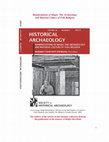
This introductory article explores the complex and overlapping concepts of magic, religion, and r... more This introductory article explores the complex and overlapping concepts of magic, religion, and ritual and the ways in which archaeologists’ understanding of these concepts informs our interpretation of the material record. An overview of the development of a historical archaeology of ritual highlights current controversies and deficiencies in the discipline, notably assumptions regarding race and ethnicity. An overview of the themes and topics addressed in the articles in this thematic issue and their relevance to the broader field of historical archaeology concludes the paper (pp.1–9). Four Spiritual Middens in Mid Suffolk, England, ca. 1650 to 1850 By Timothy Easton Abstract: Deposits of personal objects, chosen for their ritual associations and hidden in buildings, have been reported in England since the early 20th century. This article examines the evidence for particular ritual concealments in houses in central Suffolk, England, consisting of numerous objects deliberately depo...
Historic Nantucket, 2018
This article explores Nantucket's history of social justice, civil rights, and racial equality in... more This article explores Nantucket's history of social justice, civil rights, and racial equality in the nineteenth and early twentieth centuries and accompanied an exhibition on the same topic, "titled Rights and Race," that opened at the NHA's Hadwen House in May 2018.
Published in the Fall 2017 issue of Historic Nantucket, vol. 67(2):8-13.
Published in the Fall 2017 issue of Historic Nantucket, vol. 67(2):14-19.
Research on concealed deposits with ritual significance has been conducted by scholars in contine... more Research on concealed deposits with ritual significance has been conducted by scholars in continental Europe, the British Isles, and Australia. Similar evidence of the material culture of magic and folk belief in the United States is presented, focusing on ritual deposits hidden within and around domestic structures associated with European American populations. Comparative analysis of three artifact types—witch bottles, concealed footwear, and cats—highlights discrepancies between ethnohistorical and archaeological evidence, and demonstrates temporal, geographical, and spatial patterns in ritual concealments. An overview of other important artifact types illustrates the wide variety of material culture employed in folk rituals in European America. The article concludes with a discussion of regional variation in ritual concealments and the importance of family and household structure, geographic and cultural origin, and cosmology and worldview in private domestic ritual.
This introductory article explores the complex and overlapping
concepts of magic, religion, and r... more This introductory article explores the complex and overlapping
concepts of magic, religion, and ritual, and the ways in which
archaeologists’ understanding of these concepts informs the
interpretation of the material record. A discussion of the
development of an historical archaeology of ritual highlights
current controversies and deficiencies in the discipline, notably
assumptions regarding race and ethnicity. An overview of the
themes and topics addressed in the articles in this thematic
issue, and their relevance to the broader field of historical
archaeology, concludes the paper.
The tradition of placing objects and symbols within, under, on, and around buildings for supernat... more The tradition of placing objects and symbols within, under, on, and around buildings for supernatural protection and good luck, as an act of formal or informal consecration, or as an element of other magico-religious or mundane ritual, has been documented throughout the world. This thesis examines the material culture of magic and folk ritual in the eastern United States, focusing on objects deliberately concealed within and around standing structures. While a wide range of objects and symbols are considered, in-depth analysis focuses on three artifact types: witch bottles, concealed footwear, and concealed cats. This thesis examines the European origins of ritual concealments, their transmission to North America, and their continuation into the modern era. It also explores how culturally derived cognitive frameworks, including cosmology, religion, ideology, and worldview, as well as the concepts of family and household, may have influenced or encouraged the use of ritual concealments among certain groups.
This thesis examines the availability and use of manufactured and imported building materials in ... more This thesis examines the availability and use of manufactured and imported building materials in southern and central Indiana before 1850. Specifically, it seeks to identify the extent to which materials such as paint, machine-cut nails, window glass and prefabricated sash, architectural hardware, and cast iron stoves were imported into the region from both foreign and domestic sources. It examines the transition from handmade and hand-wrought to standardized, mass-produced, and prefabricated building materials and explores the impact of emerging American consumerism, changing economic policy, and advancements in technology and transportation on the built environment of the Indiana frontier.
Paper Abstract:
Significant research on apotropaic concealments has been conducted by scholars i... more Paper Abstract:
Significant research on apotropaic concealments has been conducted by scholars in Europe and Great Britain, as well as in Australia. Similar research in colonial and post-colonial contexts in the United States, however, is still in its infancy. This paper examines the material culture of magic and folk belief in the eastern United States focusing on magical apotropaia associated with domestic and public structures. In particular, it explores the European origins of these practices, their transformation and reinterpretation in the United States and their continuation into the twentieth century.
Symposium Abstract:
Although it has been twenty-five years since British archaeologist Ralph Merrifield published his seminal work, The Archaeology of Ritual and Magic, the archaeological study of magic in European contexts is still a relatively new field. Bringing together scholars from diverse backgrounds and disciplines, this session will explore the material culture of magic and folk belief, both above and below ground. Emphasis is on the manifestation of magical traditions in Europe as well in various colonial and post-colonial contexts in Australia and North America, interaction with non-Western magico-religious traditions, and the ways in which archaeologists and scholars in related disciplines engage and interpret material evidence of magical belief and practice.
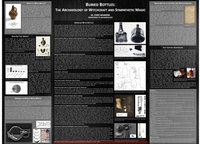
This poster examines the well-documented folk practice of constructing and deploying so-called ‘w... more This poster examines the well-documented folk practice of constructing and deploying so-called ‘witch bottles’ to counter a witch’s spell. Witch bottles can be identified in the archaeological record by their contents—usually a combination of pins and nails, scraps of felt or leather, hair and fingernail clippings, and human urine—as well as their frequently inverted position and location near hearths and doorways. The practice appears to have originated in Britain in the early fourteenth century and was introduced to this country in the seventeenth century by English colonists. While hundreds of examples have been documented in Britain and Europe, only a handful are known in the United States. This poster examines the known American cases, compares and contrasts them to witch bottles in Europe, and discusses evidence which suggests the practice continued into the twentieth century as part of a syncretic system of magical belief.
This poster examines the folk practice of deliberately concealing shoes and other footwear within... more This poster examines the folk practice of deliberately concealing shoes and other footwear within the structure of a building to bring good luck or to ward off evil. The practice appears to have originated in Europe, specifically in Great Britain, and was likely introduced to this country by colonists. While a large body of research on British and European finds exists, little research has been conducted on American finds. This poster presents four case studies of concealed shoe deposits in Indiana and discusses their significance and possible interpretation.
This paper examines the practice of deliberately concealing shoes and other footwear within the s... more This paper examines the practice of deliberately concealing shoes and other footwear within the structure of a building to bring good luck or to ward off evil. The practice appears to have originated in Europe, specifically in Britain, and was introduced to this country by immigrants. While a large body of research on European finds exists, little research has been conducted on American finds, particularly in the Midwest. This paper will present four case studies of concealed shoe deposits in Indiana, including deposits from the Indiana State House in Indianapolis, the Sullivan House in Madison, the Carnegie Library in Muncie, and the Heinzerling House in Garrett. Possible interpretations of shoes as concealed objects and the significance of these four particular finds will be discussed. In addition, material evidence for the practice will be compared to folklore accounts gathered in the United States in the twentieth century.
Book Chapters by M. Chris Manning
The Wider Picture: Parallel Evidence in America and Australia. In Physical Evidence for Ritual Acts, Sorcery and Witchcraft in Christian Britain: A Feeling for Magic. Edited by Ronald Hutton.
Physical Evidence for Ritual Acts, Sorcery and Witchcraft in Christian Britain investigates the p... more Physical Evidence for Ritual Acts, Sorcery and Witchcraft in Christian Britain investigates the physical evidence for magic in medieval and modern Britain, including ritual marks and designs, concealed objects, amulets hung about the person and home, and the equipment of folk magicians. The subject has been largely neglected by mainstream historians and archaeologists, and the contributors to this volume represent the current leading experts in each part of it, and often the pioneers of study of it. Between them, they show how ample and convincing the evidence is, and how it forces us to reconsider the history of ritual and religion in Britain since the Middle Ages and admit to the existence of a whole dimension of activity which has hardly been considered before. It should therefore have importance to those interested in British history in general across this large span of time.



Uploads
Papers by M. Chris Manning
concepts of magic, religion, and ritual, and the ways in which
archaeologists’ understanding of these concepts informs the
interpretation of the material record. A discussion of the
development of an historical archaeology of ritual highlights
current controversies and deficiencies in the discipline, notably
assumptions regarding race and ethnicity. An overview of the
themes and topics addressed in the articles in this thematic
issue, and their relevance to the broader field of historical
archaeology, concludes the paper.
Significant research on apotropaic concealments has been conducted by scholars in Europe and Great Britain, as well as in Australia. Similar research in colonial and post-colonial contexts in the United States, however, is still in its infancy. This paper examines the material culture of magic and folk belief in the eastern United States focusing on magical apotropaia associated with domestic and public structures. In particular, it explores the European origins of these practices, their transformation and reinterpretation in the United States and their continuation into the twentieth century.
Symposium Abstract:
Although it has been twenty-five years since British archaeologist Ralph Merrifield published his seminal work, The Archaeology of Ritual and Magic, the archaeological study of magic in European contexts is still a relatively new field. Bringing together scholars from diverse backgrounds and disciplines, this session will explore the material culture of magic and folk belief, both above and below ground. Emphasis is on the manifestation of magical traditions in Europe as well in various colonial and post-colonial contexts in Australia and North America, interaction with non-Western magico-religious traditions, and the ways in which archaeologists and scholars in related disciplines engage and interpret material evidence of magical belief and practice.
Book Chapters by M. Chris Manning