Papers by María del Mar Rodríguez Caldas
Imaxes do delito. Seminario permanente de Comunicación e Xénero CO(M)XÉNERO, 2024
I explore the concept of Posmemoria as defined by Marianne Hirsch and its effective application in examining the personal, collective, and cultural trauma stemming from the Spanish Civil War, specifically through the lens of the work "12 de maio de 1937." I analyze the creation, development, and various formal expressions of this significant piece.
DIDAC nº 81, 2023
Este proyecto se puso en marcha en el curso 2016-2017, con la finalidad de contrarrestar los patrones sexistas y homófobos existentes, y los objetivos de promover en el alumnado la reflexión sobre cuestiones de género que contribuyan a su desarrollo personal y social, incentivar entre la comunidad universitaria el respeto y el afecto hacia la igualdad y la diversidad sexual, y difundir estas reflexiones más allá de la institución. El proyecto ha contado con el apoyo de la Unidad de Igualdad de la Universidad de Vigo.
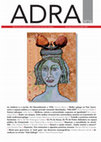
ADRA-Revista dos socios e socias do Museo do Pobo Galego, nº 16, 2021
A análise das obras é precedida dunha contextualización na que se observa a presenza/ausencia da temática do traballo en diferentes correntes artísticas e o tratamento que se lle da desde as prácticas feministas. Trázanse algunhas liñas xenealóxicas entre obras feministas realizadas desde finais dos anos 60 do pasado século, enlazando diferentes épocas e lugares e atinxindo disciplinas e formas de articular o traballo artístico ben diversas.
"El arte sí tiene sexo", en AusArt Journal for Research in Art. 7(2) -2019, pp. 61-76, 2019
In this paper, we will take Bourdieu and Heinich theories and we will use cases studies to emphasize the importance of symbolic recognition for the development of artistic work. We will expose why the acts of credit exchanged among artists have a great importance, they can show a marked androcentric bias without receiving a negative sanction or even being perceived. The curator-author and the artist-curator recent figures, together with a growing reflexivity towards the exhibition conventions, have renewed the participation of artists in the recognition traffic. In these practices, feminine gender often has an aspect of undervaluation, contravening feminist achievements in artistic institutions. In relation to these issues, we will analize the increase of women in artistic education and the assymmetry with their professional careers. The logic of symbolic domination, the definition of excellence, the qualities that define the figure of the artist and the charismatic ideology underpin a persistently sexuaded universe.

Igualdad de género en Europa y América Latina. Quaderns de la Igualtat ,10, Dec 2019
En la segunda parte, se analiza y valora la aplicación de una serie de políticas expositivas en una sala de exposiciones de la Universidad de Vigo, cuyos principales objetivos eran denunciar dicha situación de discriminación y contribuir a contrarrestarla, así como colaborar en la difusión de los debates y las prácticas artísticas feministas.
The first part of this paper will demostrate the necessity for art to take action agaisnt gender inequality, disclosing data which reveal the current situation principally in Galicia. The second part will analize and assess the implementation of exhibition policies in a showroom at the Universidad de Vigo. The aim of these policies was to denounce gender inequality and to contribute to the fight against gender discrimination as well as to colaborate in the propagation of feminist debates and practicies.
III Congreso Xénero, Museos, Arte e Educación (Actas). Rede Museística Provincial de Lugo, 2018
"El gestus y las prácticas feministas performativas", en AusArt Journal for Research in Art. 6 (1) - 2018, pp. 83-94, 2018
This paper examines feminist artistic practices that confront the real investigating ways of relating with the body. These practices receive the legacy of the Brecht's theater gestus. They are practices that produce knowledge. These performative artworks have politicized the body and the private and public spaces; they can be performances or action art, or they can use another medium, like photography or film. We note a genealogy of feminist artworks made in the 70's and from the 90's whose common search is the revelation of a social gestus from the bodies. Both periods are productive in artistic practices socially and politically committed. After solipsism reinforced by postmodern culture, 1968 activism reappears in the 90's and the search for a reunion with intersubjectivity and social reality (Sánchez 2007).
"Prácticas feministas en el cine de exposición", en ACC'17 3º Congreso Internacional Arte, Ciencia, Ciudad 2017 : ¿Cómo se cuentan las cosas?, pp. 641-651, 2018
de artistas y cineastas. Nos centraremos, específicamente, en las prácticas feministas y las nuevas visiones que aportan a este nuevo formato.
En las prácticas feministas, encontramos lazos muy estrechos entre obras fílmicas, performáticas y teatro de vanguardia. Examinamos el desarrollo de un “cine de los cuerpos” (Deleuze) y la aplicación de un gestus brechtiano en autoras del reciente cine de exposición (Pipilotti Rist, Eija-Liisa Ahtila o Tracey Moffatt). Estas autoras reciben el legado del cine de los cuerpos de cineastas de la nouvelle vague (Agnès Varda o Chantal Akerman) y de las performances feministas de los años 70 (VALIE EXPORT, Faith Wilding o Martha Rosler).
Por otra parte, el cine de exposición con perspectiva feminista también revisa críticamente el documental etnográfico. Los trabajos de Ursula Biemann, Zineb Sedira, Sharon Lockhart, Chantal Akerman o Emily Jacir constituyen aportaciones fundamentales al paradigma del “artista como etnógrafo” (Foster). De nuevo aquí confluyen un importante legado de cineastas (Chick Strand, Trin T. Minh-ha o Ulrike Ottinger) y una herencia performática reflexionando sobre la representación de la “otredad” (de clase, sexual, étnica, cultural): Ana Mendieta, Ana Bella Geiger, Howardena Pindell, Adrian Piper o Coco Fusco.
This paper introduces the exhibition cinema as a discipline in contemporary art. We study convergent aesthetic and conceptual approaches of artists and filmmakers, focusing on feminist practices and their new visions in this new format.
In feminist practices, we find very close links between film works, performance art works and avant-garde theater. We examine the development of “cinema of the body” (Deleuze) and the application of brecthian gestus in women artists working with “exhibition cinema” (Pipilotti Rist, Eija-Liisa Ahtila or Tracey Moffatt). These authors receive the legacy of “cinema of the body” (nouvelle vague women filmmakers Agnès
Varda or Chantal Akerman) and feminist performance art in the 70s (VALIE EXPORT, Faith Wilding or Martha Rosler).On the other hand, the “exhibition cinema” with feminist perspective is also critically reviewing the ethnographic documentary. Works by women artists and filmmakers as Ursula Biemann, Zineb Sedira, Sharon Lockhart, Chantal Akerman or Emily Jacir are fundamental contributions to the “artist as an eth-
nographer” paradigm (Foster). Again, we find an important legacy of women filmmakers (Chick Strand, Trin T. Minh-ha or Ulrike Ottinger) and performance artists working about representation of “otherness” (class, sexual, ethnic, cultural): Ana Mendieta, Ana Bella Geiger, Howardena Pindell, Adrian Piper or Coco Fusco.

"Aportaciones feministas al cine de exposición", en ArtistAAS: violencias, afectos, diálogos, creaciones, pp. 70-76, 2016
En este artículo serán examinadas aquellas confluencias que suponen importantes aportaciones feministas al cine de exposición. Específicamente, las contribuciones de autoras del campo cinematográfico y del campo del arte al desarrollo del “cine de los cuerpos” y a la revisión crítica del documental etnográfico.
Retomamos el término "cine de los cuerpos" de Deleuze para referirnos a un gestus feminista que localizamos en las obras de cineastas como Agnès Varda y Chantal Akerman, de performers como VALIE EXPORT, Faith Wilding o Martha Rosler y en el más reciente cine de exposición de autoras como Pipilotti Rist, Eija-Liisa Ahtila o Tracey Moffatt.
En cuanto a las revisiones del documental etnográfico, establecemos nexos entre obras performáticas de Ana Mendieta, Ana Bella Geiger, Howardena Pindell, Adrian Piper o Coco Fusco, de las cineastas Chick Strand, Trin T. Minh-ha o Ulrike Ottinger, y la presencia de elementos etnográficos en el cine de exposición de Ursula Biemann, Zineb Sedira, Sharon Lockhart o Emily Jacir.
"Notas sobre la crisis del arte", en En estado crítico. Sobre políticas y economías del Arte en el eje noroeste, pp. 7-19, 2010
"As fotografías. Aparentemente tan lexibles" , en Outono Fotográfico 2005, pp. 11-17, 2005
Ensayo sobre fotografía contemporánea
"O retrato fotográfico popular", en Tempos novos nº 135, pp. 67-69, Aug 2008
This paper explores self-represen-tation strategies by Jo Spence and Cindy Sherman, relating them to earlier and later artworks. These strategies are examined in relation to the critique of woman representation and the uses of photography.
principios y ritmo narrativos, así como al efecto emocional que su lectura provoca en el
receptor. Boltanski recoge procedimientos del arte conceptual para elaborar micro-relatos que indagan en la condición humana y la memoria.
Kaddish book by Christian Boltanski is analyzed according to form, structure, narrative
principles and rhythm, and emotional effect of reading. Boltanski uses conceptual art procedures to create micro-stories about human condition and memory.
.
I Congreso de Investigadores en Arte. El Arte Necesario. La Investigación Artística en un Contexto de Crisis, 2014
entre los sexos. Se presentan datos que revelan la situación actual y estrategias orientadas a la visibilización del trabajo de
las artistas y a su desempeño profesional, así como acciones de concienciación dirigidas a agentes e instituciones del arte.
We will show, with Bispo do Rosario, how artistic reputation is produced and how discourses arte not only accompaniments of the artwork but producers of his sense and value.
I Xornada de Innovación en Xénero. Docencia e Investigación, 2013
da situación de desigualdade das artistas no campo da arte,
trasladando algúns datos significativos respecto da súa escasa
presenza nas instancias de lexitimación artística e atendendo
especificamente ao contexto galego. Expóñense os obxectivos,
o desenvolvemento e os resultados acadados no Proxecto de
visibilización das obras artísticas das alumnas da Universidade
de Vigo impulsado pola Unidade de Igualdade. Un
proxecto concibido en resposta a dita situación, baseado na
nosa experiencia na docencia en Belas Artes e que emprega
formatos novidosos para facer visibles as achegas das artistas
formadas na nosa universidade.

This analysis of the main institutions disseminating contemporary art in Spain and Portugal assesses the changes both countries have undergone since the return of democracy and the exchange partnerships established between them. It also examines the contribution and sphere of activity of Portual's art infrastructures and the way in which they operate -factors that lie at the basis of the asymmetrical relationships observed between both countries. In addition, it looks at the conditions of the artistic agentes which result in close or distant relationships.
Metodologías de análisis del film, 2007
El análisis de la imagen fotográfica. Actas del I Congreso Internacional de Teoría y Técnica de los Medios Audiovisuales., 2005