BOOKS by Mara Mattoscio
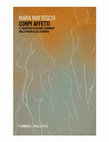
Mimesis Edizioni, 2018
[Scroll down for the English version]
Questa monografia è il primo studio interamente dedicato a... more [Scroll down for the English version]
Questa monografia è il primo studio interamente dedicato all’impegno di Nadine Gordimer nell’adattamento cinematografico. Prendendo in esame quattro testi chiave della scrittrice sudafricana e le relative trasposizioni filmiche da lei sceneggiate o sostenute, lo studio mette in luce la complessità e l’attualità dell’indagine sul corpo dell’autrice. In un contesto politico-culturale in cui la gerarchizzazione delle caratteristiche fisiche ha dato forma a un ‘corpo della nazione’ particolarmente deforme, Gordimer dimostra, anche attraverso un impegno di sceneggiatrice tutto all’insegna di una poetica della condensazione, di aver intuito la carica trasformativa di una corporeità che non si esaurisce sulla superficie epidermica individuale, ma include anche nel suo orizzonte gli oggetti e gli affetti in circolazione nelle relazioni sociali. Se le relazioni tra corpi privilegiati e corpi sotto attacco emergono nell’opera di Gordimer in tutto il loro squilibrio, il confronto tra i testi letterari e i testi filmici qui esaminati evidenzia anche il potenziale sovversivo insito nell’ostinato desiderio delle protagoniste di entrare in relazione di prossimità con corpi proibiti, e in questo modo di riarticolare almeno temporaneamente il movimento e lo spazio pubblico del corpo sociale sudafricano.
ENGLISH VERSION:
This monograph is the first one to be entirely dedicated to Nadine Gordimer’s active engagement with filmic adaptation. Through detailed scrutiny of four of Gordimer’s key texts and the relative screen versions whose scripts she wrote or helped to write, this study points out the complexity and topicality of the South African author’s investigation of the body. In a political and cultural context in which violent hierarchies of bodily features produced a particularly deformed ‘body of the nation’, Gordimer’s screenwriting activity enfolded as a creative practice inspired by a principle of corporeal density. In such poetics this study detects Gordimer’s understanding of the transformative potential of corporeality, one grounded in the idea that the corporeal dimension does not end at the borders of individual epidermic surfaces, but also includes the objects and affects that circulate in social relationships. While the power unbalances between privileged and discriminated bodies are relentlessly pointed out throughout Gordimer’s oeuvre, comparing these specific literary and filmic texts also reveals the subversive potential of the women protagonists’ desires: their attempt to move close to other forbidden bodies manages to rearticulate, at least temporarily, the movement and public space of the South African ‘collective’ body.
EDITED WORKS by Mara Mattoscio

Palgrave MacMillan, 2024
This collection of essays aims to widen the current critique on borders by examining their entang... more This collection of essays aims to widen the current critique on borders by examining their entanglements with constructions of identity and disciplinary categories. In particular, it calls into question established models of gender, notions of narrative genres and typological genera of borders in today’s literary, artistic, philosophical, and socio-political discourse. The chapters interrogate boundaries and boundary-crossing not only in terms of geographical frontiers and the physical acts of trespassing, but also as discursive constructs that police crossing subjects as gendered subjects, on the one hand, and identify artistic genres and academic disciplines as fixed, sealed-in ways of understanding the world, on the other. Taking inspiration from the multiple meanings of the Italian word genere (which stands for “gender”, “genre”, and “typology”/“genus” simultaneously), the volume reflects on the gendered, narrative, and typological nature of borders and border imagery, and on the significance and potentialities of crossover phenomena taking place in borderlands, in the fields of arts, literature, anthropology, sociology and philosophy.
Feminist Media Studies, 2018
This Commentary and Criticism section of Feminist Media Studies on the theme of "Gender, Migratio... more This Commentary and Criticism section of Feminist Media Studies on the theme of "Gender, Migration, and the Media" collects short essays by Anna Carastathis and Myrto Tsilimpounidi ("Methodological Heteronormativity and the 'Refugee Crisis'"); Giuliana Sorce ("Sounding the Alarm for Right-Wing #MeToo: '120 Dezibel' in Germany"); Krista Geneviève Lynes ("Drowned at Sea: What Haunts the Stories of Trafficked Women?"); and Faith Aanu Oloruntoba, Abigail Odozi Ogwezzy-Ndisika, Babatunde Adeshina Faustino, Kelechi Okechukwu Amakoh ("Transnational Gender Narratives on Migration: The Nigerian Media and Female Migrants en Route to Italy from Libya").
BOOK CHAPTERS by Mara Mattoscio
![Research paper thumbnail of "Violent conclusion[s]" versus "hopeful return[s]": Zadie Smith’s The Embassy of Cambodia and the Performative Border-Crossing of the Narrative Voice](https://attachments.academia-assets.com/108109582/thumbnails/1.jpg)
Rethinking Identities Across Boundaries. Genders/Genres/Genera, 2024
This chapter examines Zadie Smith’s The Embassy of Cambodia (2013a) as a work that probes the per... more This chapter examines Zadie Smith’s The Embassy of Cambodia (2013a) as a work that probes the performative boundaries of narrative voice(s) in their political and identitarian implications, and particularly in their ability to question Europe’s celebratory discourses of multiculturalism in the face of pervasive migratory and post-migratory violence and border surveillance. Through the experiences of Fatou, a newly arrived Ivorian immigrant trapped in an abusive domestic role in suburban London, Smith’s novella explores the complexities of narrative boundaries through a continuous shift in focalisation between Fatou’s own perspective, narrated by a third-person voice, and that of a second, collective narrative voice that pretends to represent the entire local community. Drawing on Mary Louise Pratt’s speech-act theory and Susan Lanser’s insights on the narrative voice, the chapter demonstrates that Smith’s text questions both the displayed emphatic capacity of a supposedly enlightened North-West public, and the genre and gender conventions characterising Europe’s prevailing identitarian discourse. The complex narrative border-crossing staged by the novella entails the condemnation of perspective insularity in terms of genre, gender, geopolitics, and cultural identity, and encourages a polyvocal conversation in which, as Smith writes, ‘violent conclusion[s]’ are always contradicted by ‘hopeful return[s]’.
Rethinking Identities Across Boundaries. Genders/Genres/Genera, 2024
This introductory chapter draws upon the current expansion of border studies to examine the wide-... more This introductory chapter draws upon the current expansion of border studies to examine the wide-ranging interpretations of borders and boundaries in the contemporary world, which are offered in the volume Rethinking Identities Across Boundaries—Genders/Genres/Genera. It reflects on the volume’s engagement with the formation, reformation, and dynamic becoming of identities across boundaries of disparate kinds, across gender and sexual categories, typologies of species, textual and narrative edges, linguistic frontiers, arts and genres frames. Furthermore, this introduction explores how the diverse chapters intersect, creating crossings that enrich the volume’s many possible thematic and conceptual cartographies. These entanglements demonstrate the valuable interdisciplinary and transdisciplinary methodologies adopted in this volume, developed by border theorists whose contributions have become increasingly influential.
Reading David Foster Wallace Between Philosophy and Literature, 2022
Drawing on affect theory, this paper proposes to read Brief Interviews with Hideous Men as an exp... more Drawing on affect theory, this paper proposes to read Brief Interviews with Hideous Men as an exploration of the socio-structural nature of affects. I maintain that, in contrast with Lauren Berlant’s notion of “cruel optimism”, Wallace’s attitude in this book is one of ‘wry pessimism’, predicated on the need to point out our societal crisis and the refusal to take for granted a linear idea of future progress. By examining two specific stories in the collection, namely the futuristic “Datum Centurio” and the multi-section, meta-fictional “Octet,” I argue that Wallace goes beyond both argumentative appraisal and performative critique of the problematic present. Rather, he attempts to show what the affective consequences of today’s sexist society can be on future human connections that promise to be more and more dependent on advanced technological devices. While highlighting the inescapable ambiguity of language, Brief Interviews centres the chase for affect – both embodied and narrated – and urges readers to ‘invest’ in their own structural affective inadequacies in attempt to track apparently irretrievable emotions down in the “interstices” of our gender-constrained world.

(Post)Colonial Passages. Incursions and Excursions across the Literatures and Cultures in English, 2018
At a time when an unprecedented number of asylum seekers is reaching the borders of Fortress Euro... more At a time when an unprecedented number of asylum seekers is reaching the borders of Fortress Europe, and Western discourses on national identities take on the features of collective hysteria, postcolonial writing can once again prove crucial in probing the boundaries of political and ethical debates. Such is no doubt the case of J. M. Coetzee’s novel The Childhood of Jesus (2013), i.e. a dystopian fiction in which all the characters, including the protagonists, are strangers more or less recently arrived by boat to a mysterious “new” country with no apparent history and a decidedly Beckettian twist. In this new location, which seems to be posthumous or downright unreal (as its Spanish name Novilla literally translates as “no city”), every newly arrived has been shorn of his/her memory and is looked after by a pervasive state bureaucracy which, though maintaining a benign attitude, allows for no variety, no personal initiative, no individual passion and no irony. Comparing Coetzee’s novel to Christoph Schlingensief’s performance art show Foreigners Out! Schlingensief’s Container (2000), in which a dozen assumedly “real” asylum seekers were provocatively engaged in a parodic reality show and exposed to be voted out of Austria by the local audience, I intend to demonstrate that explicitly postcolonial (and dystopian) allegories and parodies may have an unprecedented impact on present-day voyeuristic society’s understanding of geopolitical dynamics. Drawing on Deleuze’s immanent idea of difference as difference-in-itself, which undermines traditional binary oppositions and processes of othering, I propose that postcolonial art such as Coetzee’s and Schlingensief’s has an irreplaceable power of envisaging alternative possibilities of relating and living together in the contemporary identity-driven postcolonial world.
PAPERS by Mara Mattoscio
Areté. International Journal of Philosophy, Human and Social Sciences, 2025
Reflecting on the dismembering of the social body in apartheid South Africa and on the ambiguitie... more Reflecting on the dismembering of the social body in apartheid South Africa and on the ambiguities of the current attempts at ‘remembering the nation’, a new generation of South African women poets has recently questioned the role of silence and normativity in the discursive script and accelerated the re-shaping of the public discourse over subjectivity and the body – both collective and individual. Drawing on established psychoanalytical understandings of language and on recent scholarship on the creative text as theory-making, this article focuses in particular on Koleka Putuma’s "Collective Amnesia" (2017) and Gabeba Baderoon’s "The History of Intimacy" (2018) as works that helped to impose a political and poetical turn in South African consciousness about memory and language. Variously dealing with bodily, discursive, and social intimacies, as well as with history, identity, and the nation, these collections of poems interrogate old and new violence, explore life in margins, and invite disobedience to the discursive script produced by both historical and current Law(s) of the Father.
Traduttologia. Rivista di Interpretazione e Traduzione, 2021
Saggio recensivo sulla recente traduzione italiana di alcuni scritti cruciali di bell hooks, in u... more Saggio recensivo sulla recente traduzione italiana di alcuni scritti cruciali di bell hooks, in un'edizione dal titolo "Elogio del margine. Scrivere al buio", per la traduzione, intervista e cura di Maria Nadotti. Napoli, Tamu Edizioni, 2020, 260 pp.
Journal of Postcolonial Writing, 2022
Through a comparative analysis of Maaza Mengiste’s award-winning
"The Shadow King" (2019) and Zoy... more Through a comparative analysis of Maaza Mengiste’s award-winning
"The Shadow King" (2019) and Zoya Barontini’s collective mosaic novel
"Cronache dalla polvere" (Chronicles from the dust) (2019), this article
traces the roots of contemporary Italy’s intersectional violence back to
the country’s colonial history. While the Ethiopian American Mengiste
redresses the masculine language of war by dramatizing the historical
experience of Ethiopian female partisans, the Italian authors of
Cronache dalla polvere deliberately assign to Ethiopian female characters
the task of recording, remembering, and retelling the atrocities
committed by the Italian fascists against the local population. Drawing
on interdisciplinary explorations of the intersections among race, gender,
and class in contemporary Italy by Heather Merrill and Gaia
Giuliani, and in Italian postcolonial literature by Caterina Romeo, it
seeks to demonstrate how the two novels attempt to reorient the
Italian literary archive in ways that illuminate the colonial matrix of
the country’s persistent culture of intersectional violence.

MEROPE. Rivista semestrale di studi umanistici, 2021
In the context of persisting yet ambiguous framings of South African life as intrinsically violen... more In the context of persisting yet ambiguous framings of South African life as intrinsically violent in particular for women, this article aims at illuminating the relationship between gendered violence and responsibility in two key works by J. M. Coetzee and their filmic adaptations, which have until recently been the only existing remediations of his oeuvre for the screen. The works in question are Coetzee’s early novel In the Heart of the Country (1977), written at the height of the apartheid era and set in the charged colonial space of a farm, and his later success Disgrace (1999). The latter famously stirred a national controversy because, in the early stage of the “new South Africa”, it dramatized the violent gang rape of a white woman by three black men, alongside the sexual exploitation of a ‘coloured’ girl by a powerful white professor. Drawing on insights by Aaronette White, Veena Das, and Judith Butler, responding in turn to the works of Frantz Fanon and Hannah Arendt, this article explores the complexities and ambiguities of Coetzee’s take at gendered violence in both its traditional and its innovative instances. If on the one hand his approach seems intended at denouncing the persistent the subjugation of women in a (post)colonial, racialized, and classist context, on the other it points to the possibility of a non-violent social practice which implies staying aware of one’s inescapable vulnerability while looking for a non reciprocal agency in the social relations that make one vulnerable.
Lingue e Linguaggi, 2020
While political discourses on the current 'migratory crisis' often take the language of ecologica... more While political discourses on the current 'migratory crisis' often take the language of ecological emergency, depicting Western states as self-sufficient ecosystems put in danger by the 'vermin' of external intruders, postcolonial writing proves crucial in reimagining frontier limbos and precarious existences as the originating centres of unprecedented transformations. Drawing on biological and cultural definitions of the "ecotone" (Haraway 2007, Morrissey 2015) and on Edward Casey's notion of spaces "in-between edges" (2008), I intend to explore two different declinations of literary ecotones centred around migrant children's experiences, namely Igiaba Scego's "La mia casa è dove sono" [Home is where I am] (2010) and J. M. Coetzee's "The Childhood of Jesus" (2013). The first chronicles the Scegos's diaspora from Mogadishu to Europe as well as the writer's own struggles in growing up a black Italian-born girl in 1990s Rome. The second is a dystopian fiction in which the protagonists are strangers recently arrived by boat in a posthumous dimension where all inhabitants have forgotten their past and are content with their anodyne present. Scego's memoir and Coetzee's novel provide instances of different but equally powerful literary ecotones. Whereas Coetzee's fictional text focuses on the existential and philosophical limbo of a lost child literally experiencing a new (after)life, Scego's work deals with specific objects (the home-drawn Rome-plus-Mogadishu map, Bernini's Roman sculpture of an African elephant) as objective correlatives of complex and transformative collective geographies.

Anglistica AION. An Interdisciplinary Journal, 2019
This paper aims to explore the notion of presentism as a way of looking at the fraught temporalit... more This paper aims to explore the notion of presentism as a way of looking at the fraught temporalities of the post-/de- ‘pre-fixing frontier’ in colonialism studies. Drawing on various interpretations of the concept, presentism can be said to manifest when societies become unable to imagine a future or a past, because of structured powers keen on preserving the status quo. Using a combination of data from media ethnography and literary criticism, we intend to assess the productivity of an updated notion of presentism for the ongoing debates on the coloniality of power. Instances of arrested and recursive temporalities exemplified in recent Anglophone African novels as well as in Swedish media discourses on migration will serve as case studies. Issues of memory and denial, as well as the ideological claim that enduring phenomena such as immigration should be considered symptoms of a contemporary migratory crisis, will be at the centre of our investigation.
Il Tolomeo, 2019
Drawing on the work of Elizabeth Freeman (2010), this study offers a contribution to the South Af... more Drawing on the work of Elizabeth Freeman (2010), this study offers a contribution to the South African literary debate over historical progress and irregular temporalities by proposing an analysis of time and embodiment in Rehana Rossouw's second novel "New Times" (2017). The book, all centred around the themes of betrayal versus remembrance, tells the story of Ali, a young journalist trying to heal secret wounds in the year after South Africa's first democratic elections. While her identity is continuously questioned because of her male nickname, mixed slave heritage and uncertain sexuality, Ali starts her new job for the aptly-titled "The New Times" by uncovering the new govern-ment's first signs of corruption and blindness towards the AIDS plague. By investigating what is left of the colonial in the supposedly postcolonial era, Rossouw's novel offers a fresh addition to the strand of South African literature that dares to deconstruct the myth of Mandela and of Liberation Day, calling for a deeper understanding of the often fractured temporalities of political change.

Feminist Review - "Currents" Issue, Nov 2017
The story of Sara Baartman, who was brought to Europe in 1810 to be exhibited as the erotic-exoti... more The story of Sara Baartman, who was brought to Europe in 1810 to be exhibited as the erotic-exotic freak ‘Hottentot Venus’, is arguably the most famous case study of the scientific validation of (gendered) racism. Her scientific examination and post-mortem dissection by Georges Cuvier, who looked for an alleged connection between the Khoisan and the orangutan, have been the object of famous critical works (Gilman, 1985; Haraway, 1989; Fausto-Sterling, 1995), but also exposed her to the unpalatable fate of becoming the ‘quintessential’ figure of intersecting gender and racial oppressions. This paper deals with Abdellatif Kechiche’s film Vénus Noire (2010), which interestingly rearticulates the (in)famous narrative in unexpected ways. Shot by a male director who is also a postcolonial subject, the film exposes the performativity not only of gender and racial identities, but also of science theorisation, while at the same time raising the issue of whether exposing a violent male colonial gaze on a heavily exhibited woman can contribute to a counter-knowledge of her experience or rather risks reiterating the historical violence. The startling dynamic between the portrayed abuse and Kechiche’s peculiar filmic strategies is the crucial focus of this paper. While Sara’s body is continually exposed and violated, Vénus Noire relies on her face, shot in recurrent extreme close ups, as a haunting presence potentially exceeding violence. Drawing on Gilles Deleuze and Félix Guattari’s (1987 [1980]) account of the close up (1987 [1980]), I explore how Kechiche’s take on Sara’s face builds a strong connection with the spectator’s extra-filmic dimension. As a case of what Deleuze and Guattari call a ‘reflective face’, such close ups invest the viewer with the ethical responsibility of being complicit in the othering practices of (post)colonial times. Vénus Noire thus manages to engage the spectator’s own corporeal awareness of violence, and calls attention to the persisting exploitation of sexual and racial colonial tropes in the contemporary world.

Merope. Rivista semestrale di studi umanistici, 2017
In taking the body as the first locus of subjectivity and intentionality, 20th-century phenomenol... more In taking the body as the first locus of subjectivity and intentionality, 20th-century phenomenology specifically focused on its motility, and in particular on its ability to approach, grasp, and appropriate the objects around it — an ability that for Maurice Merleau-Ponty ensures “our power of dilating our being-in-the-world, or changing our existence by appropriating fresh new instruments”. However, such a successful perspective raises a number of questions when it comes to bodies whose motility is amputated by race, gender, and class discrimination. When we look at contexts where the partition of space and the unequal circulation of objects is institutionalized, as in apartheid South Africa, how does a subject’s understanding of the world change? Examining two short stories by Nadine Gordimer and their filmic adaptations through the lenses of Iris Marion Young’s and Sara Ahmed’s feminist and anti-racist critiques of Merleau-Ponty, this paper aims at showing a pervasive ‘phenomenology of negation’ at play in literary and cinematic accounts of women’s lived experiences under apartheid.
Critical African Studies (Special Issue “Corporealities of Violence in Southern and Eastern Africa”), 2015
Against a backdrop of increasing academic interest in the pervasiveness and mutability of violenc... more Against a backdrop of increasing academic interest in the pervasiveness and mutability of violence in African contexts, this paper explores how violence on women’s bodies, including punitive rape, partners’ violence, invasive state surveillance and medicalization, is dramatized in works by the South African authors Nadine Gordimer and J. M. Coetzee, and in their filmic adaptations. While Gordimer’s short stories "City Lovers" and "Country Lovers" (both 1974) are mostly concerned with the corporeal transformations women undergo because of simultaneous race, class and gender violence, Coeztee’s post-apartheid "Disgrace" (1999) more explicitly interrogates the possibilities of undermining violence through corporeal resistance to documentation, medicalization and displacement. Drawing on a Deleuzian notion of the body as a relational and ever-changing ‘assemblage’, I contend that a comparison between these literary texts and their filmic adaptations, rather than leading to a sterile debate on trans-media ‘fidelity’, allows a further, deeper understanding of women’s violated corporealities: one which entails moving beyond the pervasive idea of violence as an inevitable facet of (South) African societies, and pushes us towards a vision of violated bodies as always self-inventive and potentially revolutionary forces. The irreducible materiality of the screened bodies will moreover be seen as intentionally, or sometimes unintentionally, interrogating the spectators’ own sense of vulnerability and responsibility.
BOOK REVIEWS by Mara Mattoscio
Postcolonial Studies Association Newsletter #26, 2020
Review of "Postcolonial Intellectuals in Europe. Critics, Artists, Movements, and their Publics".... more Review of "Postcolonial Intellectuals in Europe. Critics, Artists, Movements, and their Publics". Edited by Sandra Ponzanesi and Adriano José Habed. London: Rowman & Littlefield, 2018.
Il Tolomeo, 21, 2019
Review of Danyela Demir's monograph "Reading Loss: Post-Apartheid Melancholia in Contemporary Sou... more Review of Danyela Demir's monograph "Reading Loss: Post-Apartheid Melancholia in Contemporary South African Novels" (2019), Berlin: Logos, pp. 212.
Victorian Popular Fictions Journal 1: 2, 2019
Review of Silvia Antosa's monograph "Frances Elliot and Italy. Writing Travel, Writing the Self" ... more Review of Silvia Antosa's monograph "Frances Elliot and Italy. Writing Travel, Writing the Self" (2018), Milano-Udine: Mimesis, pp. 153



Uploads
BOOKS by Mara Mattoscio
Questa monografia è il primo studio interamente dedicato all’impegno di Nadine Gordimer nell’adattamento cinematografico. Prendendo in esame quattro testi chiave della scrittrice sudafricana e le relative trasposizioni filmiche da lei sceneggiate o sostenute, lo studio mette in luce la complessità e l’attualità dell’indagine sul corpo dell’autrice. In un contesto politico-culturale in cui la gerarchizzazione delle caratteristiche fisiche ha dato forma a un ‘corpo della nazione’ particolarmente deforme, Gordimer dimostra, anche attraverso un impegno di sceneggiatrice tutto all’insegna di una poetica della condensazione, di aver intuito la carica trasformativa di una corporeità che non si esaurisce sulla superficie epidermica individuale, ma include anche nel suo orizzonte gli oggetti e gli affetti in circolazione nelle relazioni sociali. Se le relazioni tra corpi privilegiati e corpi sotto attacco emergono nell’opera di Gordimer in tutto il loro squilibrio, il confronto tra i testi letterari e i testi filmici qui esaminati evidenzia anche il potenziale sovversivo insito nell’ostinato desiderio delle protagoniste di entrare in relazione di prossimità con corpi proibiti, e in questo modo di riarticolare almeno temporaneamente il movimento e lo spazio pubblico del corpo sociale sudafricano.
ENGLISH VERSION:
This monograph is the first one to be entirely dedicated to Nadine Gordimer’s active engagement with filmic adaptation. Through detailed scrutiny of four of Gordimer’s key texts and the relative screen versions whose scripts she wrote or helped to write, this study points out the complexity and topicality of the South African author’s investigation of the body. In a political and cultural context in which violent hierarchies of bodily features produced a particularly deformed ‘body of the nation’, Gordimer’s screenwriting activity enfolded as a creative practice inspired by a principle of corporeal density. In such poetics this study detects Gordimer’s understanding of the transformative potential of corporeality, one grounded in the idea that the corporeal dimension does not end at the borders of individual epidermic surfaces, but also includes the objects and affects that circulate in social relationships. While the power unbalances between privileged and discriminated bodies are relentlessly pointed out throughout Gordimer’s oeuvre, comparing these specific literary and filmic texts also reveals the subversive potential of the women protagonists’ desires: their attempt to move close to other forbidden bodies manages to rearticulate, at least temporarily, the movement and public space of the South African ‘collective’ body.
EDITED WORKS by Mara Mattoscio
BOOK CHAPTERS by Mara Mattoscio
PAPERS by Mara Mattoscio
"The Shadow King" (2019) and Zoya Barontini’s collective mosaic novel
"Cronache dalla polvere" (Chronicles from the dust) (2019), this article
traces the roots of contemporary Italy’s intersectional violence back to
the country’s colonial history. While the Ethiopian American Mengiste
redresses the masculine language of war by dramatizing the historical
experience of Ethiopian female partisans, the Italian authors of
Cronache dalla polvere deliberately assign to Ethiopian female characters
the task of recording, remembering, and retelling the atrocities
committed by the Italian fascists against the local population. Drawing
on interdisciplinary explorations of the intersections among race, gender,
and class in contemporary Italy by Heather Merrill and Gaia
Giuliani, and in Italian postcolonial literature by Caterina Romeo, it
seeks to demonstrate how the two novels attempt to reorient the
Italian literary archive in ways that illuminate the colonial matrix of
the country’s persistent culture of intersectional violence.
BOOK REVIEWS by Mara Mattoscio