Papers by Marco Guglielminotti Trivel
Beyond Mesopotamia. Collected Essays on Syriac Christianity in Central Asia and China, 2025
This new book contains the revised and translated versions of two of my early articles, first pub... more This new book contains the revised and translated versions of two of my early articles, first published only in Italian: “Temple of the Cross, Fangshan (Beijing): Preliminary Survey of Epigraphic Documents Still in situ” (first edition 2005), pp. 63-109; and “Burials and Funerary Rituals of the Önggüd in Inner Mongolia” (first edition 2004), pp. 127-143. However, the main strength of the volume lies in the other nine articles edited by Professor Borbone himself, which deal with the spread of Syriac Christianity in Central Asia and China, with particular attention to epigraphy, codicology, and the circulation of texts.
The International Archives of the Photogrammetry, Remote Sensing and Spatial Information Sciences, 2021
For years, virtual reconstruction in the figurative arts, and sculpture, in particular, has been ... more For years, virtual reconstruction in the figurative arts, and sculpture, in particular, has been developing and consolidating. The workflow from the acquisition to three-dimensional modelling and to the integration of missing parts, has been optimized through processes entirely implemented in the digital dimension. The most recent developments in augmented reality and virtual reality technologies, together with the possibility of using low-cost and widely available devices, have made it possible to establish new links between the real and the virtual. The experiences presented in this paper comes up within the agreement between the Politecnico di Torino and the Museo d'Arte Orientale (MAO). The workflow set up for this research involves: structure from motion (SfM) survey, 3D modelling, and 3D philological reconstruction, then develops a proposal to implement augmented and virtual reality experiences aimed at the communication and fruition of the exhibits. The case study concerns two Japanese statues, and proposes their visualisation with the respective weapons virtually reconstructed, and through VR, involving the reconstruction of the interior space of a temple recognised as philologically compatible with the location of the statues within a statuary complex.

Connecting. Drawing for weaving relationship. Languages Distances Technologies. Proceedings of the 42th International Conference of Representation Disciplines Teachers, 2021
This work comes up within the agreement between the Politecnico di Torino and the Museo d’Arte Or... more This work comes up within the agreement between the Politecnico di Torino and the Museo d’Arte Orientale and develops a proposal to implement augmented and virtual reality technologies aimed to the communication and fruition of the exhibits. The activity has involved a multidisciplinary team that covers the knowledge of representation, information processing systems, art history, archaeology and museography. The project foresees the identification of a series of artworks that can be subject to AR and VR experiences and constitute, also in their sequence, new heritage narratives. The case study, concerning two Japanese statues (Ni-Tennō, temple guardians), led to the contextualization of the artefacts in the digital model of a coherent coeval temple and to the modelling of the weapons that the guardians might have originally held. Textual and vocal information accompany a prototype app thanks to which the in situ experience, through mobile devices and markerless anchoring, uses AR technologies. The experience is designed to be carried out and replicated also in VR mode, with the possibility to navigate in the digitally created spaces, using cardboards.
Il Drago e il Fiore d'Oro. Potere e magia nei tappeti della Cina imperiale, 2015
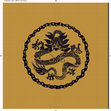
The paper deals with one of the less-studied artifacts of Chinese art history from the point of v... more The paper deals with one of the less-studied artifacts of Chinese art history from the point of view of its peculiar symbolic implications. The (knotted) carpets of the Qing court are considered in their context of use, while their decoration is compared to common motifs found on other objects of late imperial China. Far from being mere furnishings, these carpets were essential in conveying a sense of majesty to those admitted to the Imperial Palace. The carpet placed before or below the Dragon Throne formed the ideal focus of the Empire together with the throne itself. As if in a game of Chinese boxes, the microcosm of the carpet lies at the centre of the mesocosm of the Forbidden City, which in turn lies at the centre of the macrocosm ruled by the emperor. The same presence of auspicious symbols recurring five or nine times has strong cosmological and directional associations: a carpet is a sacred space that provides a schematic depiction of the universe; its centre represents the earthly emperor as well as the palace grounds, from which he commands “Everything Under the Heavens”.
Arte dal Mar Mediterraneo al Mar della Cina. Genesi ed incontri di scuole e stili, 2015
Art historians of China, Korea, and Japan are well aware of one distinctive feature of Buddha ima... more Art historians of China, Korea, and Japan are well aware of one distinctive feature of Buddha images in this region of Asia, at times a blank spot or a fleshy bump but more often a shiny jewel situated above the forehead at the base of the uṣṇīṣa. The article draws attention to this iconographic peculiarity, normally taken for granted or largely overlooked by scholars, in order to raise some questions concerning the reason for its sudden appearance in the 8th century AD and to offer possible interpretations. Although a conclusive answer is not given, the author suggests that an increased reference to concepts involving revelation and luminosity, linked to the rise of the esoteric and devotional schools and reflected in the sacred texts in vogue at that time, may have played a major part in this change of representation of the Buddha's head. A final suggestion is also made to put this phenomenon in connection with similar occurrences that took place almost simultaneously within the Buddhist contexts of other Asian cultures.
Japanese Collections in European Museums. Vol. III, 2015
A general presentation of the Japanese art collection preserved in the Museo d’Arte Orientale, en... more A general presentation of the Japanese art collection preserved in the Museo d’Arte Orientale, encompassing a chronological span of one thousand years from the 11th century to the mid-20th century. The collection consists of about 625 objects, the most ancient ones being Buddhist wooden sculptures and the most numerous being printed materials, paintings, lacquers, and textiles of the Edo period. The article also describes the Japanese gallery display and focuses on some of the most important and rare artworks in the collection.
Cavalli Celesti. Raffigurazioni equestri nella Cina antica, 2014
The main essay in my catalogue is an overview of the history of the horse in China – from its dom... more The main essay in my catalogue is an overview of the history of the horse in China – from its domestication to the Northern Song period (960-1127) - which merges archaeological evidence and historical sources with the representation of horses in art. The result is an easy-to-consult and compact summary addressing to the general reader, but supplied with enough bibliographic reference to be also useful for scholars as a starting point for further research. Seventeen black and white pictures and drawings are included.
Japanese Collections in European Museums. Vol. IV: Buddhist Art, 2013
A general presentation of the collection of Japanese Buddhist objects preserved at the Museo d’Ar... more A general presentation of the collection of Japanese Buddhist objects preserved at the Museo d’Arte Orientale is followed by a precise description of fifteen monastic outer robes donated to the museum in 2006 and 2010, written by Dr. Sawada Kazuto from the National History Museum in Sakura.
Riflessi d’Oriente - 2500 anni di specchi in Cina e dintorni, 2012
For any member of the upper classes in ancient China, it is hard to think of an object more signi... more For any member of the upper classes in ancient China, it is hard to think of an object more significant than a bronze mirror in its balance of usefulness and artistic value, and at the same time so close to its owner both physically and spiritually, in life and the afterlife. The introductory paper of my catalogue is a condensed account of this fascinating "sumptuary good", whose decorations on the rear are veritable maps of the Chinese culture through the ages. Both faces of a mirror are naturally explained in terms of yin-yang relations; its origin in a shamanistic background is duly considered; the subsequent appropriation by Daoism is given much importance in order to better appreciate every shade of the mirror's lore. This lore gravitates around the concepts of transparency and purity, and mirrors are regarded as true receptacles of light.
Il Celeste Impero. Dall’Esercito di Terracotta alla Via della Seta, 2008
When writing for an exhibition catalogue, one's main concern should be to make complex and cultur... more When writing for an exhibition catalogue, one's main concern should be to make complex and culturally distant concepts easily accessible to the general reader. This is what my paper here tries to achieve while putting the exhibits in context for a better comprehension of their historical, religious and cultural values from the point of view of the ancient people who produced them. Change and continuity in afterlife beliefs are reflected in the arrangement and content of burials from the Qin Empire (and before) to the Tang Dynasty. Case studies in this paper are the famous tombs of Qin Shi Huangdi (c. 210 BCE), the Marquise of Dai (c. 168 BCE), Liu Sheng (c. 113 BCE), Yuan Shao (c. 528 CE), and the Prince of Zhanghuai (c. 711 CE).
Andalò da Savignone. Un genovese del ’300 sulla via della seta, 2008
Based on scattered material evidence and scanty written sources, this short paper gives a summary... more Based on scattered material evidence and scanty written sources, this short paper gives a summary of what is known about Christian relics in and around Beijing during the Mongol rule of the Yuan dynasty. Most of the tangible proofs pertain to the sphere of Nestorianism, such as the Guang'anmen tombstone reported by Saeki on the spot where once probably stood a “Temple of the Cross”; and the richer temple site of Shizisi at Fangshan, where two stone blocks carved with crosses and two inscribed stelae can still be found. Even more intriguing is an attempt – based on written sources and inspired by the studies of Xu Pingfang – of suggesting the possible location of the Roman cathedral founded by Giovanni da Montecorvino in 1305-1307. It might have been located in the vicinity of Di'anmen, very close to the Yuan Imperial Palace.
The paper aims to present archaeological evidence from the monastic settlements and burials – inc... more The paper aims to present archaeological evidence from the monastic settlements and burials – including scattered finds - in the Longmen area in chronological order, from the emergence of the first Buddhist materials at the end of the 5th century to the slow decline in the 9th-11th centuries. The fieldwork was carried out from 2002 to 2004 in my capacity both as a member of the Chinese-Italian Archaeological Mission to Luoyang and as a doctoral student of the University of Naples “L’Orientale”. An archaeological map of the Longmen area is also presented as an original part of the research.
English abstract at the end of the paper (p. 460)
Tang. Arte e cultura in Cina prima dell’anno mille, 2005
This is a concise and partial summary – limited to the Tang period - of my Ph.D. dissertation, wh... more This is a concise and partial summary – limited to the Tang period - of my Ph.D. dissertation, which was the result of research based on fieldwork and the examination of historical and epigraphic sources related to an area of about 10 km in diameter, with the southern end of the Longmen cave temples at its centre. The archaeological map presented here is a fruit of this research, being possibly the first attempt to apply aerial photographs, GPS surveys, and topographic mapping to the Longmen area south of Luoyang. The English reader may find much more material and reference in another paper on the same subject: “Archaeological Evidence from the ‘Buddhist Period' in the Longmen Area", 2006. Please look for it on my Academia.edu page.
I Mongoli dal Pacifico al Mediterraneo, 2004
English abstract at the end of the paper
The ‘Gao Huan Cave Tomb’. Iconographic and Architectural Peculiarities of the North Cave at Northern Xiangtangshan, 1998
This is a summary of my thesis (MA equivalent) with a focus on the largest – and possibly the old... more This is a summary of my thesis (MA equivalent) with a focus on the largest – and possibly the oldest - cave in the northern group of the Xiangtangshan complex. After examining the cave iconography and architecture in relation to other caves, and after researching into historical and epigraphic sources, the paper tries to respond to the intriguing question: may the empty cavity inside the upper part of the huge central pillar be the burial chamber of general Gao Huan or his son Gao Yang, the first emperor of the Northern Qi dynasty? While the solution to this mystery remains unsolved, I point to emperor Wenxuan as the only reasonable after-death dweller of the concealed cavity – although the hypothesis of a relic chamber seems more reasonable in the end.
Exhibition Catalogues by Marco Guglielminotti Trivel
Sfumature di terra. Ceramiche cinesi dal X al XV secolo / Shades of Earth. Chinese ceramics from the 10th to the 15th century, 2020
This text is a short introductory essay to a volume published in 2020 in the wake of the exhibiti... more This text is a short introductory essay to a volume published in 2020 in the wake of the exhibition of ceramics from a private collection hosted at the Museum of Oriental Art in Turin (November 2018 – March 2019). The catalogue as a whole includes the collector’s essay “Modernist Paradigms”, plates of twenty-six ceramics, and a glossary covering Song and Yuan kiln traditions. The introduction outlines the broader historical background of Chinese stoneware and porcelain, traces the developments that shaped their appreciation over time, and places the selection of works within the context of the museum’s programme.
Shoreless – Opere di Güler Ates al MAO, 2019
Some personal reflections on the 'Shoreless' project by artist Güler Ates at the Museum of Orient... more Some personal reflections on the 'Shoreless' project by artist Güler Ates at the Museum of Oriental Art in Turin, which took place in 2019 when the museum was under my direction. Reflections on the artist’s work and the value of contemporary art in an ancient art museum, which also served as a pretext to talk about the museum itself and the direction it was heading before the halt caused by the pandemic and the end of my tenure in 2021.
Orienti. 7000 anni di arte asiatica dal Museo delle Civiltà di Roma, 2018
These are short texts that I had prepared as introductions to four sections of the volume publish... more These are short texts that I had prepared as introductions to four sections of the volume published on the occasion of an exhibition at the Museum of Oriental Art in Turin, namely: “Ming and Qing Dynasties: a historical overview”, “Art of the Ming and Qing Dynasties”, “Surfing on Japanese history”, and “Main trends in Japanese art”. Although they cannot be considered scholarly papers, one may appreciate the ability to condense in short texts for the general public the salient features of broad historical and artistic phenomena, always with an eye on the collection on exhibit.
Dall’antica alla nuova Via della Seta / From the ancient to the new Silk Road, 2016
Seven Chinese funerary works from the mid-2nd to the mid-8th century – all part of the MAO Museo ... more Seven Chinese funerary works from the mid-2nd to the mid-8th century – all part of the MAO Museo d’Arte Orientale collection in Turin – are presented and discussed. In Italian and English.


Uploads
Papers by Marco Guglielminotti Trivel
Exhibition Catalogues by Marco Guglielminotti Trivel