Books by Marcus Goncalves, Ed.D., Ph.D.
Business Expert Press, 2017
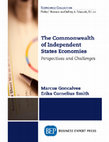
The year 2016 marks the 25th anniversary of the of?cial inauguration of the Commonwealth of Indep... more The year 2016 marks the 25th anniversary of the of?cial inauguration of the Commonwealth of Independent States (CIS), a free association of sovereign states comprised by Russia and 11 other republics that were formerly part of the Soviet Union. Although this loose association of states may not exist as a ?xed-entity on the globe, it is believed that this bloc of countries will continue to build upon the various separate regions in the former Soviet space in the coming decade.
This book provides a regional analysis and a country scan of the CIS regional block economies. It examines its history since the breakup of the formal Soviet Union and the formation of the CIS bloc, including creation of regional agreements such as the CIS Free Trade Area and the Eurasian Economic Union, which now represents more than 180 million people. As a whole, our text attempts to better understand current, and future, prospects for economic growth in the region, as well as their individual national challenges.
More than half a decade has passed since the financial crisis hit, traversing the global economy ... more More than half a decade has passed since the financial crisis hit, traversing the global economy very rapidly, confirming just how interconnected the world has become as ideas, information, capital, and new technologies have streamed across borders with increasing ease. Nevertheless, the lack of sustained financial crisis response has made it clear just how fractured the international political landscape has become, as advanced and emerging economies’ diverging interests make global coordination ever more difficult. Hence, despite sustained globalization, and in some cases because of it, we are seeing a growing vacuum of global leadership, as well as traditional geopolitical risks, which consequently are on the rise.
This chapter attempts to address key global issues for tomorrow that demand our attention today. It provides an overview of many of the most volatile, significant, and misunderstood developments reshaping the global geopolitical landscape, from the growing global vulnerability of public and private institutions to the increasing impact of public opinion and protest.
Learning Organizations Turning Knowledge into Actions, 2012
A lot has been discussed about the limitations of an adaptive learning organization and a generat... more A lot has been discussed about the limitations of an adaptive learning organization and a generative one. We live in a world of rapid changes, economic and technological, as well as cultural and political. In order to remain competitive, organizations must be able to transform, both to adapt to the changed business environment, as well as to proactively ready themselves for the next wave of changes to come.
Transformation, in turn, requires excellence in strategy, organization, and systems. When all these three components are effectively considered, not only can the implementation risks associated with any transformation within an organization be reduced, but also success can readily be achieved. After all, the goal of knowledge workers and knowledge managers is to ensure every individual in the organization is ready for transformations at any given time.
Several internationalization theories have made great contributions in explaining MNE's internati... more Several internationalization theories have made great contributions in explaining MNE's internationalization process. It has been suggested that the determinants of entry mode choice of MNEs from emerging and frontier markets differ from those of comparable enterprises from advanced economies. Studies suggest there is a need to expand the framework for entry mode strategies to accommodate the expansion issues MNEs from emerging and frontier countries face in the global marketplace. Nevertheless, not much information and acceptable conclusions have been made on how these MNEs internationalize. This study investigates the internationalization strategies of Lusophone Africa MNEs from Angola and Mozambique. The results suggest most MNEs opt for equity-based investment strategies, mainly joint venture and M&A, as their preferred mode of entry when internationalizing. Others rely on e-commerce, exports and greenfield. A few of these MNEs could be classified as born global/INV. This research also presents a conceptual framework for analyzing entry mode choices for MNEs from Lusophone African frontier markets and proposes alternatives to understand the determinants of such strategies.
Nearly seven decades ago, six countries in Western Europe (Belgium, France, West Germany, Italy, ... more Nearly seven decades ago, six countries in Western Europe (Belgium, France, West Germany, Italy, Luxembourg, and the Netherlands) decided to take economic cooperation to the next level. The vision of the European Union (EU) founding states, epitomized by the Schuman Declaration in 1950, was to tie their economies—including the reemerging West German economy—so closely together that war would become impossible.
Europe will not be made all at once, or according to a single plan. It will be built through concrete achievements which first create a de facto solidarity—Robert Schuman. In 1973, Denmark, Ireland, and the United Kingdom joined what was then referred to as the “European Community.” The 1970s were also a decade of deep social and political transformations in Greece, Portugal, and Spain, where military regimes and dictatorships were overthrown. Inspired by the prosperity and stability of the European Community, these countries joined the European project within 10 years, strengthening their emerging democracies. The countries benefited enormously from free trade and common economic policies, in particular structural funds designed to foster convergence by funding infrastructure and investments in poorer regions.
The Maastricht Treaty established convergence criteria to ensure that countries joining the new common currency would be sufficiently similar, and it also gave market forces a significant role in disciplining member states, by establishing the “no bailout” clause. To dispel skepticism and preserve fiscal discipline after the common currency was introduced, member countries signed the Stability and Growth Pact in 1997, which was designed to tie policies to fiscal balance and debt targets. In sum, the euro’s architecture was built on the premise that market forces, combined with minimal coordination of policies, would sufficiently align economies, discipline fiscal policies, and allow countries to withstand idiosyncratic shocks.
This book examines how these larger trends were experienced in individual member states throughout the Eastern European states. This book also scans the regional block of Central and Eastern Europe (CEE), South East Europe (SEE), and the Commonwealth of Independent States (CIS), and the macroeconomic dynamics of these states and the EU.
Chapter 3: Advanced versus Emerging Markets: Global Economic Prospects, provides an overview of t... more Chapter 3: Advanced versus Emerging Markets: Global Economic Prospects, provides an overview of the global economic prospects for these regions, not only with regards to the well known North-South trade routes, but also the strengthening South-South new trade relations.
At the time of these writings, fall of 2011, the economy in United States is in a major downturn.... more At the time of these writings, fall of 2011, the economy in United States is in a major downturn. Some analyst would say the country is in a recession, while others would disagree. Either way, the slowing economy, which transcends across the American borders into the European Union and beyond, is giving a new blow to knowledge worker-lead KM project teams. Today's knowledge workers, and KM professionals for that matter, are been required to change their business structure and the way their KM implementations are managed to enable their projects to remain under budget, meet deadlines, and most important, pay off. Focusing on knowledge sharing, Internet based applications and virtual access to data, knowledge workers are emerging as a driving force in the collaborative implementation of KM. However, given the high risk for KM implementation failures, the new breed of knowledge workers required to lead such teams must have a multitude of skills, including business, technology, team-building, project management, communication skills and leadership in order to be successful.
Chapter 1, Challenges Faced by Knowledge Workers in the Global Economy, addresses the challenges ... more Chapter 1, Challenges Faced by Knowledge Workers in the Global Economy, addresses the challenges knowledge workers face in a much integrated global economy, where their role is not often well defined and many times confused with those of a CTO with business and information systems skills, or from a different angle, as of a CIO with business and information technology expertise.
As corporations continue to migrate to a knowledge-centric structure, planning, leadership, board... more As corporations continue to migrate to a knowledge-centric structure, planning, leadership, board and executive management support becomes crucial. However, most often, knowledge management (KM) is not easily plugged into a return of investment (ROI) equation. In addition, the past few years, since 2008, characterized by an economic downturn never seen since the information-driven economy emerged in the early 1990s, have shown that a knowledge worker's performance should no longer be measured by results only, but by goals as well. Until recently, the business-critical value of knowledge management investment was all but assumed, and experts on the subject all realized that their assumptions were wrong. Many predicted, and are still predicting, that knowledge management and its derived career paths are doomed to extinction. In fact, ten years ago, during the spring of 2001, CIO magazine commented that knowledge management systems didn't work, in particular due to the fact that no one in the organization would use or support such systems, beginning with upper management. And they were right!
There is intense competition among emerging markets to capture their share of the global economy.... more There is intense competition among emerging markets to capture their share of the global economy. This book addresses questions that are germane to accomplishing this goal. Most important to this end is the study and practice of international business and foreign trade. Undertaking such a study raises many questions such as: Why are emerging markets and the firms doing business in them internationalizing so aggressively? Why in the past decade has the pace of internationalization accelerated so rapidly? What competitive advantages do these emerging economies enjoy in comparison to advanced economies, such as the G20, and what are the origins of those advantages? Through what strategies are emerging market blocks such as the BRICS (Brazil, Russia, India, China, and South Africa) and the CIVETS (Colombia, Indonesia, Vietnam, Egypt, Turkey, and South Africa) building their global presence and expanding their market reach? How are emerging markets rivaling advanced economies and how are they affecting the already established rivalries among those economies? This book will answer these and other questions. In doing so, it will attempt to address the larger issue of what it all means for mainstream international business theory and its actual practice.
This book is a part of a series, which recognizes that there is intense competition among emergin... more This book is a part of a series, which recognizes that there is intense competition among emerging markets and against advanced economies to capture their share of the global economy. The series addresses questions that are germane to accomplishing this goal. Most important to this end is the study and practice of international business and foreign trade. Undertaking such a study raises many questions, which the series will attempt to answer. What competitive advantages do these emerging economies enjoy in comparison to advanced economies, such as the G7, and what are the origins of those advantages? Why are emerging markets becoming the powerhouse of world economy growth and the firms doing business there internationalizing so aggressively? And, why in the past decade has the pace of internationalization accelerated so rapidly and what are the challenges and possible solutions? This volume is devoted to a comparison of advanced economies and emerging ones, the advantages and disadvantages of each, and what globalization means in each type of environment.
In today’s fast-paced global economy, markets are sifting very swiftly, and the balance of trade ... more In today’s fast-paced global economy, markets are sifting very swiftly, and the balance of trade and even political influence are following suit. It is important, therefore, that international business professionals, academics and students of global trade and international markets, and anyone interested on the latest developments taking place in global trade to be able to understand, compare and contrast the primary categories of emerging market business development, including its sub-categories, or maybe more appropriately, its sibling, the frontier markets. There is no doubt that today’s global markets present both great opportunity and significant risk for business development and investment. Established and mature markets have been supposedly providing safety and security for labor and capital, but the last seven years or so have changed such perspective when we witness advanced economies struggling with debt and lack of growth, while competition is at an all time high. Hence, understanding emerging and frontier markets present some of the most significant opportunities for international business professionals and investors. This book, an expanded and enhanced version of the Part II of our “big” book published a few months ago (Advanced Economies and Emerging Markets: Perspectives for Globalization), dives deeper at the opportunities and challenges faced by emerging and frontier markets, comparing the risks and opportunities in its main markets so that students and researchers, as well as investors and casual readers interested in this topic, can gain a better understanding of which markets provide the best opportunities. Our hope is that readers will find this information useful in their forward-looking international business careers and business strategies.
Doing Business in Emerging Markets reflects the challenges and opportunities facing international... more Doing Business in Emerging Markets reflects the challenges and opportunities facing international businesses and professionals when operating in emerging markets, particularly in the wake of the financial crisis of 2008. This book is filled with valuable information and real-world facts and examples from across the globe. It covers all the key topics on conducting business in emerging markets, addressing important aspects of entering a new market, as well as post-entry issues and strategies, such as dealing with corruption, the application of the United States Foreign Corrupt Practice Act (FCPA), international market research and more, demonstrating how the emerging market context challenges traditional international business theories and even best practices.
Nearly seven decades ago, six countries in Western Europe (Belgium, France, West Germany, Italy, ... more Nearly seven decades ago, six countries in Western Europe (Belgium, France, West Germany, Italy, Luxembourg, and the Netherlands) decided to take economic cooperation to the next level. The vision of the European Union (EU) founding states, epitomized by the Schuman Declaration in 1950, was to tie their economies—including the reemerging West German economy—so closely together that war would become impossible. Europe will not be made all at once, or according to a single plan. It will be built through concrete achievements which first create a de facto solidarity—Robert Schuman. In 1973, Denmark, Ireland, and the United Kingdom joined what was then referred to as the “European Community.” The 1970s were also a decade of deep social and political transformations in Greece, Portugal, and Spain, where military regimes and dictatorships were overthrown. Inspired by the prosperity and stability of the European Community, these countries joined the European project within 10 years, strengthening their emerging democracies. The countries benefited enormously from free trade and common economic policies, in particular structural funds designed to foster convergence by funding infrastructure and investments in poorer regions. The Maastricht Treaty established convergence criteria to ensure that countries joining the new common currency would be sufficiently similar, and it also gave market forces a significant role in disciplining member states, by establishing the “no bailout” clause. To dispel skepticism and preserve fiscal discipline after the common currency was introduced, member countries signed the Stability and Growth Pact in 1997, which was designed to tie policies to fiscal balance and debt targets. In sum, the euro’s architecture was built on the premise that market forces, combined with minimal coordination of policies, would sufficiently align economies, discipline fiscal policies, and allow countries to withstand idiosyncratic shocks. This book examines how these larger trends were experienced in individual member states throughout the Eastern European states. This book also scans the regional block of Central and Eastern Europe (CEE), South East Europe (SEE), and the Commonwealth of Independent States (CIS), and the macroeconomic dynamics of these states and the EU.
This book provides relevant and timing information addressing a significant aspect of the economi... more This book provides relevant and timing information addressing a significant aspect of the economic, political, and social transition in Central and Eastern Europe (CEE) over the last several decades, integrating historical data with the most recent political and economic reporting based on the author’s analysis. Analysis include assessments, opinions, and experience (where appropriate) as scholars, researchers, consultants, and global citizens, from an introduction to the historical context for European integration, including the political structures and economic relationships forged in the post-World War II period, to the relationship between the European Union and the economies of states in CEE, examining the political, economic, and security considerations that complicated the federalist relationship in each state, and end with a brief discussion of the adoption of the euro. This book also discusses the economic impact of integration of CEE countries as they attempt to make their economic transition and to integrate with the European Union and other free-market economies. The authors look at the economic growth and challenges these countries face, as well as how the indebtedness of the advanced economies are impacting these economies and prompting them to launch economic countermeasure to protect their own economies.
Until recently, the business-critical value of knowledge management (KM) investment was all but a... more Until recently, the business-critical value of knowledge management (KM) investment was all but assumed, and experts on the subject all realized that their assumptions were wrong. Many predicted, and are still predicting , that KM and its derived career paths are doomed to extinction. In fact, more than ten years ago, during the spring of 2001, CIO magazine commented that KM systems (KMS) didn't work, in particular due to the fact that no one in the organization would use or support such systems, beginning with upper management. And they were right! Fast forward to the financial meltdown of 2008 and we realized that very few companies have escaped the impact of the past year's economic woes. Even those organizations that have not been forced to implement redundancy programs have had to implement widespread budgetary cuts, some asking employees to take sabbaticals or part-time work, until economic conditions improve. With resources tight, and internal departments in a state of flux, the case for KM has become even trickier. While KM is normally seen as a support service, KM teams may have been among the first to have been culled in recessionary conditions. But interesting enough, through my consulting practices, those companies that view KM as essential, and central, to business profitability have been more reluctant to make cuts, PPL Montana is a good example of it, as they continue to invest in its people and knowledge capital, and are being very successful at it. In my experience, only a few KM teams have passed through the recession completely unscathed trough. The theory that a KMS was only as good as its information technology has been nearly unquestionable. But I believe the thinking behind

Central and Eastern European Economies: Perspectives and Challenges, 2016
This book provides relevant and timing information addressing a significant aspect of the economi... more This book provides relevant and timing information addressing a significant aspect of the economic, political, and social transition in Central and Eastern Europe over the last several decades, integrating historical data with the most recent political and economic reporting based on the author’s research. Analysis include assessments, opinions, and experience (where appropriate) as scholars, researchers, consultants, and global citizens, from an introduction to the historical context for European integration, including the political structures and economic relationships forged in the post-World War II period, to the relationship between the European Union and the economies of states in Central and Eastern Europe, examining the political, economic, and security considerations that complicated the federalist relationship in each state, and end with a brief discussion of the adoption of the euro.
This book also discusses the economic impact of integration of CEE countries as they attempt to make their economic transition and to integrate with the European Union and other free-market economies. The authors look at the economic growth and challenges these countries face, as well as how the indebtedness of the advanced economies are impacting these economies and prompting them to launch economic countermeasure to protect their own economies.
Eastern European Economies: A Region in Transition, 2016
Nearly seven decades ago, six countries in Western Europe (Belgium, France, West Germany, Italy, ... more Nearly seven decades ago, six countries in Western Europe (Belgium, France, West Germany, Italy, Luxembourg, and the Netherlands) decided to take economic cooperation to the next level. The vision of the EU founding states, epitomized by the Schuman Declaration in 1950, was to tie their economies so closely together that war would become impossible.
Robert Schuman, author of the plan, believed Europe could not be made all at once, or according to a single plan. It would have to be built through concrete achievements, which first create a de facto solidarity. The countries within the “European Community” benefited enormously from free trade and common economic policies, in particular structural funds designed to foster convergence by funding infrastructure and investments in poorer regions.
This book examines how similar transitions and integration into the European Union are experienced in individual central and eastern European states through the use of country scans in the regional blocks of CEE, SEE, and CIS.



Uploads
Books by Marcus Goncalves, Ed.D., Ph.D.
This book provides a regional analysis and a country scan of the CIS regional block economies. It examines its history since the breakup of the formal Soviet Union and the formation of the CIS bloc, including creation of regional agreements such as the CIS Free Trade Area and the Eurasian Economic Union, which now represents more than 180 million people. As a whole, our text attempts to better understand current, and future, prospects for economic growth in the region, as well as their individual national challenges.
This chapter attempts to address key global issues for tomorrow that demand our attention today. It provides an overview of many of the most volatile, significant, and misunderstood developments reshaping the global geopolitical landscape, from the growing global vulnerability of public and private institutions to the increasing impact of public opinion and protest.
Transformation, in turn, requires excellence in strategy, organization, and systems. When all these three components are effectively considered, not only can the implementation risks associated with any transformation within an organization be reduced, but also success can readily be achieved. After all, the goal of knowledge workers and knowledge managers is to ensure every individual in the organization is ready for transformations at any given time.
Europe will not be made all at once, or according to a single plan. It will be built through concrete achievements which first create a de facto solidarity—Robert Schuman. In 1973, Denmark, Ireland, and the United Kingdom joined what was then referred to as the “European Community.” The 1970s were also a decade of deep social and political transformations in Greece, Portugal, and Spain, where military regimes and dictatorships were overthrown. Inspired by the prosperity and stability of the European Community, these countries joined the European project within 10 years, strengthening their emerging democracies. The countries benefited enormously from free trade and common economic policies, in particular structural funds designed to foster convergence by funding infrastructure and investments in poorer regions.
The Maastricht Treaty established convergence criteria to ensure that countries joining the new common currency would be sufficiently similar, and it also gave market forces a significant role in disciplining member states, by establishing the “no bailout” clause. To dispel skepticism and preserve fiscal discipline after the common currency was introduced, member countries signed the Stability and Growth Pact in 1997, which was designed to tie policies to fiscal balance and debt targets. In sum, the euro’s architecture was built on the premise that market forces, combined with minimal coordination of policies, would sufficiently align economies, discipline fiscal policies, and allow countries to withstand idiosyncratic shocks.
This book examines how these larger trends were experienced in individual member states throughout the Eastern European states. This book also scans the regional block of Central and Eastern Europe (CEE), South East Europe (SEE), and the Commonwealth of Independent States (CIS), and the macroeconomic dynamics of these states and the EU.
This book also discusses the economic impact of integration of CEE countries as they attempt to make their economic transition and to integrate with the European Union and other free-market economies. The authors look at the economic growth and challenges these countries face, as well as how the indebtedness of the advanced economies are impacting these economies and prompting them to launch economic countermeasure to protect their own economies.
Robert Schuman, author of the plan, believed Europe could not be made all at once, or according to a single plan. It would have to be built through concrete achievements, which first create a de facto solidarity. The countries within the “European Community” benefited enormously from free trade and common economic policies, in particular structural funds designed to foster convergence by funding infrastructure and investments in poorer regions.
This book examines how similar transitions and integration into the European Union are experienced in individual central and eastern European states through the use of country scans in the regional blocks of CEE, SEE, and CIS.