Books by Marian Coman
Putere şi teritoriu. Ţara Românească medievală (sec. XIV-XVI)
Dominium şi Ecclesia in Occidentul Medieval. Culegere de texte
Co-edited volumes by Marian Coman
Călători străini despre țările române. Supliment III. , 2022
2 Se pare că cel dintâi care a inventat acest termen a fost William Wood, care l-a folosit pe pag... more 2 Se pare că cel dintâi care a inventat acest termen a fost William Wood, care l-a folosit pe pagina de titlu a descrierii sale despre Noua Anglie publicate în 1634. Pentru acest concept vezi
Călători străini despre țările române. Supliment III. , 2022
Un caiet legat în piele, de 159 de file, numerotate, aflat din 2009 în Biblioteca Universităţii P... more Un caiet legat în piele, de 159 de file, numerotate, aflat din 2009 în Biblioteca Universităţii Princeton, cuprinde însemnările de călătorie ale unui aventurier elveţian pe parcursul a 20 de ani de la începutul veacului al XVIII-lea 1. Pe prima foaie a caietului, scrisă doar pe recto, apare titlul Extrait des journeaux de quelques uns de mes voyages şi câteva informaţii tehnice despre felul în care au fost calculate distanţele de către autor, precum şi despre harta folosită pentru a-şi povesti peregrinările. Însemnările propriu-zise încep de la pagina 3 şi sunt împărţite în cinci secţiuni, delimitate prin titluri şi, uneori, prin câte o pagină lăsată goală: (1) Extrait du journal du voyage que j'a y fais en Italie, dans le commencement de ce siècle (2r-54r), (2) Extrait du jurnal du voyage que j'a y fait a Nantes sur le vaisseau le Saint Albert (55r-73v), (3) Extrait du journal du voyage que j'a y fait dans le Levant, avec le meme vaisseau le St. Albert et le meme capitaine Ballon (74r-100v), (4) Extrait du depars que j'a y fait de Marseille a cause de la peste qui y survite au mois de juillet 1720 (101r-113v), (5) Extrait du journal du voyage que j'a y fait á Smirne, á Constantinople, á Boukeresse en Valaquie, et á Vienne en Autriche (114r-157v). Caietul este scris până pe ultima filă pe verso, textul înghesuindu-se adesea pe margine şi terminându-se abrupt, însemnările fiind probabil continuate pe un alt caiet. Judecând după numărul destul de mare de ştersături şi de corecturi, textul pare să fi cunoscut cel puţin o revizuire, prilej cu care au fost adăugate şi titlurile secţiunilor, asupra cărora autorul are unele ezitări. Din păcate, numele autorului nu apare nicăieri în text, care este de altfel destul de sărac în informaţii autobiografice. Odată cu izbucnirea războiului pentru succesiunea tronului Spaniei, autorul se înrolează într-o companie de dragoni elveţieni cu care pătrunde în Italia la începutul anului 1701 2. Dezertează însă destul de repede şi, având grijă să-i evite pe francezi sau pe spanioli din armata cărora fugise, călătoreşte prin Italia. Uneori, pentru a evita pericolul, recurge la deghizare, aşa cum se întâmplă pe drumul de înapoiere spre Elveţia, prin Milano. Următoarea călătorie relatată în jurnal are loc la mai bine de 15 ani după dezertare şi este una maritimă. Îmbarcat la Marsilia pe bordul navei Saint-Albert, aventurierul elveţian călătoreşte până la Nantes, descriind cu multe detalii tehnice marinăreşti itinerariul. La scurt timp după întoarcerea la Marsilia, urmează o nouă călătorie, de aproape doi ani, 1719-1720, la bordul aceleaşi nave, de data aceasta înspre Levant, prin Egipt, Imperiul Otoman şi Grecia. Întors la Marsilia în vremea epidemiei de ciumă, aventurierul elveţian trece Alpii revenind în ţara natală, unde nu zăboveşte însă prea mult. Pe un drum ocolit, prin Bruxelles, Rennes şi Provence, revine la Marsilia, de unde în mai 1722 începe ultima călătorie relatată în jurnal. La bordul tartanei Saint-Jean-Baptiste 3
Călători străini despre țările române. Supliment III. , 2022
RIDOLFO DAMIANO DE BRŰNNETZ (a doua jum. a sec. XVII-după 1744) A doua jumătatea a anului 1716 ad... more RIDOLFO DAMIANO DE BRŰNNETZ (a doua jum. a sec. XVII-după 1744) A doua jumătatea a anului 1716 aducea mari speranţe Habsburgilor care, după victoriile de la Petrovaradin (5 august) şi Timişoara (12 octombrie), vedeau deschizându-li-se calea spre Serbia şi spre Ţara Românească 1. Pătrunderea primului detaşament austriac în Ţara Românească a adus cu sine şi prima "înfrângere fără bătălie", după cum eufemistic a denumit Şerban Papacostea trădarea vel-serdarului Petru Obedeanu 2. Refuzând să înfrunte un mic detaşament de 200 de soldaţi austrieci, deşi avea sub comanda sa 3 000 de oameni, Petru Obedeanu ceda prin "hicleşug" austriecilor marginea dinspre Cerneţi a Ţării Româneşti 3. Toţi actorii implicaţi erau însă conştienţi că ocuparea acestui "corn de ţară" 4 nu avea să fie decât un prin pas al pătrunderii Habsburgilor în Ţara Românească. Au urmat câteva luni de haos, perioadă în care regiuni întinse din ţară au ieşit complet de sub autoritatea domniei, în vreme ce o parte din boieri căuta sprijin împotriva lui Nicolae Mavrocordat 5. Pe 8 noiembrie, generalul Steinville îşi asuma printr-un manifest public intervenţia din Ţara Românească pentru a-i salva de la pierire "pe locuitorii care suspină sub jugul stăpânului lor tiran" 6. Şase zile mai târziu, Nicolae Mavrocordat era prins de trupele imperiale şi dus peste munţi, mai întâi la Sibiu, iar apoi la Alba-Iulia. Efortul de război al Habsburgilor s-a concentrat însă în direcţia Serbiei, aşa că noul domn numit de
Cǎlǎtori strǎini despre Ţǎrile Române. Supliment II , 2016
ClJVÂNT-IN/\IN IT ZACTARIA Cil li/Ol.FI (Ştefan Andrccscu) ŞTEFAN BRODARICS (traducere Virgil Cio... more ClJVÂNT-IN/\IN IT ZACTARIA Cil li/Ol.FI (Ştefan Andrccscu) ŞTEFAN BRODARICS (traducere Virgil Ciocihan; introducere Ileana Căzan) ANDREI TARA'-<OWSKI (Alexandru Ciociltan) VEIT '.'vlARCIITIIAI.ER (Virgil Ciocihan) CĂPITANl:I. DEMKOWICZ (Ileana Cizan) RELA!(E AM)NIMĂ POLONĂ DESPRE CUCERIREA TRAi\SILVA'.\/IU (lradun:rc Ilic Corli.is; introducere Ştefan Andn:cscu) CilORCilO TO\;IASI (traducere Corina Anton şi Vlad Mihai Scutaru; introducere Dragoş Ungureanu) GIOVANNI ARGl•:NTI (Ştefan Andrccscu) Al.IT ACTI: IEZUITI•: (Ştefan Andrccscu) TEOFAN MA VROCORDAT (Alexandru Ciociltan) 111:NRYK OTTl-:1\DORF (traducere şi note Ioan I la\cgan şi Marlcn '.\/egn:scu; introducere Ştefon Andreescu) l'ETRl. 1 BOCiDAN BAKSI((Alexandru Ciociltan) \IATIEO (iONDOLA (Nagy l'icnaru) MARTIROS DIN CRIMITA (Ştefon Andreescu) CiAl.l.LS MOl.l.LRI ,s (Alexandru l"iociltan)
Papers by Marian Coman
Identifications of Orthodox Christians in Ottoman Southeastern Europe (C.1450-C.1750), ed. Marija Vasiljević, 2026
In this paper, I explore the intriguing self-fashioning rhetoric of claimants to the Wallachian t... more In this paper, I explore the intriguing self-fashioning rhetoric of claimants to the Wallachian throne in the late 16th and early 17th centuries. My main contention is that the political paradigm shifted dramatically from the 1590s to the 1630s, with the Movilă family as the prime mover of this transformation. Simion Movilă and his supporters were the first to introduce the concept of a ‘foreigner’ or ‘stranger-lord’ into Wallachian political debates. Once it entered the Wallachian political lexicon, the idea of a ‘native prince’ became legitimate rhetorical currency, which Simion Movilă’s rivals could also shape to their own ends. Radu Șerban redefined the concept of a ‘native prince’ by devising a new political notion, that of a Wallachian princely lineage of the Basarabs. His model of a Wallachian ‘native’ dynasty was a direct reaction to the Moldo-Wallachian princely lineage promoted by the Movilă family. Three decades later, another Wallachian nobleman-turned-ruler, Matei, further developed the idea of the House of Basarab and employed it as a rhetorical tool to promote his political programme of fending off ‘foreigners’, including Moldavians and Greeks alike.
Studii și Materiale de Istorie Medie, 2025
The article examines the role of Epiphany assemblies held at the princely court of Wallachia duri... more The article examines the role of Epiphany assemblies held at the princely court of Wallachia during the late sixteenth century, situating them within the broader context of courtly rituals and the display of princely authority. Until now, historians have reconstructed the winter festivities at the Wallachian princely court mainly from late narrative sources, complemented by Moldavian parallels and ethnographic analogies. The result is a compelling reconstruction, but one that leaves no room for diachronic change and whose historical basis for earlier periods cannot be verified. The present study primarily relies on chancery sources, analysing the Epiphany assemblies through the lens of princely charters issued during their occurrence. Dating formulas, lists of witnesses, and especially the intensive activity of the chancery in the days surrounding Epiphany offer an indirect yet insightful perspective on the court’s political and liturgical rhythms. The study examines how Epiphany assemblies functioned as both religious celebrations and political arenas, where the presence or absence of members of the lay and clerical elite of the country served as a visible sign of loyalty to the ruler or, on the contrary, as a challenge to his authority. In the first half of the sixteenth century, notable absences from the Epiphany assemblies indicated the ruler’s vulnerability and were often followed by attempts to usurp the throne, explaining the frequent campaigns launched by pretenders during the winter months. The gradual integration of Wallachia into the Ottoman Empire disrupted the synchronism between liturgical and political cycles; nonetheless, the Epiphany assembly remained the highlight of the princely court calendar.
Writing History in Ottoman Europe (Fifteenth–Eighteenth Centuries), 2026
The present study is the first systematic attempt to explore the Wallachian chancery’s knowledge ... more The present study is the first systematic attempt to explore the Wallachian chancery’s knowledge of the past and memorializing strategies, focusing on the princely sobriquets documented up to the end of the sixteenth century. My main contention is that the first historians of Wallachia were, in fact, the chancery scribes, even though they did not claim to write historical texts as such. Modern historians have rightly pointed out the intertextuality of medieval diplomas, as nearly every novel document of this kind referred to the prior acts of predecessors, thus contributing to a constant reshaping of the past. This way, diplomas served as a kind of memorials of former rulers and the sobriquets ascribed to them can be viewed as a rudimentary form of writing history.
Eastern European History Review, 2025
This article investigates how Western European mapmakers addressed the cartographic challenge of ... more This article investigates how Western European mapmakers addressed the cartographic challenge of mapping the theatre of the Ottoman-Habsburg Long War. Although most simply sought to circumvent this spatial conundrum, some mapmakers directly confronted it, seeking a viable solution. My contention is that, of the three cartographic genres involved in the process, the most innovative was the news map. The article has a twofold structure. In the first part, I identify the main centres of cartographic production related to the Long War (such as Augsburg, Frankfurt, Köln, and Nuremberg) and briefly discuss the relationship between printed and manuscript maps. In the second part, I examine the spatial frames used by different cartographic genres, focusing on a series of news maps and propaganda maps produced between 1593 and 1595. My main argument is that the mapping of the Long War was a key moment in the making of a new cartographic genre, that of the theatre of war.

Companion to the Later Crusades (1400–1700), 2026
From the late fourteenth to the mid-seventeenth century, members of the Wallachian elite particip... more From the late fourteenth to the mid-seventeenth century, members of the Wallachian elite participated in nearly all anti-Ottoman crusades, whether executed or merely theoretical. Nevertheless, their fellow Christian crusaders were often uncertain about whose side these unreliable allies truly supported. The most renowned Wallachian champions of the crusade, such as Mircea the Elder, Vlad the Impaler, and Michael the Brave, ultimately faced allegations of betraying the Christians, transforming from heroes into villains. Viewed through Ottoman sources, the Wallachians appear as obedient subjects of the sultan. In contrast, Western sources depict the same individuals as aspiring crusaders. This chapter proposes a means to circumvent an either-or interpretation of the Wallachians’ involvement in the later crusades. Primarily utilising Wallachian sources, it contends that the Wallachians’ ability to “cross lines” was structural rather than contingent. The chapter is divided into two parts, exploring different aspects of the Wallachian elite’s involvement in the later crusades. The first section analyses crusading as a leverage tool employed by various Wallachian political actors, ranging from ruling lords and nobles to claimant princes, to achieve their individual or collective objectives. The second part shifts to an external perspective, investigating the dilemma faced by Christian crusaders when collaborating with the Wallachians. Due to their capacity to “turn Turk,” the Wallachians proved to be a valuable yet unreliable asset in the crusading effort. This ambiguity was further intensified by the role the Wallachians played in the ransoming of slaves within the context of crusading.
Revisiting the Byzantine Commonwealth. Nodes, Networks, and Spheres, 2025
GEOGRAPHY AND CARTOGRAPHY IN THE OTTOMAN EMPIRE, 2024
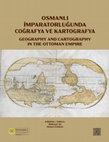
This chapter analyzes Abraham Ortelius’s different strategies for mapping the Ottoman Empire in h... more This chapter analyzes Abraham Ortelius’s different strategies for mapping the Ottoman Empire in his seminal Theatrum Orbis Terrarum, considering the atlas in its entirety, as well as the additions and amendments made to subsequent editions. The first section examines the absence of explicit references to the Ottoman-ruled provinces in the European section of the Theatrum, contrasting it with Ortelius’s detailed knowledge and interest of Ottomans’ recent history and of their expansion into Europe. Despite closely following the news of Ottoman expansion in Eastern and Central Europe, Ortelius chose to obscure it cartographically in the most important section of his atlas, the one dedicated to “our Christian” Europe. The second section of the chapter focuses on the map of Romania, which found its way in the Theatrum beginning with the 1584 edition. Romania was a fictional humanist cartographical frame rooted in the classical antiquity that used the Roman past as a cover for the Ottoman eyalet of Rumelia, thus concealing the imperial and religious frontier between Ottoman and Christian Europe. In the geographical worldview of the Dutch cartographer, the Ottomans had no place on the map of Europe. The Ottomans’ “foreign” nature confined them to the non-European sections of the atlas, and Ortelius used this as an opportunity to include in his Theatrum a full-map of their empire, comprising all tri-continental territories: Turcici Imperii Descriptio. Placed near the end of the atlas, in the Asian section, in between the maps of Persia and of the Holy Land, the map of the Ottoman Empire was visually arresting. When viewed on its own, the map may give the false impression of acknowledging the Ottoman Empire’s territorial structure. However, placed back in its original context and interpreted as part of the atlas for which it was created, the map reveals its true meaning: a cartographical representation of an empire that had grown into a geographical monstrosity. The main contention of the chapter is that Ortelius’s innovative mapping should be placed at the origin of a lineage of successive cartographic frames, such as “Turkey in Europe,” “Turkey of Europe,” “Eastern Europe,” and “Balkans,” as the first conceptual attempt to map a unified Christian Europe, despite the Ottomans’ rule over large parts of the continent.
Materiale și Cercetări Arheologice (MCA), 2024
The present paper aims to provide an interpretation of the dynamics of the largest medieval funer... more The present paper aims to provide an interpretation of the dynamics of the largest medieval funerary complex known so far in Wallachia (the site of Buftea – La Cârna/Mănești, generically dated between the 14th and 17th centuries), using the coins associated to the burials as a documentary basis. Obviously, such an approach has certain weaknesses, such as the use of a single element of analysis as terminus post quem indicator, the low percentage of burials with coins (less than 7%), etc. However, given the fact that the site was investigated in two distinct stages three decades apart, time bringing great changes in the theory and practice of archaeology, a reference system to report on the various specific aspects of both the earlier and the future research, a system perhaps vulnerable at the moment, but perfectible in time. The purpose of the article is to provide a historical interpretive framework for the archaeological finds from Buftea – La Cârna/Mănești, thus connecting the funerary finds with the socio‑economic and political changes that took place in medieval Wallachia, around Bucharest, from the end of the 14th to the beginning of the 17th century.
Turkiye-Romania Joint Military History Symposium, ed. Bunyamin Kocaoglu, Ahmet Tașdemir, 2023
Of more than fifty lords ruled Wallachia from 1418 to 1632, only four directly inherited the thro... more Of more than fifty lords ruled Wallachia from 1418 to 1632, only four directly inherited the throne. Usually, a bid for the throne was decades long and it took extremely convoluted routes, as a successful pretender needed to gather a wide-ranging coalition of supporters and allies. The competition for the throne often led to open military confrontations and the armies involved in such battles were usually mixed. Throughout this period, the slow integration of the realm into the Ottoman Empire brought significant changes into the game of Wallachian politics and, more often than not, the Ottoman troops were actively participating to these battles. The aim of this article, which has a threefold structure, is to investigate the military confrontations for the throne of Wallachia. The first part will sketch a few methodological caveats, by mapping the different distortions of the primary sources, both intentional and unintentional. The second part proposes a broad overview, delineating the main phases in the history of the military confrontations for the throne of Wallachia from 1418 to 1632. Finally, the third and last section of the study attempts to theorize the main rules of engagement, trying to define the circumstances, conditions and manners in which a battle for the throne of Wallachia took (or did not take) place, with a special focus on the involvement of the Ottoman contingents.
Istoria ca pasiune. Studii oferite profesorului Alexandru-Florin Platon la împlinirea a 65 de ani, 2022
Spaţiul est-carpatic în secolele II a. Chr.-IV p. Chr.: între tradiţia antică şi interpretările m... more Spaţiul est-carpatic în secolele II a. Chr.-IV p. Chr.: între tradiţia antică şi interpretările moderne. I. Tradiţia antică (sursele literare
REVUE DES ÉTUDES SUD-EST EUROPÉENNES, 2022
The present study addresses the complex and ambiguous relationship between Enlightenment adventur... more The present study addresses the complex and ambiguous relationship between Enlightenment adventurers and cartography. In order to authenticate their travel experiences and to fabricate a geographical expertise, the adventurers pointed out the flaws of known maps and, simultaneously, pretended to have possession of secret, better, ones. They especially exploited the gaps in the cartographic knowledge of the regions situated at the very margins of Europe, such as the Ottoman Empire. Such was the case with the Transylvanian-Suisse charlatan Ridolfo Damiano de Brűnnetz, the main character of this article. In 1716, taking advantage of the Habsburgs’ interest for Wallachia, this adventurer wrote a memorandum in an attempt to impress the potential employer with his geographical knowledge of the realm. However, Ridolfo Damiano de Brűnnetz’s alleged expertise was an unconvincing pretence, as his description of Wallachia reveals a rather patchy and superficial
knowledge. Nonetheless, at the core of his memorandum lies a detailed and systematic geographical description of Wallachia, extremely rich in place-names (no fewer than 503). The main contention of this article is that the memorandum is a pseudo-gazetteer of the 1700 map of Wallachia printed at Padua. Ridolfo Damiano de Brűnnetz’s prose cartography was, to a large extent, a veiled reading of this map.


Uploads
Books by Marian Coman
Co-edited volumes by Marian Coman
Papers by Marian Coman
knowledge. Nonetheless, at the core of his memorandum lies a detailed and systematic geographical description of Wallachia, extremely rich in place-names (no fewer than 503). The main contention of this article is that the memorandum is a pseudo-gazetteer of the 1700 map of Wallachia printed at Padua. Ridolfo Damiano de Brűnnetz’s prose cartography was, to a large extent, a veiled reading of this map.