Caucasus by Marie Orange
A multi-directional bridge? The geo-strategic significance of Nakhchivan during the Late Chalcolithic (4500-3500 BCE)
The Caucasus: Bridge between the urban centres in Mesopotamia and the pontic steppes in the 4th and 3rd millennium BC
GIEMSCH, L. and HANSEN, S. (eds.), The Caucasus: Bridge between the urban centres in Mesopotamia ... more GIEMSCH, L. and HANSEN, S. (eds.), The Caucasus: Bridge between the urban centres in Mesopotamia and the pontic steppes in the 4th and 3rd millennium BC / Der Kaukasus: Brücke zwischen den urbanen Zentren Mesopotamiens und der pontischen Steppe im 4. und 3. Jahrtausend v. Chr. Proceedings of the / Ergebnisse der Caucasus Conference, Frankfurt am Main 2018. Schriften des Archäologischen Museums Frankfurt 34. 288pp.
Duzdağı during the Kura-Araxes period: a pastoralist hub? A preliminary cross-analysis of ceramic and obsidian data [conference presentation]
Workshop ‘The integration of the mountains into the agro-pastoral systems between the Neolithic and the Iron Age’, 2020
Obsidian consumption at the salt mine of Duzdağı (Babek district, Nakhchivan, Azerbaijan) [conference presentation]
Workshop ‘The integration of the mountains into the agro-pastoral systems between the Neolithic and the Iron Age’, 2020

Consuming local: The new obsidian source of Ideloo (Northwestern Iran) and first evidence of use by neighbouring prehistoric communities
Geoarchaeology, 2021
This paper reports the results of a recent geological and archaeological survey conducted in the ... more This paper reports the results of a recent geological and archaeological survey conducted in the Sarab district (Sabalan area) in Northwestern Iran. This survey aimed to identify potential obsidian outcrops in the region and to investigate archaeological sites in the vicinity to assess their obsidian exploitation patterns. We located a new obsidian source, Ideloo, and surveyed the previously known archaeological sites of Tepe Qalehjoogh, Kultepe Asbfrooshan, Tepe Emam Chay and Qaleh Tepe Abarghan. Here, we describe the methods and results of our surveys, along with the geochemical characterisation, using portable XRF and LA‐ICP‐MS, of both the new outcrop and the obsidian artefacts found on the sites. Our analyses have revealed the consumption of Ideloo obsidian on three of the four sites surveyed, confirming its exploitation by local communities. While validating previous assumptions regarding the existence of potential obsidian sources in Northwestern Iran, our study also highlights the consumption of raw materials originating from the Caucasus or Eastern Anatolia in complement to local resources. However, the diffusion of the Ideloo obsidian seems so far restricted to a small area, which suggests more complex consumption and trade patterns than previously expected.
Archaeology Seminar Series 2019, La Trobe University - Toward greener pastures: investigating the role of mobile pastoralists in the prehistoric exploitation and diffusion of obsidian in the Southern Caucasus [conference presentation]
IOC 2019 - Humans and materials in motion in the Southern Caucasus: exploring the role of mobile pastoralists in the exploitation and diffusion of obsidian
Recent research on the Chalcolithic period and the Bronze Age in the Southern Caucasus has highli... more Recent research on the Chalcolithic period and the Bronze Age in the Southern Caucasus has highlighted the seasonal movement of mobile pastoralists groups from north-western Iran towards the rich pasturelands of the Azerbaijani and Armenian highlands, where obsidian sources abound. Such links between Iran and the Caucasus are for example suggested by the excavations of Godedzor (Armenia) and Uçan Agil (Nakhchivan), both seasonal campsites presenting similarities with the sites of the Urmia region, and corroborated by the presence of Armenian obsidian material (mostly from the Syunik outcrops) at numerous north-western Iranian sites, such as Kultepe-Jolfa or Dava Göz.
While different routes between these two regions have been suggested, i.e. through the Araxes valley and the Vorotan valley, none of these hypotheses has so far been substantiated by sufficient data to confirm either possibility. This is especially the case for the Araxes valley alternative, which involves the crossing of Nakhchivan, a region where only a handful of obsidian artefacts had been analysed until recently. However, new data from two recent research programs has brought key information regarding the role of mobile pastoralists in the exploitation and diffusion patterns of obsidian in the Southern Caucasus from the Neolithic to the Bronze Age (6200-1500 BC). By investigating the obsidian industries found on numerous mobile pastoral campsites located in the mountainous areas of Nakhchivan, these projects offer crucial new insights into the complex socio-economic systems in place in the Southern Caucasus during the Chalcolithic.
The Araxes river in late Prehistory: bridge or border? 10th Anniversary of the Collegium de Lyon 2019 - Dynamics of obsidian consumption in Nakhchivan and Northwestern Iran: a long-term perspective (6200-2300 BC)
Until recently, few research programs had focused on the dynamics of obsidian consumption in Nakh... more Until recently, few research programs had focused on the dynamics of obsidian consumption in Nakhchivan (Azerbaijan), despite the strategic location of this region between the rich pastures and obsidian outcrops of the Southern Caucasian highlands and the wintering lowlands of the Urmia lake (north-western Iran). Previous studies had already given a central role to this region in the distribution networks of obsidian during late Prehistory, following main historic pastoral routes between Armenia and Iran, but relied in part on the provenance of a very limited amount of obsidian artefacts from Nakhchivan.
In order to investigate the connections between Nakhchivan and northwestern Iran from the Neolithic to the Early Bronze Age, and the relationship between mobile pastoralism, the exploitation of natural resources, and technological innovations, two research programs have successively been initiated since 2016: the PAST-OBS pilot project ([ANR-10-LABX-] dir. F.-X. Le Bourdonnec, 2016-2018) and the SCOPE project (2018-2021). These research programs mainly focus on the study of the obsidian consumption patterns on either side of the Araxes River.
For the study of the numerous obsidian assemblages unearthed in the framework of the Mission Archéologique du basin de l’Araxe (Nakhchivan, dir. C. Marro), and of the artefacts collected in recent surveys in northwestern Iran (surveys conducted by A. Abedi in the Salmas, Sarab, and Urmia Lake regions), we rely on a multi-platform analytical strategy using portable XRF and LA-ICP-MS to allow non-destructive and exhaustive geochemical analyses. In total, more than 2500 artefacts have been characterized so far.
The results produced by the PAST-OBS and SCOPE projects have shown a much diversified use of the South Caucasian and Anatolian obsidian sources, both in Nakhchivan and in northwestern Iran. In Nakhchivan, the Geghasar and Syunik outcrops clearly dominate the assemblages, irrespective of the period considered, and are supplemented by a sporadic use of sources located in Armenia, Anatolia, and Georgia. The variety of obsidian raw materials (up to a dozen) observed in the valley settlements (Ovçular Tepesi and Kultepe) in comparison to the mobile camps located further up in the mountains (Uçan Agil, Bûlôv Qayasi, i.a.) seem to confirm the central role of these sites in the redistribution of obsidian.
Compared to Nakhchivan, the consumption pattern observed south of the Araxes, in northwestern Iran, seems somewhat reversed. Our results indeed show an overall predominant use of the Anatolian products, mostly coming from the Nemrut Dağ and Meydan Dağ outcrops, and a more limited use of the Armenian sources, represented by less than 20% of the artefacts. This suggests, along with the sole presence of end-products made of Nemrut Dağ obsidian in Nakhchivan, that eastern Anatolian obsidians were most likely obtained ‘directly’ by northwestern Iranian mobile pastoral groups via another route, and that some rare implements made their way to Nakhchivan during the summer journeys to the Armenian highland pastures. Along with the movement of Syunik obsidian from the sources to the sites of northwestern Iran (from north to south), the opposite movement of Nemrut Dağ obsidian from south to north, if confirmed, would corroborate the connections between these two regions. Surprisingly, the diffusion of Meydan Dağ obsidian is slightly different from that of the Nemrut Dağ material: despite its relative proximity to the latter, Meydan Dağ obsidian is indeed present in larger amounts in Nakhchivan; it is thus possible that this material was introduced in Nakhchivan through another route. In order to better understand how these consumption patterns relate to (or complete) each other, further surveys and analyses are now needed.
GMPCA 2019 - Explorer les stratégies et modalités d’exploitation préhistorique de l’obsidienne au Caucase, du Néolithique à l’Âge du Bronze : les projets PAST-OBS (2016-2018) et SCOPE (2018-2021)
Le projet 'De la Transhumance à la Mine. Le Rôle des Pasteurs Nomades dans les Exploitations Prot... more Le projet 'De la Transhumance à la Mine. Le Rôle des Pasteurs Nomades dans les Exploitations Protohistoriques de l'obsidienne en Iran et au Caucase' [PAST-OBS, ANR-10-LABX-52], mené de 2016 à 2018, s’est attelé à explorer la relation entre exploitation des ressources naturelles, innovations technologiques et pasteurs nomades. Dans ce but, ce projet s’est concentré sur la caractérisation géochimique et techno-fonctionnelle des assemblages en obsidienne collectés dans la région depuis 2006, tout en menant de nouvelles campagnes de prospections et sondages. Grâce au concept de ‘stratégie analytique’ développé par notre équipe, plus de 2000 artefacts ont pu être analysés de façon non-destructive, dans un temps et budget limités. Reconstituer une ‘économie’ de l’obsidienne à travers une approche exhaustive et intégrée (provenance – chaîne opératoire) permet en effet de retracer des itinéraires de circulation inattendus. Dans le cadre du projet PAST-OBS, nos résultats ont déjà révélé des axes de circulation nord-sud (Caucase – Iran), mais également des contacts orientés est-ouest (Anatolie – Caucase), et donc à priori en dehors des chemins de transhumance traditionnels.
Le projet Southern Caucasus Obsidian Prehistoric Exploitation [SCOPE], débuté en 2018, a pour but d’approfondir les recherches entamées par le projet PAST-OBS. L’objectif principal de ce programme est la mise en évidence de potentiels changements dans l’orientation des axes de diffusion du matériau ‘obsidienne’ au moment de l’introduction de la métallurgie extractive, mais aussi la documentation de changements éventuels au niveau des stratégies d’approvisionnement à l’apparition des produits secondaires dérivés de l’élevage. La sélection plus exhaustive de sites étudiés – de l’Azerbaïdjan de l’est au sud du lac d’Urmiah – donne à ce projet un avantage crucial sur la plupart des travaux menés jusqu’à présent dans la région.
Notre communication présentera un bilan des résultats du projet PAST-OBS, ainsi que les résultats préliminaires obtenus dans les limites du projet SCOPE.
11th ICAANE 2018 - Looking north: first insights into the consumption of obsidian from the Neolithic to the Bronze Age in Nakhchivan
As part of the PAST-OBS research project (a research program supported by the ANR [ANR-10-LABX-52... more As part of the PAST-OBS research project (a research program supported by the ANR [ANR-10-LABX-52]), which aims to investigate the complex relationships between the exploitation of natural resources, technological innovations, and nomadic pastoralists in the Urmiah (northern Iran) and Sirab (Nakhchivan) regions between the 6th and the 3rd millennium B.C., more than 1500 obsidian artefacts have so far been geochemically characterized. These results were obtained thanks to an analytical strategy that was specifically adapted to these assemblages: it relies on several analytical methods, mainly a portable XRF (pXRF; used both in the field and in the lab), and the use of the Laser Ablation Inductively Coupled Plasma Mass Spectrometry (LA-ICP-MS; complementary to pXRF). These artefacts originate from no less than nine archaeological sites that are all located in Nakhchivan (Azerbaijan): the excavated settlements of Kültepe I, Nakhchivan Tepe, Ovçular Tepesi, Uçan Agil, and Sorşu, as well as the surveyed sites of Bûlôv qayasi, Çay Aǧzi, Kolani, and Mesmeliagil. Altogether, these assemblages cover a long period of time - from the Neolithic to the Bronze Age (Kura-Araxes), which makes possible synchronic and diachronic comparisons: an overview of the obsidian economies of these regions and their evolution through time is now available. This paper will be an opportunity for us to present the first results of the PAST-OBS research project, and to discuss further possible research prospects.
UISPP 2018 - New data on the protohistoric exploitation of obsidian in Nakhchivan: first provenance results from the PAST-OBS project
Started in 2016, the PAST-OBS project ‘From transhumance to the mine: the role of nomadic pastora... more Started in 2016, the PAST-OBS project ‘From transhumance to the mine: the role of nomadic pastoralists in the protohistoric exploitation of obsidian in Iran and the Caucasus’ (dir. Dr. Le Bourdonnec; LaScArBx ANR-10-LABX-52) aims to investigate the exploitation of natural resources and the rise of mobile pastoralism in the Lesser Caucasus from the Neolithic to the Early Bronze Age (ca. 6200-2200 BCE). This project is connected to the French-Azerbaijani ‘Middle-Araxes Archaeological Project’ initiated in 2006 (dir. Dr. Marro) and focuses on the reconstruction of the complex relationships between mobile pastoralists, the exploitation of natural resources, and technological innovations in northern Iran and Azerbaijan, primarily through the comprehensive study of the obsidian assemblages unearthed from a series of archaeological sites in Nakhchivan (Azerbaijan) dated from the Neolithic to the Bronze Age. So far, it includes the excavated settlements of Kültepe I, Nakhchivan Tepe, Ovçular Tepesi, Uçan Agil, and Sorşu, as well as the surveyed sites of Bülöv Qayasi, Çay Aǧzi, Kolani, and Mesmeliagil. To allow, in a timely manner, the representative and non-destructive geochemical characterisation of the large assemblages – which altogether amount to several thousands of artefacts – a flexible analytical strategy relying on complementary analytical methods was developed, mostly using portable X-Ray Fluorescence spectroscopy [pXRF] and Laser Ablation-Inductively Coupled Plasma-Mass Spectrometry [LA-ICP-MS]. Together with the information provided by the typo-technological study, the results obtained following this strategy helped us gain a significant insight into the complexity and diversity of the obsidian consumption behaviours that developed in the Lesser Caucasus from the Neolithic to the Bronze Age.
ISKM 2017 - Sourcing obsidian from Ovçular Tepesi (Nakhchivan, Azerbaijan): application of an analytical strategy
A new trend in obsidian provenance studies has recently been focusing on the non-destructive and ... more A new trend in obsidian provenance studies has recently been focusing on the non-destructive and exhaustive characterisation of the assemblages in order to grasp and analyse the behaviours related to the consumption of this sometimes ‘precious’ material. Such an approach necessitates the design and adoption of an analytical strategy that depends on the use of several geochemical characterisation techniques. The sourcing of the obsidian assemblage excavated from the Chalcolithic and Early Bronze Age occupation levels at the settlement of Ovçular Tepesi (Nakhchivan, Azerbaijan) was hence achieved using an analytical strategy befitting the geometry, size, thickness, and surface state of the samples, by relying on two methods: portable XRF [pXRF] and Laser Ablation Inductively Coupled Mass Spectrometry [LA-ICP-MS]. While the pXRF was used to analyse the samples presenting a flat surface, as well as a sufficient thickness and width, the LA-ICP-MS allowed the characterisation of the smaller, thinner, or more irregularly-shaped samples. The provenance results obtained on the obsidians from Ovçular Tepesi will provide further insight(s) on the exploitation strategies of the Highlands and the communication/exchange networks from the 5th to the 3rd mill. BC in the South Caucasus.
Near East by Marie Orange
Comptes Rendus Palevol, 2019
This paper details an integrated characterisation study of a substantial assemblage of obsid-ian ... more This paper details an integrated characterisation study of a substantial assemblage of obsid-ian artefacts (n = 519) from the Syrian Neolithic site of Qdeir 1 (El Kowm oasis). The results of the chemical characterisation (using ED-XRF and SEM-EDS) have been coupled with the typo-technological data. Such an approach has allowed us (i) to identify four raw materials in the assemblage, namely Bingöl A and Bingöl B from eastern Anatolia, plus Göllü Da˘ g and Nenezi Da˘ g from central Anatolia, (ii) to specifically source the distinctive green peralkaline obsidian to Bingöl A (rather than 'Bingöl A and/or Nemrut Da˘ g'), (iii) to observe that these four raw materials were consumed in a nigh-identical manner, probably worked locally by specialist craftspeople to produce fine pressure flaked blades, and (iv) to hypothesise that the people of Qdeir 1 may have played a key redistributive role in the circulation of obsidian tools, likely supplying the neighbouring village of El Kowm.
While obsidian sourcing has long represented a powerful means of reconstructing past socio-econom... more While obsidian sourcing has long represented a powerful means of reconstructing past socio-economic interaction, the use of destructive techniques restricted most studies to analysing only a few artefacts per site. Non-destructive methods allow the characterization of much more material, thus providing more robust data upon which to base our archaeological interpretations. Here we report on one such study using EDXRF and SEM-EDS to analyse assemblages from Tell Aswad and Qdeir 1, two Syrian Neolithic sites. The study demonstrates for the first time that SEM-EDS can play an important role in discriminating Bingöl A and Nemrut Dag sources, while the rapidity of EDXRF permits the analysis of a more statistically valid number of artefacts, providing a better impression of the assemblage. It enabled us to chart diachronic patterns in raw material procurement at Tell Aswad and detailed raw materials not recorded in a previous smaller-scale analysis of obsidian from Qdeir 1.
In this study, we used two non-destructive techniques, scanning electron microscopy with an energ... more In this study, we used two non-destructive techniques, scanning electron microscopy with an energy dispersive spectrometer (SEM-EDS; [1]) and energy dispersive x-ray fluorescence (EDXRF; [2]), for the elemental characterisation of obsidian assemblages from Tell Aswad (middle/late Pre-Pottery Neolithic B, PPNB; [3]) and Qdeir 1 (final PPNB; [4]), two Neolithic sites in Syria [5]. Firstly, we prove for the first time the efficiency of SEM-EDS in discriminating the eastern Anatolian peralkaline sources of Bingöl A and Nemrut Dağ, two of the most important sources in Near Eastern prehistory, often difficult to differentiate due to their geochemical similarity. Secondly, the rapidity of EDXRF [6 ; 7] allowed us to analyse the entire assemblages, revealing new data on the obsidian provenance of the two sites.
[1] Poupeau G. et al., 2010. The use of SEM-EDS, PIXE and EDXRF for obsidian provenance studies in the Near East : a case study from Neolithic Çatalhöyük (central Anatolia). Journal of Archaeological Science, 37, 2705-2720.
[2] Carter T. & Contreras D. A., 2012. The character and use of the Soros Hill Obsidian source, Antiparos (Greece). Comptes Rendus Palevol, in press.
[3] Stordeur D. & Jammous B., 2009. La Damascène et la révolution néolithique. Annales Archéologiques Arabes Syriennes, LI-LII, 7-16.
[4] Stordeur D. (Dir.), 2000. El Kowm 2. Une île dans le désert. La fin du Néolithique précéramique dans la steppe syrienne. Paléorient, CNRS Editions, 322 p.
[5] Orange M., 2012. L’obsidienne néolithique au Proche-Orient : analyse de provenance et étude technologique des séries syriennes de Tell Aswad (PPNB moyen/récent) et Qdeir 1 (PPNB final). Mémoire de Master 2, Université Bordeaux III, France, 100 p.
[6] Shackley M.S. (Ed.), 2011. X-Ray Fluorescence Spectrometry (XRF) in Geoarcheology. Springer, New York, 231 pp.
[7] Carter T., 2012. Lithics (chipped stone and obsidian sourcing study). In Momigliano N. et al. Settlement history and material culture in southwest Turkey: report on the 2008–2010 survey at Çaltılar Höyük (northern Lycia), Anatolian Studies 61: 61-121 [109-112].
SAA 2013 - Studying Near-East obsidian from Neolithic Syria: a joint analysis by SEM-EDS and EDXRF
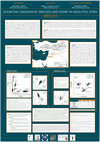
This study details the elemental characterisation of obsidian assemblages from two Syrian Neolith... more This study details the elemental characterisation of obsidian assemblages from two Syrian Neolithic sites, Tell Aswad (middle/late PPNB) and Qdeir 1 (final PPNB). Two complementary non-destructive techniques were employed: SEM-EDS which permitted the analysis of the smallest artefacts, plus EDXRF whose precision, speed and automation enabled us to characterise entire assemblages (a total of 622 artefacts) and fully discriminate the various source materials represented.
Our analyses provided new information on the obsidian employed by the two communities, demonstrated the complementarity of the two analytical methods in a Near Eastern context and showed for the first time that EDXRF is capable of discriminating the peralkaline products of Bingöl A and Nemrut Dağ, two of the most important sources of the region.
EASTERN ANATOLIA 200 km Bingöl A/B Sources Archaeological sites N INTRODUCTION Te l l A s w a d i... more EASTERN ANATOLIA 200 km Bingöl A/B Sources Archaeological sites N INTRODUCTION Te l l A s w a d i s a P P N B s i t e i n s o u t h e r n S y r i a ( D a m a s c u s b a s i n ) , e x c a v a t e d b y t h e E l K o w m -M u r e y b e t p e r m a n e n t m i s s i o n o f t h e Maison de l'Orient et de la Méditerranée (Lyon, France) since 1972. I n o r d e r t o u n d e r s t a n d t h e o b s i d i a n e c o n o m y o f t h e s i t e f o r t h e m i d d l e / l a t e P P N B p e r i o d ( 8 2 0 0 -7 5 0 0 c a l B C ) , w e c o n d u c t e d t w o s e t s o f n o n -d e s t r u c t i v e a n a l y s i s , b y S E M -E D S a t t h e C R P 2 A (Pessac, France) and by EDXRF at the MAX Lab (Hamilton, Canada).
Western Mediterranean by Marie Orange
PhD Thesis, 2017
This research project focuses on the reconstruction of obsidian economies in Middle Neolithic set... more This research project focuses on the reconstruction of obsidian economies in Middle Neolithic settlements (5th-4th millennium B.C.) from Corsica (Western Mediterranean area). Considered as a ‘marker’ of the Neolithisation process, this raw material allows direct insight into population movements and human contacts (exchange, trade patterns), technical know-hows, and ultimately on the diffusion mode of cultural models. The present work follows a long tradition of obsidian sourcing studies while integrating the latest trends of the discipline adopted by our research group. Relying on the exhaustive and non-destructive analysis of the obsidian assemblages, our approach allows the extraction of as much information as possible from the artefacts. Such a strategy depends on the combined use of several analytical techniques, such ED-XRF, pXRF, PIXE, SEM-EDS, and LA-ICP-MS to allow the geochemical characterisation of every artefact regardless of its size, shape, or surface state. The conclusions drawn on the local obsidian economies investigated bring new information to deepen our understanding of the Neolithic communities of the Western Mediterranean area.
Approches analytiques pour les études de provenance d’obsidiennes en Corse préhistorique / Avvicinere analìttiche per i studii di pruvenienza d’ussidiana in Corsica prestòrica
Actes du 1er colloque de Calvi – L’habitat pré- et protohistorique / L’alloghju prestoricu è protostoricu, J. Sicurani (ed.), 2019
En Corse, les outils taillés en obsidienne sont fréquents dans les séries néolithiques, or cette ... more En Corse, les outils taillés en obsidienne sont fréquents dans les séries néolithiques, or cette matière première vitreuse est allochtone. Rechercher ses sources potentielles est une étape clé pour appréhender l’organisation des habitats préhistoriques et les interactions entre les groupes humains en zone tyrrhénienne. La communication proposée s’efforcera de démontrer la nécessité d’optimiser les stratégies analytiques afin de répondre efficacement aux enjeux actuels des études de provenance. In Corsica, si tròvanu assai arnesi sculpiti in ussidiana in e serie neulìtiche, eppuru sta matèria prima vitrosa vene d’altrò. Ricircà ne e so pussìbule surgente hè tandu una chjave per avvicicinà u megliu ch’ellu si pò l’urganisazione di l’abitati prestòrichi è l’interazzione trà gruppi umani in l’aghja tirrènia. A cumunicazione pruposta circarà di mette in ballu a necessità d’uttimizà e strategìe analìttiche per pudè risponde megliu à a prublemàtica oghjinca di sti studii di pruvenienza.
On sourcing obsidian assemblages from the Mediterranean area: Analytical strategies for their exhaustive geochemical characterisation
Journal of Archaeological Science: Reports, 2017
This paper presents an overview of the work conducted by our research group in the Mediterranean ... more This paper presents an overview of the work conducted by our research group in the Mediterranean area. Initiated in the 1990s by the late Gérard Poupeau, our research relies on international and multidisciplinary collaborations to endeavour archaeological and anthropological issues linked to the diffusion and consumption of the obsidian raw material during the Neolithic period. Our line of action is to develop flexibly unique analytical strategies, tailored to each obsidian assemblage considered for a sourcing study. Drawing its strength from the complementarity of the methods available within our group, _i.e._ visual characterisation, SEM-EDS, ED-XRF, pXRF, PIXE, and LA-ICP-MS, this approach allows for the exhaustive and non-destructive analysis of those assemblages, thus optimising the potential of sourcing studies. Working hand in hand with archaeologists, the results are closely integrated to the information brought by the typological and technological characteristics of the artefacts, in the aim to reconstruct an overview of the obsidian economy at site level, but also to replace it in a broader — regional and supra-regional — context.
Obsidian economy on the Cauria Plateau (South Corsica, Middle Neolithic): New evidence from Renaghju and I Stantari
Quaternary International, 2018
This paper aims to study and compare the obsidian economies of Renaghju and I Stantari, two neigh... more This paper aims to study and compare the obsidian economies of Renaghju and I Stantari, two neighbouring Neolithic sites located on the Cauria plateau (south-western Corsica). The occupation phase 3 of Renaghju and phase 1 of I Stantari, both attributed to the Middle Neolithic (fifth millennium BC), have provided respectively 112 and 99 obsidian artefacts. With the aim of completing our rather lacunary knowledge of the obsidian consumption behaviours in place in Corsica during this period, the entire assemblages have been geochemically characterised virtually non-destructively using LA-ICP-MS at SOLARIS (Southern Cross University [SCU]). Our analyses revealed that, while the obsidian raw materials were exclusively sourced from the Monte Arci complex in Sardinia (SA, SB2, and SC sub-types only), rather different consumption patterns are observed for the two sites despite their comparable nature (megalithic sites) and geographical proximity (400m apart). These differences in obsidian consumption on adjacent sites could be explained by their divergent functions (ceremonial site [Renaghju] vs. ceremonial locus and large settlement [I Stantari]), or eventually point towards the need for a readjustment of the chronological attribution of the I Stantari phase 1 occupation level.



Uploads
Caucasus by Marie Orange
While different routes between these two regions have been suggested, i.e. through the Araxes valley and the Vorotan valley, none of these hypotheses has so far been substantiated by sufficient data to confirm either possibility. This is especially the case for the Araxes valley alternative, which involves the crossing of Nakhchivan, a region where only a handful of obsidian artefacts had been analysed until recently. However, new data from two recent research programs has brought key information regarding the role of mobile pastoralists in the exploitation and diffusion patterns of obsidian in the Southern Caucasus from the Neolithic to the Bronze Age (6200-1500 BC). By investigating the obsidian industries found on numerous mobile pastoral campsites located in the mountainous areas of Nakhchivan, these projects offer crucial new insights into the complex socio-economic systems in place in the Southern Caucasus during the Chalcolithic.
In order to investigate the connections between Nakhchivan and northwestern Iran from the Neolithic to the Early Bronze Age, and the relationship between mobile pastoralism, the exploitation of natural resources, and technological innovations, two research programs have successively been initiated since 2016: the PAST-OBS pilot project ([ANR-10-LABX-] dir. F.-X. Le Bourdonnec, 2016-2018) and the SCOPE project (2018-2021). These research programs mainly focus on the study of the obsidian consumption patterns on either side of the Araxes River.
For the study of the numerous obsidian assemblages unearthed in the framework of the Mission Archéologique du basin de l’Araxe (Nakhchivan, dir. C. Marro), and of the artefacts collected in recent surveys in northwestern Iran (surveys conducted by A. Abedi in the Salmas, Sarab, and Urmia Lake regions), we rely on a multi-platform analytical strategy using portable XRF and LA-ICP-MS to allow non-destructive and exhaustive geochemical analyses. In total, more than 2500 artefacts have been characterized so far.
The results produced by the PAST-OBS and SCOPE projects have shown a much diversified use of the South Caucasian and Anatolian obsidian sources, both in Nakhchivan and in northwestern Iran. In Nakhchivan, the Geghasar and Syunik outcrops clearly dominate the assemblages, irrespective of the period considered, and are supplemented by a sporadic use of sources located in Armenia, Anatolia, and Georgia. The variety of obsidian raw materials (up to a dozen) observed in the valley settlements (Ovçular Tepesi and Kultepe) in comparison to the mobile camps located further up in the mountains (Uçan Agil, Bûlôv Qayasi, i.a.) seem to confirm the central role of these sites in the redistribution of obsidian.
Compared to Nakhchivan, the consumption pattern observed south of the Araxes, in northwestern Iran, seems somewhat reversed. Our results indeed show an overall predominant use of the Anatolian products, mostly coming from the Nemrut Dağ and Meydan Dağ outcrops, and a more limited use of the Armenian sources, represented by less than 20% of the artefacts. This suggests, along with the sole presence of end-products made of Nemrut Dağ obsidian in Nakhchivan, that eastern Anatolian obsidians were most likely obtained ‘directly’ by northwestern Iranian mobile pastoral groups via another route, and that some rare implements made their way to Nakhchivan during the summer journeys to the Armenian highland pastures. Along with the movement of Syunik obsidian from the sources to the sites of northwestern Iran (from north to south), the opposite movement of Nemrut Dağ obsidian from south to north, if confirmed, would corroborate the connections between these two regions. Surprisingly, the diffusion of Meydan Dağ obsidian is slightly different from that of the Nemrut Dağ material: despite its relative proximity to the latter, Meydan Dağ obsidian is indeed present in larger amounts in Nakhchivan; it is thus possible that this material was introduced in Nakhchivan through another route. In order to better understand how these consumption patterns relate to (or complete) each other, further surveys and analyses are now needed.
Le projet Southern Caucasus Obsidian Prehistoric Exploitation [SCOPE], débuté en 2018, a pour but d’approfondir les recherches entamées par le projet PAST-OBS. L’objectif principal de ce programme est la mise en évidence de potentiels changements dans l’orientation des axes de diffusion du matériau ‘obsidienne’ au moment de l’introduction de la métallurgie extractive, mais aussi la documentation de changements éventuels au niveau des stratégies d’approvisionnement à l’apparition des produits secondaires dérivés de l’élevage. La sélection plus exhaustive de sites étudiés – de l’Azerbaïdjan de l’est au sud du lac d’Urmiah – donne à ce projet un avantage crucial sur la plupart des travaux menés jusqu’à présent dans la région.
Notre communication présentera un bilan des résultats du projet PAST-OBS, ainsi que les résultats préliminaires obtenus dans les limites du projet SCOPE.
Near East by Marie Orange
[1] Poupeau G. et al., 2010. The use of SEM-EDS, PIXE and EDXRF for obsidian provenance studies in the Near East : a case study from Neolithic Çatalhöyük (central Anatolia). Journal of Archaeological Science, 37, 2705-2720.
[2] Carter T. & Contreras D. A., 2012. The character and use of the Soros Hill Obsidian source, Antiparos (Greece). Comptes Rendus Palevol, in press.
[3] Stordeur D. & Jammous B., 2009. La Damascène et la révolution néolithique. Annales Archéologiques Arabes Syriennes, LI-LII, 7-16.
[4] Stordeur D. (Dir.), 2000. El Kowm 2. Une île dans le désert. La fin du Néolithique précéramique dans la steppe syrienne. Paléorient, CNRS Editions, 322 p.
[5] Orange M., 2012. L’obsidienne néolithique au Proche-Orient : analyse de provenance et étude technologique des séries syriennes de Tell Aswad (PPNB moyen/récent) et Qdeir 1 (PPNB final). Mémoire de Master 2, Université Bordeaux III, France, 100 p.
[6] Shackley M.S. (Ed.), 2011. X-Ray Fluorescence Spectrometry (XRF) in Geoarcheology. Springer, New York, 231 pp.
[7] Carter T., 2012. Lithics (chipped stone and obsidian sourcing study). In Momigliano N. et al. Settlement history and material culture in southwest Turkey: report on the 2008–2010 survey at Çaltılar Höyük (northern Lycia), Anatolian Studies 61: 61-121 [109-112].
Our analyses provided new information on the obsidian employed by the two communities, demonstrated the complementarity of the two analytical methods in a Near Eastern context and showed for the first time that EDXRF is capable of discriminating the peralkaline products of Bingöl A and Nemrut Dağ, two of the most important sources of the region.
Western Mediterranean by Marie Orange