Books by Markus Lundström
Research paper thumbnail of Anarchist Critique of Radical Democracy: The Impossible Argument, Second Edition

PM Press, 2023

In the spring of 2013, a wave of urban riots swept across Sweden after police shot an elderly man... more In the spring of 2013, a wave of urban riots swept across Sweden after police shot an elderly man in his own home. When community residents from his marginalized city-district demanded an official apology, they were ignored. The anti-police insurgences that followed addressed deep problems of the Swedish welfare state, and the official responses revealed glitches built into democracy itself. In this updated edition of Anarchist Critique of Radical Democracy: The Impossible Argument, sociologist and historian Markus Lundström explores the boundaries of Swedish democracy. He probes in-depth interviews with community residents to explain how the 2013 riots intensified a profound democratic conflict: the social divide between the governors and the governed. Resistance to this divide is then traced through the defiance of governance and approaches to democracy in the history of anarchist thought. This book offers an original introduction to anarchism. It relates the diversity of anarchist thought to anti-police riots and the radicalization of democracy.

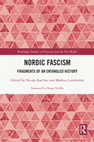
Research paper thumbnail of Nordic Fascism: Fragments of an Entangled History

Nordic Fascism: Fragments of an Entangled History (eds.), 2022

Transnational cooperation between radical nationalists has especially been the case in Sweden, De... more Transnational cooperation between radical nationalists has especially been the case in Sweden, Denmark, Norway, and Finland, where fascism has not only developed through interdependent processes but also through interactions between and beyond national boundaries, and where “racial relationship” has been a core argument. With chapters ranging from the inception of fascism in the interwar years up to the present day, this book offers the first fragments of an entangled history of Nordic fascism. It illuminates how The North occupies a special place in the fascist imagination, articulating ideas about the Nordic people resisting the supposed cultural degeneration, replacement, or annihilation of the white race. The authors map ideological exchange between fascist organisations in the Nordic countries and outline past and present attempts at pan-Nordic state building.

This book addresses the conflictual nature of radical democracy. By analyzing democratic conflict... more This book addresses the conflictual nature of radical democracy. By analyzing democratic conflict in Husby, a marginalized Stockholm city district, it exposes democracy’s core division – between governors and governed – as theorized by Jacques Rancière. Tracing the genealogy of that critique, the book interrogates a historical tradition generically adverse to every form of governance, namely anarchism. By outlining the divergent and discontinuous relationship between democracy and anarchy – within the history of anarchist thought – the author adds to democratic theory ‘The Impossible Argument’: a compound anarchist critique of radical democracy.

The Making of Resistance: Brazil’s Landless Movement and Narrative Enactment, 2017

This book advances a theoretical approach that recognizes social movements as contingent enterpri... more This book advances a theoretical approach that recognizes social movements as contingent enterprises. It explores the endurance of social movements over time, by developing analytical tools to study how social movement heterogeneities are simultaneously acknowledged and articulated together, through collective narration and practices. With a unique empirical analysis of one particular narrative – the story of Brazil’s Landless Movement – this book portrays a narrative revisited and revised by movement participants, a story revived through enactment. This book addresses the increasing academic audience seeking to study, and theorize, the multi-colored phenomena of resistance and social movements.

Articles and Chapters by Markus Lundström
Research paper thumbnail of Pentecostalism and Antisemitism The Prophecy of God's Hunters

Pneuma, 2026

Critical Pentecostal studies increasingly chart racism in the movement's history, while racializa... more Critical Pentecostal studies increasingly chart racism in the movement's history, while racialization of Jews remains largely unexplored. This article contributes by analyzing Christian Zionism and political antisemitism in the teachings of Lewi Pethrus (1884-1974), a key figure of formative Pentecostalism during the Holocaust era. By examining his publications, editorials, sermons, and correspondence, the article reveals an ambivalent racialization of Jews as both threat and promise: Jewish power posed a cultural threat by its degenerative and anti-Christian agenda while relocation of Jews to Palestine bore the promise of God's plan for world redemption. With this theological outlook, Pethrus rallied against alleged attacks on Christian values in Sweden while promoting Jewish migration to Palestine. The dispensational Jews-to-Palestine call-based on Jeremiah 16:16 prophesying about fishers of Zionism and hunters of antisemitism-answered the so-called Jewish question in this Pentecostal vision of national rebirth.

Research paper thumbnail of (2025) - Lewi Pethrus och radikalnationalismen

Personhistorisk tidskrift, 2025

Lewi Pethrus (1884–1974) var en av grundarna till den svenska pingströrelsen. Som pastor för Sver... more Lewi Pethrus (1884–1974) var en av grundarna till den svenska pingströrelsen. Som pastor för Sveriges första och största pingstförsamling fungerade Pethrus som pingströrelsens ledare från seklets början fram till sin död. Han drev teologiska tidskrifter och bokförlaget Filadelfia, var ansvarig utgivare för rörelsens huvudorgan Evangelii Härold och 1945 lanserade han tidningen Dagen. Pethrus författarskap sträcker sig över sex decennier och innefattar ett femtiotal böcker samt en lång rad ledartexter och tidningsartiklar. Hans väckelsekristna arbete utmynnade i ett politiskt engagemang som 1964 kulminerade i grundandet av partiet Kristen Demokratisk Samling.

Denna artikel kastar nytt ljus över Pethrus politiska arbete genom en historisk undersökning av hans förhållande till den svenska radikalnationalismen. Studien bygger på hans publicerade texter samt opublicerat källmaterial från personarkivet i form av predikomanus och brevkorrespondens. Undersökningen omfattar även arkiv från Kristen Demokratisk Samling, Filadelfiaförsamlingen, Tyska legationen i Stockholm, Säkerhetspolisen (SÄPO) med föregångare, radikalnationalistiska arkivsamlingar samt nationalsocialistisk korrespondens vid Das Bundesarchiv och Politisches Archiv des Auswärtigen Amtes i Berlin. Studien inbegriper även audiovisuellt material från SVT:s arkiv samt mikrofilmade tidningar och tidskrifter vid Kungliga biblioteket.

Sammantaget visar det historiska källmaterialet att Lewi Pethrus under hela sitt verksamma liv uttryckte antisemitiska föreställningar om illvillig judisk makt. Föreställningarna integrerades i en dispensationalistisk eskatologi, läran om världshistoriens slutskede där judarnas lidande och repatriering spelade en nyckelroll. I undervisningen kombinerades Pethrus antisemitism med kristen antijudaism, föreställningen att judarna måste straffas eftersom de förkastat Messias. Fram till 1950-talet predikade han om Novemberpogromerna och Förintelsen som Guds straff över judarna.

Lewi Pethrus antisemitiska uttryck följde den svenska radikalnationalismens idéutveckling under 1900-talet, från öppna anklagelser om judisk makt till ett terminologiskt kodspråk. Arkivstudien visar att Pethrus läste och refererade till antisemitisk litteratur samt korresponderade med Sveriges ledande radikalnationalister från mellankrigstiden och livet ut. Dessa personliga och organisatoriska kontaktnät manifesterades genom inbjudningar, publicistiskt stöd, politiskt samarbete och val av nationalsocialistiska medarbetare.

Slutsatsen är att Lewi Pethrus bidrog till den svenska radikalnationalismens idémässiga och organisatoriska utveckling genom sitt samarbete med organiserade nationalsocialister och sin undervisning om judarnas fientliga makt och självförvållande lidande under Förintelsen.

International Journal of Social Research Methodology, 2025
The emergent field of podcast research is typically devoid of critical reflection on the ethical ... more The emergent field of podcast research is typically devoid of critical reflection on the ethical borderlands of digital lurking and personal data protection. This article draws on methodological literature, guidelines for digital media studies, legislation, and knowledge produced by the emerging podcast-ethnographic research field to expound three ethical considerations: (i) determining whether the podcast contains sensitive or personal data; (ii) distinguishing between publicly and openly available podcasts; (iii) reflecting critically on whether to use an overt or covert intervention. These ethical considerations provide a rough guide for reflexive ethics of podcast research.

Research paper thumbnail of Den svenska radikalnationalismens genesis

Historisk tidskrift, 2025

While historical studies of fascism in Sweden typically start in the interwar period, this articl... more While historical studies of fascism in Sweden typically start in the interwar period, this article traces the political-ideological roots in the nationalist era leading up to the Great War. It depicts the genesis of Swedish radical nationalism, a political ideology centred on tying an imagined people to a bordered territory. In the early twentieth century, radical nationalism in Sweden articulated that the people were diluted by cultural decadence and uncontrolled migration, while the territory was threatened by geopolitical aggression from Russia. This radicalisation of national defence was driven by a gendered logic of masculinist protection, reinforced by an emergency temporality oriented towards national rebirth. Whereas national conservatism cultivated the memory of paradise lost, radical nationalism became the politics of resurrection: Swedishness restored and Sweden reborn. This ideational assemblage of defence and rebirth was articulated in a series of books, articles, and journals published by three men – Rudolf Kjellén, Adrian Molin, and Teodor Holmberg – who have become ideological sages for the nationalist movement today; radical-nationalist think tanks are republishing Kjellén’s and Molin’s political manifestos while the Sweden Democrats publicly acknowledges its debt to Holmberg’s political thought. In that sense, the genesis of Swedish radical nationalism serves as an ideological resource when demanding the reinforcement of the exclusionary mechanisms of the modern nation-state.

Journal of Child and Family Studies, 2023
While research on parenting programs typically focuses on program-specific evaluations, this arti... more While research on parenting programs typically focuses on program-specific evaluations, this article considers therapeutic competence as a transversal feature across different programs. It draws empirically on focus group interviews with practitioners of two separate parenting programs in Sweden: Circle of Security (COS-P) and Communication Method (COMET). The qualitative data analysis shows how the practitioners of both programs used their therapeutic competence to tailor the program manuals for each parent group; they combined the techniques of positive reinforcement and intentional self-disclosure with an attuned flexibility that was enabled by mentalization. The article concludes that therapeutic competence is a crucial aspect of parenting programs that needs further attention from scholars and practitioners alike.

Research paper thumbnail of Radical nationalism

Journal of Political Ideologies, 2023

Radical nationalism is a political ideology centred on tying an imagined people to a bordered ter... more Radical nationalism is a political ideology centred on tying an imagined people to a bordered territory. It grows from nationalism's root system into a diversity of political manifestations aimed at sealing the people-territory bond. By theorizing radical nationalism, this article outlines a political-ideological approach that opens new pathways for studying the so-called far right. The article draws on Michael Freeden's conceptual-morphological theory and delineates how nationalism's thin-centred conceptual core-people and territory-can thicken into a full-bodied political ideology: from football and flags to systemic discrimination, deportations, and mass violence. In response to the empirical observation that radical nationalism nurtures historical and contemporary actors across the left-right spectrum, the article offers a political-ideological lens for transhistorical analyses of various political manifestations that sprout and flourish from the exclusionary roots of the modern nation-state.

Social Movements in 1980s Sweden: Contention in the Welfare State , 2023
Anarchism in Sweden had been around for nearly a century when the turbulent 1980s arrived. As sho... more Anarchism in Sweden had been around for nearly a century when the turbulent 1980s arrived. As shown throughout this anthology, the decade was marked by social marginalization, political tension, and cultural exploration. It was a hotbed for social movements, a breeding ground for new forms of activism, perennial growth of recurring contention-and regeneration of politics buried in the social soil, like pyrophile plants sprouting through a wildfire. When anarchism met punk in the Swedish 1980s, certain repertoires of contention became revived and enacted, exhibiting how remembered actions from the past can give life to collective action in the present and revive the struggle for a desirable future. In the vein of social movement literature concerned with the interplay between cultural

Research paper thumbnail of The Nature of Nordic Fascism: An Introduction

Nordic Fascism: Fragments of an Entangled History, 2022
This chapter introduces the rationale for mapping the nature of Nordic fascism. It clarifies the ... more This chapter introduces the rationale for mapping the nature of Nordic fascism. It clarifies the theoretical, methodological, and conceptual starting points that inform the book chapters and binds them together. Nordic fascism is here construed as a revolutionary branch of radical nationalism that encompasses a plethora of historical and contemporary manifestations in Sweden, Norway, Denmark, and Finland. The introduction chapter outlines how Nordic fascists typically share a mythical belief in the exceptional Nordicness and The North as an idealised past and a desired future. It offers a unique historical overview of fascism in the Nordic countries, a development unfolding not only with varied pace and intensity across localities but also through entanglements that transcend national boundaries. Entangled history is presented as a joint effort by the chapter contributors to capture how political ideas and actions develop across the Nordic countries. The chapters of this book are all based on original research and present new findings – fragments – of an entangled history of Nordic fascism.

Research paper thumbnail of Young in pandemic times: a scoping review of COVID-19 social impacts on youth

International Journal of Adolescence and Youth, 2022

This scoping review article concerns COVID-19 social impacts on youth between 15 and 24 years old... more This scoping review article concerns COVID-19 social impacts on youth between 15 and 24 years old. The article charts 108 scientific journal articles, published between 1 March 2020 and 1 November 2021, encompassing 27 different countries but primarily concerning the USA (30%) and Canada (12%). The reviewed studies tell the overall hardship of being young in pandemic times; they report collective experiences of isolation, constraint, loss of formative life moments, and reverberation of structural inequalities. But they also show that the pandemic is not just passively consumed by the youth of today; young people are likewise at the forefront of collective mitigation strategies and community support organizing. Based on these scoping review findings, the article concludes that further agency-oriented research on youth responses is vital for a deeper understanding of what it can mean to be young in pandemic times.

Time & Society, 2022

Crisis is a conceptual tool for synchronizing different experiences of time. It is operative in n... more Crisis is a conceptual tool for synchronizing different experiences of time. It is operative in notions of the Financial Crisis, the Crisis of Democracy, the Climate Crisis-and the Corona Crisis. This article explores that synchronization through an empirical inquiry into the different timescapes of the Corona Crisis. It builds empirically on 200 interviews with residents in Norra Botkyrka, which is located at the fringes of Sweden's capital Stockholm. The thematic analysis shows how the respondents' different time frames, time orders, tempos, and timings become synchronized through the crisis concept, but also how they invoke active and passive desynchronization. This temporal diversity points out the interplay between social differences and the various ways people are (de)synchronizing with the Corona Crisis.

Critical Sociology, 2023

Whereas the sociology of food has drawn attention to differences between corporate and alternativ... more Whereas the sociology of food has drawn attention to differences between corporate and alternative foodways, the political imaginations underpinning the latter are often overlooked. This article distinguishes between different political imaginations of the community kitchen, a set of practices characterised by collective preparation and redistribution of food. The analysis builds on ethnographic and archive material in Sweden to outline how the folkkök (people's kitchen) was once an institutional practice to address urban food insecurity, soon outsourced as altruistic soup kitchens, and then regenerated a century later by the anarchist movement. By distinguishing between altruistic and anarchistic imaginations in this analysis, the article adds another layer to the critical sociological study of alternative foodways.

Moving the Social: Journal of Social History and the History of Social Movements, 66, Oct 31, 2021

This article explores how anarchist women viewed the feminist struggle for suffrage in the early ... more This article explores how anarchist women viewed the feminist struggle for suffrage in the early 1900s. By focusing on this ostensible historical anomaly — women against patriarchy refuting the call for women’s suffrage — the article ventures into a plural history of feminism. The historiographic wave metaphor, typically employed to portray different stages of feminism, is here reimagined as radio waves. Through a variety of publications written by influential anarchist women, the article tunes into a broadcast that airs how anarchy expels patriarchy through a generic struggle against hierarchy. The case of anarchist women and women’s suffrage arguably signposts how to productively invoke plurality in social movement historiography.

Research paper thumbnail of Barns perspektiv pa svensk vardagsrasism [Children's perspectives on everyday racism in Sweden]

Sociologisk forskning, 58(4), Feb 21, 2022

Tidigare forskning har visat att barn återkommande utsätts för rasism i den svenska skolan, en sa... more Tidigare forskning har visat att barn återkommande utsätts för rasism i den svenska skolan, en samhällsinstitution med målet att motverka alla former av diskriminering. Den här artikeln undersöker varför skolelever fortsätter att utsättas för rasism trots den svenska skolans antirasistiska ambitioner. Problemet angrips genom att analysera svensk vardagsrasism med hjälp av barns perspektiv. Artikeln bygger på åtta fokusgruppsintervjuer med mellanstadieelever och en grupp medforskande elvaåringar som bidragit till intervjuguiden och den empiriska analysen. Studieresultaten pekar på att vardagsrasismen förblir osynlig för vuxna, medan barn själva lyckas identifiera rasistiska mikroaggressioner i skolans vardag. Studien visar också att barn har antirasistiska intentioner men saknar nödvändigt stöd och skydd från vuxenvärlden för att kunna agera. Slutsatsen är att den svenska skolan behöver uppmärksamma vardagsrasismens subtila verkningar och att barns perspektiv kan bidra till en sådan lärandeprocess.

Previous research has demonstrated that many children experience racism in the Swedish school system, a public institution that formally aims to combat all forms of discrimination. The question posed in this article is how racism can endure despite the school system's anti-racist agenda. Everyday racism is examined from children's perspectives, based upon eight focus groups with primary school pupils and a group of 11-year-old co-researchers who contributed to the interview planning and data analysis. The focus group discussions show that while everyday racism is typically concealed, invisible to teachers and other adults, racial microaggressions are nevertheless often detected by children themselves. The analysis reveals that children have the intention to speak up against everyday racism, but lack the necessary support and protection from adults. The article concludes that to fight racism in the Swedish school environment, adults must learn how everyday racism operates and in that learning process actively consult children for their perspectives.

Fascism. Journal of Comparative Fascist Studies, 10(1), 2021
This article sketches fascism's ideological morphology under a post-fascist condition. It builds ... more This article sketches fascism's ideological morphology under a post-fascist condition. It builds empirically on three years of ethnographic studies of the radical-nationalist podcast Motgift [Antidote], disclosing that (i) fascist multivocality characterizes and feeds the rhizomic structure of Swedish radical nationalism; (ii) fascist narration locates protagonists and antagonists in driving a plot of 'genocide against the white race'; and (iii) fascist temporality reinforces ideas of a lost past and degenerated present-prompting a struggle for cultural rebirth and racial revival. The multivocality, narration, and temporality of Motgift illuminate the radical-nationalist politics at work under a post-fascist condition: the state of ideological reconfiguration pondering fascism's historical downfall.

Research paper thumbnail of The temporal nexus of collective memory mediation: print and digital media in Brazil's Landless Movement 1984-2019

Social Movement Studies, 2021

Social movement scholarship has increasingly shown how continuous mobilization depends on collect... more Social movement scholarship has increasingly shown how continuous mobilization depends on collective memory construction. This article sets out to study this formative activity in a changing media landscape. It asks how activists navigate the temporal nexus of collective memory mediation. The empirical focus is on Brazil’s Landless Rural Workers’ Movement (MST), a well-established organization that since the early 1980s has communicated its collective memories on several media platforms. This article also demonstrates, through a corpus analysis of MST’s internal newspaper, Jornal Sem Terra (1984–2014), and its Facebook page (2014–2019), how collective memories of rural violence serve various functions in these different media. The empirical study verifies the formative implication of rural violence for Brazil’s landless movement, but also unveils notable differences between the newspaper and Facebook in this regard. Whereas Jornal Sem Terra employed a horizontal collective memory construction through contemporary documentation of ongoing and upcoming events, the Facebook posts primarily engaged in the vertical extraction of already established
memories. In other words, the print media produced a narrative around collective memories of rural violence, and these memories were re-produced through digital media platforms. These empirical findings implicate that renewed methodologies are needed in future studies of social movements.
Research paper thumbnail of Researching Otherwise? Autoethnographic Notes on the 2013 Stockholm Riots

Critical Sociology, 2021

Market adaptation, fragmentation and precariousness have been widely documented as problematic fe... more Market adaptation, fragmentation and precariousness have been widely documented as problematic features of knowledge production processes in the university. This article follows an undercurrent of critical scholarship to explore how paths of resistance can be opened up by researching otherwise. The article builds on autoethnographic notes from a collective and non-funded research project aimed at gathering in situ narratives from people who experienced the 2013 Stockholm Riots. The research strategy behind this project, its organization as well as its results and reception, is here used as a point of departure to scrutinize the conditions of the possibility of critical knowledge production. The article draws attention to a critical place for doing research-in the cracks of the university-which arguably complicates the academic-public divide and keeps open discursive spaces during troubling moments of closure.