Conference Presentations by Marta Valerio
Dans les sources royales égyptiennes, depuis les temps les plus reculés, les étrangers sont repré... more Dans les sources royales égyptiennes, depuis les temps les plus reculés, les étrangers sont représentés comme des captifs, dans une variété de contextes et sur d’innombrables supports. Dans de nombreux cas, il ne s’agit que d’images stéréotypées d’étrangers soumis au pouvoir du pharaon, le résultat de la lutte (souvent fictive) du pharaon contre une ou plusieurs puissances étrangères. Toutefois, les sources nous permettent parfois de reconstituer certains aspects de la réalité historique de la condition du prisonnier.
Au Nouvel Empire notamment, les sources iconographiques et écrites permettent de retracer le processus de transformation des prisonniers de guerre, qui passent du statut d’ennemis soumis à celui de parties intégrantes du système économique et social égyptien. Au fur et à mesure que ces étrangers y pénètrent, la façon dont ils sont décrits dans les sources change, montrant moins d’éléments de distance et d’altérité par rapport aux coutumes égyptiennes.
Osservando le lunghe file di prigionieri raffigurate dai sovrani ramessidi sulle pareti dei templ... more Osservando le lunghe file di prigionieri raffigurate dai sovrani ramessidi sulle pareti dei templi tebani, colpisce la violenza con cui i loro corpi sono trattati. Mentre sfilano davanti al carro del faraone o mentre vengono presentati al cospetto delle divinità, le braccia dei nemici vinti sono contorte in posizioni spesso innaturali e sono trattenute da una corda che li lega poi gli uni agli altri, mentre un capo è trattenuto dal faraone. Se li si osserva con maggiore attenzione, si può notare che le mani di alcuni di alcuni prigionieri sono immobilizzate da dispositivi che possono essere interpretati come manette. Questi oggetti sono attestati nelle fonti egiziane in almeno due tipologie: a forma allungata (quella maggiormente ricorrente) e a forma di leone. Le rappresentazioni di prigionieri ammanettati, per quanto circoscritte al Nuovo Regno, non sono repertorio esclusivo dei rilievi templari ramessidi, ma sono anche presenti nei monumenti regali e nelle tombe private della XVIII dinastia. Le manette sono attestate nelle fonti egiziane soprattutto a livello iconografico, ma il loro uso effettivo sembra essere confermato da alcune fonti testuali e archeologiche. Almeno tre esemplari in legno sono noti dai ritrovamenti archeologici: due a forma di leone e uno di forma allungata. Le loro proporzioni e il sistema di funzionamento sembrano corrispondere a quanto visibile nei rilievi. Infine, il racconto della “Presa di Joppa”, conservato dal papiro Harris 500 fornisce una possibile attestazione del termine utilizzato per identificare le manette.
Il presente contributo presenta le fonti iconografiche, testuali e archeologiche ad oggi note che permettono di identificare questi strumenti, al fine di discuterne il funzionamento e il loro utilizzo.
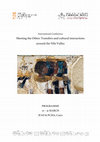
During the New Kingdom, the presence of foreign troops in the Egyptian army was well attested, bo... more During the New Kingdom, the presence of foreign troops in the Egyptian army was well attested, both in the visual and iconographic official documentation. This massive presence of foreigners in the army has generally been associated with new know-how and new military technologies, that quickly integrated into the art of Egyptian warfare. Evidence suggests that the conscription of foreign soldiers had been constantly increasing since the 18th dynasty. However, during the Ramesside period, a part of these foreign contingents started to be made of prisoners taken during the conflicts, and therefore being the direct outcome of war.
From an ideological and symbolic point of view, the act of integrating a former enemy in the pharaoh’s army had a strong significance, which is well attested in the sources. However, it is less clear what the actual consequences of this practice were. How successful were these foreign people to settle in the country? How important was it for these foreign soldiers to retain a separate and distinctive cultural identity?
My paper will discuss the presence of foreign troops in the Egyptian army during the New Kingdom with the objective of understanding their relevance in the processes of integration and hybridization of the Egyptian society. By focusing on written and visual sources concerning troops of Asiatic provenance, I will suggest that Egyptians did not perceive the considerable presence of foreign groups installed in certain areas of the country, tied by a strong sense of community belonging, as a threat to the central power.
When we talk about the practice of branding, we mostly refer to the cattle branding with a hot ir... more When we talk about the practice of branding, we mostly refer to the cattle branding with a hot iron, a technique attested in Egypt since the Old Kingdom. During the New Kingdom several representations coming from tombs show the branding activity on livestock and display different types of branding irons. This was an evident sign of economic control, since each symbol was used as a mark of possession by institutions and privates. Some written sources also deal with this practice and allow us to understand some material aspects of this usage. To indicate the branding instrument and the action of branding, Egyptians used the word Ab/Abw (Wb I 6,18-23 ). Taking this information into account, how could this word to be understood when referred to humans? We know for example that some marks could be affixed with a hot iron as punishement for some crimes. If this practice can be intended as real (because of its violence and its permanents effects, meaningful in a juridical context), other cases require more caution in interpretation. In religious and literary texts we can find the action of branding as a metaphor which indicates the influence exerted by a deity or by a person on a person or on a group of people. Moreover, at least three attestations from the Ramesside period deal with branding of prisoners of war and in all these examples the purpose of marking prisoners was to give an exterior sign of the fact that these people entered in the pharaoh’s possession. By contextualizing these sources within a wider investigation of branding practices during the New Kingdom, this paper will discuss whether human branding was a form of control really happening in this period or whether it has to be considered only in a metaphoric way.

The presence of foreigners in Egypt lasted throughout the entire Pharaonic era. It had different ... more The presence of foreigners in Egypt lasted throughout the entire Pharaonic era. It had different features depending on epochs and increased during the New Kingdom, because of forced installations of great amounts of prisoners of war. In the Pharaonic ideology, foreigners represented the Nine Bows against which the Egyptians fought to maintain the order of the Maat, the cosmic order – a mission that the deity attributed to the Pharaoh. But sources show a stark difference in the ways in which Egyptians described the foreigner outside of Egypt and the foreigner within Egypt. Referring to the A. Loprieno’s theory of topos and mimesis, I will use the forced installation of prisoners of war as a case study to investigate the Egyptian consideration of foreigners living and working in Egypt and the reflections of this vision in written and visual sources. Some official sources, created for propaganda purposes, underline the importance of a rapid "egyptization" of these people, obtained by forcing them to abandon their language and learn Egyptian, a necessary and irreversible process. But beyond the propagandistic proclamations, what information on the presence of foreigners in Egypt do these sources provide? In my paper I will present some examples concerning the treatment of prisoners of war, to underline possible elements of what Egyptians considers “otherness” and how it was possible to eliminate or almost reduce the distance between them and the outsiders.
Sin dai periodi più remoti, nell'ideologia faraonica, una delle missioni principali del faraone e... more Sin dai periodi più remoti, nell'ideologia faraonica, una delle missioni principali del faraone era quella di sconfiggere i "Nove archi", i paesi stranieri che circondavano l'Egitto. La rappresentazione del potere del re si esprimeva dunque attraverso immagini che mostrassero la sua abilità nello sconfiggere e annientare fisicamente i nemici. Al di là del quadro ideologico, uno dei risultati concreti dei conflitti armati era quello di impadronirsi di un enorme bottino composto non solo da beni preziosi ma anche da prigionieri. Durante il Nuovo Regno, la potenza “imperiale” egiziana veniva celebrata dai faraoni tramite rappresentazioni iconografiche e testi di eventi militari. Un'importante eco di tutto ciò risuona anche nei testi letterari e nelle fonti private.
Gli studi che prendono in considerazione queste fonti, focalizzati principalmente sull’analisi delle scene narrative, si concentrano in particolare sul ruolo del faraone. Nel mio intervento, che presenterà i risultati della mia tesi di dottorato, proporrò invece di spostare l’attenzione sui nemici catturati : soggiogati, trattati con violenza, ma anche trasformati in lavoratori e inseriti nella società egiziana. Le fonti analizzate dimostreranno come la condizione di prigioniero fosse temporanea e cessasse dopo l'arrivo in Egitto: i prigionieri venivano infatti immediatamente convertiti in lavoratori. Nel corso del mio intervento mi soffermerò sulla distribuzione di questi nuovi abitanti nel paese, sulle varie istituzioni (templi, esercito ...) e le persone che beneficiavano dei loro servizi, offrendo alcune riflessioni sulle conseguenze sociali ed economiche di queste installazioni.

This paper will discuss the presence, role and social function of foreigners in Egypt during the ... more This paper will discuss the presence, role and social function of foreigners in Egypt during the New Kingdom (about 1500-1000 BC). While foreigners in Egypt were a constant presence throughout the entire Pharaonic era, during the New Kingdom their forced installations as prisoners of war contributed in a significant way to the growth of the Egyptian population. The focus on the treatment of prisoners of war during the New Kingdom – a theme that I have investigated in my PhD dissertation – shows that the sources acknowledge and emphasize “foreignness” when it comes to enemies to be subdued, but they are silent once the foreign people are incorporated into the Egyptian society. In fact, the prisoners after the deportation were immediately transformed into workers and acquired a status not different from that of the Egyptians of humble extraction, with whom they shared their tasks of artisans, servants or masons. Some official sources, redacted for propaganda purposes, underline the importance of a rapid "egyptization" of these people, obtained by forcing them to abandon their language and learn Egyptian, a necessary and irreversible process. But beyond the propagandistic proclamations, what information on the presence of foreigners in Egypt are provided by the sources? How does they inform us about the relationship between Egyptians and foreigners living in the country?
This paper will suggest that there is a stark difference in the ways in which Egyptians described the foreigner outside of Egypt and the foreigner within Egypt. In the first case, the foreigner was at best a stranger element and often an enemy to be fought, in the second case it was an integral part of the society. The “external” foreigner is represented according to precise iconographic codes and epithets that make it easily recognizable in contrast to “the Egyptian being”. Conversely, the “Egyptianized” foreigner reveals himself as such only through his name. In the Pharaonic ideology, foreigners represented the Nine Bows against which the Egyptians fought to maintain the order of the Maat, a mission that the deity attributed to the Pharaoh. The relationship between the Egyptians and these foreigners was thus regulated by a dualism that scholar Loprieno has synthetized using two antithetical concepts: topos and mimesis. The topos considers the Egyptians as superior to “others”, while the mimesis expresses the daily practice of relations with foreigners that goes beyond the violent relations underlying the topos. Referring to this theory, and using prisoners of war as a case study, this paper will investigate Egyptians’ ambivalent relationship with foreigners.

Since the beginning of the pharaonic civilization, a recurrent trope in the royal ideology is tha... more Since the beginning of the pharaonic civilization, a recurrent trope in the royal ideology is that of the king defeating the ‘Nine Bows’, the foreign countries surrounding Egypt. Royal and private sources often showed the king’s power by representing his ability to defeat his enemies. However, beyond the ideological framework, one of the concrete results of these armed conflicts was the conquer of huge booties consisting of precious goods and prisoners. Especially during the New Kingdom, more sophisticated representations and texts were used to celebrate military events and the so-called Egyptian ‘Imperialism’, providing details about numbers, ethnics, genres and sometimes the final destination of the prisoners. There was also an echo of these themes in literary texts and private sources.
Existing studies on this subject deal mostly with narrative scenes and focus on the role of the pharaoh. In my paper I will steer the attention towards the prisoners themselves: subjugated, annihilated but also turned into workers. The evidence analysed in my PhD thesis show that the condition of prisoner was temporary and ceased after the arrival in Egypt, where captives were immediately converted into workers. The interest of this study is thus the distribution of these new inhabitants in the country, the various institutions (temples, army ...) or the people who used them and the social and economic consequences of these installations. The manner in which the prisoners are mentioned in the sources reveals their role in royal ideology and their perception in private or literary sources. In this paper I will presents the main conclusions of my study and the research prospects on this subject.

Several monuments celebrate the numerous military successes obtained by Egypt during the New King... more Several monuments celebrate the numerous military successes obtained by Egypt during the New Kingdom, through texts and images that feature the pharaoh in the act of capturing or deporting enemies. Depicting the "triumphant pharaoh" had a strong ideological and symbolic value and a celebratory purpose; however, in practice these victories had also great effects on the economy and the administration of the country, since large amounts of prisoners and raw materials entered the country and had to be managed. By analysing six biographical texts from private tombs of the XVIIIth dynasty, this paper will track not only the propaganda aspects of the pharaoh’s celebration, but most importantly details of the capturing of prisoners and their management as workers employed by the Temple of Amun-Re at Karnak. Moreover, this investigation will show that privates used prisoners as a means to prove their own personal achievements, representing themselves as loyal and efficient public officials.
Since ancient times, kings in Ancient Egypt paid great attention to the representation of defeate... more Since ancient times, kings in Ancient Egypt paid great attention to the representation of defeated enemies found in texts, images on monuments, tombs and other various objects. In all these cases the focus was on representing the power of the pharaoh and his ability to defeat the “Nine Bows”, all the foreign countries surrounding Egypt. For this reason pharaohs included detailed numbers and the ethnic features of the prisoners in the representations.
In the New Kingdom it is possible to notice a discontinuity from the old tradition: even if the sources remain full of symbolic meanings in some cases these included details that allow to go beyond mere symbolism and reconstruct the concrete reality of the prisoners deported in Egypt. In this period, Egypt greatly expanded to the detriment of its neighbour states and every pharaoh celebrated these episodes on the monuments of the country. Analysing the exceptional reliefs and the texts from the funeral temple of Ramses III in Medinet Habu, together with the passages from the papyrus Harris I and from the Annals of Thutmosis III, we obtain details which can be used to reconstruct the treatment of prisoners and some features of the defeated people. Together with the image of the king bringing the bonded prisoners in front of the divinity and subjugating them to his power, the sources provide information on the procedures of registration and division of prisoners, on their future tasks and destinations. Civil officers, soldiers and privates were also involved in these processes and inform us, according to their role, on the procedures of handling prisoners (see for example the case of the Vizir Rekhmira) or on the capturing and deportation of enemies, that were offered at a later stage to veterans as a reward for their military value.
In my paper I will analyse the most relevant sources with the objective of discussing the transformation of the representation of prisoners from celebrative trophies to real subjects. Do the sources available for the New Kingdom tell us a different reality or conversely do they simply use a new form of symbolism to describe a non-changing situation? In other words, is the discontinuity in the representation of prisoners between Old and New Kingdom real or apparent?
Papers by Marta Valerio
Human Branding Practices during the New Kingdom
Archaeopress Publishing Ltd eBooks, Dec 7, 2023
The Journal of Egyptian Archaeology, 2022
This brief communication concerns an unpublished wooden manacle kept at the Ägyptisches Museum un... more This brief communication concerns an unpublished wooden manacle kept at the Ägyptisches Museum und Papyrussammlung in Berlin. The object, of unknown provenance, entered in the Museum collection in 1900 through a purchase made by L. Borchardt from the antiquities dealer Butros Abd el Melek of Qena. The manacle bears on both sides a one-line hieroglyphic inscription, giving the name and title of its possible owner: Nebamon ‘The soldier of the company of Pharaoh’. In order to better understand the function and use of the analysed artefact, a comparison with the available visual and written documentation is offered. Concerning the date, all of the information gathered points toward the first half of the Eighteenth Dynasty.
Authenticity Studies - International Journal of Archaeology and Art, 2022
Cet article présente un relief de balustrade amarnienne proposé à la vente par l’HVMC en juillet ... more Cet article présente un relief de balustrade amarnienne proposé à la vente par l’HVMC en juillet 2020. Après avoir défini la typologie de ces éléments architecturaux particuliers à la période amarnienne et sa nouvelle capitale, nous déterminerons quels éléments peuvent être identifiés comme authentiques. L’aspect intriguant de cette pièce nous permettra d’aborder la question épineuse des faux hybrides en égyptologie, ainsi que les liens entre faussaires, marchands d’antiquités et égyptologues au cours du XXe siècle.

Sur la question des mgꜢ.w dans les textes égyptiens du Nouvel Empire, ChronEg 94 (Facs. 188), 2019, p. 293-320.
Le mot mgȝ, attesté au cours de la XVIIIe et XIXe dynasties, reste jusqu’à présent mal perçu. Le ... more Le mot mgȝ, attesté au cours de la XVIIIe et XIXe dynasties, reste jusqu’à présent mal perçu. Le nombre très limité de sources disponibles à ce propos représente la majeure difficulté pour son analyse. Néanmoins, le caractère divers des attestations permet de discerner quelques caractéristiques propres à ce terme. L’étude globale et minutieuse de chaque document proposée dans cet article, avec la mise en lumière de nouveaux données qui, jusqu’à présent, ont échappé aux chercheurs, a pour but d’amener le lecteur vers une meilleure compréhension de cette entité si peu connue : le mgȝ.w. Nous aborderons également des différentes interprétations déjà suggérées pour ce vocable pour finalement essayer de proposer une nouvelle explication et traduction.
The word mgȝ, attested during the XVIIIth-XIXth dynasties, remains until now poorly understood. The scant number of sources available on this subject represents the major difficulty for its analysis. Nevertheless, the various nature of the attestations makes it possible to discern some peculiar characteristics of this term. The global and careful study of each document proposed in this article, with the highlighting of new data which until now have escaped the researchers, aims to bring the reader to a better understanding of this little known entity: the mgȝ.w. We will also discuss different interpretations already suggested for this term to finally try to propose a new explanation and translation of it.
Conference Proceedings by Marta Valerio
Compulsion and Control in Ancient Egypt Proceedings of the Third Lady Wallis Budge Egyptology Symposium (ed. Alexandre Loktionov), 2023
In Egyptian sources the practice of branding with a hot iron refers mostly to animals. The techni... more In Egyptian sources the practice of branding with a hot iron refers mostly to animals. The technique appears in the Old Kingdom as a sign of conomic control, and during the New Kingdom it sees an increase in its use, being attested in iconographical, written and archaeological sources. As some attestations from the New Kingdom seem to refer to the branding
activity applied to humans, this article discusses whether the reported practice should be understood as happening in reality or whether it has to be considered only in a metaphoric way, as a strong sign of influence or possession.
Edited Books by Marta Valerio
Bouhafs (A.), Chapon (L.), Claude (M.), Danilova (M.), Dautais (L.), Fathy (N.), Fernández Pichel (A.I.), Guigner (M.), Pinon (M.) et Valerio (M.) (éd.), 2023. Current Research in Egyptology 2022. Proceedings of the 22nd Symposium, UPVM3, 26-30 Sept. 2022, Archaeopress/CENiM 36, Oxford-Montpellier. Cahiers Égypte Nilotique et Méditérranéenne / Access Archaeology, 2023
Current Research in Egyptology 2022. Proceedings of the Twenty-Second Annual Symposium, Universit... more Current Research in Egyptology 2022. Proceedings of the Twenty-Second Annual Symposium, Université Paul-Valéry Montpellier 3, 26-30 September 2022.
The present volume collects thirty-two papers on various topics from the history of Egyptology to archaeology and material culture, from the Predynastic to the Roman period, through history and epigraphy, as well as new technologies.
Encyclopaedia Entry by Marta Valerio
ENCICLOPEDIA DIGITAL DE LOS MUNDOS ANTIGUOS (EDMA), 2023
Ya desde el período predinástico en Egipto tenemos evidencias de representaciones de prisioneros ... more Ya desde el período predinástico en Egipto tenemos evidencias de representaciones de prisioneros tanto en pequeños objetos como formando parte de la decoración parietal de ciertos monumentos. Con posterioridad el empleo de este motivo será mucho más habitual, siendo integrado asimismo en el programa decorativo de tumbas, templos y palacios. En la mayoría de los casos, estas figuraciones presentan un carácter netamente estereotipado del prisionero como extranjero subyugado, definido por atributos genéricos que permiten su identificación específica como asiático, nubio o libio. Otras fuentes permiten ahondar en la realidad histórica de estos colectivos. Sabemos así que los cautivos, considerados enemigos de Egipto, eran capturados, tratados con violencia y a menudo aniquilados, aunque con frecuencia podían constituirse en mano de obra como trabajadores integrados en la sociedad egipcia. En este segundo caso, conviene destacar que la condición de prisionero era tan solo temporal y que esta cesaba tras la llegada a Egipto con posterioridad al conflicto bélico.
Talks by Marta Valerio
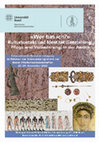
The presence of foreigners in Egypt is a phenomenon that lasted the entire Pharaonic era, occurri... more The presence of foreigners in Egypt is a phenomenon that lasted the entire Pharaonic era, occurring with different features throughout its history. In particular, during the New Kingdom, the forced installations of prisoners of war contributed to the presence of foreigners in the country in a very significant way.
In royal and elite sources, foreign enemies could be portrayed wearing some specific clothing, speaking a different language, presenting a different skin color, often untidy and with a chaotic/disordered attitude. Once captured and deported, these people were quickly converted into something economically productive and positive: they became workers (such as soldiers, craftsmen, peasants, masons, etc.) and the way sources refer to them change.
To what extent is it possible to use the case of foreigners to give shape the idea of “egyptianness” by opposition? Are changes in the prisoners' lives signs of their integration in Egyptian society? A selection of sources will be presented to discuss these questions.
Si le XIXème siècle est un moment crucial pour la naissance de la discipline égyptologique, en It... more Si le XIXème siècle est un moment crucial pour la naissance de la discipline égyptologique, en Italie cela s’accompagne avec l’unification du pays. Turin, première capitale d’Italie, offre un point de vue privilégié pour suivre ces évènements, mais l’aventure de l’égyptologie « italienne » ne s’arrête pas à cette ville. Florence, Bologne, Naples et Rome jouent un rôle tout aussi important.
"Prisoners of war during the New Kingdom: the transition from enemy to resource", Birmingham Egyptology Forum, 8th March 2019.


Uploads
Conference Presentations by Marta Valerio
Au Nouvel Empire notamment, les sources iconographiques et écrites permettent de retracer le processus de transformation des prisonniers de guerre, qui passent du statut d’ennemis soumis à celui de parties intégrantes du système économique et social égyptien. Au fur et à mesure que ces étrangers y pénètrent, la façon dont ils sont décrits dans les sources change, montrant moins d’éléments de distance et d’altérité par rapport aux coutumes égyptiennes.
Il presente contributo presenta le fonti iconografiche, testuali e archeologiche ad oggi note che permettono di identificare questi strumenti, al fine di discuterne il funzionamento e il loro utilizzo.
From an ideological and symbolic point of view, the act of integrating a former enemy in the pharaoh’s army had a strong significance, which is well attested in the sources. However, it is less clear what the actual consequences of this practice were. How successful were these foreign people to settle in the country? How important was it for these foreign soldiers to retain a separate and distinctive cultural identity?
My paper will discuss the presence of foreign troops in the Egyptian army during the New Kingdom with the objective of understanding their relevance in the processes of integration and hybridization of the Egyptian society. By focusing on written and visual sources concerning troops of Asiatic provenance, I will suggest that Egyptians did not perceive the considerable presence of foreign groups installed in certain areas of the country, tied by a strong sense of community belonging, as a threat to the central power.
Gli studi che prendono in considerazione queste fonti, focalizzati principalmente sull’analisi delle scene narrative, si concentrano in particolare sul ruolo del faraone. Nel mio intervento, che presenterà i risultati della mia tesi di dottorato, proporrò invece di spostare l’attenzione sui nemici catturati : soggiogati, trattati con violenza, ma anche trasformati in lavoratori e inseriti nella società egiziana. Le fonti analizzate dimostreranno come la condizione di prigioniero fosse temporanea e cessasse dopo l'arrivo in Egitto: i prigionieri venivano infatti immediatamente convertiti in lavoratori. Nel corso del mio intervento mi soffermerò sulla distribuzione di questi nuovi abitanti nel paese, sulle varie istituzioni (templi, esercito ...) e le persone che beneficiavano dei loro servizi, offrendo alcune riflessioni sulle conseguenze sociali ed economiche di queste installazioni.
This paper will suggest that there is a stark difference in the ways in which Egyptians described the foreigner outside of Egypt and the foreigner within Egypt. In the first case, the foreigner was at best a stranger element and often an enemy to be fought, in the second case it was an integral part of the society. The “external” foreigner is represented according to precise iconographic codes and epithets that make it easily recognizable in contrast to “the Egyptian being”. Conversely, the “Egyptianized” foreigner reveals himself as such only through his name. In the Pharaonic ideology, foreigners represented the Nine Bows against which the Egyptians fought to maintain the order of the Maat, a mission that the deity attributed to the Pharaoh. The relationship between the Egyptians and these foreigners was thus regulated by a dualism that scholar Loprieno has synthetized using two antithetical concepts: topos and mimesis. The topos considers the Egyptians as superior to “others”, while the mimesis expresses the daily practice of relations with foreigners that goes beyond the violent relations underlying the topos. Referring to this theory, and using prisoners of war as a case study, this paper will investigate Egyptians’ ambivalent relationship with foreigners.
Existing studies on this subject deal mostly with narrative scenes and focus on the role of the pharaoh. In my paper I will steer the attention towards the prisoners themselves: subjugated, annihilated but also turned into workers. The evidence analysed in my PhD thesis show that the condition of prisoner was temporary and ceased after the arrival in Egypt, where captives were immediately converted into workers. The interest of this study is thus the distribution of these new inhabitants in the country, the various institutions (temples, army ...) or the people who used them and the social and economic consequences of these installations. The manner in which the prisoners are mentioned in the sources reveals their role in royal ideology and their perception in private or literary sources. In this paper I will presents the main conclusions of my study and the research prospects on this subject.
In the New Kingdom it is possible to notice a discontinuity from the old tradition: even if the sources remain full of symbolic meanings in some cases these included details that allow to go beyond mere symbolism and reconstruct the concrete reality of the prisoners deported in Egypt. In this period, Egypt greatly expanded to the detriment of its neighbour states and every pharaoh celebrated these episodes on the monuments of the country. Analysing the exceptional reliefs and the texts from the funeral temple of Ramses III in Medinet Habu, together with the passages from the papyrus Harris I and from the Annals of Thutmosis III, we obtain details which can be used to reconstruct the treatment of prisoners and some features of the defeated people. Together with the image of the king bringing the bonded prisoners in front of the divinity and subjugating them to his power, the sources provide information on the procedures of registration and division of prisoners, on their future tasks and destinations. Civil officers, soldiers and privates were also involved in these processes and inform us, according to their role, on the procedures of handling prisoners (see for example the case of the Vizir Rekhmira) or on the capturing and deportation of enemies, that were offered at a later stage to veterans as a reward for their military value.
In my paper I will analyse the most relevant sources with the objective of discussing the transformation of the representation of prisoners from celebrative trophies to real subjects. Do the sources available for the New Kingdom tell us a different reality or conversely do they simply use a new form of symbolism to describe a non-changing situation? In other words, is the discontinuity in the representation of prisoners between Old and New Kingdom real or apparent?
Papers by Marta Valerio
The word mgȝ, attested during the XVIIIth-XIXth dynasties, remains until now poorly understood. The scant number of sources available on this subject represents the major difficulty for its analysis. Nevertheless, the various nature of the attestations makes it possible to discern some peculiar characteristics of this term. The global and careful study of each document proposed in this article, with the highlighting of new data which until now have escaped the researchers, aims to bring the reader to a better understanding of this little known entity: the mgȝ.w. We will also discuss different interpretations already suggested for this term to finally try to propose a new explanation and translation of it.
Conference Proceedings by Marta Valerio
activity applied to humans, this article discusses whether the reported practice should be understood as happening in reality or whether it has to be considered only in a metaphoric way, as a strong sign of influence or possession.
Edited Books by Marta Valerio
The present volume collects thirty-two papers on various topics from the history of Egyptology to archaeology and material culture, from the Predynastic to the Roman period, through history and epigraphy, as well as new technologies.
Encyclopaedia Entry by Marta Valerio
Talks by Marta Valerio
In royal and elite sources, foreign enemies could be portrayed wearing some specific clothing, speaking a different language, presenting a different skin color, often untidy and with a chaotic/disordered attitude. Once captured and deported, these people were quickly converted into something economically productive and positive: they became workers (such as soldiers, craftsmen, peasants, masons, etc.) and the way sources refer to them change.
To what extent is it possible to use the case of foreigners to give shape the idea of “egyptianness” by opposition? Are changes in the prisoners' lives signs of their integration in Egyptian society? A selection of sources will be presented to discuss these questions.