Books by Martin Rundkvist
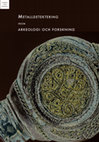
Metalldetektering inom arkeologi och forskning, 2020
Metall i form av föremål, mynt och slaggprodukter är ett viktigt arkeologiskt källmaterial. Det ä... more Metall i form av föremål, mynt och slaggprodukter är ett viktigt arkeologiskt källmaterial. Det är en källa till förståelse av allt från handel, rituella aktiviteter, hantverk och smide till konstruktionen av identiteter i det förflutna. Som material betraktat har metall även egenskaper som gör det tekniskt möjligt att spåra den under jord genom metalldetektering. Kunskapen om kulturarvet kan ökas och fördjupas genom samarbete med de entusiaster som utövar metalldetektering som hobby. Dessvärre motverkar regleringen av metalldetektering en sådan utveckling. Därför tog Örebro läns museum initiativ till ett seminarium kring hur samarbetet mellan metalldetekterare, arkeologer och forskare kan utvecklas. Texterna i antologin är en rapport från detta tillfälle, och belyser på olika sätt möjligheterna en ökad samverkan ger samt behovet av förändrade attityder. Samverkan med personer som vill använda metalldetektor, för att söka efter spår av forntida människor, har två syften. För det första att på ett ordnat sätt öka den arkeologiska kunskapen om det förflutna, för det andra att ge både metallsökarentusiaster och allmänhet en direktkontakt med forntiden. Vår förhoppning är att boken ger konstruktiva uppslag för att realisera dessa syften.
I Östergötland finns 25 medeltida borgar, mer eller mindre väl bevarade. Den här boken är en stud... more I Östergötland finns 25 medeltida borgar, mer eller mindre väl bevarade. Den här boken är en studie av livsstilar på dessa platser utifrån nya utgrävningar och fynd, en genomgång av tidigare resultat och de skriftliga källorna. I de aktiviteter och roller som undersöks ingår:
Avfallshantering
Avradsuppbörd
Bakning
Belysning
Beskattning
Bordsskick
Boskapsskötsel
Bryggning
Bröllop
Dryckenskap
Fiske
Fängsligt förvar
Hantverk
Herrar och fruar
Husdjur
Hålla sig varm
Hälsovård
Hästhållning
Jakt
Knektar och svenner
Kärleksaffärer
Matlagning
Mode
Musik
Myntanvändning
Naturbehoven
Pälsverksproduktion
Religion
Ridderskap
Rykt och snygghet
Skeppsbygge
Skrivande
Smide
Smycken
Spel och dobbel
Träldom
Tullindrivning
Växa upp
At home at the Castle, 2019
Östergötland is one of Sweden’s original core provinces and has 25 Medieval strongholds. This boo... more Östergötland is one of Sweden’s original core provinces and has 25 Medieval strongholds. This book is a study of lifestyles at these sites, based on new excavations and finds, a survey of previous ones as well as the relevant written sources. The activities and roles investigated include:
Agriculture
Baking
Brewing
Chivalry
Coin use
Cooking
Crafts
Dining
Drinking
Fashion and jewellery
Fishing and eating fish
Fur production
Gaming
Growing up
Healthcare
Horsemanship
Hunting
Imprisonment
Keeping livestock
Keeping pets
Keeping warm
Lighting
Lords and ladies
Love affairs
Music
Relieving oneself
Religion
Shipbuilding
Slavery
Smithwork
Soldiering
Taxation
Waste disposal
Weddings
Bronze Age settlements and burials in the Swedish provinces around Lakes Mälaren and Hjälmaren yi... more Bronze Age settlements and burials in the Swedish provinces around Lakes Mälaren and Hjälmaren yield few bronze objects and fewer of the era's fine stone battle axes. Instead, these things were found by people working on wetland reclamation and stream dredging for about a century up to the Second World War. Then the finds stopped because of changed agricultural practices.
The objects themselves have received much study. Not so with the sites where they were deposited. This book reports on a wide-ranging landscape-archaeological survey of Bronze Age deposition sites, with the aim to seek general rules in the placement of sites. How did a person choose the appropriate site to deposit a socketed axe in 800 BC?
The author has investigated known sites on foot and from his desk, using a wide range of archive materials, maps and shoreline displacement data that have only recently come on-line. Over 140 sites are identified closely enough to allow characterisation of their Bronze Age landscape contexts. Numerous recurring traits emerge, forming a basic predictive or heuristic model. Bronze Age deposition sites, the author argues, are a site category that could profitably be placed on contract archaeology's agenda during infrastructure projects. Archaeologists should seek these sites, not wait for others to report on finding them.
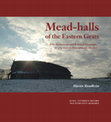
Rundkvist, Martin. 2011. Mead-halls of the Eastern Geats. Elite Settlements and Political Geograp... more Rundkvist, Martin. 2011. Mead-halls of the Eastern Geats. Elite Settlements and Political Geography AD 375-1000 in Östergötland, Sweden. Kungl. Vitterhets Historie och Antikvitets Akademien (KVHAA), Handlingar, Antikvariska serien 49. Stockholm 2011. 165 pp. ISBN 978-91-7402-405-0.
The Swedish province of Östergötland has long been recognised as one of the 1st millennium's political hot spots. Splendid single finds, though never before surveyed comprehensively, offer a rough idea of where elite settlements might be sought. But not one of the ostentatious manorial buildings where the era's elite lived has been identified in the field. This book aims at beginning to remedy this regional absence of mead-halls, being an investigation of the internal political geography of Östergötland during the period AD 375-1000. Good candidate sites are identified in nine out of c. 155 parishes. Apparently they were occupied only rather briefly by magnates, and there is little sign of continuity anywhere.
Key words
Archaeology, Early Medieval, Sweden, Östergötland, Viking, elite, political geography
Grave matters. Eight studies of first millennium AD burials in Crimea, England and southern Scandinavia. Papers from a session held at the European Association of Archaeologists fourth annual meeting in Göteborg 1998.

Scholarly Journals Between the Past and the Future
On 21 April 2006 a round-table seminar took place on the premises of the Royal Swedish Academy of... more On 21 April 2006 a round-table seminar took place on the premises of the Royal Swedish Academy of Letters, History and Antiquities in Stockholm. The occasion was Fornvännen’s centenary, and the theme was the current status and future prospects of such scholarly journals.
This volume collects nine papers by participants in the seminar. They include the editors-in-chief of Acta Archaeologica (Copenhagen), Antiquity (York), Archaeologia Polona (Warsaw), Finskt Museum (Helsinki), Kuml (Aarhus) and the defunct Meddelanden från Lunds universitets historiska museum (Lund). Other contributions are made by representatives for the National Library in Stockholm, the Library of the Academy of Letters in Stockholm and the Royal Irish Academy in Dublin.
Main themes are the step from paper to on-line publishing, how to solve funding problems and the best way to ensure continued high academic standards.
Keywords: publishing, scholarly journals, libraries, Open Source, on-line, archaeology, Scandinavia, England, Ireland, Poland
Swedish Seminar Papers in Archaeology 1991-1996
Papers by Martin Rundkvist
Grave Matters: Eight studies of First Millennium AD burials in Crimea, England and southern Scandinavia. Papers from a session held at the European Association of Archaeologists Fourth Annual Meeting in Göteborg 1998
Det 52:a Sachsensymposiet, Lund, 19-21 augusti 2001
Fornvännen, 2001
Daniela Hofmann, Frank Nikulka & Robert Schumann (ed.). 2022. The Baltic in the Bronze Age: regional patterns, interactions and boundaries. Leiden: Sidestone; 978-9-464270-181 paperback €65 Open Access
Antiquity, Aug 3, 2023
The Viking Age. Ireland and the West. Proceedings of the Fifteenth Viking Congress. Edited by JohnSheehanand DonnchadhÓ Corráin
The Archaeological Journal, 2011
Type codes and definitions smeophou Openwork, hour-glass-shaped with central ring. Cf. ÄEG 514-51... more Type codes and definitions smeophou Openwork, hour-glass-shaped with central ring. Cf. ÄEG 514-516. smeopdis Openwork, not hour-glass-shaped, ending in a disc. Cf. ÄEG 518-521, VWG 128. smeopen2 This definition takes precedence over those for smeopen1 and smeopen3. Openwork, Näsman's group II, cf. VWG 121, 123, 126, 459; Barshalder 1 fig. 10:23 D. At least one of the following two criteria must be met. 1. Lower intermediate part rectangular with two opposed slots. 2. End plate has circular outline. Excluded from the analysis, too long-lived. smeopen1 Openwork, Näsman's group I, cf. VWG 114-118. Fastening plate must not have parallel-then-concave sides. No cuff. Upper intermediate part rectangular with two opposed rounded slots. No knob. smeopen3 Openwork, Näsman's group III, cf. VWG 460-465. Cuff present. Upper intermediate part must not be rectangular with two opposed rounded slots, but may be rectangular if slots are triangular or rectangular. Central frame has two opposed angles on its outline and is filled with an inverted T or a horizontal bar. Lower intermediate part must not be disc-shaped. Triangular end plate. smesword Solid, straight-sided outline similar to a two-edged sword blade, cf. VWG 473-482; Barshalder 1 fig. 10:22 F. smerect Solid, partly concave sides, ending in a rectangular crossbar, cf. VWG 134-136, 471. Excluded from the analysis, too long-lived. smedisc Solid, ending in a disc, cf. VWG 129-130, 132-133. Excluded from the analysis, too long-lived. Only two openwork strap end mounts have been found in Migration Period male graves (VWG grave 103 & Bhr 1934:03). This is another nicety of the period's gender symbolism that has not been made use of in the gender attribute study in chapter 3.
Tva uppsättningar seldonsbeslag fran Barshalder och en vendeltida mattenhet
Résumé/Abstract The paper concerns a grave find (SHM 12113. VZG grave 135) of the early Vendel Pe... more Résumé/Abstract The paper concerns a grave find (SHM 12113. VZG grave 135) of the early Vendel Period, collected in 1904 during gravel extraction at Barshalder in Grötlingbo parish, Gotland's largest prehistoric cemetery. The grave goods indicate a double female/male burial and include two horse bits and a number of ornamental bronze sheet harness mounts. These mounts are separated into two mutually exclusive punch-linked sets, one for each bit, each with further distinct characteristics. Both sets are however demonstrated to be ...



Uploads
Books by Martin Rundkvist
Avfallshantering
Avradsuppbörd
Bakning
Belysning
Beskattning
Bordsskick
Boskapsskötsel
Bryggning
Bröllop
Dryckenskap
Fiske
Fängsligt förvar
Hantverk
Herrar och fruar
Husdjur
Hålla sig varm
Hälsovård
Hästhållning
Jakt
Knektar och svenner
Kärleksaffärer
Matlagning
Mode
Musik
Myntanvändning
Naturbehoven
Pälsverksproduktion
Religion
Ridderskap
Rykt och snygghet
Skeppsbygge
Skrivande
Smide
Smycken
Spel och dobbel
Träldom
Tullindrivning
Växa upp
Agriculture
Baking
Brewing
Chivalry
Coin use
Cooking
Crafts
Dining
Drinking
Fashion and jewellery
Fishing and eating fish
Fur production
Gaming
Growing up
Healthcare
Horsemanship
Hunting
Imprisonment
Keeping livestock
Keeping pets
Keeping warm
Lighting
Lords and ladies
Love affairs
Music
Relieving oneself
Religion
Shipbuilding
Slavery
Smithwork
Soldiering
Taxation
Waste disposal
Weddings
The objects themselves have received much study. Not so with the sites where they were deposited. This book reports on a wide-ranging landscape-archaeological survey of Bronze Age deposition sites, with the aim to seek general rules in the placement of sites. How did a person choose the appropriate site to deposit a socketed axe in 800 BC?
The author has investigated known sites on foot and from his desk, using a wide range of archive materials, maps and shoreline displacement data that have only recently come on-line. Over 140 sites are identified closely enough to allow characterisation of their Bronze Age landscape contexts. Numerous recurring traits emerge, forming a basic predictive or heuristic model. Bronze Age deposition sites, the author argues, are a site category that could profitably be placed on contract archaeology's agenda during infrastructure projects. Archaeologists should seek these sites, not wait for others to report on finding them.
The Swedish province of Östergötland has long been recognised as one of the 1st millennium's political hot spots. Splendid single finds, though never before surveyed comprehensively, offer a rough idea of where elite settlements might be sought. But not one of the ostentatious manorial buildings where the era's elite lived has been identified in the field. This book aims at beginning to remedy this regional absence of mead-halls, being an investigation of the internal political geography of Östergötland during the period AD 375-1000. Good candidate sites are identified in nine out of c. 155 parishes. Apparently they were occupied only rather briefly by magnates, and there is little sign of continuity anywhere.
Key words
Archaeology, Early Medieval, Sweden, Östergötland, Viking, elite, political geography
This volume collects nine papers by participants in the seminar. They include the editors-in-chief of Acta Archaeologica (Copenhagen), Antiquity (York), Archaeologia Polona (Warsaw), Finskt Museum (Helsinki), Kuml (Aarhus) and the defunct Meddelanden från Lunds universitets historiska museum (Lund). Other contributions are made by representatives for the National Library in Stockholm, the Library of the Academy of Letters in Stockholm and the Royal Irish Academy in Dublin.
Main themes are the step from paper to on-line publishing, how to solve funding problems and the best way to ensure continued high academic standards.
Keywords: publishing, scholarly journals, libraries, Open Source, on-line, archaeology, Scandinavia, England, Ireland, Poland
Papers by Martin Rundkvist