Books by Martina Bernardi
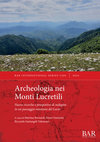
BAR International Series 3160, 2024
Attraverso casi di studio che vedono l’applicazione delle diverse metodologie proprie di ciascuna disciplina, il volume vuole stimolare un dibattito sulle metodologie di ricerca ma soprattutto sui maggiori temi storiografici che hanno toccato quest’area dei dintorni di Roma, legati alla trasformazione del paesaggio e ai cambiamenti delle forme insediative nelle diverse epoche, con un focus particolare sul periodo medievale. Inoltre, il libro propone ai ricercatori che si occupano di archeologia montana e rurale un caso di studio confrontabile con altri contesti mediterranei indagati nella prospettiva della longue durée.
The volume collects the first results of the “Monti Lucretili Landscape Project”, as presented during the meeting held at Roma Tre University (November 8, 2022).
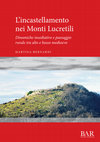
BAR International Series 3027, 2021
Book Reviews by Martina Bernardi
Il capitale culturale. Studies on the Value of Cultural Heritage, 31, 2025
Archeologia Classica, LXXV, 2024
FOLD&R Archaeological Survey by Martina Bernardi

FOLD&R. Fasti Online Documents & Research, Survey(20), 2023
Papers by Martina Bernardi
X Congresso Nazionale di Archeologia Medievale (Udine - Cividale del Friuli, 9-13 settembre 2025), 2025
Geostorie, 2025
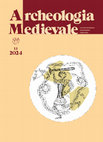
Archeologia Medievale LI, 2024
The purpose of this article is to re-examine the weakness of the papacy presumed by scholars for the ‘long 10th century’ between around 900 and 1050. It focuses on the history of the domuscultae, papal property under direct management which, according to the unanimous opinion of scholars, were abandoned during the 9th century due to various factors, mostly related to the intensification of ‘Saracen’ incursions into the Lazio region. The analysis starts with archaeological data: the re-reading of the excavation data does not seem to reveal a discontinuity in settlement occupation in these sites, at least until the 12th century. It moves then to the written sources – which are highly discontinuous in terms of the data that can be obtained – first of all to investigate the logic behind the document’s transmission. Furthermore, it aims to re-examine, with a more ‘unconstrained’ perspective, some significant documentary dossiers. It is precisely the parallel reading of these two types of sources that permits the identification of new data regarding the history of the domuscultae in the 10th and 11th centuries. This re-analysis of the material and written data showed that these landed estates were not abandoned or significantly destroyed, but rather transformed and reconfigured, with different forms and names: from domuscultae to curtes, while still leaving traces in the toponymy.

EvoMedio, I, 2024
In the studies on medieval rural landscapes, the representativeness and data traceability of archaeological sources are related to the material visibility of sites and the width of the territorial contexts under investigation. The great attention dedicated to the highly visible sites hides the surrounding realities, which remain invisible due to the lack of monumental structures and the perishable nature of the construction materials. Furthermore, even for the highly monumental rural sites, such as abandoned castles or currently inhabited villages, archaeological sources can present significant changes that affect the understanding of the sites. Additionally, archaeological sources include limitations in meaning: the source often appears fragmentary, made by multiple elements inherited from the past that show diverse contents. This paper aims to reflect on how to overcome the limits related to medieval archaeological sources in the reconstruction of rural landscapes: a good balance between the quality of data obtained through the integration of various methodologies and source systems.
Lambusier L., Ghini G., Mari Z. (a cura di), Lazio a Sabina 13, Atti del Convegno. Tredicesimo Incontro di Studi sul Lazio e la Sabina (Roma, 25 - 27 maggio 2022), 2024
Archeologia cristiana in Italia. Ricerche, metodi e prospettive (1993-2022), Atti del XII Congresso Nazionale di Archeologia Cristiana, vol. II, 2024
Atti e memorie della Società Tiburtina di Storia e d'Arte, 2022

PCA, 2022
Parole chiave: Roma medievale, cantieri edili, paesaggio costruito, archeologia del cantiere, archeologia urbana.
When considering construction sites in Rome, attention often focuses on the aspects related to the masonries. Not many data are presented about the shape and characteristics of the construction site (intended as a work area), about the type of activities for building construction, and how the material evidence and the negative traces of these activities marked the physiognomy of a landscape in continuous construction.
This paper aims to define characteristics and trends observed through the archaeological evidence in the contexts of construction sites in Rome in the Early and Late Middle Ages.
Keywords: medieval Rome, construction site, built landscape, archaeology of the construction site, urban archaeology.
P. de Vingo, Y. A. Marano, J. Pinar Gil (a cura di), Sepolture di prestigio nel bacino mediterraneo (secoli IV-IX). Definizione, immagini, utilizzo. Atti del convegno - Pella (NO), 28-30 giugno 2017, II, Sesto Fiorentino 2021, 2021
Peculiarità della necropoli è il suo utilizzo: infatti, l’area cimiteriale si venne ad installare quando il vicus era ancora in funzione, come suggerito dalla stratigrafia archeologica, non ostacolando quindi la transitabilità della strada con la sua creazione.
Le prime sepolture in quest’area sono state rinvenute durante gli scavi della Soprintendenza Archeologica di Roma intrapresi nel primo decennio del Duemila. Le recenti indagini stratigrafiche avviate dal 2015 hanno fornito ulteriori testimonianze di tale contesto cimiteriale, consentendo di chiarire il suo sviluppo e le fasi di frequentazione durante il periodo bassomedievale. Le tombe attualmente censite, databili tra la metà dell’XI e il XII secolo, erano disposte lungo i lati del percorso stradale e in alcuni punti centrali dell'asse viario. L’analisi antropologica e ulteriori ricerche archeologiche contribuiranno a una migliore comprensione di altri aspetti della necropoli e della storia dell'area durante il Medioevo.