Books by Matthew Fogarty
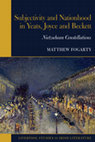
Research paper thumbnail of Subjectivity and Nationhood in Yeats, Joyce, and Beckett: Nietzschean Constellations (Liverpool University Press, 2023).
This monograph reconceptualises Friedrich Nietzsche’s position in the intellectual history of mod... more This monograph reconceptualises Friedrich Nietzsche’s position in the intellectual history of modernism and refigures our received ideas regarding his relationship to the work of Yeats, Joyce, and Beckett. Building on recent developments in new modernist studies, the book demonstrates that Nietzsche is a modernist writer *and* a modernist philosopher by drawing new parallels between his engagement with established philosophical theories and the aesthetic practices that Ezra Pound and T. S. Eliot identified as quintessentially modernist. With specific reference to key Nietzschean philosophemes – eternal recurrence, the Übermensch, transnationalism, cultural paralysis, and ethical perspectivism – it challenges the longstanding assumption that Yeats, who repeatedly acknowledged his admiration for Nietzsche, is the most "Nietzschean" of these Irish modernists. While showing how both Joyce and Beckett are in many important ways more "Nietzschean" than Yeats, this interdisciplinary study makes a number of significant and timely contributions to the fields of Irish studies and modernist studies.

Edited Volumes by Matthew Fogarty

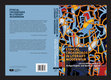
Research paper thumbnail of Ethical Crossroads in Literary Modernism. Eds. Katherine Ebury, Bridget English, and Matthew Fogarty (Clemson University Press, 2023).
Establishing a new theoretical foothold at the crossroads of human, nonhuman, and posthuman studi... more Establishing a new theoretical foothold at the crossroads of human, nonhuman, and posthuman studies in literary modernism, Ethical Crossroads in Literary Modernism broadens our current understanding of modernist ethics. Analysing a wide range of poetry, drama, prose fiction, and non-fiction writing, these essays expand the vertical and horizontal boundaries of modernist studies while addressing a number of the thematic concerns and critical approaches that are currently at the vanguard of modernist studies. These provocations, produced by both established critics and emerging scholars, include interrogations of the ethics of collaboration and influence through the lenses of queer theory, feminism, and ecocriticism, among others. The wide ranging geographical and interdisciplinary scope of this collection, which includes fields such as law and literature and animal studies, refreshes and reconfigures past debates on the positive influence and ethical failures of modernist literature for a new generation of researchers and students. This edited collection is the first book length study to use such an expansive and cutting-edge definition of modernist ethics and acts as both the definitive introduction to the topic and offers a series of original and ground-breaking essays.

Peer-Reviewed Journal Articles by Matthew Fogarty

Research paper thumbnail of "The Greatest Enemy We Have is the Spirt of Jazz": Agricultural Modernism in Patrick Kavanagh’s "The Great Hunger" --- Irish University Review, Vol. 55, No. 2 (2025), pp. 310-30.
"The Greatest Enemy We Have is the Spirt of Jazz": Agricultural Modernism in Patrick Kavanagh’s "The Great Hunger" --- Irish University Review, Vol. 55, No. 2 (2025), pp. 310-30.
Building upon two interconnected twenty-first century developments in Irish studies and modernist... more Building upon two interconnected twenty-first century developments in Irish studies and modernist studies, this essay revisits the critical debate concerning Patrick Kavanagh’s engagement with aesthetic modernism in "The Great Hunger." Rather than primarily focusing on the aesthetic correspondences between Kavanagh’s poem and the literature produced by his European modernist contemporaries, however, this essay brings "The Great Hunger" into dialogue with the formal techniques and thematic preoccupations evident in the work of African American modernist writers, such as Sterling A. Brown and Langston Hughes, and examines how "The Great Hunger" draws dynamism from the jazz aesthetic and from the modes of cultural resistance that are embodied in this aesthetic form. In addition to highlighting how modernist literature can emerge from the ostensibly rural margins of the metropolitan centre, so to speak, this essay explores how African American art and thought provides a critical framework to explore the dynamics of power and oppression in other cultural contexts. In doing so, it shows how Kavanagh’s agricultural modernism draws on aspects of the jazz aesthetic to dramatise the physical, emotional, and psychological burden borne by the citizens of mid-twentieth century Ireland at a time when using this aesthetic form was in and of itself a subversive act.

Research paper thumbnail of "You know more than you pretend": Passing, Jazz Inversion, and the Spectre of Reductive Racial Equivalence in Roddy Doyle's "Oh, Play That Thing" (2004) --- Studi irlandesi: A Journal of Irish Studies, Vol. 15 (2025), pp. 31-46.
This essay explores how Roddy Doyle’s 2004 novel, Oh, Play that Thing, utilises the jazz aestheti... more This essay explores how Roddy Doyle’s 2004 novel, Oh, Play that Thing, utilises the jazz aesthetic, both formally and thematically, to demythologise some of the most pernicious and persistent misconceptions around historical migration; misconceptions which are all too frequently used to minimise, justify, or categorically deny the existence of racism in contemporary Ireland. Adopting a bifocal approach to the central theme of Irish travel, it looks back to the cultural moment in which Doyle’s novel was published, a period characterised by a sustained period of net in-migration to Ireland, from our current vantage point, which has witnessed the emergence of new far-right political parties in Ireland and a significant spike in violent anti-migrant criminality. On the one hand, this essay situates Oh, Play that Thing in the field of biofiction studies to show how Doyle incorporates literary techniques that call to mind some intrinsic characteristics of the jazz aesthetic, such as call and response, rhythmic syncopation, and chordal inversion, to subvert the traditional Irish emigration narrative. On the other hand, it highlights how Doyle’s indirect engagement with the jazz aesthetics’ migration to Irish shores, and the resulting anti-jazz campaign, documents the prevalence of racism in early twentieth-century Ireland. In doing so, this essay argues that Doyle’s reimagining of the Jazz Age allows him to move beyond the constraints imposed by the short story format in which he initially addressed the subject of racism in twenty-first century Ireland, that is, the serialised stories that appeared in the Irish multicultural monthly newspaper, Metro Éireann, and were subsequently published as The Deportees and Other Stories (2007).

Research paper thumbnail of Henry Flower Esq. and the Uses of History for Life in “Ulysses” --- James Joyce Quarterly, Vol. 60, No. 3 (2023), pp. 357-77.
M uch has been said about James Joyce's literary engagement with Friedrich Nietzsche's philosophy... more M uch has been said about James Joyce's literary engagement with Friedrich Nietzsche's philosophy during the six decades that have elapsed since Richard Ellmann first proposed that "at heart Joyce can scarcely have been a Nietzschean any more than he was a socialist." 1 In the 1960s and 1970s, this appraisal established a foundation for the common belief that Joyce identified with aspects of Nietzsche's philosophy for a brief period during the summer of 1904, before outgrowing these ideas as he matured. 2 As shown by the following note to George Roberts, dated 13 July 1904, there is no question that Joyce was familiar with Nietzsche's philosophy at that time: Dear Roberts: Be in the "Ship" tomorrow at 3.30 with £1. My piano is threatened. It is absurd my superb voice should suffer. You recognise a plain duty-Well then-James Overman. 3 The term "Overman" is one of the monikers used to refer to Nietzsche's self-creating "Übermensch" or "Superman." Indeed, this biographical detail is reflected in Joyce's fictionalized recollection of the period; it is, after all, Buck Mulligan, the literary alter ego of Joyce's then roommate, Oliver St. John Gogarty, who proclaims himself the "Übermensch" before plunging into the ocean at the end of "Telemachus." 4 It was also during the summer of 1904 that George Russell, having been impressed by an early draft of Stephen Hero, 5 asked Joyce if he could write a "simple, rural live-making" short story for the Irish Homestead, according to Ellmann (169). This prompted Joyce to begin composing the short stories that would eventually be published as Dubliners, in which he offers his first literary allusion to Nietzsche's writing; in "A Painful Case," the narrator tells us that the protagonist, a Mr. James Duffy, possessed "two volumes by Nietzsche: Thus Spake Zarathustra and The Gay Science (D 112)." 6 It is more difficult, however, to substantiate the claim that Joyce simply outgrew these ideas after immigrating to mainland Europe in the autumn of 1904. In fact, his library at Trieste, where he lived peri

Research paper thumbnail of "A Positive Statement of a Negative Thing": Nietzschean Eternal Recurrence as Dramatic Form in Samuel Beckett's "Waiting for Godot" --- Modern Drama, Vol. 65, No. 4 (2022), pp. 522-46.
Much has been written in the late twentieth and early twentyfirst centuries about the pessimistic... more Much has been written in the late twentieth and early twentyfirst centuries about the pessimistic tenor of Samuel Beckett's middleperiod plays. With specific reference to Waiting for Godot , however, this essay draws a distinction between the pessimistic appearance of the content that partially constitutes this text and the nature of the formal medium through which it is realized. In short, I argue that there is a critical disjunction between what this play says and what this play does. Conceptually speaking, this essay is primarily concerned with Beckett's textual engagement with the theory of eternal recur rence, that is, the idea that all occurrences have happened innumer able times before, and will happen again, and again, in an infinitely recurring cycle. Focusing on how Waiting for Godot developed, both in translation and as a performance piece under the direction of its author, I demonstrate that Beckett's metatheatrical dramatization of eternal recurrence explores this theory's capacity to function as an ethi cal imperative in the morally nihilistic atmosphere of post-Holocaust Europe. In doing so, Beckett's play implicates the viewer in a drama tization that is aligned with the axiological iteration of eternal recur rence that modern and contemporary scholars associate with Friedrich Nietzsche. Indeed, it is in this sense that Waiting for Godot is, as Beckett himself puts it, "a positive statement of a negative thing."

Research paper thumbnail of Centralised Supports for Writing in Higher Education and Their Applicability to Research, Teaching and Learning Contexts --- Journal of Academic Writing, Vol. 10, No. 1 (2020), pp. 14-24.
In 2018, as part of an EU COST Action (COST Action 15221-www.werelate.eu), 43 academics, based at... more In 2018, as part of an EU COST Action (COST Action 15221-www.werelate.eu), 43 academics, based at various higher education institutions in Europe, were asked about existing and desirable centralised support for writing, research, teaching and learning. This article draws on the academics' responses. It uses that data to demonstrate the ways in which the learner-centred approach, typically adopted by writing centres, might function as a blueprint for a blended centralised support model for these four strands of higher education. In order to explore this idea, the article examines the reported support for research, as the data suggest that the majority of the centralised supports that currently exist at these institutions are designed primarily to support research. The study unpicks the mechanisms and approaches that are designed to ensure that research can be supported; it identifies what is effective in terms of supporting staff as researchers. From there, turning to the existing and desirable supports for writing, teaching and learning, I argue that, using a learner-centred writing centre model as inspiration, the structures which are currently in place to effectively support research can be modified and repurposed to more effectively support writing, teaching, and learning in higher education.

In the foreword to the first volume of his collected-plays series, Conor McPherson recently ackno... more In the foreword to the first volume of his collected-plays series, Conor McPherson recently acknowledged that, as a playwright who came to prominence during the Celtic-Tiger period, he belonged to a new wave of internationally acclaimed Irish dramatists who were considered representative of 'a place where a horrendous past met a glistening future and where tradition evolved'. 1 Gothic scholars will scarcely need reminding that 'horrendous pasts' and 'glistening futures' make for eerie bedfellows; the gothic is, after all, a genre that draws much of its potency from the anomalous conjunctions that bind the future to its past. Indeed, Victor

Book Chapters by Matthew Fogarty

"Yardbird Suite": Jazz, Double Consciousness, and the Reverberations of the Harlem Renaissance in Stewart Parker’s "Pentecost" --- Progressive Intertextual Practice in Modern and Contemporary Literature. Eds. Katherine Ebury and Christin M. Mulligan (New York: Routledge, 2024), pp. 115-33.

Research paper thumbnail of Introduction to Ethical Crossroads in Literary Modernism --- Ethical Crossroads in Literary Modernism. Eds. Katherine Ebury, Bridget English, and Matthew Fogarty (Clemson: Clemson University Press, 2023), pp. 1-27.
Introduction to Ethical Crossroads in Literary Modernism --- Ethical Crossroads in Literary Modernism. Eds. Katherine Ebury, Bridget English, and Matthew Fogarty (Clemson: Clemson University Press, 2023), pp. 1-27.

This introduction establishes a critical backdrop for the revaluations of literary modernism that... more This introduction establishes a critical backdrop for the revaluations of literary modernism that comprise the book’s substantive chapters, which are grouped under four subsections, “The Ethics of Mind and Body,” “Planetary Ethics,” “Legal Ethics,” and “Intersectional Ethics.” It begins by situating the volume in the context of new modernist studies and, in particular, Kwame Anthony Appiah’s rejection of Emmanuel Levinas’s ethics on the grounds that it excludes key economic, social, geographical, and political factors. Turning to recent scholarship on ethics and modernism, which has thus far primarily focused on one dimension of ethics (such as human nature, aesthetics, the political imagination, etc.) or on the usual modernist suspects (Beckett, Eliot, Joyce, Yeats, and Woolf), this chapter identifies a critical gap that is addressed by the book’s subsequent analyses of Djuna Barnes, Stella Benson, Gabriele D’Annunzi, W. E. B. Du Bois, Isadora Duncan, Eleonora Duse, Langston Hughes, Zora Neale Hurston James Joyce, D. H. Lawrence, Alain Locke, Flann O’Brien, Margery Perham, Anthony Powell, Charles Reznikoff, Jean Toomer, Anna D. Whyte, and Ludwig Wittgenstein.

Research paper thumbnail of "I can't go on, I'll go on": Liminality in Undergraduate Writing --- (Re)Considering What We Know: Learning Thresholds in Writing, Composition, Rhetoric, and Literacy. Eds. Linda Adler Kassner and Elizabeth Wardle (Logan: Utah State University Press, 2019), pp. 261-77.
According to Jan Meyer and Ray Land (2006), along with being troublesome, integrative, transforma... more According to Jan Meyer and Ray Land (2006), along with being troublesome, integrative, transformative, and probably irreversible, threshold concepts are characterized as liminal. Their liminal nature is summarized by Linda Adler-Kassner and Elizabeth Wardle (2016): "Threshold concepts involve what the name implies-thresholds. But the movement toward and the (hopeful) crossing of those thresholds isn't straightforward; instead, it happens in a two-steps-forward-one-step-back kind of way as learners push against troublesome knowledge" (ix). Glynis Cousin (2006) observes that the idea of liminal states aids "our understanding of the conceptual transformations students undergo" in challenging learning situations, like the grasping of threshold concepts (4). And yet, Ray Land, Julie Rattray, and Peter Vivian (2014) suggest that the liminal space "has remained relatively ill-defined, something of a 'black box' within the conceptual framework of Threshold Concepts" (201). This chapter focuses on this liminal space. Specifically, we wanted to better understand the nature, occurrence, and impact of liminality in undergraduate writing through the lens of threshold concepts of writing, through which those concepts could in turn provide an effective theoretical and pedagogical framework for our particular context. Our setting is a relatively new writing center (established 2011) in an Irish university that has an undergraduate population of 10,050 students and a postgraduate enrollment of 1,900. Following a presentation of our distilled findings, we explore and contextualize one key action-oriented insight about undergraduates' experiences with threshold concepts of writing that emerged from the data, that of the coexistence of apparent liminality, a stage that can be paralyzing for students, and authentic liminality, a stage that is important for students grappling with threshold concepts and that is therefore productive and potentially transformative.

Reviews and Media Publications by Matthew Fogarty

"Modernity and the Political Fix" by Andrew Gibson (2019) Bloomsbury Academic --- James Joyce Broadsheet, No. 121 (2022), p. 2.

"The Edinburgh Companion to Irish Modernism" by Maud Ellmann, Siân White, and Vicki Mahaffey (2021) Edinburgh Univesity Press --- Estudios Irlandeses, Vol. 17 (2022), pp. 222-25.

"The Pathos of Distance: Affects of the Moderns" by Jean-Michel Rabaté (2016) Bloomsbury Academic --- James Joyce Broadsheet, No. 116 (2020), p. 3.

How HBO's "Chernobyl" Addresses 21st Century Concerns --- RTÉ Brainstorm, 6th August 2019.

https://www.rte.ie/brainstorm/2019/0801/1066467-how-hbos-chernobyl-addresses-21st-century-concerns/

What Nietzsche Can Teach Us about Fake News --- RTÉ Brianstorm, 3rd May 2019.

https://www.rte.ie/brainstorm/2019/0502/1047119-what-nietzsche-can-teach-us-about-fake-news/