Papers by Melis Uzdurum
npj Heritage Science, 2026
PLOS One, 2026
During the 6th century CE, many Late Antique cities in the eastern Mediterraneanespecially in Ana... more During the 6th century CE, many Late Antique cities in the eastern Mediterraneanespecially in Anatolia-underwent major changes. By the 7th century CE, most had gradually lost their urban functions. As populations declined, urban spaces were reused for domestic, industrial and rural purposes. This shift is visible in the archaeological record, through the abandonment and reuse of public spaces. At Zımbıllı Tepe-Pompeiopolis, located in in Paphlagonia (northern Anatolia), which was occupied during Late Antiquity and Medieval periods, architectural remains, artifacts, and radiocarbon (C14) dates from both public and private areas show patterns consistent with this broader urban transformation across Anatolia between the 6th and late 7th centuries. To better understand how the site transformed over time, we conducted micro-scale, multiproxy analysis. These included macrobotanical and microdebris studies, micromorphology, x-ray fluorescence (XRF), microscopic fourier transform infrared (micro-FTIR), and C14 dating, based on samples from a street sewer and a connected private latrine. Together, these datasets reveal the cultural and natural processes that shaped the site's last occupation, its abandonment, and its post-abandonment transformation. The disuse and infilling of the sewer suggest a halt in public maintenance toward the end of the occupation, while the latrine's earlier abandonment reflects gradual organizational changes already in the 6th century. This study provides a macro-and-micro-scale view of urban transformation during the 6th-7th centuries using a multiproxy approach, which remains rare in archaeological studies of this period in Anatolia.
In Assur, monumental and residential structures predom-
inantly used mudbricks and fired bricks ... more In Assur, monumental and residential structures predom-
inantly used mudbricks and fired bricks as primary build-
ing materials. Analysing these bricks provides valuable
insights into the city’s resource management, architectur-
al practices, labour organisation, and climate adaptation
strategies, thus shedding light on the socio-political dy-
namics and technological advancements of the time.
This chapter presents results from geochemical analy-
ses addressing the following key questions:
● Which raw materials were used, and where were they
sourced?
● Can patterns of resource distribution be identified
through brick composition?
● How did Assur’s inhabitants adapt their building mate-
rials to environmental and societal changes?
Through these analyses, we seek to enhance our under-
standing of the economic, environmental, and technolog-
ical practices that underpin Assur’s history.
Heritage Türkiye, 2024
https://biaa.ac.uk/wp-content/uploads/2024/12/BIAA-e-magazine-2024-17.pdf
Antiquity, 2024
Regional variation in the historic development of agricultural societies in South-west Asia is in... more Regional variation in the historic development of agricultural societies in South-west Asia is increasingly apparent. Recent investigations at the wetland site of Balıklı (c. 8300–7900 BC) provide new insights into the initial processes of sedentism in Central Anatolia and the interaction of early communities within local and larger-scale networks. Located near major obsidian sources, excellent architectural preservation and faunal and botanical records at Balıklı suggest cultural connections to the upper Middle Euphrates region, yet inhabitants of the site do not appear to have participated in the wider South-west Asian obsidian-exchange networks and largely relied on wild resources.
Science Advances, 2024
Occupied between ~10,300 and 9300 years ago, the Pre-Pottery Neolithic site of Aşıklı Höyük in Ce... more Occupied between ~10,300 and 9300 years ago, the Pre-Pottery Neolithic site of Aşıklı Höyük in Central Anatolia went through early phases of sheep domestication. Analysis of 629 mitochondrial genomes from this and numerous sites in Anatolia, southwest Asia, Europe, and Africa produced a phylogenetic tree with excessive coalescences (nodes) around the Neolithic, a potential signature of a domestication bottleneck. This is consistent with archeological evidence of sheep management at Aşıklı Höyük which transitioned from residential stabling to open pasturing over a millennium of site occupation. However, unexpectedly, we detected high genetic diversity throughout Aşıklı Höyük's occupation rather than a bottleneck. Instead, we detected a tenfold demographic bottleneck later in the Neolithic, which caused the fixation of mitochondrial haplogroup B in southwestern Anatolia. The mitochondrial genetic makeup that emerged was carried from the core region of early Neolithic sheep management into Europe and dominates the matrilineal diversity of both its ancient and the billion-strong modern sheep populations.
Archaeological and Anthropological Sciences, 2023
This article illustrates how changes in the sediment source, tempering strategies, and shaping pr... more This article illustrates how changes in the sediment source, tempering strategies, and shaping process in early Neolithic earthen architecture in Aşıklı Höyük have a major impact on many aspects of techno-environmental know-how traces. Archaeological micromorphology analyses of sun-dried mudbricks (in Turkey, called a specific term: kerpiç), mortars, daub, and their paleoenvironmental contexts were used to examine the tempo and modes of exploitation of the local environment, and chaîne opératoire of kerpiç and mortar recipes, and the possible reasons behind the relationships among material choices, building forms, and wall construction techniques of the earlier inhabitants in Central Anatolia during the establishment of the early settlement, i.e., 8400-7750 BCE. The nature of and changes in the built environment can be traced especially through the mortar recipes that provide various insights into the agro-pastoral activities at the site, including middens, open areas, and penning deposits. During the early Neolithic occupation at Aşıklı Höyük, vegetal tempering occurred as a micro-invention and was developed in relation to the management of fecal and domestic waste used in construction materials. Furthermore, the variability of tempering strategies can be regarded as a cognitive development that resulted from the long-term learning and experimentation background of the Aşıklı people in kerpiç production. The main motivation behind these changes and testing of the recipes was the need for more durable and long-lasting construction of earthen buildings as used by this early sedentary community in the region.
Open Archaeology, 2023
Using case studies from Aşıklı Höyük, Çatalhöyük, Boncuklu Tarla, Göbekli Tepe (all Turkey), and ... more Using case studies from Aşıklı Höyük, Çatalhöyük, Boncuklu Tarla, Göbekli Tepe (all Turkey), and Monjukli Depe (southern Turkmenistan), this study presents a framework for in-depth research on prehistoric earthen architecture in southwestern and central Asia. It demonstrates the challenges and potential for innovative and comparative studies based on interdisciplinary approaches and the use of architectural, microstratigraphic, and microarchaeological analyses. Furthermore, it sheds new light on issues related to various aspects of building continuity which is commonly recognised as a very important phenomenon in the Neolithic but could have different facets. The study attempts to discuss the reasons behind the local decisions to use and recycle specified building materials. In addition, it evaluatesin relation to particular sitesthe usefulness of specific analyses for reconstruction of daily, seasonal, or annual practices. Advanced analyses of floors and fire installations, for instance, can contribute not only to the identification of indoor and outdoor surfaces but also to a better understanding of activity areas and the intensity of use within particular spaces. Variations and different combinations of mudbrick, mortar, and plaster recipes allow for insights into how earth and sediment material were used to mark collective and individual identity through the performance of a building. Recognising reused materials and features allows us to trace further the nature of prehistoric societies and local architectural dialects.
Journal of Anthropological Archaeology, 2021
In the beginning of the 8th millennium BCE, the people of Aşıklı Höyük dramatically changed how t... more In the beginning of the 8th millennium BCE, the people of Aşıklı Höyük dramatically changed how they constructed their buildings. People no longer constructed circular, semi-subterranean residential buildings and instead started to build above ground rectangular buildings. The long-term Aşıklı Höyük excavations help us understand the tempo and organization of this important evolutionary transition. This study advances discussion in three ways: 1) it provides a fine grained understanding of the diachronic shift in social and economic practices, 2) through broad horizontal excavation, this research provides new insights into the built environment, including the opportunity to understand the synchronic organization of residential and non-residential spaces, and 3) this study puts forth a detailed understanding of the evolutionary shift from circular-oval to rectangular architectural practices within a single residential setting. Collectively, the long-term research project at Aşıklı Höyük, with extensive horizontal excavations and detailed radiocarbon dating project, advances our understanding of the changing social and economic context of the transition from circular to rectangular residential buildings.
Anadolu Araştırmaları, 2021
Hayvan dışkısı hem çevresel koşullar hem de insan topluluklarının yaşamına ve geçmişte insan-hayv... more Hayvan dışkısı hem çevresel koşullar hem de insan topluluklarının yaşamına ve geçmişte insan-hayvan etkileşimine dair bilgi sağlayan disiplinlerarası çalışmaların ilgi odağındaki araştırma alanlarından biridir. Arkeolojik yerleşmelerdeki hayvan dışkısı kalıntılarının makroskopik olarak tespit edilmesi çoğu zaman mümkün değildir. Bu nedenle özellikle son yıllarda dışkının mikro göstergelerine ulaşabilmenin yollarına odaklanan araştırmalar artmış, çeşitlenmiştir. Çalışmamız çok-göstergeli yaklaşım (multi-proxy approach) çerçevesinde yapı malzemelerindeki hayvan dışkısının izlerini belirlemenin analitik yollarına odaklanmaktadır. Bu bağlamda Akeramik Neolitik Dönem yerleşmesi Aşıklı Höyük’teki kerpiç ve harçlar üzerinde ince kesit analizleri, kalsiyum karbonat (CaCO3), karbon (C) ve azot (N) analizleri gerçekleştirilmiştir. Mikromorfoloji/ince kesit analizleri sözü edilen göstergelerden birinin dışkı sferülitleri olduğunu ortaya koymuştur. Hayvan dışkısının göstergelerinden bir diğerinin ise azot olduğu anlaşılmıştır. Böylelikle ulaştığımız sonuçlardan biri iskan boyunca kerpiç yapı geleneğini hiç terk etmemiş bir topluluk olan Aşıklılıların kerpiç ve harçlarında katkı malzemesi olarak hayvan dışkısı kullandığı; diğeri bu kullanımın yerleşik köy yaşamının kurulduğu süreçte hem zamansal değişime, hem de mekansal çeşitliliğe sahne olduğudur. Buradan çıkarımla çalışmamız arkeolojik hayvan dışkısına dair bilgimizin sınırlarını çok-göstergeli yaklaşım ve yöntemlerle genişletebileceğimizi ortaya koymaktadır.
Anatolia 46, 2020
Fen bilimsel yöntemlerin arkeoloji dünyasında kalıcı bir yer edindiği 1960’lardan bu yana mikrosk... more Fen bilimsel yöntemlerin arkeoloji dünyasında kalıcı bir yer edindiği 1960’lardan bu yana mikroskobik ve ultramikroskobik analizlerin hızla arttığı görülür. Başlangıçta küçük fakat gözle görülebilen maddi kültür ögelerinin, küçük parçaların incelenmesinde kullanılan bu analizlerin sınırları zamanla sedi-manlar, mineraller, mikroorganizmalar gibi mikron ölçeğindeki kalıntı ve hatta izleri de içine alacak şekilde genişlemiştir. Bugün geldiğimiz noktada dönüşen yaklaşımlar ve gelişen teknikler ile geçmiş yaşam daha yüksek çözünürlükte incelenebilmektedir. Arkeolojik mikromorfoloji buna katkı sunmakla kalmayıp mikro bağlamın kurulmasını sağlayan bir yöntem olarak ön plana çıkar. Yöntemin günümüz Türkiye arkeolojisinde özellikle de tarihöncesi araştırmalarında halen yeterince tanınır olmadığı, analizlerin münferit örneklerle sınırlı kaldığı görülür. Bu yazıda arkeolojik mikromorfoloji, incelediği kalıntılar ve ilgi alanına giren konuların arkeolojiye sunduğu katkı çerçevesinde ilk kez kapsamlı olarak sunulmaktadır. Bu bağlamda yazı hem Türkçe literatürde arkeolojik mikromorfoloji ile ilgili kuramsal ve terminolojik bir altlık oluşturulmasına hem de arkeolojik mikromorfolojinin Türkiye arkeolojisindeki yerinin sağlamlaştırılmasına katkı sağlamaktadır.
--------------------------------------------------------------------------------------------------------------
ARCHAEOLOGY UNDER THE MICROSCOPE: THE CONTRIBUTION OF ARCHAEOLOGICAL MICROMORPHOLOGY TO THE INTERPRETATION OF PREHISTORIC SITES
Microscopic and ultramicroscopic analyses had a rapid increase in archaeology since the 1960s with the introduction of the methods of natural sciences. The scope of these analyses, which were originally used in the study of small but visible material culture elements, expanded over time to include micron-scale residues such as sediments, minerals, microorganisms, and even traces. Today, the new approaches and developing techniques allow higher resolution analyses of past life. Archaeologicalmicromorphology, one of the methods used in archaeology, not only contributes to the study of the past in a micron-scale, but also helps reconstructing the micro context out of the field in a laboratory environment. In Turkey -especially in prehistoric archaeology- however, archaeological micromorphology is still not widely practiced and is limited to individual studies. This article is a first comprehensive presentation of archaeological micromorphology to the Turkish audience. It discusses the various remains and topics that are studied and addressed in the scope of archaeological micromorphology. In this regard, this study contributes creating a theoretical and terminological basis for archaeological micromorphology in Turkish literature, and aims to strengthen its place in Turkish archaeology.
Urine salts elucidate Early Neolithic animal management at Aşıklı Höyük, Turkey, 2019
The process of sheep and goat (caprine) domestication began by 9000 to 8000 BCE in Southwest Asia... more The process of sheep and goat (caprine) domestication began by 9000 to 8000 BCE in Southwest Asia. The early Neolithic site at Aşıklı Höyük in central Turkey preserves early archaeological evidence of this transformation, such as culling by age and sex and use of enclosures inside the settlement. People's strategies for managing caprines evolved at this site over a period of 1000 years, but changes in the scale of the practices are difficult to measure. Dung and midden layers at Aşıklı Höyük are highly enriched in soluble sodium, chlorine, nitrate, and nitrate-nitrogen isotope values, a pattern we attribute largely to urination by humans and animals onto the site. Here, we present an innovative mass balance approach to interpreting these unusual geochemical patterns that allows us to quantify the increase in caprine management over a ~1000-year period, an approach that should be applicable to other arid land tells.
The political and socio-cultural atmosphere of the 1960s, which was characterized by a ‘quest for... more The political and socio-cultural atmosphere of the 1960s, which was characterized by a ‘quest for a new world’ put new questions into the agendas of the social sciences, such as anthropology and archaeology. These questions initiated new research programs focusing on the hierarchical and authoritarian order of today's world systems. This process, which addressed themes such as social order, simple and complex societies, egalitarian societies and/or the origins of inequality, and made them principal questions of various research agendas, is an outcome of a genuine political and socio-cultural a search in the field of social sciences. The main outcome of these studies was the formation of an analytical structure aimed at explaining how the inner dynamics of societies really worked.
In this work we will try to evaluate the prominent factors of complexity, and use the concept of social complexity to understand and explain societies' social organization systems and how political and socio-cultural backgrounds affect approaches employing this concept. Our aim is to emphasize that even similar social systems, life-ways and circumstances may not be enough to schematize societies and to embody parameters of social complexity. We accomplish this by reviewing hypothesis and critiques and presenting a case study of the Inuit society.
Posters by Melis Uzdurum
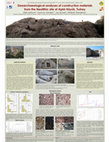
Aşıklı Höyük is the oldest Aceramic Neolithic tell in the Cappadocia region of Central Anatolia, ... more Aşıklı Höyük is the oldest Aceramic Neolithic tell in the Cappadocia region of Central Anatolia, Turkey, an area of Central Anatolia which has a distinct geologic and geographic structure. The Aşıklı Project first started in 1989, directed by Prof. Ufuk Esin of Istanbul. The current work at the site, which started in 2010, is led by Prof. Mihriban Özbaşaran of Istanbul University. The results of radiocarbon dating show that habitation started around the first half of the 9 th millennium BC and continued until the middle of the 8 th millennium BC. The site contains the earliest evidence for sedentism and adaptation of a new life style, and has a thick sequence that developed over 1000 years without interruption. Therefore, at Aşıklı Höyük, it is possible to observe the process of Neolithization in one place. The many changes in human life that happened during this time are documented in many fields of research, such as studies of plant remains, animal remains, stone tools, human bones, and architecture. Aşıklı is also the only early Neolithic site excavated in Cappadocia, It is unique in its age, size, geologic context, and good state of preservation. RESEARCH AIMS The main structural material in the settlement-from its first stages of occupation to its abandonment-is the mud-brick. Mud-brick can be defined as building material formed from soil made using a mixture of loam and water with various additive and binding materials. Mud-brick is a convenient building material because it can be produced from many kinds of soil using different methods. Although it has a disadvantage in that it must be renewed and repaired due to weathering and natural disasters, it has an advantage in that it is a recyclable material. The process of mud-brick production, from preparing the raw material to making and using the bricks provides information about structures and traditions of the culture to which it belongs. For example, the preferred sources, the additives used, and brick shaping methods differ in certain geographies and time periods. We aim to study: (1) how mud-brick, mortar and plaster were produced, (2) changes in production methods over time, and (3) the relationship between these changes and other aspects of sedentary life that are specific to the Aşıklı Höyük Neolithic community. In this context, we propose to analyze the changes in technological and social life by first understanding the use of construction materials in Aşıklı.
Talks / Popular by Melis Uzdurum
http://anamedblog.tumblr.com
The inhabitants of Aşıklı Höyük, also known as the “earliest sedent... more http://anamedblog.tumblr.com
The inhabitants of Aşıklı Höyük, also known as the “earliest sedentary community of Western Cappadocia”, have managed to live together in cohesion for hundreds of years. During this long span of time, despite slow and gradual changes manifested through population growth, increasing interaction with other regions and communities, innovations in technology, changes in burial practices, architecture, and subsistence, the Aşıklı community persisted their collective lifestyle. Aşıklı community, who lived about 10 thousand years ago, could be regarded as a guide for today's societies to question their existence, ideologies, forms of organization and social identities.
Thesis Chapters by Melis Uzdurum
Orta Anadolu Bölgesindeki Aşıklı Höyük MÖ 8500-7400 (cal.) yıllarına tarihlenen, Çanak Çömleksiz ... more Orta Anadolu Bölgesindeki Aşıklı Höyük MÖ 8500-7400 (cal.) yıllarına tarihlenen, Çanak Çömleksiz Neolitik Dönem yerleşmesidir. Bu tez çalışmasında Aşıklı Höyük yerleşmesinde ortaya çıkarılan ateş yerleri incelenmiştir. Çalışmada ateş yerlerinin yapımı, kullanımı ve yerlerinin zaman içerisindeki olası değişimlerinin tespit edilmesi ve bina içlerinde bulunan ocakların, konut yapılarının düzenlenmesinde nasıl bir rol üstlendiğinin anlaşılması amaçlanmıştır.
Bu amaçla ateş yerlerinin teknolojik ve tipolojik tanımları, tasnifleri yapılmış, etnoarkeolojik çalışmalar ve deneysel uygulamalar çerçevesinde olası işlevleri anlaşılmaya çalışılmış, ateş yerleri ile ocaklı ve ocaksız binaların yatayda ve dikeydeki dağılımları, karşılaştırmaları yapılmıştır. Alınan sonuçlar, Aşıklı Höyük’te, 1000 yıllık süreçte, zaman içinde ateş yerlerinde değişim görüldüğüdür. Çalışmamız, bu değişimin yerleşmedeki diğer çalışma/uzmanlık alanlarında saptanan değişimlerle birlikte ele alınarak ilk yerleşik toplulukların yeni yaşam biçimine nasıl adapte oldukları konusuna katkıda bulunmaktadır.
Aşıklı Höyük, located in Central Anatolia, is a Pre-Pottery Neolithic settlement dated to 8500-7400 cal. BC. In this study, fire installations of Aşıklı Höyük have been investigated. The main aim of this study is to understand the possible changes in the construction, use and location of fire-places and the role of hearths in the organization of the buildings. In order to reach this aim, fire installations were analyzed technologically and
typologically; classified and compared to ethnographical and experimental examples that provide hints in understanding their possible functions. Analyses on stratigraphy and spatial distribution through time have also been carried out. The results indicated changes through time. Such changes, contextualised with other changes observed in the settlement, contribute in understanding the newly established way of living of the early sedentary communities.
Güneybatı Asya’da erken Neolitik toplulukların yerleşikliğe geçiş süreci ve
yaşam biçimlerindeki ... more Güneybatı Asya’da erken Neolitik toplulukların yerleşikliğe geçiş süreci ve
yaşam biçimlerindeki değişimlerin, farklı bölgelerde özgün dinamiklerle yaşandığı
bilinmektedir. Orta Anadolu Bölgesi’nin doğusunda, Volkanik Kapadokya olarak
adlandırılan coğrafyada yer alan Aşıklı Höyük (MÖ 8350-7300) yerleşmesi de bölgenin
özgün Neolitikleşme sürecinin ve bu süreçte toplulukların dönüşen yaşam
biçimlerinin kesintisiz bir şekilde takip edilebildiği anahtar yerleşmelerden biridir.
Volkanik Kapadokya’nın en eski kerpiç mimari örneklerini veren Aşıklı, kerpiç
teknolojisinin kesintisiz olarak, yüzyıllarca aynı yerleşme özelinde takip edilmesini
sağlaması bakımından da ayrıcalıklı bir yere sahiptir. Yerleşme sakinlerinin kerpiç ve
harç tariflerini nasıl hazırladığı ve bunun zaman içerisindeki değişimine odaklı
gerçekleştirilen bu tez çalışmasında, tarihöncesi yapı malzemeleri mikroarkeolojik bir
çerçevede incelenmiştir.
Aşıklı yerleşimcilerinin iskan geçmişi boyunca yapı malzemesi tercihindeki
ısrarcı tutumunun kerpiç ve harçlarda kullandıkları hammadde kaynağı, katkı ve
bağlayıcılar ile yapım teknolojisi bağlamında geçerli olmadığı, kerpiç ve harç
tariflerinin yerleşiklik sürecinde dönüştüğü, standartlaştığı ve belirli normlara
oturtulmuş olduğu anlaşılmaktadır. Yapılan kapsamlı analizler, yapı malzemeleri
reçetelerindeki zamansal değişim eğilimi ve temposunun, yerleşikliğe geçiş sürecinde
yaşanan sosyal, teknolojik, ekonomik, çevresel pek çok etken ve dönüşümlerle
karşılıklı bir ilişki içerisinde olduğunu, sakinlerin kerpiç teknolojisi konusunda
yüzyıllar içerisinde edindiği tecrübenin, yerleşik yaşamın kurulması ve devamlılığının
sağlanmasında etkin bir rol üstlendiğini önermektedir.
The transition to sedentism in Southwest Asia, and accompanying changes in
the life-styles of the early Neolithic communities appeared in due to diverse and
unique dynamics in different parts of this vast region. Aşıklı Höyük (8350-7300 BC), a
Pre-Pottery Neolithic site in the Volcanic Cappadocia region of Central Anatolia, is
one of the key sites where the region’s unique Neolithisation process and the
concomitant changes brought by this new way of life can be tracked continuously.
The site, providing the earliest examples of mud-brick architecture in Volcanic
Cappadocia, exhibits a particular case as the nature and transformation of mud-brick
technologies can be followed continuously for centuries within the same settlement.
In this thesis, with the core question of how the inhabitants of Aşıklı prepared mudbrick
and mortar recipes and how and why their recipes changed over time,
prehistoric building materials are studied with multiple complementary methods
deriving from a microarchaeological approach.
Aşıklı community strictly preferred mud-brick as the principal building
material throughout their occupation at the site; however, this strict behavior was not
true for their choices in raw material and sediment sources, preparation of tempers
and binders, and the production technologies they preferred. This tendency is
evidenced by the changes and standardization in recipes during the overall
occupation sequence. The comprehensive analyses performed within the scope of this
research suggest a mutual relationship between the rhythm of the diachronic changes
in building material recipes and the social, technological, economic, and
environmental changes occurred during the course of the transition to a fully
established sedentary way of life. It could thus be suggested that the centuries of
experience the Aşıklı community gained in mud-brick technologies played an active
role in establishing and sustaining settled life at the site.
Call for Papers by Melis Uzdurum

Bildiri Çağrısı
Teorik Arkeoloji Grubu-Türkiye Üçüncü Toplantısı
6-7 Mayıs 2021
"Kimlikler"
... more Bildiri Çağrısı
Teorik Arkeoloji Grubu-Türkiye Üçüncü Toplantısı
6-7 Mayıs 2021
"Kimlikler"
Toplumsal cinsiyet/cinsiyet, cinsellik, yaş ve çocukluk, statü, hiyerarşi ve güç, toplumsal/kolektif ve bölgesel kimlikler gibi farklı düzlemlerde kimliklerin nasıl tanımlanabileceği konularında kavramsal ve metodolojik çalışmalar, ölüm ritüelleri ve kimliklerin bu ritüellerde nasıl somutlandığına dair çalışmalar, bireysel ve sosyal farklılaşma, kimlik-maddi kültür ilişkisi gibi temalar ekseninde araştırmalarınızı sunmak üzere sizleri TAG-Türkiye üçüncü toplantısına davet ediyoruz.
------------------------------------------------------------------------------------------------------------------------------------
Call for Papers
Third Meeting of the Theoretical Archaeology Group-Turkey
6-7 May 2021
"Identities"
We are delighted to invite you to the third meeting of TAG-Turkey to present papers dealing with themes including but not limited to gender/sex, sexualities, age and childhood, status, hierarchies, power, social, collective, and regional identities, as well as the construction of identities in funerary rites, studying identities through the lens of material culture, personhood, and social differentiation. Studies focusing on methods and approaches in identifying identities in the archaeological record are especially welcome.
------------------------------------------------------------------------------------------------------------------------------------
www.tagturkey2021.com
[email protected]
Virtual Conference: TAG-Turkey 2021 by Melis Uzdurum
TAG-Turkey 2021 / Kimlikler-Identities / Abstract Booklet & Conference Program



Uploads
Papers by Melis Uzdurum
inantly used mudbricks and fired bricks as primary build-
ing materials. Analysing these bricks provides valuable
insights into the city’s resource management, architectur-
al practices, labour organisation, and climate adaptation
strategies, thus shedding light on the socio-political dy-
namics and technological advancements of the time.
This chapter presents results from geochemical analy-
ses addressing the following key questions:
● Which raw materials were used, and where were they
sourced?
● Can patterns of resource distribution be identified
through brick composition?
● How did Assur’s inhabitants adapt their building mate-
rials to environmental and societal changes?
Through these analyses, we seek to enhance our under-
standing of the economic, environmental, and technolog-
ical practices that underpin Assur’s history.
--------------------------------------------------------------------------------------------------------------
ARCHAEOLOGY UNDER THE MICROSCOPE: THE CONTRIBUTION OF ARCHAEOLOGICAL MICROMORPHOLOGY TO THE INTERPRETATION OF PREHISTORIC SITES
Microscopic and ultramicroscopic analyses had a rapid increase in archaeology since the 1960s with the introduction of the methods of natural sciences. The scope of these analyses, which were originally used in the study of small but visible material culture elements, expanded over time to include micron-scale residues such as sediments, minerals, microorganisms, and even traces. Today, the new approaches and developing techniques allow higher resolution analyses of past life. Archaeologicalmicromorphology, one of the methods used in archaeology, not only contributes to the study of the past in a micron-scale, but also helps reconstructing the micro context out of the field in a laboratory environment. In Turkey -especially in prehistoric archaeology- however, archaeological micromorphology is still not widely practiced and is limited to individual studies. This article is a first comprehensive presentation of archaeological micromorphology to the Turkish audience. It discusses the various remains and topics that are studied and addressed in the scope of archaeological micromorphology. In this regard, this study contributes creating a theoretical and terminological basis for archaeological micromorphology in Turkish literature, and aims to strengthen its place in Turkish archaeology.
In this work we will try to evaluate the prominent factors of complexity, and use the concept of social complexity to understand and explain societies' social organization systems and how political and socio-cultural backgrounds affect approaches employing this concept. Our aim is to emphasize that even similar social systems, life-ways and circumstances may not be enough to schematize societies and to embody parameters of social complexity. We accomplish this by reviewing hypothesis and critiques and presenting a case study of the Inuit society.
Posters by Melis Uzdurum
Talks / Popular by Melis Uzdurum
The inhabitants of Aşıklı Höyük, also known as the “earliest sedentary community of Western Cappadocia”, have managed to live together in cohesion for hundreds of years. During this long span of time, despite slow and gradual changes manifested through population growth, increasing interaction with other regions and communities, innovations in technology, changes in burial practices, architecture, and subsistence, the Aşıklı community persisted their collective lifestyle. Aşıklı community, who lived about 10 thousand years ago, could be regarded as a guide for today's societies to question their existence, ideologies, forms of organization and social identities.
Thesis Chapters by Melis Uzdurum
Bu amaçla ateş yerlerinin teknolojik ve tipolojik tanımları, tasnifleri yapılmış, etnoarkeolojik çalışmalar ve deneysel uygulamalar çerçevesinde olası işlevleri anlaşılmaya çalışılmış, ateş yerleri ile ocaklı ve ocaksız binaların yatayda ve dikeydeki dağılımları, karşılaştırmaları yapılmıştır. Alınan sonuçlar, Aşıklı Höyük’te, 1000 yıllık süreçte, zaman içinde ateş yerlerinde değişim görüldüğüdür. Çalışmamız, bu değişimin yerleşmedeki diğer çalışma/uzmanlık alanlarında saptanan değişimlerle birlikte ele alınarak ilk yerleşik toplulukların yeni yaşam biçimine nasıl adapte oldukları konusuna katkıda bulunmaktadır.
Aşıklı Höyük, located in Central Anatolia, is a Pre-Pottery Neolithic settlement dated to 8500-7400 cal. BC. In this study, fire installations of Aşıklı Höyük have been investigated. The main aim of this study is to understand the possible changes in the construction, use and location of fire-places and the role of hearths in the organization of the buildings. In order to reach this aim, fire installations were analyzed technologically and
typologically; classified and compared to ethnographical and experimental examples that provide hints in understanding their possible functions. Analyses on stratigraphy and spatial distribution through time have also been carried out. The results indicated changes through time. Such changes, contextualised with other changes observed in the settlement, contribute in understanding the newly established way of living of the early sedentary communities.
yaşam biçimlerindeki değişimlerin, farklı bölgelerde özgün dinamiklerle yaşandığı
bilinmektedir. Orta Anadolu Bölgesi’nin doğusunda, Volkanik Kapadokya olarak
adlandırılan coğrafyada yer alan Aşıklı Höyük (MÖ 8350-7300) yerleşmesi de bölgenin
özgün Neolitikleşme sürecinin ve bu süreçte toplulukların dönüşen yaşam
biçimlerinin kesintisiz bir şekilde takip edilebildiği anahtar yerleşmelerden biridir.
Volkanik Kapadokya’nın en eski kerpiç mimari örneklerini veren Aşıklı, kerpiç
teknolojisinin kesintisiz olarak, yüzyıllarca aynı yerleşme özelinde takip edilmesini
sağlaması bakımından da ayrıcalıklı bir yere sahiptir. Yerleşme sakinlerinin kerpiç ve
harç tariflerini nasıl hazırladığı ve bunun zaman içerisindeki değişimine odaklı
gerçekleştirilen bu tez çalışmasında, tarihöncesi yapı malzemeleri mikroarkeolojik bir
çerçevede incelenmiştir.
Aşıklı yerleşimcilerinin iskan geçmişi boyunca yapı malzemesi tercihindeki
ısrarcı tutumunun kerpiç ve harçlarda kullandıkları hammadde kaynağı, katkı ve
bağlayıcılar ile yapım teknolojisi bağlamında geçerli olmadığı, kerpiç ve harç
tariflerinin yerleşiklik sürecinde dönüştüğü, standartlaştığı ve belirli normlara
oturtulmuş olduğu anlaşılmaktadır. Yapılan kapsamlı analizler, yapı malzemeleri
reçetelerindeki zamansal değişim eğilimi ve temposunun, yerleşikliğe geçiş sürecinde
yaşanan sosyal, teknolojik, ekonomik, çevresel pek çok etken ve dönüşümlerle
karşılıklı bir ilişki içerisinde olduğunu, sakinlerin kerpiç teknolojisi konusunda
yüzyıllar içerisinde edindiği tecrübenin, yerleşik yaşamın kurulması ve devamlılığının
sağlanmasında etkin bir rol üstlendiğini önermektedir.
The transition to sedentism in Southwest Asia, and accompanying changes in
the life-styles of the early Neolithic communities appeared in due to diverse and
unique dynamics in different parts of this vast region. Aşıklı Höyük (8350-7300 BC), a
Pre-Pottery Neolithic site in the Volcanic Cappadocia region of Central Anatolia, is
one of the key sites where the region’s unique Neolithisation process and the
concomitant changes brought by this new way of life can be tracked continuously.
The site, providing the earliest examples of mud-brick architecture in Volcanic
Cappadocia, exhibits a particular case as the nature and transformation of mud-brick
technologies can be followed continuously for centuries within the same settlement.
In this thesis, with the core question of how the inhabitants of Aşıklı prepared mudbrick
and mortar recipes and how and why their recipes changed over time,
prehistoric building materials are studied with multiple complementary methods
deriving from a microarchaeological approach.
Aşıklı community strictly preferred mud-brick as the principal building
material throughout their occupation at the site; however, this strict behavior was not
true for their choices in raw material and sediment sources, preparation of tempers
and binders, and the production technologies they preferred. This tendency is
evidenced by the changes and standardization in recipes during the overall
occupation sequence. The comprehensive analyses performed within the scope of this
research suggest a mutual relationship between the rhythm of the diachronic changes
in building material recipes and the social, technological, economic, and
environmental changes occurred during the course of the transition to a fully
established sedentary way of life. It could thus be suggested that the centuries of
experience the Aşıklı community gained in mud-brick technologies played an active
role in establishing and sustaining settled life at the site.
Call for Papers by Melis Uzdurum
Teorik Arkeoloji Grubu-Türkiye Üçüncü Toplantısı
6-7 Mayıs 2021
"Kimlikler"
Toplumsal cinsiyet/cinsiyet, cinsellik, yaş ve çocukluk, statü, hiyerarşi ve güç, toplumsal/kolektif ve bölgesel kimlikler gibi farklı düzlemlerde kimliklerin nasıl tanımlanabileceği konularında kavramsal ve metodolojik çalışmalar, ölüm ritüelleri ve kimliklerin bu ritüellerde nasıl somutlandığına dair çalışmalar, bireysel ve sosyal farklılaşma, kimlik-maddi kültür ilişkisi gibi temalar ekseninde araştırmalarınızı sunmak üzere sizleri TAG-Türkiye üçüncü toplantısına davet ediyoruz.
------------------------------------------------------------------------------------------------------------------------------------
Call for Papers
Third Meeting of the Theoretical Archaeology Group-Turkey
6-7 May 2021
"Identities"
We are delighted to invite you to the third meeting of TAG-Turkey to present papers dealing with themes including but not limited to gender/sex, sexualities, age and childhood, status, hierarchies, power, social, collective, and regional identities, as well as the construction of identities in funerary rites, studying identities through the lens of material culture, personhood, and social differentiation. Studies focusing on methods and approaches in identifying identities in the archaeological record are especially welcome.
------------------------------------------------------------------------------------------------------------------------------------
www.tagturkey2021.com
[email protected]
Virtual Conference: TAG-Turkey 2021 by Melis Uzdurum