Book Reviews by Menchelli-Buttini Francesca
Journal for Eighteenth-century Studies, 2010
Journal for Eighteenth-century Studies, 2010
Books by Menchelli-Buttini Francesca
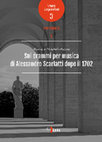
Il volume concerne i drammi per musica di Alessandro Scarlatti dal "Flavio Cuniberto", allestito ... more Il volume concerne i drammi per musica di Alessandro Scarlatti dal "Flavio Cuniberto", allestito a Pratolino nel 1702, alla "Griselda", apparsa a Roma nel 1721. Vengono prese in considerazione le 'prime' intonazioni la cui responsabilità sia attribuibile per intero al musicista palermitano, più le tarde rielaborazioni d’autore per Roma di due dei lavori scritti originalmente per Pratolino: "Turno Aricino" (1720) e "Arminio" (1722). La materia è suddivisa in due parti: la prima contiene sia un esame dei soggetti, dei nuclei drammatici e degli eventuali accomodi (in caso di libretti di lungo corso), sia un quadro delle caratteristiche stilistiche e formali della musica in ottica generale e sistematica; la seconda parte descrive più in dettaglio, e in prospettiva cronologica, le intonazioni di cui sussistano fonti, in specie riguardo ai rapporti e alle alternative possibili fra musica, parole e gesto negli snodi melo-drammatici di maggior rilievo.
riporta una diversa sistemazione dei recitativi, contiene otto arie sostitutive e serba l'ordine ... more riporta una diversa sistemazione dei recitativi, contiene otto arie sostitutive e serba l'ordine originale delle entrate alla fine del primo atto, precedendo Mandane. Tuttavia, sulla scorta di Vicenza 1756, per il 'finale' del primo atto si può azzardare l'ipotesi di una circolazione di entrambi gli arrangiamenti, ovverosia l'ensemble e la serie delle arie, seguendo Mandane: il testo a stampa riporta un nuovo quartetto, No, che padre a te non sono, mentre nel citato manoscritto della partitura conservato a Stoccolma (S-Skma, Kungl. Teatern A 10 [12]) lo stesso quartetto precede l'avvertimento «Nuova aggiunta / Tralasciandosi il dire / il Quartetto», comprendente tre restanti battute di recitativo di I.11, l'aria originale di entrata di Artaserse, Deh, respirar lasciatemi, il dialogo fra i personaggi rimasti, le scene per il primo uomo e la prima donna, anticipando il congedo di Arbace con Se al labbro mio non credi, mentre Mandane termina l'atto con Agitata in tanti affanni, un binomio condiviso da Lucca 1757 (Galuppi), Verona 1759 (Galuppi) e Roma 1768 (Sacchini), nel primo e nell'ultimo caso forse per la comune scrittura di Gaetano Guadagni nella parte di Arbace. La pratica del ricorso all'ensemble sembrerebbe dunque trovare spazio, nei primi decenni del Settecento, soprattutto all'estero, se consideriamo le occorrenze in Galuppi, Carl Heinrich Graun (Berlino 1743) e Jommelli (Stuttgart 1756): questo almeno per quanto riguarda Artaserse e forse, più in generale, gli adattamenti da Metastasio, ché altrimenti terzetti, quartetti e quintetti vengono somministrati in dosi ragionevoli, come vedremo in seguito, anche nei teatri italiani.

Il fenomeno fortunatissimo degli intermezzi autonomi comincia a Venezia attorno al 1706, soprattu... more Il fenomeno fortunatissimo degli intermezzi autonomi comincia a Venezia attorno al 1706, soprattutto sulle scene del Teatro San Cassiano, i cui allestimenti per il periodo 1705-1710 sono già stati ricostruiti grazie ad uno spoglio attento delle fonti musicali. 1 Si riproducono in questa sede Le rovine di Troia (Dragontana e Policrone) e Melissa contenta, rappresentati al San Cassiano negli anni cruciali 1707-1708, e Cuoco e Madama (La preziosa ridicola) nell'intonazione più tarda intesa a Vienna nel 1724, a testimonianza del dinamismo e della forma aperta del genere, privilegiando dunque un panorama multicolore in luogo d'una rigida uniformità. Anche la scelta di offrire il solo episodio Melissa contenta, ultimo di una serie già comprensiva dei titoli Melissa schernita e Melissa vendicata, riflette la contraddittoria prassi settecentesca di allestirne la storia separatamente e in diverse puntate, in serate e in stagioni differenti, tanto è vero che pare incerta la stessa circostanza di una rappresentazione collettiva, sebbene una versione integrale della trilogia uscisse in Laguna per i tipi di Marino Rossetti ed essa risulti allo stato attuale «la prima serie del San Cassiano di cui si conosca un'edizione a stampa [con] il Parpagnacco». 2 Per quanto concerne la paternità dei testi e delle note, già a cominciare dai più antichi Le rovine di Troia (Dragontana e Policrone) e Melissa, nel frontespizio dei libretti come per solito non figurano i nomi del poeta e del musicista, 3 ma le partiture conservate accordano l'attribuzione della musica al compositore del dramma che include la prima recita degli intermezzi. Così sull'unico testimone superstite dell'intonazione delle Rovine di Troia compare l'etichetta «Musica del Sig r : Antonio Lotti», autore dell'Achille placato (su testo di Urbano Rizzi) cui in origine si accompagnarono le vicende di Dragontana e Policrone; 4 le tre «azioni» del ciclo Melissa vengono ascritte a Lotti e a Francesco Gasparini per essere apparse dapprima nelle loro opere L'amor generoso (Zeno-Gasparini), Teuzzone (Zeno-Lotti) e Flavio Anicio Olibrio (Zeno-Pariati, Gasparini), nonostante permanga nella tradizione una sensibile divergenza: se da un lato il documento conservato presso la Staats-und Universitätsbibliothek di Amburgo assegna la prima e la terza «azione» a Gasparini, la seconda a Lotti, 5 dall'altra parte secondo il catalogo a schede della Sächsische Landesbibliothek di Dresda risulta che nel perduto manoscritto di Melissa (Mus 1/F/71), probabile antigrafo della copia di Melissa contenta qui ripubblicata, 6 si assegnava la prima e la seconda «azione» a Gasparini, la terza a Lotti. 7 Il quadro dei reciproci rapporti fra i due intermezzi relativamente alle notizie storiche presenta accanto al luogo di rappresentazione, alla data e forse al compositore gli interpreti, identificati nel contralto bolognese Santa Marchesini e nel basso mantovano Giovanni Battista Cavana, senz'altro compartecipi assieme ad alcuni musicisti (Gasparini, Lotti, Tommaso Albinoni) e poeti (in particolare Pietro Pariati) nella nascita e nel successo del nuovo genere. 8 Il declino a Venezia della prima fiorente produzione locale di intermezzi (1706-1710), possibilmente per via della partenza di Cavana, 9 costituisce il favorevole Madama Madama Venga sì, sì Venga, venga, mi contento Quel forestiero, Di ricever il favore: Quel cavaliero Già mi sento per l'umore Che sì mi brama. Correr certa bizzarria Digli: «Madama Di mostrar quanto io mi sia L'aspetta già». Disinvolta, accorta e saggia. È colonnello? Ho un sorriso, un sguardo, un vezzo, È così bello? Un amabile disprezzo, IX B-TRE INTERMEZZI pag 9-28 14-03-2008 9:21 Pagina IX (Ma poi si sa). Un bel dire, un brio vivace, Tu non m'inganni? Un scherzar che morde e piace; Mentre è vezzoso, E con dolce manierina Più generoso Ne fo salsa così fina Forse sarà. Che vi torna chi l'assaggia. 19 Nel 1724 La preziosa ridicola giunge a Vienna, nuovamente intonata da Antonio Caldara in occasione dell'allestimento della sua Andromaca (28 agosto) su libretto di Apostolo Zeno: perlomeno a prestar fede alla congettura del bibliotecario dell'Österreichiche Nationalbibliothek, ché il nome del compositore non figura sulla partitura manoscritta separata degli intermezzi, mutila del frontespizio; 20 come valida alternativa, si potrebbe avanzare la candidatura di Francesco Conti, autore di altri intermezzi per le opere del collega. Balza agli occhi la somiglianza con un libretto dal titolo Cuoco e Madama, privo di note tipografiche, 21 dipendente da Modena 1717 e Bologna 1718, dalle cui lezioni si discostano tuttavia diversi aggiustamenti, taluni adattati su Roma 1712, ma autonomamente rispetto alla Raccolta d'intermedi milanese, che pure utilizzava gli stessi archetipi. La differenza più netta -fra il libretto conservato presso l'Istituto di Archeologia e di Storia dell'arte di Roma e la partitura viennese -è la caduta nella partitura dell'ultima parte dell'intreccio. Si deve forse pensare alla tendenza a coprire soltanto due «intervalli» di un dramma in cinque atti con intermezzi, serbando ai balli la collocazione in fine degli altri atti, caratteristica dopo il 1714 a Vienna: nello specifico i balli di «Custodi del Tempio d'Apollo», di «Ladri e furie» e di «Greci e Troiani» appaiono rispettivamente dopo il primo, il terzo e il quinto atto; 22 l'evenienza che si decidesse di stampare comunque il racconto per intero ad uso del pubblico potrebbe testimoniare una contestuale corrispondenza dei due documenti.
Nato dall'esperienza del Convegno internazionale di studi La monodia in Toscana alle soglie del X... more Nato dall'esperienza del Convegno internazionale di studi La monodia in Toscana alle soglie del XVII secolo tenutosi a Pisa nel dicembre 2004 su iniziativa del Progetto Tesori Musicali Toscani, il volume affronta alcuni nodi della teoria musicale e degli indirizzi della disciplina, fissati dagli autori con lodevole approfondimento critico. In particolare vengono presi in considerazione e discussi il termine e il concetto stesso di monodia, i diversi stili di esecuzione e le convergenze fra monodia e contrappunto, l'esame filologico dei più importanti manoscritti monodici fiorentini, la ricostruzione aggiornata della figura e dell'opera di uno dei principali musicisti dell'epoca, Antonio Brunelli.
Papers by Menchelli-Buttini Francesca
Voci in movimento. Donne nella mobilità paneuropea dell’opera italiana nel Settecento / Voices in Motion. Women and the Pan-European Mobility of Italian Opera in the Eighteenth Century, a cura di Tatiana Korneeva, Melania Bucciarelli, Piermario Vescovo, Bari, Edizioni di Pagina, pp. 183-202, 2025
A chiusura di una carriera fortunatissima, acclamata come il miglior contralto dell’epoca, sia pe... more A chiusura di una carriera fortunatissima, acclamata come il miglior contralto dell’epoca, sia per la maestria nella recitazione, sia per una voce eccellente, Vittoria Tesi cantò ancora in qualità di prima donna nelle a Vienna nel 1748-1751. Fra le immagini femminili cui ella prestò voce e gesto figurano anzitutto le eroine eponime Semiramide, Didone, Andromaca e Merope. Il dramma di Merope è classificato nei repertori come riproposizione dello spettacolo inaugurato a Venezia nel 1741-1742 con musica di Niccolò Jommelli, sebbene lo studio della partitura e del libretto dimostri in realtà come il rapporto della rappresentazione del 1749 con il precedente veneziano si limiti alla protagonista, interpretata in entrambe le occasioni da Tesi. La presenza a Vienna della cantante e di Jommelli favorì la ripresa di un ruolo femminile che aveva garantito ad entrambi un esito trionfale a Venezia.
L’articolo intende anzitutto approfondire le differenze d’impianto del dramma del 1749 rispetto alla tradizione librettistica del soggetto, tenendo conto di alcune divergenze fra testo e partitura. Si intende quindi rintracciare la provenienza dei pezzi sostitutivi, probabilmente adattati a musica preesistente, verificarne la congruenza rispetto alle fonti, e valorizzare l’eventuale contributo degli interpreti – in particolare Tesi – alla definizione di un simile mosaico.
Riprese e nuove intonazioni di drammi per musica italiani a Vienna fra il 1748 e il 1751
I libretti italiani a Vienna tra Sei e Settecento, a cura di Adriana De Feo e Nicola Usula, Vienna, Böhlau, 2025
L'Olimpiade di Traetta a Firenze e a San Pietroburgo
Tommaso Traetta. Nuovi studi, a cura di Lorenzo Mattei, 2024
Metastasio e la Francia, a cura di Giovanni Ferroni ed Elisabetta Selmi, Padova, Padova University Press, pp. 41-95, 2024
Il saggio intende affrontare il tema nell’ottica sia del dibattito estetico-filosofico del Sei-Se... more Il saggio intende affrontare il tema nell’ottica sia del dibattito estetico-filosofico del Sei-Settecento sulla tragedia sia della circolazione di soggetti, intrecci ed episodi teatrali di sicuro effetto. Si considerano anzitutto gli enunciati di “poetica” disseminati all’interno dei drammi di Metastasio, e solo per riflesso l’Estratto dell’Arte poetica di Aristotile e osservazioni sulla medesima (1773), con particolare riguardo per la produzione dei primi anni Trenta, nella quale – poco dopo l’arrivo a Vienna – il poeta cesareo chiarisce i presupposti della propria attività di drammaturgo, sebbene sia possibile rintracciare spunti anche in testi antecedenti.
Leonardo Leo per Vittoria Tesi sulle scene napoletane
Leonardo Leo tra sacro e profano, Atti del Convegno internazionale di studi (Reggio Calabria, 3-4 ottobre 2023), Reggio Calabria, Edizioni del Conservatorio “F. Cilea”, pp. 17-53, 2024

Überlegungen zu den Werken von Alessandro Scarlatti nach 1702 (trad. tedesca Gerhard Kuck)
Alessandro Scarlatti: das kompositorische Schaffen, ed. Sabine Hermann-Ehrfort, Gerhard Kuck, Kassel, Bärenreiter, pp. 102-143, 2024
This essay discusses Alessandro Scarlatti’s late operas, from "Tito" and "Tiberio" (the last ones... more This essay discusses Alessandro Scarlatti’s late operas, from "Tito" and "Tiberio" (the last ones composed for Naples in 1702) to Griselda (Rome 1721). It considers the musical settings fully ascribed to Alessandro,
leaving aside revisions and pasticci. Some preliminary thoughts are offered on the principal elements of plot and on the models and their adaptation where long-standing librettos are concerned. Following this excursus, the interactions between music, word and gesture are examined in four operas: "Mitridate" (Venice 1707), "L’amor volubile e tiranno" (Naples 1709), "La principessa fedele" (Naples 1710) and "Telemaco" (Rome 1718). This choice is the result of a combination between pertinence and necessity, as it pays attention to chronology, places, genres and the availability of complete scores rather than single arias or collections of arias. A separate section deals with the comic scenes, and then the aspects of dramaturgical choices and compositional means are addressed as cross cutting issues. This final section explores the introductory sinfonias; the situations having visual impact that calls for instrumental insertions; the instances that accommodate obbligato recitative; the use in arias or ensembles of special instrumental colouring (wind instruments or instrumental soloists) or changes in meters and tempo, in relation to concepts, characters or feelings; the juxtaposition of rhythmic variability with symmetrical treatment.
Eighteenth Century Music
The interdisciplinary research project 'Women, Opera and the Public Stage in Eighteenth-Century V... more The interdisciplinary research project 'Women, Opera and the Public Stage in Eighteenth-Century Venice' (WoVen) brings together an international team of researchers dedicated to the question of how women and European opera culture were intertwined in the eighteenth century. The focus is on female singers, librettists and other women involved in performance of the genre, as well as female patrons and audience members. The focus, however, is not only on specific women; the questions are also directed at 'women's roles' in the operatic context in general. Venice lends itself particularly well to this as a focal point, since the character of European operatic culture can be seen in the Serenissima as if under a burning glass. The theme of the first colloquium was 'Concepts, Sources and Methodologies'. In her introductory presentation on the project, Melania Bucciarelli (Norges teknisknaturvitenskapelige universitet) explained the main aims and the four overarching research areas of the project: 1) women's roles and images of femininity on the Venetian stage, 2) the performance of celebrity there, 3) women's participation in opera, including the role of female audiences and patrons, and 4) a practice-oriented approach to eighteenth-century female opera performers. While opera is often considered a decidedly 'feminine' genre, research has so far been almost exclusively concerned with men in the ranks of composers and librettists of the eighteenth centuryand has therefore also predominantly taken them as its starting-point. The project aims to overcome this gap by understanding individual female singers as 'agents of culture and change'. Despite numerous studies on opera and theatre in eighteenth-century Venice, there is still no comprehensive documentation of the many female opera practitioners who were active in the city and their influence on opera practice both there and throughout Europe. Studies focusing on the construction of femininity in eighteenth-century Italian opera are also lacking, as is information on staging practices and acting on the Venetian stage, including in specific individual theatres. Little is known about the mechanisms of the construction of prominence and celebrity, or about female opera audiences and patrons; further, there is a fundamental lack of methods that can be used to assess the impact that the 'seen' and 'heard' female body had on stage. Bucciarelli's final observation concerned the 'oscillating perception' between the physical body of the actor/singer and her stage role, which had been emphasized in opera not only by the widespread practice of cross-gender casting but also by the presence of the castrato. This oscillation between performer and role was also important for the construction and performance of celebrity and 'star status'. Following on from this, Suzanne Aspden (University of Oxford) illustrated the possibilities of 'female agency' in eighteenth-century opera, defining 'agency' as an 'expression of power'. Aspden linked such an individual exertion of influenceor, more pointedly, powerto the example of the divas Francesca Cuzzoni and Faustina Bordoni, who were bitter rivals in London in the 1720s. When the situation escalated to fisticuffs, on 6 June 1727 during Giovanni Battista Bononcini's opera Astianatte, in which the two were on stage simultaneously as Andromaché
Teatro San Carlo, 1747-1753. Further investigation on its management Unissued documents are repro... more Teatro San Carlo, 1747-1753. Further investigation on its management Unissued documents are reproduced here, sitting at the district notary archive and the Archivio Storico del Banco, Naples, about the Teatro San Carlo management being granted to a four-person company — Diego Tufarelli, Nicola Tagliavanti, Biagio Soreca, and Vincenzo Martinez, soon replaced by Stefano Buonfiglio — by 1747-53. Some of these very papers are also cited in a manuscript Relazione dell’appalto del Real Teatro di San Carlo , dated 14 September 1756 and now at the Archivio di Stato, Naples. Such document, published by Gian Giacomo Stiffoni, has relevant info on the theater management and its constitution. In particular, Archivio Storico del Banco contracts and registers yielded info about the company members and savings, expense sharing, membership fees, and more. For instance, we learn that Martinez was a gambling levy officer, as well as a representative of several Neapolitan noblemen. Finally, evidence ...

Luigi Cherubini: il teatro musicale, a cura di Maria Teresa Arfini, Francesca Menchelli-Buttini, Emilia Pantini, Würzburg, Studio Verlag im Königshausen & Neumann, pp. 153-174, 2020
Paisiello’s "Il tamburo notturno" was performed in Paris, at the Théâtre Feydeau, on 7th of April... more Paisiello’s "Il tamburo notturno" was performed in Paris, at the Théâtre Feydeau, on 7th of April 1791 with some new music, including two new arias by Luigi Cherubini, “Moro... moro... manco... cado”, on a parodied text, and “Fuggite, o donne, amore”. The model was the venetian version performed at the Teatro San Moisè in the Autumn of 1773 based on a libretto by Giovanni Bertati, who revised a previous work by Giambattista Lorenzi (Naples, Teatro Nuovo, Spring 1773) and translated into Italian the parts written originally in Neapolitan dialect.
My study aims to offer a contribution on Cherubini’s activity as a key collaborator to the revivals of Italian operas. It opens with the exploration of the theatrical tradition behind the subject of Il tamburo notturno – through Addison, Destouches and Goldoni’s "Il conte Caramella" – and poses the problems of reading and interpretation across texts, modes and genres. The study then proceeds to evoke confrontations and choices that may evaluate the role of music in expressing and representing a drama, with particular attention to Cherubini’s compositional choices.
den hinterlassenen Papieren desselben im fürstlichen Archiv zu Butschowitz), "oesterreichische re... more den hinterlassenen Papieren desselben im fürstlichen Archiv zu Butschowitz), "oesterreichische revue", 3/6, 1865, pp. 1-79. 6 Johann adam andreas was the third ruler of the house of liechtenstein. He was a great patron of the arts and laid the groundwork for the world-famous art collection of the liechtenstein family. JaCoB Von FalKe, Geschichte des fürstlichen Hauses Liechtenstein, 3 vols, Vienna, Wilhelm Braumüller, 1877, vol. 2, pp. 395-408. 8 Johann adam andreas certainly did not heed his father's advice when it came to his children. His sons Charles Joseph (1684-1704) and Franz dominic (1689-1711) studied the flute under the imperial oboist Franz Glätzl; consider, for example, the following receipt from 1699: "dem Frantz Glazel von Instruirung der zweÿ Prinzen, alß Fürst Carl Joseph und Fürst Frantz auf der flauten pr. 2. Monath nembl: pro Julio et Augusto [1699], 26 f. 34 xr."; HalW [Hausarchiv liechtenstein Wien], H [Herrschaftsakten] 91 Hauptkassa 1695-1703, n. 10, Hof-zahlambts-rechnung [24 June-24 december, 1699, fol. 21a. Here, "flaute" probably refers to the transverse flute: while the term "Flauto/Flöte" ordinarily meant the recorder at the turn of the century, Viennese sources around that time show that this could refer to both instruments. archduke Joseph is recorded playing what is likely the transverse flute in private concerts as early as 1699. His teacher Franz Glätzl was appointed flute master of the "edelknaben" in 1708, and according to Fux, this musician was "ein gutter Virtuos in dreyerley Instrumenten, alss Hautbois, Flutte traversiere, vnd Fagott"; HerBert seIFert, Die Bläser der kaiserlichen Hofkapelle zur Zeit von J. J. Fux, in Johann Joseph Fux und die barocke Bläsertradition: Kongressbericht Graz 1985, "alta Musica", 9, ed. Bernhard Habla, tutzing, Hans schneider, 1987. Johann adam andreas's daughter Maria theresa (1694-1772) also studied the flute, almost certainly the transverse instrument, under the imperial oboist roman Glätzl, brother of the mentioned Franz: "dem 12. Januarÿ anno 1708 dem Roman Glazel, Kaÿ: Cammer Musico vor Informirung der Princessin Theresiae auf der Flautten, von 9. Decembris 1707, bies 9. Janÿarÿ 1708, pr. 1. Monath, 8 fr., dann vor ein Pahr Flautten, 8 fr: zusammen lauth quittung und Approbation zahlt, 16 fr."; HalW, H 1761 Hauptkassa 1708-1728, n. 26, Hof-zahlambts-rechnung [24 June-24 december, 1707], fol. 29b. It should be noted here that the currency abbreviations f., fl., fr., and fn., all refer to the Florin, and x, xr., or kr., to the Kreuzer. 1 Florin equalled 60 Kreuzer. Payments for the keyboard instruction of Maria antonia (1687-1750), sister of the above, likewise appear in the accounts for the period 1695-1703; her teachers were the musicians Frantz anton Candus, Ferdinand lindt and Johann Joseph legler, the last of whom was at that time the parish organist in Feldsberg. 9 "Verzeichnus uber die sowohl Ihro durchl: der g[nä]digsten Fürstin alß s. r durchl. der gnädigsten Fürstens ober-und unter officier was denenselben vor das quartal von 1. n Jenner bis 31. Martÿ [1715] zubezahlen komet, alß: [...] leopold Paschecky"; HalW, K [Familienarchiv] 67 Allgemeines bis 1732, unfoliated. 10 "Passetsky (Leopold) von Passeka, ein Kayserl. Kriegs-Officier, hat an. 1713 zwölff Sonate da Camera, à Violino solo e Cembalo, davon die lezte mit 2 Violinen gesezt ist, zu augspurg, bey andreas Maschenbauer in breit folio drucken lassen, und solche sr. Kayserl. Majestät Carolo VI. dediciret"; JoHann GottFrIed WaltHer, Musicalisches Lexicon oder musicalische Bibliothec, leipzig, deer, 1732, p. 465. 11 "Leopold Passezkÿ erstattet auf obiger zweÿ scholaren eingeraicht unterthanigstes Supliciren. [reply] nachdeme wür den Sup[li]k[an]ten pro directore musicae und unßere Scholaren zu instruiren g[nä]d[ig]st bestellet haben alß soll dem selben auch von aller seiths waß darzue gehöret die gebührende parition geleistet werden, umb von ihme zu perfectionirung ged: scholaren gewisse stunden des tags wobeÿ in unßern diensten sonst nichts zu werabsaumen aus gesezt auch fleissig beständig und ordentlich gehalten werden, und dieß beÿ vermaidung unßerer ungnad, wie dan den Ferdinand Kurzweil und Mathias lauterbach ex eo daß in ihren Musicalische exercitio nachlassig und widerspenstig geweßen, abgeschaffet werden."; HalW, Ha [Handschriftenarchiv] 595, Liechtenstein, Hofkanzlei des Fürsten Anton Florian: Suppliken-Protokolle, 1716, Vienna, 29 august 1716, f. 135. 12 "Carl zagiyek schullmeister zu ostra Sup[lik]:et in nahmen zwaÿer armen unterth: Weÿßen welche er in der Music unterrichtet e: d[urc]hl[auch]t: gerneheten dieselbe mit einer schlecthen Klaÿdung zur begnaden. [reply] damit innermeldte zweÿ waÿsen nach erlehrnung der Music in welcher sie der Sup: wohl und fleissig zu unterrichten, künftig Ihr Brod verdienen können werden hiermit zu bekleÿdung derselben auf einer jeden 5. fr. aus unsern ostra rendt ambt vor dießmahl g[nä]dig angeschafft, und solle Verwalter unß geh: berichten wie sie reussiren werden umb selbete mittler zeit beÿ unserer Hof Music rasch befund Ihrer fähigkeit appliciren zu können."; HalW, Ha 596 Liechtenstein, Hofkanzlei des Fürsten Anton Florian: Suppliken-Protokolle, 1717, Vienna, 7 october, f. 128. Musicians of anton Florian, 1715-1721



Uploads
Book Reviews by Menchelli-Buttini Francesca
Books by Menchelli-Buttini Francesca
Papers by Menchelli-Buttini Francesca
L’articolo intende anzitutto approfondire le differenze d’impianto del dramma del 1749 rispetto alla tradizione librettistica del soggetto, tenendo conto di alcune divergenze fra testo e partitura. Si intende quindi rintracciare la provenienza dei pezzi sostitutivi, probabilmente adattati a musica preesistente, verificarne la congruenza rispetto alle fonti, e valorizzare l’eventuale contributo degli interpreti – in particolare Tesi – alla definizione di un simile mosaico.
leaving aside revisions and pasticci. Some preliminary thoughts are offered on the principal elements of plot and on the models and their adaptation where long-standing librettos are concerned. Following this excursus, the interactions between music, word and gesture are examined in four operas: "Mitridate" (Venice 1707), "L’amor volubile e tiranno" (Naples 1709), "La principessa fedele" (Naples 1710) and "Telemaco" (Rome 1718). This choice is the result of a combination between pertinence and necessity, as it pays attention to chronology, places, genres and the availability of complete scores rather than single arias or collections of arias. A separate section deals with the comic scenes, and then the aspects of dramaturgical choices and compositional means are addressed as cross cutting issues. This final section explores the introductory sinfonias; the situations having visual impact that calls for instrumental insertions; the instances that accommodate obbligato recitative; the use in arias or ensembles of special instrumental colouring (wind instruments or instrumental soloists) or changes in meters and tempo, in relation to concepts, characters or feelings; the juxtaposition of rhythmic variability with symmetrical treatment.
My study aims to offer a contribution on Cherubini’s activity as a key collaborator to the revivals of Italian operas. It opens with the exploration of the theatrical tradition behind the subject of Il tamburo notturno – through Addison, Destouches and Goldoni’s "Il conte Caramella" – and poses the problems of reading and interpretation across texts, modes and genres. The study then proceeds to evoke confrontations and choices that may evaluate the role of music in expressing and representing a drama, with particular attention to Cherubini’s compositional choices.