Mid-Atlantic Bight
The Mid-Atlantic Bight is home to important shellfisheries and finfish with demonstrated sensitivity to ocean acidification. Research aims to enhance the capacity to forecast ocean acidification in order to develop effective strategies that safeguard ecosystems and coastal communities.
Understanding acidification drivers to protect valuable resources
The Mid-Atlantic Bight Region (MAB) includes the eastern United States continental shelf area extending from Cape Hatteras, NC to Cape Cod, MA. The MAB has a diverse assemblage of flora and fauna including commercially and recreationally important shellfish and finfish, deep water hard corals, soft corals and sea fans, as well as shellfish hatcheries, aquaculture leases, and oyster restoration areas. Fisheries totaled $800 million in 2016 with Atlantic sea scallops, blue crab and the eastern oyster accounting for 56% of the total revenues (NEFSC, 2018; NOAA Fisheries, 2019). Marine aquaculture is expanding in every state with the potential of offshore aquaculture throughout the coastal zone, highlighting the importance of characterizing the drivers of ocean acidification in the region.
Ocean acidification in the region is modified by ocean circulation patterns, particularly influenced by the Labrador Sea water that forms the cold pool, natural seasonal and decadal variability and eutrophication. Upwelling areas in the MAB are characterized with enhanced primary productivity, intense fishing activity, and low dissolved oxygen concentrations. Key physical and biogeochemical drivers, such as seasonal changes in net-community production, temperature, salinity, physical mixing, and nutrient loading, in addition to air-sea gas exchange influence acidification in the MAB region. With 5 major estuaries and many coastal barrier island bays, eutrophication may contribute substantially to ocean acidification in this region. Understanding ocean acidification drivers and the effects on marine life and socioeconomics effects on the fishing and aquaculture industries, recreational fisheries and tourism will help determine adaptive strategies for impacted communities.

Tracking progress of ocean acidification research in the Mid-Atlantic

The research goals in the Mid-Atlantic Bight Region are to:
- Improve ocean acidification (OA) forecasts across daily to decadal timescales informed through a modified regional observing system that better quantifies the primary drivers of vertically resolved carbonate dynamics with an increased emphasis at reactive interfaces (e.g., sediment boundary, land-ocean, etc.) in context with other environmental change
- Determine how OA in concert with other stressors impact ecologically and/or economically important marine species, with a focus on understanding impacts to aquaculture stocks
- Evaluate costs and benefits of mitigation and adaptation strategies for communities, ecosystems and economies
- Promote integration of OA understanding into regional planning and management.
The following charts represent the mid-point progress in implementing research actions that focus on the Mid-Atlantic Bight Region according to the NOAA Ocean, Coastal, and Great Lakes Acidification Research Plan.
Good overall progress
Some progress
No known progress
NOAA invests in research and activities toward meeting goals that improve our ability to understand and predict environmental change, species and ecosystem to response to changing ocean chemistry, and the human impacts of these changes. The report card below summarizes progress over the past five years toward meeting these goals for the Mid-Atlantic Bight Region, measured by the number of major actions toward meeting this goal: good progress (4+ actions), some progress (1-3 actions) and no known progress.
Environmental Change
There are eight environmental change actions: five have good overall progress and three have made some progress.
Collaborations with shellfish hatcheries, and state and other federal agencies improve monitoring systems focused on carbon movement near the seafloor and coastlines - where species people rely on live. Developing better computer models using data that accurately represent the ocean environment is also critical to accurately predicting conditions that affect commercial species.
Biological Sensisitivity
There are seven biological sensitivity actions: four have good overall progress, one has made some progress and two have no known progress.
Ocean acidification in concert with nutrient pollution, warmer temperatures and less oxygen, may alter where important marine species can live at different stages of their lives. Studying both indirect and direct effects, like predator-prey relationships and how species react to environmental stresses can help us develop better models. This will help predict population changes and support management strategies that consider the whole ecosystem and how people rely on them.
Human Dimensions
There are 11 human dimension actions: one has good overall progress, five have made some progress and five have no known progress.
Improved models predicting impacts of changing ocean chemistry on fish and shellfish can inform economic forecasts for fishing industries and communities vital for planning. Understanding the costs and benefits of adaptation strategies for different groups will ensure coastal community sustainability. Rapid changes in acidification require quick management responses for harvested species to protect livelihoods and economies.
Featured Research Projects
Biological Sensitivity
Human Dimensions
Partners in Understanding Ocean Acidification in the Mid-Atlantic
The Mid-Atlantic Coastal Acidification Network (MACAN) works to develop a better understanding of the processes associated with estuarine, coastal, and ocean acidification, predict the consequences for marine resources, and devise local adaptation strategies that enable communities and industries to better prepare and adapt. MACAN is a nexus of scientists, federal and state agency representatives, resource managers, and affected industry partners who seek to coordinate and guide regional observing, research, and modeling of ocean and coastal acidification.
MACAN serves as an information hub and exchange among research, industry, and resource managers. MACAN focuses on waters and impacted species from south of Long Island down to Virginia. Network members work collaboratively on identifying and pursuing opportunities to address coastal and ocean acidification in the Mid-Atlantic, building upon the skills and interest of individual members. The Network provides a forum to share best practices in monitoring and sampling collection. MACAN was established by the Mid-Atlantic Regional Association Coastal Ocean Observing System (MARACOOS) and the Mid-Atlantic Regional Council on the Ocean (MARCO).

OAP Funded Projects

- PI(s): Samantha Siedlecki, University of Connecticut; Shannon Meseck, NOAA National Marine Fisheries Service; Robert Murphy Jr, NOAA National Marine Fisheries Service
- Fiscal Year Funded: 2025, 2026, 2027, 2028
- Grant Award # NA25OARX017C0010-T1-01

- PI(s): Denis Pierrot, NOAA Atlantic Oceanic and Meteorological Laboratory; Katelyn Schockman, University of Miami/CIMAS
- Fiscal Year Funded: 2024, 2025, 2026
- PI(s): Samuel J. Gurr, NOAA Northeast Fisheries Science Center (NEFSC) Milford Lab
- Fiscal Year Funded: 2024, 2025, 2026
Latest Publications
- Halle M. Berger, Samantha A. Siedlecki, Shannon L. Meseck, Emilien Pousse, Deborah R. Hart, Felipe Soares, Antonie Chute, Catherine M. Matassa
- Ecological Modelling
- December 13, 2025
- Findlay, H.S., R.A. Feely, K. Grabb, E.B. Jewett, E.F. Keister, G. Kitch, Y. Artioli, P. Bhadury, J. Blackford, O. Crabeck, A. Ghosh, Y. Li, K.B. Lowder, S. Mehta, B. Van Dam, H. Beghoura, N. Karo, A.Z. Horodysky, S. Hennige, S.M. Salaah, F. Ragazzola, and L. Wright-Fairbanks
- Oceanography
- September 5, 2025
- Ming Li, Renjian Li, Yijun Guo, Jeremy M. Testa, Wei-Jun Cai, Chunqi Shen, Yuren Chen, Sujay S. Kaushal
- AGU Advances
- April 22, 2025
Get involved with ocean acidification
The NOAA Ocean Acidification Program exists to meet the ocean acidification research and monitoring needs of the U.S. See how you can get involved to serve your community and participate in cutting-edge research and education and outreach.
Nowcasts and Forecasts for Chesapeake Bay

NOAA’s Ocean Acidification Program supports the Virginia Institute of Marine Science to maintain the acidification forecasts in the Chesapeake Bay Environmental Forecasting System (CBEFS). CBEFS has been supplying the Chesapeake Bay community with real-time nowcasts and short-term forecasts of environmental conditions since 2017. These forecasts are provided 24 hours a day, 7 days a week. They include coastal and ocean acidification metrics such as pH, alkalinity and aragonite saturation-state, as well as the percent chance of encountering harmful algal blooms and Vibrio vulnificus. This information, together with other water quality parameters such as temperature, salinity and water clarity, is regularly used by the general public, aquaculture industry specialists and shellfish restoration managers.
Population Adaptation of Atlantic Surfclams to Ocean Acidification

The U.S.Atlantic surfclam (Spisula solidissima) fishery generates $20-30 million of revenue annually and hundreds of jobs, but research identifies this species as vulnerable to climate change. Atlantic surfclam habitat is a dynamic environment that can experience tidal, seasonal and yearly changes in carbonate chemistry, temperature and food availability. Partnering with NOAA’s Ocean Acidification Program, the Northeast Fisheries Science Center combines laboratory and field experiments to characterize the phenotypic plasticity of two genetically distinct Northern surfclam populations. Understanding how each population responds, adapts, or acclimatizes to ocean acidification is important to help maintain a viable Atlantic surfclam fishery.
Assessing Vulnerability and Resilience of the Atlantic Sea Scallop Fishery
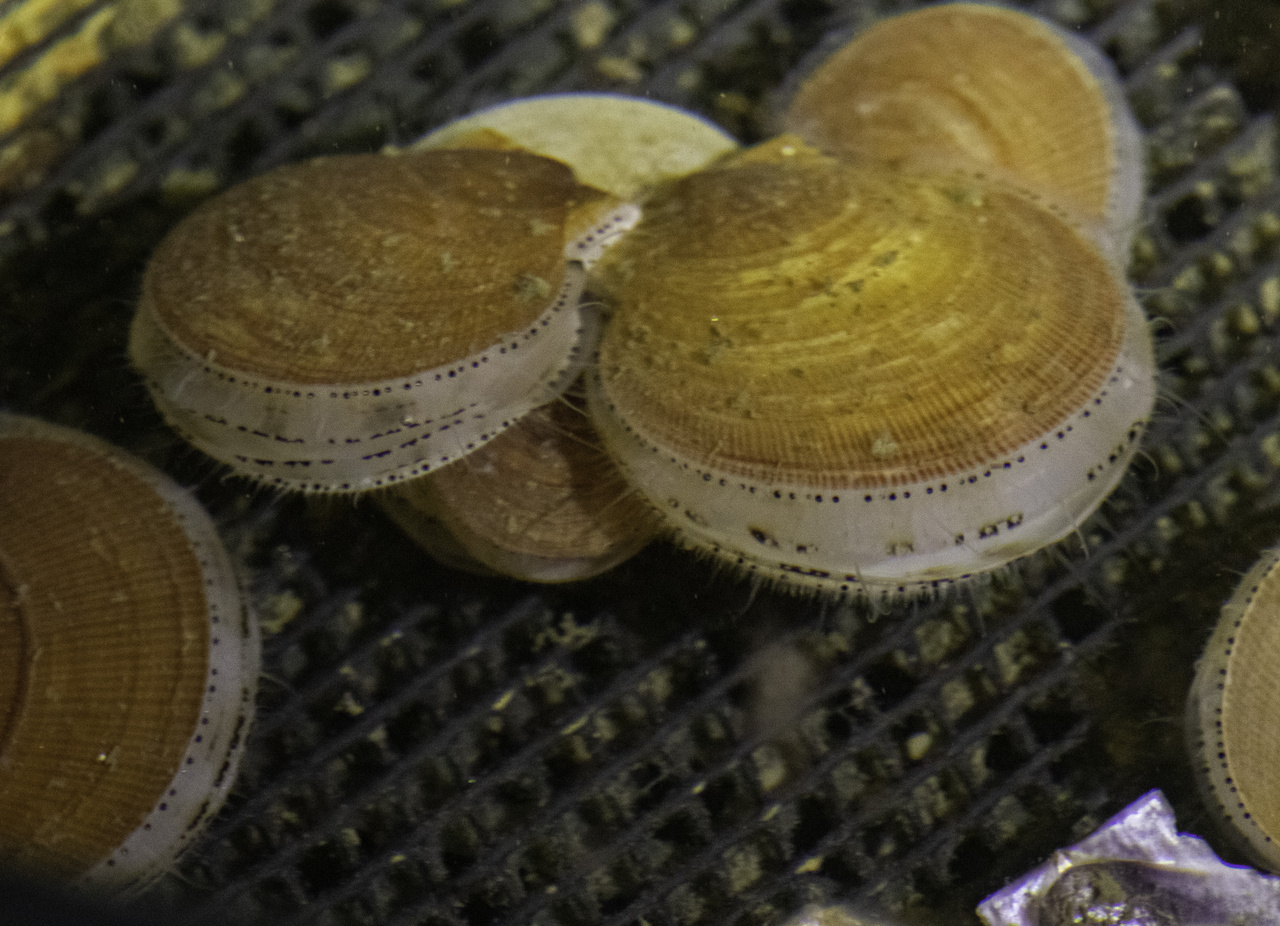
The U.S. Atlantic sea scallop fishery generates more than $500 million per year, making it the second highest grossing fishery in the United States and the largest wild scallop fishery in the world. The vulnerability and resilience of fishing communities to the effects of warming and ocean acidification depends on social and species-specific adaptive capacity. The regional contribution of sea scallop to total regional landed value has steadily increased over recent decades, in turn increasing the dependence of fishing communities on it. Research focused on using spatially-explicit regional projections of ocean change to inform Atlantic sea scallop fishery management and increase fishing community resilience. This work, conducted by researchers from the University of Connecticut, Rutgers University, the Commercial Fisheries Research Foundation and NOAA NEFSC, along with key input from community partners, include co-development of management recommendations to assist scallop industry stakeholders with OA- and temperature-driven changes in the fishery.
More about this work supported by NOAA OAP
Bioeconomic modeling to inform Alaska fisheries management

Bioeconomic models are a multidisciplinary tool that use oceanography, fisheries science and social science to assess socioeconomic impacts. Funded by the Ocean Acidification Program, researchers at the Alaska Fisheries Science Center use a bioeconomic model to study the impacts of ocean acidification on Eastern Bering Sea crab, northern rock sole and Alaska cod. The goal is to predict how ocean acidification will affect abundance yields and income generated by the fisheries. This work informs the potential economic impacts of ocean acidification and future decision making and research planning.
Effects of ocean acidification and temperature on Alaskan crabs

Long-term declines of red king crab in Bristol Bay, Alaska may be partially attributed to ocean acidification conditions. These impacts may be partially responsible for the fishery closures during the 2021–2022 and 2022–2023 seasons. Researchers found that ocean acidification negatively impacts Alaskan crabs generally by changing physiological processes, decreasing growth, increasing death rates and reducing shell thickness. Funded by the Ocean Acidification Program, scientists at the Alaska Fisheries Science Center continue to investigate the responses of early life history stages and study the potential of various Alaska crabs to acclimate to changing conditions. Results will inform models that will use the parameters studied to predict the effects of future ocean acidification on the populations of red king crab in Bristol Bay as well as on the fisheries that depend on them. Fishery managers will better be able to anticipate and manage stocks if changing ocean chemistry affects stock productivity and thus the maximum sustainable yield.
Forecasts for Alaska Fisheries

Understanding seasonal changes in ocean acidification in Alaskan waters and the potential impacts to the multi-billion-dollar fishery sector is a main priority. Through work funded by NOAA’s Ocean Acidification Program, the Pacific Marine Environmental Laboratory developed a model capable of depicting past ocean chemistry conditions for the Bering Sea and is now testing the ability of this model to forecast future conditions. This model is being used to develop an ocean acidification indicator provided to fisheries managers in the annual NOAA Eastern Bering Sea Ecosystem Status Report.
ADAPTING TO OCEAN ACIDIFICATION
The NOAA Ocean Acidification Program (OAP) works to prepare society to adapt to the consequences of ocean acidification and conserve marine ecosystems as acidification occurs. Learn more about the human connections and adaptation strategies from these efforts.
Adaptation approaches fostered by the OAP include:
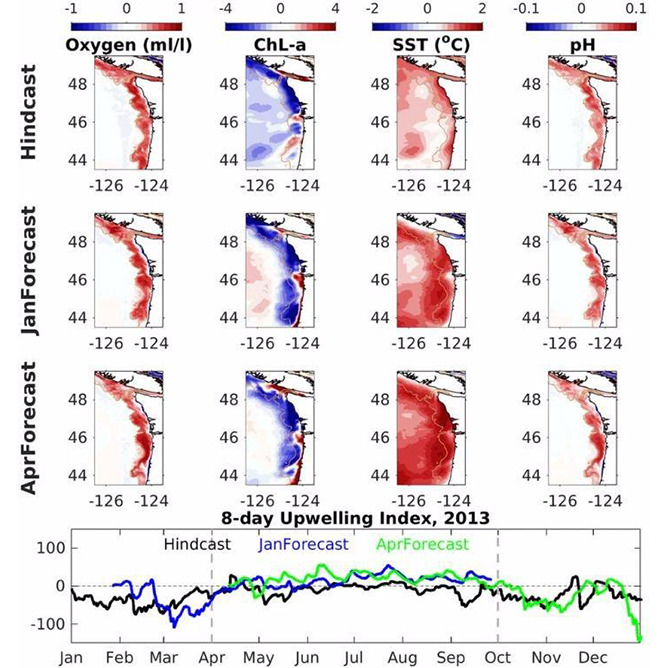
FORECASTING
Using models and research to understand the sensitivity of organisms and ecosystems to ocean acidification to make predictions about the future, allowing communities and industries to prepare
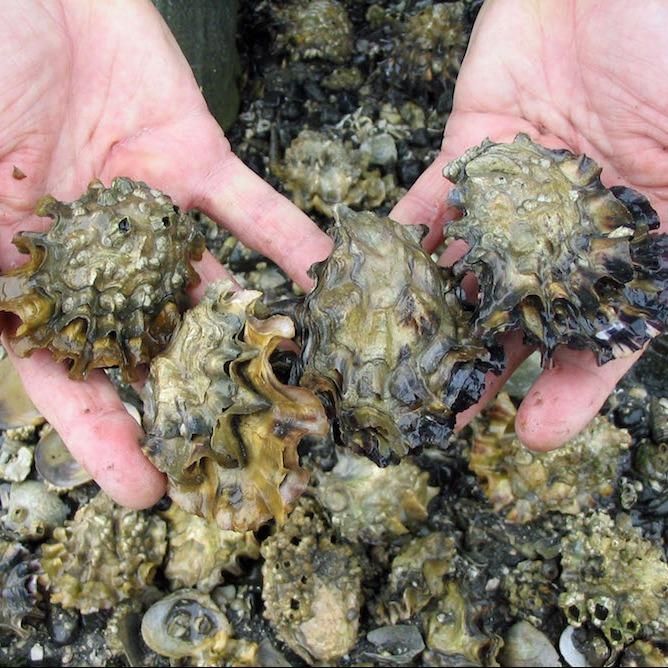
MANAGEMENT
Using these models and predictions as tools to facilitate management strategies that will protect marine resources and communities from future changes
TECHNOLOGY DEVELOPMENT
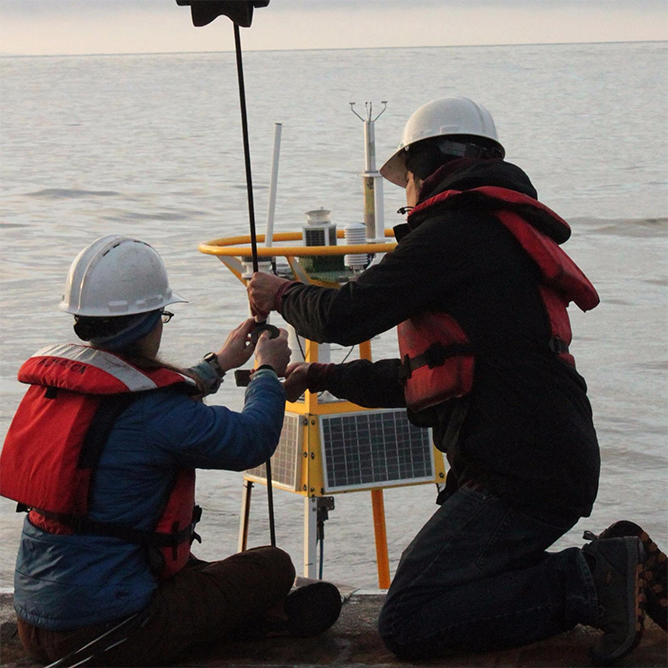
Developing innovative tools to help monitor ocean acidification and mitigate changing ocean chemistry locally
REDUCING OUR CARBON FOOTPRINT
On the Road
Drive fuel-efficient vehicles or choose public transportation. Choose your bike or walk! Don't sit idle for more than 30 seconds. Keep your tires properly inflated.
With your Food Choices
Eat local- this helps cut down on production and transport! Reduce your meat and dairy. Compost to avoid food waste ending up in the landfill
With your Food Choices
Make energy-efficient choices for your appliances and lighting. Heat and cool efficiently! Change your air filters and program your thermostat, seal and insulate your home, and support clean energy sources
By Reducing Coastal Acidification
Reduce your use of fertilizers, Improve sewage treatment and run off, and Protect and restore coastal habitats
TAKE ACTION WITH YOUR COMMUNITY
You've taken the first step to learn more about ocean acidification - why not spread this knowledge to your community?
Every community has their unique culture, economy and ecology and what’s at stake from ocean acidification may be different depending on where you live. As a community member, you can take a larger role in educating the public about ocean acidification. Creating awareness is the first step to taking action. As communities gain traction, neighboring regions that share marine resources can build larger coalitions to address ocean acidification. Here are some ideas to get started:
- Work with informal educators, such as aquarium outreach programs and local non-profits, to teach the public about ocean acidification. Visit our Education & Outreach page to find the newest tools!
- Participate in habitat restoration efforts to restore habitats that help mitigate the effects of coastal acidification
- Facilitate conversations with local businesses that might be affected by ocean acidification, building a plan for the future.
- Partner with local community efforts to mitigate the driver behind ocean acidification – excess CO2 – such as community supported agriculture, bike & car shares and other public transportation options.
- Contact your regional Coastal Acidification Network (CAN) to learn how OA is affecting your region and more ideas about how you can get involved in your community