Papers by Myrsini Dogani

Scandalogy 5 Scandals in Times of Crises, Conflicts and Conspiracies, 2025
The "Qatargate" scandal is the case of the suspected corruption and money laundering of members o... more The "Qatargate" scandal is the case of the suspected corruption and money laundering of members of the European Parliament and employees of EU institutions and agencies on behalf of government officials in Qatar and Morocco. The revelation of an international political scandal in the news impacts the reputation of the countries involved in it. Inevitably, they face a reputational security threat, meaning that there are cracks in their nation image projected in the news. Considering that avoiding scandals is an essential motive and ongoing activity of individuals, groups, and institutions (Adut, A., American Journal of Sociology 111:213-248, 2005), we suggest that part of the defensive reputation building strategy (Cull, 2022) is analyzing and understanding the negative stories about a corrupt state that were revealed in the news, when avoidance of revelation fails. Through the employment of the state mapping method, this chapter aims to discuss the impact of the "Qatargate" scandal in the formation of images of nations in terms of reputational security threat. Quantitative content frame analysis was employed. We analyzed the francophone press (Le Monde, La Libération, Le Figaro, Le Soir), from December 2022 until February 2023, while the unit of analysis is the depiction of a nation state in a news item.
Envisioning the Future of Communication - Conference Proceedings vol. 2, 2025
This study is grounded in the proposition that the organization of news, such as an international... more This study is grounded in the proposition that the organization of news, such as an international scandal, is based on criteria designed to make the content as attractive as possible to the reader. In the case of "Qatargate", MEP Eva Kaili played a central role in the scandal narration by the Press. The study explores whether MEP Eva Kaili became the face synonymous with the "Qatargate" scandal and how her gender characteristics made her the key figure for the attractiveness of the topic. To this end, quantitative content analysis is applied to Francophone newspapers from December 2022 to February 2023. The subsequent analysis involves both quantitative findings and qualitative characteristics of selected rhetorical narratives concerning the portrayal of gender stereotypes in an issue of extended international interest. To sum up, this research ponders whether and how MEP Eva Kaili's characteristics as a "44-year-old woman, former TV presenter" are presented to enhance the attractiveness of the issue of "Qatargate".

Revista de Etudos Helenicos, 2022
Σκοπός της παρούσας έρευνας είναι να εξεταστεί η δυνατότητα εργαλειοποίησης των εννοιών τ... more Σκοπός της παρούσας έρευνας είναι να εξεταστεί η δυνατότητα εργαλειοποίησης των εννοιών του «cringe» και της οντολογικής ασφάλειας για τους σκοπούς της ανάλυσης του δημόσιου λόγου μέσα από τη μελέτη τριών περιπτώσεων δημόσιου και θεσμικού λόγου στην ελληνική συγχρονία. Για την επίτευξη του προαναφερθέντα σκοπού μελετάται η σχέση ανάμεσα στο «cringe» και την οντολογική ασφάλεια, χρησιμοποιώντας τη μέθοδο της αναστοχαστικής κριτικής ανάλυσης: Αναστοχαστικής, επειδή αναζητούνται γνωσιακές και συναισθηματικές αντιδράσεις σε μια σειρά «cringe» ερεθισμάτων. Κριτικής, διότι παράγεται προβληματοποίηση γύρω από τους κοινωνικούς και πολιτικούς παράγοντες που διαμορφώνουν την αντίληψη σχετικά με την συγκεκριμένη αντίδραση, δηλαδή με το cring-άρισμα. Στον πυρήνα τίθεται το εξής ζήτημα: Μπορεί μια κακή εμφάνιση ενός δημόσιου προσώπου να κινητοποιεί συλλογική αμηχανία και οντολογική ανασφάλεια; Επιπλέον, τι σημαίνει αυτή η αμηχανία όταν εδώ και δύο δεκαετίες η δημόσια εικόνα της χώρας κάνει τον πολίτη να cring-άρειως Έλλην;
Η ρητορική συγκρότηση και η ειδησεογραφική κατασκευή του φόβου ως στοιχείου της εικόνας των κρατών: μία συστηματική ανάλυση περιεχομένου στον αγγλικό τύπο
Δημοσιογραφία-Τεύχος 6-7| Χειμώνας 2014 - Άνοιξη 2015
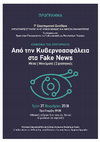
Το Εργαστήριο Στρατηγικής Επικοινωνίας και Μέσων Ενημέρωσης & το Εργαστήριο Πληροφόρησης και Κυβε... more Το Εργαστήριο Στρατηγικής Επικοινωνίας και Μέσων Ενημέρωσης & το Εργαστήριο Πληροφόρησης και Κυβερνοασφάλειας, του Τμήματος Διεθνών και Ευρωπαϊκών Σπουδών του Πανεπιστήμιο Πειριαιώς συνδιοργανώνουν το συνέδριο με θέμα:
«Κοινωνία της Επιτήρησης: Από την Κυβερνοασφάλεια στα Fake News - Μέσα, Μηνύματα, Στρατηγικές»
Η συζήτηση γύρω από τις «ψευδείς ειδήσεις» είναι μια συζήτηση για τη γνώση και την αλήθεια, για την μεροληψία και την χειραγώγηση, για την τεχνολογική εξέλιξη και την ισχύ. Επιτήρηση και παρακολούθηση στον ψηφιακό κόσμο, κυβερνοασφάλεια, fake news, μέσα, μηνύματα και στρατηγικές, φόβοι των αποκαλύψεων και προβολές ισχύος, είναι ζητήματα τα οποία θα εξεταστούν διεξοδικά .
Υπό το πρίσμα του συνεδρίου θα τεθούν σύγχρονα θέματα κυβερνοασφάλειας, απειλές και στρατηγικές που χρησιμοποιούνται από κυβερνήσεις και ιδιώτες, καθώς και ποιες είναι οι σύγχρονες στρατηγικές αντιμετώπισης:
Ποια είναι η εφαρμογή του διεθνούς δικαίου για τις επιχειρήσεις στον κυβερνοχώρο;
Τι συμβαίνει στην Ευρώπη πάνω στο ζήτημα της κυβερνοασφάλειας;
Ποιος ήταν ο ρόλος των ΜΜΕ στην αναπαραγωγή των ειδήσεων για τα σκάνδαλα των Wikileaks και του Snowden;
Ποια είναι η στρατηγική χρήση του όρου fake news και πως χρησιμοποιούνται στους λόγους των ηγετών και των πολιτικών για την αποδόμηση των αντιπάλων τους;
Ποια παίγνια κυριαρχίας και ποιες συμβολικές διαμάχες διεξάγονται στην Κοινωνίας της Επιτήρησης και ποιες ρητορικές στρατηγικές ακολουθούνται;
Πώς διαχειρίζονται τις κατηγορίες για χρησιμοποίηση των fake news όσοι τις υφίστανται;
Στο συνέδριο θα συμμετέχουν έγκριτοι επιστήμονες και καθηγητές του Πανεπιστημίου Πειραιά, του Εθνικού και Καποδιστριακού Πανεπιστημίου Αθηνών, του Αριστοτελείου Πανεπιστημίου Θεσσαλονίκης, νέοι ερευνητές καθώς και επαγγελματίες του χώρου. Το Συνέδριο τελεί υπό την Αιγίδα του Μορφωτικού Ιδρύματος της ΕΣΗΕΑ.
Επικοινωνία και Πολιτική στην Σκιά του Brexit. Αφιέρωμα στο επιστημονικό περιοδικό Διεθνής και Ευ... more Επικοινωνία και Πολιτική στην Σκιά του Brexit. Αφιέρωμα στο επιστημονικό περιοδικό Διεθνής και Ευρωπαϊκή Πολιτική Τεύχος 39. Επιστημονική επιμέλεια: Αθ.Ν. Σαμαράς Περιεχόμενα & Εισαγωγικό Σημείωμα.
Samaras, Ath.N., Iordanidou, S. & Dogani, M. (2016). «The Dialectic on International Relations an... more Samaras, Ath.N., Iordanidou, S. & Dogani, M. (2016). «The Dialectic on International Relations and Political Communication: The Impact of the Financial Crisis Upon the Nation Image of Germany; A Comparative Analysis in Greek and UK Press». Pages 121-143 in Luengo, O.G. (Ed), «Political Communication in Τimes of Crisis». Berlin: Logos Verlag .
The notion of nation image is employed to examine the internal and external challenges and opport... more The notion of nation image is employed to examine the internal and external challenges and opportunities that the BRIC countries in general and India and China in particular face in the process of redefining their role in the world state system. Nation image is defined as the cognitive representation of a given country (Kunczik, 1997). It is comprised of two differentiated elements: image-projected, i.e. the image as an attribute of the message; and image-perceived, the image as a cognitive structure i.e. the image formulated in the minds of the audience (Hacker 1995). Sociology of News focuses on a particular form of projected nation-image: that in the media, which is produced by the combined operation of the international news making process, the strategies of actors and domestic and international events . The impact of news media upon the construction of image-perceived is related to their capacity to make particular topics (agenda-setting) or aspect of these topics (framing) more accessible to the audience (Iyengar, 1991).
Conference Programmes and Book of Abstracts by Myrsini Dogani
The Strategic Communication and News Media Laboratory is a research and education institution ope... more The Strategic Communication and News Media Laboratory is a research and education institution operating at the International and European Studies Department, University of Piraeus. The Laboratory’s mission is to fill the gap between the scientific fields of International Relations with Communication and Media Studies and contribute to the development of the interdisciplinary field of International Political Communication.The Laboratory provides the Department of International and European Studies with research and education expertise on the fields of Strategic Communication, Argumentation, Rhetorical Communication and Persuasion in the context of both domestic politics and international politics, Media Studies, News Analysis, Nation Banding, Images of Nations, Cultural Diplomacy and Intercultural and International Communication.
The Strategic Communication and News Media Laboratory participated at the international conference: #AMIRetreat2017: Journalism, Society and Politics in the Digital Media Era, organized by the Advanced Media Institute, Open University of Cyprus and Cyprus University of Technology with two panels and eight research presentations. The Laboratory of Intelligence and Cyber-Security, University of Piraeus joined the panels with two more papers.This presentation includes only the abstracts of the panels and the papers of the two Laboratories that were presented at the conference.
Both theStrategic Communication and News Media Laboratory and the Laboratory of Intelligence and Cyber-Security wish to thank the organizers of the conference and especially Prof. Sofia Iordanidou for the invitation and for providing a forum for in depth academic discussions and exchange of ideas.
Panel 1: (International) Politics, News Media and Images of Nations: Image Making in the Context of Crisis.
Nation image is defined as the cognitive representation of a given country (Kunczik, 1997). There are three main forms of image-projected (i.e. the image as an attribute of the message): (a) The identity of the country as constructed and projected by strategic communication of institutions of a country. (b) The image of the country that derives from events that take place within the country and/or otherwise related with the country and (c) The journalistically mediated image, the image in the news which is produced by the combined operation of the (international) news making process, the strategies of actors and domestic and international events. Major events with long duration and high visibility operate via the processes of agenda setting and framing in order to affect the journalistically projected nation image of the countries related with the event. Aim of this panel is to examine the image of nation as constructed by the interplay of international events, domestic party -political systems, international politics and the news making process. The underlying context for all researches in this panel is that of crisis: Grexit, Brexit, Turkish Coup, Ukrainian Crisis, Refugee Crisis and the Greek Financial Crisis.
This panel is sponsored by the Strategic Communication and News Media Laboratory.
Panel 2: WikiLeaks, Snowden and the Surveillance Society: Politics, Narratives and Representations.
The ability to digitize and capture data, to publish and disseminate it worldwide without mediation by external parties provided opportunities to anyone with the inclination to harness them. Continual developments in digital technology provided the ideal catalyst for the creation of the transparency organization Wiki Leaks. In June 2013, Edward Snowden released a series of classified National Security Administration documents that revealed extensive National Security Agency (NSA) foreign and domestic surveillance activities. The disclosure of US spying programs potentially threatened the government’s ability to carry out the national security activities needed to protect a democracy while Wiki Leaks deconstruct the official political rhetoric at an international level, delegitimize political actors in several countries while it provided opportunities for embarrassment for governments at both the international and domestic level. Both cases pose the more intricate question of how to weigh the democratic expectancies of free expression and the public’s right to know versus national security needs. Snowden and WikiLeaks necessitate a conceptual and methodological outline for studying the social and political implications of digital surveillance. The papers in this panel explore the politics of surveillance society, its triangular relations with journalism and security as well as the related narratives and representations.
This panel is sponsored by the “Intelligence & Cybersecurity Laboratory” and the “Strategic Communication and News Media Laboratory”, International and European Studies Department, University of Piraeus.

Focal point of this paper is the mediated rhetorics of immigration ant
its interconnection with t... more Focal point of this paper is the mediated rhetorics of immigration ant
its interconnection with the rhetoric on European identity and the
impact that Paris terrorist attack upon it.
Aim of this paper is to examine: the framing of the influx of
immigrants through the Greek islands; the construction of rhetorical
borders through competing narratives of immigration; the uniformity
in the public vocabulary surrounding immigration and to what extend it
has merges with the vocabulary surrounding Islamic terrorism; the
rhetorical actualization of fear, risk and threat argumentation in
this rhetorical process and finally the impact that a critical
event, like the Paris terrorist attacks, haw upon the aforementioned
rhetorical processes.
The research focuses upon the content of eleven Aegean news sites
situated to Greek islands (chiosnews.com, chiosopinion.gr,
lesvosnews.gr,
lesvospost.com, politikalesvos.gr, dimokratiki.gr, emprosnet.gr,
rodiaki.gr, limniakifoni.gr, i-samos.gr, samiakonvima.blogspot.gr).
This choice allows us to examine the newsmaking process of
domestication (integration of events into the local angle) of the
events within the perspectives of the local communities which are at
the forefront of the immigrant problem. What is the effect of such
close proximity with the immigrant influx? How local Aegean news
sites negotiate the meanings produced the EU official rhetoric as
well as the Greek ethnocentric perspective?
The content of the news sites is examined for three months (October –
December 2015). Qualitative content analysis and grounded theory are
employed. The analytical tools include: terministic control,
persuasive definition, fear appeals and framing.
Βιβλίο Συνόψεων: Επιστημονικό Διαπανεπιστημιακό Συνέδριο: «Προσφυγικό και Brexit: Πολιτική Ρητορι... more Βιβλίο Συνόψεων: Επιστημονικό Διαπανεπιστημιακό Συνέδριο: «Προσφυγικό και Brexit: Πολιτική Ρητορική, Μέσα Ενημέρωσης και Εικόνες Κρατών». Συνδιοργάνωση: Εργαστήριο Στρατηγικής Επικοινωνίας και Μέσων Ενημέρωσης - Τμήμα Διεθνών και Ευρωπαϊκών Σπουδών Πανεπιστήμιο Πειραιώς και Μεταπτυχιακό Πρόγραμμα Σπουδών Επικοινωνία και Δημοσιογραφία - Ανοικτό Πανεπιστήμιο Κύπρου, Πειραιάς 20 Οκτωβρίου 2016, Πανεπιστήμιο Πειραιώς, Πορτοκαλί Αμφιθέατρο.
3. 2η Επιστημονική Ημερίδα: “Εικόνες Κρατών, Στρατηγικές Απολογίας και Ρητορική του Φόβου: Πρακτι... more 3. 2η Επιστημονική Ημερίδα: “Εικόνες Κρατών, Στρατηγικές Απολογίας και Ρητορική του Φόβου: Πρακτικές Εφαρμογές της Ρητορικής Επικοινωνίας στο Σύγχρονο Διεθνές Περιβάλλον”. Διοργάνωση Ομάδα Έρευνας «Ρητορική, Επικοινωνία και Πειθώ», ΚΕΔΕΥ. Πειραιάς, 20 Νοεμβρίου 2013, Πανεπιστήμιο Πειραιώς, Πορτοκαλί Αμφιθέατρο. - Συνόψεις Συνεδρίου
Interviews and Research Presentations in the Press by Myrsini Dogani
Προεκλογικές "επενδύσεις" στον φόβο, 2022
Συνέντευξη στον δημοσιογράφο κ. Κώστα Βενιζέλο για την ρητορική του φόβου στον κοινοβουλευτικό λό... more Συνέντευξη στον δημοσιογράφο κ. Κώστα Βενιζέλο για την ρητορική του φόβου στον κοινοβουλευτικό λόγο για την ψήφίση των μνημονιακών συμβάσεων στην Ελλάδα.
Δογάνη, Μ. (2017). «Η Απειλή της Παραμονής και το Ρίσκο της Αποχώρησης. Όψεις του Εκφοβισμού στο ... more Δογάνη, Μ. (2017). «Η Απειλή της Παραμονής και το Ρίσκο της Αποχώρησης. Όψεις του Εκφοβισμού στο Βρετανικό Δημοψήφισμα». Διεθνής και Ευρωπαϊκή Επιθεώρηση, τεύχος 39, σελ.269 - 310.
Κ αταξιώνεται πλέον ο θεσμός του Θερινού Σχολείου, η επιτυχία του οποίου αναγνωρίζεται από όλους.... more Κ αταξιώνεται πλέον ο θεσμός του Θερινού Σχολείου, η επιτυχία του οποίου αναγνωρίζεται από όλους. Για δεύτερη συνεχή χρονιά, το Πανεπιστήμιο Κύπρου διοργανώνει και φέτος το Θερινό Σχολείο με τίτλο, «Γίνε και εσύ φοιτητής για μια εβδομάδα!», ένα πρωτοποριακό πρόγραμμα, για τα κυπριακά δεδομένα, που απευθύνεται σε μαθητές Λυκείου. Στόχος του Θερινού Σχολείου είναι η γνωριμία των μαθητών με το Πανεπιστήμιο Κύπρου και η πρώτη επαφή τους με το επιστημονικό αντικείμενο που τους ενδιαφέρει.



Uploads
Papers by Myrsini Dogani
«Κοινωνία της Επιτήρησης: Από την Κυβερνοασφάλεια στα Fake News - Μέσα, Μηνύματα, Στρατηγικές»
Η συζήτηση γύρω από τις «ψευδείς ειδήσεις» είναι μια συζήτηση για τη γνώση και την αλήθεια, για την μεροληψία και την χειραγώγηση, για την τεχνολογική εξέλιξη και την ισχύ. Επιτήρηση και παρακολούθηση στον ψηφιακό κόσμο, κυβερνοασφάλεια, fake news, μέσα, μηνύματα και στρατηγικές, φόβοι των αποκαλύψεων και προβολές ισχύος, είναι ζητήματα τα οποία θα εξεταστούν διεξοδικά .
Υπό το πρίσμα του συνεδρίου θα τεθούν σύγχρονα θέματα κυβερνοασφάλειας, απειλές και στρατηγικές που χρησιμοποιούνται από κυβερνήσεις και ιδιώτες, καθώς και ποιες είναι οι σύγχρονες στρατηγικές αντιμετώπισης:
Ποια είναι η εφαρμογή του διεθνούς δικαίου για τις επιχειρήσεις στον κυβερνοχώρο;
Τι συμβαίνει στην Ευρώπη πάνω στο ζήτημα της κυβερνοασφάλειας;
Ποιος ήταν ο ρόλος των ΜΜΕ στην αναπαραγωγή των ειδήσεων για τα σκάνδαλα των Wikileaks και του Snowden;
Ποια είναι η στρατηγική χρήση του όρου fake news και πως χρησιμοποιούνται στους λόγους των ηγετών και των πολιτικών για την αποδόμηση των αντιπάλων τους;
Ποια παίγνια κυριαρχίας και ποιες συμβολικές διαμάχες διεξάγονται στην Κοινωνίας της Επιτήρησης και ποιες ρητορικές στρατηγικές ακολουθούνται;
Πώς διαχειρίζονται τις κατηγορίες για χρησιμοποίηση των fake news όσοι τις υφίστανται;
Στο συνέδριο θα συμμετέχουν έγκριτοι επιστήμονες και καθηγητές του Πανεπιστημίου Πειραιά, του Εθνικού και Καποδιστριακού Πανεπιστημίου Αθηνών, του Αριστοτελείου Πανεπιστημίου Θεσσαλονίκης, νέοι ερευνητές καθώς και επαγγελματίες του χώρου. Το Συνέδριο τελεί υπό την Αιγίδα του Μορφωτικού Ιδρύματος της ΕΣΗΕΑ.
Conference Programmes and Book of Abstracts by Myrsini Dogani
The Strategic Communication and News Media Laboratory participated at the international conference: #AMIRetreat2017: Journalism, Society and Politics in the Digital Media Era, organized by the Advanced Media Institute, Open University of Cyprus and Cyprus University of Technology with two panels and eight research presentations. The Laboratory of Intelligence and Cyber-Security, University of Piraeus joined the panels with two more papers.This presentation includes only the abstracts of the panels and the papers of the two Laboratories that were presented at the conference.
Both theStrategic Communication and News Media Laboratory and the Laboratory of Intelligence and Cyber-Security wish to thank the organizers of the conference and especially Prof. Sofia Iordanidou for the invitation and for providing a forum for in depth academic discussions and exchange of ideas.
Panel 1: (International) Politics, News Media and Images of Nations: Image Making in the Context of Crisis.
Nation image is defined as the cognitive representation of a given country (Kunczik, 1997). There are three main forms of image-projected (i.e. the image as an attribute of the message): (a) The identity of the country as constructed and projected by strategic communication of institutions of a country. (b) The image of the country that derives from events that take place within the country and/or otherwise related with the country and (c) The journalistically mediated image, the image in the news which is produced by the combined operation of the (international) news making process, the strategies of actors and domestic and international events. Major events with long duration and high visibility operate via the processes of agenda setting and framing in order to affect the journalistically projected nation image of the countries related with the event. Aim of this panel is to examine the image of nation as constructed by the interplay of international events, domestic party -political systems, international politics and the news making process. The underlying context for all researches in this panel is that of crisis: Grexit, Brexit, Turkish Coup, Ukrainian Crisis, Refugee Crisis and the Greek Financial Crisis.
This panel is sponsored by the Strategic Communication and News Media Laboratory.
Panel 2: WikiLeaks, Snowden and the Surveillance Society: Politics, Narratives and Representations.
The ability to digitize and capture data, to publish and disseminate it worldwide without mediation by external parties provided opportunities to anyone with the inclination to harness them. Continual developments in digital technology provided the ideal catalyst for the creation of the transparency organization Wiki Leaks. In June 2013, Edward Snowden released a series of classified National Security Administration documents that revealed extensive National Security Agency (NSA) foreign and domestic surveillance activities. The disclosure of US spying programs potentially threatened the government’s ability to carry out the national security activities needed to protect a democracy while Wiki Leaks deconstruct the official political rhetoric at an international level, delegitimize political actors in several countries while it provided opportunities for embarrassment for governments at both the international and domestic level. Both cases pose the more intricate question of how to weigh the democratic expectancies of free expression and the public’s right to know versus national security needs. Snowden and WikiLeaks necessitate a conceptual and methodological outline for studying the social and political implications of digital surveillance. The papers in this panel explore the politics of surveillance society, its triangular relations with journalism and security as well as the related narratives and representations.
This panel is sponsored by the “Intelligence & Cybersecurity Laboratory” and the “Strategic Communication and News Media Laboratory”, International and European Studies Department, University of Piraeus.
its interconnection with the rhetoric on European identity and the
impact that Paris terrorist attack upon it.
Aim of this paper is to examine: the framing of the influx of
immigrants through the Greek islands; the construction of rhetorical
borders through competing narratives of immigration; the uniformity
in the public vocabulary surrounding immigration and to what extend it
has merges with the vocabulary surrounding Islamic terrorism; the
rhetorical actualization of fear, risk and threat argumentation in
this rhetorical process and finally the impact that a critical
event, like the Paris terrorist attacks, haw upon the aforementioned
rhetorical processes.
The research focuses upon the content of eleven Aegean news sites
situated to Greek islands (chiosnews.com, chiosopinion.gr,
lesvosnews.gr,
lesvospost.com, politikalesvos.gr, dimokratiki.gr, emprosnet.gr,
rodiaki.gr, limniakifoni.gr, i-samos.gr, samiakonvima.blogspot.gr).
This choice allows us to examine the newsmaking process of
domestication (integration of events into the local angle) of the
events within the perspectives of the local communities which are at
the forefront of the immigrant problem. What is the effect of such
close proximity with the immigrant influx? How local Aegean news
sites negotiate the meanings produced the EU official rhetoric as
well as the Greek ethnocentric perspective?
The content of the news sites is examined for three months (October –
December 2015). Qualitative content analysis and grounded theory are
employed. The analytical tools include: terministic control,
persuasive definition, fear appeals and framing.
Interviews and Research Presentations in the Press by Myrsini Dogani