Books by Nazan Maksudyan
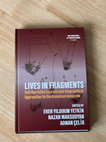
Berghahn Books, 2026
The lens of life stories allows us to identify contested memories and counter-narratives, thus of... more The lens of life stories allows us to identify contested memories and counter-narratives, thus offering new ways of interpreting the social dynamics that led to acts of genocidal violence and their remembrance, yet also to their denial. Lives in Fragments focuses on life stories that were fragmented and shattered through the historical violence of the Armenian genocide, and offers a nuanced understanding of genocide’s complex historical and social dimensions. Diverse autobiographical sources become subject of analysis in chapters that investigate the historiography and remembrance of the Armenian genocide.
Contributors include: Adnan Çelik, Alice von Bieberstein, Annika Törne, Bedross Der Matossian, Boris Adjemian, Duygu Tasalp, Eren Yıldırım Yetkin, Fatma Muge Gocek, Lena Inowlocki, Michael Rothberg, Nazan Maksudyan, Paul Vartan Sookiasian, Talin Suciyan, Vahe Tachjian, Yael Navaro
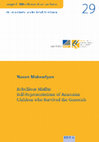
Joseph C. Miller Memorial Lectures Series, Vol. 29, 2025
This study examines the self-representations of Armenian child survivors during the Armenian geno... more This study examines the self-representations of Armenian child survivors during the Armenian genocide, while engaging with new historiography on children and youth. Armenian children survived under paradoxical circumstances: they were targets (and hence victims) of direct violence, sexual exploitation, and the erasure of identity, but they were also agents who resisted through escape, deception, and defiance. Their agency was neither limitless nor transformative, but primarily a means of endurance, shaped by age, gender, and social bonds. Relying on various works in the self-narrative and testimonial genres as primary sources, including oral histories, memoirs, and diaries written at different points in time in the twentieth century, I analyse how child survivors depicted themselves as heroes—rebellious misfits who resisted authority, protected the weak, retaliated against oppressors, and embarked on perilous journeys. These narratives highlight survival, play, friendship, and solidarity amid trauma. I argue that, though often used as evidence of Armenian victimhood, survivor testimonies also reveal a parallel narrative: one of agency, resilience, and self-determination, thus challenging traditional portrayals of genocide survivors solely as passive victims.

Urban Neighbourhood Formations: Boundaries, Narrations and Intimacies, 2020
This book examines the formation of urban neighbourhoods in the Middle East, Africa, and South As... more This book examines the formation of urban neighbourhoods in the Middle East, Africa, and South Asia. It departs from ‘neighbourhoods’ to consider identity, coexistence, solidarity, and violence in relations to a place.
Urban Neighbourhood Formations revolves around three major aspects of making and unmaking of neighbourhoods: spatial and temporal boundaries of neighbourhoods, neighbourhoods as imagined and narrated entities, and neighbourhood as social relations. With extensive case studies from Johannesburg to Istanbul and from Jerusalem to Delhi, this volume shows how spatial amenities, immaterial processes of narrating and dreaming, and the lasting effect of intimacies and violence in a neighbourhood are intertwined and negotiated over time in the construction of moral orders, urban practices, and political identities at large.
This book offers insights into neighbourhood formations in an age of constant mobility and helps us understand the grassroots-level dynamics of xenophobia and hostility, as much as welcoming and openness. It would be of interest for both academics and more general audiences, as well as for students of undergraduate and postgraduate courses in Urban Studies and Anthropology.

Syracuse University Press, 2019
Described by historians as a “total war,” World War I was the first conflict that required a comp... more Described by historians as a “total war,” World War I was the first conflict that required a comprehensive mobilization of all members of society, regardless of profession, age, or gender. Just as women became heads of households and joined the workforce in unprecedented numbers, children also became actively engaged in the war effort. Adding a new dimension to the historiography of World War I, Maksudyan explores the variegated experiences and involvement
of Ottoman children and youth in the war. Rather than simply passive victims, children became essential participants as soldiers, wage earners, farmers, and artisans. They also contributed to the propaganda and mobilization effort as symbolic heroes and orphans of martyrs. Rebelling against their orphanage directors or trade masters, marching and singing proudly with their scouting companies, making long-distance journeys to receive vocational training or simply to find their families, they acquired new identities and discovered new forms of agency. Maksudyan focuses on four different groups of children: thousands of orphans in state orphanages (Darüleytam), apprentice boys who were sent to Germany, children and youth in urban centers who reproduced
rivaling nationalist ideologies, and Armenian children who survived the genocide. With each group, the author sheds light on how the war dramatically impacted their lives and, in turn, how these self-empowered children, sometimes described as “precocious adults,” actively shaped history.
Syracuse University Press, Oct 2014
Berghahn, 2014
Gender StudieS urban StudieS
Journal Articles by Nazan Maksudyan
First World War Studies, 2025
In contrast to their male counterparts in apprenticeships, secondary education and technical trai... more In contrast to their male counterparts in apprenticeships, secondary education and technical training, there is a gap in scholarship on the education of (Muslim, unmarried) Ottoman women in Germany during the First World War as part of an educational collaboration between two empires. This article presents a wealth of new insights into the lives of this group of young women, based on research into official documentation from the Ottoman Prime Ministry Archives, the Political Archive of the Foreign Office, the Federal Archives in Berlin and the Secret State Archives, supplemented by personal documents and biographical sources. In particular, I focus on the Heidelberg diary of Şaziye Hayri (1899–1994), held from 20 February 1918 to 26 January 1919. The diary offers insights into the experiences of young women in German cities and educational institutions during wartime, thereby enriching our understanding of the interplay of gender dynamics in such exceptional conditions. Furthermore, the diary provides valuable insights into women’s experiences and explorations into gender, body, and sexuality. I argue that these women arrived in Germany with high hopes of achieving emancipation, independence, self-sufficiency, and individualisation. Their emancipated lifestyles during and after the war led them to seek a similar space of freedom in their later lives and helped them develop a more grounded sense of agency and self-respect. Nevertheless, in the context of the rise of fascism across Europe in the 1930s, the anti-intellectual, anti-liberal, and anti-feminist attitudes of these regimes marginalised the contributions and experiences of these women in historical scholarship.

Women's History Review, 2024
This paper looks into the life and ethnographic work of Leonore Kosswig (1904–1973), who lived in... more This paper looks into the life and ethnographic work of Leonore Kosswig (1904–1973), who lived in Turkey as a German exile from 1937 until her death in 1973. While her husband, Curt Kosswig was invited to Istanbul University as a full professor, Leonore had no institutional affiliation. However, she traveled with her husband around Anatolia and joined his fieldwork, during which she developed an interest in local customs and the daily life of villagers and nomadic tribes. Leonore decided to stay in Turkey after Curt’s return to Germany in 1955. Her excellent command of Turkish and former experience in fieldwork allowed her to become one of the first women to conduct ethnographic research in Turkey. Until her death, she pursued several pioneering research projects on wedding customs, tablet weaving, nomadic life, and ownership signs. Relying on her research publications and ego-documents, we employ a biographical approach to articulate upon her liminal existence in exile. In dialogue with research on twentieth century forced migrations that engage with the concepts of in-betweenness and liminality, we address Leonore’s liminal existences on the edge of two worlds on numerous planes. In particular, we argue that Kosswig’s liminality was reflected on her exilic existence in Istanbul as a foreign woman; her ethnographic research agenda into liminal geographic locations, marginalized communities, and disappearing cultural artifacts; and her gendered navigation of foreignness and nativeness.

Contemporary Levant, 2024
Relying on a biographical approach that reconstructs the life and work of
Johannes Jakob Manissad... more Relying on a biographical approach that reconstructs the life and work of
Johannes Jakob Manissadjian (1862–1942), a highly successful scientist at the Anatolia College (Merzifon/Marsovan/Մարզվան), who established a meteorological station and a natural history museum with an extensive collection of specimens, the paper traces the routes of disappearance, dispersal and ruination of indigenous lives, people, and knowledge within the context of the Armenian genocide. Drawing on documents from Ottoman, German, and American archives, I stress the potential of biographical methods to study the processes and structures of mass violence targeting the Ottoman Armenians, as well as to foreground the agency and subjectivity of genocide survivors. The article also focuses on post-genocide scientific
(dis)engagements of Manissadjian in light of Theodor W. Adorno’s ‘after Auschwitz’ discussions and from the perspective of indigenous knowledge production. In particular, his two ‘archival acts’ in the postgenocide context, the ‘Catalogue’ of the collection of the Anatolia College Museum that he prepared as ‘the former Curator’ and his small pamphlet entitled Proverbs of Turkey, which provided an ethnographic portrait of Anatolia, were his humble acts of saving a treasure trove of knowledge that was in danger of becoming debris.
German Studies Review, 2024
This article applies a (micro)biographical approach to the life stories of two Ottoman orphans se... more This article applies a (micro)biographical approach to the life stories of two Ottoman orphans sent to Germany to receive vocational training during World War I, Ali and İsmail Dağlı. Coupling family archives, oral and visual sources with state documentation, I elaborate on the post-Ottoman afterlives of German know-how, education, and capital in the social and economic history of Turkey. Biographies of Dağlı brothers show that the successors of both empires restored former channels of circulation of expertise, technology, and labor. Especially seen in the context of Jewish emigration, the life and work history of the brothers elucidate the positive reception of their German education, the importance of their position as "cultural intermediaries," and the extent of Turkish-German business entanglements.

Social Review of Technology and Change, 2024
The history of early sound recording technologies in the Ottoman Empire has been studied mainly f... more The history of early sound recording technologies in the Ottoman Empire has been studied mainly from the perspectives of music production, comparative musicology, and ethnomusicology. In fact, while hundreds of commercial and musical cylinders were being produced in Istanbul, Beirut, and elsewhere, European anthropologists, ethnologists, linguists, orientalists, etc. were traveling throughout the Balkans, Anatolia, and the Caucasus to collect audio data for scientific purposes. In order to contribute to the Ottoman history of science and technology from the perspectives of sound studies and auditory history, I focus on the first field recordings in the Ottoman Empire, namely during Paul Kretschmer's (1866-1956) study trip to Lesbos in 1901 and Felix von Luschan's (1854-1924) research in Zincirli (Sendschirli, Aintab) in 1902. Thus, this paper aims to fill a research gap within Ottoman Studies regarding field recordings and the impact of sound reproduction technologies on the history of the (colonial) sciences, especially anthropology, ethnology and linguistics.

tuded: Journal of Turkish Language and Literature, 2023
In 1975, novelist and short story writer Füruzan came to West Berlin following the invitation of ... more In 1975, novelist and short story writer Füruzan came to West Berlin following the invitation of the German Academic Exchange Service and spent the next five years on and off in Berlin until 1980. Following her travels, she published her journalistic essays/memoirs Yeni Konuklar (1977) and Ev sahipleri (1981), her children’s book Vom rotgesprenkelten Spatzen (1980), and her novel Berlin’in Nar Çiçeği (1988). While she gained a transregional perspective on issues concerning labour migration and class during her time in Germany, her works resulting from it introduced these subjects to her readership in Turkey. Her Yeni Konuklar and Ev sahipleri in particular provide a significant amount of data on the subject of labour migration to Germany, while her Vom rotgesprenkelten Spatzen and Berlin’in Nar Çiçeği elaborate upon the inherent large cultural shifts on both sides resulting from labour migration. This article examines the works Füruzan produced following her stay in Germany in the 1970s. It discusses the ways in which she presents the perspectives of the children as previously underexplored material on issues concerning global labour mobility. It looks at how children’s experiences reveal a more complicated reality in regards to social and cultural integration with an emphasis on the difficulties that they face and go unnoticed. Moreover, it also argues for the distinct potentialities of integration rendered possible through the relationship between the immigrant children and the elderly Germans due to a shared experience of marginalisation.

Journal of European Studies, 2023
Ernest Hemingway arrived in Istanbul on 30 September 1922 to cover the end of the Greek–Turkish W... more Ernest Hemingway arrived in Istanbul on 30 September 1922 to cover the end of the Greek–Turkish War for the Toronto Star. From late October to mid-November 1922, Hemingway wrote 20 articles about the last days of the war and the re-constellation of political legitimacy in the region. There are four distinguishing features of Hemingway’s reports from Constantinople. First, they provided an eloquent depiction of the city, suggesting the charm and squalor of old ‘Constan’ for the young writer. The second was a clear expectation of a ‘second disaster’, which was assumed to be a replica of Smyrna. Hemingway clearly observed the fears of non-Muslims and foreigners in the city, who were panicking over possible new massacres and pillage. Third, Hemingway quickly realized that the exodus of people – the desperate flight of Christian refugees – and Turkification of the country would be his main subject. His repeated emphasis on refugee’s permanent loss of a home is reminiscent of Hannah Arendt’s famous essay ‘We Refugees’, as well as a precursor to Agamben’s point that refugees are reduced to ‘bare life’. Lastly, his prose relied on irony and cynicism, as a cover for his disappointment and shame for humanity and modern civilization. Juxtaposing his writing with contemporary local accounts, I intend to situate his witnessing into the larger historiography of ‘Armistice Istanbul’ and the homogenization policies of the winning Turkish nationalist leadership. Hemingway’s critique of (homogeneous) nation-state formation after the war and the favourable involvement of the Allied countries and humanitarian agencies in the mass production of refugees was quite exceptional and ahead of his times.

Women's History Review, 2023
Erna Eckstein-Schlossmann (1895–1998) and Albert Eckstein (1891– 1950), a pediatrician couple fro... more Erna Eckstein-Schlossmann (1895–1998) and Albert Eckstein (1891– 1950), a pediatrician couple from Düsseldorf, had to hand in their official resignations after being declared as ‘Jews’ according to the laws of 1933 and 1935. Albert Eckstein accepted the offer of the Turkish government to become the head of the pediatric clinic of Ankara Hospital. Relying on a biographical approach and utilizing ego-documents, such as memoirs, letters, and travelogues at the Eckstein family archives, together with Turkish state archives, and Erna Eckstein-Schlossmann’s research publications, this paper conceptualizes Erna’s exile years in Turkey along gendered lines and provides an intersectional interpretation of migration. This microhistorical reconstruction acknowledges her agency and subjectivity as a high-skilled migrant woman; intertwines her life story with the larger dynamics of the migrant networks in Turkey; and brings it into dialogue with macro-level structural factors with regards to the war, the mass murder and the global movement of European Jews.

N.Maksudyan, "For the Holy War and Motherland: Ottoman State Orphanages (Darüleytams) in the Context of the First World War and the Armenian Genocide", in "Kinder in Heimen", ed. by A. Kassabova, S. Maß. L’Homme. Europäische Zeitschrift für Feministische Geschichtswissenschaft 34/1 (2023): 39-59.
L’Homme. Europäische Zeitschrift für Feministische Geschichtswissenschaft, 2023
The Great War was a motor of historical change and social reform in the field of child welfare in... more The Great War was a motor of historical change and social reform in the field of child welfare in the Ottoman Empire, especially because of the nationalist obsession with demography in the late nineteenth and early twentieth centuries. In the institutional history of the Ottoman child welfare mechanisms, Darüleytam (house of orphans) refers to a large network of state orphanages, which were opened in the course of the First World War and remained open until 19221923. In this paper, I argue that the heightened importance of children as future Turkish and Muslim citizens not only led to expansion of orphan care but also the conversion, assimilation and Turkification of Armenian orphans. Based on Ottoman archival material, official regulations, parliamentary discussions, ongoing inspections, press reports, petitions and complaints written by children and their guardians, the article discusses the main institutional characteristics of Darüleytams, along with their important role in the assimilation of Armenian orphans in the context of Armenian genocide.

History of the Human Sciences, 2023
This article situates the trajectory of the academic life of Seniha Tunakan (1908-2000) within th... more This article situates the trajectory of the academic life of Seniha Tunakan (1908-2000) within the development of anthropology as a scientific discipline in Turkey and its transnational connections to Europe during the interwar period and up until the second half of the 20th century. Relying on the archives of the Max-Planck-Gesellschaft, the archive of the Humboldt-Universität zu Berlin, the Politisches Archiv des Auswärtigen Amtes in Germany, and the Prime Ministry's Republican Archives in Turkey, it focuses on the doctoral studies of Seniha Tunakan in Germany and her life as a female PhD researcher in the capital of the Third Reich, as well as her entire research career after her return to Turkey. Through Tunakan's career, the article also provides an analysis of the perpetuation of German race science in the Turkish context, shedding light upon the success of the Kaiser-Wilhelm-Institut für Anthropologie, menschliche Erblehre und Eugenik (Kaiser Wilhelm Institute for Anthropology, Human Heredity, and Eugenics) and its transnational impact.

Journal of European Studies, 2022
The 'women's liberation' of the global 1960s did not entail a full range of women's rights, femin... more The 'women's liberation' of the global 1960s did not entail a full range of women's rights, feminist politics and sexual freedoms in Turkey. On the contrary, the Turkish 1960s were characterised by a patriarchal heteronormative order that imprisoned women in a passive and essentially asexual identity and denied them control over their bodies. In Turkey, women's emancipation was postponed. At the same time, the 1960s offered a juncture of literary renewal in women's writing and representation, embracing the dictum 'the personal is political'. This article focuses on three works by Sevgi Soysal (1936-1976), a key name of this period whose writing is concerned with the problematisation of what Judith Butler calls 'the compulsory order of sex/gender/desire'. Relying on queer theory, we examine how Soysal's Tutkulu Perçem (The Passionate Forelock, 1962), Tante Rosa (Aunt Rosa, 1968) and Yürümek (Walking, 1970) represent female characters' growing awareness of their rich spectrum of gender performances, as they embrace their desires, transformations and confusions. In this way, Soysal's works not only take the female body 'out of the closet' but also explore its multitude of desires and fluid possibilities.
![Research paper thumbnail of Nazan Maksudyan, “Encounter and Memory in Ottoman Soundscapes: An Audiovisual Album of Street Vendors’ Cries”, trans. by Katerina Stathi, Historika 74 (April 2022), 32-60 [in Greek].](https://attachments.academia-assets.com/85150038/thumbnails/1.jpg)
Historika, 2022
Nazan Maksudyan, "Συνάντηση και μνήμη σε οθωμανικά ηχοτοπία: ένα οπτικοακουστικό άμλπουμ των φωνώ... more Nazan Maksudyan, "Συνάντηση και μνήμη σε οθωμανικά ηχοτοπία: ένα οπτικοακουστικό άμλπουμ των φωνών των πλανόδιων πωλητών", μτφρ. Κατερίνα Στάθη, Τα Ιστορικά, τχ. 74, Απρ. 2022, σ. 32-60.
This paper focuses on the sonic presence of street vendors’ in nineteenth century Ottoman soundscapes through a unique and extraordinary audiovisual media object: an album of photos and musical transcriptions of street vendors’ cries in Western staff notation. My research is conceived as a sonic history tracing several encounters of vendors with passersby on the streets, as I emphasize that sound should be analyzed as a relationship between a listener and something listened to. The paper analyzes different listening habits and subjectivities along the lines of religion, class, language, ethnicity, gender and other categories of difference. I stress the way cultural difference, especially intra-imperial difference, emerges in an urban soundscape like Istanbul. I use the term, then, in the plural, as “soundscapes”, taking into account multiple sensory experiences of a diversity of peoples. Relying on Ottoman archival material, literature in different Ottoman languages, ego-documents, travelogues, scientific writings, newspapers, letters, diaries, legal documents, musical notes, court records, I analyze four encounters and relations that itinerant sellers’ cries delineate: migration (how rural migrants listened to Ottoman urbanites, and vice versa); multilingualism and diversity; human-nonhuman encounters; and the audibility of gender. Lastly, I touch upon the romantic fascination with the practice of itinerant merchants, due to their imagined “oriental” character, originality, and anticipated extinction.
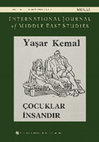
International Journal of Middle East Studies (IJMES), 2022
In 1975, the world-famous novelist Yaşar Kemal (1923-2015) undertook a series of journalistic int... more In 1975, the world-famous novelist Yaşar Kemal (1923-2015) undertook a series of journalistic interviews with street children in Istanbul. The series, entitled "Children Are Human" (Çocuklar İnsandır), reflects the author's rebellious attitude as well as the revolutionary spirit of hope in the 1970s in Turkey. Kemal's ethnographic fieldwork with street children criticized the demotion of children to a less-than-human status when present among adults. He approached children's rights from a human rights angle, stressing the humanity of children and that children's rights are human rights. The methodological contribution of this research to the history of children and youth is its engagement with ethnography as historical source. His research provided children the opportunity to express their political subjectivities and their understanding of the major political questions of the time, specifically those of social justice, (in)equality, poverty, and ethnic violence encountered in their everyday interactions with politics in the country. Yaşar Kemal's fieldwork notes and transcribed interviews also bring to light immense injustices within an intersectional framework of age, class, ethnicity, and gender. The author emphasizes that children's political agency and their political protest is deeply rooted in their subordination and misery, but also in their dreams and hopes. Situating Yaşar Kemal's "Children Are Human" in the context of the 1970s in Turkey, I hope to contribute to childhood studies with regard to the political agency of children as well as to the history of public intellectuals and newspapers in Turkey and to progressive representations of urban marginalization.



Uploads
Books by Nazan Maksudyan
Contributors include: Adnan Çelik, Alice von Bieberstein, Annika Törne, Bedross Der Matossian, Boris Adjemian, Duygu Tasalp, Eren Yıldırım Yetkin, Fatma Muge Gocek, Lena Inowlocki, Michael Rothberg, Nazan Maksudyan, Paul Vartan Sookiasian, Talin Suciyan, Vahe Tachjian, Yael Navaro
Urban Neighbourhood Formations revolves around three major aspects of making and unmaking of neighbourhoods: spatial and temporal boundaries of neighbourhoods, neighbourhoods as imagined and narrated entities, and neighbourhood as social relations. With extensive case studies from Johannesburg to Istanbul and from Jerusalem to Delhi, this volume shows how spatial amenities, immaterial processes of narrating and dreaming, and the lasting effect of intimacies and violence in a neighbourhood are intertwined and negotiated over time in the construction of moral orders, urban practices, and political identities at large.
This book offers insights into neighbourhood formations in an age of constant mobility and helps us understand the grassroots-level dynamics of xenophobia and hostility, as much as welcoming and openness. It would be of interest for both academics and more general audiences, as well as for students of undergraduate and postgraduate courses in Urban Studies and Anthropology.
of Ottoman children and youth in the war. Rather than simply passive victims, children became essential participants as soldiers, wage earners, farmers, and artisans. They also contributed to the propaganda and mobilization effort as symbolic heroes and orphans of martyrs. Rebelling against their orphanage directors or trade masters, marching and singing proudly with their scouting companies, making long-distance journeys to receive vocational training or simply to find their families, they acquired new identities and discovered new forms of agency. Maksudyan focuses on four different groups of children: thousands of orphans in state orphanages (Darüleytam), apprentice boys who were sent to Germany, children and youth in urban centers who reproduced
rivaling nationalist ideologies, and Armenian children who survived the genocide. With each group, the author sheds light on how the war dramatically impacted their lives and, in turn, how these self-empowered children, sometimes described as “precocious adults,” actively shaped history.
Journal Articles by Nazan Maksudyan
Johannes Jakob Manissadjian (1862–1942), a highly successful scientist at the Anatolia College (Merzifon/Marsovan/Մարզվան), who established a meteorological station and a natural history museum with an extensive collection of specimens, the paper traces the routes of disappearance, dispersal and ruination of indigenous lives, people, and knowledge within the context of the Armenian genocide. Drawing on documents from Ottoman, German, and American archives, I stress the potential of biographical methods to study the processes and structures of mass violence targeting the Ottoman Armenians, as well as to foreground the agency and subjectivity of genocide survivors. The article also focuses on post-genocide scientific
(dis)engagements of Manissadjian in light of Theodor W. Adorno’s ‘after Auschwitz’ discussions and from the perspective of indigenous knowledge production. In particular, his two ‘archival acts’ in the postgenocide context, the ‘Catalogue’ of the collection of the Anatolia College Museum that he prepared as ‘the former Curator’ and his small pamphlet entitled Proverbs of Turkey, which provided an ethnographic portrait of Anatolia, were his humble acts of saving a treasure trove of knowledge that was in danger of becoming debris.
This paper focuses on the sonic presence of street vendors’ in nineteenth century Ottoman soundscapes through a unique and extraordinary audiovisual media object: an album of photos and musical transcriptions of street vendors’ cries in Western staff notation. My research is conceived as a sonic history tracing several encounters of vendors with passersby on the streets, as I emphasize that sound should be analyzed as a relationship between a listener and something listened to. The paper analyzes different listening habits and subjectivities along the lines of religion, class, language, ethnicity, gender and other categories of difference. I stress the way cultural difference, especially intra-imperial difference, emerges in an urban soundscape like Istanbul. I use the term, then, in the plural, as “soundscapes”, taking into account multiple sensory experiences of a diversity of peoples. Relying on Ottoman archival material, literature in different Ottoman languages, ego-documents, travelogues, scientific writings, newspapers, letters, diaries, legal documents, musical notes, court records, I analyze four encounters and relations that itinerant sellers’ cries delineate: migration (how rural migrants listened to Ottoman urbanites, and vice versa); multilingualism and diversity; human-nonhuman encounters; and the audibility of gender. Lastly, I touch upon the romantic fascination with the practice of itinerant merchants, due to their imagined “oriental” character, originality, and anticipated extinction.