Books by Niels Gaul
On behalf of the Trustees of the A. G. Leventis Foundation, I would like to extend our heartfelt ... more On behalf of the Trustees of the A. G. Leventis Foundation, I would like to extend our heartfelt thanks to all those who have worked hard to make this possible. Particular thanks are owed to the Principal of the University of Edinburgh, Professor Peter Mathieson, for warmly embracing this initiative, and to the School of History, Classics and Archaeology as well as the Centre for Research Collections for undertaking the co-production of the exhibition and its accompanying catalogue. Both together are a testament to their enthusiasm for this largely unexplored subject, but also to their perseverance in completing a challenging project amidst a pandemic. The excellent result is proof of values that would have been equally relevant, and equally appreciated, in 1821: resilience in the face of adversity, and faith in better days ahead.
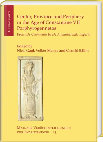
This comprehensive volume offers new insights into a seminal period of medieval Eastern Roman imp... more This comprehensive volume offers new insights into a seminal period of medieval Eastern Roman imperial history: the rule of Constantine VII Porphyrogennetos (913/945–959). Its fifteen chapters are organized around the concepts of center, province and periphery and take the reader from the splendor of Constantinople to the fringes of the empire. They examine life in the imperial city in the age of Constantine VII, the cultural revivals in Byzantium and the Carolingian West, as well as the emperor’s historiographical projects, including his historical excerpts and the famous Book of Ceremonies. Entering the sphere of the provinces, the authors explore visual messages on the coinage of Romanos I Lekapenos and Constantine Porphyrogennetos and its circulation through the provinces, provincial legal culture in the tenth-century empire, and offer a new analysis of Constantine VII’s two military harangues. Spotlights on the empire’s periphery include chapters on borderland trade with the Muslim world, a compelling new theory of the untimely deaths of the children of King Hugh of Italy, and the origins of medieval Croatia in relation to information gained from Constantine VII’s De administrando imperio. The final chapter offers intriguing insights into Constantine VII’s legacy and reception, from later middle Byzantine historiography via the Renaissance editions of the emperor’s treatises to Bavarian King Louis II’s Constantinople-inspired building projects. The volume combines leading scholars and new voices and contains survey chapters with detailed case studies.

Dialogues and Debates from Late Antiquity to Late Byzantium
Table of Contents
1. Plutarch’s Dialogues: Beyond the Platonic Example? / Eleni Kechagia-Ovseiko... more Table of Contents
1. Plutarch’s Dialogues: Beyond the Platonic Example? / Eleni Kechagia-Ovseiko
2. Erostrophus, a Syriac Dialogue with Socrates on the Soul / Alberto Rigolio
3. The Rhetorical Mechanisms of John Chrysostom’s On Priesthood / Alberto J. Quiroga Puertas
4. Literary Distance and Complexity in Late Antique and Early Byzantine Greek Dialogues Adversus Iudaeos / Patrick Andrist
5. Prepared for All Occasions: The Trophies of Damascus and the Bonwetsch Dialogue / Peter Van Nuffelen
6. New Wine in Old Wineskin: Byzantine Reuses of the Apocryphal Revelation Dialogue / Péter Tóth
7. Dialogical Pedagogy and the Structuring of Emotions in Liber Asceticus / Yannis Papadogiannakis
8. Anselm of Havelberg’s Controversies with the Greeks: A Moment in the Scholastic Culture of Disputation / Alex J. Novikoff
9. A Platonizing Dialogue from the Twelfth Century: The Logos of Soterichos Panteugenos / Foteini Spingou
10. The Six Dialogues by Niketas “of Maroneia”: A Contextualising Introduction / Alessandra Bucossi
11. Theodore Prodromos in the Garden of Epicurus / Eric Cullhed
12. “Let Us Not Obstruct the Possible”: Dialoguing in Medieval Georgia / Nikoloz Aleksidze
13. Embedded Dialogues and Dialogical Voices in Palaiologan Prose and Verse / Niels Gaul
14. Nikephoros Gregoras’ Philomathes and Phlorentios / Divna Manolova
15. Dramatization and Narrative in Late Byzantine Dialogues: Manuel II Palaiologos’s On Marriage and Mazaris’s Journey to Hades / Florin Leonte
16. Form and Content in the Dialogues of Gennadios Scholarios / George Karamanolis
Articles & Book Chapters by Niels Gaul
J. Henderson and R. F. Thomas (eds), The Loeb Classical Library and Its Progeny: Proceedings of the First James Loeb Biennial Conference, Munich and Murnau 18–20 May 2017. Loeb Classical Monographs (Cambridge, Mass.), 2020
F or a Byzantine rhetor to perform his art meant to translate. Not from one language into another... more F or a Byzantine rhetor to perform his art meant to translate. Not from one language into another, but from the everyday register of his own language into an artificial, classicizing one: a phenomenon known as literary mimesis. Mimesis in this context denotes the imitation of the Attic language (lexicon, grammar, syntax, style) of a Thucydides, Demosthenes, or Plato, or of their deuterosophistic and indeed patristic successors, that came to characterize Byzantine learned rhetoric. 1 This Attic or, more precisely, Atticizing Greek was no longer the literary register of a dialect, as in ancient Athens, but a sociolect: a socially defined, somewhat artificial language constructed and perpetuated not least for purposes of social distinction. 2 To master this learned register * This article was completed with generous funding support from the European Research Council (ERC) under the European Union's Horizon 2020 research and innovation program (grant agreement no. 726371, PAIXUE). I am very grateful to the members of the James Loeb Gesellschaft for their most generous hospitality; to Jeffrey Henderson and Richard Thomas for their boundless patience; and to Foteini Spingou for her valuable comments. Translations from the Greek are my own unless otherwise specified. 1 Hunger 1969; Rhoby and Schiffer 2010; cf. Wilson 2007: 46 for the impact of the Second Sophistic on commentaries. Ultimately, texts from Homer to Prokopios of Caesarea and his immediate successors (Agathias, Theophylaktos Simokates) were included in this "Atticizing" canon, with a few later additions such as the eleventh-century rhetor Michael Psellos. For a fuller spectrum of the meanings of mimesis see Halliwell 2002 and, for the early stages of an "ideology of classicism," Wiater 2011. 2 On Atticizing Greek as a sociolect see Gaul 2011: 272-310 and more recently Cuomo and Trapp 2017. Unlike some scholars claim (e.g., Horrocks 2010: 231-43), this sociolect was by no means a "dead language." Fueled by its contact with everyday Greek, changing canons of the Classics, and novel approaches to teaching, it evolved over the centuries: an
S. Bassett (ed.), The Cambridge Companion to Constantinople, 2022
centre-province cohesion. 12 Learning was closely intertwined with the emperor's presence in Cons... more centre-province cohesion. 12 Learning was closely intertwined with the emperor's presence in Constantinople, not only in practical but also in ideological terms. The imperial role in reviving and fostering education became a topos of late Roman 13 and Byzantine imperial ideology (whether accurate or not). Themistios praised Constantius II; George the Monk gave credit to Michael III (842-67) and his mother, Theodora. The Scriptores post Theophanem commended the kaisar Bardas (d. 866), John Skylitzes, Constantine VII Porphyrogennetos (913/945-59). Michael Psellos praised Constantine IX Monomachos (1042-55) while Anna Komnene (1083-c.1153) described her father's school in the Orphanotropheion. In the thirteenth century George Kyprios hailed George Akropolites, and Nikephoros Choumnos and Nikephoros Gregoras lauded Kyprios, and, through them, Michael VIII Palaiologos (1259-82), the conqueror of Constantinople. 14
‘And the whole city cheered’: The poetics and politics of the miraculous in the Early Palaiologan period
A. Mattiello and A. M. Rossi (eds), Late Byzantium Reconsidered: The Arts of the Palaiologan Era in the Mediterranean, 2019
, and the late Anna Christidou for their pertinent remarks on various draft versions of this chap... more , and the late Anna Christidou for their pertinent remarks on various draft versions of this chapter. For present purposes, 'reading' includes performance of rhetorical compositions from memory. On the theatron, see I. Medvedev, 'The So-called Theatra as a Form of Communication of the Byzantine Intellectuals in the th and th Centuries' in N. G.
Dumbarton Oaks Papers 69, 2015
In Networks of Learning: Perspectives on Scholars in Byzantine East and Latin West, c.1000–1200, edited by S. Steckel, N. Gaul and M. Grünbart, 235–280. Byzantinische Studien und Texte, 6. Berlin–Münster: LIT Verlag, 2014.
“The Manuscript Tradition”
In A Companion to the Ancient Greek Language, edited by E. J. Bakker, 69–82. Blackwell Companions to the Ancient World. Oxford: Wiley-Blackwell, 2010., 2010
In Lexicologica byzantina. Beiträge zum Kolloquium zur byzantinischen Lexikographie (Bonn, 13.–15. Juli 2007), edited by E. Trapp and S. Schönauer, 163–196. Super alta perennis. Studien zur Wirkung der klassischen Antike. Göttingen: V&R unipress / Bonn University Press, 2008., 2008
In Theatron. Rhetorische Kultur in Spätantike und Mittelalter, edited by M. Grünbart, 69–104. Berlin: de Gruyter, 2007., 2007
Segno e testo: international journal of manuscripts and text transmission 5 (2007): 263–340, 2007
Byzantinische Zeitschrift 96 (2003): 623–660, 2003
Der erste Andronikos erwies sich unter jenen Kaisern, welchen auf dem Thron des byzantinischen Re... more Der erste Andronikos erwies sich unter jenen Kaisern, welchen auf dem Thron des byzantinischen Reiches nur eine kurze Zeitspanne beschieden war, als besonderer Liebling der Nymphe Echo. Geboren um 1120, tritt dieser kaiserliche Neffe und Ziehbruder eines Kaisers als eine im wahren Wortsinn changierende Gestalt des 12. Jahrhunderts vor unsere Augen. Zeitlebens war er der vornehmste Opponent seines Vetters, des Kaisers Manuel Komnenos (reg. 1143–1180); er verbrachte neun Jahre im Kerker (1154/55–Herbst 1164) und lebte nach abenteuerlicher Flucht für weitere fünfzehn Jahre in Verbannung (1164/65, 1166–1180). Als er spät im Jahr 1183 schließlich zum Basileus der Rhomäer avancierte, schreckte er vor dem Meuchelmord an seinem Neffen, dem jungen Kaiser Alexios, nicht zurück – um seinerseits kaum zwei Jahre später von Hand des konstantinopolitanischen Pöbels das wohl grausamste Ende zu finden, das jemals einem byzantinischen Autokrator zuteil wurde (September 1185): Das prophezeite AIMA der Komnenoi hatte sich erfüllt. Andronikos' kurze Tyrannis ist eingerahmt von den blutigen Ausschreitungen der Konstantinopolitaner wider die Lateiner (April 1182) und deren Nemesis, der normannischen Eroberung und Plünderung Thessalonikes (August 1185). Einige beherzte Maßnahmen seinerseits, groben Mißständen Abhilfe zu leisten, wurden bereits von den Zeitgenossen mit Lob bedacht. Die folgenden Glossen richten den Fokus allerdings vor allem auf jene Jahre, in denen odysseusgleiche Irrfahrten Andronikos bis hinauf in die Lande der Rus' (1164/65) und schließlich von Jerusalem über Damaskus und Bagdad nach Georgien führten (zwischen 1167 und 1180), ehe er in der Herrschaft der Saltuḳ-oġullari im nordöstlichen Winkel Kleinasiens, bei Koloneia (türk. Şebinkarahisar), Zuflucht fand.
In Eunuchs in Antiquity and Beyond, edited by S. Tougher, 199–219. Cardiff & London: The Classical Press of Wales and Duckworth
Book Reviews by Niels Gaul
Byzantinische Zeitschrift, 2007



Uploads
Books by Niels Gaul
1. Plutarch’s Dialogues: Beyond the Platonic Example? / Eleni Kechagia-Ovseiko
2. Erostrophus, a Syriac Dialogue with Socrates on the Soul / Alberto Rigolio
3. The Rhetorical Mechanisms of John Chrysostom’s On Priesthood / Alberto J. Quiroga Puertas
4. Literary Distance and Complexity in Late Antique and Early Byzantine Greek Dialogues Adversus Iudaeos / Patrick Andrist
5. Prepared for All Occasions: The Trophies of Damascus and the Bonwetsch Dialogue / Peter Van Nuffelen
6. New Wine in Old Wineskin: Byzantine Reuses of the Apocryphal Revelation Dialogue / Péter Tóth
7. Dialogical Pedagogy and the Structuring of Emotions in Liber Asceticus / Yannis Papadogiannakis
8. Anselm of Havelberg’s Controversies with the Greeks: A Moment in the Scholastic Culture of Disputation / Alex J. Novikoff
9. A Platonizing Dialogue from the Twelfth Century: The Logos of Soterichos Panteugenos / Foteini Spingou
10. The Six Dialogues by Niketas “of Maroneia”: A Contextualising Introduction / Alessandra Bucossi
11. Theodore Prodromos in the Garden of Epicurus / Eric Cullhed
12. “Let Us Not Obstruct the Possible”: Dialoguing in Medieval Georgia / Nikoloz Aleksidze
13. Embedded Dialogues and Dialogical Voices in Palaiologan Prose and Verse / Niels Gaul
14. Nikephoros Gregoras’ Philomathes and Phlorentios / Divna Manolova
15. Dramatization and Narrative in Late Byzantine Dialogues: Manuel II Palaiologos’s On Marriage and Mazaris’s Journey to Hades / Florin Leonte
16. Form and Content in the Dialogues of Gennadios Scholarios / George Karamanolis
Articles & Book Chapters by Niels Gaul
Book Reviews by Niels Gaul