Papers by Olivia Denk
Bulletin 3/22: Geld: seine Werte, seine Wandlungen, Nov 16, 2022
Münzen haben viel zu erzählen. Den Lebenslauf einer antiken Münze genau zu verfolgen, von der Her... more Münzen haben viel zu erzählen. Den Lebenslauf einer antiken Münze genau zu verfolgen, von der Herstellung über ihre mannigfache Verwendung bis zu ihrem Nachleben im digitalen Sammlungskatalog, erlaubt uns, die Entwicklung von Wirtschaftsweisen und politischen Interaktionen über Jahrhunderte hinweg besser zu verstehen.
Geldgeschichtliche Nachrichten 319, 2022
Organ der Gesellscha für Interna onale Geldgeschichte (GIG), gemeinnützige Forschungsgesellscha e... more Organ der Gesellscha für Interna onale Geldgeschichte (GIG), gemeinnützige Forschungsgesellscha e.V. Frankfurt am Main Herausgeber und Verlag: GIG
Journal of Hellenic Religion , 2018
Le culte de Poséidon, avec ses aspects multiples, s'instaura à l'âge du bronze égéen et se diffus... more Le culte de Poséidon, avec ses aspects multiples, s'instaura à l'âge du bronze égéen et se diffusa, dans sa diversité, dans le monde antique tout entier. En Macédoine antique, ne sont identifiés avec certitude que deux sanctuaires de Poséidon, situés à la Péninsule de Chalcidique, en Grèce du Nord. L'important Ποσειδώνιον, situé au Cap Poseidi, à Pallène, est un sanctuaire extra-urbain de la cité antique de Mendé. Son autel de cendre date du XII e s. av. J.-C., tandis que l'édifice cultuel absidal – un des plus anciens connus en Grèce – remonte au X e s. av. J.-C. Le second sanctuaire de Poséidon est associé à Potidée qui, selon une source littéraire, était la seule colonie des Corinthiens en Chalcidique, sur l'isthme de Pallène. Le monnayage archaïque montre le patron de la cité, Poséidon Hippios, dont le temple fut localisé à l'extérieur de la cité. Le présent article vise à décrire les origines et la diversité du culte de Poséidon, tout en entamant une enquête sur le caractère divin du dieu en Chalcidique. L'esquisse préliminaire croise informations archéologiques, mythologiques, historiques, textuelles et numismatiques.
Abstract: The multifaceted cult of Poseidon was shaped in the Aegean Bronze Age and spread in its diversity over the Greek world. For the area of ancient Macedonia only two sanctuaries of Poseidon are safely identified, both situated on the Chalcidice peninsula in Northern Greece. The significant Ποσειδώνιον at Cape Poseidi on Pallene represents an extraurban sanctuary of the nearby ancient city of Mende – has an ash-altar dating to the 12 th century BC and one of the oldest apsidal cult buildings known in Greece, dating to the 10 th century BC. The other of Poseidon's sanctuaries is associated with Potidaea, which according to a literary source, was the sole colony of the Corinthians in the Chalcidice on the isthmus of Pallene. The archaic coinage depicts the city's patron god Poseidon Hippios, whose temple has been located outside of the city. The paper aims to outline the origins and the variety of Poseidon's worship in combination with the investigation of the god's divine character on the Chalcidice. The preliminary sketch is based on archaeological information discussed with myth, history and the literary and numismatic record.
Posters by Olivia Denk
EAA Rome , 2024
Probably in 316 BC, Alexarchos, the brother of the Macedonian king Cassander, founded
Ouranopolis... more Probably in 316 BC, Alexarchos, the brother of the Macedonian king Cassander, founded
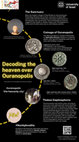
Ouranopolis (“Heavenly City”) on the Chalcidice peninsula in northern Greece. The location of the city is linked today with the area of ancient Sane near modern Nea Roda, where a Hellenistic cult building has been excavated. The archaeological material suggests that Apollo or Apollo-Helios was worshipped in a trinity with Artemis and Leto or with Selene and Eos. The coinage of Ouranopolis represents a particularly interesting case in terms of the illustration of astronomic-related components. The silver and bronze coins show on the obverse a solar disc or an eight-rayed star or rather a star with a crescent moon, while on the reverse sits a figure usually interpreted as Aphrodite Ourania on a celestial sphere with a special headdress and holding a scepter. The legend reads ΟΥΡΑΝΙΔΩΝ (the Ouranids) or ΟΥΡΑΝΙΔΟΩΝ ΠΟΛΕΩΣ (of the city of the Ouranids), providing an insight into a unique community. This poster aims to visualize the celestial elements (sun, crescent moon, star) and other features with the focus of a new interpretation, which proposes that the coin depict the god Helios or the personification of the sky (Ouranos) instead of the heavenly Aphrodite. This case study explores a Hellenistic worldview through a new interdisciplinary approach to Ouranopolitian coinage.
Science Communication by Olivia Denk
Instagram Reel: Storytelling & Storyboarding Science - 76. Locarno Film Festival 2023
Moderation by Olivia Denk
Co-Moderation Science after Noon: Open Science Meets Citizen Science (Februar 2025) im Rahmen der Love Data Week 2025
Co-Moderation Science After Noon: D wie "Datenkompetenz" (August 2024)
Moderation Science After Noon: From Tweets to Findings - The Challenges of Data Access for Scientific Studies on Online Platforms (2023)
Book Reviews by Olivia Denk
Orbis Terrarum 20 (2022), 2022
Die Erforschung der Geographie der Alten Welt ist eine interdisziplinäre Wissenschaft. Der Orbis ... more Die Erforschung der Geographie der Alten Welt ist eine interdisziplinäre Wissenschaft. Der Orbis Terrarum bietet Raum für Publikationen in den Bereichen Geschichte, Philologie, Geographie und Archäologie. Dabei ist das inhaltliche Spektrum, das mit dem Orbis Terrarum abgedeckt werden soll, bewusst breit angelegt. Geographisch-topographische Studien haben hier ebenso ihren Platz wie Untersuchungen zur Wechselwirkung zwischen Mensch und Landschaft sowie wissenschaftsgeschichtliche oder methodologische Arbeiten. Die Beiträge dieser Ausgabe erstrecken sich chronologisch von der Welt Herodots bis in die römische Kaiserzeit. Inhaltliche Schwerpunkte liegen auf der Untersuchung von antiken Texten (z.B. Herodot), archäologischen Fragestellungen, Numismatik, der Küste als geopolitischem Faktor oder der Regionalgeschichte. Der Band bietet zudem Studien, die räumlich in Südfrankreich, der Levante und dem vorderasiatischen Raum angesiedelt sind. Schließlich enthält der Orbis Terrarum einen umfangreichen Literaturteil mit Rezensionen von Neuerscheinungen zur historischen Geographie der Alten Welt.
Reports by Olivia Denk
ANTIKE WELT 3.21 / Buchempfehlung zu A. Lichtenberger, Der Olymp. Sitz der Götter zwischen Himmel und Erde (Stuttgart 2021).
Conference Presentations by Olivia Denk
This paper represents a digital approach to visualize the ancient religioscape of Chalcidice, a m... more This paper represents a digital approach to visualize the ancient religioscape of Chalcidice, a microregion in northern Greece. The unlocking of the peninsula’s sanctuaries and cults is a desideratum of archaeological research and is investigated within the framework of my doctoral project funded by the Swiss National Science Foundation (SNSF) at the University of Basel (Switzerland). By using ArcGIS to map the ancient sites and cult places it was achieved to create the sacred landscape of Chalcidice. As a result, the significance of the sanctuaries’ spatial location concerning the god’s characteristics was revealed. The map was embedded in ArcGIS StoryMaps where selected archaeological, literary, numismatic, and epigraphic evidence will be added. Regarding the numismatic data linked open data principles will be used which connects the project with the international numismatic community. Additionally, my photos taken during my research stay abroad in Greece will gradually complement the online presentation. This paper aims to discuss the status of ArcGIS as a digital tool for the investigation of ancient religious spaces.
Münzen repräsentieren antike Artefakte von besonderer Bedeutung für die altertumswissenschaftlich... more Münzen repräsentieren antike Artefakte von besonderer Bedeutung für die altertumswissenschaftliche Forschung. Sie unterscheiden sich hinsichtlich gewisser Charakteristika signifikant von anderen Kategorien materieller Kultur und sind als beständige bewegliche Metallobjekte zu klassifizieren. Neben ihrer monetären Funktion stehen weitere vielschichtige Deutungsebenen für ihre Verwendung zur Verfügung. Die
Kombination von Text, Bild und Objekt macht die Münze zu einer Quelle von besonderem historischen Wert. Diese spezifischen Eigenschaften von Münzen erzeugen starke Verbindungen zur Vergangenheit, wodurch es nicht verwundert, dass münzkundliche Studien den Beginn der Auseinandersetzung mit den Hinterlassenschaften der griechischrömischen Antike markieren. Aufbauend auf den Ausführungen von Krmnicek 20091 soll die potenzielle Objektzeit einer griechischen Münze von der Herstellung über ihren antiken
Gebrauch bis hin zur Auffindung in der Neuzeit und ihr rezentes Nachleben in seinen verschiedenen Facetten präsentiert werden. Materielle Veränderungen oder Manipulierungen durch Eigentumswechsel sind anhand einer Objektautopsie zu
erschliessen. Die Objektbiografie der Münze endet mit einem Ausblick auf moderne Digitalisierungsmethoden, der das Potenzial von Münzen für verschiedene Fachdisziplinen aufzeigt. Der transepochale Dialog zwischen Benutzer und Objekt ist ein wesentlicher Faktor, um das Interpretationsspektrum von Nutzungen und Bedeutungen von der Antike bis in die Moderne aufzudecken. Anhand ausgewählter Beispiele wird dies exemplarisch demonstriert.
Probably in 316 BC, Alexarchos, the brother of the Macedonian king Cassander, founded Ouranopo... more Probably in 316 BC, Alexarchos, the brother of the Macedonian king Cassander, founded Ouranopolis (“Heavenly City”) on the Chalcidice peninsula in northern Greece. The location of the city is linked today with the area of ancient Sane near modern Nea Roda, where a Hellenistic cult building has been excavated. The archaeological material suggests that Apollo or Apollo-Helios was worshipped in a trinity with Artemis and Leto or with Selene and Eos. The coinage of Ouranopolis represents a particularly interesting case in terms of the illustration of astronomic related components. The silver and bronze coins show on the obverse a solar disc or an eight-rayed star or rather a star with a crescent moon, while on the reverse sits a figure usually interpreted as Aphrodite Ourania on a celestial sphere with special headdress and holding a scepter. The legend reads ΟΥΡΑΝΙΔΩΝ («the Ouranids) or ΟΥΡΑΝΙΔΟΩΝΠΟΛΕΩΣ («of the city of the Ouranids»), providing an insight into a unique community. The aim of this paper is to discuss the attribution to Aphrodite Ourania through literary sources and archaeological remains in relation to the symbols depicted on the Ouranopolitan coins. The celestial elements (sun, crescent moon, star) and other features will be analysed with the focus of a new interpretation, which proposes that the coin depict the god Helios or the personification of the sky (Ouranos) instead of the heavenly Aphrodite. This case study explores a new interdisciplinary approach to Ouranopolitian coinage and reveals the value of numismatic imagery to investigate Hellenistic astronomy.
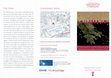
The unlocking of the sacred landscape of the Chalcidice is still a desideratum of current researc... more The unlocking of the sacred landscape of the Chalcidice is still a desideratum of current research. Yet the
Chalcidian peninsula is exceptionally important in the context of early Greek societies as the most of the
Northern Aegean’s early sanctuaries are situated in this micro‐region. Natural features seem
characteristic of these sites: at Kallithea a cave sanctuary, at Parthenonas a peak sanctuary, at Poseidi a
seaside sanctuary, and at Sane a lagoon sanctuary. Of these early Chalcidian sanctuaries Poseidi, on the
Pallene peninsula, is of great significance. With its ash‐altar in use from the 12th century B.C. it
represents a rare example of Late‐Mycenaean cult practice, and its apsidal building of the 10th century
B.C. is thought to be one of the earliest cult structures in Greece. More striking is that Poseidi is the only
safely identified sanctuary of Poseidon in the area of ancient Macedonia.
Using the new results yielded by my doctoral project this paper will explore the character and cult
practices of the sanctuary of Poseidi through discussion of the architectural features and archaeological
findings. In addition to this, I will, first reconsider the perception of Poseidi as the extra‐urban sanctuary
of the coastal city of Mende, referring to de Polignac’s retrospective on 'Space, Society and Religion'. This
sheds new light on the relationship between sanctuaries and the polis, and the changing status of extraurban
sanctuaries due to political events. Secondly, in the context of the “Euboean colonization” the role
of Mende itself, according to Thucydides an apoikia of the Eretrians, needs a nuanced view. Excavations
at Mende have produced evidence of permanent habitation at the settlement site from the Late
Mycenaean to the Classical period with an attested Euboean presence until the Geometric period.
Thirdly, focusing on Poseidon’s cult at Poseidi, the impact of the Eretrians will be questioned in a
comparative approach using literary, epigraphical and archaeological sources. This will be used to
sketch a preliminary perspective with spatial and religious aspects on early Chalcidian societies and
their relations to southern Greek regions.



Uploads
Papers by Olivia Denk
Abstract: The multifaceted cult of Poseidon was shaped in the Aegean Bronze Age and spread in its diversity over the Greek world. For the area of ancient Macedonia only two sanctuaries of Poseidon are safely identified, both situated on the Chalcidice peninsula in Northern Greece. The significant Ποσειδώνιον at Cape Poseidi on Pallene represents an extraurban sanctuary of the nearby ancient city of Mende – has an ash-altar dating to the 12 th century BC and one of the oldest apsidal cult buildings known in Greece, dating to the 10 th century BC. The other of Poseidon's sanctuaries is associated with Potidaea, which according to a literary source, was the sole colony of the Corinthians in the Chalcidice on the isthmus of Pallene. The archaic coinage depicts the city's patron god Poseidon Hippios, whose temple has been located outside of the city. The paper aims to outline the origins and the variety of Poseidon's worship in combination with the investigation of the god's divine character on the Chalcidice. The preliminary sketch is based on archaeological information discussed with myth, history and the literary and numismatic record.
Posters by Olivia Denk
Ouranopolis (“Heavenly City”) on the Chalcidice peninsula in northern Greece. The location of the city is linked today with the area of ancient Sane near modern Nea Roda, where a Hellenistic cult building has been excavated. The archaeological material suggests that Apollo or Apollo-Helios was worshipped in a trinity with Artemis and Leto or with Selene and Eos. The coinage of Ouranopolis represents a particularly interesting case in terms of the illustration of astronomic-related components. The silver and bronze coins show on the obverse a solar disc or an eight-rayed star or rather a star with a crescent moon, while on the reverse sits a figure usually interpreted as Aphrodite Ourania on a celestial sphere with a special headdress and holding a scepter. The legend reads ΟΥΡΑΝΙΔΩΝ (the Ouranids) or ΟΥΡΑΝΙΔΟΩΝ ΠΟΛΕΩΣ (of the city of the Ouranids), providing an insight into a unique community. This poster aims to visualize the celestial elements (sun, crescent moon, star) and other features with the focus of a new interpretation, which proposes that the coin depict the god Helios or the personification of the sky (Ouranos) instead of the heavenly Aphrodite. This case study explores a Hellenistic worldview through a new interdisciplinary approach to Ouranopolitian coinage.
Science Communication by Olivia Denk
Moderation by Olivia Denk
Book Reviews by Olivia Denk
Reports by Olivia Denk
Conference Presentations by Olivia Denk
Kombination von Text, Bild und Objekt macht die Münze zu einer Quelle von besonderem historischen Wert. Diese spezifischen Eigenschaften von Münzen erzeugen starke Verbindungen zur Vergangenheit, wodurch es nicht verwundert, dass münzkundliche Studien den Beginn der Auseinandersetzung mit den Hinterlassenschaften der griechischrömischen Antike markieren. Aufbauend auf den Ausführungen von Krmnicek 20091 soll die potenzielle Objektzeit einer griechischen Münze von der Herstellung über ihren antiken
Gebrauch bis hin zur Auffindung in der Neuzeit und ihr rezentes Nachleben in seinen verschiedenen Facetten präsentiert werden. Materielle Veränderungen oder Manipulierungen durch Eigentumswechsel sind anhand einer Objektautopsie zu
erschliessen. Die Objektbiografie der Münze endet mit einem Ausblick auf moderne Digitalisierungsmethoden, der das Potenzial von Münzen für verschiedene Fachdisziplinen aufzeigt. Der transepochale Dialog zwischen Benutzer und Objekt ist ein wesentlicher Faktor, um das Interpretationsspektrum von Nutzungen und Bedeutungen von der Antike bis in die Moderne aufzudecken. Anhand ausgewählter Beispiele wird dies exemplarisch demonstriert.
Chalcidian peninsula is exceptionally important in the context of early Greek societies as the most of the
Northern Aegean’s early sanctuaries are situated in this micro‐region. Natural features seem
characteristic of these sites: at Kallithea a cave sanctuary, at Parthenonas a peak sanctuary, at Poseidi a
seaside sanctuary, and at Sane a lagoon sanctuary. Of these early Chalcidian sanctuaries Poseidi, on the
Pallene peninsula, is of great significance. With its ash‐altar in use from the 12th century B.C. it
represents a rare example of Late‐Mycenaean cult practice, and its apsidal building of the 10th century
B.C. is thought to be one of the earliest cult structures in Greece. More striking is that Poseidi is the only
safely identified sanctuary of Poseidon in the area of ancient Macedonia.
Using the new results yielded by my doctoral project this paper will explore the character and cult
practices of the sanctuary of Poseidi through discussion of the architectural features and archaeological
findings. In addition to this, I will, first reconsider the perception of Poseidi as the extra‐urban sanctuary
of the coastal city of Mende, referring to de Polignac’s retrospective on 'Space, Society and Religion'. This
sheds new light on the relationship between sanctuaries and the polis, and the changing status of extraurban
sanctuaries due to political events. Secondly, in the context of the “Euboean colonization” the role
of Mende itself, according to Thucydides an apoikia of the Eretrians, needs a nuanced view. Excavations
at Mende have produced evidence of permanent habitation at the settlement site from the Late
Mycenaean to the Classical period with an attested Euboean presence until the Geometric period.
Thirdly, focusing on Poseidon’s cult at Poseidi, the impact of the Eretrians will be questioned in a
comparative approach using literary, epigraphical and archaeological sources. This will be used to
sketch a preliminary perspective with spatial and religious aspects on early Chalcidian societies and
their relations to southern Greek regions.