Books by Paolo Franzo
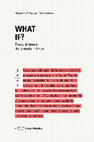
Il libro sfida la comprensione dualistica dominante della moda come fantasia al servizio dell’ind... more Il libro sfida la comprensione dualistica dominante della moda come fantasia al servizio dell’industria e indaga, per la prima volta in Italia, il panorama emergente delle mode sperimentali e speculative, termine con cui si intendono le mode votate più all’indagine e alla conoscenza che al prodotto e che rispondono alla domanda What If? del titolo. Nel volume sono documentati e analizzati gli esiti del ciclo di conversazioni collaborative e del workshop svolti nell’estate del 2020 all’Università Iuav di Venezia nell’ambito della ricerca Fashion Futuring e delle attività del corso di Laurea magistrale in Arti visive e Moda. Al ciclo hanno preso parte in qualità di relatori fashion designer emergenti e portatori di una visione radicale della moda, curatori, professionisti ed esperti di sostenibilità ambientale, di mode digitali e di intelligenza artificiale. Come la maggior parte delle domande, anche quelle lanciate durante gli incontri di What If? non prevedevano una risposta univoca, lasciando ai partecipanti del workshop, e ai lettori del libro, la possibilità di immaginare la propria risposta.
Il libro considera il portfolio come un progetto complesso che consente al suo autore di definire... more Il libro considera il portfolio come un progetto complesso che consente al suo autore di definire una propria identità professionale. Attraverso un lavoro di ricerca sul campo che ha coinvolto i corsi di laurea in design della moda di tre università, sono analizzati i processi coinvolti nell’ideazione e realizzazione del portfolio, le tensioni tra dimensione materiale e immateriale, le traiettorie temporali, le interazioni tra studente e ambiente formativo. Portando al centro della ricerca un oggetto finora trascurato e superando l’idea che sia un riassunto di esperienze concluse, questo lavoro interpreta il portfolio come un luogo in cui progettare se stessi, il proprio futuro, gli obiettivi da raggiungere, il percorso da compiere e i contesti in cui agire.
Journal Articles by Paolo Franzo
Diid Journal - Digital Special Issue 1, 2023
diid disegno industriale industrial design Digital Special Issue 1 -DSI 1 Year XXI diid is an ope... more diid disegno industriale industrial design Digital Special Issue 1 -DSI 1 Year XXI diid is an open access peer-reviewed scientific design journal diid is published three times a year Registration at Tribunale di Roma 86/2002
Fashion Highlight_Special Issue 01, 2025
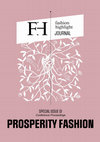
The fashion system has been questioning for years how to decrease its negative impact on the envi... more The fashion system has been questioning for years how to decrease its negative impact on the environment and people, trying to improve individual elements: from natural, organic or recycled materials to zero-waste design methodologies, from slower production processes to socially responsible actions, from development of local supply chains to inclusive communication campaigns, from blockchain traceability of products to more reliable trend forecasts through artificial intelligence, from social engagement to large scale regulation.
Thanks to the contribution of researchers, practitioners, and activists, a new awareness in civil society about the finite nature of materials and resources has been achieved, and the definition of standards and certifications regulating fashion processes and products towards circular and closed ecosystems has been refined and broadly disseminated.
Fashion Highlight_Special Issue 01, 2025
The concept of prosperity is often associated with economic growth and the success of a product o... more The concept of prosperity is often associated with economic growth and the success of a product on the market, neglecting or downplaying the impact on the environment and people according to a model that has long been considered unsustainable. What is your definition of prosperity and what do you think are the tools and approaches to develop it?
Fashion Practice, 2025
The contribution explores the concept of textile hacking as an approach that redefines the materi... more The contribution explores the concept of textile hacking as an approach that redefines the material surface of fashion, through transdisciplinary actions ranging from the reuse of textile waste to the development of new materials. Through the analysis of several case studies, the research identifies two different interpretations of the concept of textile hacking: (i) hacking the waste, in which independent emerging designers appropriate the textile scraps of global fashion brands for redesign actions, as analysed in Avavav and Dapper Dan; (ii) hacking the Anthropocene, in which fabrics are colonised by other living beings and become vibrant matter in a posthuman perspective, as demonstrated in the work of Paula Ulargui Escalona with Loewe and in Biogarmentry.
Convergências — Revista de Investigação e Ensino das Artes, 2024
For several years, the fashion industry has been grappling with an exponential technological and ... more For several years, the fashion industry has been grappling with an exponential technological and digital transformation, revolutionising the way ideas are conceived, designed, produced, communicated and sold. Artificial intelligence, integrated in fashion design, gives rise to new scenarios and acts of cultural and social construction in which human creativity and technology merge into new co-creative and collaborative approaches. Through the analysis of two significant case studies, Robbie Barrat and Anna Yang, this contribution aims to investigate the methodologies and practices
through which this emerging phenomenon modifies the fashion design process and the skills of the professionals involved. The analysis provides insight into the ways in which archives can be transformed into datasets and the process of human-technology collaboration in fashion design.
PAD. Pages on Arts and Design, 2024
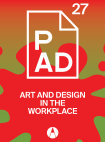
For years, the fashion system has been questioning how to reduce its negative impact on the envir... more For years, the fashion system has been questioning how to reduce its negative impact on the environment and society, clashing with the need for constant economic growth.
Climate, humanitarian and health crises have fueled the debate on the excessive centrality of GDP as a universal measure of prosperity, often pursued at the expense of environmental and human resources. This reflection prompts a redefinition of the concept of prosperity, no longer just economic, but as a virtuous relationship between people, space and resources, in line with a sustainable and desirable future. The contribution explores whether it is possible to imagine a future for fashion manufacturing in Italy, particularly in the textile sector, which promotes new models of relations between workplaces, people and products, thanks to art and processes of care, in a perspective of renewed prosperity.
The investigation is based on three case studies: Bonotto, promoter of the “slow factory” that has brought artists and artworks inside the factory; Lanificio Paoletti, committed to the protection of the Alpago sheep and the enhancement of the territory through events such as La via della lana (The wool road); Lottozero, a creative hub for textile research and experimentation. The analysis reveals a reorganisation of Italian manufacturing, in which factories become places of living, learning and growth, capable of generating prosperity based on relations between people, spaces and objects.
GUD, 2024
For many years, the fashion industry has been at the centre of the debate on the lack of sustaina... more For many years, the fashion industry has been at the centre of the debate on the lack of sustainability of its processes and its negative impact on the environment and people.
Theoretical and design reflections on the urgency of reducing its ecological footprint, slowing down the pace and decreasing resource consumption levels have multiplied.
Recently, however, the idea has emerged that it would be useful to ask not so much how fashion can reduce its impact, but how it can become an active and positive force, also through the use of technology, encouraging a new relationship between man and nature.
This contribution aims to answer the question posed by Ezio Manzini concerning the possibility that fashion objects can become agents of positive change, to reweave the web of life that has been torn apart by human action in recent years. This question leads to two seemingly contrasting, but in fact deeply interrelated approaches to fashion
design in the 21st century, which are addressed here through a literature review and the analysis of some case studies.
The first consists of bringing attention back to the people involved in the manufacturing processes and narrating the fashion production chain. This response is developed through the analysis of the textile company Botto Giuseppe.
The second approach is characterised by a post-human vision, a decentralisation of the human being in search of new forms of collaboration with non-humans, including nature and technology. This perspective is investigated through an investigation of living materials, which allow the creation of fashion objects that breathe, grow and regenerate. Unlike traditional materials, these need care and attention and completely
transform the relationship of quick and detached enjoyment between consumer and garment, that has been nurtured by fast fashion brands in recent decades.
These two directions are part of a constant process of human centralisation and decentralisation, in search of new fashion ecosystems capable of sustaining the future.
The contribution questions the possibility that fashion and its objects can be interpreted as a p... more The contribution questions the possibility that fashion and its objects can be interpreted as a practice of care, agents capable of stimulating a positive change in the relationship between people, environment and territories. Within the theoretical framework of fashion futuring, the design and social innovation workshop Talking Hands is analysed as a case study of redirection practices, which are expressed in participatory design dynamics, relationships between the subjects of creative and production processes, new narratives and synergies between people and communities.
DIID, 2023
The essay addresses the reasons why fashion design is manifesting an increasing interest in the m... more The essay addresses the reasons why fashion design is manifesting an increasing interest in the marine environment as a context where to identify new sustainable materials for fashion, focusing on the particular case of seaweeds. Through the analysis of some significant international case studies, the recent applications of a variety of biomaterials derived from algae are observed. This phenomenon is interpreted not only as a response to the emergencies of innovation and sustainability in fashion design, but also confirms the framework of a new materialism according to a posthuman perspective. Water shifts from being perceived as a natural element exploited and polluted by fashion into a place of making kin between human and non-human through the use of seaweeds. This is possible thanks to the collaboration of design, chemistry, biology and technology, that are orchestrated to redefine the expressive codes of contemporary fashion within a multispecies landscape.
Il contributo costituisce l'introduzione al numero 41 di OFFICINA* che è stato curato dai due aut... more Il contributo costituisce l'introduzione al numero 41 di OFFICINA* che è stato curato dai due autori sul tema "Corpi e Cura". Corpi e cura si intrecciano all’interno del numero attraverso vari saggi che coinvolgono diversi territori del progetto, dalla moda allo spazio pubblico, dal design di prodotto all’architettura degli interni, mettendo in luce nuovi approcci alle teorie e pratiche della contemporaneità. La dimensione a cui si fa riferimento è multispecie, postdigitale e transdisciplinare: si tratta di un corpo che non teme il confronto con l’alterità, di una cura che si espande oltre l’umano.
The contribution is the introduction to the Issue 41 of OFFICINA*, curated by the two authors on the theme "Bodies and Care". Bodies and care are interwoven within the issue through various essays involving different design territories, from fashion to public space, from product design to interior architecture, highlighting new approaches to contemporary theories and practices. The dimension referred to is multispecies, postdigital, and transdisciplinary: it is about a body that is not afraid of confrontation with otherness, about a caring that expands beyond the human.
Il Fashion Design sta manifestando un crescente interesse per l’ambiente marino, contesto nel qua... more Il Fashion Design sta manifestando un crescente interesse per l’ambiente marino, contesto nel quale individuare nuovi materiali per la moda. Attraverso l’analisi di alcuni casi studio internazionali, sono osservate le recenti applicazioni di biomateriali ricavati dalle alghe marine in una prospettiva qui definita Blue Fashion. Un fenomeno che non solo risponde alle urgenze di innovazione e sostenibilità della moda, quanto suggerisce l’idea di un nuovo materialismo in una prospettiva postumana. L’acqua si sta trasformando da elemento naturale sfruttato e inquinato in luogo del making kin tra umano e non-umano attraverso la collaborazione di design, chimica, biologia e tecnologia, ridefinendo i codici espressivi della moda contemporanea.
________
Fashion Design is showing a growing interest in the marine environment as a context in which to identify new materials for fashion. Through the analysis of some international case studies, the recent applications of biomaterials derived from seaweed are observed in a perspective defined here as Blue Fashion. This phenomenon it’s not only a response to the emergencies of innovation and sustainability in fashion, but suggests the idea of a new materialism in a posthuman
perspective. Water shifts from being perceived as a natural element exploited and polluted into a place of making kin between human and non-human through the collaboration of design, chemistry, biology and technology, redefining the expressive codes of contemporary fashion.
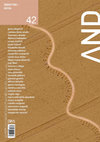
La moda è un ambito di indagine particolarmente rilevante nella contemporaneità per la sua colloc... more La moda è un ambito di indagine particolarmente rilevante nella contemporaneità per la sua collocazione all’intersezione tra le discipline progettuali, artistiche, storiche, sociologiche ed economiche. È una lente attraverso cui è possibile osservare il mondo e le sue evoluzioni, è un sistema complesso in grado di agire sul presente e modificarlo. Uno degli aspetti di maggiore interesse per i fashion studies è il ruolo diretto e indiretto della moda nel dare forma ad architetture, città e territori (Vaccari 2016).
Fashion is a particularly relevant field of investigation in the contemporary world because of its position at the intersection of design, artistic, historical, sociological, and economic disciplines. It is a lens through which the world and its evolutions can be observed, it is a complex system capable of acting on and modifying the present. One of the most interesting aspects for fashion studies is the direct and indirect role of fashion in shaping architectures, cities, and territories (Vaccari 2016). Urban centres and peripheral areas throughout history have become part of fashion, which, in turn, has characterised them with its own material dimension and imagery. In the processes of conception, production and consumption, this ever-changing, two-way relationship manifests itself.
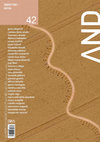
Il contributo indaga come molti marchi internazionali del lusso abbiano contribuito negli ultimi ... more Il contributo indaga come molti marchi internazionali del lusso abbiano contribuito negli ultimi quindici anni a definire nuove identità della moda e dei suoi luoghi, riconfigurando in particolare quelli legati alla produzione manifatturiera. Questi fenomeni non vanno però interpretati come uno sguardo nostalgico al passato o come visione stereotipata dell’identità artigianale del Made in Italy. Viene qui proposto, invece, di inserirli nel framework teorico del nuovo materialismo, concetto sviluppato da Anneke Smelik secondo il quale tutto è fatto di materia: «cose, oggetti, arte, moda e persone […] tutto è un misto di materiali organici, minarli, vegetali e sintetici» (Smelik, 2020).
The contribution investigates how many international luxury brands have contributed in the last fifteen years to defining new identities of fashion and its places, reconfiguring in particular those linked to manufacturing. However, these phenomena should not be interpreted through a nostalgic glance at the past or as a stereotype of the craft identity of Made in Italy. Instead, it is proposed here to place them within the theoretical framework of the new materialism, a concept developed by Anneke Smelik according to which everything is made of matter: «things, objects, art, fashion and people […] are all mixtures of organic, mineral, vegetable and synthetic materials» (Smelik, 2020).

Il contributo intende dimostrare, attraverso l'analisi dei casi studio Bottega Veneta e Lanificio... more Il contributo intende dimostrare, attraverso l'analisi dei casi studio Bottega Veneta e Lanificio Paoletti, come gli spazi tradizionali per la produzione di moda siano stati trasformati in luoghi per l'apprendimento formale e informale, aumentando le sinergie con le istituzioni educative locali e incoraggiando eventi pubblici all'interno delle fabbriche. I distretti industriali della provincia italiana, in declino dal punto di vista produttivo, si stanno rivelando un territorio ideale per generare il cambiamento cercando una maggiore trasparenza e apertura con il territorio.
The contribution aims to demonstrate, through the analysis of the case studies Bottega Veneta and Lanificio Paoletti how traditional spaces for fashion production have been transformed into places for formal and informal learning increasing synergies with local educational institutions and encouraging public events inside the factories. The industrial districts of the Italian province, in decline from a production point of view, are proving to be an ideal territory for generating change by seeking greater transparency and openness with the territory.

La teoria del design del XXI secolo ha contribuito in larga misura a evidenziare la coesistenza a... more La teoria del design del XXI secolo ha contribuito in larga misura a evidenziare la coesistenza antagonista di capitalismo ed emergenze socio-ambientali. Tuttavia, ha solo marginalmente indagato il ruolo che i fashion designer possono svolgere in tale contesto. Questo contributo vuole intervenire nel dibattito teorico sul futuro sostenibile della moda e del design, discutendo le implicazioni che i tre concetti chiave dell’autonomia strategica, sviluppato da Hal Foster, il co-design, teorizzato da Ezio Manzini, e il futuring, definito da Tony Fry, possono avere sulla capacità dei fashion designer di modificare il sistema, innescare un cambiamento, dirigerlo o gestirlo. Questi concetti vengono indagati attraverso tre casi studio: Eugenia Morpurgo, Abitario e Garbage Core, progetti autonomi e indipendenti, avviati in Italia negli ultimi anni nell’ambito del design della moda, e qui scelti considerando la loro capacità di ridefinire il ruolo del progettista e della disciplina, rispondendo in modo originale alle questioni di sostenibilità ambientale e sociale in ambito moda.
The article investigates the 21st-century fashion through the theoretical lens of the mise en aby... more The article investigates the 21st-century fashion through the theoretical lens of the mise en abyme, focusing on the mixed reality as an extended panorama between physical and digital. Four case studies were chosen within the Italian context, deemed as a place of experimentation and interaction between digital innovation and manufacturing tradition. Those cases have developed projects in mixed reality
during the months of social distancing imposed by Covid-19, with significant consequences on creative processes, production, distribution, communication and consumption of fashion. In this scenario, the article questions the expansion of fashion experience, the ongoing transformation of the digital object, the conception and perception of time and the idea of intimacy at the time of Covid.
Change is at the heart of the definition of fashion, as many theorists, designers and cultural an... more Change is at the heart of the definition of fashion, as many theorists, designers and cultural analysts have shown. This article takes up this perspective to question the role of fashion design in the 21st century in the relation to cultural, media and technological changes. Adopting a field research approach, the paper analyses the interaction between fashion, designers and digital technologies that are emerging in Italy in order to re-grasp Made in Italy in a futuring perspective. The case studies were selected for their relevance to the digital in terms of design, production, and display. The paper analyses how the pandemic crisis is affecting the Made in Italy, stimulating new ways of designing, understanding, producing, and consuming fashion.


Uploads
Books by Paolo Franzo
Journal Articles by Paolo Franzo
Thanks to the contribution of researchers, practitioners, and activists, a new awareness in civil society about the finite nature of materials and resources has been achieved, and the definition of standards and certifications regulating fashion processes and products towards circular and closed ecosystems has been refined and broadly disseminated.
through which this emerging phenomenon modifies the fashion design process and the skills of the professionals involved. The analysis provides insight into the ways in which archives can be transformed into datasets and the process of human-technology collaboration in fashion design.
Climate, humanitarian and health crises have fueled the debate on the excessive centrality of GDP as a universal measure of prosperity, often pursued at the expense of environmental and human resources. This reflection prompts a redefinition of the concept of prosperity, no longer just economic, but as a virtuous relationship between people, space and resources, in line with a sustainable and desirable future. The contribution explores whether it is possible to imagine a future for fashion manufacturing in Italy, particularly in the textile sector, which promotes new models of relations between workplaces, people and products, thanks to art and processes of care, in a perspective of renewed prosperity.
The investigation is based on three case studies: Bonotto, promoter of the “slow factory” that has brought artists and artworks inside the factory; Lanificio Paoletti, committed to the protection of the Alpago sheep and the enhancement of the territory through events such as La via della lana (The wool road); Lottozero, a creative hub for textile research and experimentation. The analysis reveals a reorganisation of Italian manufacturing, in which factories become places of living, learning and growth, capable of generating prosperity based on relations between people, spaces and objects.
Theoretical and design reflections on the urgency of reducing its ecological footprint, slowing down the pace and decreasing resource consumption levels have multiplied.
Recently, however, the idea has emerged that it would be useful to ask not so much how fashion can reduce its impact, but how it can become an active and positive force, also through the use of technology, encouraging a new relationship between man and nature.
This contribution aims to answer the question posed by Ezio Manzini concerning the possibility that fashion objects can become agents of positive change, to reweave the web of life that has been torn apart by human action in recent years. This question leads to two seemingly contrasting, but in fact deeply interrelated approaches to fashion
design in the 21st century, which are addressed here through a literature review and the analysis of some case studies.
The first consists of bringing attention back to the people involved in the manufacturing processes and narrating the fashion production chain. This response is developed through the analysis of the textile company Botto Giuseppe.
The second approach is characterised by a post-human vision, a decentralisation of the human being in search of new forms of collaboration with non-humans, including nature and technology. This perspective is investigated through an investigation of living materials, which allow the creation of fashion objects that breathe, grow and regenerate. Unlike traditional materials, these need care and attention and completely
transform the relationship of quick and detached enjoyment between consumer and garment, that has been nurtured by fast fashion brands in recent decades.
These two directions are part of a constant process of human centralisation and decentralisation, in search of new fashion ecosystems capable of sustaining the future.
The contribution is the introduction to the Issue 41 of OFFICINA*, curated by the two authors on the theme "Bodies and Care". Bodies and care are interwoven within the issue through various essays involving different design territories, from fashion to public space, from product design to interior architecture, highlighting new approaches to contemporary theories and practices. The dimension referred to is multispecies, postdigital, and transdisciplinary: it is about a body that is not afraid of confrontation with otherness, about a caring that expands beyond the human.