Videos by Paolo Rosati
L'Extended Matrix Initiative 2021, è la prima di una serie di conferenze organizzate da Una Quant... more L'Extended Matrix Initiative 2021, è la prima di una serie di conferenze organizzate da Una Quantum inc. relative al metodo di ricostruzione virtuale ed al software di GIS 3D Extended Matrix (EM) sviluppato da Emanuel Demetrescu e Bruno Fanini. Alla presentazione del presidente Una Quantum Roberto Montagnetti è seguito l'intervento degli sviluppatori Emanuel Demetrescu e Bruno Fanini, seguiti dalle presentazioni della community EM. Simone Berto ha presentato il suo lavoro con EM per il Foro della Città di Nora, Daniele Ferdani, con un intervento sull'utilizzo di EM nel Foro di Augusto a Roma, Cristina Gonzalez Esteban, studentessa dell’Università di Southampton, ha parlato del suo progetto di stage presso il VHLab.
Dopo questa fase, si sono alternate presentazioni rientranti nell'orbita di EM; Paolo Rosati con la richiesta di lavorare all'unione dell'interscambio: Pyarchinit - EM, l'analisi dei possibili punti di contatto tra i due software e dello sviluppo congiunto futuro. 23 views
Books (as editor) by Paolo Rosati
Una Quantum 1. Book of proceedings (Full text), 2021
The proceeding book of the first Una Quantum conference.
Una Quantum 1 (2021)
Nuove Tecnologie o... more The proceeding book of the first Una Quantum conference.
Una Quantum 1 (2021)
Nuove Tecnologie open source per la gestione dei beni, delle attività culturali e del turismo 16-17 Dicembre 2021, Sala della Fortuna, Museo Nazionale Etrusco Villa Giulia, Roma
Edited by Paolo Rosati - Eloisa Casadei
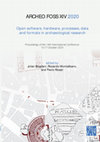
ArcheoFOSS XIV 2020: Open software, hardware, processes, data and formats in archaeological resea... more ArcheoFOSS XIV 2020: Open software, hardware, processes, data and formats in archaeological research collects the proceedings of the fourteenth ArcheoFOSS international conference, held online due to the outbreak of the COVID-19 pandemic. The book gathers seventeen papers on three principal topics, the main sessions of the conference: use and application of free/libre and open-source (FLOS) tools in archaeology; creation, use and promotion of open data and open formats in archaeology; and development and customization of FLOS software and hardware solutions for cultural heritage. Forty-one scholars of very diverse age, academic affiliation and geographic location, but all actively involved in the promotion of FLOS culture, open data and open science in digital archaeology and humanities, contribute. The volume is completed by a critical analysis of the contribution of these important annual meetings to the scientific and cultural activity of the ArcheoFOSS community. The opportunity offered by the pandemic-related difficulties to widen the geographical scope of the conference has been further boosted by the decision to adopt the English language for most of the papers, with the hope that this will extend the work of the ArcheoFOSS community far beyond the Italian national borders.
Papers by Paolo Rosati
Archeologia e Calcolatori, 2024
The institutional goal of studying and mapping archaeological potential in SITAR in recent years ... more The institutional goal of studying and mapping archaeological potential in SITAR in recent years has been to create an efficient tool to support urban planning and cultural heritage management: The Archaeological Potential Map of Rome. The Soprintendenza of Rome plays a key role in this effort, being responsible for the safeguarding and promotion of the city’s archaeological heritage. By developing a robust model of archaeological potential, the Soprintendenza can better anticipate and mitigate the impact of construction and development projects on archaeological sites. This proactive approach ensures that significant archaeological resources are identified and preserved before they are damaged or destroyed. The tool will facilitate informed decision-making in urban planning, helping to balance the needs of modern development with the preservation of historical sites. Moreover, it will support the regulatory framework that mandates archaeological assessments in high-potential areas, rationalisation of administrative processes and improving compliance with heritage protection regulations. Overall, the creation of an efficient archaeological potential model by the Soprintendenza of Rome underlines the commitment to preserving the city’s cultural heritage while accommodating its continuous urban evolution.
Lo studio geologico e geomorfologico ha fornito nuove informazioni sull'evoluzione del delta del ... more Lo studio geologico e geomorfologico ha fornito nuove informazioni sull'evoluzione del delta del Tevere nella seconda metà dell'Olocene. Nel periodo compreso tra VIII e V secolo a.C. il Tevere sfociava in mare attraverso due bocche ubicate nella zona del Porto di Claudio e Traiano. Il primo insediamento romano alla foce del Tevere, chiamato Ostia Tiberina, datato secondo la tradizione romana al VII secolo a.C., doveva trovarsi presso tale zona. La foce del Tevere migrò nella sua posizione attuale in un momento precedente al IV secolo a.C. Il porto di Claudio venne costruito in una zona formata da sedimenti fluviali, ed i bacini portuali vennero scavati per lo più sugli stessi sedimenti. Il bacino del porto di Claudio, profondo fino a 8 m sotto il livello del mare, ha sfruttato anche la presenza di due rientranze della costa corrispondenti ad antiche bocche del Tevere. In base alle attuali conoscenze geologiche, nessuna delle ipotesi su forma e dimensioni del porto di Claudio è pienamente accettabile. Il porto comunque doveva avere due ingressi, di cui il principale posto a Sud-Ovest, il secondo verso Nord. Il fiume Tevere ha un bacino di alimentazione situato nell'Appennino Settentrionale e Centrale e sbocca in mare a SE di Roma. Nell'area del delta, il fiume Tevere si divide in due rami (fig. ): il ramo principale, detto Fiumara Grande, sbocca nel mare Tirreno a NW del Lido di Ostia, mentre il ramo secondario, detto Fiumicino, sbocca in mare presso l'omonima cittadina. Nel presente lavoro vengono esposti i risultati degli studi morfologici e stratigrafici relativi alla porzione centrale del delta del Tevere. Attenzione particolare è stata posta su una zona occupata dai resti dell'antico porto costruito dall'imperatore romano Claudio e modificato dall'imperatore Traiano (I e II secolo d.C.). Nel corso del lavoro sono stati eseguiti studi morfologici, rilevamenti geologici e sondaggi a carotaggio continuo. I carotaggi hanno permesso di evidenziare la stratigrafia dei sedimenti che formano il substrato di aree coperte da resti archeologici o interessate da scavi di età romana. Lo scopo del lavoro è quello di definire la situazione paleogeografica dell'area nel periodo appena precedente la costruzione dei porti romani e di riconoscere le modalità di interrimento. La ricostruzione paleogeografica permette di verificare la compatibilità delle controverse ipotesi relative alla forma ed alle dimensioni del bacino del porto di Claudio. Il ramo del Tevere di Fiumicino coincide in gran parte con la "Fossa Traiana" scavata artificialmente negli anni '40 del I secolo d.C., durante la costruzione del bacino di Claudio. Nella "Fossa Traiana" affluiva un secondo canale artificiale scavato da Traiano all'inizio del II secolo d.C. 1 Nella zona del porto vi erano poi alcuni altri canali di epoca Claudiana, conosciuti come "Fosse di Claudio". Evoluzione geologica olocenica del delta del Tevere L'evoluzione del delta è stata oggetto di vari studi, a partire dalla seconda metà del XIX secolo 2 . La maggior parte dei lavori geologici moderni riguarda principalmente lo studio sedimentologico dei depositi tardo-pleistocenici ed olocenici che formano il delta, prelevati attraverso carotaggi a rotazione effettuati, per lo più, all'interno del perimetro dell'aeroporto internazionale Leonardo da Vinci di Fiumicino. In vari lavori sono state presentate ricostruzioni dell'evoluzione del delta basate sui dati geologici e su informazioni storiche, ed ipotesi sulla posizione delle linee di
In December 2022, DigiLab of Sapienza University, Rome, partnered with Società Cooperativa Cultur... more In December 2022, DigiLab of Sapienza University, Rome, partnered with Società Cooperativa Culture to potentially develop a metaverse prototype, ArcheoVerso, dedicated to cultural heritage. ArcheoVerso aims to leverage digital universes to enhance both tangible and intangible Cultural Heritage, creating an ecosystem for best practices in immersive and augmented reality and economically sustainable metaverse solutions. With an estimated market value of $758.60 billion by 2026, a significant subscription rate for Meta, and hefty investments by leading companies in engaging systems, the metaverse presents an immense opportunity. Like social media, it serves as an excellent communication and enhancement tool for cultural heritage, driving unprecedented public involvement and economic impact. Platforms like Facebook, WhatsApp, Instagram are merging digital and physical reality, reflecting philosopher Luciano Floridi's concept of 'onlife' in a 'phygital' world. This transformation is evident in recent cultural studies.
The MirrorLAB project, nearing completion, seeks to employ innovative tools to enhance Rome's pub... more The MirrorLAB project, nearing completion, seeks to employ innovative tools to enhance Rome's public museum heritage within aristocratic palaces, focusing on their historical and morphological relationship to the city. The project aims to expose cultural content through inter-scalar, inter-modal ICT, making it homogeneous and operable by comparison and aggregation, using a geodatabase for cognitive data and a technological system for disseminating meaningful data within narratives. The initiative is built on three actions: documentation of aristocratic palaces housing art collections from the 16th to 18th century, prototypical representation of existing or virtually reconstructed palace interiors, and the design of a cultural and touristic circuit of publicly-managed palacesmuseums, enhanced with augmented reality technologies. To explore the relationships between buildings and their historical occupants, case studies linking museums to past residences are examined. This includes the Boncompagni Ludovisi collection, selected for its typological eloquence, historical stratification, and relational character.
The mediaeval fortress of Cervara di Roma, with its origins dating as far back as 1005, underwent... more The mediaeval fortress of Cervara di Roma, with its origins dating as far back as 1005, underwent numerous cycles of destruction and reconstruction until it came under the ownership of the Colonna family. Recent excavation campaigns conducted in the years 2006-2008 have unveiled four distinct evolutionary phases of the fortress. However, due to the scarcity of archaeological remnants, comprehending the layout and ancient structures of the site remains a challenge. This paper endeavours to provide the community with a means to comprehend the fortress's historical evolution through the medium of virtual reconstructions.To achieve this objective, a comprehensive digital reconstruction project for the mediaeval fortress was conceived, building upon existing studies and historical sources. The project unfolded through three integral phases: firstly, a photogrammetric survey conducted using drone technology; secondly, a digital processing endeavour to generate a 3D model; and lastly, the development of three-dimensional models to represent structures that have long since disappeared. Through these meticulous actions, this research seeks to bridge the gap in understanding the fortress's intricate history and architectural transformations.
Una Quantum 2022: Open Source Technologies for Cultural Heritage, Cultural Activities and Tourism, 2023
Reverse Archaeology is a digital method useful for rebuilding an old excavation from its document... more Reverse Archaeology is a digital method useful for rebuilding an old excavation from its documentation. It mainly involves passing data from analogical sheets to digital feature/tables or from older sources to new and open-source formats. The idea for this paper came from the Una Quantum 2021 conference, specifically from the writing of the paper presented with Agnese Vacca at that same conference. What will be presented in this paper is a new assessment, with some other examples and a larger theoretical support, toward the creation of a community and a practical manual.
DigItalia, 2023
La rivoluzione apportata dalla connessione via web ha comportato la nascita di processi collabora... more La rivoluzione apportata dalla connessione via web ha comportato la nascita di processi collaborativi tra utenti, portando alla creazione di vere e proprie comunità digitali in grado di attuare una progettualità basata sulla condivisione, ottimizzando le risorse e promuovendo il coinvolgimento attivo a partire dal basso. Tale dinamica si riscontra anche nell'archeologia pubblica, coinvolgendo il pubblico nella ricerca, conservazione e divulgazione del patrimonio archeologico. Basato su principi di accessibilità, partecipazione e condivisione delle informazioni, include diversi attori, tra cui archeologi, istituzioni culturali e volontari. Uno dei principi chiave è la condivisione dei dati archeologici attraverso piattaforme online, consentendo a ricercatori e pubblico di accedere e utilizzare informazioni per ulteriori progetti di ricerca. Tuttavia, in Italia, l'adozione di questa filosofia è in crescita ma limitata dalla mancanza di progetti collaborativi e di dati archeologici aperti, spesso a causa di una legislazione che non supporta appieno la cultura libera. 1 Sito consultabile tuttora nella sua forma archiviata: <http://wiki.c2.com/?WikiWikiWeb>.
Archeologia e Calcolatori 34.1, 2023
ArchaeoloGIS is a QGIS plugin for very basic archaeological spatial analysis. It was inspired by ... more ArchaeoloGIS is a QGIS plugin for very basic archaeological spatial analysis. It was inspired by the accurate studies in geography, methodology and digital humanities made by the author during the years of his participation in the ERC project PAThs. The Archaeological Atlas of the Coptic Literature (https://atlas.paths-erc.eu). The first steps were taken from the studies of the road network named MOvEIT (https://paths-erc.eu/moveit/, Bogdani 2023). The coding phase started in the winter of 2021 and the validation on the practical applications presented below were carried out during the spring of the next year. The plugin is GPL-3.0 licensed and can be freely installed from the official repository (https://github.com/archeorosati/archaeoloGIS). It is developed as a QGIS Processing Toolbox script, it is still in beta version and suggestions and questions from the community are welcomed.
M. L. Caldelli, N. Laubry e F. Zevi (ed), Ostia e Portus dalla Repubblica alla Tarda Antichità : studi di archeologia e di storia urbana sui porti di Roma. Collection de l'École française de Rome 612, 2023
This paper reports the results of some excavation campaign carried out between 2015 and 2018 unde... more This paper reports the results of some excavation campaign carried out between 2015 and 2018 under the scientific direction of Parco Archeologico di Ostia Antica, in a lot of land located at Km 23,00 of the modern via Portuense, between the Episcopio and the fossa Traiana. The area has yielded an archaeological stratigraphy in a good state of preservation and of great interest. The complex sequence of building activities, is useful to better understand the abandonment and reuse dynamics of the Horrea in this sector of the Portus Romae between Late Antiquity and the Early Middle Ages.
Archeomatica 1, 2023
Il 24 settembre 2022 sono stati inaugurati due pannelli sensoriali lungo l’Appia Antica presso il... more Il 24 settembre 2022 sono stati inaugurati due pannelli sensoriali lungo l’Appia Antica presso il terzo miglio (41.85185334496778, 12.520686541593687 in coordinate Google Maps), di fronte alla chiesa di S. Nicola. Sono visibili dando le spalle all’ingresso del Mausoleo di Cecilia Metella.
Nuove Tecnologie open source per la gestione dei beni, delle attività culturali e del turismo 16-17 Dicembre 2021, Sala della Fortuna, Museo Nazionale Etrusco Villa Giulia, Roma, 2022
In the year 2017 the authors of the present paper developed a relational DataBase and an integrat... more In the year 2017 the authors of the present paper developed a relational DataBase and an integrated GIS platform using as a case study the Ancient Bronze Age III-IVA1 archaeological contexts and materials ex- cavated by the MAIS Expedition (Italian Archaeological Mission to Syria) at Tell Mardikh/Ebla.
The name of the project is ‘Ebla 2.0’.
The DBRS has been organised to mirror the excavation system adopted since the 1960s by the MAIS Ex- pedition at Ebla (co-led by P. Matthiae and F. Pinnock). The paper will present the Ebla GIS as a case study of Reverse Archaeology. The aim is to discuss the solutions adopted by the authors to archive, manipulate and combine multiple datasets, providing a spatial dimension to the documentation preserved in the Ebla archives, and finally develop a useful tool to stimulate future research and applications.
Nuova Verde Ambiente, 2022
The project of the Italian Archaeological Expedition in the Kurdistan Region of Iraq (MAIPE) of t... more The project of the Italian Archaeological Expedition in the Kurdistan Region of Iraq (MAIPE) of the University of Milan focuses on a small part of the Erbil plain, namely the area of Helawa/Aliawa, 27 km south-west of Erbil. In 2013 and 2015, a topographic survey with differential GPS was carried out at Helawa. The ensuing GIS-based spatial analysis of diagnostic materials made it possible to reconstruct the site’s main occupational phases and estimating its extension at different times in its history. In this paper, we will focus on additional aspects that emerged from our spatial analysis. The distribution of selected categories of finds (e.g., furnace wasters, lithic artefacts) throughout the site points to possible functional distinctions. Furthermore, our analysis of morphological data bears witness to processes of multilayer deposition and erosion, which contributed to shaping the site’s mound morphology through time.
ARCHEO.FOSS XIV 2020 Open software, hardware, processes, data and formats in archaeological research Proceedings of the 14th International Conference 15-17 October 2020, 2021
The Faro Convention’s adoption by the Italian Parliament changed the future of Italian public mus... more The Faro Convention’s adoption by the Italian Parliament changed the future of Italian public museums; the Convention regards the active participation of the community as a new resource, intrinsically linked to the conservation and enhancement of heritage. This contribution hopes to give some guidelines for the future ‘techno- creative spaces’ at the Italian cultural sites, presenting some cases studies from the last three years (2018–2021).
Environmental Sciences Proceedings, 2021
Telegram for Humanities, presented at the 13th ArcheoFOSS conference 2019 (Padua, Italy).
ArcheoB... more Telegram for Humanities, presented at the 13th ArcheoFOSS conference 2019 (Padua, Italy).
ArcheoBot is a prototype of a Telegram Bot: it is an experimental prototype that builds on the common digital experiences of the authors of this article, aiming to offer a quick, powerful, easy to use tool. It aims to serve archaeological and topographical investigations quickly and to interface with other software for the management of collected data.
This article is an open access article distributed under the terms and conditions of the Creative Commons Attribution (CC BY SA-NC)
Temporis Signa, 2021
In TEMPORIS SIGNA
Archeologia della tarda antichità e del medioevo
XVIIVI–2019 pubblicato nel... more In TEMPORIS SIGNA
Archeologia della tarda antichità e del medioevo
XVIIVI–2019 pubblicato nel 2021
L'articolo riguarda la segnalazione del ritrovamento della Rocca Iubenzana / Castrum Buberani nell'odierno Comune di Sambuci (Rm) e la sua posizione su base catastale.
Segue l'argomentazione metodologica e topografica sul riassetto fondiario delle Valli del Giovenzano e dell'Empiglione tra il IX e il XII secolo alla luce degli studi sul tema a partire da Jean Coste, delle fonti monastiche del Regesto Sublacense e dei recenti survey archeologici.
Scrivere un messaggio all'autore in caso servisse una copia del presente contributo, tramite questa piattaforma o via email.
Please, if you need a copy of this paper, write a message to the author by this website or email.

TEMPI DEL CAMBIAMENTO TRA ROMA E SUBURBIUM MUTAMENTI RELIGIOSI E PASSAGGI DI PROPRIETÀ DELL’IPOGEO DI SAN NICOLA A GUIDONIA.
a cura di LETIZIA ERMINI PANI, IL TEMPO DELLE COMUNITÀ MONASTICHE NELL’ALTO MEDIOEVO Atti del Convegno internazionale di studio Roma - Subiaco, 9-11 giugno 2017, 2020
La relazione si ripromette di indagare le strutture ed il contesto archeologico della chiesa ipog... more La relazione si ripromette di indagare le strutture ed il contesto archeologico della chiesa ipogea di S. Nicola, sita nel suburbium romano, in quello che oggi è l’abitato di Marco Simone (Guidonia).
Basandosi sulla pianta, sulle caratteristiche architettoniche e sul contesto topografico, si tenterà di presentare la proposta secondo la quale, durante le prime fasi funzionali, l’ipogeo possa essere stato adibito a luogo di culto mitraico, nonché le possibili cause storiche del cambiamento religioso avvenuto al suo interno. Scopo del presente intervento sarà inoltre quello di proporre un’ipotesi ricostruttiva dei diversi passaggi di proprietà che hanno interessato il sito, culminati con l’incamerazione all’interno dei possedimenti dell’Ordine di San Benedetto e Scolastica a Subiaco, e successivamente di S.S. Ciriaco e Nicola in Via Lata. Determinanti nel comprendere le motivazioni di tali mutamenti saranno, secondo l’ipotesi presentata, i rapporti intessuti fra il sito di San nicola a Mar- co Simone ed un’area ben più centrale della Roma tardoantica e me- dievale, il Monte Celio, più precisamente l’area oggi occupata dal Padiglione Ospedaliero dell’Annunziata.
Archeologia e Calcolatori 30, 2019
The project involves the setting up of a virtual tour for the Museum of the Origins, namely the M... more The project involves the setting up of a virtual tour for the Museum of the Origins, namely the Museum of Prehistory and Protohistory at the Sapienza University of Rome Mu- seum Pole. The virtual tour has been developed through open source technologies: a low-cost approach was pursued to provide a work-flow example for other museum sites wishing to acquire this promotion tool. The final product was designed both for museum use (in-site) and for a web spread (web-site).



Uploads
Videos by Paolo Rosati
Dopo questa fase, si sono alternate presentazioni rientranti nell'orbita di EM; Paolo Rosati con la richiesta di lavorare all'unione dell'interscambio: Pyarchinit - EM, l'analisi dei possibili punti di contatto tra i due software e dello sviluppo congiunto futuro.
Books (as editor) by Paolo Rosati
Una Quantum 1 (2021)
Nuove Tecnologie open source per la gestione dei beni, delle attività culturali e del turismo 16-17 Dicembre 2021, Sala della Fortuna, Museo Nazionale Etrusco Villa Giulia, Roma
Edited by Paolo Rosati - Eloisa Casadei
Papers by Paolo Rosati
The name of the project is ‘Ebla 2.0’.
The DBRS has been organised to mirror the excavation system adopted since the 1960s by the MAIS Ex- pedition at Ebla (co-led by P. Matthiae and F. Pinnock). The paper will present the Ebla GIS as a case study of Reverse Archaeology. The aim is to discuss the solutions adopted by the authors to archive, manipulate and combine multiple datasets, providing a spatial dimension to the documentation preserved in the Ebla archives, and finally develop a useful tool to stimulate future research and applications.
ArcheoBot is a prototype of a Telegram Bot: it is an experimental prototype that builds on the common digital experiences of the authors of this article, aiming to offer a quick, powerful, easy to use tool. It aims to serve archaeological and topographical investigations quickly and to interface with other software for the management of collected data.
This article is an open access article distributed under the terms and conditions of the Creative Commons Attribution (CC BY SA-NC)
Archeologia della tarda antichità e del medioevo
XVIIVI–2019 pubblicato nel 2021
L'articolo riguarda la segnalazione del ritrovamento della Rocca Iubenzana / Castrum Buberani nell'odierno Comune di Sambuci (Rm) e la sua posizione su base catastale.
Segue l'argomentazione metodologica e topografica sul riassetto fondiario delle Valli del Giovenzano e dell'Empiglione tra il IX e il XII secolo alla luce degli studi sul tema a partire da Jean Coste, delle fonti monastiche del Regesto Sublacense e dei recenti survey archeologici.
Scrivere un messaggio all'autore in caso servisse una copia del presente contributo, tramite questa piattaforma o via email.
Please, if you need a copy of this paper, write a message to the author by this website or email.
Basandosi sulla pianta, sulle caratteristiche architettoniche e sul contesto topografico, si tenterà di presentare la proposta secondo la quale, durante le prime fasi funzionali, l’ipogeo possa essere stato adibito a luogo di culto mitraico, nonché le possibili cause storiche del cambiamento religioso avvenuto al suo interno. Scopo del presente intervento sarà inoltre quello di proporre un’ipotesi ricostruttiva dei diversi passaggi di proprietà che hanno interessato il sito, culminati con l’incamerazione all’interno dei possedimenti dell’Ordine di San Benedetto e Scolastica a Subiaco, e successivamente di S.S. Ciriaco e Nicola in Via Lata. Determinanti nel comprendere le motivazioni di tali mutamenti saranno, secondo l’ipotesi presentata, i rapporti intessuti fra il sito di San nicola a Mar- co Simone ed un’area ben più centrale della Roma tardoantica e me- dievale, il Monte Celio, più precisamente l’area oggi occupata dal Padiglione Ospedaliero dell’Annunziata.