New Publications by Patrick McGee
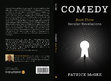
Resource Publications, imprint of Wipf and Stock, 2024
“This third volume powerfully and beautifully concludes Patrick McGee’s profound COMEDY confirmi... more “This third volume powerfully and beautifully concludes Patrick McGee’s profound COMEDY confirming that this comprehensively erudite and authentically accessible text is a definitive epic for our time and all time. McGee has skillfully and fluently mastered and adapted Dante's and Blake's epic perspectives to our contemporary world by placing them in structural and conceptual dialogue with one another and also with contemporary critical theory and popular culture. This deeply thoughtful and richly insightful conversation of past with present gives us a new ancredible vision of hope for the human future.”
-LAURA HAIGWOOD, professor emerita of English, Saint Mary's Colleg
Inspired by Dante and William Blake, SECULAR REVELATIONS, is the third and final book of the long poem COMEDY. Still in the form of a waking dream, this volume is a meditation on paradise, not as a transcendent place but as an expression of human experience and desire. It consists of poetic dialogues, some with the spirits of well-known artists and philosophers (Richard Wright, John Lennon, Norman O. Brown, Michael Cimino, Michel Foucault, Jacques Derrida, and Marlon Brando), others with more personal contacts. In an autobiographical mode, this book is a journey through the places, mostly real, in which the author underwent intellectual transformations. Critical motifs in this book are references and allusions to cinema (as in Book 2) and to popular music from the blues to rock-and-roll. There are some satirical and dystopian visions of the future, but the goal of the poem is the affirmation of the power of the human multitude to continue a permanent struggle against that which subverts infinite truth procedures, such as freedom, justice, and democracy. It presupposes that every human mind incorporates the living and the dead in one immeasurable mental process."
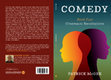
Resource Publication, imprint of Wipf & Stock, 2022
“COMEDY, Book Two is a tour de force. I read his first volume in this three-part series and
was... more “COMEDY, Book Two is a tour de force. I read his first volume in this three-part series and
was blown away by its intellectual scope and power. I was skeptical that anyone could
build on that success and go even further with the next book. Patrick McGee did it again,
and I’m now a champion of these two vehicles for engaging with the most important,
slippery issues of our time.”
—ROBERT CON DAVIS-UNDIANO, University of Oklahoma
COMEDY is a philosophical poem in the form of waking dream, inspired by Dante and William Blake. In book two, CINEMATIC REVOLUTIONS, the narrator, having passed through a cinema screen at the end of book one, arrives in the middle of a World War I field of dying men. An indescribable human figure appears who warns that these cinematic images are not real but projections of the cinematic mind with its power of empathy. Assuming different shapes and identities, this generic being becomes the narrator’s guide. Through a series of dialogues and encounters, cinema and the visual culture it generates are identified with a cultural revolution—the nonviolent revolution—that surpasses the violent revolutions of the twentieth century. This view is articulated through encounters with Russian revolutionary Trotsky, twelve modernist writers and the philosopher Wittgenstein, Alfred Hitchcock, three dictators (Hitler, Stalin, Mao), a cinematic Jesus Christ, Holocaust historian Raul Hilberg, Martin Luther King, Malcolm X, and James Baldwin. Interspersed among these encounters are cinematic visions from directors like Eisenstein, Chaplin, and others. From Paris to Memphis, passing through Pasolini’s black and white desert in GOSPEL ACCORDING TO SAINT MATTHEW, descending into the dark underworld of Fritz Lang’s Metropolis, rising into a Hollywood heaven of the forties, and standing on top of the Empire State Building with King Kong, cinematic images channel revolutionary desires and the necessity of nonviolence.
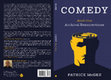
Resource Publications, imprint of Wipf & Stock, 2020
“McGee’s COMEDY takes Dante as a model, but the first book is an inferno only insofar as fire is ... more “McGee’s COMEDY takes Dante as a model, but the first book is an inferno only insofar as fire is like flowing water, which in turn is like thought itself: mixing, altering, and consuming as it goes. Behind it is an idea that also occurs in McGee’s critical works: that the worlds we exist in are woven through streams of thought that change and flow. Among this flow are currents that express a growing understanding of how things might be.”
— Anthony Uhlmann, literary critic and novelist writes:
COMEDY is a philosophical poem for the twenty-first century inspired by Dante’s COMMEDIA . It can be read as an ironic dream or fantasy that addresses the democratic idea. Book One, ARCHIVAL RESURRECTIONS, explores the transindividual nature of human thought, which autonomously expands while it passes through different minds in historical time. On a walk in Seattle, the Narrator encounters his dead teacher, who becomes his guide through a world inside his own head where he encounters people from his personal past and past philosophers, poets, and statesmen, including Dante, Christine de Pizan, Spinoza, William Blake, Jefferson, Hamilton, Sally Hemings, Frederick Douglass, Lincoln, Marx, Oscar Wilde, James Joyce, and others. Part of the poem takes place in a library in the shape of an inverted cone, the antithesis of Dante’s purgatory. Later, under the assumption that imagination is topological or plastic, there are visitations to Blake’s cottage in Felpham, Lincoln’s White House, Marx’s London, and Wilde’s and Joyce’s Dublin. Joyce’s Volta cinema is the gateway to Book Two, entitled CINEMATIC REVOLUTIONS, which will envision the twentieth century through its signature aesthetic form. Book Three, as yet untitled, will explore lived cityscapes as forms of life that gestate in themselves different possibilities for the future.
Books by Patrick McGee
Bloomsbury Academic, 2016
POLITICAL MONSTERS AND DEMOCRATIC IMAGINATION is an archaeology of the democratic imagination. Th... more POLITICAL MONSTERS AND DEMOCRATIC IMAGINATION is an archaeology of the democratic imagination. The premise of the project is that critical imagination has produced political monsters—in this case, Spinoza, Blake, Hugo, and Joyce—who challenge dominant social hierarchies and the forms of common sense through which they legitimate themselves. It offers detailed analysis of Baruch Spinoza’s democratic ontology and the concrete elaboration of that thought in three significant literary works from different historical periods. Recent scholarship on Spinoza and the ontologies of immanence associated with Alain Badiou and Antonio Negri clarify the significance of his work for any understanding of democratic and social equality.
This work, originally intended to be part of a series, constitutes the philosophical background to my poetic work, COMEDY.
Palgrave Macmillan 2012, Dec 15, 2011
In his latest book, Patrick McGee argues for the political and social significance of mass cultur... more In his latest book, Patrick McGee argues for the political and social significance of mass culture through the interpretation of four recent big-budget movies: Titanic, Gangs of New York, Australia, and Inglourious Basterds. Through philosophical and historical contextualization, he reveals the logic of what appears on the screen, a logic that shows how these films both represent and distort the historical record in order to articulate a truth that challenges conventional history as a discipline. Counterdisciplinary in its method, this exciting work asserts that no movie can ever be reduced to the absolutely authentic or the absolutely inauthentic.
Palgrave Macmillan, Mar 31, 2009
Challenging contemporary academic and intellectual culture, Patrick McGee writes experimentally a... more Challenging contemporary academic and intellectual culture, Patrick McGee writes experimentally about a series of thinkers who ruptured linguistic and social hierarchies: Marx, Nietzsche, Wilde, Lawrence, Gramsci, Wittgenstein, Bourdieu, Derrida, and Badiou. His method combines analysis, memoir, and polemic and is aimed particularly at students and teachers in the field of cultural studies. Influenced by Alain Badiou's “Logiques des mondes,” McGee uses his personal relation to theory and its institutions, not excluding his own “ressentiment,” to explore how thought enters a "common" existence as an event that can transform the individual life by transforming a world.
![Research paper thumbnail of From Shane to Kill Bill: Rethinking the Western
[EPUB or EPUB converted to PDF]](https://attachments.academia-assets.com/116838963/thumbnails/1.jpg)
Blackwell 2006, Apr 28, 2007
Original and compelling, From Shane to Kill Bill rethinks what American Western film has to offer... more Original and compelling, From Shane to Kill Bill rethinks what American Western film has to offer us as a genre. Westerns have succeeded in dramatizing the individual, defining the frontier myth, and promoting the limits of masculinity. In tracing the development of the Western from 1939 to the present, this entertaining book demonstrates that the genre is also a successful vehicle for articulating class resentments and the social contradictions in American culture. Offering sensitive readings that extend and deepen our understanding of the American West – from Shane, Stagecoach, and The Searchers to Heaven’s Gate, Unforgiven, and Kill Bill – this book discusses the Western in new and insightful ways. McGee appreciates the limits of this film genre, but also articulates its positive political value as an expression of social desires typically unspoken in American public discourse. Informative and compelling, this book suggests new understandings of this much-discussed genre.
University Press of Florida, Mar 26, 2001
Offering a critique of the class politics of contemporary Joyce studies, McGee insists that Joyce... more Offering a critique of the class politics of contemporary Joyce studies, McGee insists that Joyce’s later work be understood in the context of the general political economy, or conditions of production, that underlies both Joyce’s career and his critical reputation. He relates debates over pedagogy and the critical editions of Joyce’s works to his situation as a colonial and postcolonial subject and as a critic of the social, economic, and ethical values of capitalism. In his groundbreaking view of Joyce’s politics, McGee offers a new way to understand Joyce’s attitude toward violence and social change and his response to the Irish revolution and civil war. A final long essay lays out the implicit theory of social and cultural revolution in the Wake. While especially valuable to scholars of modern literature and critical theory, the work also will be important to readers in a range of fields, including politics, education, psychoanalysis, feminist and gender theory, ethics, and postcolonial theory.
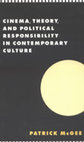
Cambridge UP, 1997
This book explores the political significance of aesthetic analysis in the context of cultural st... more This book explores the political significance of aesthetic analysis in the context of cultural studies. It applies the theories of Adorno, Derrida, and Lacan to film studies, and asks how political responsibility can be reconciled with the concept of the university as a democratic institution. Art and the university, Patrick McGee claims, share a common feature: they are usually regarded as autonomous realms that resist the determination of economic and political interests, while they still play a crucial role in ethical and political discourse. Through detailed reference to Neil Jordan's The Crying Game, McGee shows how film can be both a product of the culture industry and a critique of it. He goes on to analyze the function of the university in producing interpretations of political art-forms and in determining the limits of critical discussion. McGee links Adorno with popular culture and film studies to provide new ways of thinking through the claims of political criticism. He reconfigures Derrida's theory of undecidability, which has been criticized by Habermas and others as politically irresponsible, to address some of the most crucial debates on freedom and the ethics of intellectual work in social institutions like the university.
St. Martin’s, Apr 15, 1997
In his analysis of Ishmael Reed's fiction from the perspective of gender and race theory, Patrick... more In his analysis of Ishmael Reed's fiction from the perspective of gender and race theory, Patrick McGee makes a case for the relevance of such fiction to the understanding of contemporary American and Black diasporic cultures. Taking into account Reed's feminist and political critics, McGee argues that Reed's work must be read as a critique of racial ideology. Beginning with questions of critical location and Reed's special understanding of diasporic cultural forms like vodun, the book goes on to examine Reed's paradoxical fictional world as a response - though not a resolution - to the contradictions of postmodern and postcolonial history.
Cornell University Press, Aug 1, 1992
In this provocative and illuminating book, Patrick McGee looks at the ways in which certain texts... more In this provocative and illuminating book, Patrick McGee looks at the ways in which certain texts resist the dominant cultural assumptions that condition their writing and reception. Challenging received notions of aesthetic and social value, he offers readings of modernist, postmodernist, and postcolonial works which suggest forms of relationship disruptive of social systems and institutional hierarchies.
University of Nebraska Press, Apr 1, 1988
Patrick McGee uses the Lacanian model of the Unconscious to show how Ulysses baffles and defeats ... more Patrick McGee uses the Lacanian model of the Unconscious to show how Ulysses baffles and defeats certain axioms of traditional literary criticism, such as the assumption that the meaning of an author's fiction can be reduced to his conscious beliefs and intentions. Described by Shari Benstock as "the first feminist reading of Ulysses," Paperspace goes further than any other book to date [1988] in the application of postmodern critical theory to a close reading of the novel.
Interviews by Patrick McGee
Bloomsday in Baton Rouge 2007
LPB, 2007
The PBS station in Baton Rouge covered the Bloomsday celebrations of the the local Irish Club. It... more The PBS station in Baton Rouge covered the Bloomsday celebrations of the the local Irish Club. It included an interview with me. You can find it at this link: https://1drv.ms/v/s!Ampxx0_3RB-3h6NrE7QEdwnSy9V0RA.
My First Interview by Gerry Fialka 2022
MESS 80, 2022
I was interviewed on Youtube by Gerry Fialka. Our conversation covers a range of topics determine... more I was interviewed on Youtube by Gerry Fialka. Our conversation covers a range of topics determined his set of interesting, sometimes unusual questions. The interview is a little over 2 hours. Gerry is an an experimental film maker in L.A. who also does online interviews. He has published a book of interviews with the title, STRANGE QUESTIONS: EXPERIMENTAL FILM AS CONVERSATION.
My Second Interview by Gerry Fialka 2022
Laughtears #17, 2022
The topic of this interview is THE SEARCH FOR IDENTITY IN CINEMA, but the conversation is more fa... more The topic of this interview is THE SEARCH FOR IDENTITY IN CINEMA, but the conversation is more far-ranging than the topic suggests. The interview lasts about 2 hours. Gerry is an an experimental film maker in L.A. who also does online interviews. He has published a book of interviews with the title, STRANGE QUESTIONS: EXPERIMENTAL FILM AS CONVERSATION.
Blog Essays by Patrick McGee
Wordpress Blog, 2025
Contents
Introduction
1. Class Struggle and the Multitude
2. Nonviolent Revolution and the Val... more Contents
Introduction
1. Class Struggle and the Multitude
2. Nonviolent Revolution and the Value of Life
3. Religion and the Soul of Politics
4. What Is to Be Done?
wcpseattle.wordpress.com, 2020
Videos and Blog by Patrick McGee
Working Class No Account Productions
Click on this link https://wcpseattle.wordpress.com/ to go to my blog and the collection of my vi... more Click on this link https://wcpseattle.wordpress.com/ to go to my blog and the collection of my videos. These are not professional videos but playful experiments in homemade video production. WCP is just me and my laptop. So far I have created links to only 13 of 21 videos I have made.
Selected Articles by Patrick McGee
EUROPEAN JOYCE STUDIES 21, 2011
In JOYCE, BENJAMIN AND MAGICAL URBANISM, ed. Marizia Boscagli and Enda Duffy. The article explore... more In JOYCE, BENJAMIN AND MAGICAL URBANISM, ed. Marizia Boscagli and Enda Duffy. The article explores Walter Benjamin's concept of the "flaneur" in relation to Joyce's FINNEGANS WAKE and Charlie Chaplin's CITY LIGHTS.



Uploads
New Publications by Patrick McGee
-LAURA HAIGWOOD, professor emerita of English, Saint Mary's Colleg
Inspired by Dante and William Blake, SECULAR REVELATIONS, is the third and final book of the long poem COMEDY. Still in the form of a waking dream, this volume is a meditation on paradise, not as a transcendent place but as an expression of human experience and desire. It consists of poetic dialogues, some with the spirits of well-known artists and philosophers (Richard Wright, John Lennon, Norman O. Brown, Michael Cimino, Michel Foucault, Jacques Derrida, and Marlon Brando), others with more personal contacts. In an autobiographical mode, this book is a journey through the places, mostly real, in which the author underwent intellectual transformations. Critical motifs in this book are references and allusions to cinema (as in Book 2) and to popular music from the blues to rock-and-roll. There are some satirical and dystopian visions of the future, but the goal of the poem is the affirmation of the power of the human multitude to continue a permanent struggle against that which subverts infinite truth procedures, such as freedom, justice, and democracy. It presupposes that every human mind incorporates the living and the dead in one immeasurable mental process."
was blown away by its intellectual scope and power. I was skeptical that anyone could
build on that success and go even further with the next book. Patrick McGee did it again,
and I’m now a champion of these two vehicles for engaging with the most important,
slippery issues of our time.”
—ROBERT CON DAVIS-UNDIANO, University of Oklahoma
COMEDY is a philosophical poem in the form of waking dream, inspired by Dante and William Blake. In book two, CINEMATIC REVOLUTIONS, the narrator, having passed through a cinema screen at the end of book one, arrives in the middle of a World War I field of dying men. An indescribable human figure appears who warns that these cinematic images are not real but projections of the cinematic mind with its power of empathy. Assuming different shapes and identities, this generic being becomes the narrator’s guide. Through a series of dialogues and encounters, cinema and the visual culture it generates are identified with a cultural revolution—the nonviolent revolution—that surpasses the violent revolutions of the twentieth century. This view is articulated through encounters with Russian revolutionary Trotsky, twelve modernist writers and the philosopher Wittgenstein, Alfred Hitchcock, three dictators (Hitler, Stalin, Mao), a cinematic Jesus Christ, Holocaust historian Raul Hilberg, Martin Luther King, Malcolm X, and James Baldwin. Interspersed among these encounters are cinematic visions from directors like Eisenstein, Chaplin, and others. From Paris to Memphis, passing through Pasolini’s black and white desert in GOSPEL ACCORDING TO SAINT MATTHEW, descending into the dark underworld of Fritz Lang’s Metropolis, rising into a Hollywood heaven of the forties, and standing on top of the Empire State Building with King Kong, cinematic images channel revolutionary desires and the necessity of nonviolence.
— Anthony Uhlmann, literary critic and novelist writes:
COMEDY is a philosophical poem for the twenty-first century inspired by Dante’s COMMEDIA . It can be read as an ironic dream or fantasy that addresses the democratic idea. Book One, ARCHIVAL RESURRECTIONS, explores the transindividual nature of human thought, which autonomously expands while it passes through different minds in historical time. On a walk in Seattle, the Narrator encounters his dead teacher, who becomes his guide through a world inside his own head where he encounters people from his personal past and past philosophers, poets, and statesmen, including Dante, Christine de Pizan, Spinoza, William Blake, Jefferson, Hamilton, Sally Hemings, Frederick Douglass, Lincoln, Marx, Oscar Wilde, James Joyce, and others. Part of the poem takes place in a library in the shape of an inverted cone, the antithesis of Dante’s purgatory. Later, under the assumption that imagination is topological or plastic, there are visitations to Blake’s cottage in Felpham, Lincoln’s White House, Marx’s London, and Wilde’s and Joyce’s Dublin. Joyce’s Volta cinema is the gateway to Book Two, entitled CINEMATIC REVOLUTIONS, which will envision the twentieth century through its signature aesthetic form. Book Three, as yet untitled, will explore lived cityscapes as forms of life that gestate in themselves different possibilities for the future.
Books by Patrick McGee
This work, originally intended to be part of a series, constitutes the philosophical background to my poetic work, COMEDY.
Interviews by Patrick McGee
Blog Essays by Patrick McGee
Introduction
1. Class Struggle and the Multitude
2. Nonviolent Revolution and the Value of Life
3. Religion and the Soul of Politics
4. What Is to Be Done?
Videos and Blog by Patrick McGee
Selected Articles by Patrick McGee