Pandemics Politics: Class, Gender and Stigmatized Labor
in Bangladesh’s Garment Industry
by Dina M. Siddiqi (New York University) and
Hasan Ashraf (Jahangirnagar University)
Abstract
The effects of Covid-19 dramatized yet again the fragilities and asymmetries built into global
supply chains and the marginal structural location of Bangladesh – the world’s second
largest clothing manufacturer – within the apparel supply chain. It was a reminder that the
distribution of risk is highly asymmetric and falls disproportionately on gendered, classed,
and raced laboring bodies at the bottom of the chain, usually located in the Global South.
Against this backdrop, this article asks why and how pandemic discourses of stigmatization
and othering largely congealed around the bodies of garment factory workers in Bangladesh.
At the heart of the paper is the question of how ostensibly essential labour is made expendable
through governmental techniques and discursive practices that draw on gendered and
classed tropes with strong colonial precedents. We argue that Bangladeshi garment workers’
shadow inclusion into or evacuation from this elastic and troubling category hinges on a
complex assemblage of market rationalities, global supply-chain contingencies and national
governmental determinations.
Keywords: Bangladesh, Pandemic, Garment Industry, Supply Chains
When the Bangladesh Inland Water Transporta- in the Covid-19 period and the apparent indiffer-
tion Authority (BIWTA) unexpectedly announced ence of the state to workers’ well-being captured
the resumption of ferry services on 31 July 2021, the imagination of social media and the public
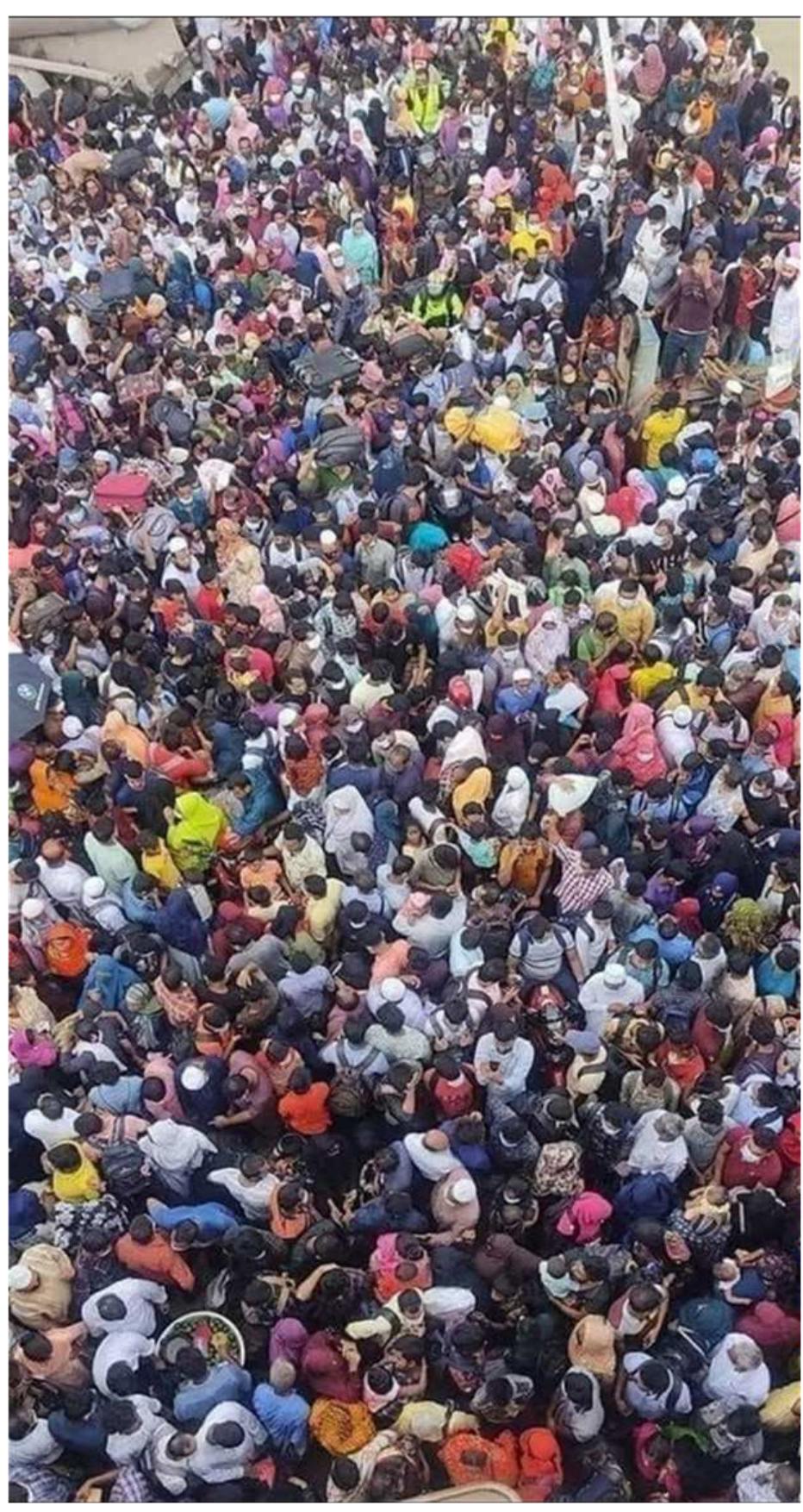
migrant workers from across the country scram- alike. Viral images of a seemingly endless flow of
bled to return to Dhaka. The majority were gar- bodies crammed cheek to jowl on ferries and in
ment factory workers responding to news that rickshaws or on foot generated intense anxiety
the Bangladesh Garment Manufacturers and and discomfort among segments of the capital’s
Employers’ Association (BGMEA) had secured middle- and-upper class inhabitants, fearful of
government permission to reopen its factories the further spread of Covid-19 in their otherwise
immediately. Hundreds of thousands of men sheltered environments.
and women poured into ferry terminals and bus What can we learn about racialization and
stops (see Figure 1). At one point, all major entry boundary-making projects in times of crisis from
points into the capital city were choked and inac- the stigma that came to be attached to these
cessible. Evidently the 24-hour notice, prevail- laboring bodies during the pandemic? In what
ing fears of the Delta variant of Covid-19 and ways are newly emergent forms of stigma con-
memories of being stigmatized for ‘irresponsible’ tinuous with or distinct from the social stigma
behaviour the previous year (in disturbingly simi- to which garment workers in South Asia are
lar circumstances) were not enough to deter the subject in ‘normal’ times (Hewamanne 2008;
workers. The latter’s obvious desperation, cor- Kabeer 2002; Lynch 2007; Siddiqi 2009)? How
responding scenes of ‘multitudes’ on the move are such modes of Othering connected to the
NEW DIVERSITIES Early View, 2022
ISSN-Print 2199-8108 ▪ ISSN-Internet 2199-8116
NEW DIVERSITIES Early View, 2022 Dina M. Siddiqi and Hasan Ashraf
conditions, 2020 saw an alarming increase in
the (re)production of stigmatized bodies and
communities along well-worn racial, ethnic
and religious fissures (Carswell, de Neve and
Yuvaraj 2020; Ruwanpura 2022; Siddiqi 2022).
Like the pandemic itself, these developments
have been global. Targeted as dangerous and
irresponsible vectors of disease, ‘Asians’ in the
United States, or Muslims and others (those
who ‘look Chinese’) in India, for instance, were
vilified in dominant nationalist imaginaries and
frequently targeted with violence (Ahmad 2020).
At the same time, mobile transnational citizens
found themselves framed as racialized threats
(Gill 2021). Indeed, the pandemic has produced
a fertile environment for redrawing social, politi-
cal and spatial boundaries of insider and outsider,
normal and pathological, familiar and foreign
(Ashraf and Mol 2020). Fear of the contagion’s
border-crossing propensities rendered suspect
otherwise unmarked bodies, making them dan-
gerous ‘enemies within’, as happened with expa-
triate populations (probashi) who were forced to
return to Bangladesh from viral hotspots, such as
Italy. As one scholar notes, the purported ‘mis-
conduct’ of the probashi, rather than the lack of
preparedness of the state, initially dominated
Figure 1. Garment workers on a ferry crossing the images and imaginations of the coronavirus out-
River Padma on Saturday, 1 August 2021. Source:
Anonymous, on Facebook break, in large part due to media depictions of
‘ignorant, selfish, and unruly returnees’ unwilling
or incapable of following public health protocols
construction of garment workers as essential at (Ahasan 2020).
one moment and expendable at others? Finally, The pandemic also threw into sharp relief fun-
what does the ensuing distribution of ‘blame’ damental paradoxes embedded in the category
conceal, and what does it magnify? In what fol- of the essential worker. The very people deemed
lows, these questions are addressed through a essential – so called frontline workers – also
transnational, multi-scalar analytic that reveals appeared to be the most dispensable and most
the global dimensions of what appears to be a vulnerable to the disease. There is now a sub-
local or national crisis. stantial body of scholarship on migrant labour,
The Covid-19 pandemic serves as a brutal essential workers and the politics of expend-
reminder of the many ways ‘crises’ or ‘emergen- ability and othering. Most of this work focuses
cies’ play themselves out along existing mate- on international migrants in Europe and North
rial and ideological fault lines, even as the latter America. This paper moves the focus to the
are reconfigured and structurally re-inscribed Global South, specifically to Bangladesh and the
(Bonilla-Silva 2015). Corresponding to the fear, internal migrants who constitute the bulk of the
panic and uncertainty generated by pandemic labour force in the garment export industry.
2
Pandemics Politics NEW DIVERSITIES Early View, 2022
The effects of Covid-19 dramatized yet again supply chains, contributing to the racialization
the fragilities and asymmetries built into global of Bangladeshi garment workers as dispensable
supply chains and the marginal structural loca- labour during the pandemic.
tion of Bangladesh – the world’s second larg- What logics are at work in the making of the
est clothing manufacturer – within the apparel garment industry as essential, as a zone of excep-
supply chain (Saxena 2017; Siddiqi 2020; Tighe tion, such that exclusionary state policies and
2016). It was a reminder that the distribution of the prioritization of the ‘needs’ of the garment
risk is highly asymmetric and falls disproportion- factory owners over the welfare of their work-
ately on gendered, classed and raced laboring ers appeared to be necessary, indeed essential,
bodies at the bottom of the chain, usually located in an emergency? How do we account for what
in the Global South (Mezzadri 2017; Miller 2013; appeared to be the state’s apparent refusal to
Prentice and de Neve 2017; Wikramasinge and manage or regulate this particular population?
Coe 2021). The impact of the cancellation and We approach these questions using a trans-
non-payment of existing orders (around 90%) national feminist lens, taking into account the
was immediate and devastating. In a cascade mediation of nation, race, caste/class, imperial-
effect, hundreds of factories closed down more ism and geopolitics in the production of differ-
or less overnight, leaving over a million out of ence (Abu-Lughod 2013; Alexander and Mohanty
a four million strong workforce jobless or fur- 1996; Grewal and Kaplan 1994; Tambe and Thayer
loughed. The material consequences for the 2021). At the same time, we critically foreground
national economy and for workers in this critical the relatively neglected category of class in re-
industry, which accounts for around 80 percent animating projects of Othering and racialization
of Bangladesh’s total exports, have been well- in the field of Bangladesh Studies, especially in
documented (see, for instance, Anner 2020; Ali relation to an otherwise excellent body of schol-
et al. 2021, Siddiqi 2020). The government and arship on the garment industry that takes gender
factory owners have been rightly criticized for as its primary organizing category.
policy decisions that prioritized safeguarding the As we show, state ‘indifference,’ public health-
industry over the welfare of its workers. related governance techniques, corporate rheto-
Little attention has been paid to the ways in ric and media discourses effectively re-distrib-
which pandemic discourses of stigmatization and uted blame for the virus on to garment workers
othering congealed in and through the bodies of (and to a lesser degree on to foreign returnees,
garment workers, or the relationship between that is, on migrant labor also of ‘lower class’
Bangladesh’s Covid-19 containment policies standing). The redistribution of values attached
and its marginal structural position in the global to gendered labouring bodies relied on long-
apparel supply chain. Represented as productive, standing middle-class anxieties that separate
desirable citizens in non-emergency times, gar- and hierarchize manual from intellectual labour.
ment workers found themselves deeply stigma- Pandemic discourses draw on and amplify an
tized and made expendable, even as the garment enduring grid of valuation in which working-class
industry and the workers came to be hailed as populations are understood to be not quite civi-
essential. At the heart of the paper is the ques- lized or developed, always on the verge of irra-
tion of how ostensibly essential labor is made tionality or unruliness, and who must be disci-
expendable through governmental techniques plined accordingly. In this respect, older colonial
and discursive practices that draw on gendered tropes are joined to newer classed anxieties and
and classed tropes with strong colonial prec- developmentalism. These discourses are neither
edents. These contextually and historically spe- timeless nor stable; informed by colonial modes
cific techniques and practices intersect with the of exclusion and vilification, they are critically
global racial hierarchies embedded in apparel reconfigured by the neoliberal logic that struc-
3
NEW DIVERSITIES Early View, 2022 Dina M. Siddiqi and Hasan Ashraf
tures power along the global apparel supply modern phenomenon and that the production
chain. of capital takes place in correspondence with the
The pandemic has dramatically reconfigured production of difference (Kim 2013; Manjapra
ethnographic research methodologies. This 2020; Prentice 2015). Rooted in the conditions of
paper is based on multiple online and offline imperialist expansion, (settler) colonialism and
research rather than classic ethnographic field- slavery, racialization has always been a deeply
work, informed by the dictates of digital eth- gendered process that polices female labour and
nography.1 Through social media platforms such sexuality (Morgan 2021; Virdee 2018: 12-13).
as Facebook and Tiktok, we were able to track In light of the above, how might we understand
workers’ responses to shifting policy direc- the production of racialized difference in relation
tives, as well as to “misinformation” emanating to the operations of transnational capital today,
from management and mainstream media. This specifically those of apparel supply chains? With
entailed following individual status updates at exceptions, neither the vast scholarship on glo-
times, and at other moments, a close reading of balization nor the equally prolific field of gender
debates on popular threads. We also collected and development addresses questions of race in
newspaper clips from major news outlets in any sustained manner. In the context of South
Bangladesh (and selected international media) Asia, at least, this absence could be attributed
for the last eighteen months and tracked cover- to the category of race fitting ‘uneasily’ into pre-
age on private television channels on Facebook. vailing notions of difference and hierarchy (Khan
It soon became clear that the latter reported 2019, 87; Shroff, 2020). However, as Mishal Khan
on incidences such as police brutality toward argues, ‘[c]apitalism has demonstrated remark-
protesting workers that were generally ignored able flexibility historically, exploiting each new
or intentionally avoided by more corporatized frontier’s unique logics of exclusion and exploi-
mainstream media outlets. In the early months tation, where and how it finds them (ibid.).’ It is
of the pandemic, we also spoke on zoom with these logics of exclusion that are of interest to
several labour leaders and workers. us.2
Various iterations of the civilized/uncivilized
Racialized Geographies of Supply Chain binary, produced through infrastructures of gov-
Capitalism erning, such as the law and the census, secured
Scholars who are attentive to questions of race colonial rule in British India. With formal decolo-
have long challenged the assumption of a colour- nization, these always gendered and racialized
blind capitalism, positing instead that ideologies civilizational distinctions between those who
of racial difference have been co-constitutive were morally and physically fit to rule and those
with global capitalism (Ralph and Singhal 2019; who must be governed found a robust afterlife,
Robinson 1983; Virdee 2018). Put differently, the mapping on to the binary of developed/under-
maintenance of a capitalist social order hinges on developed. Denise Ferreira da Silva remarks that,
the production and negotiation of social differ-
ence, including racialized difference (Jenkins and 2 Feminist theorists have brought analytical atten-
LeRoy 2019). While individual authors diverge tion to bear on the ‘layered histories’ and ‘uneven
considerably in terms of theoretical orientation, geographies’ of capitalist expansion, disinvestment
and devaluation, shedding light on how connections
there is general agreement that racialization is a across space and time ‘are forged through processes
of disjuncture and disruption that selectively trans-
1 https://iriss.stanford.edu/doing-ethnography- form or disarticulate existing social relations and
remotely; https://anthrodendum.org/2020/06/12/ forms of production (Bair and Werner 2011: 997, em-
home-work-homework-and-fieldwork/ https://an- phasis added).’ A disarticulation perspective offers an
throdendum.org/2020/05/01/introduction-field- important entry point into interrogating the logics of
work-in-a-time-of-coronavirus-new-series/. exclusion and inclusion in any specific context.
4
Pandemics Politics NEW DIVERSITIES Early View, 2022
by the time the global development apparatus for super-exploitation as well as for expend-
came into its own in the 1940s, notions of racial ability (Prentice 2015; Salzinger 2003; Werner
and cultural difference developed by anthropolo- 2014; Wright 2006). Race/racism in overt forms
gists were part of sociological and popular com- may be absent or explicitly frowned upon, but
mon sense (da Silva 2014: 41). Race, understood racial and class-based understandings of labour
as racial or cultural difference, allowed for the re- and geography regulate value along the supply
inscription of older civilizational binaries. Even as chain.3 They allow for the cheapening of labour
race went ‘underground,’ it was inscribed con- and determine which lives are worthy and which
ceptually into discourses of development, implic- dispensable at any point in time (Datta 2021;
itly reproducing gendered spatial and social hier- Salzinger 2003; Wright 2006; Werner 2015).
archies (Siddiqi 2021; Wilson 2011: 316; see also It is against this backdrop that migrants from the
White 2002). Global South have been so easily racialized as
Kalpana Wilson (2011) contends that racial- both essential and dispensable labour during the
ized power relations are inherent in the world of pandemic.
development, and that contemporary neoliberal The stigmatization and othering of Bangladeshi
constructions of third-world women as espe- garment workers during the pandemic results
cially efficient naturalize and racialize existing from the intersection of multiple processes of
gendered ideologies (see also Mohanty 1984; racialization at different scales, and folded into
Roy 2010). Indeed, in dominant development contextually specific logics of inclusion and
narratives third-world women are assumed to exploitation. Indigenous concepts of class/caste,
have an inherent gendered propensity for hard colonial and Orientalist tropes of submissive,
work and altruism (Wilson ibid.: 325). With the oppressed Muslim women and international
rise of ‘global factories’ in Asia, the Caribbean racial hierarchies of third-world backwardness
and elsewhere from the 1980s onwards, the intersect in complex and contingent ways with
racialization of third-world women workers drew gendered nationalist ideologies and contested
on earlier colonial and orientalist distinctions discourses of sexuality.
and tropes (Ong 1987; Mohanty 2003). Here the A pre-pandemic headline from the Los Angeles
ideal female factory worker, located in ex- and Times, ‘Bangladesh Women Find Liberty in Hard
postcolonial spaces, was constructed as naturally Work’, captures perfectly the racialized assump-
submissive, repressed, dependent and docile, as tions and logics invoked on the scale of the global
numerous feminist scholars have pointed out (Weiss 2014). The subheading reads: The gar-
over the last three decades (Pearson and Elson ment factory workers toil for paltry wages. But
1981; Mills 2003; Ruwanpura 2011). Corpora- such jobs have also afforded Bangladeshi girls a
tions and policy-makers alike promoted women measure of independence in a traditional Muslim
– and more recently girls – in the Global South as society.’ Even as they are infantilized (in the slide
especially suited to assembly line work, endowed between girls and women), the presumption at
with nimble fingers, advanced hand-eye coordi- work is that ‘hard labour’ and ‘paltry wages’ are
nation and limitless patience for repetitive work
(Elson and Pearson 1981; Siddiqi 1996 and forth- 3 Context is crucial here. We do not suggest that all
coming). With some exceptions, the existing women workers everyhere are always considered to
be disposable. Goger et al. 2014 and Ruwanpara and
literature no longer explicitly articulates these Hughes 2015 offer counter examples to discourses of
issues in terms of the biologization or racializa- disposability in Sri Lanka and Pakistan respectively. In
tion of women workers on the assembly line this paper, our aim is to understand how and why in
the particular context of Bangladesh, where garment
(Bonacich et al. 2008). Yet the international racial
workers are often hailed as national heroes, construc-
hierarchies already in place and their associated tions of their subjectivities can so easily slide into ex-
tropes of dehumanization provide a justification pendability.
5
NEW DIVERSITIES Early View, 2022 Dina M. Siddiqi and Hasan Ashraf
justified by the supposed liberty factory work ‘The essential worker’, Andrew Lakoff (2020)
affords. Labour is literally cheapened and oth- writes, is a new form of social classification
erwise objectionable working conditions made ‘interacting in complex ways with existing forms
acceptable through the invocation of Bangladesh of inequality.’ Like so much else in our present,
as a ‘traditional Muslim society’. In this world the origins of the concept can be traced to Cold
view, Muslim women must be saved at any cost, War politics, in the idea of ‘essential critical infra-
including hard labour and paltry wages, condi- structure’ and techniques of classification aris-
tions that would be unacceptable in Euro-Amer- ing from the world of national security planning
ica. The racialized trope of Muslim societies as (ibid.). As such, the category is an elastic one,
especially backward, with little freedom for Mus- with considerable interpretive flexibility, expand-
lim women, is used to normalize violent practices ing or contracting in relation to shifting contexts
that would be deemed intolerable in other, more on an ad hoc basis. Since the Covid-19 pandemic,
‘civilized’ geographical spaces (Siddiqi 2009). anthropologists have paid particular attention
These racializing discourses intersect with to the work that the idea of essential worker
classed and sexualized Bengali tropes to further and related notions of sacrifice does. Drawing
cheapen labour and the value of those who labour on the situation in the United States in the first
in Bangladesh, where the gendered labouring few months of the pandemic, Brown and Pear-
body is the site of deeply ambivalent and contra- son (2020) argue that ‘essential’ had become a
dictory nationalist pride (Siddiqi 2009, 2020; Sen synonym for expendable, and that the sacrifice
2020). However else they are marked socially – of ‘essential workers’ had been normalized in
Hindu, Chakma, Muslim, or Bengali – the body the name of the nation and its economy. Oth-
of the Bangladeshi garment worker signifies a ers have shown that the willingness of some in
specific set of classed and sexualized nationalist the US to dehumanize the aging and openly call
anxieties. On the one hand, as key protagonists on them to be ‘sacrificed’ for the sake of future
in the story of Bangladesh’s economic and social generations does not necessarily resonate else-
development, the labour of these women’s bod- where (Sadruddin and Inhorn 2020). Acevido
ies represents and enacts neoliberal aspirations (2020) contends that the post-Covid-19 binary
to achieve women’s empowerment. On the between essential and non-essential labor in the
other hand, as sexed labouring bodies, these naming and regulation of work in the US is not
women are always already suspect, their visibil- so new. Protections and obligations have always
ity and mobility disruptive of urban middle- and been allocated based on the degree to which
upper-class sensibilities and socio-spatial hier- a particular job is considered essential. In her
archies. As a result, within the national space of view, what has shifted is the referent: essential
Bangladesh, female garment workers have long to whom? Rather than just the employer, ‘essen-
oscillated between being hailed as saviours of tial labor’ now refers to ‘tasks that are essential
the nation and denounced as sexually lax lower- to society’ (ibid., emphasis added). This means,
class others (Siddiqi 2003; see also Sara Shroff among other things, that an essential worker is
2020). During the pandemic, this basic duality in obliged to work under the riskiest of conditions,
meaning paved the way for garment workers to without recourse, such that involuntary labor
be hailed as ‘essential’ workers at one point in can then be cast as voluntary sacrifice. Acevido
time and deemed expendable at another.4 opens up urgent questions of what labour is truly
essential for whom, and we would add, who has
4 The feminist literature on expendability is very
much more nuanced that the binary analysis above
suggests (Goger, Dutta, Hughes and Ruwanpura). We text and its normative conceptions of who is and is
delve into this literature later in the paper. Here we not considered expendable at specific moments in
make a particular point about the Bangladeshi con- time.
6
Pandemics Politics NEW DIVERSITIES Early View, 2022
the authority or power to determine the lines From Disposable to Empowered but
between essential and inessential labor, or even Expendable?
what constitutes society. How might we think through the relationship
In a recent essay, Scauso et al. (2020) argue between ‘essential worker’ as a political category
that the spectre of colonialism has made a ‘spec- and the ostensible disposability of female labour
tacular (re)appearance’ during the present pan- in global garment production? In this regard,
demic (ibid.: 82). Colonial continuities can be Lamia Karim remarks that in Bangladesh the poor
seen not only in the myriad forms of inequality, in general are regarded as disposable bodies that
discrimination and violence exposed, but also will bear the burden of modernization and the
in the exclusionary responses of the state and costs of development (Karim 2014). By extension,
society (Bhaskaran, Datta and Naidu 2021; Car- the exploitation of bodies rendered disposable
swell and De Neve 2020). Such responses, they can be reframed as a necessary sacrifice for the
contend, mirror colonial vilification of natives, nation. In her classic text, Melissa Wright traces
characterized as ‘treacherous,’ ‘filthy’ and the making of myths of the third world woman’s
‘unsanitary,’ during the pandemics of the eigh- disposability under global capitalism through
teenth and nineteenth centuries. Further, they managerial discourses in particular (Wright
note that egregious and ongoing material injus- 2006). Building on Wright’s insights, feminist
tices are often hidden behind notions such as scholars have revised and nuanced the idea of
progress, even as ideal subjectivities (such as workers as expendable or disposable. Among
citizens) are constructed against racialized, gen- other things, scholars insist that the logic of dis-
dered and geographical others. Enduring colonial posability is not a necessary relationship; rather,
logics sutured to neoliberal forms of reason and it is ‘produced and reproduced through specific
valuation produce a framework in which ‘histori- historical and geographical contexts of social dif-
cal inequalities appear natural, necessary, or [a] ference’ (Goger 2013: 2642). Attention to speci-
temporary problem,’ that will be solved eventu- ficity has led to research that shows considerable
ally by ‘the magic of trickle-down benefits (ibid.: variation across national spaces in India, Paki-
84).’ stan and Sri Lanka (Goger 2013; Mezzadri 2017;
A similar logic is at work in Bangladesh, where Ruwanpura and Hughes 2016). Studies of the Sri
recourse to a ‘magical’ narrative of progress and Lankan garment industry where, like Bangladesh,
economic development renders the garment women constitute the bulk of the labor force
industry essential (Murshid 2020). Though it was show that disposability discourses take the form
not explicitly defined as such, garment work was of moral panics, of the stigmatization of garment
essential work in pre-Covid-19 Bangladesh (see workers as a threat to national morality (Goger
below for details). The garment sector looms 2013; Hewamanne 2008; Lynch 2007). At the
large in the middle-class imaginary; as the sec- same time, feminist scholars have drawn atten-
ond largest exporter of clothing in the world, tion to the contradictory effects of disposal logic.
next only to China, Bangladesh’s garment indus- For instance, in the face of labor shortages, man-
try is a source of considerable nationalist pride agers in Sri Lanka routinely mobilize discourses
(Siddiqi 2022; Siddiqi 2020). The ‘health’ of the of empowerment, ‘to disarticulate the myth of
industry is critical for any government in power, disposability’ at least for that moment in time
since it brings in the bulk of foreign revenue. (Goger 2013: 2641; Ruwanpura 2021).
Globally, the three million young women who In Bangladesh too, disposability myths are
labour in the garment factories literally embody deployed through managerial discourses and
the success of neoliberal capitalist development practices, rearticulating worker subjectivities in
and associated empowerment discourses. the process. More specifically, the language of
sexual morality and the language of class con-
7
NEW DIVERSITIES Early View, 2022 Dina M. Siddiqi and Hasan Ashraf
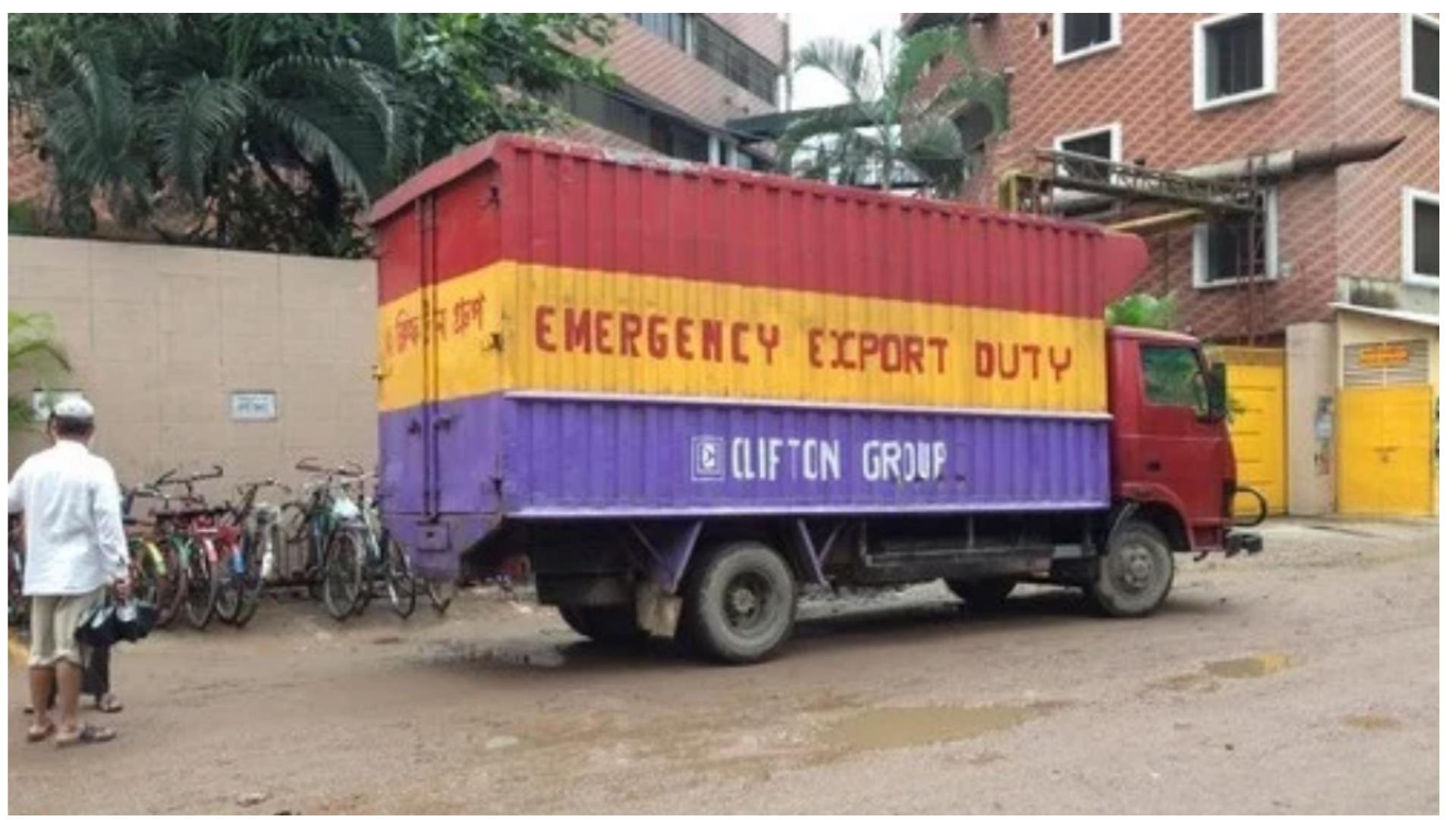
verge to produce stigma around the body of the The streets of Chittagong, Bangladesh, are over-
female garment worker (Siddiqi 1996). At the crowded with cars, rickshaws, and big trucks. Traf-
fic can be a serious problem for clothing manufac-
same time, at the level of the government or
turers that need to get their shipments to the port
the BGMEA (the official body representing the on time, so the big garment factories here use spe-
industry), the logic of disposability is replaced by cial vehicles to cut through the traffic. The mark-
imperial and liberal feminist myths of empower- ing ‘Emergency Export Duty’ gives these trucks the
ment, especially of Muslim women (see Siddiqi same rights as ambulances: They don‘t have to
2021). Empowerment and expendability do not follow any traffic laws and they can use alternate
routes when roads are closed. The timeliness of a
contradict each other in Bangladesh. Here it is
T-shirt order is this city‘s livelihood. 5
worth taking into consideration another binary,
that between replaceable and irreplaceable. The The quote above nicely captures the centrality of
‘elastic supply of labor’ means that individual the temporal – the heightened urgency in which
workers are interchangeable, as easily discarded all steps of garment export production seem to
and replaced as the cheap clothing they manu- be wrapped. Indeed, time is a key structuring
facture. Yet, the industry itself is public-facing. element in garment workers’ experiences on
Routinely confronted with global and national and off the factory floor. Covid-19 or no Covid-
opprobrium, managers, factory owners and the 19, if a factory is open, workers are expected
state mobilize discourses of empowerment and to report for work at 8 am sharp. Late arrivals,
upliftment on the shop floor, as well as in politi- even by a few minutes, are recorded on a time-
cal and social discourse, even as their practices card, and three late arrivals can result in a one-
produce expendability. What appears to be dis- day wage cut. Time is a source of tremendous
tinctive about the logic and discourses of dis- anxiety for workers and a disciplinary mecha-
posability in the time of Covid-19 is that social nism for management. Indeed, it was the fear of
stigma attaches to both male and female labour- being late, and thus of lost wages or even of dis-
ing bodies. Inflected by the vocabulary of class missal, that prompted the mass exodus of work-
distinctions, the moral panic that ensues is mini- ers from their villages to Dhaka city on 1 August
mally gendered or sexualized. 2021, as described in the opening section of this
essay.
Making Garment Industry Essential The NPR story, authored in the months after
By what logic does an industry that exports cloth- the Rana Plaza collapse, takes for granted what
ing become essential, including under conditions constitutes emergency duty, and for whom. It
of crisis? What makes labour associated with the does not question why the system as such is
industry expendable? pressed into protecting and maximizing profits
Preconditions for positioning Bangladesh’s and minimizing losses for individual factory own-
garment industry in a zone of exception had been ers.6
in place long before the pandemic ‘played havoc’
with global garment supply chains. Observant
5 h t t p s : // w w w. n p r. o r g / s e c t i o n s / m o n e y /
citizens and visitors may have noticed a variety
2013/09/04/218890986/where-a-truck-full-of-t-
of trucks and microbuses speeding through the shirts-gets-the-same-privileges-as-an-ambulance,
streets of Dhaka, Chittagong and Narayanganj, emphasis added.
6 One feature of the asymmetrical distribution of
deftly weaving though the dense mixed traf-
risk and power along the supply chain is that brands
fic, with the phrase ‘On Emergency Export Duty’ hold suppliers fully liable for any disruption or delay in
boldly painted on their sides (see Figures 2 and shipment delivery. Late deliveries result in lower pay-
3). Here is how a 2013 story on National Public ments and risk cancellation of the entire order. Mini-
mizing traffic related delays is therefore imperative for
Radio in the US described the existence of these
individual owners, who must otherwise pay for much
‘emergency’ vehicles: steeper air shipment costs to make on time delivery.
8
Pandemics Politics NEW DIVERSITIES Early View, 2022
Figure 2 Source: https://www.npr.org/sections/money/2013/09/04/218890986/where-a-truck-full-of-t-shirts-
gets-the-same-privileges-as-an-ambulance
What renders the production of goods for fies and naturalizes historical and contemporary
export, and the private profits thereby earned, a conditions of inequality (Scauso 2020 et al.). In
performance of national duty? What is obscured literal terms, the health of the national economy
by the logic that citizens have a duty to make a and that of the living, breathing individual gar-
profit, for both self and nation? What narratives ment worker is never commensurate. Unlike the
are naturalized by the assumption that meeting clothes they produce, and no matter what the
private shipping deadlines constitutes an emer- shipping deadline, garment workers are never
gency of national scope, that private profits must entitled to emergency modes of transportation.
be protected for the sake of the nation, rather The folding of national interest into the fate
than squandered in time wasted on jam-packed of Bangladesh’s garment industry – the logic of
streets? Granting these vehicles the same rights emergency and national duty – allowed the Ban-
as ambulances clearly suggests that the health of gladeshi government and the powerful industrial
the nation, its lifeblood, is at stake in the timely body, the Bangladesh Garment Manufacturers
shipment of garments. By this logic, the health and Owners Association (BGMEA), to position
and wealth/pride of the nation and its citizens the industry as essential during the lockdown.
are inextricably linked with the health of the gar- By extension, those labouring in garment facto-
ment industry; saving the garment sector stands ries could be understood as essential workers,
in for serving and saving the economy. Here we even if the term was never used formally. The
see neoliberal modes of governance and reason irony is that to be classified as essential in the
at work. The duty of private citizens, i.e., gar- time of Covid-19 is a risk rather than a privilege.
ment workers, to profit for the nation hinges on Bangladeshi garment workers’ shadow inclu-
the promise of a trickle-down economic policy, sion into or evacuation from this elastic and trou-
of prosperity for all through unlimited economic bling category hinges on a complex assemblage
growth. It also creates a particular distribution of of market rationalities, global supply-chain con-
value in which making a profit at all costs takes tingencies and national governmental determi-
priority. This neoliberal criterion of value justi- nations. On the one hand, the rationality under-
9
NEW DIVERSITIES Early View, 2022 Dina M. Siddiqi and Hasan Ashraf
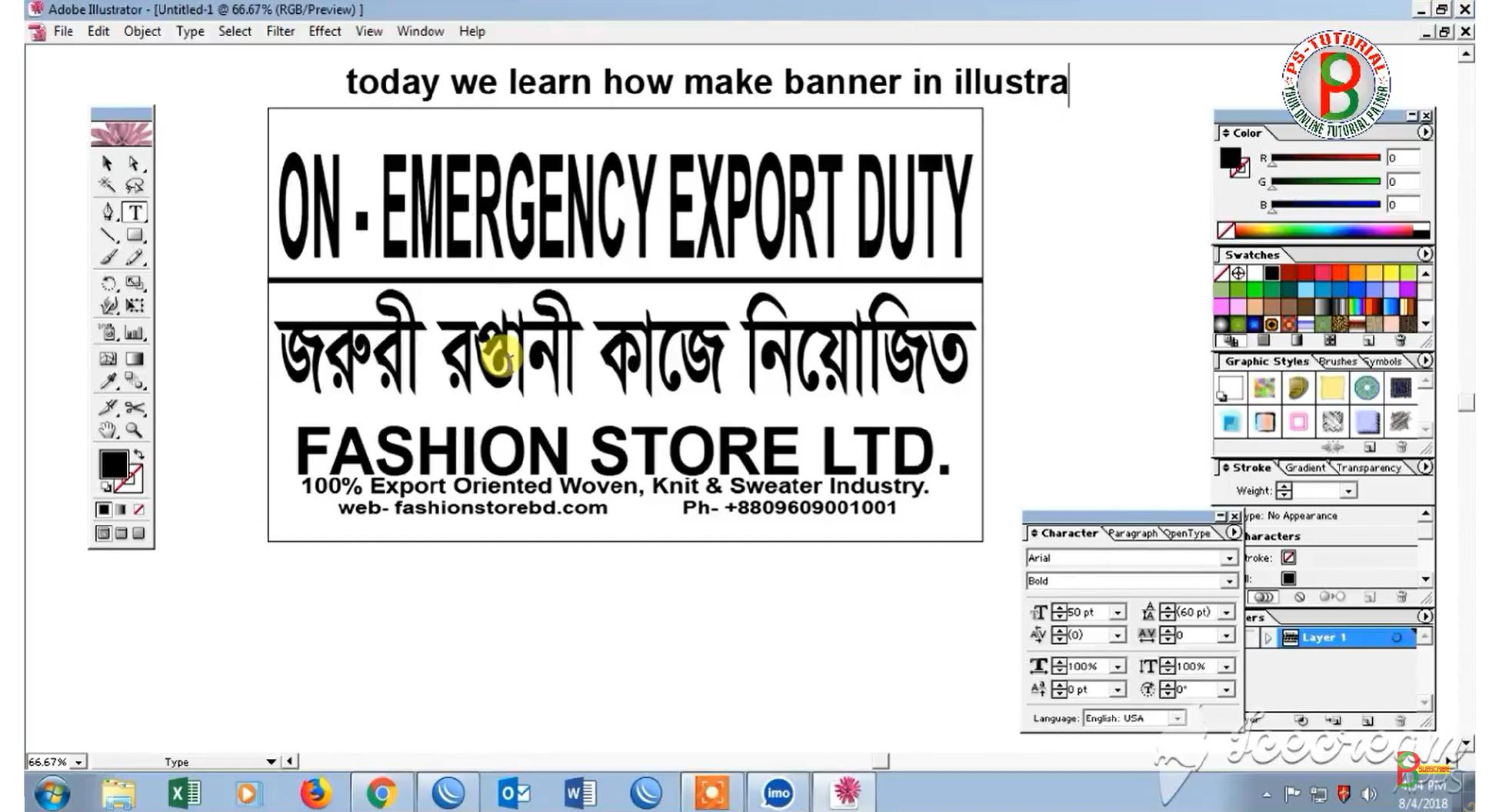
Figure 3 Source: YouTube site targeted for a Bangladeshi audience, offering tutorials on using the program
Illustrator. The choice of banner contents in the advertisement is telling.7
lying economization ascribes value to lives that failure to govern and manage calls for an exami-
serve the purpose of the national economy. One nation beyond the state’s ‘spectacular ineffi-
the other hand, the purpose of serving the econ- ciency’ in managing the pandemic, examples of
omy superseded the necessity to protect the lives which abound (see Chowdhury 2020). Its bears
of individual workers. It is reasonable to ask what asking who benefitted and how from the uncer-
it is that changed with Covid-19 if garment work tainty and ‘regime of confusion’ that ensued.
was already considered essential work. If only Between the end of March and early April 2020,
temporarily, the pandemic made visible quite Prime Minister Sheikh Hasina Wazed issued 31
literally the essential expendability of a working separate directives on how to govern the lives of
population otherwise hailed as national heroes, Bangladeshi citizens under pandemic conditions.
thus bringing to the fore a distilled version of the These executive orders and a corresponding
underlying logic at work.7 General Holiday – governmental euphemism for
a lockdown – conspicuously avoided mentioning
Refusal to Regulate or the Ineptitude of the garment export sector. This was a curious
Power8? absence, given the apparel industry’s dispropor-
While formal Covid-19 management in Bangla- tionate significance to the national economy and
desh largely pivoted around the figure of the for- self-image, as well as its four million-strong work-
eign returnee, it was the garment workers, not force of largely female migrants from rural Ban-
the industry, that appear to have been the object gladesh. Unstated but implicit was the assump-
of concerted non-management. This apparent tion that the industry and its workers constituted
a zone of exception (Agamben 2005; Cotula
7 2017). The state’s apparent refusal to regulate
https://www.youtube.com/watch?v=2SoT0YDTC-E
last accessed July 30, 2021. produced uncertainty and hardship. Upon news
8 We have borrowed the title of a powerful op-ed:
of the General Holiday, most garment workers
‘Covid-19: The Ineptitude of Power’ by Seuty Sabur
left Dhaka city for the safety and affordability of
and Shehzad M. Arifeen in The Daily Star, Saturday
4 April 2020. The authors’ analysis and sentiment cor- their village homes. Just days later, many of the
respond to our analysis here. same workers were instructed by their employ-
10
Pandemics Politics NEW DIVERSITIES Early View, 2022
ers to return to work immediately, unless they disease and stigmatized as reckless, selfish and
were willing to forfeit owed wages, or risk losing wilfully endangering the lives of others. Land-
their jobs. With full knowledge that they would lords turned away imagined or actually sick ten-
endanger themselves and others, thousands of ants. Cast as undisciplined bodies disrupting and
men and women prepared to retrace their steps polluting safe spaces, many of those returning to
back to the place they had just left behind (Sabur villages also faced rejection and violence. The cri-
and Arifeen 2020; Siddiqi 2022). The fear of sis of ‘social distancing’ in keeping the factories
retrenchment, even without receiving outstand- open had become a crude form of ‘class distanc-
ing payment, compelled workers to ‘defy’ the ing’. This re-distributed ‘blame’ constituted the
lockdown openly and visibly. In the absence of real emergency for garment workers.
public transportation – halted for the time being A number of unsuccessful lockdowns fol-
– they made their way largely on foot, often for lowed. These multiple and failed lockdowns not
hundreds of kilometres. Within days of reporting only fuelled ongoing regimes of (im)mobility,’
back to work the government abruptly ordered they determined who was allowed to be mobile
all factories to shut down production. Workers (those with special passes) and who was forced
who had rushed to the city to protect their live- into mobility or immobility (primarily garment
lihoods found themselves trying to leave again. workers).
Many of the same workers were called back a It could be argued that the state’s navigation of
second time, only for the factories to close down what was undeniably a fluid, unpredictable and
again.9 rapidly shifting situation was complicated by the
While civil-society groups condemned the cal- inconsistencies between state policy and factory
lousness of the state and factory owners, the owners’ interests. Instructions from the BGMEA
workers’ (forced) mobility had deeply stigmatiz- or individual factory owners to report to work
ing outcomes. Images of densely packed make- directly contradicted public health messages to
shift forms of transport, of flows of people on contain or limit movement, leading to confu-
foot, all apparently rejecting quarantine pro- sion among workers and the troubled mobilities
tocols, quickly gave rise to rumour, stigma and that were the source of their social stigmatiza-
othering. Mobility (albeit coerced) in this time tion. Yet, from the outset, the government left
of general containment generated profound fear, critical loopholes even when it declared a full
suspicion and mistrust. shutdown, allowing factories with ‘proper health
The impossible choices workers faced – the facilities on site’ to stay open throughout the so-
risk of contracting the virus or losing their jobs, called General Holiday. This is hardly surprising,
the risk of dying of starvation or of the virus – given the blurred lines between state and capi-
were obscured by a discourse through which tal that many scholars have pointed out (Miller
they came to be identified as major vectors of 2014; Saxena 2014; Tighe 2016). The mainstream
corporatized media, which actively shaped pub-
9 Naomi Hossain contends that ‘moral economy’ lic discourse on the pandemic’s effects on the
thinking and a strong sense that the state is responsi-
ble for protecting people during crises shapes citizens’ industry, minimized the consequences for work-
expectations, in turn consolidating or undermining ers, effectively producing public consent to keep
the state’s legitimacy (Hossain 2017). In other words, factories open to ‘save the nation’s lifeline’.
‘a powerful set of expectations about the rightful be-
havior of ruling elites in times of crisis, shapes public
Government silence and the explicit refusal
policy to a significant if somewhat invisible degree’ to name the sector in its numerous directives
(Ali et al. 2021: 105216). It is not clear the extent to turned out to be critical tools for the industry
which garment workers hold such expectations or
and allowed maximum flexibility on the part of
trust any particular government, though perhaps ex-
pectations of ‘relief’ constitute a broader world view individual factory owners, who were already
among citizens (see Winters et al.). under considerable stress from the cascade of
11
NEW DIVERSITIES Early View, 2022 Dina M. Siddiqi and Hasan Ashraf
cancelled orders and unpaid shipments. Even garment supply chain. In this calculus, timely
as official BGMEA commentary blamed workers shipments and profit-making constituted the
for defying explicit instructions to stay in place, emergency; considerations of individual worker
workers received text messages and phone health ranked much lower. This was a lockdown
calls from factory managers instructing them to in which the value of making shipments on time
return ‘on time.’ exceeded the value of the lives of individual gar-
Here it is worth recalling the kind of time pres- ment workers. This is the conjuncture at which
sure that the ‘just in time’ production on which the different layers of structural constraint faced
the global garment supply chain thrives places by garment workers – the local, the regional, the
on suppliers in the Global South. In response to national and the global – converge.
a precipitous decline in consumer demand, Euro- An anonymous reviewer for this article
American buyers of Bangladeshi garments had remarked that the trajectory of Covid-19 in Ban-
cancelled or postponed orders worth $1.44 bil- gladesh was marked by temporal specificities; by
lion by the end of March 2020. Most refused to extension, neither the state nor citizens exhib-
pay for cancellations, even when goods had been ited singular responses. While this is indeed the
shipped and delivered (Anner 2020a: 5-6). Some case, what strikes us is the repetition and recur-
retailers demanded steep discounts on orders sivity of government and BGMEA actions—fac-
that had already been produced at prices that tories declared open without much notice, shut
were already some of the lowest in the world. down production with even less warning. This
With little negotiating power, and out of a fear of re-iterability seems to be specific to the garment
alienating future clients, few owners were will- industry.
ing to challenge the cancellations or demands for
discount openly. The one exception, Mostafizud- The Pandemic and Its Disorders: Colonial
din, whose factory supplied denim to high-end Continuities
retailers, called such demands blackmail: ‘That Perhaps in a bid to stem criticism of its handling
means I am making the jeans for free and my of the pandemic, at certain moments the BGMEA
workers made the jeans for free. It’s blackmail’ invoked explicitly classed language. Then Presi-
(quoted in Pham 2020: 318). dent Dr Rubana Huq declared at one point that
Supply-chain contingencies (international ‘sromikder shorire ekta alada shokti thake,’ which
orders that continued to trickle in or dry up) roughly translates as ‘working class bodies pos-
and the ‘whims’ of individual owners ultimately sess a distinct kind of strength.’ Colonial tropes of
determined whether or not production would effeminate middle-class bhadralok Bengalis, too
continue. In this light, the official refusal to regu- effete for manual labour, are turned around here
late does not appear to be incidental but a con- to assert that working-class bodies are biologi-
scious policy decision. Notably, while the govern- cally less vulnerable to disease. The idea of work-
ment allocated a substantial sum of money to ing people possessing exceptional or singular
the garment sector as part of a post-Covid-19 strength maps on to widely shared middle-class
stimulus package (which covered the first month tropes of divisions between mind and body. As
of outstanding wages only), absolutely no provi- noted earlier, historically, labouring bodies have
sions were made to vaccinate garment-workers been imagined in opposition to the bhadrolok
as a part of a population of ‘essential work- classes. When asked why employees should not
ers’. The rationality underlying the GoB’s (non) be paid even if factories remain closed, owners
decision-making is not hard to discern – the frequent invoked the phrase ‘sromik pala’ (lit-
logic that the well-being of the collective/nation erally rearing or bringing up workers, as in ani-
depends upon the health of the economy, which mal husbandry) to mark their relations to their
in turn relies on the smooth functioning of the workers. The verb pala is used generally with
12
Pandemics Politics NEW DIVERSITIES Early View, 2022
reference to pets or poultry, as in raising pets, (literally ‘small people’). As an emergent cate-
raising children in the abstract, or fostering an gory, bhadralok self-presentation hinged on the
inferior dependent. The implication is that pay- rejection of manual labour, especially ploughing
ing wages under emergency conditions would and cultivating the fields. Manual work set the
be equivalent to treating workers like pets, who boundary between those who associated them-
expect to be fed and housed but offer nothing selves with the life of the mind and the so-called
in return. Here workers are constructed not as lower orders, the latter associated with unruli-
agentive contract bearers but in a relationship of ness and sexual/moral laxity. This took place at a
dependence made possible only by the generos- time when Hinduism itself was undergoing redef-
ity of the owner. The lines between humans and inition, so that the binary between elite and non-
animals become blurred in this imagery, even as elite also separated intellectual labour from rit-
racialized class lines are sharpened. Dehuman- ual practices considered the work of chotolok. In
ized and animalized, their subjectivities as work- short, bhadralok subjectivities were constituted
ers with rights protected by unions or the state through and against caste/classed, gendered,
are completely erased. Bestiary tropes, as Frantz and sexualized others. This form of indigenous
Fanon noted long ago, are critical to drawing lines othering intersects with the racialized hierarchy
between civilized and uncivilized. Colonial racial- in the global garment industry, contributing to
ized tropes of the lazy native are also folded into the social stigmatization and troubled mobility
bhadralok constructions of the labouring classes. trajectories of female garment workers in Ban-
In relation to paying wages, a question that gladesh.
workers and labour advocates faced repeatedly Bhadralok status refers to an ethos or world
is why and for how long factory owners should view as much as it does class or status (Roy 2016:
‘support workers to sit idle and eat’. It is difficult 23). What might be called bhadralok sentiment or
to capture the layers and the nuances of ‘boshe mentality saturates everyday interactions in con-
boshe khawano,’ a Bengali term that implies lazi- temporary Bangladesh, not least in phrases such
ness and exploiting hospitality. Elora Chowdhury as ‘arguing like a rickshaw wallah’s wife’ (that is,
reports that labour organizer Taslima Akter was in an ‘uncultured’, ‘unladylike’ manner, within
asked a version of this question on live television hearing of the public, with no sense of propriety
(Chowdhury 2020: 619). Such ‘misrecognition’ is or privacy) or ‘made-up like a garment worker’
made possible by prior associations and markers (a reference to garish make-up and clothing,
of class and labour. The English term ‘freeloaders’ aspiring to but failing to emulate middle class
comes closest to capture the meaning of both tastes). Class boundaries are constantly secured
sromik pala and boshe boshe khawa. Here we through such gendered and sexualized tropes.
see a complex intersectionality at work -- colo- Gender and class hierarchies materialized
nial racial tropes intersecting with classed and through spatial disciplining and distancing map
gendered discourses to produce a narrative that on to dominant development and middle-class
valorizes otherwise exploitative working condi- concerns over subaltern others. These discursive
tions and constructs workers as non-agentic and and spatial techniques of discipline have long
animal-like, in need of paternalist disciplining. enduring colonial legacies. Dhaka city has always
The cultural and political category of bhadralok had containment zones carved out on the basis
was crystallized in nineteenth-century colo- of class: the elite Gulshan residential area is now
nial Bengal, as an increasingly English educated, proudly a ‘beggar-free’ zone, and the diplomatic
professional and salaried urban middle income zone of Baridhara was declared Lungi-free10 for
group, largely upper-caste Hindu, sought to dis-
tance itself from ‘backward’ agricultural and cul- 10 A
sarong like garment for men, in which a host of
tivating classes, who came to be seen as chotolok ambivalent meanings, norms and practices are em-
13
NEW DIVERSITIES Early View, 2022 Dina M. Siddiqi and Hasan Ashraf
a while (Begum 2020; Habib 2014; Lata 2020). month for Eid. Workers consent to a form of
These zones of containment, like urban planning hyper-exploitation, working even on the weekly
practices in general in Bangladesh, are rooted in holiday of Friday, with these extra hours counted
colonial modes of planning and dividing up the as ‘general duty’ rather than as overtime. This
city (Baffoe and Roy 2022). They echo colonial much-anticipated annual break is a time for
urban-management practices that carved out reuniting with family left behind in villages, and
spaces marked by racial and class segregation. literally repairing bodies depleted from the wear
The expulsion of ‘undesirable’ populations in the and tear of factory work.
name of beautification or for ostensibly health In 2021, at the last minute, the BGMEA
and sanitation purposes also has its roots in colo- announced that workers would be granted
nial management ideologies (Chhabria 2019). In only a three-day holiday including the day of
this backdrop, one scholar insists that official Eid itself. This would have effectively precluded
contempt for the poor constitutes a major fea- most workers from returning to their villages.
ture of urban governance in Bangladesh today The resistance and fury was immediate. Faced
(Lata 2020). In her words, cities such as Dhaka, with a different kind of containment, workers
‘the poor do not fit well with a new urban vision’, organized spontaneous protests demanding full
being subject instead to discourses that por- pay before Eid. The response from the state was
tray them as criminals, producers of filth and equally unequivocal. In Gazipur police disrupted
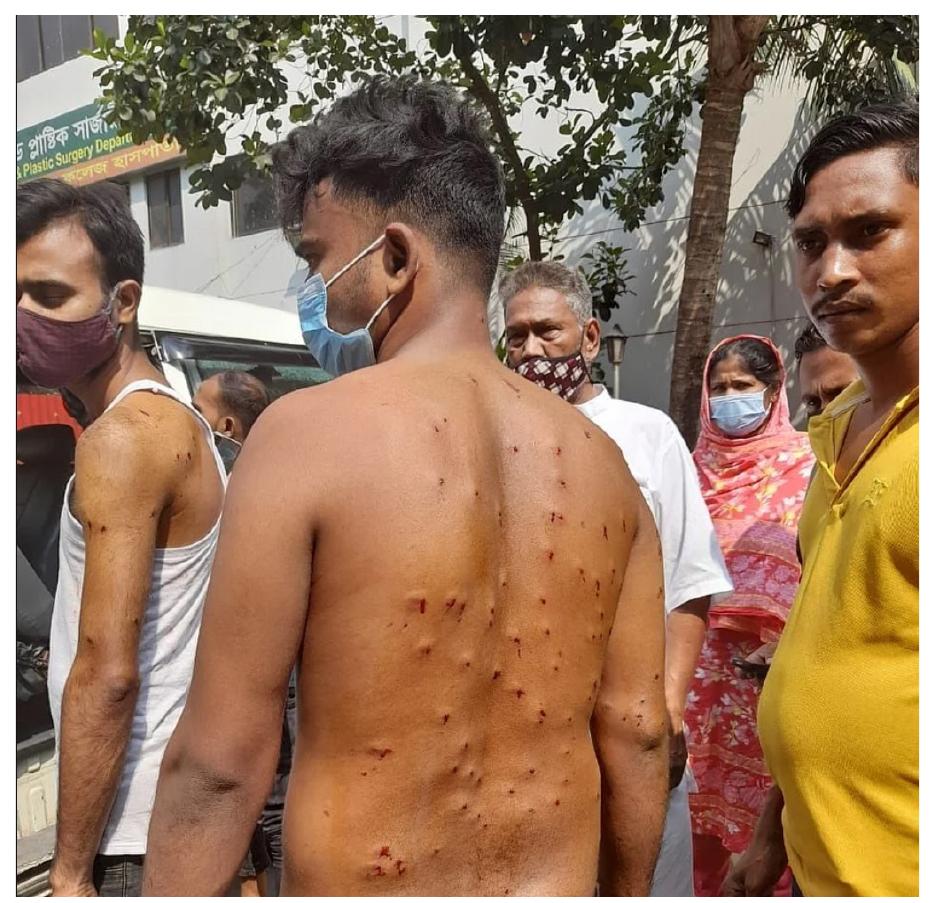
encroachers (ibid.: 4). 11 Expendable labour, even a peaceful demonstration and opened fire on
if it is also essential, must be contained in par- workers without provocation (see Figure 4).
ticular zones, slums being the most obvious. The At least twelve workers were hospitalized, and
project of disciplining and keeping out working- many were badly injured from beatings.
class bodies is explicit and open in contemporary Workers’ voices and resistance have been
Bangladesh. most legible in the numerous Facebook pages
set up since the pandemic. In their individual
‘Garment Workers’ Lives Don’t Matter?’ Facebook statuses, as well as in various groups
The second wave of Covid-19 in 2021 coincided formed during the pandemic, despairing work-
with the month of Ramadan. Over the years, it ers wondered why ‘Garment Workers’ Lives
has become practice for garment workers to Don’t Matter.’ Online media was also the site of
labor for longer hours than usual at this time, expressions of resistance. We reproduce below
in anticipation of a long break at the end of the an especially powerful Facebook post that circu-
lated widely at the time:
bedded. Celebrated as an informal ‘national dress’ ‘Those [workers] who are saying, the factories are
for men in Bangladesh, it is everyday wear for urban
now opened, but how can I come without any form
working-class men and rural peasants. Bhadralok/ur-
of transport, here is my two cents,
ban elites eschew it in public, though they may use
it in domestic spaces. In this context, its attempted This ‘you’ will come to the factory no matter what,
abolition was tied its association as not-modern. on foot, walking for 24 hours without sleeping,
11 Dhaka’s working-class migrant population reside
endless changes of short distances, that industry
in over 4000 slums, and are routinely subjected to
violent evictions legalized through reconstituted ver- owners already know. Workers will surely show up
sions of colonial era vagrancy laws. This form of ac- regardless of the lockdown or availability of trans-
cumulation by dispossession often occurs in the name port. If it were the case that no one showed up for
of hygiene and orderliness. In January 1975, under work, then owners would think about the lack of
the auspice of a ‘Clean Dhaka’ rehabilitation project, transport before reopening the factories. We had
nearly 200 thousand people were forcibly relocated better fix ourselves first, before making comments
to the fringes of the city. In the 1980s during military like that. Until we re-make ourselves properly, the
rule, the second author recalls that it was common government and industry owners will continue to
for police to pick up “vagrant” children from Dhaka make fools of us.’
streets and forcibly detain them in shelters.
14
Pandemics Politics NEW DIVERSITIES Early View, 2022
Laced with sarcasm, the above post can be read
as simultaneously a lament and a ‘call to arms’.
These few lines capture with economy the basic
structural predicament with which workers must
contend, underscoring the compulsions and
regimes of valuation that separate garment work-
ers from others, not just in moments of crisis but
in ‘normal’ times as well. The power of this post
lies in the author’s recognition of worker agency
and implicit call to reject managerial discourses
that amplify relations of dependence. Instead of
the usual appeal to either the state or the own-
ers of capital, the post addresses workers directly,
holding them responsible, refusing passivity. In
restoring workers’ agency, the author opens the Figure 4: Wounds from rubber bullet fired at workers
in Gazipur. Photo: Sheikh Sabiha Alam (Prothom Alo)
possibility of collective action and meaningful
social and political transformation.
dramatized forcefully under pandemic condi-
Conclusion: Troubled Mobilities and Moral tions. The travails of Bangladesh’s garment work-
Panics ers also bring to the fore the troubled concept
This essay builds on existing feminist scholarship of mobility in the contemporary moment. Move-
on women’s labour and disposability in global ment, considered essential to modernity, can
garment production. It denaturalizes the ‘excep- produce pathological panic in others. Following
tional’ moment of the pandemic by locating the Arjun Appadurai, we could say that mobility itself
predicament of workers within longer histories becomes the disease, exhibiting a virulent qual-
of gendered labour expendability and discourses ity that marks bodies as undesirable.
of development within the specific context of Movement becomes a method of killing, such
Bangladesh. As we show, Covid-19 conditions that workers who set off en masse to secure pre-
rendered it impossible to mobilize discourses carious livelihoods find themselves on ‘death
of empowerment and upliftment; the logic of marches’. Those on the move – immigrants, refu-
expendability on which the garment industry gees, or garment workers desperately seeking
actually operates in ‘normal’ times, under con- refuge from a disease or seeking to save their
ditions in which workers are easily ‘replaceable’, jobs by ignoring lockdown orders – can easily
became impossible to deny. If only temporarily, become pariah citizens in the new global order.
the pandemic made visible the expendability If the value of bodies is linked to the creation of
of a labouring population otherwise hailed as wealth, then some workers must be allowed to
national heroes and on the path to female eman- die to save the economy and the nation.
cipation. This kind of necro-political logic ensures the
Covid-19 literalized and materialized pre-exist- oscillating construction of Bangladeshi garment
ing social fears and anxieties through the invo- workers as expendable and pathological bodies
cation of public health concerns, effectively rein- as well as productive, essential workers. Rather
forcing middle-class boundary-making projects. than asking what the lockdown prevents, it may
Racialized, gendered and classed tropes became be more productive to ask what the lockdown or
a narrative resource to paper over the contradic- so-called ‘General Holiday’ enabled. One thing it
tions generated by the postcolonial development allowed was intensified biopolitics and multiple
state and its ties to global capital, contradictions boundary-making projects to flourish.
15
NEW DIVERSITIES Early View, 2022 Dina M. Siddiqi and Hasan Ashraf
References and Planning A: Economy and Space 43: 988-997.
Abu-Lughod, L. 2013. Do Muslim Women Need https://doi.org/10.1068/a43505
Saving? Cambridge: Harvard University Press. Begum, F. 2021. Perception of Covid in Bangladesh:
https://doi.org/10.4159/9780674726338 Interplays of Class and Capital. Society and Cul-
Acevedo, D.D. 2020. Essentializing Labor Before, ture in South Asia 7 (1): 32-47.
During and After COVID 19. Society for the An- https://doi.org/10.1177/2393861720977049
thropology of Work. https://saw.americanan- Begum, S. 2020. Reclaiming Public Open Space
thro.org/pub/essentializing-labor/release/1 within the Shifting Landscape of Dhaka, Ban-
Ahasan, A. 2020. ‘The Biopolitics of Covid 19 and gladesh. Civil Engineering and Architecture 8(6):
a New Kind of Racism.’ Rottenviews. March 26. 1178-1193.
http://rottenviews.com/the-bio-politics-of-co- https://doi.org/10.13189/cea.2020.080603
vid-19-and-a-new-kind-of-racism/ Bhaskaran, S., M. Dutta and S. Naidu. 2021. Flatten-
Ahmad, I. 2020. Coronavirus, Naked Life and the ing the Curve or Flattening Life? Public Service
Importance of Giorgio Agamben. The Polis Announcements in the Pandemic. Economic and
Project, 25 May. https://thepolisproject.com/ Political Weekly 56(9).
coronavirus-naked-life-and-the-importance-of- https://www.epw.in/engage/article/flattening-
giorgio-agamben/#.YQRmsxNKjSI curve-or-flattening-life
Agamben, G. 2005. State of Exception. Chicago: The Bonacich, E., S. Alimahomed and J.B. Wilson. 2008.
University of Chicago Press. The Racialization of Global Labor. American Be-
Alamgir, F., F. Alamgir and F.I. Alamgir. 2022. Live or havioral Scientist 52 (3): 342-355. https://doi.
Be Left to Die? Deregulated Bodies and the Glob- org/10.1177/0002764208323510
al Production Network: Expendable Workers of Bonilla-Silva, E. 2015. The Structure of Racism in
the Bangladesh Apparel Industry in the time of Color-Blind, ‘Post-Racial’ America. American Be-
Covid. Organization 29 (3): 478-501. havioral Scientist. 59 (11): 1358-1376.
https://doi.org/10.1177/13505084211028528 https://doi.org/10.1177/0002764215586826
Alexander, M.J. and C.T. Mohanty. 1996. Feminist Brown, S. and Z. Pearson. 2020. Human Sacrifices,
Genealogies, Colonial Legacies, Democratic Fu- not Heroes: U.S. Essential Workers and the Co-
tures. New York: Routledge. vid-19 Pandemic. Society for the Anthropology
https://doi.org/10.4324/9780203724200 of Work.
Ali, T.O., M. Hassan and N. Hossain. 2021. The https://saw.americananthro.org/pub/human-
Moral and Political Economy of the Pandemic sacrifices-not-heroes-us-essential-workers/rele
in Bangladesh: Weak States and Strong So- ase/1?readingCollection=d660ea15
cieties during Covid-19. World Development. Carswell, G., G. De Neve and S. Yuvaraj. 2020. Fifty
137(105216). https://doi.org/10.1016/j.world- Days of Lockdown in India: A View from Two
dev.2020.105216 Villages in Tamil Nadu. Economic and Political
Anner, M. 2020. Abandoned? The Impact of Covid Weekly 55(25).
19 on Workers and Businesses at the Bottom of https://www.epw.in/engage/article/fifty-days-
Global Garment Supply Chains. Center for Global lockdown-india-view-two-villages-tamil
Workers’ Rights. Chhabria. S. 2019. Making the Modern Slum: The
Ashraf, H. and A. Mol. 2020. Outsides and Insides: Power of Capital in Colonial Bombay. Seattle:
Covid-19 Seen from the First Floor of a House in University of Washington Press.
Mirpur, Dhaka. Somatosphere. Chowhury, E.H. 2020. The Precarity of Pre-existing
http://somatosphere.net/2020/outsides-in- Conditions. Feminist Studies 46 (3): 615-625.
sides-covid-19-mirpur.html/ https://doi.org/10.1353/fem.2020.0044
Baffoe, G. and S. Roy. 2022. Colonial Legacies and Chowdhury, N.S. 2020. Crowd, Contagion, Corona.
Contemporary Urban Planning Practices in Dha- Fieldsights, May 8.
ka, Bangladesh. Planning Perspectives. https://culanth.org/fieldsights/crowd-conta-
https://doi.org/10.1080/02665433.2022.2041468. gion-corona
Bair, J. and M. Werner. 2011. Commodity Chains Cotula, L. 2017. The State of Exception and the Law
and the Uneven Geographies of Global Capital- of the Global Economy: A Conceptual and Em-
ism: A Disarticulations Perspective. Environment pirico-legal Inquiry. Transnational Legal Theory,
16
Pandemics Politics NEW DIVERSITIES Early View, 2022
8(4): 424-454. https://doi.org/10.1080/204140 Jenkins, D. and J.C. LeRoy. 2019. Race and the His-
05.2017.1425811 tory of Capitalism. New York: Columbia Univer-
Da Silva, D.F. 2014. Race and Development. In: sity Press.
V. Desai and R. Potter, eds., The Companion Kabeer, N. 2002. The Power to Choose: Bangladeshi
to Development Studies. London: Routledge. Garment Workers in London and Dhaka. London:
https://doi.org/10.4324/9780203528983 Verso.
Dutta, M. 2021. Becoming ‘Active Labour Pro- Karim, L. 2014. Disposable Bodies: Garment Fac-
testors’: Women Workers Organizing in In- tory Catastrophe and Feminist Practices in Ban-
dia’s Garment Export Factories. Globalizations gladesh. Anthropology Now 6 (1): 52-63.
18(8): 1420-1435. https://doi.org/10.1080/147 https://doi.org/10.1080/19492901.2013.11728417
47731.2021.1877972 Khan, M. 2021. The Indebted among the ‘Free’:
Elson, D. and R. Pearson. 1981. ‘Nimble Fingers Producing Indian Labor Through the Layers of
Make Cheap Workers’: An Analysis of Women’s Racial Capitalism. In: J. Leroy and D. Jenkins, eds.,
Employment in Third World Export Manufactur- Histories of Racial Capitalism. New York: Colum-
ing. Feminist Review 7(1): 87-107. bia University Press.
https://doi.org/10.2307/1394761 https://doi.org/10.7312/jenk19074-005
Gill, S.K. 2021. Race-making of COVID 19 in Early Kim, J. 2013. Chinese Labor in a Korean Factory:
Mainstream Frames: The Production of the Class, Ethnicity and Productivity on the Shopfloor
Epidemic(ed) Citizen. MediaRise in Globalizing China. Stanford: Stanford Uni-
https://oaktr ust.librar y.tam u.e du/han- versity Press. https://doi.org/10.11126/stan-
dle/1969.1/188170 ford/9780804784542.001.0001
Goger, A., A. Hull, S. Barrientos, G. Gereffi, and S. Lakoff, A. 2020. The Supply Chain Must Continue:
Godfrey. 2014. Capturing the Gains in Africa: Becoming Essential in the Pandemic Emergency.
Making the Most of Global Value Chain Partici- Items, November 5. https://items.ssrc.org/cov-
pation. Duke University Center on Globalization, id-19-and-thesocial-sciences/disaster-studies/
Governance & Competitiveness. the-supply-chain-must-continue-becoming-es-
Grewal, I. and K. Caren. eds. 1994. Scattered He- sential-inthe-pandemic-emergency
gemonies: Postmodernity and Transnational Lata, L. 2020. To Whom Does the City Belong? Ob-
Feminist Practices. Minneapolis: University of stacles to Right to the City for the Urban Poor
Minnesota Press. in Bangladesh. Journal of Contemporary Asia,
Habib, K., H. Heynen and B. De Meulder. 2014. (Un) https://doi.org/10.1080/00472336.2020.1791
Covering the Face of Dhaka: Gender Politics and 934
Public Space in the Post‐colonial City. Environ- Lynch, C. 2007. Juki Girls, Good Girls: Gender and
ment, Space, Place 6 (2): 69-98. Cultural Politics in Sri Lanka’s Garment Industry.
https://doi.org/10.5840/esplace20146212 Ithaca: ILR Press.
Hewamanne, S. 2008. Stitching Identities in a Manjapra, C. 2020. Colonialism in Global Perspec-
Free Trade Zone: Gender and Politics in Sri Lan- tive. Cambridge: Cambridge University Press.
ka. Philadelphia: University of Pennsylvania https://doi.org/10.1017/9781108560580
Press. https://www.degruyter.com/document/ Mezzadri, A. 2017. The Sweatshop Regime: Labor-
doi/10.9783/9780812202250/html ing Bodies, Exploitation, and Garments Made in
Higgins, R., E. Martin and M.D. Vesperi. 2020. An India. Cambridge: Cambridge University Press.
Anthropology of the COVID 19 Pandemic. An- https://doi.org/10.1017/9781316337912
thropology Now 12(1): 2-6. https://doi.org/10.1 Miller, D. 2013. Last Nightshift in Savar: The Story
080/19428200.2020.1760627 of Spectrum Sweater Factory Collapse. Alnwick:
Hossain, D. 2013. Boundaries Undermined: The Ru- McNidder & Grace.
ins of Progress on the Bangladesh-India Border. Mills, M.B. 2003. Gender and Inequality in the
London: Hurst. Global Labor Force. Annual Review of Anthro-
Hossain, N. 2017. The Aid Lab: Understanding Ban- pology 32: 41-62. https://doi.org/10.1146/an-
gladesh’s Unexpected Success. Oxford: Oxford nurev.anthro.32.061002.093107
University Press. https://doi.org/10.1093/acpro Mohanty, C. 2003. Feminism Without Borders: De-
f:oso/9780198785507.001.0001 colonizing Theory, Practicing Solidarity. Durham:
17
NEW DIVERSITIES Early View, 2022 Dina M. Siddiqi and Hasan Ashraf
Duke University Press. h t t p s : // d o i . org/2021/03/16/covid-19-ethical-trade-and-
org/10.1515/9780822384649 women-apparel-workers/
Mohanty, C.T. 1984. Under Western Eyes: Feminist Ruwanpura, K. and A. Hughes. 2016. Empow-
Scholarship and Colonial Discourses. Boundary ered Spaces? Managerial Articulations of
2 12(3): 333-58. https://doi.org/10.2307/302821 Gendered Spaces in Apparel Factories in Ka-
Morgan, J. 2021. Reckoning with Slavery: Gender, rachi, Pakistan. Gender, Place & Culture 23 (9):
Kinship, and Capitalism in the Early Black Atlan- 1270-1285. https://doi.org/10.1080/096636
tic. Durham: Duke University Press. 9x.2015.1136815
https://doi.org/10.1515/9781478021452 Ruwanpura, K. 2022. Garments Without Guilt:
Murshid, N. 2020. Magical Thinking in the Time of Global Labor Justice and Ethical Codes in Sri Lank-
Covid. The Daily Star, April 13. https://www.the- an Apparels. Cambridge: Cambridge University
dailystar.net/opinion/researchmesearch/news/ Press. https://doi.org/10.1017/9781108937573
magical-thinking-the-time-covid-19-1892287 Sabur, S. and S.M. Arifeen. 2020. Covid-19: The In-
Ong, A. 1987. Spirits of Resistance and Capitalist eptitude of Power. The Daily Star. Saturday April
Discipline: Factory Women in Malaysia. Albany: 4. https://www.thedailystar.net/opinion/news/
SUNY Press. covid-19-the-ineptitude-power-1889254
Pandey, K., R.S. Parreñas and G.S. Sabio. 2021. Es- Salzinger, L. 2003. Genders in Production: Making
sential and Expendable: Migrant Domestic Work- Workers in Mexico’s Global Factories. University
ers and the COVID 19 Pandemic. American Be- of California Press.
havioral Scientist. 65 (10): 1287-1301. Saxena, S. 2014. Made in Bangladesh, Cambodia,
https://doi.org/10.1177/00027642211000396 and Sri Lanka: The Labor Behind the Global Gar-
Prentice, R. 2015. Thiefing a Chance: Factory Work, ments and Textiles Industries. New York: Cam-
Illicit Labor, and Neoliberal Subjectivities in bria Press.
Trinidad. Denver: University of Colorado Press. Scauso, M.S. 2020. COVID-19, Democracies and
https://doi.org/10.5876/9781607323754 (De)Colonialities. Democratic Theory 7(2): 82-93.
Pham, M.T. 2020. ‘How to Make a Mask’: Quaran- https://doi.org/10.3167/dt.2020.070211
tine Feminism and Global Supply Chains. Femi- Siddiqi, D.M. 1996. Women in Question: Gender
nist Studies 46 (2): 316-326. and Labor in Bangladeshi Factories. Unpub-
https://doi.org/10.1353/fem.2020.0028 lished PhD dissertation. University of Michigan,
Ralph, M. and M. Singhal. 2019. Racial Capitalism. Ann Arbor.
Theory and Society 48(6): 851-881. Siddiqi, D.M. 2009. Do Bangladeshi Garment Work-
https://doi.org/10.1007/s11186-019-09367-z ers Need Saving? Feminist Review 91: 154-174.
Robinson, C. 1983. Black Marxism: The Making of https://doi.org/10.1057/fr.2008.55
the Black Radical Tradition. London: Zed Press. Siddiqi, D. M. 2020. Logics of Sedition: Re-signify-
Roy, A. 2010. Poverty Capital: Microfinance and the ing Insurgent Labour in Bangladesh’s Garment
Making of Development. New York: Routledge. Factories. Journal of South Asian Development
https://doi.org/10.4324/9780203854716 15(3): 371-397.
Roy, P. 2016. Bhadralok/Bhadramahila. In: R. Dwyer, https://doi.org/10.1177/0973174120983955
G. Dharampal-Frick, M. Kirloskar-Steinbach and Siddiqi, D.M. 2021. Development. In: The Key-
J. Phalkey, eds., Key Concepts in Modern Indian words Feminist Editorial Collective, eds., Key-
Studies. New York: NYU Press. words for Gender and Sexuality Studies. New
https://doi.org/10.18574/nyu/97814798268 York: NYU Press. https://doi.org/10.18574/
34.003.0013 nyu/9781479808168.003.0022
Ruwanpura, K. 2011. Women Workers in the Ap- Siddiqi, D.M. 2022. Scandalising the Supply Chain:
parel Sector: A Three-decade (R)evolution of Looking Back at 40 Years of Bangladesh’s Gar-
Feminist Contributions? Progress in Develop- ment Industry. Himal Southasia, January 11.
ment Studies 11(3): 197-209. https://www.himalmag.com/scandalising-the-
https://doi.org/10.1177/146499341001100302 supply-chain-bangladesh-2022/
Ruwanpura, K. 2021. Covid-19, Ethical Trade and Siddiqi, D.M. (Forthcoming). Child Marriage in the
Women Apparel Workers. Groundviews: Journal- Feminist Imagination. In: L. Abu-Lughod, R. Ham-
ism for Citizens. March 16. https://groundviews. mami and N. Shalhoub-Kevorkian, eds., The Cun-
18
Pandemics Politics NEW DIVERSITIES Early View, 2022
ning of Gender Violence. Durham: Duke Univer- https://doi.org/10.1002/9781118941959
sity Press. White, S. 2002. Thinking Race, Thinking Develop-
Sen, S. 2021. Saving the Factory, Not the Workers: ment. Third World Quarterly 23(3): 407-419.
The Garment Industry in Bangladesh. The Fu- https://doi.org/10.1080/01436590220138358
nambulist 33 (1): 24-31. Wilson, K. 2011. ‘Race’, Gender and Neoliberal-
https://thefunambulist.net/magazine/spaces- ism: Changing Visual Representations in Devel-
of-labor opment. Third World Quarterly 32(2): 315-331.
Shroff, S. 2020. Modestly Modern: Mapping the https://doi.org/10.1080/01436597.2011.560471
Pakistani Muslim Working Woman. In: Huang, S. Wickramasingha, S. and N. Coe. 2021. Concep-
and K. Ruwanpura, eds., Handbook on Gender in tualizing Labor Regimes in Global Production
Asia. Cheltenham: Edward Elgar Publishing. Networks: Uneven Outcomes across the Ban-
https://doi.org/10.4337/9781788112918. gladeshi and Sri Lankan Apparel Industries. Eco-
00021 nomic Geography 98(1): 68-90. https://doi.org/
Tambe, A. and M. Thayer. 2021. Transnational Fem- 10.1080/00130095.2021.1987879
inist Itineraries: Situating Theory and Activist Winters, M.S., S. Dietrich and M. Mahmud. 2018.
Practice. Durham: Duke University Press. Aiding the Virtuous Circle? International Devel-
https://doi.org/10.1215/9781478021735 opment Assistance and Citizen Confidence in
Tighe, E. 2016. Voluntary Governance in Clothing Government in Bangladesh, Journal of Interven-
Production Networks: Management Perspec- tion and State Building 12(4): 468-483. https://
tives on Multi-stakeholder Initiatives in Dhaka. doi.org/10.1080/17502977.2018.1520954
Environment and Planning A: Economy and Wright, M. 2006. Disposable Women and Other
Space 48 (12): 2504-2524. Myths of Global Capitalism. New York: Rout-
https://doi.org/10.1177/0308518x16660978 ledge. https://doi.org/10.4324/9780203390313
Virdee, S. 2019. Racialized Capitalism: An Account Zobaida, N. and G.B. Caesar. 2020. Corona-shaming
of its Contested Origins and Consolidation. The Exposes the Fault Lines of Our Society. The Dai-
Sociological Review 67(1): 3-27. ly Star, April 3. https://www.thedailystar.net/
https://doi.org/10.1177/0038026118820293 opinion/perspective/news/corona-shaming-
Weiss, K.R. 2014. Bangladesh Women Find Liberty exposes-the-fault-lines-our-society-1888933
in Hard Labor. L.A. Times, March 13.
https://www.latimes.com/world/la-fg-c1-ban-
gladesh-garment-workers-20140313-dto-html- Acknowledgements
story.html The authors would like to thank Fatema Aarshe
Werner, M. 2015. Global Displacements: The Mak- and Md. Khaled Bin Oli Bhuiyan for their help in
ing of Uneven Development in the Caribbean. archiving digital media contents and transcrip-
Chichester: Wiley Blackwell. tions.
Note on the Authors
Dina M. Siddiqi is Clinical Associate Professor, Liberal Studies, New York University. Her research
joins development studies and transnational feminist theory to the anthropology of labor and
Islam. Her publications include ‘Child Marriage in the Feminist Imagination’ in Lila Abu-Lughod et
al. The Cunning of Gender Violence, forthcoming in 2023.
[email protected]
Hasan Ashraf is Associate Professor, Department of Anthropology, Jahangirnagar University,
Bangladesh. His research focuses on transnational garment production, labour history and
politics, urban water practices, and politics of infrastructure. His recent publications include an
online exhibit with Christian Strümpell (2021), The Transnational Ready-Made Garment Industry
in Bangladesh: Shifts and Changes, Late 1970s until Now, Workplaces: Pasts and Presents, Omeka
RSS, 29 Nov.
[email protected]
19