Journal Articles by Pelin Ayan Musil
Czech Journal of International Relations, 2024
This article contributes to the literature focusing on the relationship between crises and populi... more This article contributes to the literature focusing on the relationship between crises and populism. It argues that the timing, the crisis type, and the contextual factor of whether populists are in power, matter for changes in the discursive strategies of populists and their ability to turn crises into opportunity structures. Guided by the constructivist literature on external shocks and a thematic content analysis of 561 online media news reports on the 2022 Hungarian national elections before and after the outbreak of the Russian aggression in Ukraine (RAiU), the article shows that this crisis helped to refresh the people-centrist elements of Fidesz's populist discourse while slightly downgrading its anti-elitist aspects. The absence of any material impact of the RAiU on Hungarian society at the time of the elections, combined with the dominance of Fidesz's 'pro-peace vs. pro-war' discourse, transformed the RAiU into an opportunity structure for Fidesz during the elections.
Southeast European and Black Sea Studies , 2024
This article explains the survival of the AKP in Turkey's late stage of autocratization (2017pres... more This article explains the survival of the AKP in Turkey's late stage of autocratization (2017present) through its strategy of shifting the primary drivers of competition from individual parties to preelectoral alliances. Confronted with a decline in popular support in 2015 June elections, the article argues that the AKP created uneven patterns of competition via the system of pre-electoral alliances so that it could institutionalize a 'Rikerian offense' on the salient Turkish-Kurdish cleavage and establish an authoritarian power-sharing mechanism with its former challenger, the Turkish nationalist MHP. To illustrate the shift toward uneven patterns of electoral competition via such incumbent strategies, the article conducts a two-part analysis: It first examines the landscape of competition among parties (2002-2015) and second, evaluates competition among both parties and alliances (2018-2023) at the national and district levels in Turkey.
Archiv orientální, 2023
In the early 2000s, the Justice and Development Party (AKP) rose to power by contesting the elect... more In the early 2000s, the Justice and Development Party (AKP) rose to power by contesting the electoral dominance of pro-Kurdish parties in the Kurdish-majority provinces of Turkey. The existing literature has accounted for the AKP's popularity in these provinces by focusing on three distinct factors: economic performance, the use of "Islam as cement," and pledges to safeguard the ethnic rights of the Kurds as a ruling party. This article introduces a more allencompassing perspective for understanding the AKP's popularity among the Kurdish population. Based on original interviews conducted with party activists representing the AKP and the pro-Kurdish party, it argues that these three issues were encapsulated in the AKP's outsider identity, which was derived from its stance against an exclusivist state ideology. In making this argument, the article offers a two-dimensional definition of outsider parties, with one dimension based on their exclusion from the state ideology and the other based on the party's own discourse. The broader implication of this study is that outsider parties, as part of their power-seeking strategy, can mobilize groups with different political goals by creating a bonding effect among them against a repressive state ideology.
Democratization, 2023
This article contributes to the growing body of literature on opposition coordination within comp... more This article contributes to the growing body of literature on opposition coordination within competitive authoritarian regimes (CARs). Defining oppositional unity as the ability of key opposition parties to select one joint candidate for elections, it introduces the concept of an intermediary party that facilitates such unity. An intermediary party is perceived less threatening by other opposition parties in their opportunistic and ideological conflicts and has the potential to offer a more agreeable joint candidate or a more conciliatory method of selecting the joint candidate within the opposition bloc. The article illustrates this argument by examining the Budapest and Istanbul mayoral elections held in 2019 in Hungary and Turkey. Drawing on data from 30 anonymized elite interviews and media statements of the opposition leaders in each country, the article demonstrates the significance of an intermediary party that facilitates oppositional unity in CARs, adding that the participation of intraparty actors with strong communication skills during the negotiations further reinforces this outcome.
Government and Opposition, 2023
Despite a growing body of literature on the advancement of autocratic tactics and toolkits in com... more Despite a growing body of literature on the advancement of autocratic tactics and toolkits in competitive authoritarian regimes (CARs), we lack sufficient knowledge on the strategies that the opposition builds against populist-authoritarian governments. Using two top autocratizing cases – Turkey and Hungary – this article singles out ‘transnationalization’ as one such novel strategy. ‘Transnationalization’ is defined as a strategy through which opposition-led subnational executives transform local and global boundaries by consciously forming a link with the liberal-democratic world in order to expand their space for manoeuvre. Conducting a qualitative content analysis of the Istanbul and Budapest mayors' international Twitter accounts and using evidence from elite interviews with officials from Istanbul and Budapest municipalities, we demonstrate the material, symbolic and political means of this strategy and the rationalist and normative motivations behind it. By discussing the what, how and why of a transnationalization strategy, we fill an important gap in the scholarship regarding opposition strategies in CARs.
British Journal of Middle Eastern Studies, 2023
Both Turkey and Tunisia have attracted significant attention regarding their democratization and ... more Both Turkey and Tunisia have attracted significant attention regarding their democratization and religious politics. While Turkey was considered a successful case of blending Islam and democracy in the decade of 2000s, it plunged into autocratization in the following decade. Tunisia became the only Arab spring country to go through democratic transition between 2011 and 2015 but 6 years later, an elected president grabbed power over the democratic institutions. Inspired by the elite theories of democratization and combining the comparative method with a within-case analysis, this article evaluates the regime trajectories of the two countries, emphasizing the points of convergence and divergence. First, it argues that the emergence of a power symmetry between the elites representing the religious-secular cleavage constituted a critical juncture in each case, paving the way for democratic reforms. Second, it argues that the power symmetry was of an adversarial nature in Turkey and a consensual nature in Tunisia, which affected the elite choices to deal with the masses in different ways. The article concludes with a discussion of how the elite-mass interactions ultimately eroded the power symmetries and reversed the democratic processes in Turkey and Tunisia.
Middle East Law and Governance, 2021
This article presents the case of Turkey within the framework of this special issue entitled "On ... more This article presents the case of Turkey within the framework of this special issue entitled "On Islamist Parties and the Inclusion-Moderation Hypothesis". I argue that rather than a distinction between the concepts of "tactical" and "ideological" moderation that the literature talks about, a distinction between the concepts of an "inclusionary-populist" and "moderate Islamist" party could provide a more useful insight over the role of Islamist and post-Islamist parties in democratization and de-democratization processes. Through a re-analysis of the secondary literature and a content analysis of 196 newspaper columns written by three pro-democracy intellectuals, I label the akp's transition period from moderate-Islamism toward authoritarianism as its inclusionary populist phase. I show that in contexts marked by deep ideological divisions and unconsolidated democratic institutions, a shift in party identity from moderate-Islamism toward inclusionary populism can be taken as the early signal of an unfolding process of autocratization.
Mediterranean Politics, 2021
Turkey has experienced a heterogeneous collection of social movements and protests. While scholar... more Turkey has experienced a heterogeneous collection of social movements and protests. While scholars have given substantial attention to coups in this context, it remains unclear if the Turkish Armed Forces have ever defected in favor of civilian mobilization during periods of political instability. In large-N databases on defection, cases in Turkey are either disproportionately skewed towards coups or are fully absent of observations on defection during resistance campaigns. In this study, we analyze cases spanning 1959-2017 to trace patterns of defection. Through triangulating qualitative evidence from memoirs of former military officers, media reports, and interviews carried out with multi-generational political actors, our analysis reveals that three instances of defection occurred in times of mass mobilization, two of which were vertical and one horizontal. Alongside three other instances of defection that occurred during coup attempts, these results illustrate the highly dynamic nature of defection in the Turkish context and the general interrelated processes of mobilization, defection, and coups.
Civil Wars, 2021
While the literature on rebel-to-party transformation focused on formation of parties at the end ... more While the literature on rebel-to-party transformation focused on formation of parties at the end of civil wars, in this study, we address the phenomenon of a political party that co-exists alongside a rebel group during a lengthy civil war. We define this party as a ‘pro-rebel party,’ which is constrained by the rebel group but adheres to the legal order by offering candidates in elections. Based on the case of pro-Kurdish parties in Turkey, we argue that pro-rebel parties experience ideological and organisational pluralisation in structures with increasing opportunities and reinforce a counter-hegemonic struggle against a one-sided state discourse.
Social Movement Studies, 2021
The 2013 Gezi protests still remain the largest to have arisen in the AKP era of governance in Tu... more The 2013 Gezi protests still remain the largest to have arisen in the AKP era of governance in Turkey. In light of substantial interdisciplinary attention attributed to this case, this study analyses a previously neglected, yet salient activist strategy known as fraternization that arose during protester-police interactions. We argue that when entrapped in situations marked by confrontational tension with police, protesters strategically attempt to overcome outgroup divisions by getting state forces to sympathize with opposition through fraternization. Utilizing video data analysis (VDA), we assess a sample of 147 publicly available videos featuring protester-police interactions and complement our assessment with semi-structured interviews with protesters. Results reveal that significant levels of fraternization occurred between heterogeneous groups of activists (age, gender, identity) and the police. In some cases, fraternization attempts contributed to a positive dialogue being established with police, while other attempts had no effect in reducing repression. Although activists were ultimately unsuccessful in convincing police to defect, this inquiry presents new implications for our understanding of the situational dynamics underlying fraternization.
Turkish Studies, 2020
The Turkish party law (TPL) has thus far been studied only in isolation. We do not have any knowl... more The Turkish party law (TPL) has thus far been studied only in isolation. We do not have any knowledge of where it stands compared to other party laws. This study fills this gap by comparing the TPL with other European party laws. It codes the TPL according to the categories of party regulation that exists in the current literature and finds that the TPL is the third-most heavily regulated party law in Europe. While it is particularly keen on regulating the ‘activity and behavior’ and ‘programmatic identity’ of parties similar to Ukrainian and Spanish party laws, it is significantly behind in regulating the ‘party finance’ and ‘external oversight’ compared to other European countries. This article discusses the implications of these findings on contemporary Turkish politics, arguing that the TPL's thick definition of an ‘anti-system party’ contributes to the current democratic recession in Turkey.
New Perspectives (2015, Vol 23, No 1)
The extant literature has made a rich contribution to our understanding of the low levels of publ... more The extant literature has made a rich contribution to our understanding of the low levels of public support for Turkey’s EU bid within the EU-15 and the EU-27, but the Central European perspective on this issue has not gained much attention. This article seeks to explain why there has been an unsupportive public opinion on this issue in the Czech Republic, through semi structured elite interviews and a qualitative content analysis of selected print media. It offers an analytical framework derived from sociological and discursive institutionalism. It argues that the historical/cultural context in the Czech Republic has created an informal institution built around the norms of “othering” Muslim societies like Turkey (sociological institutionalism). Second, this institution both enables and constrains the “discursive ability” of the media in communicating these issues to its audience (discursive institutionalism). Since the media—as a political actor—mostly acts to maintain this institution and does not critically debate it, the public opinion of Turkey as the “cultural other” remains as a dominant perception.
Beytulhikme An International Journal of Philosophy 5(1): 47-57
Acta Politologica (2014) Vol. 6, No. 3, pp: 326-342
South European Society and Politics (2015) Vol 20, No. 1, pp: 71-93
This study aims to provide insights for how and why a dominant party system emerges after an era ... more This study aims to provide insights for how and why a dominant party system emerges after an era of multipartism. Conceptualizing the emergence phase of a dominant party system within the framework of Sartori's 'predominant party system,'
International Political Science Review (2016)
In nondemocratic parties, the oppositional factions have difficulty in making inroads to the top ... more In nondemocratic parties, the oppositional factions have difficulty in making inroads to the top executive party organs. There are two consequences for these groups: party split or leadership removal. In the former, the oppositional faction exits and establishes its own party. In the latter, the opposition achieves to alter the balance of power by removing the leader and the party goes through change. This article suggests that the level of power concentration within the dominant faction matters for the type of outcome in factional rivalries. If the power is concentrated in the hands of a small elite, the divisions within the elite can help the oppositional faction remove the party leader. If the power resides only with a single leader, the oppositional faction is likely to lose the struggle against the dominant faction and decides to exit. This study explores the causal mechanisms of this argument by comparing six non democratic parties from Turkey.
Turkish Studies (2010)
Authoritarianism within party structures is recognized as a central feature of all political part... more Authoritarianism within party structures is recognized as a central feature of all political parties in Turkey but used in a taken‐for‐granted manner. This article highlights the necessity to examine the power relationship between the central and local party actors and argues that the different incentive structures within political parties lead to different types of party authoritarianism. Comparing the incentive structures of the Republican People's Party (CHP) and the Justice and Development Party (AKP), the article concludes that the CHP is close to an oligarchic type of authoritarianism whereas the AKP is close to a hegemonic type of authoritarianism.

Grasping the Social Through Movies
Teaching in Higher Education (2011) - SSCI
In Turkey, one of the major challenges that university education faces is the indifference of you... more In Turkey, one of the major challenges that university education faces is the indifference of young people towards social issues. The aim of this article is to contribute to the practice of critical pedagogy by proposing that showing movies is an important critical teaching method with the power both to give pleasure to the students and to develop their interest in crucial social issues. To support our argument, we showed three movies to students taking Sociology and Social Psychology courses in three successive academic terms on the topics ‘the death penalty’, ‘gender equality’ and ‘prejudice’. Analysing the essays which the students were asked to write on these movies, we observed growing interest and an increase in critical thinking on the issues in question. We then conducted a survey to test this change quantitatively. The results indicate that showing movies is very influential in helping students to develop an interest and critical perspective.
Books by Pelin Ayan Musil
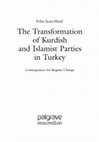
Palgrave Macmillan, 2022
This book analyzes the transformation of ethnic and religious political parties in Turkey with sp... more This book analyzes the transformation of ethnic and religious political parties in Turkey with special focus on their role in the country’s democratization and regime changes. Turkey went through a process of autocratization under the rule of the AKP government over the last two decades. Scholars question the structural, agent-centered and cultural factors that led the country on this path, and provide the lessons learnt from this case for other cases of democratic decline or breakdown. This book contributes to this debate. It treats the three national elections (2002, 2007, 2015-June) as opportunities for democratization, in which the Islamist-successor AKP (in 2002, 2007) and the Kurdish-successor HDP (in 2015-June) managed to overcome identity politics and received the organized support from social groups outside of their traditional constituency. This book argues that in a semi-democratic context where repressive acts of the state (e.g. banning of parties, arresting politicians) have been subject to widespread public criticism, confronting the state becomes a salient issue. When these parties manage to frame this issue as one of democracy, they take ownership of it, and this then becomes an opportunity for democratizing the regime. This opportunity, yet, can be missed if the party follows an office-seeking strategy rather than a policy-seeking one.



Uploads
Journal Articles by Pelin Ayan Musil
Books by Pelin Ayan Musil