Awards/Prizes by Possum Pincé
Best Poster Prize: “Beaming into the past: X-ray Fluorescence on pre-Islamic ceramics from the Kur River Basin (Fars, Iran)”, InArt Conference, Ghent, March 21-25, 2016
Papers by Possum Pincé
P. Pincé, D. Vandenberghe, N. Karimi Moayeb, H. VandendrieP. Pincé "Dating and formation of inland dunes along the river Scheldt and its tributaries: implications for the detection of Final Palaeolithic sites, campaign 2020 (NW Belgium)" Notae Praehistoricae, 2020, vol. 40, p. 91-104
P. Pincé, D. Vandenberghe, N. Karimi Moayeb, H. Vandendriessche, J. De Grave & Ph. Crombé "Optical dating and archaeological survey of an inland dune along the Lower Scheldt valley at "Warandeduinen-Speelbos" (Wetteren, East Flanders, BE)" Notae Praehistoricae, 2021, vol. 41, p. 159-171
B. Overlaet,B. De Prez & P. Pincé “Report on the 2016 Belgian excavation of Mleiha area F and the "Tomb of Amud"” Annual Sharjah Archaeology, 2018, vol. 16, p. 25-48
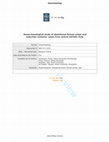
Geoarchaeology
The Potenza Valley Survey project investigates since 2000 the settlement dynamics in the Central ... more The Potenza Valley Survey project investigates since 2000 the settlement dynamics in the Central Adriatic Potenza valley, with particular attention to the period from the Iron Age to early Medieval times (900 BC-AD 900). Part of this research focuses on the Roman abandoned towns of Potentia and Trea by performing an integrated, geoarchaeological study of their townscape. This largely noninvasive research consists of remote sensing analysis, geophysical surveys (magnetometry, electrical resistivity and Ground Penetrating Radar) and geomorphological fieldwork such as microtopographic measurements and hand augerings. The chosen techniques depend on the nature of each town and are integrated with more traditionally achieved research data. This paper presents the main interdisciplinary results of these two Roman towns and highlights the importance of obtaining complementary data and performing hand augering as a stratigraphic control of the remote sensing and geophysical results. An insight in the character and layout of the cities, the structural influence on the surrounding area and the human-environment interactions and dynamics through time of both Roman cities could be obtained. Moreover, the results offer guidelines for conservation strategies of these abandoned towns and their suburbium, which are necessary to protect them from present-day threats such as agriculture and tourism.

In situ and laboratory analysis on the polychromy of the Ghent Pantheon cork model by Antonio Chichi
The European Physical Journal Plus
Abstract.The Archaeological Collection of Ghent University Museum hosts one of the most remarkabl... more Abstract.The Archaeological Collection of Ghent University Museum hosts one of the most remarkable cork models representing the Pantheon of Rome, made by the master Antonio Chichi (1743-1816). Ghent University started a restoration campaign dedicated to the cork masterpiece, which has great artistic value. Next to macroscopic analysis, an extensive physicochemical campaign was organised in order to study and document the composition and the preservation state of the polychromic layers of Chichi’s masterpiece. Portable and micro-Raman spectroscopy revealed the presence of materials such as carbon-based pigments, lead white, vermilion, chalk, gypsum, bassanite, Prussian blue and haematite on the exterior and interior of the cork model. A tin-containing layer was characterized on the exterior of the model. XRF instruments were employed to better understand the overall elemental composition of the model’s polychromic layers, positively identifying Pb, Sn, Zn, Ca, Hg, Fe at the exterior surface. Stratigraphic analysis was performed, with both analytical techniques, when possible. The detailed information provided by archaeology, art history and applied sciences on the cork model of the Pantheon, will help the conservators to better understand and restore the Pantheon model which will be exhibited in the new museum of Ghent University.
Archaeometry
A total of 119 mid-late second millennium BCE pottery samples from six sites in the Kur River Bas... more A total of 119 mid-late second millennium BCE pottery samples from six sites in the Kur River Basin (Fars, Iran) were examined to characterize these ceramics and reconstruct their manufacturing technology and origin of the primary materials. For this, a combined study of handheld XRF and thin section petrography was performed. The geochemical signatures of these ceramics were defined and interpreted in their archaeological and geological framework resulting in the determination of different production processes and clay types used for four ceramic wares (Middle Elamite, Qaleh, Shogha and Taimuran) and the identification of possible outcrops used for Shogha-Taimuran production.
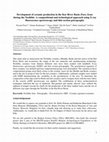
Archaeological and Anthropological Sciences
This study aims to characterize the Neolithic ceramics (Mushki, Bashi and Jari wares) of the Kur ... more This study aims to characterize the Neolithic ceramics (Mushki, Bashi and Jari wares) of the Kur River Basin and reconstruct the origin of the raw materials and manufacturing technology. Neolithic ceramics from thirteen different sites have been studied with handheld X-ray fluorescence spectroscopy (hXRF) and thin section petrography. The geochemical signature of these ceramics was defined and four compositional groups were determined. The variation in these compositional groups most likely relates to the ceramic wares for the Mushki and Bashi ceramics and to the site or group of sites for the Jari ceramics. Additionally, sediment samples were studied with hXRF demonstrating the variability in the geochemistry of the area. To determine the composition of the slips used for Bashi and Jari ceramics and to compare them with the inner fabric of the vessels, μXRF spectroscopy was applied. The combination of these archaeometrical techniques indicated the use of unaltered, fine-grained and mainly alluvial clays without the addition of temper (except for chaff) for the production of the three studied wares and the use of different clay types through the Neolithic in the Kur River Basin.
D. Taelman, M. De Dapper, L. Weekers & P. Pincé "Landscape background and geoarchaeology in the PVS project", In: The Potenza Valley Survey (Marche, Italy) - Settlement dynamics and changing material culture in an Adriatic valley between Iron Age and Late Antiquity, 2017, vol. 1, p. 42-66
B. Overlaet & P. Pincé "The "hill of the jackal" : the 1951 excavations at Tall-i Shogha, Iran", Iranica Antiqua, 2018, vol. 53, p. 1-39
P. Pincé, D. Braekmans, S. Lycke & P. Vandenabeele "Ceramic production in the Kur River Basin (Fars, Iran) during the late second millennium B.C.E.. A geochemical and technological characterization", Archaeometry, 2019, vol. 61:3, p. 556-573.
"Development of ceramic production in the Kur River Basin (Fars, Iran) during the Neolithic. A compositional and technological approach using X-ray fluorescence spectrometry and thin section petrography" Archaeological and Anthropological Sciences, 2019, vol. 11:4, p. 1241-1258
P. Pincé, B. Vekemans, P. Vandenabeele, E. Haerinck & B. Overlaet "Analysis of pre-Islamic ceramics from the Kur River Basin (Fars, Iran) using handheld X-ray fluorescence spectrometry", Spectrochimica Acta Part B, 2016, vol. 123, p. 150-156
A large number of painted pre-Islamic ceramics from the Kur River Basin (Fars province, Iran) was... more A large number of painted pre-Islamic ceramics from the Kur River Basin (Fars province, Iran) was collected on surveys and excavations conducted by the late Prof. L. Vanden Berghe (Ghent University, Belgium) during the 1950s. Handheld X-ray fluorescence spectrometry was undertaken on a selection of these ceramics to evaluate the applicability of the technique to study the fabric of these ceramics and the pigments used for decoration. The aim is to obtain elemental data, from which information about raw materials, manufacturing techniques and exchange systems can be extracted. A total of 26 sherds was analyzed dating from the Neolithic to the Late Bronze Age and belonging to different sites and styles. Five compositional groups could be identified in the dataset. These elemental groups differ from the groups obtained by the macroscopic study and are related to the production process and/or the provenance of the primary materials.
B. Overlaet, E. Haerinck, B. De Prez, P. Pincé, L. Van Goethem & P. Stein “The Mleiha Area F graveyard, Sharjah (U.A.E.). Preliminary Report on the 2015 Belgian Excavations” Sharjah Antiquities, 2016, vol. 15, p. 89-107
F. Vermeulen, M. De Dapper, P. Pincé, L. Weekers “Geoarchaeological study of abandoned Roman urban contexts: cases in Central-Adriatic Italy” Geoarchaeology - Special Publication: The Urban Geoarchaeology of Ancient Mediterranean Cities, 2017, vol. 33, issue 1, p. 85-99
B. Overlaet, E. Haerinck, B. De Prez, P. Pincé, L. Van Goethem & P. Monsieur “Preliminary Report on the 2014 Belgian Excavations at Mleiha area AV, Sharjah (U.A.E.)” Sharjah Antiquities, 2016, vol. 15, p. 30-39
PhD by Possum Pincé
P. Pincé "Clay in close-up : a spectroscopic and petrographic approach to ceramic production in the Kur River Basin (Fars, Iran)", Ghent University, 2018
Conference presentations by Possum Pincé
P. Pincé, A. Rousaki, S. Lycke & P. Vandenabeele "Analysis of painted pre-Islamic pottery from the Kur River Basin (Fars, Iran) using Raman spectroscopy", Poster presented at the GeoRaman XIII International Conference, Catania (Italy), June 10-14, 2018
"The production of Late Bronze Age ceramics in the Kur River Basin (Fars, Iran) – New insights based on handheld X-ray fluorescence spectrometry and thin section petrography", Oral presentation at the ASOR Conference, Boston, November 15-18, 2017
"Handheld X-ray fluorescence spectrometry on Neolithic ceramics from the Kur River Basin (Fars, Iran) - New insights into their ceramic production and distribution", Oral presentation at the BANEA Conference, Glasgow, January 4-6, 2017


Uploads
Awards/Prizes by Possum Pincé
Papers by Possum Pincé
PhD by Possum Pincé
Conference presentations by Possum Pincé