Books by Raffaele Tondini

TU 193, 2023
The Commentary on Matthew is one of Origen’s works we can partially read in Greek language. Nonet... more The Commentary on Matthew is one of Origen’s works we can partially read in Greek language. Nonetheless, this Greek text doesn’t reproduce Origen’s work in its original form but in a later abridgement.
The shortened nature of the Greek text is demonstrated thanks to a close comparison with fragments from exegetical catenae (cap. 1) and with an anonymous Latin translation (cap. 2). Particular attention is devoted to a 5th-century palimpsest fragments of the unabridged Commentary (cap. 4).
The previous editor of the Commentary tried to restore the original form Greek text by mean of large number of conjectures mainly based on the Latin translation. His results weren’t anyway satisfactory. In this volume the autonomy of the Greek abridgement is reestablished: a sample of this enterprise is offered in the new critical edition of books 12 and 13.
This volume offers a comprehensive study of the manuscript tradition of the Commentary on Matthew (cap. 5) and takes into consideration the general process of reduction undergone by Origen’s sometimes verbose production.
Clavis Origenis, 2024
Research on Origen of Alexandria (185–253/54) is a vibrant and growing field of patristic researc... more Research on Origen of Alexandria (185–253/54) is a vibrant and growing field of patristic research all over the world. Clavis Origenis aims to provide scholars with up-to-date information about Origen’s numerous writings. It records all printed pre-modern versions of Origenian texts together with critical editions and translations in modern languages, followed by a list of modern studies on the texts and their transmission. A short introduction to each of Origen’s writings provides essential information about its date and setting, its transmission in the original Greek or in Latin translation, and the current status of its text. The online edition of Clavis Origenis redirects to open-access digital works and studies.
Alfons Fürst/Samuel Fernández (eds.),
Il sacro | ἱερόν Greco. Lingua, storia e cultura di una grande civiltà (cur. M. Cenatani, P.B. Cipolla), 2022
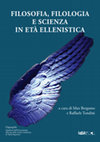
The volume is available in Open Access at the following address:
https://www.ledizioni.it/prodott... more The volume is available in Open Access at the following address:
https://www.ledizioni.it/prodotto/filosofia-filologia-scienza-eta-ellenistica/
Gli studi raccolti in questo volume puntano a mettere in luce la relazione strutturale e lo scambio reciproco tra diversi campi del sapere nella cultura di età ellenistica. Se oggi si va affermando uno specialismo settoriale sempre più rigido, nello spazio culturale che nacque dalle conquiste di Alessandro Magno e influenzò il mondo romano discipline come la filosofia, la filologia e le diverse scienze non conoscevano confini definiti ma vivevano di uno scambio ininterrotto e fecondo, che la ricerca stenta ancora a valorizzare. I saggi ospitati in questo volume, a cui hanno contribuito sia studiosi affermati sia giovani ricercatori, analizzano casi esemplari di questo fenomeno. Figure poliedriche di scienziati e filosofi come Eratostene di Cirene e Diogene di Babilonia vengono qui accostate a riflessioni sulla nascita della filologia, sulla trasmissione e il commento dei testi filosofici e sul delicato statuto di ambiti di ricerca come la meccanica. Oltre a valorizzare gli sforzi critici sinora compiuti per affermare una visione complessiva dei saperi in gioco, ci si interroga anche sulla causa della fine, più o meno traumatica, del modello culturale ellenistico.

by Nunzio Bianchi, Claudio Schiano, Bianca Maria Altomare, Max Bergamo, Luciano Bossina, Tommaso Braccini, Sergio Brillante, Cristiano Castelletti, Pasqua De Cicco, Francesca De Robertis, Ciro Giacomelli, Margherita Losacco, Vanna Maraglino, Ottavia Mazzon, Stefano Micunco, Rosa Otranto, Pasquale Massimo Pinto, Raffaele Tondini, and Anna Trento Nel secolo in cui l’impero bizantino è di fatto la più grande potenza mediterranea, la figura del... more Nel secolo in cui l’impero bizantino è di fatto la più grande potenza mediterranea, la figura del patriarca Fozio (ca. 820-891) domina la scena della «seconda Roma», capitale dell’impero. Grande battistrada dell’umanesimo, grande teologo, due volte patriarca ecumenico, pugnace avversario delle aspirazioni romane al primato, è considerato dal mondo cattolico pur sempre come un avversario, mentre dal mondo ortodosso solo tardi fu assunto come santo. Il suo nome è legato, per gli studiosi della letteratura greca antica e protobizantina, all’imponente repertorio, definito sommariamente Biblioteca, che in 280 capitoli riassume, analizza, sottopone a critica e in larga parte trascrive varie centinaia di autori: profani e cristiani, molto spesso per noi altrimenti perduti.
La Biblioteca non era certo destinata alla circolazione libraria: nacque come strumento di difesa della cerchia raccoltasi intorno al patriarca e variamente bersagliata dall’ala oltranzista della Chiesa d’Oriente. L’opera alla quale egli probabilmente intendeva legare il suo nome era semmai l’intensa pubblicistica teologica e dottrinaria che occupa quasi per intero un paio di tomi della Patrologia greca.
In questo volume viene finalmente offerta ai lettori la prima traduzione italiana integrale della Biblioteca. Al tempo stesso un commento sistematico ed essenziale accompagna il lettore nella selva fittissima della erudizione racchiusa in questo autentico «tesoro», come i grandi umanisti amarono definire la Biblioteca foziana. A fronte figura il testo greco, migliorato rispetto all’unica moderna edizione circolante, quella della “Collection Budé”. Al termine, l’indice analitico di Immanuel Bekker fornisce al lettore una preziosa chiave per la consultazione.
Papers by Raffaele Tondini

R. Tondini, Passato, presente, futuro, eternità. I tempi della profezia tra Origene e gli Antiocheni, in Prolepsis: Predicting, Anticipating, Foretelling from Antiquity to the Renaissance cur. R. Berardi – S. Mancuso – O. Montepaone, De Gruyter, Berlin-Boston 2025, 227-249.
This contribution investigates the way ancient Christian literature dealt with the theme of proph... more This contribution investigates the way ancient Christian literature dealt with the theme of prophecy by reworking the Greek (notably Homeric) tradition and that of Jewish prophetism. In this paper, the different approaches of Origen and the Antiochene school are highlighted: while the former focused his efforts on combining the prophets' foreknowledge of the future with the individual freedom and responsibility, the Antiochene exegetes applied the classical pattern to biblical literature, going so far as to use the lexicon of grammar to denote the present, the past, and the future, i.e., the chronological dimensions that are knowable to the prophet.
This article examines Origen’s complex view on suicide through key texts involving Judas, Jesus, ... more This article examines Origen’s complex view on suicide through key texts involving Judas, Jesus, and self-chosen death. Combining Greco-Roman and Christian thought, Origen sees suicide as illegitimate unless divinely justified, yet he avoids total condemnation.
Annali di Storia dell'Esegesi, 2022
L’articolo analizza l’uso del termine περιωπή in Origene, evidenziando un’allusione al Politico d... more L’articolo analizza l’uso del termine περιωπή in Origene, evidenziando un’allusione al Politico di Platone. Attraverso il confronto con Numenio, si mostra come l’immagine della specola divina unisca esegesi biblica e filosofia platonica.
Rivista di Storia del Cristianesimo, 2025
Discussione sull'esegesi origeniana dal Salmo 82 e della sua ricezione a partire da Alfons Fürst... more Discussione sull'esegesi origeniana dal Salmo 82 e della sua ricezione a partire da Alfons Fürst, Vergöttlichung und Sozialethik. Die neuentdeckte Homilie des Origenes über Psalm 82 (81 LXX) im auslegungsgeschichtlichen Kontext (Adamantiana 29), Münster 2024.
R. Tondini, Interpolare il Vangelo. Severo di Antiochia e un’antica discussione filologica (con un nuovo frammento di Cirillo di Alessandria), «Vetera Christianorum» 59 (2022), 173-187
R. Tondini, L’Origene di Ribera. Breve storia di un dipinto, «Adamantius» 27 (2021), 396-402
R. Tondini, Educazione antiochena. L’Introduzione di Adriano e il contesto scolastico della tarda antichità, «Rivista di Storia del Cristianesimo» 18 (2021), 423-440
R. Tondini, Il marchio della sconfitta: un’ipotesi su Aristofane, Rane 1511-1512, «Quaderni di Storia» 93 (2021), 101-112
Quaderni di Storia, 2021
R. Tondini, Ateniesi si nasce? La legge periclea del 451/50 a. C., «Incidenza dell'Antico» 17 (2019), 69-103.
Incidenza dell'Antico, 2019
This paper aims at offering a general interpretation of Pericles’ citizenship law of 451/50 BC. A... more This paper aims at offering a general interpretation of Pericles’ citizenship law of 451/50 BC. A first section is devoted to the development of Athenian citizenship rules in the archaic period: the role of phratries in defining the legitimate birth – and consequently the possibility to obtain citizenship – is shown as crucial. The central part of the paper takes into consideration ancient witnesses and modern interpretations of Pericles’ citizenship law and argues legislative action was mainly aimed at strengthening social cohesion in a critical moment for the Athenian democracy. It is finally stated that this Periclean law, as it was not retroactive and was substantially abolished during the Peloponnesian War, had limited effects in the 5th century but was definitively re-established in 403/402 BC.
R. Tondini, Paul Collomp: tra Marc Bloch e Giorgio Pasquali, «Eikasmos» 30 (2019), 327-354.
Eikasmos, 2019
This paper is devoted to Paul Collomp (Niort 1885–Clermont-Ferrand 1943), Professor of Papyrology... more This paper is devoted to Paul Collomp (Niort 1885–Clermont-Ferrand 1943), Professor of Papyrology and Greek at the University of Strasbourg. The first part demonstrates that the source of Marc Bloch’s Métier d’historien, when dealing with textual criticism, is Collomp’s handbook La critique des textes. The second part contains a biography of Collomp and an assessment of his contribution to the philological debate of the 1930s. The third considers Giorgio Pasquali’s review of Collomp’s handbook in the context of the debate between Paul Maas and Pasquali about textual criticism. Finally, the Italian reception of Collomp’s work is inserted in the wider context of the relationship between Italian and French philology in the first half of the 20th century.
R. Tondini, Photius as Origen’s Reader (and Editor), in Origeniana Duodecima, Leuven 2019, 753-770.
Origeniana Duodecima. Origen's Legacy in the Holy Land - A Tale of Three Cities: Jerusalem, Caesarea and Bethlehem (Proceedings of the 12th International Origen Congress, Jerusalem, 25-29 June, 2017), Leuven, Peeters, 2019
This essay aims at showing that ll. 582-606 of Euripides’ Ion alludes to the political figure of ... more This essay aims at showing that ll. 582-606 of Euripides’ Ion alludes to the political figure of Pericles the Younger. Ion and Pericles’ son are reluctant to join the political stage because of their not entirely Attic ancestry. In particular, Pericles’ law of 451/450 BC prevented Pericles the Younger from being Athenian citizen, even though he was instated into the citizenship later thanks to a reform which took place in 430 BC. In the year 411 BC, a likely date for the performance of the play, when the Four Hundreds established an oligarchic government, Pericles the Younger was thirty-years old (or more) and, as argued in the essay, he could take part in political activity but he was hesitant and this attitude of his was shown by the character of Ion in Euripides’ tragedy and by a line of Eupolis’ Demoi. Even Xenophon was concerned with the figure of Pericles the Younger (Men. III,5) after the trial of the Arginusae in which the latter had been put to death.
R. Tondini, Origene bizantino. I Commenti a Matteo e Giovanni da Mistrà a Venezia, «Adamantius» 22 (2016), 398-415.
This essay tries to shed light on some moments of the byzantine tradition of Origen. Particular a... more This essay tries to shed light on some moments of the byzantine tradition of Origen. Particular attention is paid to the transmission of the Commentary on Matthew: the codex Marc. Gr. 43 is shown to have been copied in Mystras for the emperor John V Kantacouzenus, who took inspiration from the Commentary for his theological treaties, as proved by a reading note here transcribed. The following owner of the manuscript was Bessarion, who played a fundamental role in the circulation of Origen’s writings and expressed great admiration for the heretic theologian of Alexandria. From a strictly philological point of view, Marc. Gr. 43 is demonstrated to be not a simple copy of Monac. Gr. 191 but to be the result of a probable contamination and to contain conjectures by the scribe himself. It is finally argued that the division between books X and XI of the Commentary on Matthew originated in the Marc. Gr. 43 and can’t consequently be considered original.
Events, seminars, talks by Raffaele Tondini
Questa giornata di studi si propone di riunire specialisti di varie discipline classiche e giovan... more Questa giornata di studi si propone di riunire specialisti di varie discipline classiche e giovani studiosi al fine di indagare la cultura ellenistica nel suo complesso e di far emergere come quest’epoca, nonostante una marcata tendenza alla specializzazione, preservi una più profonda unità dei saperi. Si presterà dunque attenzione alle dinamiche epistemologiche e storiche che presiedono all’interazione di campi disciplinari specifici e, dall’altro lato, alle ragioni di un’unità che li lega in un tutto coerente e inscindibile.
PhD Thesis by Raffaele Tondini
Tesi di dottorato discussa persso l'Università degli Studi di Padova in data 11/02/2020. Relatore: prof. Luciano Bossina, 2020
This thesis has two distinct but related purposes. First of all, it aims at investigating some mo... more This thesis has two distinct but related purposes. First of all, it aims at investigating some moments of the fortune and misfortune of Origen in the Byzantine world. Firstly, it will deal with a curious reference, contained in the acts of the Second Council of Nicaea (787), to the presumed acts of an apostolic synod held in Antioch and kept in the library of Origen (chapter 1). We will then focus on Photius' appreciation of the figure and work of Origen. Particularly important will be the manuscript Marc.gr. 47 of Philocalia (chapter 2).
Secondly, this thesis aims at the edition of books 12 and 13 of Origen's Commentary on Matthew, departing from the ecdotic criteria adopted by Klostermann in his 1935 edition. For this work, we have a Greek text available (books 10-17 on 25), partially overlapping with an anonymous Latin translation (5th-6th century). Our aim is to demonstrate that our Greek manuscripts do not transmit the text as licensed by the author: they are but witnesses of a later compilation, in which the Commentary on Matthew has been heavily abbreviated. This conclusion will be reached through the systematic comparison of the Greek text with the Latin translation, which often appears wider (chapter4), and with the exegetical chains dedicated to the Synoptic Gospels which, where they draw on Origen’s commentary, offer passages unknown to the direct tradition. (chapter 3). The same conclusions will then be drawn from the study of other branches of tradition, among which the fragments of Crypt. Γ. β. VI stand out. They are in fact witness of the unabridged version of the Commentary on Matthew (chapters 5 and 6). In its 1935 edition Klostermann had inserted in the Greek text conjectures and additions derived from the systematic comparison with the Latin translation. Here we offer instead an edition of the Greek abridged version, purified from the interventions of the German scholar. The Greek text will be accompanied by a strictly literal Italian translation and will be followed by a series of notes to justify the most delicate ecdotic choices. The edition will also be based on a new codicological and palaeographic study of the Greek manuscripts of the Commentary on Matthew (Cantabr.Trin.Coll. B. 8. 10; Monac.gr. 191; Marc.gr. 43, Vat.gr. 597; Par.gr. 455; Matr.gr. 4725; Barb.gr. 575; Barb.gr. 556). Finally, an updated stemmatic arrangement of the manuscript tradition will be offered (chapter 7).



Uploads
Books by Raffaele Tondini
The shortened nature of the Greek text is demonstrated thanks to a close comparison with fragments from exegetical catenae (cap. 1) and with an anonymous Latin translation (cap. 2). Particular attention is devoted to a 5th-century palimpsest fragments of the unabridged Commentary (cap. 4).
The previous editor of the Commentary tried to restore the original form Greek text by mean of large number of conjectures mainly based on the Latin translation. His results weren’t anyway satisfactory. In this volume the autonomy of the Greek abridgement is reestablished: a sample of this enterprise is offered in the new critical edition of books 12 and 13.
This volume offers a comprehensive study of the manuscript tradition of the Commentary on Matthew (cap. 5) and takes into consideration the general process of reduction undergone by Origen’s sometimes verbose production.
Alfons Fürst/Samuel Fernández (eds.),
https://www.ledizioni.it/prodotto/filosofia-filologia-scienza-eta-ellenistica/
Gli studi raccolti in questo volume puntano a mettere in luce la relazione strutturale e lo scambio reciproco tra diversi campi del sapere nella cultura di età ellenistica. Se oggi si va affermando uno specialismo settoriale sempre più rigido, nello spazio culturale che nacque dalle conquiste di Alessandro Magno e influenzò il mondo romano discipline come la filosofia, la filologia e le diverse scienze non conoscevano confini definiti ma vivevano di uno scambio ininterrotto e fecondo, che la ricerca stenta ancora a valorizzare. I saggi ospitati in questo volume, a cui hanno contribuito sia studiosi affermati sia giovani ricercatori, analizzano casi esemplari di questo fenomeno. Figure poliedriche di scienziati e filosofi come Eratostene di Cirene e Diogene di Babilonia vengono qui accostate a riflessioni sulla nascita della filologia, sulla trasmissione e il commento dei testi filosofici e sul delicato statuto di ambiti di ricerca come la meccanica. Oltre a valorizzare gli sforzi critici sinora compiuti per affermare una visione complessiva dei saperi in gioco, ci si interroga anche sulla causa della fine, più o meno traumatica, del modello culturale ellenistico.
La Biblioteca non era certo destinata alla circolazione libraria: nacque come strumento di difesa della cerchia raccoltasi intorno al patriarca e variamente bersagliata dall’ala oltranzista della Chiesa d’Oriente. L’opera alla quale egli probabilmente intendeva legare il suo nome era semmai l’intensa pubblicistica teologica e dottrinaria che occupa quasi per intero un paio di tomi della Patrologia greca.
In questo volume viene finalmente offerta ai lettori la prima traduzione italiana integrale della Biblioteca. Al tempo stesso un commento sistematico ed essenziale accompagna il lettore nella selva fittissima della erudizione racchiusa in questo autentico «tesoro», come i grandi umanisti amarono definire la Biblioteca foziana. A fronte figura il testo greco, migliorato rispetto all’unica moderna edizione circolante, quella della “Collection Budé”. Al termine, l’indice analitico di Immanuel Bekker fornisce al lettore una preziosa chiave per la consultazione.
Papers by Raffaele Tondini
Events, seminars, talks by Raffaele Tondini
PhD Thesis by Raffaele Tondini
Secondly, this thesis aims at the edition of books 12 and 13 of Origen's Commentary on Matthew, departing from the ecdotic criteria adopted by Klostermann in his 1935 edition. For this work, we have a Greek text available (books 10-17 on 25), partially overlapping with an anonymous Latin translation (5th-6th century). Our aim is to demonstrate that our Greek manuscripts do not transmit the text as licensed by the author: they are but witnesses of a later compilation, in which the Commentary on Matthew has been heavily abbreviated. This conclusion will be reached through the systematic comparison of the Greek text with the Latin translation, which often appears wider (chapter4), and with the exegetical chains dedicated to the Synoptic Gospels which, where they draw on Origen’s commentary, offer passages unknown to the direct tradition. (chapter 3). The same conclusions will then be drawn from the study of other branches of tradition, among which the fragments of Crypt. Γ. β. VI stand out. They are in fact witness of the unabridged version of the Commentary on Matthew (chapters 5 and 6). In its 1935 edition Klostermann had inserted in the Greek text conjectures and additions derived from the systematic comparison with the Latin translation. Here we offer instead an edition of the Greek abridged version, purified from the interventions of the German scholar. The Greek text will be accompanied by a strictly literal Italian translation and will be followed by a series of notes to justify the most delicate ecdotic choices. The edition will also be based on a new codicological and palaeographic study of the Greek manuscripts of the Commentary on Matthew (Cantabr.Trin.Coll. B. 8. 10; Monac.gr. 191; Marc.gr. 43, Vat.gr. 597; Par.gr. 455; Matr.gr. 4725; Barb.gr. 575; Barb.gr. 556). Finally, an updated stemmatic arrangement of the manuscript tradition will be offered (chapter 7).