Papers by Razan Ghazzawi
Daraj Press, 2021
In the piece, I explore the politics of shaming and bullying within the Syrian activist communiti... more In the piece, I explore the politics of shaming and bullying within the Syrian activist communities against anti-militarization activists, specifically if they come from 'minoritarian' backgrounds (women, LGTBQ, religious minorities). I argue that anti-colorist feminist critique provides us with optics that allow us to read everyday violence within activist communities that enable metanarratives and silence visionary ones. I also challenge the racial politics behind the term 'white Syrian,' and how it is often used by Syrian intellectuals to compare Black people's struggles with Syrians' and I show why and how this is problematic.
Finally, this is a piece written as an 'insider' within the Syrian activist communities. It does not aim to shame people who use the term 'white Syrian' to shame other Syrian activists. It aims to encourage a politics of reflection after 10 years of revolution and counterrevolution[s]. It mostly aims to move the discussion forward.
On Rojava's new international LGBTQI brigade, the "war on terror" and the Western left's erasure ... more On Rojava's new international LGBTQI brigade, the "war on terror" and the Western left's erasure of local struggles.
This paper is not an academic one, I wrote it when following my unpleasant departure from Syria. ... more This paper is not an academic one, I wrote it when following my unpleasant departure from Syria. While many things have changed in Syria since March 2014, I hope it still can offer some perspective.
It was published in 'The people want to bring down the regime' by Rote Fabrik in March 2014 in the exhibition: huge flights -little shelter, curated by Rayelle Niemann & Silvia Staub. All rights are reserved to Rote Fabrik.
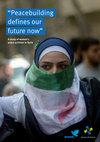
The research sought to understand the women activists’ definitions and priorities of peace-buildi... more The research sought to understand the women activists’ definitions and priorities of peace-building in Syria today; and explore the current forms and characteristics of women activism in peace-building, identify the challenges it is facing, and shed light on the available opportunities. It relied on data collected from women activists working in various non-regime controlled as well as regime-controlled areas across Syria. In total, the research collected information from 49 women’s groups, interviews with 35 influential women activists, and 10 focus groups discussions hosting 8-10 activists each.
Despite the escalating violence in the country, women activists in Syria today are the most effective peacebuilders on the ground. They have tailored their peacebuilding activities to respond to the local needs, gain people’s trust and turn initial societal resistance to local support. Their growing activism is, however, faced with mounting challenges, including the escalating violence and widespread fighting, continued regime’s violent crackdown on its dissidents, and lack of funds.
Talks by Razan Ghazzawi
Women's Grassroots Activism in Syria
This presentation was made in Harvard Arab Weekend 2016 http://www.harvardarabweekend.com/copy-of... more This presentation was made in Harvard Arab Weekend 2016 http://www.harvardarabweekend.com/copy-of-speakers. The points made from first hand experience as an activist from 2011-2013 and a co-author of "Peacebuilding Defines our Future Now" report with Badael Foundation for Sustainable Peace in Syria between 2014-2015.
Journal Articles by Razan Ghazzawi

Popular Sovereignty and Trans Mothering of Antiwar Syrian Soldiers
Review of Middle East Studies, 2026
This short article explores trans mothering as an embodied practice of popular sovereignty in the... more This short article explores trans mothering as an embodied practice of popular sovereignty in the context of the Syrian state army. Moving beyond traditional state-centered and militarized masculinities that shape scholarly notions of sovereignty, I demonstrate how trans mothering—embodied through listening, care, and affirmation of fellow soldiers—became a mode of antiwar world-making amid Assad’s counterrevolutionary war. The article centers on the story of Duaa, a trans woman whose gender identity was denied by the Syrian state. Forcibly conscripted and sent to the frontlines in the Damascus suburbs, Duaa developed everyday practices of trans care and support toward fellow soldiers, reorienting military service around mutual support rather than state control. Building on ethnographic research and life history interviews in Lebanon, I engage with Syrian–Palestinian writer Naya Rajab’s approach to trans mothering and Amahl Bishara’s theorization of popular sovereignty as a disruptive force against authoritarian rule. Through this framework, the article illustrates how Duaa’s trans mothering temporarily shifts the army’s hierarchy into acts that nurture mutual care rather than sovereign obedience. Her trans care reimagines sovereignty not necessarily through resistance, but through the everyday reconstitution of state power on state military bases. Finally, the article argues for a reconsideration of popular sovereignty in post-Assad Syria, where massacres and displacement continue to serve as technologies of sovereign rule under Ahmad al-Sharaa.
Kohl: a Journal for Body and Gender Research, 2023



Uploads
Papers by Razan Ghazzawi
Finally, this is a piece written as an 'insider' within the Syrian activist communities. It does not aim to shame people who use the term 'white Syrian' to shame other Syrian activists. It aims to encourage a politics of reflection after 10 years of revolution and counterrevolution[s]. It mostly aims to move the discussion forward.
It was published in 'The people want to bring down the regime' by Rote Fabrik in March 2014 in the exhibition: huge flights -little shelter, curated by Rayelle Niemann & Silvia Staub. All rights are reserved to Rote Fabrik.
Despite the escalating violence in the country, women activists in Syria today are the most effective peacebuilders on the ground. They have tailored their peacebuilding activities to respond to the local needs, gain people’s trust and turn initial societal resistance to local support. Their growing activism is, however, faced with mounting challenges, including the escalating violence and widespread fighting, continued regime’s violent crackdown on its dissidents, and lack of funds.
Talks by Razan Ghazzawi
Journal Articles by Razan Ghazzawi