Celebrity Society by Robert van Krieken
Historical Social Research, 2024
This paper outlines the intellectual origins of this special issue in a number of conferences and... more This paper outlines the intellectual origins of this special issue in a number of conferences and workshops held between 2018 and 2021, addressing the questions of, on the one hand, how the understanding of law and legal institutions can be en-hanced with reference to Norbert Elias’s conception of both civilizing and de-civilizing process and, on the other hand, how Elias’s analysis of civilization and decivilization could be developed with a deeper engagement with the specific role of law. After a discussion of the centrality of law to civilizing and decivilizing processes, we identify the central theoretic premises that in-formed the call for papers and that link all the papers together. This is fol-lowed by a very brief outline of each of the nine papers, and finally some con-cluding reflections on the future directions that research in this field might take.
Books by Robert van Krieken

I et interview kommenterede den tysk-britiske sociolog Norbert Elias (1897-1990) engang en bemærk... more I et interview kommenterede den tysk-britiske sociolog Norbert Elias (1897-1990) engang en bemærkning, som Zygmunt Bauman havde knyttet til hans værk. Bemærkningen gik ud på, at Elias måske var ”den sidste repræsentant for den klassiske sociologi, en forsker, der stræber efter den store syntese”. Elias var rasende over denne karakteristik, fordi han hellere ville være ”den første, der bryder en ny vej”.
De to udsagn tydeliggør ikke alene forskellen mellem Elias’ selvopfattelse og den måde, mange kommentatorer har betragtet ham på, men fastholder også et vigtigt kendetegn ved hans værk: Elias kombinerer nemlig på den ene side en syntese af de vigtigste elementer i det sene 1800-tals og det tidlige 1900-tals sociologiske tænkning med på den anden side en yderst selvstændig og intellektuel stringent anvendelse af denne syntese i forhold til et bredt spektrum af empiriske data.
Det er med andre ord i spændingsfeltet mellem tradition og nytænkning, Elias’ sociologiske arbejde udfolder sig; og det er blandt mange andre ting dette forhold, Robert van Krieken klarlægger i sin engagerede, men langt fra ukritiske introduktion til Elias og hans indsats og placering inden for det 20. århundredes sociologi.
Bogen henvender sig primært til et fagpublikum, men i og med, at den så levende beskæftiger sig med en samfundsforsker, der gennem hele sit værk søgte at besvare spørgsmålet: Hvad det i grunden vil sige at være et ’moderne’, ’civiliseret’ menneske, har den relevans for en langt bredere, samfundsinteresseret læserskare.
Oversat fra engelsk efter Norbert Elias af Tom Havemann.

"Children and the State" seeks to make a significant contribution to both historical sociology an... more "Children and the State" seeks to make a significant contribution to both historical sociology and our understanding of the development of child welfare. It critically discusses theories of welfare as social control, explores the development of child welfare institutions and agencies in their social and political context, and provides new perspectives on the current system of child welfare. The book is divided into three parts, the first of which outlines the work of writers critical of the operation of power in the welfare state such as Platt, Lasch, Donzelot and Meyer, and setting their ideas and concepts within the history and sociology of welfare and family life. The second part of the book provides a history of the development of child welfare in Australia between 1800 and 1940, and explains how the major turning points relate to their social and political contexts. The third part explains what can be learnt from Australian child welfare history to improve our current understanding of the relation between the state, family life and childhood. The book may be of value to students of sociology, social history, education, criminology and the human services, as well as practitioners interested in relating social theory to practical concerns such as child abuse and neglect, juvenile delinquency and family breakdown.
This book locates Elias's work clearly within the development of sociology and also against the b... more This book locates Elias's work clearly within the development of sociology and also against the background of current debates.
Between the 1930s and the 1980s he developed a unique approach to social theory which is now beginning to take root in contemporary social research and theory. Since the translation of his work into English began to accelerate in the 1980s, a growing number of books and articles on topics including health, sexuality, crime, national and ethnic identity, femininity and globalization, in a variety of disciplines, make positive reference to Elias as an authority on the history of emotions, identity, violence, the body and state formation.
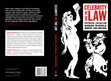
Celebrity and the Law provides an historical and conceptual context for understanding the phenome... more Celebrity and the Law provides an historical and conceptual context for understanding the phenomenon of the celebrity in contemporary society and analyses three areas of law in which celebrity status has a significant impact:
the law of passing off, which controls commercial use of the celebrity identity
the law of defamation, which protects the celebrity’s reputation in the community, and
the law of privacy and confidence, which regulates intrusions into and disclosures of information about a celebrity’s private life
Since celebrity interactions with legal systems are global phenomena, comparisons are made throughout the book between Australian celebrity law and that of other jurisdictions, such as the United States and the United Kingdom in its new European context. The book seeks to explain and analyse how the law has responded and ought further to respond to the phenomenon of celebrity and to the ever-expanding demands of celebrities for extensive legal protection and stringent controls over the unauthorized use of their identities.
The analysis in the book acknowledges the sensational and enchanting nature of celebrity and recognises that the celebrity persona is often a valuable cultural and expressive resource which is and ought to be, within reasonable limits, available for public use and public comment. The book never loses sight of the strong public interest in free competition and free speech, and the need to balance celebrity demands with a public sphere of robust and open dialogue, ideas, creativity and debate.
Journal Articles by Robert van Krieken
Theory, Culture & Society, 2024
Politics and society today are characterized by anger and rancour. This paper reflects on this is... more Politics and society today are characterized by anger and rancour. This paper reflects on this issue by linking: first, Norbert Elias's sociological account of the complex dynamics of processes of civilization and decivilization, his thoughts on the interrelationship between technological and social organization and human habitus; second, the work done on the concept of ressentiment, introduced by Nietzsche and developed by Scheler and others. Linking these two conceptual frameworks enables a deeper reflection on the role of contemporary communications technology and the 'new structural transformation of the public sphere' in the expanding significance of ressentiment in social and political life today. My argument will be that it is important to see the shifts taking place today as part of the interweaving of technological and social changes, with the spread of ressentiment in social media being the latest episode in the ongoing interweaving of processes of civilization and decivilization.
Historical Social Research, 2024
This paper will examine the ways in which the prevailing representation of the legal practices an... more This paper will examine the ways in which the prevailing representation of the legal practices and institutions related to the management and control of Indigenous fami-lies and children in Australia shifted over time from “welfare” to “cultural gen-ocide,” and how that shift can be better understood by drawing on Norbert Elias’s understanding of civilizing and decivilizing processes. Policies and practices which were understood from the 19th century onwards to be aimed at promoting the welfare of Indigenous children in the interests of increasing civilization came to be regarded from the 1980s onwards as essentially vio-lent and indeed barbaric. This was due to them being a social engineering project for the gradual and systematic annihilation of Aboriginal cultural identity, to the point of being consistent with the definition of genocide in the UN Genocide Convention, albeit as “cultural genocide.” However, the term remains heavily contested, with views divided between those who think gen-ocide should be restricted to deliberate physical killing, and those arguing for a more expansive conception of what constitutes the destruction of human life. I will argue that a turn to Elias’s conception of civilizing and decivilizing processes helps to clarify what underpins the opposition between these two approaches. After examining the concepts underpinning the legal mecha-nisms used first to intervene into Australian Indigenous family life and then to pursue holding the responsible authorities to account through “Stolen Generations” litigation, the paper argues for a more nuanced conception of the ways in which civilizing and decivilizing processes interweave with each other in changing ways over time, generating a need to engage with the con-cept of a “meta-civilizing process.”
Critical Sociology, 2024
The 'Robodebt' scheme was an initiative pursued by the Australian Department of Human Services be... more The 'Robodebt' scheme was an initiative pursued by the Australian Department of Human Services between 2016 and 2019 to increase the amount of money recovered from supposed 'overpayments' to recipients of welfare benefits. Drawing on the rich body of empirical material generated by the Royal Commission into the Robodebt Scheme as well as journalists and academic observers, this paper develops an understanding of the affair from the perspective of the sociology of organizations. Particular use is made of a growing body of research in the organizational sociology of ignorance. Following an outline of the main features of Robodebt, the paper explains the significance of the conception of ignorance as more complex than the mere absence of knowledge in organizational life. It then examines the specifics of the way in which Robodebt casts light on the role played by systemic, wilful ignorance in the relationship between law, bureaucracy and politics. The paper concludes with some reflections on the senses in which Robodebt was a manifestation not only of a crisis, fiasco or scandal, but also of the normal operation of the 'will to ignorance' (Nietzsche) in organizational life.
Annual Review of Law & Social Science 19(1), 2023
A significant body of social science research is now working with the concept of refeudalization—... more A significant body of social science research is now working with the concept of refeudalization—as well as related terms such as neo-feudalism and neo-medievalism—to analyze a variety of contemporary developments. The social science scholars who use these terms challenge an oversimplified modernization model that regards power relations such as serfdom, vassalage, suzerainty, and fiefdom as merely historical relics. The refeudalization process has significant legal dimensions, which this review outlines to draw out the central implications of the concept of refeudalization for an adequate understanding of current developments in law, society, and politics. Topics covered include the changing relationship between public and private law; the privatization of public authority and responsibilities; the territorial unbundling of sovereignty and the tendency toward multiple, overlapping authorities and jurisdictions; the contractualization of groups and political units as well as individuals; and the changing relationship between sovereignty and political representation.
Journal of Sociology 56(4): 714-25, 2020
This article outlines the key elements of Norbert Elias's theory of the civilizing process that c... more This article outlines the key elements of Norbert Elias's theory of the civilizing process that can usefully be drawn upon to develop a detached, less present-focused sociological understanding of the Covid-19 pandemic. Three ideas are highlighted: first, this is in fact an old story, in the sense that we're in the middle of a constellation of long-term processes, and this matters in a number of ways. Second, human civilization, understood as based on expanding and intensifying forms of global interdependence, is both a cause and part of the solution to the problems we are facing. Third, the causes, effects and possible responses to the Covid-19 pandemic are tightly bound up with what kinds of persons we are. It concludes that a sustainable response to crises like pandemics will only be organized around rational reflection to a limited extent: in significant ways it will be constituted by shifts at the emotional and psychological level, in the realm of culture and habitus, by the formation of particular ways of being a person.
Electra 11, 2021
This paper analyses and charts the genealogy of celebrity, identifying the historically changing ... more This paper analyses and charts the genealogy of celebrity, identifying the historically changing social conditions and realities that make celebrity possible, while at the same showing that its history is interwoven with the history of the public realm. This a longer
Historical Social Research/Historische Sozialforschung, 2019
This paper provides an introduction and overview for this special issue’s collection of important... more This paper provides an introduction and overview for this special issue’s collection of important new work in the history of celebrity. It sets the scene by explaining the main difficulties that have beset the development of a historiography of the very contemporaneous phenomenon of celebrity. A key issue is how one understands the historical emergence of the “public sphere,” and how confident one should be that the historical narrative concerning the public sphere and celebrity should begin in the 18th century, rather than in earlier periods. It outlines what is particularly significant and innovative about the contributions to this special issue, and draws out their implications for the ever-expanding scope of the history of celebrity.
This article places Georg Franck’s ‘The Economy of Attention’ in the context of the broader discu... more This article places Georg Franck’s ‘The Economy of Attention’ in the context of the broader discussions of ‘the attention economy’, and the increasing significance of attention in a knowledge society characterised by ever-increasing flows of information and data. I highlight the four core
elements of Franck’s theory of the economy of attention: first, the importance of the fundamental human desire for attention; second, his emphasis on the parallels between attention and money, making it more literally a form of capital than is usually assumed; third, the self-reproducing character of attention capital, earning interest just as money does; fourth, the connections between the economy of attention and the expanding impetus towards everyone becoming a celebrity and a ‘brand’ within what he calls ‘mental capitalism’, with the field of academic labour
a key example.
Theory, Culture & Society, 2019
The concept of ressentiment is increasingly being drawn upon to analyse current political develop... more The concept of ressentiment is increasingly being drawn upon to analyse current political developments, but in doing so it is important to have a clear understanding of its original meaning in the work of Nietzsche and Scheler, who applied it to the inner logic of democracy, rather than political movements opposed to liberal democracy. This article introduces an important essay written in 1937, ‘National Socialism as a doctrine of rancour’, by the Dutch modernist writer, Menno ter Braak. Despite having been highly influential in Dutch literature and scholarship, he is virtually unknown in the Anglophone world, since none of his work has been translated. This article is an important contribution both as a rare examination of how ressentiment can be used to analyse 1930s National Socialism, and as an analysis of the role of ressentiment as a moral sentiment in democratic politics, especially its populist variants.
Annual Review of Law & Social Science, 2019
The German sociologist Norbert Elias developed a wide-ranging sociological analysis of the interc... more The German sociologist Norbert Elias developed a wide-ranging sociological analysis of the interconnections between processes of state formation, institutional dynamics and individual subjectivity, or habitus, and the logic of their processes of transformation over time. His work has had significant impact on social scientific thought in a wide variety of fields, including the historical sociology of the self, violence, crime and punishment, organizations, emotions, sexuality, social control, and sport. His influence in legal scholarship, however, has concentrated in criminology, with only sporadic use of his ideas in relation to other topics in law and society research. This review highlights the ways in which Elias can be read as a theorist of regulation by outlining (1) the core elements of Elias’s ‘process-figurational’ sociology and his analysis of processes of civilization and decivilization, (2) Elias’s observations on law and state formation, (3) a selection of the socio-legal research related to his sociological approach, in fields such as crime and punishment, evolving modes of regulation, and international relations (4) the potential future directions in which Elias’s process-figurational approach might move in socio-legal research and scholarship, including the emotional dimensions of family law, human rights and humanitarianism, the intersections of legal evolution and broader processes of social change, legal pluralism and legal culture, tort law, constitutionalism and the rule of law.
Published in: Theory, Newsletter of the ISA Research Committee 16 Sociological Theory, Autumn/Winter 2012: 3-4, 2012
A brief discussion of the place of celebrity in sociological theory.
Current Sociology, 2010
This article outlines the specific form taken by the social scientific study of childhood in Aust... more This article outlines the specific form taken by the social scientific study of childhood in Australia, identifying both what is shared with childhood research in other English-language countries, and what is distinctive in the Australian setting. It begins by sketching the social history of childhood in Australia, with particular reference to what was specific about the childhood experiences of Aboriginal children, as well as the peculiarities of settler-colonial family life. It then goes on to identify the moves towards a distinct focus on childhood in Australian sociology, which have until now been relatively modest, closely linked to other social science disciplines (notably history, anthropology, social policy and psychology), and theoretically more or less derivative of international developments in childhood sociology. The key research themes are outlined, including Aboriginal childhoods, the children of asylum-seekers and refugees and children’s experience of divorce and separation, against a background of an increasingly neoliberal organization of social science research activity. The article then sketches the place of childhood in Australian public debate, and concludes with some observations on the possible future directions of the sociology of childhood in Australia.
Social & Legal Studies, 2007
This paper pursues an improved theoretical understanding of the particular position of legal rati... more This paper pursues an improved theoretical understanding of the particular position of legal rationality in relation to other, competing, modes of thinking about human behaviour and social institutions. Against the background of the existing literature on the role of scientific expert evidence in legal proceedings, the paper critically reconstructs Luhmann’s arguments concerning the combined normative or operational “closure” and “cognitive openness” of the legal system, and relates these arguments to Bourdieu’s work on the internal functioning of the juridical “field”. It then puts those conceptual insights “to work” with reference to a number of empirical examples of the role of extra-legal forms of knowledge - in particular, history and anthropology - within the Australian High Court and Federal Court jurisprudence regarding native title.



Uploads
Celebrity Society by Robert van Krieken
Books by Robert van Krieken
De to udsagn tydeliggør ikke alene forskellen mellem Elias’ selvopfattelse og den måde, mange kommentatorer har betragtet ham på, men fastholder også et vigtigt kendetegn ved hans værk: Elias kombinerer nemlig på den ene side en syntese af de vigtigste elementer i det sene 1800-tals og det tidlige 1900-tals sociologiske tænkning med på den anden side en yderst selvstændig og intellektuel stringent anvendelse af denne syntese i forhold til et bredt spektrum af empiriske data.
Det er med andre ord i spændingsfeltet mellem tradition og nytænkning, Elias’ sociologiske arbejde udfolder sig; og det er blandt mange andre ting dette forhold, Robert van Krieken klarlægger i sin engagerede, men langt fra ukritiske introduktion til Elias og hans indsats og placering inden for det 20. århundredes sociologi.
Bogen henvender sig primært til et fagpublikum, men i og med, at den så levende beskæftiger sig med en samfundsforsker, der gennem hele sit værk søgte at besvare spørgsmålet: Hvad det i grunden vil sige at være et ’moderne’, ’civiliseret’ menneske, har den relevans for en langt bredere, samfundsinteresseret læserskare.
Oversat fra engelsk efter Norbert Elias af Tom Havemann.
Between the 1930s and the 1980s he developed a unique approach to social theory which is now beginning to take root in contemporary social research and theory. Since the translation of his work into English began to accelerate in the 1980s, a growing number of books and articles on topics including health, sexuality, crime, national and ethnic identity, femininity and globalization, in a variety of disciplines, make positive reference to Elias as an authority on the history of emotions, identity, violence, the body and state formation.
the law of passing off, which controls commercial use of the celebrity identity
the law of defamation, which protects the celebrity’s reputation in the community, and
the law of privacy and confidence, which regulates intrusions into and disclosures of information about a celebrity’s private life
Since celebrity interactions with legal systems are global phenomena, comparisons are made throughout the book between Australian celebrity law and that of other jurisdictions, such as the United States and the United Kingdom in its new European context. The book seeks to explain and analyse how the law has responded and ought further to respond to the phenomenon of celebrity and to the ever-expanding demands of celebrities for extensive legal protection and stringent controls over the unauthorized use of their identities.
The analysis in the book acknowledges the sensational and enchanting nature of celebrity and recognises that the celebrity persona is often a valuable cultural and expressive resource which is and ought to be, within reasonable limits, available for public use and public comment. The book never loses sight of the strong public interest in free competition and free speech, and the need to balance celebrity demands with a public sphere of robust and open dialogue, ideas, creativity and debate.
Journal Articles by Robert van Krieken
elements of Franck’s theory of the economy of attention: first, the importance of the fundamental human desire for attention; second, his emphasis on the parallels between attention and money, making it more literally a form of capital than is usually assumed; third, the self-reproducing character of attention capital, earning interest just as money does; fourth, the connections between the economy of attention and the expanding impetus towards everyone becoming a celebrity and a ‘brand’ within what he calls ‘mental capitalism’, with the field of academic labour
a key example.