Articles by Romina Istratii
Decolonial Subversions Special Issue, 2023
Decolonial Subversions was envisioned as a platform for the dissemination of decolonial perspecti... more Decolonial Subversions was envisioned as a platform for the dissemination of decolonial perspectives by implementing a model that subverts current practices of knowledge production, validation and dissemination-both within and outside of academia. It does so by departing from mainstream standards of communication (which privilege English as language, text as format and intellect as the locus of knowing) and implementing a multilingual and multi-format publication model. This is based on the understanding that epistemic violence is perpetuated linguistically in significant ways, such as when converting multidimensional and embodied knowledge into rigidly mono-dimensional scholarly articles. Authors whose first language is not English are often forced to write in English in order to reach a wider audience and for their knowledge to be accepted as intelligible and valid. In response to this dynamic, Decolonial Subversions enables authors to submit their manuscripts in their first and working languages, as well as in an English version they can produce with the support of a translator, assistant or co-author, in addition to accepting visual and acoustic formats. This strategy aims to minimise the epistemic violence inflicted via linguistic requirements, maintain the text's original nuance, and simultaneously ensure that the work reaches and can inform Anglophone scholarship and thinking. In this essay, we discuss this approach in detail, how our contributors have engaged with the multilingual option we provide, and some of the challenges we have faced in moving towards a multilingual publishing model. The essay provides a publisher's perspective as a way of complementing the growing dissemination of multilingual articles reflecting authors’ vantage points.
Decolonial Subversions è una piattaforma per la diffusione di perspettive decoloniali tramitel’implementazione di un modello di pubblicazione che sovverte le attuali pratiche diproduzione, legittimazione e diffusione della conoscenza—sia all’interno che all’esternodell’ambito accademico. Per raggiungere questo obbiettivo, Decolonial Subversionsabbandona standard di comunicazione tradizionali (che privilegiano l'inglese come lingua, iltesto come formato e l'intelletto come luogo del sapere) a favore di un modello dipubblicazione multilinguistico e multimodale. Questo si basa sulla convinzione che laviolenza epistemica si protrae linguisticamente in vari modi, come ad esempio quandoconoscenze sensoriali e multidimensionali vengono convertite in articoli accademici rigidi eunidimensionali. Autorə la cui prima lingua non é inglese sono spesso forzatə a scrivere ininglese per poter raggiungere un pubblico più ampio e per far sì che la loro conoscenzavenga considerata valida e accessibile. Per contrastare questa dinamica, Decolonial Subversions permette ad autorə di inviare i loro manoscritti nella loro prima lingua—o nellalingua in cui si trovano maggiormente a proprio agio—in aggiunta ad una versione ininglese, che possono produrre con il supporto di traduttorə, assistantə o co-autorə; per lostesso fine, Decolonial Subversions accetta anche contribuzioni audio e visive. Questa strategia ha lo scopo di minimizzare la violenza epistemica che viene inflitta tramite prerequisitilinguistici, mantenere le sfumature del testo originale, e garantire che il lavoro possainformare culture e pensieri anglofoni. In questo articolo illustriamo in dettaglio questoapproccio, come autorə hanno interagito con l’opzione multilinguistica che offriamo, edalcune delle difficoltà che abbiamo incontrato nel promuovere un modello di pubblicazione multilinguistico. Questo articolo presenta una prospettiva dal punto di vista editoriale, in modo da complementare la crescente diffusione di articoli multilinguistici che invece riflettono i punti di vista di autorə.
Project dldl/ድልድል, 2022
Project dldl/ድልድል held its first Annual Conference on 11-12 November 2022 in Addis Ababa, Ethiopi... more Project dldl/ድልድል held its first Annual Conference on 11-12 November 2022 in Addis Ababa, Ethiopia with the option for UK speakers and audiences to join online. The Project dldl/ድልድል Annual Conference was co-organised with project partner EMIRTA/እምርታ Research, Training and Development Institute in Ethiopia. The conference focused on the nexus ‘Domestic Violence – Gender – Faith’ and had three overall aims. The first aim was to promote a better integration of theological and religious perspectives in gender-sensitive work on domestic violence and abuse. The second aim was to facilitate a bridging of different theoretical frameworks and approaches to achieve a more integrated lens through which to appraise the issue of domestic violence and abuse and to identify appropriate responses by means of working collaboratively. The third aim of was to contribute to a diversification of knowledge production in the area of domestic violence and abuse and to achieve genuine knowledge sharing from the so-called Global South to the so-called Global North. A post-conference report was produced by the organisers to summarise the key take-away messages of the conference and to share the major insights of the discussions and presentations with a wider audience. The report has also been envisioned to inform policy directions in Ethiopia to respond to domestic violence and abuse in integrated, faith-sensitive ways.
Project dldl/ድልድል, 2022
The report presents a pilot programme that was delivered by Project dldl/ድልድል with the support of... more The report presents a pilot programme that was delivered by Project dldl/ድልድል with the support of EOTC DICAC to build the preparedness of Ethiopian Orthodox Tewahedo clergy in Debre Birhan, Amhara region, to respond to domestic violence in their communities. The intervention was designed on the basis of Dr Romina Istratii’s previous long-term anthropological research on conjugal violence in northern Ethiopia. The report describes how the programme was set up and the timeline of its delivery and evaluation, the training content of the workshops and the workshop format. It also presents the delivery team’s evaluation of learnings, followed by the participants’ own feedback collected after the workshops and in follow-up ‘refresher’ trainings and outlines directions for continuing and scaling out the programme and its potential impact in the future.
Public Orthodoxy, 2021
The article discusses the role of faith, theology and the clergy in the experience of domestic vi... more The article discusses the role of faith, theology and the clergy in the experience of domestic violence and its resolution with reference to a literature review completed recently together with Professor Parveen Ali and previous long-term anthropological research in Ethiopia. The second part presents the work of project dldl/ድልድል with Ethiopian Orthodox Tewahedo clergy in Ethiopia, the workshop content and approach used and some preliminary assessment findings.
Project dldl/ድልድል Working Paper Series, 2021
The current working paper is informed by previous ethnographic investigations of conjugal abuse i... more The current working paper is informed by previous ethnographic investigations of conjugal abuse in the Ethiopian Orthodox community in Tigray region in northern Ethiopia. The research evidenced the importance of religious beliefs and experience in understanding the life of the laity, intersections with gender parameters and norms, and complex associations with the continuation and deterrence of conjugal abuse in this religious society. The study revealed important tensions between theological and folklore understandings, with ‘faith’ being juxtaposed in complex ways to ‘culture’ to preserve or discontinue pernicious behaviour and norms associated with conjugal abuse. The current working paper aims to improve understanding among Ethiopian Orthodox Täwahәdo Church clergy and theologians, state agents, and non-governmental domestic violence stakeholders about the complex role of religious beliefs and experience in the married lives of the laity, about the clergy’s approaches to mediation in marital conflict, and to suggest how theology and pastoral interventions may be appropriately engaged in alleviating the problem.
Project dldl/ድልድል Working Paper 2, 2021
Unexpectedly, on 4 November 2020 (four days after the official start date of project dldl/ድልድል), ... more Unexpectedly, on 4 November 2020 (four days after the official start date of project dldl/ድልድል), a conflict erupted in Tigray region. The eruption of the war raised an urgent need to pay attention to violence experienced in political conflict and to war trauma and to understand the implications for domestic life and family relations in the conflict-affected communities, as well as identify appropriate approaches considerate of Tigray's religio-cultural fabric. To address these objectives, a rapid scoping literature review was undertaken in the three months following the outset of the conflict to identify the state of evidence on the relationship between political violence and domestic violence internationally paying particular attention on the role of religio-cultural parameters in this relationship. Urgent responses to SGBV and efforts to promote children’s protection are currently being led by international humanitarian agencies in coordination with relevant government ministries, as well as organisations working in the region with access and capacity to contribute to the wider humanitarian response. It is hoped that the presentation of this evidence can help international, regional, national and local actors, including women’s organisations in Tigray currently working in the warzone to identify how they might better support affected individuals in ways that not only respond to the immediate consequences of war-related violence but also consider previously existing forms of violence and resources to prevent and address further abuse in domestic and communal life post displacement while the conflict is still ongoing and in post-conflict society when peace is, hopefully, restored.
Project dldl/ድልድል Blog, 2021
The essay that follows was published on the project dldl/ድልድል blog and can be accessed directly a... more The essay that follows was published on the project dldl/ድልድል blog and can be accessed directly at the link: https://projectdldl.org/news/blog-the-necessity-for-a-decolonialapproach-to-researching-and-addressing-domestic-violence-in-diverse-religio-culturalcontexts/
Within international development practice most directly preoccupied with domestic violence in low-and middle-income countries (LMICs), intimate partner violence (IPV) has been frequently under-theorised, or theorised on the basis of a single aetiology or in relation to western industrialised societies' experiences with gender inequality (Istratii, 2020). This situation largely reflects the dominance of Northern epistemology, theory and funding in the sector. In parallel, while domestic violence studies in industrialised societies have, in recent decades, diversified to affirm the psychological, intergenerational, situational and often mutual nature of intimate partner violence (e.g., family studies approaches), much research produced in tradition-oriented societies continues to be preoccupied with socio-cultural aetiologies and feminist theories of gender inequality (Bowman, 2003; Jakobsen, 2014; 2015). Such tendencies could indeed reflect specific problems within these societies; however, the systematic representation of gender inequality, and the stubborn emphasis on socio-cultural explanations, combined with the notable neglect of psychological and trauma-related aetiologies, tends to reinforce postcolonial and other critical arguments based on those historical beliefs about less 'civilised' or inherently violent non-western cultures that continue to underpin some Anglo-American thinking (Narayan, 1977; Vlopp, 2005).
Wellcome Open Research 6:129, 2021
Whilst North to South knowledge transfer patterns have been extensively problematised by Southern... more Whilst North to South knowledge transfer patterns have been extensively problematised by Southern and decolonial perspectives, there is very little reflection on the practice of research capacity development (RCD), still strongly focused on technoscientific solutionism, yet largely uncritical of its underlying normative directions and power asymmetries. Without making transparent these normative and epistemological dimensions, RCD practices will continue to perpetuate approaches that are likely to be narrow, technocratic and unreflexive of colonial legacies, thus failing to achieve the aims of RCD, namely, the equitable and developmentoriented production of knowledge in low-and middle-income societies. Informed by the authors' direct experience of RCD approaches and combining insights from decolonial works and other perspectives from the margins with Science and Technology Studies, the paper undertakes a normative and epistemological deconstruction of RCD mainstream practice. Highlighting asymmetries of power and material resources in knowledge production, the paper's decolonial lens seeks to aid the planning, implementation and evaluation of RCD interventions. Principles of cognitive justice and epistemic pluralism, accessibility enabled by systems thinking and sustainability grounded on localisation are suggested as the building blocks for more reflexive and equitable policies that promote research capacity for the purpose of creating social value and not solely for the sake of perpetuating technoscience. Open Peer Review Reviewer Status AWAITING PEER REVIEW Any reports and responses or comments on the article can be found at the end of the article.
የኢትዮጵያ ዓመታዊ መጽሔት ANNALES D’ÉTHIOPIE Volume 33, 2020
In recent years, there has been a proliferation of studies on intimate
partner violence in Ethiop... more In recent years, there has been a proliferation of studies on intimate
partner violence in Ethiopia. The latest Ethiopian Demographic and
Health surveys have established that marital violence, affecting women
primarily, is commonplace and is widely “justified” by populations
across Ethiopia. Surprisingly, very little research has been conducted
on the ethnographic realities of conjugal abuse or, and especially, on
the interface of people’s attitudes about the issue with their religious
beliefs and folklore systems. Paralleling the wider field of gender-based
violence studies in African development, many of the available studies
presuppose feminist explanations that associate conjugal abuse with
gender inequalities, which are fostered through cultural or religious parameters. These are presented without providing, however, rigorous
empirical evidence to demonstrate the connections. This paper presents
a previously unexplored theology-informed anthropological study into
the realities of conjugal abuse and attitudes in the predominantly
Orthodox Täwahedo population of Aksum, Northern Ethiopia. This
study utilised a decolonial conceptual and methodological approach
and combined a gender-sensitive ethnographic analysis in the local
languages with an investigation of the local religious tradition from an
informed insider’s perspective. This study provides a preliminary look
into some of the mechanisms that have contributed to the perpetuation
of conjugal abuse and its tolerance in the rural communities and the
city of Aksum. It adds considerable complexity to the interpretation
of attitudes towards conjugal abuse that are not currently captured in
population surveys or existing studies from Ethiopia.
Résumé
Ces dernières années, les études sur la violence entre partenaires intimes en Éthiopie se sont multipliées. Les dernières enquêtes éthiopiennes sur la démographie et la santé ont établi que la violence conjugale affectant principalement les femmes est courante et largement légitimée dans toute l’Éthiopie. Étonnamment, très peu de recherches ont été menées sur les réalités plus ethnographiques de la violence conjugale et en particulier sur les connexions entre l’attitude des gens face à la question et leurs croyances religieuses et systèmes culturels.Parallèlement au champ plus large de la violence liée au genre dans le développement de l’Afrique, de nombreuses études disponibles présupposent des explications féministes, associant la violence conjugale à des inégalités de genre favorisées par des paramètres culturels ou religieux, sans fournir de preuves empiriques rigoureuses pour démontrer ce lien. Cet article présente une enquête anthropologique originale, fondée sur la théologie, sur les réalités et les attitudes des individus face aux abus conjugaux chez les chrétiens orthodoxes Täwahedo d’Aksum, dans le nord de l’Éthiopie. Cette étude a adopté une approche conceptuelle et méthodologique décoloniale et a combiné un cadre analytique sensible au genre théorisé de « l’intérieur » avec une étude approfondie de la tradition religieuse locale. L’étude fournit un premier aperçu de certains des mécanismes qui ont contribué à la perpétuation de violences conjugales et à la tolérance envers celles-ci dans les communautés urbaines et rurales d’Aksoum, ajoutant une complexité considérable à l’interprétation des attitudes face à la violence conjugale qui ne sont actuellement pas prises en compte dans les enquêtes démographiques et autres études produites en Éthiopie.
Publishing Research Quarterly , 2020
In the current article, we tested our hypothesis by which high-impact journals tend to have highe... more In the current article, we tested our hypothesis by which high-impact journals tend to have higher Article Processing Charges (APCs) by comparing journal IF metrics with the OA publishing fees they charge. Our study engaged with both journals in Science, Technology, Engineering and Mathematics (STEM) fields and the Humanities and Social Sciences (HSS) and included Hybrid, Diamond and No OA journals. The overall findings demonstrate a positive relationship between APCs and journals with high IF for two of the subject areas we examined but not for the third, which could be mediated by the characteristics and market environment of the publishers. We also found significant differences between the analysed research fields in terms of APC policies, as well as differences in the relationship between APCs and the IF across periodicals. The study and analysis conducted reinforces our concerns that Hybrid OA models are likely to perpetuate inequalities in knowledge production.
Times Higher Education, 2020
When the UK's Global Challenges Research Fund (GCRF) was announced five years ago, it was envisio... more When the UK's Global Challenges Research Fund (GCRF) was announced five years ago, it was envisioned as a win-win arrangement that would align international aid with the national interest.
SOAS Research Online, 2020
The current document summarises key points in the conversations during the workshop “The Return o... more The current document summarises key points in the conversations during the workshop “The Return of the Colonial: Understanding the Role of Eastern Europe in Global Colonisation Debates and Decolonial Struggles”, organised by Romina Istratii, Zoltán Ginelli and Márton Demeter, with the aim to extend the insights and lessons learned beyond the small circle of participants. It is hoped that it can trigger wider reflections and conversations within and outside the region known as Eastern Europe around the themes explored, and provide a roadmap for future studies and explorations. To facilitate this, the document has been structured to reflect as much as possible the discussions on the day. The following section explains some of the motivations that led to this workshop. The rest of the document is organised according to the sessions of the workshop, each concluding with a group discussion and together leading to a final roundtable at the end. The document concludes with a list of relevant bibliographic sources that were mentioned in presentations and discussions or were suggested by the participants as further study material
Orthodox Outlet for Dogmatic Enquiries (English), 2020
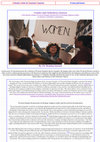
In this series, Dr Istratii presents the evolution of Western feminist theory of gender, the dang... more In this series, Dr Istratii presents the evolution of Western feminist theory of gender, the dangers that exist when Western theories extend to other societies without giving attention to the historical conditions that triggered and informed their development and addresses some of the key issues raised by feminist philosophers in reference to Orthodox theology and from the point of view of the Orthodox phronema of the Holy Fathers and Mothers of the Orthodox Church. The series began with a brief genealogical analysis of the concept of 'gender' in Western feminist thought to question the human metaphysics it has assumed under the influence of Western philosophy and scientific thought and history (see the analysis in Greek). The second essay in the series examines the validity of Western feminist hermeneutics and gender-sensitive approaches in theology/religious studies in reference to Orthodox traditions and points to the need for a decolonial method embedded in the historicity and exegetical tradition of the religious community in question each time. The report follows such a method to better understand negative or harmful attitudes towards women associated with domestic violence in Orthodox societies and to suggest how they can be addressed with the help of Orthodox theology. The essay is based extensively on the author's peer-reviewed article "Beyond a feminist' hermeneutics of suspicion ': Reading St John Chrysostom's commentaries on man-woman relations, marriage and conjugal abuse through the Orthodox phronema."
Ορθόδοξη Ομάδα Δογματικής Έρευνας, 2020
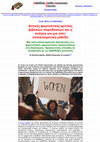
Σε αυτήν την σειρά η Dr Istratii παρουσιάζει την εξέλιξη της δυτικής φεμινιστικής θεωρίας και του... more Σε αυτήν την σειρά η Dr Istratii παρουσιάζει την εξέλιξη της δυτικής φεμινιστικής θεωρίας και τους κινδύνους που ελλοχεύουν όταν δυτικές θεωρίες επεκτείνονται σε άλλες κοινωνίες χωρίς να δίδεται σημασία στις ιστορικές συνθήκες που αποτέλεσαν έναυσμα για την ανάπτυξή τους, και εξετάζει καίρια θέματα που θέτουν οι φεμινίστριες θεωρητικοί από την σκοπιά της Ορθόδοξης θεολογίας και με σημείο αναφοράς το Ορθόδοξο φρόνημα των Αγίων Πατέρων και Μητέρων την Εκκλησίας. Η πρώτη έκθεση της σειράς παρουσίασε μια σύντομη γενεαλογική ανάλυση της έννοιας του «κοινωνικού φύλου» στην δυτική φεμινιστική θεωρία με σκοπό να προβληματίσει την ανθρώπινη μεταφυσική που αυτή έχει υποθέσει υπό την επιρροή της δυτικής φιλοσοφίας και επιστημονικής σκέψης και ιστορίας. Η δεύτερη έκθεση της σειράς εξετάζει την εγκυρότητα δυτικών φεμινιστικών ερμηνευτικών προσεγγίσεων στις θεολογικές / θρησκευτικές σπουδές σε συνάρτηση με τις Ορθόδοξες κοινωνίες και υποδεικνύει την ανάγκη για μια απο-αποικιοκρατική μέθοδο που είναι ενσωματωμένη στην ιστορικότητα και την ερμηνευτική παράδοση κάθε θρησκευτικής κοινότητας. Η έκθεση ακολουθεί μια τέτοια μέθοδο για να κατανοήσει καλύτερα αρνητικές ή επιζήμιες στάσεις προς τις γυναίκες και την οικογένεια στις Ορθόδοξες κοινωνίες και να προτείνει πώς αυτές μπορούν να αντιμετωπιστούν μέσω της Ορθόδοξης θεολογίας. Η έκθεση βασίζεται εκτενώς στο ακαδημαϊκό άρθρο της συγγραφέως “Beyond a feminist‘ hermeneutics of suspicion’: Reading St John Chrysostom’s commentaries on man-woman relations, marriage and conjugalabuse through the Orthodox phronema’.”
REFUGEE HOSTS Faith and Displacement Series, 2020
The global lockdown has had a significant impact on the ability of religious communities to gathe... more The global lockdown has had a significant impact on the ability of religious communities to gather and offer support in times of stress and illness. In this post Dr Romina Istratii draws on her research conducted with Ethiopian and Eritrean Orthodox Täwahәdo adherents in Northern Ethiopia and London to describe the role of religious communities and how these roles, traditions and practices can take on an increasingly significant role for migrants in the UK. In particular, the pastoral role of the church in providing solace and comfort in times of increased stress and illness, the reliance on church activities for social interaction and activities, the role of the church in mediating domestic abuse, and the ability of church members to seek spiritual or psychological relief. Although activities such as prayer and weekly bible studies continue on-line, it is the pastoral and support roles of the church, argues Istratii, which are most affected by the global lockdown, increasing stress and risk for migrants in the UK.
Orthodox Outlet for Dogmatic Enquiries (Amharic), 2020
This article was written by Dr Istratii and delineates an Orthodox anthropology informed by relev... more This article was written by Dr Istratii and delineates an Orthodox anthropology informed by relevant apostolic teachings and Patristic commentaries, primarily the works of St Gregory of Nyssa and St Macrina the Younger (older sister of Gregory) on the making of humanity and the ineffable communion of body and soul. The article was translated by Mr Gebrselassie into Amharic, then edited sentence-by-sentence by Dr Istratii and finally reviewed by the authors-translators together. Due to the relatively more difficult form of the ancient Greek spoken by Gregory and Macrina, the authors preserved the original Greek passages in footnotes, offering additional English translations. The authors-translators grappled with the translation of important theological concepts in Greek, such as oikonomia and koinonia, exploring available options in Ge'ez and Amharic. The rationale behind the selection of specific terms over other options is made transparent in footnotes so that other scholars can judge their appropriateness and suggest better translations if any are available.
The article was published on Amharic OODE: http://www.oodegr.com/amharic/teachings/anthropology.htm
Orthodox Outlet for Dogmatic Enquiries (Amharic), 2020
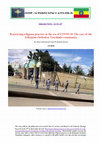
This essay follows the publication of an article that Dr Istratii contributed to the Political Th... more This essay follows the publication of an article that Dr Istratii contributed to the Political Theology Network on the 15th of April under the title “Restricting religious practice in the era of COVID-19: A de-westernised perspective on religious freedom with reference to Greece.” Motivated by similar concerns, the current essay takes a closer look at restrictions affecting religious practice in the Ethiopian Orthodox Täwahәdo community, where measures to respond to the public health crisis have become increasingly more rigid. While the Ethiopian Orthodox Täwahәdo faithful comprise a unique community, they share various elements with their counterparts in Greece, including the deeply intertwined relationship between religious tradition, historical consciousness and personal identity, which means that the faith is prominent on all realms of life. The essay discusses what the prohibition of religious practices might imply for the Church and the faithful, including material and spiritual implications, but also by restricting the activity of the clergy in society. Our objective is to bring these implications to the attention of the Ethiopian government in an effort to ensure that current efforts to contain the spread of the virus in the country are sensitive to the people’s religious living.
Decolonial Subversions , 2020
A Plan S nevű kezdeményezés azt ígéri, hogy segít „hozzáférhetővé tenni” a tudományos... more A Plan S nevű kezdeményezés azt ígéri, hogy segít „hozzáférhetővé tenni” a tudományos tudást azáltal, hogy az olvasók számára azonnali és ingyenes hozzáférés biztosítását követeli a megfelelő Open Access elvek betartása által. Noha akezdeményezés kétség kívül jószándékú, és célja azon jelenlegi publikációs akadályok leküzdésének segítése, melyek hátráltatják a gyors publikálást, a tudományos ismeretek terjesztését és sokszorosítását, a Plan S sajnálatos módon elsősorban a természettudományok perspektíváját veszi tekintetbe, figyelmen kívül hagyja a humán és társadalomtudományok jellegzetességeit, és egyáltalán nem foglalkozik egy sokkal alapvetőbb strukturális kérdéssel, tudniillik a tudástermelésben jelenlévő globális egyenlőtlenségekkel. Jelen esszé elsősorban ez utóbbi, általában kevéssé hangsúlyozott aszimmetriákkal foglalkozik annak érdekében, hogy az Open Accessre irányuló szinte kizárólagos figyelem helyett néhány sokkal sürgetőbb, kapcsolódó problémát is megfogalmazzunk és felhívjuk a figyelmet arra, hogy a globális tudástermelési folyamatok megreformálása érdekében sokkal alapvetőbb változásokat tartalmazó stratégiákra lenne szükség.
Decolonial Subversions , 2020
Plan S is a an initiative that aims at ‘opening up’ access to scientific knowledge by ensuring im... more Plan S is a an initiative that aims at ‘opening up’ access to scientific knowledge by ensuring immediate and cost-free (for the reader) access to scientific knowledge under specified Open Access (OA) principles. While the initiative is guided by evidently good intentions to overcome current obstacles that restrict the quick publication, dissemination and reproduction of scientific research, it is not only informed primarily by a natural sciences perspective, neglecting the humanities and social sciences, but also it does not appear to consider or address the more profound structural inequalities in knowledge production across the world. The essay aims to problematise some of these less often pronounced asymmetries in an effort to shift the attentionof OA advocates to more urgent issues and to evidence the necessity for more subversive remedial strategies.
Orthodox Outlet for Dogmatic Enquiries (Amharic), 2019
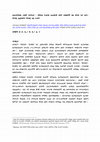
This essay is adapted from the paper entitled “Beyond a feminist ‘hermeneutics of suspicion’: Rea... more This essay is adapted from the paper entitled “Beyond a feminist ‘hermeneutics of suspicion’: Reading St John Chrysostom’s commentaries on man-woman relations, marriage and conjugal abuse through the Orthodox phronema” authored by Dr Istratii (published by The SOAS Journal of Postgraduate Research). The adapted version was written by Dr. Istratii and translated by Mr. Gebrselassie and Mr. Abhanom. Dr. Istratii mediated the translation from the original Greek to Amharic and edited the translated essay. The aim of the essay has been to make the original Greek homilies of John Chrysostom accessible to the Ethiopian Orthodox community, as opposed to relying on English translations which may not be informed by the lived Orthodox phronema. While St John Chrysostom is an undisputed authority of theological matters within the EOTC, his commentaries on apostolic teachings on marriage have received considerably less attention compared to his other works on Church dogmatics. It is hoped that increasing knowledge of his teachings can contribute toward addressing gender-related issues and domestic violence in the Orthodox community of Ethiopia.
The essay was published in April 2019 on OODE Amharic: http://www.oodegr.com/amharic/marriage/chrysostom_conjugal_relations.htm
An English version of the adapted essay was also published: http://www.oodegr.com/amharic/english/chrysostom_conjugal_relations.htm


Uploads
Articles by Romina Istratii
Decolonial Subversions è una piattaforma per la diffusione di perspettive decoloniali tramitel’implementazione di un modello di pubblicazione che sovverte le attuali pratiche diproduzione, legittimazione e diffusione della conoscenza—sia all’interno che all’esternodell’ambito accademico. Per raggiungere questo obbiettivo, Decolonial Subversionsabbandona standard di comunicazione tradizionali (che privilegiano l'inglese come lingua, iltesto come formato e l'intelletto come luogo del sapere) a favore di un modello dipubblicazione multilinguistico e multimodale. Questo si basa sulla convinzione che laviolenza epistemica si protrae linguisticamente in vari modi, come ad esempio quandoconoscenze sensoriali e multidimensionali vengono convertite in articoli accademici rigidi eunidimensionali. Autorə la cui prima lingua non é inglese sono spesso forzatə a scrivere ininglese per poter raggiungere un pubblico più ampio e per far sì che la loro conoscenzavenga considerata valida e accessibile. Per contrastare questa dinamica, Decolonial Subversions permette ad autorə di inviare i loro manoscritti nella loro prima lingua—o nellalingua in cui si trovano maggiormente a proprio agio—in aggiunta ad una versione ininglese, che possono produrre con il supporto di traduttorə, assistantə o co-autorə; per lostesso fine, Decolonial Subversions accetta anche contribuzioni audio e visive. Questa strategia ha lo scopo di minimizzare la violenza epistemica che viene inflitta tramite prerequisitilinguistici, mantenere le sfumature del testo originale, e garantire che il lavoro possainformare culture e pensieri anglofoni. In questo articolo illustriamo in dettaglio questoapproccio, come autorə hanno interagito con l’opzione multilinguistica che offriamo, edalcune delle difficoltà che abbiamo incontrato nel promuovere un modello di pubblicazione multilinguistico. Questo articolo presenta una prospettiva dal punto di vista editoriale, in modo da complementare la crescente diffusione di articoli multilinguistici che invece riflettono i punti di vista di autorə.
Within international development practice most directly preoccupied with domestic violence in low-and middle-income countries (LMICs), intimate partner violence (IPV) has been frequently under-theorised, or theorised on the basis of a single aetiology or in relation to western industrialised societies' experiences with gender inequality (Istratii, 2020). This situation largely reflects the dominance of Northern epistemology, theory and funding in the sector. In parallel, while domestic violence studies in industrialised societies have, in recent decades, diversified to affirm the psychological, intergenerational, situational and often mutual nature of intimate partner violence (e.g., family studies approaches), much research produced in tradition-oriented societies continues to be preoccupied with socio-cultural aetiologies and feminist theories of gender inequality (Bowman, 2003; Jakobsen, 2014; 2015). Such tendencies could indeed reflect specific problems within these societies; however, the systematic representation of gender inequality, and the stubborn emphasis on socio-cultural explanations, combined with the notable neglect of psychological and trauma-related aetiologies, tends to reinforce postcolonial and other critical arguments based on those historical beliefs about less 'civilised' or inherently violent non-western cultures that continue to underpin some Anglo-American thinking (Narayan, 1977; Vlopp, 2005).
partner violence in Ethiopia. The latest Ethiopian Demographic and
Health surveys have established that marital violence, affecting women
primarily, is commonplace and is widely “justified” by populations
across Ethiopia. Surprisingly, very little research has been conducted
on the ethnographic realities of conjugal abuse or, and especially, on
the interface of people’s attitudes about the issue with their religious
beliefs and folklore systems. Paralleling the wider field of gender-based
violence studies in African development, many of the available studies
presuppose feminist explanations that associate conjugal abuse with
gender inequalities, which are fostered through cultural or religious parameters. These are presented without providing, however, rigorous
empirical evidence to demonstrate the connections. This paper presents
a previously unexplored theology-informed anthropological study into
the realities of conjugal abuse and attitudes in the predominantly
Orthodox Täwahedo population of Aksum, Northern Ethiopia. This
study utilised a decolonial conceptual and methodological approach
and combined a gender-sensitive ethnographic analysis in the local
languages with an investigation of the local religious tradition from an
informed insider’s perspective. This study provides a preliminary look
into some of the mechanisms that have contributed to the perpetuation
of conjugal abuse and its tolerance in the rural communities and the
city of Aksum. It adds considerable complexity to the interpretation
of attitudes towards conjugal abuse that are not currently captured in
population surveys or existing studies from Ethiopia.
Résumé
Ces dernières années, les études sur la violence entre partenaires intimes en Éthiopie se sont multipliées. Les dernières enquêtes éthiopiennes sur la démographie et la santé ont établi que la violence conjugale affectant principalement les femmes est courante et largement légitimée dans toute l’Éthiopie. Étonnamment, très peu de recherches ont été menées sur les réalités plus ethnographiques de la violence conjugale et en particulier sur les connexions entre l’attitude des gens face à la question et leurs croyances religieuses et systèmes culturels.Parallèlement au champ plus large de la violence liée au genre dans le développement de l’Afrique, de nombreuses études disponibles présupposent des explications féministes, associant la violence conjugale à des inégalités de genre favorisées par des paramètres culturels ou religieux, sans fournir de preuves empiriques rigoureuses pour démontrer ce lien. Cet article présente une enquête anthropologique originale, fondée sur la théologie, sur les réalités et les attitudes des individus face aux abus conjugaux chez les chrétiens orthodoxes Täwahedo d’Aksum, dans le nord de l’Éthiopie. Cette étude a adopté une approche conceptuelle et méthodologique décoloniale et a combiné un cadre analytique sensible au genre théorisé de « l’intérieur » avec une étude approfondie de la tradition religieuse locale. L’étude fournit un premier aperçu de certains des mécanismes qui ont contribué à la perpétuation de violences conjugales et à la tolérance envers celles-ci dans les communautés urbaines et rurales d’Aksoum, ajoutant une complexité considérable à l’interprétation des attitudes face à la violence conjugale qui ne sont actuellement pas prises en compte dans les enquêtes démographiques et autres études produites en Éthiopie.
The article was published on Amharic OODE: http://www.oodegr.com/amharic/teachings/anthropology.htm
The essay was published in April 2019 on OODE Amharic: http://www.oodegr.com/amharic/marriage/chrysostom_conjugal_relations.htm
An English version of the adapted essay was also published: http://www.oodegr.com/amharic/english/chrysostom_conjugal_relations.htm