Papers by Ryan Scicluna
ISPIM Innovation Symposium, 2025
This research adopts a foresight approach to explore the future of academic libraries. Academic i... more This research adopts a foresight approach to explore the future of academic libraries. Academic institutions continue to evolve in today's digital age, and the role of the academic library will continue to undergo a significant transformation. This raises questions related to the future relevance of academic libraries and the future direction they choose to take. The research presents the results of a survey conducted with University of Malta students and staff on potential future scenarios for the academic library in 2050. The results suggest the retention of a hybrid model for academic libraries with the provision of both digital and physical support and resources. The library's physical building would be used for various events and activities, besides acting as a meeting place for collaborative initiatives. Surprises could, however, still be in store, as some of the respondents' suggestions predict.
International Information & Library Review, 2025
The University of Malta Library’s Outreach Department has reimagined the role of academic librari... more The University of Malta Library’s Outreach Department has reimagined the role of academic libraries as dynamic centers of creativity, well-being, and community engagement. Between 2023 and 2025, creative and forward-thinking initiatives demonstrated how innovative programming, cultural projects, and personalized support can enhance inclusivity, academic success, and sustainability on campus. By bridging traditional library functions with forwardlooking outreach strategies, the University of Malta Library has positioned itself as the heart of the university, fostering stronger connections between students, staff, and the wider community.
TAKE, 2025
This research examines the impact of the Library Social Events Team (LSET) and its inreach activi... more This research examines the impact of the Library Social Events Team (LSET) and its inreach activities on the attitudes and perceptions of staff at the University of Malta Library (UML). It evaluates the influence of LSET initiatives on job satisfaction, work ethic, and overall job experience. Using a mixed-methods approach, data was collected through a Likert scale survey with quantitative and qualitative questions. The analysis involved descriptive and inferential statistics, as well as thematic analysis. Results indicate that inreach activities significantly enhance job satisfaction, morale, and a sense of community among staff. Positive impacts on engagement and work ethic were reported, despite challenges like resource constraints and resistance to change. The study highlights the importance of internal engagement efforts in fostering a supportive work environment and contributes valuable insights for academic libraries seeking to implement similar programs, improving staff well-being and service delivery.
TAKE, 2025
The ART Connect Initiative at the University of Malta Library redefines academic libraries as cre... more The ART Connect Initiative at the University of Malta Library redefines academic libraries as creative and cognitive hubs, integrating student artwork to enhance well-being, engagement, and community-building. This study explores the initiative's impact on mental health, creativity, and academic experience through a mixed-methods approach, combining structured surveys, statistical analysis, and thematic coding of qualitative feedback. Grounded in interdisciplinary theories of art's cognitive and emotional benefits, ART Connect aligns with research emphasising libraries' evolving roles as cultural spaces. Preliminary findings suggest high levels of student engagement and positive perceptions, indicating that showcasing student creativity fosters empowerment, confidence, and social cohesion. The initiative not only enhances campus life but also serves as a replicable model for academic institutions seeking to promote mental wellness and interdisciplinary collaboration. Despite its success, challenges remain, particularly in raising awareness and ensuring long-term sustainability. Strategies such as targeted marketing, interdisciplinary events, and digital expansion are proposed to increase participation and deepen impact. Future directions include an online gallery, international collaborations, and thematic projects like the ART Connect Recycling Mural. Ultimately, ART Connect illustrates how academic libraries can bridge education, art, and community engagement, fostering resilience, creativity, and cultural enrichment in higher education.
TAKE, 2025
Academic libraries have historically served as hubs for knowledge access, scholarly support, and ... more Academic libraries have historically served as hubs for knowledge access, scholarly support, and community engagement. However, rapid technological advancements and shifting societal expectations are reshaping their role. This study examines how academic libraries can maintain their relevance as inclusive, community-oriented spaces while integrating advanced technologies such as artificial intelligence (AI), augmented reality (AR), and virtual reality (VR). Drawing on Oldenburg's third-place theory and the Library 3.0 and 4.0 models, the research explores how libraries can balance their traditional mission with digital transformation and innovation. Using a mixed-methods approach, the study combines a survey of university library users with a critical review of the literature on Library 3.0 and 4.0 theory. Findings highlight key priorities for future libraries, including inclusivity, technological accessibility, and interdisciplinary collaboration. By 2050, academic libraries are envisioned as dynamic ecosystems that balance tradition and innovation in physical and digital spaces, fostering research and cultural exchange, while incorporating sustainability and well-being initiatives. This research highlights the importance of developing agile library policies that adapt to technological and societal shifts while upholding core values. Although limited to academic settings, the findings provide valuable insights into the broader evolution of libraries, underscoring the need for further exploration of their role in a rapidly transforming world.

Looking at the Malta Libraries Act 2011, even though it is a comprehensive work for a small count... more Looking at the Malta Libraries Act 2011, even though it is a comprehensive work for a small country like Malta, only paragraph 10 and 11 deal specifically with legal deposit, with paragraph 11 being a small paragraph about electronic documents. Such paragraphs are quite limited in their description and this leaves a lot of room for improvement. In 2011, a basic outline for electronic documents might have sufficed but the constant exponential increase of online material requires a more detailed law. In comparison, countries like Britain, Australia and even New Zealand have whole Acts on Legal Deposits only and very detail Notices or regulations about electronic documents and non-print material. By comparing the Legal Deposit Libraries (Non-Print Works) Regulations 2013 of the United Kingdom and the National Library Requirement (Electronic Documents) Notice 2006 of New Zealand a model for Malta can be drafted.
The debate for the revision of reference services has been going on for quite some time now. Ford... more The debate for the revision of reference services has been going on for quite some time now. Ford (1986) started it all in 1986 by suggesting the unthinkable and encouraging librarians “to begin to explore alternatives and possibly to eliminate the reference desk”. As the years progressed, and as a result of a few financial crises, more scholars adopted Ford‟s advice and went on to argue in favour of new innovative cost-effective reference services away from the physical desk and hinging more towards the digital realm. Some, like Sonntag and Palsson, confidently asserted that “It‟s unquestionably time to eliminate the reference desk” (Sonntag and Palsson, 2012). However, taking into consideration the persistence of a reference desk in most academic libraries, the idea that reference services are no longer needed can‟t be further from the truth. So why is it that on one hand we have librarians saying that a reference desk has become obsolete while on the other patrons still require a...
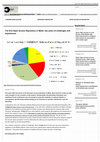
Two years after the launch of the first open access repository in Malta, Ryan Scicluna* comes up ... more Two years after the launch of the first open access repository in Malta, Ryan Scicluna* comes up with some thoughts on the evolution of this project. Unfortunately, disseminating information and speaking at local conferences was not enough to persuade academics to upload material. In consequence, the University started working on an OA policy to mandate submissions onto the repository. In September 2014, the University of Malta (UM) launched its Open Access (OA) Institutional Repository (IR) – OAR@UoM (https://www.um.edu.mt/library/oar/). In line with other institutional repositories of higher education institutions, the repository's primary goal is to collect, preserve and disseminate the research output of the University. Subsequently, OAR@UoM is an online platform, which supports UM academics and researchers to publish their research output in OA as delineated by Leslie Chan (http://www.thehindu.com/todayspaper/tp features/tpeducationplus/indefenceofopenaccesssystems/article4257197.ece), " the setup of an institutional repository should be the primary means that each institution has for making the research output of their faculty openly accessible " and thus eliminating the hefty recurrent expenditures for licensing online journals hosted by commercial publishers. This, however, presents a number of challenges. Since OAR@UoM is the first and only online institutional repository on the Maltese Islands, it also serves as an opportunity to expand partnerships with other institutions. This pushes the boundaries of traditional IRs and creates new sets of challenges.
Article published in the Malta Sunday Times on 6th November 2016 and the Malta business weekly 4t... more Article published in the Malta Sunday Times on 6th November 2016 and the Malta business weekly 4th November 2016. The article is about Open Access and the institutional repository of the University of Malta - OAR@UoM.
OAR@UoM is the UoM's institutional repository (IR) and is managed by the UoM Library. It is an on... more OAR@UoM is the UoM's institutional repository (IR) and is managed by the UoM Library. It is an online archive that collects, preserves and disseminates the intellectual output of the University. Subsequently, it is a vital tool for scholarly communication, preservation of knowledge and an important resource to enhance the visibility of the research carried out at the UoM.
A report highlighting the events, activities and initiatives that GNLM organised, participated in... more A report highlighting the events, activities and initiatives that GNLM organised, participated in or collaborated on for the year 2014.
The use of comics in educational resources is not a new thing. In fact one can find multiple arti... more The use of comics in educational resources is not a new thing. In fact one can find multiple articles outlining how comics are used in fields of study such as English language (James, 2007), Mathematics and Social Sciences (Boerman-Cornell, 2013), Media (Doyle, 2008), etc... Comics are also being featured in University degree courses both as undergraduate or post-graduate studies. For example, the University of Florida in the US has a Comics studies credit where students and professionals study and teach comics; The University of Oregon, also in the US, has a whole faculty dedicated to Comics and Cartoon Studies; The University of Dundee, Scotland, offers a unique MLitt in Comics Studies and students can pursue their studies further after completion of the Master with a PhD in comics studies.
So how do comics and graphic novels teach readers to be information literate?
So how do comics and graphic novels teach readers to be information literate?
The debate for the revision of reference services has been going on for quite some time now. Ford... more The debate for the revision of reference services has been going on for quite some time now. Ford (1986) started it all in 1986 by suggesting the unthinkable and encouraging librarians “to begin to explore alternatives and possibly to eliminate the reference desk”. As the years progressed, and as a result of a few financial crises, more scholars adopted Ford‟s advice and went on to argue in favour of new innovative cost-effective reference services away from the physical desk and hinging more towards the digital realm. Some, like Sonntag and Palsson, confidently asserted that “It‟s unquestionably time to eliminate the reference desk” (Sonntag and Palsson, 2012). However, taking into consideration the persistence of a reference desk in most academic libraries, the idea that reference services are no longer needed can‟t be further from the truth. So why is it that on one hand we have librarians saying that a reference desk has become obsolete while on the other patrons still require assistance from librarians? The answer lies in the nature of the services offered.
Instead of looking at eliminating the reference desk, librarians are focusing on new tools and services that can be offered to patrons in a digital age. In today‟s knowledge, society librarians are discovering new cost-efficient tools to offer patrons services which are user-friendly and which yield a higher quality of results. The reference desk has not disappeared, as some predicted, but instead, it changed its nature, growing digital as the years passed. This resulted in the librarian's role evolving, with one of the aims changing into closing the gap between its clients and information.
Instead of looking at eliminating the reference desk, librarians are focusing on new tools and services that can be offered to patrons in a digital age. In today‟s knowledge, society librarians are discovering new cost-efficient tools to offer patrons services which are user-friendly and which yield a higher quality of results. The reference desk has not disappeared, as some predicted, but instead, it changed its nature, growing digital as the years passed. This resulted in the librarian's role evolving, with one of the aims changing into closing the gap between its clients and information.

Looking at the Malta Libraries Act 2011, even though it is a comprehensive work for a small count... more Looking at the Malta Libraries Act 2011, even though it is a comprehensive work for a small country like Malta, only paragraph 10 and 11 deal specifically with legal deposit, with paragraph 11 being a small paragraph about electronic documents. Such paragraphs are quite limited in their description and this leaves a lot of room for improvement. In 2011, a basic outline for electronic documents might have sufficed but the constant exponential increase of online material requires a more detailed law. In comparison, countries like Britain, Australia and even New Zealand have whole Acts on Legal Deposits only and very detail Notices or regulations about electronic documents and non-print material. By comparing the Legal Deposit Libraries (Non-Print Works) Regulations 2013 of the United Kingdom and the National Library Requirement (Electronic Documents) Notice 2006 of New Zealand a model for Malta can be drafted.
Thesis Chapters by Ryan Scicluna
This research study was carried out to identify the need for marketing in academic libraries with... more This research study was carried out to identify the need for marketing in academic libraries with a main focus on Understanding the need for a marketing department at University of Malta Library and developing the Outreach Department’s marketing strategy. It also includes a comparison between the University of Glasgow Library’s and the University of Malta Library’s marketing strategies to further identify any differences and similarities in this regard. The research followed a qualitative method of investigation and used a questionnaire as a tool to gauge the level of awareness of library staff from both libraries on marketing efforts. The results revealed several interesting points about the importance of marketing and communication in university libraries. In fact a common theme for this research was the imperativeness of communication between the library’s patrons and its’ staff. This study also proposes a somewhat basic definition of what an outreach office in an academic library setting should consist of and what skills should outreach librarians possess. These are primarily communication, marketing and customer care skills that complement one another. This implies that even the librarians who are not directly involved in marketing should have at least some level of knowledge about communication and customer care as to better serve patrons and promote the library’s image as a whole.
Conference Presentations by Ryan Scicluna
Library Innovation Conference - Innovation and value co-creation for a new generation of libraries, 2025
Academic libraries are essential hubs for student learning and research, yet many struggle to att... more Academic libraries are essential hubs for student learning and research, yet many struggle to attract and sustain student engagement with their services. Traditional outreach efforts often focus on information dissemination rather than fostering meaningful interactions. This study introduces Social Exchange Theory (SET) as a
novel framework for library outreach, emphasising the role of reciprocity, trust, and perceived benefits in shaping student-library relationships. By viewing engagement as a dynamic social exchange rather than a one-way service offering, libraries can create more compelling and participatory outreach initiatives.
This research employs a qualitative case study approach to examine outreach practices at the University of Malta Library. Using interviews, surveys, and observational analysis, the study explores how SET-driven strategies impact student perceptions, participation, and resource utilisation. Findings reveal that when students perceive tangible and intangible benefits, such as academic support, social connections, and personal growth, they are more likely to engage actively with library services. Additionally, fostering trust and two-way interactions between students and librarians enhances not only library usage but also the library’s role as a vital academic and social space.
By reimagining outreach through the lens of SET, this study offers actionable insights for academic libraries seeking to move beyond passive service promotion toward strategies that cultivate sustained student engagement and long-term institutional value. The paper concludes with practical recommendations for leveraging SET to design more interactive, student-centred outreach models that transform libraries into dynamic learning communities.
novel framework for library outreach, emphasising the role of reciprocity, trust, and perceived benefits in shaping student-library relationships. By viewing engagement as a dynamic social exchange rather than a one-way service offering, libraries can create more compelling and participatory outreach initiatives.
This research employs a qualitative case study approach to examine outreach practices at the University of Malta Library. Using interviews, surveys, and observational analysis, the study explores how SET-driven strategies impact student perceptions, participation, and resource utilisation. Findings reveal that when students perceive tangible and intangible benefits, such as academic support, social connections, and personal growth, they are more likely to engage actively with library services. Additionally, fostering trust and two-way interactions between students and librarians enhances not only library usage but also the library’s role as a vital academic and social space.
By reimagining outreach through the lens of SET, this study offers actionable insights for academic libraries seeking to move beyond passive service promotion toward strategies that cultivate sustained student engagement and long-term institutional value. The paper concludes with practical recommendations for leveraging SET to design more interactive, student-centred outreach models that transform libraries into dynamic learning communities.