Books by Saulius Geniusas
Ibidem, 2022
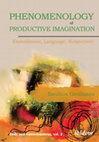
Although productive imagination has played a highly significant role in (post-) Kantian philosoph... more Although productive imagination has played a highly significant role in (post-) Kantian philosophy, there have been very few book-length studies explicitly dedicated to its analysis. In his new book, Saulius Geniusas develops a phenomenology of productive imagination while relying on those resources that we come across in Edmund Husserl’s, Max Scheler’s, Martin Heidegger’s, Ernst Cassirer’s, Miki Kiyoshi’s, Jean-Paul Sartre’s, Maurice Merleau-Ponty’s, and Paul Ricoeur’s writings, while also engaging in present-day philosophical discussions of the imagination. Investigating the relation between imagination and embodiment, affectivity, perception, language, selfhood, and intersubjectivity, the book provides a phenomenological conception of productive imagination, which is committed to basic phenomenological principles and which is sensitive to how productive imagination has been conceptualized in the history of phenomenology.
Against such a background, Geniusas develops a new conception of productive imagination: It is a basic modality of intentionality that indirectly shapes the human experience of the world by forming the contours of action, intuition, knowledge, and understanding. It is not so much a blind and indispensable function of the soul, but an art concealed in the body, for it springs out of instincts, drives, desires, and needs. The author demonstrates in which unexpected ways phenomenology of productive imagination enriches our understanding of embodied subjectivity.
What is Pain? Descriptive Psychology, Transcendental Philosophy and Naturalism, 2021
Pagrindinis šios knygos tikslas — išspresti konceptualinę
problemą, svarbią įvairioms tyrimų srit... more Pagrindinis šios knygos tikslas — išspresti konceptualinę
problemą, svarbią įvairioms tyrimų sritims, tokioms kaip
fenomenologija, transcendentaline filosofija, skausmo filosofija, psichologija ir kognityvinis mokslas. Problema susijusi
su pagrindinės sąvokos paaiškinimu: kas yra skausmas?
Nors apie skausmą ir gausu literatūros, su kuria susiduriame
įvairiose mokslo srityse, patikimo atsakymo į šį pamatinį
klausimą neturime.
Series in Continental Thought (Ohio University Press), 2020
The Phenomenology of Pain is the first book-length investigation of its topic to appear in Englis... more The Phenomenology of Pain is the first book-length investigation of its topic to appear in English. Groundbreaking, systematic, and illuminating, it opens a dialogue between phenomenology and such disciplines as cognitive science and cultural anthropology to argue that science alone cannot clarify the nature of pain experience without incorporating a phenomenological approach. Building on this premise, it develops a novel conception of pain grounded in phenomenological principles: pain is an aversive bodily feeling with a distinct experiential quality, which can only be given in original first-hand experience, either as a feeling-sensation or as an emotion. The book crystallizes the fundamental methodological principles that underlie phenomenological research. On the basis of those principles, it offers a phenomenological clarification of the fundamental structures of pain experience and contests the common conflation of phenomenology with introspectionism. It analyzes numerous pain dissociation syndromes, brings into focus the de-personalizing and re-personalizing nature of chronic pain experience, and demonstrates what role somatization and psychologization play in pain experience. In the process, it advances Husserlian phenomenology in a direction that is not explicitly worked out in Husserl’s own writings.
The following study aims to offer a systematic inquiry into the horizon-problematic in Husserl's ... more The following study aims to offer a systematic inquiry into the horizon-problematic in Husserl's phenomenology. A full-fl edged determination of the notion of the horizon cannot be offered at the outset; its establishment must rest upon the subsequent investigation. Nonetheless, so as to provide the analysis itself with a direction, we are in need of the guiding sense of the theme under scrutiny. Since the philosophical notion of the horizon derives from the resources of everyday speech, the provisional determination of this notion can be developed on the basis of how the word "the horizon" fi gures in its everyday use.
Edited Volumes by Saulius Geniusas
The purpose of the series is to serve as a vehicle for the pursuit of phenomenological research a... more The purpose of the series is to serve as a vehicle for the pursuit of phenomenological research across a broad spectrum, including cross-over developments with other fields of inquiry such as the social sciences and cognitive science. Since its establishment in 1987, Contributions to Phenomenology has published more than 100 titles on diverse themes of phenomenological philosophy. In addition to welcoming monographs and collections of papers in established areas of scholarship,the series encourages original work in phenomenology. The breadth and depth of the Series reflects the rich and varied significance of phenomenological thinking for seminal questions of human inquiry as well as the increasingly international reach of phenomenological research. All books to be published in this Series will be fully peer-reviewed before final acceptance.
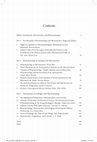
The relationship between these two central theoretical and philosophical approaches, which we tho... more The relationship between these two central theoretical and philosophical approaches, which we thought we knew, is more complex and interesting than our standard story might suggest.
It is not always clear how hermeneutics-that is, post-Heideggerian hermeneutics as articulated by Hans-Georg Gadamer, Paul Ricoeur, and a large number of thinkers working under their influence-regards the phenomenological tradition, be it in its Husserlian or various post-Husserlian formulations. This volume inquires into this issue both in general, conceptual terms and through specific analyses into questions of ontology and metaphysics, science, language, theology, and imagination. With a substantial editors' introduction, the volume contains 15 chapters, from some of the most significant scholars in this field covering the essential questions about the history, present and future of these two disciplines.
The volume will be of interest to any philosopher or student with an interest in developing a sophisticated and nuanced understanding of contemporary hermeneutics and phenomenology.

Relational Hermeneutics: Essays in Comparative Philosophy (Bloomsbury Publishing)
Investigating connections between philosophical hermeneutics and neighbouring traditions of thoug... more Investigating connections between philosophical hermeneutics and neighbouring traditions of thought, this volume considers the question of how post-Heideggerian hermeneutics, as represented by Gadamer, Ricoeur and recent scholars following in their wake, relate to these traditions, both in general terms and bearing upon specific questions.
The traditions covered in this volume-existentialism, pragmatism, poststructuralism, Eastern philosophy, and hermeneutics itself-are all characterized by significant internal diversity, adding to the difficulty in reaching an interpretation that is at once comparative and critical. None of these traditions represent a unified system of belief; all are umbrella terms which are at once useful and imprecise, and the differences internal to each must not to be understated.
An innovative work of comparative philosophy, this volume avoids oversimplification and offers specific analyses that treat hermeneutics in relation to particular themes and key figures in each of these traditions of thought. Philosophical hermeneutics is explicitly dialogical, and it is in this spirit that the authors of this book approach their subjects, revealing the important affinities and opportunities for mutually enriching conversations which have until now been overlooked.

Although the concept of productive imagination plays a fundamental role in Kant, German Idealism,... more Although the concept of productive imagination plays a fundamental role in Kant, German Idealism, Romanticism, Phenomenology and Hermeneutics, the meaning of this central concept remains largely undetermined. The significance of productive imagination is therefore all-too-often either inflated or underrated. The articles collected in this volume trace development of productive imagination in the history of philosophy, identify the different meanings this concept has been ascribed in different philosophical frameworks, and raise the question anew concerning this concept’s philosophical significance. Special attention is given to the historical background that underlies the emergence of productive imagination in modernity (Dmitri Nikulin), to Kant’s concept of productive imagination (Alfredo Ferrarin), to the further development of this concept in Romanticism (Laura Carugati) and German Idealism (Angelica Nuzzo), Wilhelm Dilthey (Rudolf Makkreel), Jules de Gaultier (Nicolas de Warren), Ernst Cassirer and Martin Heidegger (Saulius Geniusas), and Paul Ricoeur (George Taylor).
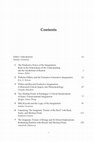
The volume addresses the diverse ways in which productive imagination has been conceptualized in ... more The volume addresses the diverse ways in which productive imagination has been conceptualized in Kantian and post-Kantian philosophy, especially in phenomenology and hermeneutics. Besides exploring the different meanings that the concept of productive imagination has been given in Kant’s own writings, the volume explores imagination’s poetic, historical and generative dimensions as well as shows its significance for the human and social sciences; it demonstrates its relevance in the formation of political concepts as well as addresses productive imagination’s significance at the levels of pre-linguistic understanding and kinaesthetic experience.
The essays here presented focus on highly unorthodox conceptions of productive imagination, which in various ways have imploded the conceptual dualisms that pervade Kant’s philosophy: sensibility vs. understanding, phenomenon vs. noumenon, nature vs. freedom, theoretical vs. practical reason. Here productive imagination is conceived as a constitutive power that shapes the human experience of the actual world by forming the contours of action, intuition, knowledge and understanding.
On the Future of Husserlian Phenomenology: Parts I, II, and III (2006-2008)
Papers by Saulius Geniusas
Philosophy of Law and General Theory of Law, 2023
Phenomenology and the Cognitive Sciences, 2024
For as long as philosophers ignore mind-wandering, they will disregard from onethird to one-half ... more For as long as philosophers ignore mind-wandering, they will disregard from onethird to one-half of conscious thoughts. Regrettably, mind-wandering is only seldom addressed in phenomenology. The fundamental ambition of this paper is to offer the first systematic phenomenological investigation of mind-wandering that relies on the classical principles of Husserlian phenomenology. The paper begins with a critique of the dominant conceptions of mind-wandering in contemporary psychology and philosophy. Against such a background, the paper develops a new, phenomenologically-grounded conception of mind-wandering. The paper further focuses on the central resources in Husserlian phenomenology, which can be fruitfully employed in the future interdisciplinary research on mind-wandering. Phenomenological reflections on background consciousness, on pre-predicative experience, on passivity and on self-awareness lie at the center of this analysis. The paper concludes with some reflections on the relation between mind-wandering and daydreaming and on the function of mind-wandering in conscious life.
Continental Philosophy Review, 2025
Although few other phenomenologists have provided a more insightful analysis of sedimentation tha... more Although few other phenomenologists have provided a more insightful analysis of sedimentation than Alfred Schutz, the importance of his reflections remains heavily underappreciated. To counteract this deficiency, this paper develops a systematic account of Schutz's phenomenology of sedimentations. While recognizing the Husserlian background that underlies Schutz's investigations, the paper brings to light the novelty of Schutz's account which, I maintain, is to be found in his reflections on the genesis, disturbances, breakdown and the recommencement of the sedimentation process. Paying careful attention to these four fundamental features of Schutz's phenomenology of sedimentations, I show how the genesis of sedimentations leads to their disturbances and breakdown, which in turn lead to the readjustments and recommencement of their formation. Having clarified the dialectical structure of Schutz's phenomenology of sedimentations, I conclude by addressing three implications that follow from it, the first of which concerns the critical function of the breakdown of sedimentations, the second one-the significance of sedimentations for phenomenology of individuation, and the third one-the importance of Schutz's phenomenology of sedimentations for phenomenology of history. Keywords Schutz • Husserl • Life-world • Sedimentation • Stock of knowledge • Temporality • Typification Although few other phenomenologists have reflected as carefully and extensively on the process of sedimentation as Alfred Schutz, the importance of this topic remains marginal in Schutzian research. Instead of addressing sedimentation as a theme in its own right, Schutz scholars address it in passing, while focusing on other themes, such
Human Studies, 2024
Although Husserl's analyses of the unconscious are scattered throughout various writings, many of... more Although Husserl's analyses of the unconscious are scattered throughout various writings, many of which have been published in Hua III/2, Hua VI, Hua X, Hua XI, Hua XV, Hua XVII, Hua XXXIX and Experience and Judgment, nowhere else has he addressed the unconscious in such fascinating detail as in the manuscripts collected in Hua XLII. The publication of this volume has made it patently clear that the unconscious has many meanings in Husserl. A clarification of the different ways in which Husserl has spoken of the unconscious is still missing in the literature and it is much needed. With the aim of developing a taxonomy of the unconscious in Husserl, here I trace the different meanings Husserl has given to this concept and I argue that in his phenomenology, the unconscious can be understood at least in seven ways: as the horizonal unconscious, the time-constituting unconscious, the sedimented unconscious, the repressed unconscious, the absorbed unconscious, the dormant unconscious, and the instinctual unconscious. Besides articulating the essential features of each determination, I also clarify what they all share. With the aim of showing what is distinctive of Husserl's approach to the unconscious, I offer some reflections on what differentiates Husserl's phenomenology of the unconscious vis-à-vis Freud's psychoanalysis. In general, I maintain that while it is a limit problem in phenomenology, the unconscious should also be considered a central phenomenological theme, for as Husserl's reflections show, without offering a phenomenology of the unconscious, phenomenology can only operate with a preliminary and insufficient conception of consciousness.
As a Journal 6: 6-14, 2024
He has also edited and co-edited a number of volumes and published more than seventy articles in ... more He has also edited and co-edited a number of volumes and published more than seventy articles in various philosophy journals and anthologies in English, German, French, Spanish, Polish and Lithuanian.
European Journal of Philosophy, 2024
Husserl is the philosopher who transformed the geological metaphor of sedimentation into a philos... more Husserl is the philosopher who transformed the geological metaphor of sedimentation into a philosophical concept. While tracing the development of Husserl's reflections on sedimentation, I argue that the distinctive feature of Husserl's approach lies in his preoccupation with the question concerning the origins of sedimentations. The paper demonstrates that in different frameworks of analysis, Husserl understood these origins in significantly different ways. In the works concerned with the phenomenology of time consciousness, Husserl searched for the origins of sedimentation in the field of subjective experience, and more precisely, in impressional consciousness. By contrast, in the later works concerned with history, he maintained that the origins of sedimentations lie in the field of historical past that stretches beyond the reach of individual experience. Building on the basis of these resources, I argue that the Husserlian concept of sedimentation has three distinct components of senses: static, genetic, and generative. In the static sense, sedimentations are modifications of retentions and necessary conditions of recollection. In the genetic sense, sedimentations are necessary for the formation of types, habits and moods, and as such, they shape present experiences. In the generative sense, sedimentations refer to what consciousness inherits from the historical tradition.
Human Studies, 2023
The fundamental goal of this paper is to clarify the importance of Husserl's reflections on desti... more The fundamental goal of this paper is to clarify the importance of Husserl's reflections on destiny (Schicksal) in the context of his post-WWI ethics. In the first section, I sketch Husserl's reflections on war in his private correspondence. In the second section, I show that, in his post-WWI research manuscripts on ethics, Hus-serl conceptualized various forms of meaningless suffering under the heading of destiny. One of the main questions of Husserl's post-WWI ethics can be formulated as follows: in the dark horizon of senselessness, how is an ethical life possible? In the remaining sections, I show that Husserl's reflections on this question led him to deformalize his earlier ethics and motivated him to ground his ethics of reason in an ethics of love. In the third and fourth sections, I sketch Husserl's two fundamental answers to this question, the first of which concerns his phenomenology of love, while the second one-his phenomenological metaphysics in general, and his phenomenological teleology, in particular. While for Husserl, these answers are complementary, after clarifying Husserl's view on the conflicts of values, I conclude with some reflections on the importance of not overlooking that these answers are analytically distinct.
Journal of Phenomenological Psychology, 2023
The paper explores the meaning of the phenomenological concept of sedimentation in the framework ... more The paper explores the meaning of the phenomenological concept of sedimentation in the framework of Merleau-Ponty's phenomenology. The analysis I offer suggests that Merleau-Ponty initiates a transition from the constitutional problematic of sedimentations that we come across in Husserl's phenomenology to the analysis of existential sedimentations. Merleau-Ponty accomplishes this transformation by binding the Husserlian conception of sedimentations with the Heideggerian conception of facticity. The distinction Merleau-Ponty draws between originary sedimentations and secondary sedimentations is especially important, for it allows one to claim that Merleau-Ponty recognizes all experiences as sedimented. Against the background of this realization, I offer a reevaluation of Merleau-Ponty's cryptic remarks in the Phenomenology of Perception regarding the "original past," also described as "a past that has never been a present." I argue that these are metaphors for originary sedimentations. In place of a conclusion, I suggest that especially when the concept of sedimentation is universalized, we come to recognize its inherently paradoxical nature. In the final analysis, besides being a genetic concept, sedimentation is also a limit problem and a limit phenomenon.
HORIZON / Fenomenologicheskie issledovanija/ STUDIEN ZUR PHÄNOMENOLOGIE / STUDIES IN PHENOMENOLOGY / ÉTUDES PHÉNOMÉNOLOGIQUES, 2019
I argue that Hartmann's engagement in the question of the value of aesthetic experience (especial... more I argue that Hartmann's engagement in the question of the value of aesthetic experience (especially as addressed in Chapter 35 of his Aesthetics) is a specific reinterpretation of the standpoint that we come across in Nietzsche's Birth of Tragedy. Hartmann completed his Aesthetics at the end of World War II and some of the central claims in his work echo Nietzsche's standpoint, as presented in the early work on tragedy, which Nietzsche completed during the Franco-Prussian war. Both studies invite us to ask: what are we to expect from philosophy under such circumstances? Like Nietzsche, Hartmann holds the view that 1) our lives are intrinsically meaningless, that 2) the world is indifferent to meaning, and that 3) aesthetic experience has value insofar as it bestows meaning both on the world and on human existence. Despite the far-reaching thematic and stylistic differences between Hartmann and Nietzsche, both thinkers see aesthetics not as a form of apolitical escapism, but as a direct way of confronting the fundamental problem, which concerns "the sense and meaning of the world and of human life. " They both leave us with the paradoxical and provocative thesis that aesthetic experience is exactly what is needed at the times of political crises.



Uploads
Books by Saulius Geniusas
Against such a background, Geniusas develops a new conception of productive imagination: It is a basic modality of intentionality that indirectly shapes the human experience of the world by forming the contours of action, intuition, knowledge, and understanding. It is not so much a blind and indispensable function of the soul, but an art concealed in the body, for it springs out of instincts, drives, desires, and needs. The author demonstrates in which unexpected ways phenomenology of productive imagination enriches our understanding of embodied subjectivity.
problemą, svarbią įvairioms tyrimų sritims, tokioms kaip
fenomenologija, transcendentaline filosofija, skausmo filosofija, psichologija ir kognityvinis mokslas. Problema susijusi
su pagrindinės sąvokos paaiškinimu: kas yra skausmas?
Nors apie skausmą ir gausu literatūros, su kuria susiduriame
įvairiose mokslo srityse, patikimo atsakymo į šį pamatinį
klausimą neturime.
Edited Volumes by Saulius Geniusas
It is not always clear how hermeneutics-that is, post-Heideggerian hermeneutics as articulated by Hans-Georg Gadamer, Paul Ricoeur, and a large number of thinkers working under their influence-regards the phenomenological tradition, be it in its Husserlian or various post-Husserlian formulations. This volume inquires into this issue both in general, conceptual terms and through specific analyses into questions of ontology and metaphysics, science, language, theology, and imagination. With a substantial editors' introduction, the volume contains 15 chapters, from some of the most significant scholars in this field covering the essential questions about the history, present and future of these two disciplines.
The volume will be of interest to any philosopher or student with an interest in developing a sophisticated and nuanced understanding of contemporary hermeneutics and phenomenology.
The traditions covered in this volume-existentialism, pragmatism, poststructuralism, Eastern philosophy, and hermeneutics itself-are all characterized by significant internal diversity, adding to the difficulty in reaching an interpretation that is at once comparative and critical. None of these traditions represent a unified system of belief; all are umbrella terms which are at once useful and imprecise, and the differences internal to each must not to be understated.
An innovative work of comparative philosophy, this volume avoids oversimplification and offers specific analyses that treat hermeneutics in relation to particular themes and key figures in each of these traditions of thought. Philosophical hermeneutics is explicitly dialogical, and it is in this spirit that the authors of this book approach their subjects, revealing the important affinities and opportunities for mutually enriching conversations which have until now been overlooked.
The essays here presented focus on highly unorthodox conceptions of productive imagination, which in various ways have imploded the conceptual dualisms that pervade Kant’s philosophy: sensibility vs. understanding, phenomenon vs. noumenon, nature vs. freedom, theoretical vs. practical reason. Here productive imagination is conceived as a constitutive power that shapes the human experience of the actual world by forming the contours of action, intuition, knowledge and understanding.
Papers by Saulius Geniusas