Books by Sharon Tettegah
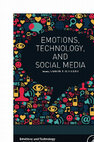
Emotions, Technology, and Social Media discusses the ways the social media sphere uses emotion an... more Emotions, Technology, and Social Media discusses the ways the social media sphere uses emotion and technology, and how each of these has become part of the digital culture. The book explores this expression within a psychological theoretical framework, addressing feelings about social media, and its role in education and knowledge generation. The second section investigates the expression of feelings within social media spaces, while subsequent sections adopt a paradigm of active audience consumption to use social media to express feelings and maintain social connectivity.
Discusses the significant relationships between Web 2.0 technologies and learning traits
Presents studies about Facebook usage and individual emotional states
Investigates the shared emotions in the construction of “cyberculture”
Shows the extent to which scientists use social media in their work, and the ways in which they use the social media
Analyzes the consequences of the online disinhibition effect
Examines YouTube as a source of opinions and discussions which can be used to track the emotions evoked by videos and the emotions expressed through textual comments
Details how Reddit users’ media choices are emotionally useful and gratifying in the “memeplex”
Links social interaction and the emotional life with that of digital devices and resources
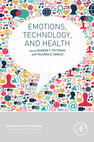
Emotions, Technology, and Health examines how healthcare consumers interact with health technolog... more Emotions, Technology, and Health examines how healthcare consumers interact with health technology, how this technology mediates interpersonal interactions, and the effectiveness of technology in gathering health-related information in various situations. The first section discusses the use of technology to monitor patients’ emotional responses to illness and its treatment, as well as the role of technology in meeting the fundamental human need for information. Section Two describes the use of technology in mediating emotions within and between individuals, and addresses the implications for the design and use of devices that gather behavioral health data and contribute to healthcare interventions. The final section assesses different situations in which technology is a key component of the health intervention-such as tablet use in educating elementary school students with social skills difficulty, physical activity monitoring for children at risk for obesity, and teleconferencing for older adults at risk of social isolation.
Shows how information on the internet significantly affects the medical decision-making process for many consumers
Describes current applications of social computing and quick access to mental health information on portable electronic devices
Discusses how cyber-communication may both impair and enhance one’s sense of humanity
Details the role of visual media in mediating emotion and memory of time
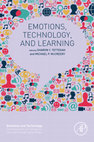
Research suggests two important roles of emotion related to learning and technology. First, emot... more Research suggests two important roles of emotion related to learning and technology. First, emotion can be the key factor that is being learned or taught through technological means. Second, emotional responses with and through technology can alter what is being learned or how the content is learned. The goal of this volume is to compile and synthesize research that addresses these two perspectives by focusing on the relationship between emotion and learning as facilitated by technology. The book is divided into four sections to represent the specific interest related to emotion and learning: Theory and Overview of Emotions and Learning; Emotions and Learning Online; Technology for Emotional Pedagogy with Students; and Technology of Emotional Pedagogy with Teachers.
Provides a deeper theoretical and empirical perspective of emotion and learning
Discusses how blended and online learning impact our ability to share emotion or learn emotion
Explores how students learn emotion, share emotion, and how it impacts their ability to learn
Examines how teachers learn emotion, share, emotion, and how it impacts their ability to teach through technology
Addresses student diversity
Emotions, Technology, Design, and Learning demonstrates how emotional responses
with and through ... more Emotions, Technology, Design, and Learning demonstrates how emotional responses
with and through technology can alter what is being learned and how the content
is learned. The design of that technology is inherently linked to those emotional
responses. The book addresses emotional design, artificial pedagogical agents,
and how the emotions they generate can influence learning. Design features such
as emoticons, speech recognition, virtual avatars, robotics, and adaptive computer
technologies, all affect the emotional responses from virtual learning.
• Addresses the emotional design specific to agent-based learning environments,
and reviews the literature in the field of advanced versions of these environments.
• Discusses the use of emoticons in online learning.
• Provides an historical overview of animated pedagogical agents, and includes
evidence-based insights on how to properly use agents in virtual learning
environments.
• Focuses on the development of a proper architecture of an artificial pedagogical
agent to be able to have and express emotions.
• Explores how educational robotic activities can divert students’ emotions from
internal to external.
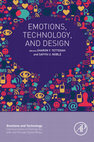
One of eight in the series, Emotions, Technology, Design, and Learning demonstrates how emotional... more One of eight in the series, Emotions, Technology, Design, and Learning demonstrates how emotional responses with and through technology can alter what is being learned and how the content is learned. The design of that technology is inherently linked to those emotional responses. The book addresses emotional design, artificial pedagogical agents, and how the emotions they generate can influence learning. Design features such as emoticons, speech recognition, virtual avatars, robotics, and adaptive computer technologies, all affect the emotional responses from virtual learning.
One of eight in the series, Emotions, Technology, and Digital Games taps into the vast emotions ... more One of eight in the series, Emotions, Technology, and Digital Games taps into the vast emotions players experience during and after digital game play—enjoyment, excitement, anxiety, anger, frustration, among many others. The book demonstrates how to harness these emotions in practical ways such as designing video games for teaching and learning, creating tools to measure social and emotional development of children, determining how empathy-related thought processes affect ethical decision-making,and examining how the fictional world of gameplay can influence and shape real-life experiences.

Technology and education: Issues in administration, policy, and applications in k12 schools. London: Elsevier Publishers
"In today's society where most students own MP3 players, engage in constant instant messaging and... more "In today's society where most students own MP3 players, engage in constant instant messaging and downloading from the Internet, more than ever school administrators and staff should be aware of issues in administration, policy, and applications. This book provides a comprehensive presentation of current policies and practices of technology in K12 schools. The first part of the book lays out the foundation of what schools should be concerned about involving various aspects of technology and its impact on school administration and teaching.
The second part of the book introduces technology, policy and philosophical discussions on the use of technology in schools.
The third section of the book provides an examination of technology of practical applications of technology currently used in schools."

"This book explores the educational use and implications of various virtual environments. We focu... more "This book explores the educational use and implications of various virtual environments. We focus on the use of chat spaces, Web 2.0, 3D Web or object oriented/semantic web (Web 3.0), and virtual environment applications.
The World Wide Web, Internet and other digital technologies continue to evolve. The evolution is happening so quickly that it is difficult even for scholars and IT professionals to keep current with the latest developments in digital domains such as the new semantic web (Web 2.0). One such area of emerging and rapid development is the use of virtual worlds for e-learning. While virtual learning environments (VLEs) are not a new phenomena (Weiss, Nolan, Hunsinger & Trifonas, 2006) the way that they are defined has been transformed by digital technologies. For the purposes of this book we define VLEs as any space that is used for learning that is different from either formal or informal, brick or mortar classrooms. In particular, we focus on VLEs that are facilitated by electronic technologies with a focus on multi- user virtual environments (MUVEs).
"
Papers by Sharon Tettegah
Narratives, Virtual Environments and Identity Semiotics: an exploration of pre-service teachers’ cognitions , 2008
The current study explored text-based and animated narrative vignette (ANV) social simulations to... more The current study explored text-based and animated narrative vignette (ANV) social simulations to specifically examine pre-service teachers' social cognitions and personal identities. The personal and social identity and narratives of a sample of eight randomly selected elementary preservice teachers were examined in depth out of 44 pre-service teachers. Content analyses revealed that ANV social simulations provide a psycho-educational outlet to engage in reflective cognitive processes that can engage pre-service teachers in expressions of joy and healing related to positive and traumatic events from their childhood school-related experiences. This article discusses how ANVs can provide a way of learning about personal and social identity through a critical examination of self using ANV social simulations as reflections of past school experiences.
Scientific reports, Feb 1, 2024
This study aims to evaluate the effect of social capital (SC), social support (SS), and social ne... more This study aims to evaluate the effect of social capital (SC), social support (SS), and social network formation (SNF) on the quality of life of American adults during COVID-19. Using a probability sample of American adults aged 49+, 2370 respondents were selected from the National Social Life Health and Aging Project (NSHAP) dataset for analysis using an integrated partial least squares based on structural equation modeling (PLS-SEM)-K-fold cross-validation approach. The analysis showed that social capital assessed using civic engagement, social cohesion, socioeconomic status (SES), social support, and social network formation were significantly and positively associated with American adults' quality of life during the COVID-19 pandemic. Furthermore, the results showed that using the PLS-SEM and K-fold cross-validation approach produced a medium predictive power of the overall model, confirming the importance of SC, SS, and SNF in predicting quality of life-outcomes. These findings suggest that efforts to promote the well-being of American adults, especially older adults, during the pandemic should focus on strengthening social capital, social support and social network formation.
Frontiers in Public Health, 2025
Background: Healthcare disparities remain a significant challenge in addressing equitable healthc... more Background: Healthcare disparities remain a significant challenge in addressing equitable healthcare access and outcomes for minority populations, including African Americans. Rooted in systemic racism and historical exclusion, these inequities persist as part of broader structural violence. Leveraging health technology holds promise in addressing these disparities by enhancing access to care, improving its quality, and reducing inequities. However, the association between health technology access, use, socioeconomic status (SES), and healthcare disparities among African Americans remains under-explored. This study aims to explore the potential role of technology in mitigating healthcare disparities by investigating the associations between technology access, healthcare technology use, socioeconomic status (SES), and health disparities among African Americans. Methods: Using data from the Health Information National Trends Survey (HINTS) Wave 6 dataset, a sample of 815 African Americans was analyzed using Partial Least Squares-Structural Equation Modeling (PLS-SEM). Findings: The results of the study showed that technology access had a significant positive effect on healthcare technology use (β = 0.260, p < 0.000). Technology access (β = −0.086, p = 0.034) and healthcare technology use (β = −0.180, p < 0.001) demonstrated a significant negative effect on healthcare disparity, respectively. Results also revealed SES had a significant positive effect on technology access (β = 0.424, p < 0.001). Additionally, SES was found to significantly moderate the relationship between technology access and healthcare disparities, indicating variability in the impact of technology access based on SES levels among African Americans. Conclusion: These findings highlight the potential of technology in mitigating healthcare disparities among African Americans. By promoting enhanced health technology access and utilization, particularly in lower SES populations, the healthcare outcomes for vulnerable communities can be significantly improved. Policymakers, healthcare providers, and technology developers are encouraged to collaborate in providing conducive conditions for the adoption and use of technology to advance healthcare equity.
Scientific Reports, 2024
This study aims to evaluate the effect of social capital (SC), social support (SS), and social ne... more This study aims to evaluate the effect of social capital (SC), social support (SS), and social network formation (SNF) on the quality of life of American adults during COVID-19. Using a probability sample of American adults aged 49+, 2370 respondents were selected from the National Social Life Health and Aging Project (NSHAP) dataset for analysis using an integrated partial least squares based on structural equation modeling (PLS-SEM)-K-fold cross-validation approach. The analysis showed that social capital assessed using civic engagement, social cohesion, socioeconomic status (SES), social support, and social network formation were significantly and positively associated with American adults' quality of life during the COVID-19 pandemic. Furthermore, the results showed that using the PLS-SEM and K-fold cross-validation approach produced a medium predictive power of the overall model, confirming the importance of SC, SS, and SNF in predicting quality of life-outcomes. These findings suggest that efforts to promote the well-being of American adults, especially older adults, during the pandemic should focus on strengthening social capital, social support and social network formation.
The Conversation, 2025
For decades, colleges, government agencies and foundations have experimented with recruitment and... more For decades, colleges, government agencies and foundations have experimented with recruitment and retention efforts designed to increase diversity in engineering programs. However, the efforts have not significantly boosted the number of women, students of color, individuals with disabilities and other underrepresented groups studying and earning degrees in STEM and engineering fields. Latino, Black, Native American and Alaska Native students are underrepresented among science and engineering degree recipients at the bachelor's degree level and above. The groups are also underrepresented among STEM workers with at least a bachelor's degree. Retention and recruitment efforts designed to boost diversity in engineering programs often fall short of their goals. gorodenkoff/Getty Images
Schools, 2024
Increasing diversity and broadening participation in engineering programs has been a persistent c... more Increasing diversity and broadening participation in engineering programs has been a persistent challenge due to various factors. Despite efforts to enhance engineering education, we have not seen a significant increase in matriculation, retention, and graduation rates in certain engineering fields. For decades, academic institutions have received financial resources to broaden participation in these programs. However, these funded recruitment and retention efforts have resulted in minimal improvement in the participation of women, students of color, individuals with disabilities, and other underrepresented groups. One hypothesis for this discrepancy is the lack of accessibility in engineering curricula for women and students of color. Access involves having diverse representations of curricula, such as word problems, equations, simulations, and graphics. In this research, we shift the focus from analyzing teacher interactions and student test scores to examining engineering curricula. We gathered information from catalogs, course content, and syllabi to develop a typology of engineering curriculum content. Whereas most instructors tend to use text and equations with some images, our results indicate that student learners have more diverse preferences in how they would prefer curricula. The findings suggest that we should consider these diverse preferences involving different representations of curricula when planning and developing engineering education programs to meet the needs of all students.
Social Networks and Presence in Second Life
PsycEXTRA Dataset, 2006
Self, Visual Representation, Voice and Online Social Identity
Society for Information Technology & Teacher Education International Conference, 2002
Abstract This paper documents key issues in electronic mediated visual representations of social ... more Abstract This paper documents key issues in electronic mediated visual representations of social identity, based on the teacher's psychological capital, in an online web-supported teaching and learning environment. Visual representation is very important because of a teacher's psychological capitol. Psychological capitol is defined as the memories, attitudes, experiences, and beliefs, which serve to provide the foundation for behaviors and practices. How teachers talk about things, do things and practice things in a classroom. The ...
With fewer than 66% of eligible voters registered and voter turnout rates 5-14 percentage points ... more With fewer than 66% of eligible voters registered and voter turnout rates 5-14 percentage points lower than any other ethnic group, Native Americans comprise the least participatory ethnic group in U.S. political elections [42, 57, 49, 25]. While discourse surrounding Native American issues and interests has increasingly moved to social media [55, 56], there is a lack of data about Native American political discourse on these platforms. Given the heterogeneity of Native American peoples in the U.S., one way to begin approaching a holistic understanding of Native American political discourse on social media is to characterize how Native American advocates utilize social media platforms for connective action. Using a post-structural, interdisciplinary, mixed methods approach, we use theories of connective action [5] and media richness [14] to analyze a Twitter data set culled from influential Native American advocates and their followers during the 2016 primary presidential election season. Our study sheds light on how Native American advocates use social media to propagate political information and identifies which issues are central to the political discourse of Native American advocates. Furthermore, we demonstrate how the bandwidth characteristics of content impact its propagation and we discuss this in the context of pernicious digital divide effects present in Indian Country.
British Journal of Sociology of Education, 2005
Emotions, Technology, and Social Media
Emotions, Technology, and Social Media discusses the ways the social media sphere uses emotion an... more Emotions, Technology, and Social Media discusses the ways the social media sphere uses emotion and technology, and how each of these has become part of the digital culture. The book explores this expression within a psychological theoretical framework, addressing feelings about social media, and its role in education and knowledge generation. The second section investigates the expression of feelings within social media spaces, while subsequent sections adopt a paradigm of active audience consumption to use social media to express feelings and maintain social connectivity. Discusses the significant relationships between Web 2.0 technologies and learning traits Presents studies about Facebook usage and individual emotional states Investigates the shared emotions in the construction of “cyberculture” Shows the extent to which scientists use social media in their work, and the ways in which they use the social media Analyzes the consequences of the online disinhibition effect Examines YouTube as a source of opinions and discussions which can be used to track the emotions evoked by videos and the emotions expressed through textual comments Details how Reddit users’ media choices are emotionally useful and gratifying in the “memeplex” Links social interaction and the emotional life with that of digital devices and resources
Biographies
Identity, Learning and Support in Virtual Environments, 2009



Uploads
Books by Sharon Tettegah
Discusses the significant relationships between Web 2.0 technologies and learning traits
Presents studies about Facebook usage and individual emotional states
Investigates the shared emotions in the construction of “cyberculture”
Shows the extent to which scientists use social media in their work, and the ways in which they use the social media
Analyzes the consequences of the online disinhibition effect
Examines YouTube as a source of opinions and discussions which can be used to track the emotions evoked by videos and the emotions expressed through textual comments
Details how Reddit users’ media choices are emotionally useful and gratifying in the “memeplex”
Links social interaction and the emotional life with that of digital devices and resources
Shows how information on the internet significantly affects the medical decision-making process for many consumers
Describes current applications of social computing and quick access to mental health information on portable electronic devices
Discusses how cyber-communication may both impair and enhance one’s sense of humanity
Details the role of visual media in mediating emotion and memory of time
Provides a deeper theoretical and empirical perspective of emotion and learning
Discusses how blended and online learning impact our ability to share emotion or learn emotion
Explores how students learn emotion, share emotion, and how it impacts their ability to learn
Examines how teachers learn emotion, share, emotion, and how it impacts their ability to teach through technology
Addresses student diversity
with and through technology can alter what is being learned and how the content
is learned. The design of that technology is inherently linked to those emotional
responses. The book addresses emotional design, artificial pedagogical agents,
and how the emotions they generate can influence learning. Design features such
as emoticons, speech recognition, virtual avatars, robotics, and adaptive computer
technologies, all affect the emotional responses from virtual learning.
• Addresses the emotional design specific to agent-based learning environments,
and reviews the literature in the field of advanced versions of these environments.
• Discusses the use of emoticons in online learning.
• Provides an historical overview of animated pedagogical agents, and includes
evidence-based insights on how to properly use agents in virtual learning
environments.
• Focuses on the development of a proper architecture of an artificial pedagogical
agent to be able to have and express emotions.
• Explores how educational robotic activities can divert students’ emotions from
internal to external.
The second part of the book introduces technology, policy and philosophical discussions on the use of technology in schools.
The third section of the book provides an examination of technology of practical applications of technology currently used in schools."
The World Wide Web, Internet and other digital technologies continue to evolve. The evolution is happening so quickly that it is difficult even for scholars and IT professionals to keep current with the latest developments in digital domains such as the new semantic web (Web 2.0). One such area of emerging and rapid development is the use of virtual worlds for e-learning. While virtual learning environments (VLEs) are not a new phenomena (Weiss, Nolan, Hunsinger & Trifonas, 2006) the way that they are defined has been transformed by digital technologies. For the purposes of this book we define VLEs as any space that is used for learning that is different from either formal or informal, brick or mortar classrooms. In particular, we focus on VLEs that are facilitated by electronic technologies with a focus on multi- user virtual environments (MUVEs).
"
Papers by Sharon Tettegah