Papers by Sico van der Meer
Discover Global Society, 2025
The proliferation and development of social media platforms in recent years has contributed signi... more The proliferation and development of social media platforms in recent years has contributed significantly to the spread of disinformation. Police Authorities around Europe have observed that harmful or criminal behaviour, stemming from social unrest, hate speech, and violent disorder are regularly preceded by disinformation campaigns. This begs the question: How can practitioners be better prepared for the real-world consequences of malign disinformation activities and to potentially even mitigate any criminal consequences? The first step in properly countering disinformation is to enhance the understanding of the complex phenomenon. Therefore, this article puts forth a new theoretical framework, called the 'C5 Interaction Model' , that explains the creation, spread and impact of disinformation, synthesising academic theory to provide practical guidance on disinformation dynamics. The multidisciplinary model represents a lifecycle and contains five main elements: Context, Causes, Content, Consequences, and Cycle of Amplification. They are each organised into two further layers of (sub)factors, which were developed to provide a comprehensive overview and breakdown of the important elements of disinformation. The C5 Interaction Model represents one of the first concerted efforts to bring diverse insights together into a comprehensive integrative framework. The complexity of the model shows that this process is non-liner and that there are a multitude of factors determining the lifecycle of disinformation, making it a highly complex phenomenon to research. A key contribution of this article is the focus on the interaction between different elements that influence the process of disinformation-from creation to consequences. Importantly, the lifecycle route is predominantly influenced by the social context in which it exists.
The Nonproliferation Review, 2021
Even if most European countries have not yet joined the Treaty on the Prohibition of Nuclear Weap... more Even if most European countries have not yet joined the Treaty on the Prohibition of Nuclear Weapons (TPNW), the treaty has been salient in a number of national settings. In the Netherlands, the TPNW enjoys broad societal appeal, and the Dutch parliament has, on a number of occasions, called on the government to explore options for joining the treaty. In this piece, we empirically study Dutch attitudes toward joining the TPNW. Our findings indicate that a majority of the Dutch would prefer to accede to the TPNW only if nuclear-weapon states or other NATO allies also joined, although unilateral accession received relatively strong support among the youngest respondents, women, and voters supporting the left-wing parties. The most popular option is to join the TPNW at the same time that the nuclear-weapon states do, which seems to be a rather distant prospect in the current international-security environment.
E-International Relations, 2021
So-called 'hybrid' security strategies, sometimes also labelled 'hybrid warfare', are much discus... more So-called 'hybrid' security strategies, sometimes also labelled 'hybrid warfare', are much discussed among military and security experts in recent years. Russia is often mentioned as employing such hybrid security strategies, yet there are more states that use them successfully, and, in some cases, for many decades already. North Korea is one of those examples. If one defines a hybrid security strategy as the integrated deployment by states of various means and actors in order to influence or coerce other states with the aim of achieving strategic objectives while avoiding actual armed conflict, North Korea offers an interesting example of how successful such strategies can be in the longer term. This article concisely analyses the North Korean experience with hybrid security strategies. First, the aims of the North Korean strategy will be discussed. Next, the evolving set of policy tools being used will be described, as well as some special characteristics. The article will conclude with a few general observations and lessons that could be learned from the North Korean case.
Clingendael Policy Brief, 2020
The majority of cyber-attacks in the world are launched by non-state actors, especially criminals... more The majority of cyber-attacks in the world are launched by non-state actors, especially criminals looking for money. Most of these cyber-attacks are far from advanced and have relatively little societal consequences. Yet, state actors increasingly also seem to hire non-state actors to launch more severe cyber-attacks with potentially damaging effects for societies abroad. While effectively responding to state-launched cyber-attacks is already a complicated task, this becomes even more difficult when states hide behind non-state actors. How could states respond to non-state cyber-attackers, especially those aiming for large-scale operations harming their societies? This Policy Brief will briefly explore the problems in dealing with non-state cyber-attackers and will offer some policy options that are available. The benefits and risks of the policy options will be discussed as well, especially from a viewpoint of escalation risks.
Clingendael Policy Brief, 2020
The prospects for nuclear arms control and disarmament are not very optimistic. Yet, measures con... more The prospects for nuclear arms control and disarmament are not very optimistic. Yet, measures contributing to limiting the risk that nuclear weapons will ever be used again, either intentionally or by accident, may offer some possibilities for short-term interim steps that could benefit any state, nuclear armed or not. Although the influence of the EU on this issue is limited, it could play a role in encouraging nuclear-armed states by offering them concrete and practical policy options, with a clear focus on the benefits of such policies for themselves as well.
Clingendael Spectator, 2019
While nuclear weapons may have disappeared from the attention of the general public after the end... more While nuclear weapons may have disappeared from the attention of the general public after the end of the Cold War, they kept playing an important role in international relations. In the last few years they re-entered the spotlights: all nuclear-armed states are investing enormous amounts of money in modernising and expanding their arsenals, various nuclear arms control agreements are abandoned or under pressure and nuclear weapons are even back in political rhetoric by world leaders. What is happening?
How can states respond to massive cyber-attacks targeting their society? Even though cyber-attack... more How can states respond to massive cyber-attacks targeting their society? Even though cyber-attacks have become a rather omnipresent phenomenon in international relations, there is still no clear answer to this question. Many ways of responding have been explored, but none of them have proved unconditionally effective in retaliating against a large-scale cyber-attack so that further attacks will be deterred.
This Clingendael Policy Brief concisely explores the policy instruments available to states experiencing a massive cyber-attack, as well as the potential effects and risks of these tools. A distinction will be made between diplomatic and non-diplomatic responses, and the effectiveness of both types of tools will be weighed as well. Examples of the actual use of the instruments will be particularly found in US policies, because this state has been most active in (publicly) experimenting with the various tools in searching for effective means of retaliation against and the deterrence of large-scale cyber-attacks.
This Clingendael Policy Brief concisely explores the policy instruments available to states experiencing a massive cyber-attack, as well as the potential effects and risks of these tools. A distinction will be made between diplomatic and non-diplomatic responses, and the effectiveness of both types of tools will be weighed as well. Examples of the actual use of the instruments will be particularly found in US policies, because this state has been most active in (publicly) experimenting with the various tools in searching for effective means of retaliation against and the deterrence of large-scale cyber-attacks.
The Fourth Review Conference of the Chemical Weapons Convention (CWC) will take place in The Hagu... more The Fourth Review Conference of the Chemical Weapons Convention (CWC) will take place in The Hague from 21-30 November 2018. All three previous five-yearly Review Conferences were successful in that they were concluded with consensus documents. Repeating this performance this year faces stiff challenges. The Review Conference takes place against the background of serious disagreements among its States Parties over the recent use of chemical weapons in Syria, Malaysia and the United Kingdom. The re-emergence of chemical weapons and the difficulties in holding the users accountable affect the core norm of the Convention and therefore its essential validity. The main challenge for the participating States Parties at the Review Conference is to prevent these disagreements from overwhelming the unquestionable progress that has been made over the years; progress that benefits all States Parties and that should be continued.
In-depth data analysis on alleged chemical weapon incidents in Syria shows that there is a surpri... more In-depth data analysis on alleged chemical weapon incidents in Syria shows that there is a surprising link between retaliatory bombardments and the use of chemical weapons. While diplomatic initiatives via the United Nations were often paralyzed by vetoes, retaliatory bombardments have proven to be one of the tools to (temporarily) stop the use of chemical weapons. The research suggests a solid command and control structure over the use of chemical weapons in Syria and implies that a credible threat to retaliate against the usage of chemical weapons in Syria can be effective in upholding the global norm against these weapons. Strengthening independent investigations in order to identify the perpetrators is required for international support to such retaliatory bombardments.
As long as nuclear weapons exist, efforts should be made to prevent them from being used. Especia... more As long as nuclear weapons exist, efforts should be made to prevent them from being used. Especially during the Cold War much thought was given to measures to prevent a nuclear war – on purpose or by accident. Considering the recent increase in the status of nuclear weapons in strategic communications, military spending, and political rhetoric in many of the nine states possessing nuclear weapons (in short: nuclear weapon states), it is worth reviewing the possibilities of such risk-reduction options.
This publication will not offer an overview of all options that have been previously proposed, yet it aims to identify some of the most practical and relevant options that might be implemented by any of the nuclear weapon states.
The menu of choice offered here consists of 11 categories of policy options. To summarize, those options are: Training; Transparency; Communication; De-targeting; Increasing the security of launching systems; De-alerting; Increasing decision time; Raising the threshold for use; Eliminating certain types; Limiting numbers and locations; and Nuclear disarmament.
The report will finish with a brief exploration of the venues that could be used to discuss and implement any of the risk reduction policies identified here.
This publication will not offer an overview of all options that have been previously proposed, yet it aims to identify some of the most practical and relevant options that might be implemented by any of the nuclear weapon states.
The menu of choice offered here consists of 11 categories of policy options. To summarize, those options are: Training; Transparency; Communication; De-targeting; Increasing the security of launching systems; De-alerting; Increasing decision time; Raising the threshold for use; Eliminating certain types; Limiting numbers and locations; and Nuclear disarmament.
The report will finish with a brief exploration of the venues that could be used to discuss and implement any of the risk reduction policies identified here.
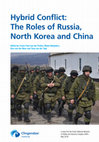
Hybrid warfare strategies are currently a hot topic among military and security experts. The Nort... more Hybrid warfare strategies are currently a hot topic among military and security experts. The North Korean case shows that hybrid warfare is not, however, a completely new phenomenon. If one defines hybrid warfare as the integrated deployment by states of various means and actors in order to influence or coerce other states with the aim of achieving strategic objectives while avoiding actual armed conflict, North Korea has been using this strategy since the 1960s. In the past, this has also been labelled an ‘asymmetric’ or ‘unconventional’ strategy. Currently, however, the cyber dimension is a new addition to this strategy, which may contribute to the use of the new term ‘hybrid’. This essay describes the long-term aims and trends in North Korea’s strategies and means for ‘peacetime’ coercion below the level of armed conflict to reach strategic goals, as well as the rationale behind them.
North Korea’s ballistic missiles with nuclear warheads will soon be able to destroy cities in the... more North Korea’s ballistic missiles with nuclear warheads will soon be able to destroy cities in the mainland of the United States. Looking at the provocative statements from Pyongyang, this may not seem a purely theoretical option. Yet, taking into account the motivations behind North Korea’s nuclear weapons programme, the risk that these weapons will be actually used by purpose is relatively low. The main risks are actually miscommunication, misperception, or domestic turmoil in Pyongyang, leading to inadvertent launch of nuclear missiles.
President Trump’s 2018 Nuclear Posture Review lays out important policy changes with regard to US... more President Trump’s 2018 Nuclear Posture Review lays out important policy changes with regard to US nuclear weapons. It broadens the circumstances in which the US may use nuclear weapons and aims for the introduction of new types of ‘smaller’ nuclear weapons. Both intentions may contribute to lowering the threshold for nuclear weapons use and blur the difference between nuclear and conventional weapons. These changes have direct effects on NATO’s European member states and require an informed debate among policy makers as well as the general public in these states. This Policy Brief offers some considerations as input for such a debate.
On 16 October 2017, amidst continuing tensions surrounding North Korea’s nuclear and missile prog... more On 16 October 2017, amidst continuing tensions surrounding North Korea’s nuclear and missile programmes, the European Union adopted a new set of economic sanctions against the country. These sanctions are the strongest so far, including a total ban on any investments in North Korea. The measures aim to cut off Pyongyang’s access to foreign currency, which it might use to invest in weapons programmes and luxury goods for its elite.
The new EU sanctions are a logical response to North Korea’s continuing provocations. However, this publication argues that it is unlikely these sanctions will make Pyongyang changing its course. Previous rounds of sanctions had little effect. Hence, the EU should look ahead, and consider next steps. Follow-up policies regarding the effectiveness of sanctions implementation, de-escalation, and contingency planning are desirable as well.
The new EU sanctions are a logical response to North Korea’s continuing provocations. However, this publication argues that it is unlikely these sanctions will make Pyongyang changing its course. Previous rounds of sanctions had little effect. Hence, the EU should look ahead, and consider next steps. Follow-up policies regarding the effectiveness of sanctions implementation, de-escalation, and contingency planning are desirable as well.
In 2017 the Organisation for the Prohibition of Chemical Weapons (OPCW) celebrates its 20th anniv... more In 2017 the Organisation for the Prohibition of Chemical Weapons (OPCW) celebrates its 20th anniversary. Looking back at these 20 years, one can hardly deny that the organisation has been successful: it has facilitated the almost universal disarmament of chemical weapons, and not always under easy circumstances. Yet, success is not always rewarded. While the OPCW can be regarded as a highly successful organisation, its reward is a discussion on its viability. Can the OPCW reduce its size and financial resources now that its verification of chemical weapons disarmament is almost finished, or could the organisation change its focus towards other challenges regarding chemical weapons? This policy debate has already been ongoing for several years, but so far without any clear-cut decisions. This report examines the track record of the organisation in the light of the questions raised about the OPCW’s future. It aims to offer some insights into the challenges and options for the future, as well as to identify potential steps that policy makers could take to prepare the OPCW for the future.
The 2015 Review Conference of the Non-Proliferation Treaty failed to reach any consensus. The iss... more The 2015 Review Conference of the Non-Proliferation Treaty failed to reach any consensus. The issues which gave rise to tensions in 2015 have not been resolved, with the inherent risk that the next Review Conference will fail as well. Three options are presented here to increase the possibilities for the 2020 Review Conference to succeed. First, it could be discussed whether the traditional focus on one final consensus document at the end of a Review Conference can be changed, so that tensions on certain topics do not block everything else as well. Second, new explorations are required to solve the deadlock on the aim to establish a WMD-Free Zone in the Middle East. Third, the nuclear weapons states should show more willingness in accelerating their disarmament efforts, for which some smaller and bigger steps are identified.
Deterrence of cyber-attacks by states or state-sponsored actors is becoming an increasingly impor... more Deterrence of cyber-attacks by states or state-sponsored actors is becoming an increasingly important issue in international relations. For states, the increasing threat of large cyber-attacks is not an easy challenge. Ideally, enemies are deterred before they actually launch a cyber-attack, so no damage is done at all. To deter cyber-attackers, their cost-benefit calculation needs to be influenced, leading them to conclude that the costs of launching a cyber-attack may be higher than the benefits. This article concisely discusses the main policy options that are relevant for deterring major cyber-attacks by other states or state actors. The options are grouped into three main categories: 1) Deterrence by Denial; 2) Deterrence by Retaliation; and 3) Deterrence by Signaling.
Cyber aggression is an increasing threat to international security and stability. While national ... more Cyber aggression is an increasing threat to international security and stability. While national policies intended to deter cyber aggression may offer some solution in the short term, their effects in the long term are doubtful. National cyber-deterrence policies entail the risk of an ongoing cyber arms race and a cycle of escalation between potential cyber opponents. Diplomacy may offer fewer results in the short term, but it is more promising in the long term. Confidence-building measures and international norms and values may not be easy to reach, but in the end they could be more effective (and cheaper) than a single focus on national cyber-deterrence strategies. In the long term, cooperation between states to establish confidence and commonly accepted norms of behaviour in cyber space are the most promising ways available to achieve enduring cyber security and stability. Enhancing interstate cooperation , transparency and predictability of behaviour in cyberspace will reduce the risks of misperception, escalation and conflict.
Most nuclear weapons systems were designed decades ago, when manipulations of computer networks, ... more Most nuclear weapons systems were designed decades ago, when manipulations of computer networks, or cyber attacks, were an almost nonexistent threat. Nowadays, cyber threats are everywhere, and one may expect that they have consequences for the stability of nuclear weapons systems as well. Considering the many unknowns of the still evolving issue of cyber threats, it is hard to measure how serious the risks are, but it cannot be excluded that, over the long term, they may have “game-changing” effects on the perceived value of nuclear weapons. This publication briefly discusses two potential consequences of this phenomenon: cyber operations targeting nuclear weapons systems, and cyber operations replacing nuclear weapons. In conclusion, some potential policy options to deal with these consequences are presented.
This chapter was published in: Oliver Meier & Elisabeth Suh (eds.), ‘Reviving nuclear disarmament. Paths towards a joint enterprise’, SWP Working Paper, Stiftung Wissenschaft und Politik, Berlin, p. 37-38.
This chapter was published in: Oliver Meier & Elisabeth Suh (eds.), ‘Reviving nuclear disarmament. Paths towards a joint enterprise’, SWP Working Paper, Stiftung Wissenschaft und Politik, Berlin, p. 37-38.
Some medium-sized states play varying, yet important roles in international cyber-security polici... more Some medium-sized states play varying, yet important roles in international cyber-security policies. This Policy Brief offers a concise overview of five medium-sized states with such a prominent position: Australia, Estonia, Israel, the Netherlands and South Korea. How did these states attain these positions, and what are the benefits and challenges?
The analysis shows that these positions are not easy to acquire or to maintain. Whilst the will to continuously invest and to develop an integrated (whole-of-government) approach seems to be an obvious key requirement for success, cyber security as a policy area is very broad. Remaining in a lead position may require looking for ‘a niche within the niche’.
The analysis shows that these positions are not easy to acquire or to maintain. Whilst the will to continuously invest and to develop an integrated (whole-of-government) approach seems to be an obvious key requirement for success, cyber security as a policy area is very broad. Remaining in a lead position may require looking for ‘a niche within the niche’.