Papers by Silvia Albizuri
Journal of Archaeological Science: Reports, 2025
This study examines a Late Neolithic-Chalcolithic ivory object (Véraza facies) found at the Bòbil... more This study examines a Late Neolithic-Chalcolithic ivory object (Véraza facies) found at the Bòbila Madurell settlement (Sant Quirze del Vallès, Barcelona, Spain). The main objective was to date the object and determine the provenance of the raw material. The radiocarbon analysis places it in the second quarter of the 3rd millennium BC. FTIR analysis identified it as hippopotamus ivory, marking the first and currently the oldest discovery in northeastern Iberia. While most Iberian ivory is attributed to Asian or African proboscideans, hippopotamus ivory is known in southern Iberia during the Chalcolithic and Early Bronze Age, reflecting emerging trade networks from the Near East and Africa. Though the object is fractured, the archaeological context, together with morphological and residue analyses, suggests a possible use in textile work.
Trabajos de Prehistoria, 2024
This paper analyses a set of Bolma rugosa opercula found in the necropolis of Bòbila Madurell (Sa... more This paper analyses a set of Bolma rugosa opercula found in the necropolis of Bòbila Madurell (Sant Quirze del Vallès, Barcelona) and their potential role in the funerary rituals of the Middle Neolithic Pit Burials Cultural Horizon. These opercula represent a unique phenomenon within the context of Neolithic Europe, both in terms of their sheer number and their association with burials. The opercula have been recorded inside seven structures, five of which also contained human remains. The most remarkable case is Tomb MS-62, where four opercula were found attached to a ceramic fragment. In two instances the opercula were found within silo structures, devoid of human remains. However, their contents and proximity to contemporaneous burials suggest a potential ritual function. The structures in which the opercula were found are dated to the end of the 5th mil-lennium and the first half of the 4th millennium BC. The recovered malacological remains indicate that the nearby coastline was exploited for the supply of shells, which were mainly used to make ornaments and possible amulets. Keywords: malacology; Bolma rugosa opercula; symbolic use; northeastern Iberian Peninsula; Middle Neolithic; Pit Burials Cultural Horizon.
Plos One, 2023
Zooarchaeological analyses of the skeletal remains of 52 animals unearthed in the courtyard of an... more Zooarchaeological analyses of the skeletal remains of 52 animals unearthed in the courtyard of an Iron Age Tartessian building known as Casas del Turuñuelo (Badajoz, Spain) shed light on a massive sacrifice forming part of a series of rituals linked to the site's last period of activity and final abandonment. The rites took place towards the end of the 5th century BCE when both the building (intentionally destroyed) and the sacrificed animals were intentionally buried under a tumulus 90 m in diameter and 6 m high. The main objective of the zooarchaeological and microstratigraphic analyses was to determine the phasing of the sacrificial depositions. Evidence gathered from taphonomic assessments and a series of radiocarbon datings indicate that the sacrifices fall into three consecutive phases spanning several years. The findings of the zooarchaeological analyses clearly point to a selection of equid and cattle males. Adult equids predominate (MNI = 41) followed by adult and subadult cattle (MNI = 6). Pigs, in turn, are only represented by a few adults and sub-adult females (MNI = 4). Among the animals is a single dog of undetermined sex between 3 and 4 years of age. The fact that the animals are mostly adults discards the likelihood that they died from natural causes or an epidemic. In addition, the scenographic deposition of certain equids in pairs, as well as evidence of the burning of plant offerings, suggest an intentional
Badajoz Veterinaria, 2020
Nature Communications, 2025
Horses have inhabited Iberia (present-day Spain and Portugal) since the Middle Pleistocene, shapi... more Horses have inhabited Iberia (present-day Spain and Portugal) since the Middle Pleistocene, shaping a complex history in the region. Iberia has been proposed as a potential domestication centre and is renowned for producing world-class bloodlines. Here, we generate genome-wide sequence data from 87 ancient horse specimens (median coverage = 0.97X) from Iberia and the broader Mediterranean to reconstruct their genetic history over the last ~26,000 years. Here, we report that wild horses of the divergent IBE lineage inhabited Iberia from the Late Pleistocene, while domesticated DOM2 horses, native from the Pontic-Caspian steppes, already arrived ~1850 BCE. Admixture dating suggests breeding practices involving continued wild restocking until at least ~350 BCE, with IBE disappearing shortly after. Patterns of genetic affinity highlight the far-reaching influence of Iberian bloodlines across Europe and north Africa during the Iron Age and Antiquity, with continued impact extending thereafter, particularly during the colonization of the Americas.
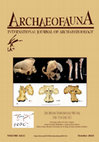
Archaeofauna, 2023
Presentamos el análisis morfométrico y osteopatológico de tres perros de talla pequeña (32-38 cm)... more Presentamos el análisis morfométrico y osteopatológico de tres perros de talla pequeña (32-38 cm) y robustos, con deformaciones en las diáfisis y epífisis (condrodistrofia) y en el foramen magnum. Provienen de diferentes yacimientos del noreste peninsular. El más antiguo se localizó en un silo del yacimiento ibero-romano, Serrat dels Espinyers (Isona, Lleida), datado a finales del s. III y la primera mitad del s. II a.C. Dos más modernos se documentaron en yacimientos romanos: uno en la necrópolis CR Empúries (L’Escala, Girona), fechada en la segunda mitad del s. II d.C. y otro en el yacimiento de Can Verboom (Premià de Dalt, Barcelona), datado a finales del s. IV d.C. Estos casos incrementan de forma importante los individuos diagnosticados hasta ahora para este período en esta área geográfica. Sus características morfológicas permiten clasificarlos entre los perros enanos más robustos y pesados que se documentan dentro de la variabilidad canina europea a partir de la colonización romana. Su excepcionalidad se debe a la escasa información actual sobre este tipo de perro en el territorio peninsular. A su vez, este trabajo evalúa sus posibles usos, y se presentan unas aproximaciones preliminares a su caracterización genética. La posible consanguinidad de estas poblaciones puede explicar la permanencia de alguna patología genética vinculada al enanismo: la condrodisplasia.
Le Chasséen, des Chasséens… Retour sur une culture nationale et ses parallèles, Sepulcres de fossa, Cortaillod, Lagozza.Actes du colloque international tenu à Paris (France) du 18 au 20 novembre 2014, 2016
Une partie des analyses realisees et presentees dans ce travail a ete realisee dans fe cadre du p... more Une partie des analyses realisees et presentees dans ce travail a ete realisee dans fe cadre du projet «Aproximacion a las primeras comunidades neoliticas del NE peninsular a traves de sus practicas funerarias (HAR2011-23149) JJ» finance par le Ministere de Economie et de fa Competitivite du Gouvernement d'Espagne. Nous remercions egafement pour leur collaboration le Departament d'Arqueologia de la Generalitat de Catalunya et les differents musees que nous avons visites (Museu Diocesa i Comarcal de Solsona, Museu d'Història de Sabadell, Museu Arqueologic de Barcelona y Girona, Vinseum de Vilafranca del Penedes, Museu de Manresa, Museu de Granollers, Patrimoni cultural d'Andorra).
The results of analyses of wild animals in various funerary structures from Sector II of Can Roqu... more The results of analyses of wild animals in various funerary structures from Sector II of Can Roqueta (Early-Middle Bronze Age) in Catalonia are presented in this article. In general, animal deposits in a funerary context provide an approach to the study of ritual activity and beliefs, especially in agro-pastoral communities where domestic animals are the basic elements of subsistence and the creation of resources. In this case, taxonomic identification indicates the importance of domestic animals due to their role in the economy, as well as their use in food and symbolic offerings and as a manifestation of the power of the dead. By contrast, a taphonomic study indicates the scarcity of wild animal deposits – six birds and two carnivores – and shows the differential use of these species, which are perhaps more closely related to life symbols or totemic symbols. PALABRAS CLAVES: Bronce Antiguo-Medio, estructuras funerarias, ofrendas de animales salvajes, complejidad social y ritual. G...
S. Valenzuela, N. Padrós, M.C. Belarte i J. Sanmartí (eds.): Economia agropecuària i canvi social a partir de les restes bioarqueològiques. El primer mil·lenni aC a la Mediterrània occidental, V Reunió Internacional d'Arqueologia de Calafell (Calafell 2009), Arqueomediterrània 12., 2011
Este trabajo se centra en las evidencias económicas documentadas en Cataluña entre el 2300 y el 6... more Este trabajo se centra en las evidencias económicas documentadas en Cataluña entre el 2300 y el 600 aC y en su incidencia sobre los cambios sociales detectados durante la edad del Bronce y la primera edad del Hierro. Se ha partido de un conjunto amplio de datos sobre la actividad agropecuaria y metalúrgica de las poblaciones asentadas en el territorio. El enfoque que proponemos es doble: por un lado, temporal, para vislumbrar la evolución y los posibles cambios de estrategias económicas y sociales durante estos períodos y, por otro, geográfico, con la intención de profundizar en las diferencias territoriales y en cómo éstas se transformaron a lo largo del tiempo. En este último sentido, se observa la existencia de al menos dos realidades arqueológicas diferentes con sus propias especificidades, una en el litoral y prelitoral -sin embargo no del todo homogénea- y la otra en el interior.
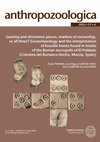
Anthropozoologica, 2022
Natural and worked astragali or knuckle bones dating from the Neolithic are common finds in Euras... more Natural and worked astragali or knuckle bones dating from the Neolithic are common finds in Eurasia
and are usually thought to be related with gaming, divination or protection. Knuckle bones/astragali
(N = 549) and imitations (N = 11) were found in 27 of the 158 tombs that have been studied in the
El Poblado necropolis, Murcia, Southeast Spain (fourth-second century BC), forming one of the most
important knuckle bone collections in an Iberian cultural site. The greatest concentrations were found
in tombs of important and high-class individuals. Most of the knuckle bones/astragali are from sheep
(Ovis aries Linnaeus, 1758) and had been burnt with the corpse of the deceased. The fact that knuckle
bones occur as part of the grave goods of both sexes suggests the egalitarian use of these items. While
certain modifications point to their probable use, unworked astragali could have symbolised ownership
of flocks or been used for exchange. The significance of this item and the data collected are discussed
within the social and cultural context of pre-Roman societies in the southeast of the Iberian Peninsula.
Archaeological and Anthropological Sciences, 2019
This study focuses on the role of faunal remains in funerary rituals in the Middle Neolithic necr... more This study focuses on the role of faunal remains in funerary rituals in the Middle Neolithic necropolis of Bòbila Madurell (Sant Quirze del Vallès, Barcelona) (“Madurell Sur” and “Madurell Ferrocarril” sectors). Faunal remains recovered in these burials a priori inform about the different uses of animals in funerary rituals. Complete and partial anatomical connections, isolated elements, and/or bone fragments were recovered. These may appear directly associated with human remains or scattered among the structures’ fill. Animal remains were analyzed using zooarchaeological and taphonomic methods: anatomical and taxonomical composition, age of death, and human modifications. The data obtained were linked to burial type and human remains’ sex and age. Results show that the economic importance of domestic animals for Middle Neolithic groups would also cover their symbolic and funerary world. In Bòbila Madurell, animals could be offerings and play a part in feasts. In addition, faunal data confirm the ritual diversity and the possible social differentiation of these groups previously proposed by other studies.
25th EAA Annual Meeting (Bern, 2019) - Abstract Book. ISBN: 978-80-907270-6-9 European Associatio... more 25th EAA Annual Meeting (Bern, 2019) - Abstract Book. ISBN: 978-80-907270-6-9 European Association of Archaeologists, 2019
International Journal of Osteoarchaeology , 2021
Can Roqueta has provided a large number of equid and dog assemblages from the Late Bronze Age to ... more Can Roqueta has provided a large number of equid and dog assemblages from the Late Bronze Age to the Early Iron Age. An analysis of the stable isotopes δ13C and δ15N in 42 bone samples has made it possible to reconstruct the diet of domestic equids. The results and carpological remains show that the territory was managed for agricultural and pasture use. They indicate the cultivation of two types of highly nutritious and digestible millet, used in combination with other cereals to prepare fodder, as well as the use of natural pastures.
Munibe Antropologia-Arkeologia
En la ganadería neolítica de la Península Ibérica el bovino doméstico (Bos taurus) fue el segundo... more En la ganadería neolítica de la Península Ibérica el bovino doméstico (Bos taurus) fue el segundo taxón en importancia, después de los ovicaprinos. Algunos yacimientos constituyen una excepción y presentan una mayor abundancia de bovino. Éste es el caso de la necrópolis de la Bòbila Madurell (4210-3670 cal BC), la más extensa del Neolítico Medio peninsular en superficie y en número de tumbas. El objetivo de este trabajo es estudiar la configuración de la cabaña bovina a partir de los conjuntos faunísticos registrados en los principales sectores de la necrópolis. Un volumen de restos importante ha permitido diferenciar 37 animales en 20 estructuras. Basándonos en el análisis osteométrico se caracteriza el conjunto y se descarta la presencia de ejemplares salvajes o uros (Bos primigenius). Los resultados indican que el rebaño fue explotado básicamente para la obtención de carne una vez obtenido su peso óptimo y secundariamente para el aprovechamiento de la leche.
RESUMEN La excepcional recuperación de tres restos de oso pardo en tres estructuras de la primera... more RESUMEN La excepcional recuperación de tres restos de oso pardo en tres estructuras de la primera Edad del Hierro del yacimiento de Can Roqueta, Sector Can Revella, nos llevó a realizar este trabajo de documentación sobre la evidencia de la captura y aprovechamiento del gran carnívoro en un yacimiento del Holoceno catalán. Los restos aparecieron mezclados con desechos de alimentación en el interior de estructuras que han aportado gran cantidad de huesos, y que a priori fueron utilizadas como silos. Una vez inutilizados como contenedores de grano fueron reutilizados como basureros acumulando detritus domésticos entre los que destacan los provocados por la limpieza de hogares (carbones, huesos quemados, piedras, etc.). RÉSUMÉ L'exceptionnelle récupération de trois restes d'ours brun dans trois structures du premier Âge du Fer du gisement de Can Roqueta, Secteur Can Revella, nous a motivé à réaliser ce travail de documentation sur les évidences de capture et utilisation du gran...

Equine diet during protohistoric times in the Northeast of the Iberian Peninsula: Stable isotope data (C, N) from bone collagen
Data in Brief, 2021
The analysis of stable isotopes in bone collagen allows us to infer the diet of the animals studi... more The analysis of stable isotopes in bone collagen allows us to infer the diet of the animals studied. This dataset con- sists of isotopic signatures ( δ13 C and δ15 N) obtained by iso- tope ratio mass spectrometry from the skeletal remains of 42 equines (horse, ass and their hybrids) from the Can Roqueta site (Sabadell, Northeast Iberian Peninsula). Their chronology spans from Late Bronze Age to Late Roman Period, with par- ticular emphasis on the Early Iron Age. These animals were found in storage silos and graves and were probably sac- rificed as ritual offerings. The isotopic values are accompa- nied by data to assess the quality of the collagen analyzed. This fills a gap in equine isotopic values for this region and chronology, which may be of use to archaeologists interested in the study of livestock management or palaeodiet.
Journal of Archaeological Science: Reports, 2019
In this article, a zooarchaeological and isotopic analysis is presented for 26 dog exemplars (Can... more In this article, a zooarchaeological and isotopic analysis is presented for 26 dog exemplars (Canis familiaris). These dogs were deposited in burial and ceremonial structures in the northeastern Iberian Peninsula during the Middle Neolithic, within the Pit Grave cultural horizon (ca. 4200–3600 cal BC). Four archaeological sites of the Catalonian coastal strip are studied: Camí de Can Grau, La Serreta, Ca l'Arnella, and Bòbila Madurell (one of the most important necropolises of the Iberian Peninsula). The presence of these dogs is interpreted as evidence of accompanying offerings and represents the most ancient use of this animal in the context of burials within the studied territory. Although it is a not a globally recorded gesture during this period, in light of the present results, it can be considered as a stereotyped ritual activity and evidence of the close relationship between these animals and the human communities. The diet of most of the dogs must be considered mixed and very similar to that of the humans, including consumption of herbivores and terrestrial plants.
Aprovechamiento y producción animal en época ibérica. Consideraciones generales económicas
Limes Revista De Arqueologia, 1999
... | Ayuda. Aprovechamiento y producción animal en época ibérica. Consideraciones generales econ... more ... | Ayuda. Aprovechamiento y producción animal en época ibérica. Consideraciones generales económicas. Autores: Jordi Nadal, Silvia Albizuri; Localización: Limes: Revista de arqueología, ISSN 1130-3786, Nº 6-7, 1999 , pags. 41-52. ...
The study of a horse in a graves-silo of Early Iron Age in Catalonia, Spain: Estudi de l’èquid aparegut en relació amb l’estructura E10 de l’Hort d’en Grimau
ABSTRACT The study of a horse is derived from detailed analysis of graves-silo in Early Iron Age ... more ABSTRACT The study of a horse is derived from detailed analysis of graves-silo in Early Iron Age in Catalonia, Spain. The silo E-10 contains a complete horse skeleton and remains of a women.



Uploads
Papers by Silvia Albizuri
and are usually thought to be related with gaming, divination or protection. Knuckle bones/astragali
(N = 549) and imitations (N = 11) were found in 27 of the 158 tombs that have been studied in the
El Poblado necropolis, Murcia, Southeast Spain (fourth-second century BC), forming one of the most
important knuckle bone collections in an Iberian cultural site. The greatest concentrations were found
in tombs of important and high-class individuals. Most of the knuckle bones/astragali are from sheep
(Ovis aries Linnaeus, 1758) and had been burnt with the corpse of the deceased. The fact that knuckle
bones occur as part of the grave goods of both sexes suggests the egalitarian use of these items. While
certain modifications point to their probable use, unworked astragali could have symbolised ownership
of flocks or been used for exchange. The significance of this item and the data collected are discussed
within the social and cultural context of pre-Roman societies in the southeast of the Iberian Peninsula.