Papers by Simla Dogangun
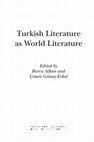
Turkish Literature as World Literature, 2021
"The thematic appeal of Şafak’s fiction on the world literature stage and its dynamics comprise t... more "The thematic appeal of Şafak’s fiction on the world literature stage and its dynamics comprise the focus of this chapter. Hybridity and cosmopolitanism are the two popular concepts frequently used by Elif Şafak to articulate both her identity and her works in the discussions on world literature. These concepts are embedded within the theoretical discourse of the politics of resistance against globalization, but there is also criticism directed toward them for being informed by elitist and Eurocentric approaches. Following the use of such themes in Şafak’s works critically proves to be an apt response in situating her authorial position within the context of world literature. Within the context of Turkish literature, the aspiration to connect with the world becomes a concern of thematic appeal (other than translation) that culminates in a complicated tension between Şafak’s fiction and world literature. The cosmopolitical significance of Şafak’s writing needs to be reexamined, if one is to discuss it as a multiply linked and layered vision that resists Eurocentric approaches."
The Conradian, 2024
Co-edited by Simla Dogangun and Christopher GoGwilt, this issue of The Conradian is dedicated to ... more Co-edited by Simla Dogangun and Christopher GoGwilt, this issue of The Conradian is dedicated to rethinking Conrad in world literature, not only as an author of the hypercanon, but also one whose works gain vitality as they get into contact with works from the countercanon (Damrosch 2006: 45). His oeuvre and identity occupy a
critical space in the ongoing debates about world literature, though they remain under-researched. His influence, critical acclaim, global readership, and transcultural recognition assure him a canonical place in world literature. Insofar as the traditional notion of a fixed and exclusive literary canon has been disrupted by globalization, digitalization, and the proliferation of literary translations, Conrad’s position within newer, non-Western conceptions of world literature, and his role in shaping a more inclusive and cosmopolitan understanding, are significant yet evolving aspects of these discussions. Conrad’s contribution to world literature lies in his capacity to encapsulate the profound transformations and tensions of his era, thereby providing a critical lens through which to examine the ongoing dynamics of cultural exchange and power relations in literature. His works continue to inspire scholarly debate, underscoring the enduring relevance of his insights into the human psyche and the socio-political fabric of a globalized society.
critical space in the ongoing debates about world literature, though they remain under-researched. His influence, critical acclaim, global readership, and transcultural recognition assure him a canonical place in world literature. Insofar as the traditional notion of a fixed and exclusive literary canon has been disrupted by globalization, digitalization, and the proliferation of literary translations, Conrad’s position within newer, non-Western conceptions of world literature, and his role in shaping a more inclusive and cosmopolitan understanding, are significant yet evolving aspects of these discussions. Conrad’s contribution to world literature lies in his capacity to encapsulate the profound transformations and tensions of his era, thereby providing a critical lens through which to examine the ongoing dynamics of cultural exchange and power relations in literature. His works continue to inspire scholarly debate, underscoring the enduring relevance of his insights into the human psyche and the socio-political fabric of a globalized society.
Ian Almond, <i>World Literature Decentered: Beyond the ‘West’ through Turkey, Mexico and Bengal</i>
Comparative Critical Studies, Feb 1, 2023

Hari Kunzru’s The Impressionist and the Mimic Bildungsroman
Gaziantep University Journal of Social Sciences, Dec 31, 2019
According to Tobias Boes the much-debated Bildungsroman has proven to be an “unparalleled success... more According to Tobias Boes the much-debated Bildungsroman has proven to be an “unparalleled success as a model by which writers and critics alike can understand the world around them” (p. 242). In the changing perception of the humanistic subject, the word Bildung (formation, development) has a precarious relationship with contemporary British fiction. Commenting on the representational possibilities of contemporary literary narratives, Mark Stein proposes that they “have a dual function: they are about the formation of the protagonist as well as the transformation of British society (Britishness) and cultural institutions” (p. 22). Drawing on these observations I argue in this study that Hari Kunzru’s The Impressionist is one such novel that mimics the classical Bildungsroman and problematizes it through its subversion of the traditional characteristics of the hero who is supposed to reach a stable and integrative end point in society and become the model citizen. Hari Kunzru’s The Betty Trask Award 2002 winning novel, The Impressionist is a multifaceted narrative that ranges across a multitude of geographical settings. Murat Aydemir (2006) contends, “The narrative tries out, tries on, different conceptualizations of inter- or cross-cultural identity” (p. 205). At the same time, the exploitative regime of “empire” manifests itself in the synchronized presence of connection and the segregation of the new “citizen of the world”. By focusing on how performativity resonates throughout the novel, I discuss the ways in which the novel mimics and performs the Bildungsroman, and offers new modes of belonging.
The new deadline for abstract submissions is November 5th!!
Where does Conrad belong in the ongo... more The new deadline for abstract submissions is November 5th!!
Where does Conrad belong in the ongoing debates about world literature? Conrad may indeed be assured a canonical place in world literature given the influence, critical acclaim, global readership, and transcultural recognition of his works. Yet the traditional notion of a fixed and exclusive literary canon has been disrupted, if not entirely undone, by factors such as globalization, digitalization, and the proliferation of literary translations. What place does Conrad occupy within newer, non-Western conceptions of world literature? What role has Conrad (and Conrad studies) played in attempts to form a more inclusive and cosmopolitan understanding of world literature?
Where does Conrad belong in the ongoing debates about world literature? Conrad may indeed be assured a canonical place in world literature given the influence, critical acclaim, global readership, and transcultural recognition of his works. Yet the traditional notion of a fixed and exclusive literary canon has been disrupted, if not entirely undone, by factors such as globalization, digitalization, and the proliferation of literary translations. What place does Conrad occupy within newer, non-Western conceptions of world literature? What role has Conrad (and Conrad studies) played in attempts to form a more inclusive and cosmopolitan understanding of world literature?
Simla Doğangün The Semiperipheral Subaltern and Literary Expression: Narratives from Turkey and India, 2023
The onset of neoliberal capitalism has endowed the concept of "peripherality" with significant re... more The onset of neoliberal capitalism has endowed the concept of "peripherality" with significant relevance for literary scholars investigating the dynamic interaction between aesthetic structures and the consequences of evolving socioeconomic and political terrains. Building on the theoretical foundations of subalternity, world-systems theory, and theories of combined and uneven development, I intend to present a comparative, constructive exploration of three distinguished novels from India and Turkey. These include Latife Tekin's Berji Kristin: Tales from the Garbage Hills (Berji Kristin hereinafter), Arundhati Roy's The God of Small Things (Small Things hereinafter), and Aravind Adiga's The White Tiger (hereinafter White Tiger). My analysis delves into the intricate intertwining of familial dynamics, communal relations, gender violence, and patriarchal norms with the mechanisms of neoliberal market operations. In doing so, I strive to delineate the manner in which semiperipheral subalternity surfaces as a consistent theme of discourse within the distinct cultural landscapes of Turkey and India.
Waltzes in Exile: Exilic spaces and female presence in Kenizé Mourad's De la part de la princess morte, 2019
Regards from the Dead Princess (1989), Kenizé Mourad's much acclaimed début novel, tells the stor... more Regards from the Dead Princess (1989), Kenizé Mourad's much acclaimed début novel, tells the story of Selma, an Ottoman princess whose life traverses capitals, cultures and continents-Istanbul, Beirut, Badalpour, and Paris during the interbellum years. Selma bears witness to key turning points in a troubled period, namely the fall of empires, rise of nationalism, and world wars. Her life story provides insight to cataclysmic events, and its retelling in an errant narrative which weaves in female experiences that have been silenced. There is a link between the shifts in places and those her inner self undergoes. Moreover, the presence of dance as a means of self-expression makes an apt point in discussing the development of Selma's identity. This paper traces the ways in which the novel represents exilic spaces and their female experiencing through focus on displacement and practices of dance. By juxtaposing the themes of exile, movement and dance this paper highlights the complexity of the narrative and the circuitous forms of displacement.
Sürgünde Vals: Kenizé Mourad'ın Saraydan Sürgüne adlı romanında sürgün ve kadın Öz Kenizé Mourad'ın Saraydan Sürgüne (1987) adlı romanı Selma adındaki Osmanlı prensesinin iki dünya savaşı arasında kıtalar, kültürler ve başkentleri kat eden (İstanbul, Beyrut, Badalpour ve Paris) hikayesini konu alır. Selma imparatorlukların çöküşü, milliyetçiliğin yükselişi ve dünya savaşları ile örülmüş sorunlu bir dönemin kilit tarihine tanıklık etmektedir. Selma'nın bu göçebe öyküsü yaşanan felaketlere ışık tutmanın yanı sıra susturulmuş ve bastırılmış farklı kadın deneyimlerine de göndermede bulunmaktadır. Romanda Selma'nın yaşadığı mekânsal değişimler ile içsel benliğinin yaşadığı başkalaşım arasında bir bağlantı bulunmaktadır. Ayrıca, kendini ifade etme aracı olarak dans kavramının varlığı, Selma'nın kimliğinin gelişimini tartışmak için uygun bir noktaya getirmektedir. Bu makale, romanda bir mekân olarak sürgün kavramının ve kadın varlığının ne şekilde temsil edildiğini ve metnin gidiş ve dönüşler arasındaki gezici niteliğinin bu kavramları nasıl
Sürgünde Vals: Kenizé Mourad'ın Saraydan Sürgüne adlı romanında sürgün ve kadın Öz Kenizé Mourad'ın Saraydan Sürgüne (1987) adlı romanı Selma adındaki Osmanlı prensesinin iki dünya savaşı arasında kıtalar, kültürler ve başkentleri kat eden (İstanbul, Beyrut, Badalpour ve Paris) hikayesini konu alır. Selma imparatorlukların çöküşü, milliyetçiliğin yükselişi ve dünya savaşları ile örülmüş sorunlu bir dönemin kilit tarihine tanıklık etmektedir. Selma'nın bu göçebe öyküsü yaşanan felaketlere ışık tutmanın yanı sıra susturulmuş ve bastırılmış farklı kadın deneyimlerine de göndermede bulunmaktadır. Romanda Selma'nın yaşadığı mekânsal değişimler ile içsel benliğinin yaşadığı başkalaşım arasında bir bağlantı bulunmaktadır. Ayrıca, kendini ifade etme aracı olarak dans kavramının varlığı, Selma'nın kimliğinin gelişimini tartışmak için uygun bir noktaya getirmektedir. Bu makale, romanda bir mekân olarak sürgün kavramının ve kadın varlığının ne şekilde temsil edildiğini ve metnin gidiş ve dönüşler arasındaki gezici niteliğinin bu kavramları nasıl
Hari Kunzru's The Impressionist and the Mimic Bildungsroman, 2019
According to Tobias Boes the much-debated Bildungsroman has proven to be an "unparalleled success... more According to Tobias Boes the much-debated Bildungsroman has proven to be an "unparalleled success as a model by which writers and critics alike can understand the world around them" (2006, p. 242). In the changing perception of the humanistic subject, the word bildung (formation, development) has a precarious relationship with contemporary British fiction. Commenting on the representational possibilities of contemporary literary narratives, Mark Stein proposes that they "have a dual function: they are about the formation of the protagonist as well as the transformation of British society (Britishness) and cultural institutions" (2004, p.22). Drawing on these observations I argue in this study that Hari Kunzru's The Impressionist is one such novel that mimics the classical Bild-ungsroman and problematizes it through its subversion of the traditional characteristics of the hero who is supposed to reach a stable and integrative end point in society and become the model citizen. Hari Kunzru's The Betty Trask Award 2002 winning novel, The Impressionist is a multifaceted narrative that ranges across a multitude of geographical settings. As Murat Aydemir (2006) contends, "The narrative tries out, tries on, different conceptualiza-tions of inter-or cross-cultural identity" (p. 205). At the same time, the exploitative regime of "empire" manifests itself in the synchronized presence of connection and the segregation of the new "citizen of the world". By focusing on how performativity resonates throughout the novel, I discuss the ways in which the novel mimics and performs the genre Bildungsroman, and offers new modes of belonging.
Edited Books by Simla Dogangun

Turkish Literature as World Literature, 2021
Thinking about a volume on “Turkish literature as world literature” introduces some seemingly sim... more Thinking about a volume on “Turkish literature as world literature” introduces some seemingly simple questions. What is “Turkish Literature as world literature?” Is not Turkish literature naturally a world literature? The qualification created by the addition of the preposition “as” is suggestive of a difference between Turkish literature on its own and Turkish literature within a collective proposition. Since the materials that constitute Turkish literature do not change with or without the “as,” this preposition seems to refer to a qualification toward not Turkish literature but what world literature is in its relation to national literary traditions. Accordingly, the singular within the collective comes into focus and both gain reciprocal value and meaning in association with one another. The question to be asked then is: what is this “world literature” that changes the perception of a national literature and is itself redefined when they interact? What is this third literary body that emerges out of the convergence of the singular and the collective spheres by means of an “as”? What is in a preposition?