Videos by Simone Brioni
Kaha Mohamed Aden, an Italian writer of Somali origin, narrates her memories of Mogadishu, her ho... more Kaha Mohamed Aden, an Italian writer of Somali origin, narrates her memories of Mogadishu, her hometown, and reconstructs its story in Pavia, where she currently lives. The capital city of Somalia is divided into five main streets, with each corresponding to different historical periods. The ‘fourth road’ symbolizes the actuality of civil war, but also negates the preceding periods and makes it necessary to set our hopes on a ‘fifth street’. The Fourth Road: Mogadishu, Italy brings to our attention the issues of a land which shared a number of historical relationships with Italy in the past years; yet, this problematic aspect unfailingly tends to be overlooked by Italian mass-media. The history of the city of Mogadishu gives rise to many important fundamental questions on the history of Italy itself, given the assumption that we have a limited, and, to some degree, distorted historical view on this matter, not to mention the partial omission of the colonialism period.
2 views
Who are you? In an attempt to give an answer to this question, Ribka Sibhatu, Italian writer and ... more Who are you? In an attempt to give an answer to this question, Ribka Sibhatu, Italian writer and essayist of Eritrean origin, presents the history of her homeland in her current city, Rome.
In her imaginary trip backwards through her memories, she is accompanied by a young Italian man, who shares her same interest in exploring the relationship between identity and territory.
Ribka’s own personal story intersects powerfully with the stories of the Eritrean diaspora, which not only does it show the fault traces that colonialism has left behind in her country, but also demonstrates how the perception of immigration in Italy has been profoundly influenced by an apparent failure in the process of decolonization in Italian collective memory.
Aulò brings into question the concept of confine, not only in geographical, but also in cultural and identitarian terms.
In her imaginary trip backwards through her memories, she is accompanied by a young Italian man, who shares her same interest in exploring the relationship between identity and territory.
Ribka’s own personal story intersects powerfully with the stories of the Eritrean diaspora, which not only does it show the fault traces that colonialism has left behind in her country, but also demonstrates how the perception of immigration in Italy has been profoundly influenced by an apparent failure in the process of decolonization in Italian collective memory.
Aulò brings into question the concept of confine, not only in geographical, but also in cultural and identitarian terms.
19 views
Six Objects: Notes Towards a Film on Pietro di Donato is a short film by Loredana Polezzi, Simone... more Six Objects: Notes Towards a Film on Pietro di Donato is a short film by Loredana Polezzi, Simone Brioni, and Lindsey Pelucacci, which includes preliminary ideas for a larger research/film project about Pietro di Donato. The film features an interview with Richard di Donato and archival material from his personal collection. It was made thanks to a CAS Seed Grant for Interdisciplinary Research Teams.
16 views
Maka is a documentary about Geneviève Makaping, a Cameroonian-Italian anthropologist, writer and ... more Maka is a documentary about Geneviève Makaping, a Cameroonian-Italian anthropologist, writer and the first Black woman news anchor on Italian television, as well as the first Black woman to be named the director of a newspaper in Italy. The film offers a detailed account of Makaping’s journey of migration from Cameroon across the desert and the ocean, her arrival in Italy in 1982 following the tragic death of her partner, her success as a journalist and television host, and her more recent relocation and current teaching job in Mantua. Maka focuses on questions of national belonging, and it reflects on how the perception of migration and race has changed since Makaping first came to Italy in the 1990s. https://film.5e6.it/portfolio/maka/
19 views
Beyond the Frame discusses colonial photography and challenges the gaze through which it framed A... more Beyond the Frame discusses colonial photography and challenges the gaze through which it framed Africa. A journey that emerges from a family archive discovered by chance, Beyond the Frame observes, interprets, and reflects upon how the colonial legacy shapes our present.
Oltre i bordi presenta un’intima riflessione sulla fotografia coloniale e interroga la prospettiva con cui essa ha costruito l’Africa. Attraverso un’esplorazione che prende forma da un archivio familiare scoperto in maniera fortuita, Oltre i bordi osserva, interpreta e riflette sul modo in cui le tracce del passato coloniale danno forma al nostro presente.
Oltre i bordi presenta un’intima riflessione sulla fotografia coloniale e interroga la prospettiva con cui essa ha costruito l’Africa. Attraverso un’esplorazione che prende forma da un archivio familiare scoperto in maniera fortuita, Oltre i bordi osserva, interpreta e riflette sul modo in cui le tracce del passato coloniale danno forma al nostro presente.
2 views
Books by Simone Brioni
Shrapnel , 2025
Shrapnel is a book that introduces the film Not Because We Were There, exploring the significance... more Shrapnel is a book that introduces the film Not Because We Were There, exploring the significance of the Piazza della Loggia massacre, its memory, and its legacy. It reflects on the power of the photographs from that tragic day—their ability to bear witness for those who were not there—and the kind of society they challenge us to imagine and help create.
Diversity, Decolonization and Italian Studies, 2022
will be Open Access under the international licensing Creative Commons Attribution-NonCommercial-... more will be Open Access under the international licensing Creative Commons Attribution-NonCommercial-NoDerivatives 4.0 (CC BY-NC-ND) with a two-year embargo on all articles. Issues and single articles under embargo will still be available respectively on subscription or for a fee.

Creatività diasporiche è un volume bilingue costituito da tredici conversazioni tra studiosi/stud... more Creatività diasporiche è un volume bilingue costituito da tredici conversazioni tra studiosi/studiose di materie umanistiche e artisti/artiste il cui lavoro si concentra sul tema della migrazione e dell’identità. I contributi nella raccolta abbracciano forme di produzione che vanno dalla letteratura alle arti visive, dal cinema alla performance teatrale, dai podcast alla musica rap, mentre tra le tematiche ricorrenti emergono dibattiti su identità, lingua, migrazione, memoria e cittadinanza. Questo volume è anche un invito a ripensare il lavoro creativo e quello accademico, in area umanistica, come intrinsecamente legati al dialogo e alla collaborazione. Ciascuna conversazione si concentra sull’Italia intesa come un catalizzatore di significati e di pratiche artistiche che si sviluppano in direzioni diverse e spesso inaspettate, piuttosto che come luogo geograficamente e culturalmente specifico, omogeneo e delimitato. Allo stesso modo, la nozione di cultura italiana che emerge da queste conversazioni è aperta, dinamica e intrinsecamente legata alla convinzione che ricerca e creatività abbiano un ruolo centrale nell’immaginare e costruire società più giuste e inclusive.
James Graham Ballard (1930-2009) è stato uno degli scrittori più eclettici e visionari del nostro... more James Graham Ballard (1930-2009) è stato uno degli scrittori più eclettici e visionari del nostro tempo, autore di alcuni romanzi di culto come "High Rise" (1975), "Crash" (1973) e "The Atrocity Exhibition" (1970). Intersecando alcune delle linee teoriche tracciate da Jean Baudrillard, questo saggio si concentra proprio su quest'ultima opera, capolavoro della sperimentazione letteraria post-moderna in lingua inglese. "The Atrocity Exhibition" introduce alcuni dei temi cardine della successiva produzione dell'autore e ha il merito di spostare l'attenzione della produzione fantascientifica sul presente piuttosto che su un ipotetico futuro, mettendo in rilievo le profonde contraddizioni della società dei consumi.
Pisa University Press, 2023
Il progetto Repositories scandaglia l’archivio della colonialità non semplicemente per ricostruir... more Il progetto Repositories scandaglia l’archivio della colonialità non semplicemente per ricostruire le storie degli imperialismi nella loro complessità fatta di scontri e interazioni, usurpazione e negoziazione. Esso indaga come le società coloniali si siano auto-immaginate in relazione a quei processi, come siano state costruite convinzioni, narrazioni e memorie, e come relazioni di potere nate durante l’età degli imperi si siano riprodotte – o siano state criticate – nel contesto post-coloniale. Se questo archivio ancora oggi influenza tutta una serie di discorsi e fenomeni socio-politici, le pratiche
artistiche e di ricerca che popolano questo volume mettono in discussione visioni e conoscenze stereotipate o marcatamente razziste che ancora oggi popolano il nostro presente. ISBN 978-88-3339-790-0
artistiche e di ricerca che popolano questo volume mettono in discussione visioni e conoscenze stereotipate o marcatamente razziste che ancora oggi popolano il nostro presente. ISBN 978-88-3339-790-0

This monograph is a meditation on how transnational migrations have influenced how the sense of p... more This monograph is a meditation on how transnational migrations have influenced how the sense of place and the politics of space are represented in literature and film about migration to, from and within Italy. It examines work produced in Italian and English, and it emphasizes how culture and national identity can be reconsidered in a more inclusive way within a world marked by increased mobility. The text is divided into three main sections – “Places”, “Spaces” and “Crossings” – each of which contains two chapters. Chapter 1 argues that bridges, as they are represented in literature, movies and paintings about and by Italian Americans, are often used as symbols to highlight the social improvement of this ethnic group. Drawing on Michel Foucault’s definition of heterotopia, Chapter 2 analyses the filmic and literary representation of Termini station. The representation of Termini either as an isolated place in the urban geography of Rome or as a place that mirrors the multicultural reality of present-day Italy highlights a tension between different ways of practicing the same space. Moving from the analysis of “Places” to the analysis of “Spaces”, Chapter 3 examines how Pannone’s ‘American Trilogy’ (1991-98) and shows how memory of the myth of America in Italy rethinks ‘Italian’ history with a trans-national lens. Chapter 4 analyzes how Juhmpa Lahiri’s In Other Words (2015) dislocates Italy both linguistically and spatially by de-linking the experience of Italy from its physical spaces. “Crossings” focuses on reflections about moving through a space, and how the ways in which a space is practiced or experienced changes our understanding of it. Chapter 5 analyzes the ways Giuliano Santoro’s Su due piedi. Camminando per un mese attraverso la Calabria (On My Two Feet: Walking for a Month in Calabria, 2012) and Wu Ming 2’s Il sentiero luminoso (The Bright Path, 2016) describe walking as an activity which allows one to recognize the social modifications of space, and to rethink the geographies of suburban areas in Italy. Chapter 6 discusses how Elia Moutamid’s Talien (2017) reimagines driving as an activity that links physical movement through spaces to reflections about transnational mobility and national belonging. Moving beyond the analysis of literature and film about the representation of spaces of migration, the coda argues that finding new ways of inscribing the memory of the past in the present can be a way of rethinking subjectivity, memory and belonging.
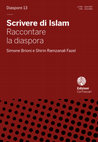
Scrivere di Islam. Raccontare la diaspora, 2020
Scrivere di Islam. Raccontare la diaspora (Writing About Islam. Narrating a Diaspora) is a medita... more Scrivere di Islam. Raccontare la diaspora (Writing About Islam. Narrating a Diaspora) is a meditation on our multireligious, multicultural, and multilingual reality. It is the result of a personal and collaborative exploration of the necessity to rethink national culture and identity in a more diverse, inclusive, and anti-racist way. The central part of this volume – both symbolically and physically – includes Shirin Ramzanali Fazel’s reflections on the discrimination of Muslims, and especially Muslim women, in Italy and the UK. Looking at school textbooks, newspapers, TV programs, and sharing her own personal experience, this section invites us to change the way Muslim immigrants are narrated in scholarly research and news reports. Most importantly, this section urges us to consider minorities not just as ‘topics’ of cultural analysis, but as audiences and cultural agents. Following Shirin’s invitation to question prevailing modes of representations of immigrants, the volume continues with a dialogue between the co-authors and discusses how collaboration can be a way to avoid reproducing a ‘colonial model’ of knowledge production, in which the white male scholar takes as object of analysis the work of an African female writer. The last chapter also asserts that immigration literature cannot be approached with the same expectations and questions readers would have when reading ‘canonized’ texts. A new critical terminology is needed in order to understand the innovative linguistic choices and narrative forms that immigrant writers have invented in order to describe a reality that has lacked representation or which has frequently been misrepresented, especially in the discourse around the contemporary Muslim diaspora.

Il libro propone undici percorsi teorici all’interno della fantascienza italiana moderna e contem... more Il libro propone undici percorsi teorici all’interno della fantascienza italiana moderna e contemporanea per metterne in luce le caratteristiche originali e specifiche rispetto alla storia del paese e alla costruzione dell’identità nazionale. Gli undici capitoli (Discronie, Robot, Totalitarismi, Ecocritica, Follia, Religione, Terrorismo, Supereroi, Berlusconi, Europa, Postumano) analizzano ciascuno due o tre testi di riferimento, riflettendo sulla maniera in cui tali temi sono stati declinati all’inter- no della fantascienza italiana. Attraverso un viaggio culturale che spazia dal cinema alla letteratura, dal fumetto alle serie televisive, si vuole dare un’idea dell’originalità e della complessità di alcune esperienze culturali italiane, in un arco cronologico che va dagli ulti- mi anni del diciannovesimo secolo (L’anno 3000 di Paolo Mantegazza) alle più recenti uscite distopi- che (Furland di Tullio Avoledo e La festa nera di Violetta Bellocchio, ma anche la serie Il miracolo di Niccolò Ammaniti), passando per i film degli anni Sessanta e i romanzi post- apocalittici dei Set- tanta e Ottanta.

This book explores Italian science fiction from 1861, the year of Italy’s unification, to the pre... more This book explores Italian science fiction from 1861, the year of Italy’s unification, to the present day, focusing on how this genre helped shape notions of Otherness and Normalness. In particular, Italian Science Fiction draws upon critical race studies, postcolonial theory, and feminist studies to explore how migration, colonialism, multiculturalism, and racism have been represented in genre film and literature. Topics include the role of science fiction in constructing a national identity; the representation and self-representation of “alien” immigrants in Italy; the creation of internal “Others,” such as southerners and Roma; the intersections of gender and race discrimination; and Italian science fiction’s transnational dialogue with foreign science fiction. This book reveals that though it is arguably a minor genre in Italy, science fiction offers an innovative interpretive angle for rethinking Italian history and imagining future change in Italian society.

The recent histories of Italy and Somalia are closely linked. Italy colonized Somalia from the en... more The recent histories of Italy and Somalia are closely linked. Italy colonized Somalia from the end of the 19th century to 1941, and held the territory by UN mandate from 1950 to 1960. Italy is also among the destination countries of the Somali diaspora, which increased in 1991 after civil war. Nonetheless, this colonial and postcolonial cultural encounter has often been neglected. Critically evaluating Gilles Deleuze and Félix Guattari’s concept of ‘minor literature’, as well as drawing on postcolonial literary studies, The Somali Within analyses the processes of linguistic and cultural translation and self-translation, the political engagement with race, gender, class and religious discrimination, and the complex strategies of belonging and unbelonging at work in the literary works in Italian by authors of Somali origins. Brioni proposes that the ‘minor’ Somali Italian connection might offer a major insight into the transnational dimension of contemporary ‘Italian’ literature and ‘Somali’ culture.
Edited Volumes by Simone Brioni

Traiettorie di sguardi denuncia il razzismo nell’Italia contemporanea, sottolineando il modo in c... more Traiettorie di sguardi denuncia il razzismo nell’Italia contemporanea, sottolineando il modo in cui diverse forme di disuguaglianza − razza, colore, genere, classe − si intersecano e si rafforzano a vicenda. Facendo riferimento alle proprie esperienze personali, Geneviève Makaping rovescia lo sguardo abituale dell’antropologia − quello che nell’etnografia coloniale è rivolto dai colonizzatori alle popolazioni indigene − osserva la maggioranza bianca dalla propria posizione di donna nera: «Guardo me stessa che guardo loro che da sempre mi guardano». Tale ribaltamento di prospettiva invita le persone bianche in Italia a non identificare sé stesse con la “normalità”
e a osservare che cosa voglia dire sentirsi costantemente “altri”. Traiettorie di sguardi è un libro originale e incisivo, che stimola una riflessione individuale e collettiva sulla questione del razzismo strutturale attraverso il racconto di accadimenti quotidiani. Ma soprattutto interroga i lettori sui meccanismi di inclusione ed esclusione presenti nella società italiana.
e a osservare che cosa voglia dire sentirsi costantemente “altri”. Traiettorie di sguardi è un libro originale e incisivo, che stimola una riflessione individuale e collettiva sulla questione del razzismo strutturale attraverso il racconto di accadimenti quotidiani. Ma soprattutto interroga i lettori sui meccanismi di inclusione ed esclusione presenti nella società italiana.
Articles by Simone Brioni

Scritture Migranti, 2024
This study guide is aimed to help students explore four documentaries about postcolonial culture ... more This study guide is aimed to help students explore four documentaries about postcolonial culture in
Italy: The Fourth Road, Aulò, Beyond the Frame, and Maka. It is the result of a reflection and
collective work by a professor who wrote the films and a teaching assistant and previous student of
a course on migration studies. Each film features a prominent African Italian writer, respectively
Kaha Mohamed Aden, Ribka Sibhatu, Ubah Cristina Ali Farah and Geneviève Makaping. After a
brief plot summary, the study guide includes questions about various elements of cinematic style,
such as sound, lighting, and genre conventions. It also explores themes related to migration
cultures, including the feelings of multiple belonging and unbelonging experienced by immigrants.
Additionally, the guide investigates spatial issues such as ghettoization, the spatialization of
memory, and the concept of intimate and affective geography. Specific questions address the
histories of Somalia, Eritrea, Cameroon, and Italy.
Italy: The Fourth Road, Aulò, Beyond the Frame, and Maka. It is the result of a reflection and
collective work by a professor who wrote the films and a teaching assistant and previous student of
a course on migration studies. Each film features a prominent African Italian writer, respectively
Kaha Mohamed Aden, Ribka Sibhatu, Ubah Cristina Ali Farah and Geneviève Makaping. After a
brief plot summary, the study guide includes questions about various elements of cinematic style,
such as sound, lighting, and genre conventions. It also explores themes related to migration
cultures, including the feelings of multiple belonging and unbelonging experienced by immigrants.
Additionally, the guide investigates spatial issues such as ghettoization, the spatialization of
memory, and the concept of intimate and affective geography. Specific questions address the
histories of Somalia, Eritrea, Cameroon, and Italy.
Scritture migranti, 2024
Queste attività didattiche si propongono di esplorare quattro documentari sulla cultura
postcolon... more Queste attività didattiche si propongono di esplorare quattro documentari sulla cultura
postcoloniale in Italia: La quarta via, Aulò, Oltre i bordi e Maka. Ogni film ha come protagonista
una scrittrice africana italiana, rispettivamente Kaha Mohamed Aden, Ribka Sibhatu, Ubah Cristina
Ali Farah e Geneviève Makaping. Ciascuna sezione presenta un breve riassunto della trama,
comprende domande sulle storie di Somalia, Eritrea, Camerun e Italia e sullo stile cinematografico
(suoni, uso delle luci, fotografia). Le attività esplorano questioni relative all’appartenenza nazionale,
alla rappresentazione degli immigrati nei media, alla spazializzazione della memoria e alle geografie
intime e affettive che caratterizzano le culture degli immigrati.
postcoloniale in Italia: La quarta via, Aulò, Oltre i bordi e Maka. Ogni film ha come protagonista
una scrittrice africana italiana, rispettivamente Kaha Mohamed Aden, Ribka Sibhatu, Ubah Cristina
Ali Farah e Geneviève Makaping. Ciascuna sezione presenta un breve riassunto della trama,
comprende domande sulle storie di Somalia, Eritrea, Camerun e Italia e sullo stile cinematografico
(suoni, uso delle luci, fotografia). Le attività esplorano questioni relative all’appartenenza nazionale,
alla rappresentazione degli immigrati nei media, alla spazializzazione della memoria e alle geografie
intime e affettive che caratterizzano le culture degli immigrati.

Conflicting views of the relation of Islam to modernity have attained a high level of media atten... more Conflicting views of the relation of Islam to modernity have attained a high level of media attention over a long period. The issue of veiling, in particular, has consistently been the focus of attention in a number of European countries, with many statements made concerning the significance of the veil in relation to women's position in society. Given the urgency of the topic, I co-organised the conference "Women and Islam: Agency in Italophone and Francophone Literatures", which took place on 27 October 2023 at the Institute of Languages, Cultures and Societies at the University of London. The focus was on female authors who, through their voices, contribute to the debate on Muslim women's identity and agency in contemporary Europe, inviting us to rethink traditional analyses that position the "non-Western" as backward and restrictive. On that occasion, I conducted an interview with author Shirin Ramzanali Fazel in discussion with postcolonial studies scholar Simone Brioni, which I am presenting here. The interview focuses on the veiling issue, cultural stereotypes, female agency, the publishing market in Italy, and the place of transnational literature. It highlights how the localised concept of "female oppression" can be misleading and instead draws attention to the many nuances that exist and that are often brushed aside under the blanket label of "Muslim woman".
Maka offers an account of Makaping’s journey of migration from Cameroon across the desert and the... more Maka offers an account of Makaping’s journey of migration from Cameroon across the desert and the ocean, her arrival in Italy in 1982 following the tragic death of her partner, her success as a journalist and television host, and her more recent relocation to Mantua. Maka focuses on questions of national belonging, and it reflects on how the perception of migration and race has changed since Makaping first came to Italy in the 1990s. This contribution includes a short article in which the protagonist, the writer and the director of the film reflect upon their collaboration. It also includes a video recording of the Q&A roundtable with Michela Ardizzoni and Mariagrazia de Luca from the American Association of Italian Studies 2023 conference.

Altre Modernità, 2024
La distribuzione e la circolazione dei film indipendenti sono aspetti fondamentali ma spesso tras... more La distribuzione e la circolazione dei film indipendenti sono aspetti fondamentali ma spesso trascurati negli studi cinematografici. L’articolo presenta un’esperienza distributiva seguita dall’autore del testo in prima persona: il caso del documentario indipendente Maka. Prodotto grazie ad un contributo accademico e alla collaborazione con due case di produzione italiane, Maka è stato presentato in numerosi festival internazionali, ricevendo diversi premi. La distribuzione ha coinvolto sia circuiti cinematografici tradizionali che piattaforme digitali indipendenti. Il film è stato proiettato in contesti accademici e associativi, in Italia e negli Stati Uniti, favorendo dibattiti su temi sociali e culturali. La partecipazione della protagonista, del regista, e dell’autore alle proiezioni ha giocato un ruolo chiave nel successo del film, evidenziando l’importanza dell’interazione diretta con il pubblico per la diffusione di opere indipendenti.
Costruire la razza come mostruosità 1 di Simone Brioni Secondo Alberto Burgio, «il razzismo non p... more Costruire la razza come mostruosità 1 di Simone Brioni Secondo Alberto Burgio, «il razzismo non parte mai dalle 'razze' [le quali non hanno alcun comprovato fondamento genetico-deterministico] perché le inventa sempre, anche prescindendo da reali differenze somatiche» (2010, 108). Il concetto di razza sarebbe quindi il frutto di una