Edited Works by Søren Handberg
Monographs of the Danish Institute at Athens vol. 23 (Aarhus University Press)
Proceedings of the Danish Institute at Athens volume VII, Jul 2014
Books by Søren Handberg

Emotions in Antiquity and Ancient Egypt, 2020
English version:
Let us live, my Lesbia, and let us love…
Suns can set and rise again: we whe... more English version:
Let us live, my Lesbia, and let us love…
Suns can set and rise again: we when once our brief light
has set must sleep through a perpetual night.
Give me a thousand kisses, and then a hundred…
Catullus 84–54 BC
A love poem. A reminder that everything must die. But also, that some things are eternal. Words are easy to understand, but emotions can also be retrieved from things. An image of a god or ruler conveys respect or reverence to those who have power. Funerary art reveals hope of an eternal life. A gift can be given out of love, and a drinking cup can bear witness to the joys of gathering around a table. This book is produced at the occasion of an exhibition with a table set with items that allow us to glimpse emotions from Antiquity and ancient Egypt. Some emotions can be understood across time and space, others are culturally defined. Emotions can be manipulated and controlled. They have overturned regimes and started wars. But it is in the small and everyday things that we come to meet the individual.
Norwegian version:
La oss leve, Lesbia, og elske…
Solen kan synke og gjenoppstå, mens
vi må dø med vårt korte lys, for vår søvn
er en evig natt. Gi meg tusen kyss,
og hundre til…
Catull 84-54 f.Kr.
Et kjærlighetsdikt. En påminnelse om at alt må dø. Men også om at noe er evig. Ordene er lette å forstå, men følelser kan også leses ut av ting. Et bilde av en gud eller hersker forteller om respekt eller ærefrykt for den som har makt. Gravkunst handler ofte om sorg, men også om håp om et liv etter døden. En gave kan bli gitt i kjærlighet, og et vinbeger vitner om bordets gleder. Denne boken er produsert i forbindelse med en utstilling der et bord er dekket med gjenstander som bærer med seg glimt av følelser fra antikken og det gamle Egypt. Noen følelser kan forstås på tvers av tid og rom, andre er kulturelt betinget. Følelser kan manipuleres og kontrolleres. De har veltet regimer og startet kriger. Men det er i de små og hverdagslige tingene vi kan møte det enkelte menneske.
Excavations on Timpone della Motta (1992-2004), vol. I. The Greek Pottery.
The current volume is the first systematic publication of archaological material from excavations... more The current volume is the first systematic publication of archaological material from excavations conducted by the Groningen Institute of Archaeology in the sanctuary on the Timpone della Motta in the years 1992-2004.
The volume presents a detailed account of the influx of Greek pottery to the sanctuary during four centuries and includes Greek pottery ranging from the first imports in the middle of the 8th century BC to the last arriving vessels in the 4th century BC.
Kalydon by Søren Handberg
Proceedings of the Danish Institute at Athens VOLUME IX, 2019
This report presents the preliminary results of extensive topographical surveys of the entire arc... more This report presents the preliminary results of extensive topographical surveys of the entire archaeological
area of the ancient city of Kalydon in Aitolia conducted in the years 2015-2018. The fieldwork has resulted
in the creation of a new detailed topographical map of the city that includes all visible monuments within
the archaeological area. One of the main aims of the survey project was to document the city’s extensive necropoleis,
and three distinct burial areas dating to the Hellenistic period surrounding the city were identified.
Furthermore, the survey demonstrated the existence of graves situated on the slopes of the acropolis within
the fortified area of the city, which may date to the Classical period. The report also includes a presentation
of more detailed surveys of one of the city’s gates and a stretch of the fortification wall where ancient repairs
are visible. The first evidence ever found for olive oil production in the city and the discovery of Mycenaean
pottery are also discussed in the report.
ΤΟ ΑΡΧΑΙΟΛΟΓΙΚΟ ΕΡΓΟ ΣΤΗΝ ΑΙΤΩΛΟΑΚΑΡΝΑΝΙΑ & ΤΗ ΛΕΥΚΑΔΑ Πρακτικά 2OY ΔΙΕΘΝOYΣ ΑΡΧΑΙΟΛΟΓΙΚΟY & ΙΣΤΟΡΙΚΟY ΣΥΝΕΔΡΙΟY Ι.Π. Μεσολογγίου, 6 – 8 Δεκεμβρίου 2013, 2018, 2018
Εκτύπωση: ΑΡΧΕ-ΤΥΠΟ -Μυταράς Ε. & ΣΙΑ ΟΕ © 2018 ΕΦΟΡΕΙΑ ΑΡΧΑΙΟΤΗΤΩΝ ΑΙΤΩΛΟΑΚΑΡΝΑΝΙΑΣ & ΛΕΥΚΑΔΟΣ -... more Εκτύπωση: ΑΡΧΕ-ΤΥΠΟ -Μυταράς Ε. & ΣΙΑ ΟΕ © 2018 ΕΦΟΡΕΙΑ ΑΡΧΑΙΟΤΗΤΩΝ ΑΙΤΩΛΟΑΚΑΡΝΑΝΙΑΣ & ΛΕΥΚΑΔΟΣ -ΑΙΤΩΛΙΚΗ ΠΟΛΙΤΙΣΤΙΚΗ ΕΤΑΙΡΕΙΑ Ο τόμος τυπώθηκε με δαπάνες του ΥΠΠΟΑ και με την ευγενική υποστήριξη χορηγών.
Proceedings of the Danish Institute at Athens, volume VII, 221-234, Jul 2014
ble for Aitolia, and it was decided that the road should be constructed some m further south. A b... more ble for Aitolia, and it was decided that the road should be constructed some m further south. A brief report was published in which the theatre was described as a bouleuterion. A corner of seat-rows were le exposed and the monument was forgo en about until , when the Danish-Greek excavations at Kalydon were re-initiated.
Papers by Søren Handberg
Ascending and Descending the Acropolis. Movement in Athenian Religion. (Monographs of the Danish Institute at Athens volume 23), 2019
question of to what extent members of the Athenian aristocracy, for lack of a better word, were i... more question of to what extent members of the Athenian aristocracy, for lack of a better word, were involved in, or even responsible for, the intensified worship in the Athenian countryside, and how closely the ruling families in the city were connected to these sites. In the case of Athens and Attica, it is usually thought that the religious sites in the countryside were predominantly, or even exclusively, visited by local farmers and herders throughout the Geometric period, and that there were no close ties to ruling families in Athens. Indeed, as François de Polignac has argued, Athens represents an "anomaly" among the major ancient Greek cities exactly because of the absence of strong ties to an extra-urban sanctuary. 3 In this chapter, I am going to argue that the ruling families in Athens had a vested interest in rural shrines, and that we might see this as a sort of beginning of sacred travel in Athens and Attica. Through some selected case studies, I will first attempt to trace the travels of Athenian aristocrats to areas outside Attica in the Middle Geometric period, which seem closely connected to a network of guest-friendships (xenia). Then, having established that this was likely the case, I am going to argue that one of the primary religious concerns of the members of the ruling families in Athens in the Late Geometric period was the veneration of Zeus in his capacity as a weather deity and that they used the sanctuaries on Mount Hymettos and Mount Parnes, which are among the
Proceedings of the Danish Institute at Athens, Volume IX, Edited by Kristina Winther-Jacobsen & Nicolai von Eggers Mariegaard, 2019
This report presents the preliminary results of extensive topographical surveys of the entire arc... more This report presents the preliminary results of extensive topographical surveys of the entire archaeological area of the ancient city of Kalydon in Aitolia conducted in the years 2015-2018. The fieldwork has resulted in the creation of a new detailed topographical map of the city that includes all visible monuments within the archaeological area. One of the main aims of the survey project was to document the city’s extensive necropoleis, and three distinct burial areas dating to the Hellenistic period surrounding the city were identified. Furthermore, the survey demonstrated the existence of graves situated on the slopes of the acropolis within the fortified area of the city, which may date to the Classical period. The report also includes a presentation of more detailed surveys of one of the city’s gates and a stretch of the fortification wall where ancient repairs are visible. The first evidence ever found for olive oil production in the city and the discovery of Mycenaean pottery are also discussed in the report.
Proceedings of the Danish Institute at Athens. 8, 8 , 2017
Proceedings of the Danish Institute at Athens, volume VII, 221-234, 2014
ble for Aitolia, and it was decided that the road should be constructed some m further south. A b... more ble for Aitolia, and it was decided that the road should be constructed some m further south. A brief report was published in which the theatre was described as a bouleuterion. A corner of seat-rows were le exposed and the monument was forgo en about until , when the Danish-Greek excavations at Kalydon were re-initiated.
THE DŽARYLGAC SURVEY PROJECT
ABSTRACT This book is a publication of the Danish-Dutch-Ukrainian survey project carried out in 2... more ABSTRACT This book is a publication of the Danish-Dutch-Ukrainian survey project carried out in 2007 and 2008 on both sides of Lake Dzarylgac - that is, in the hinterland of the ancient Greek settlement of Panskoe I on the Tarchankut Peninsula (Northwestern Crimea). The project was the first systematic, intensive survey in the region, and its aim was to investigate the landscape from prehistory until early modern times. The publication concludes that the region was most intensively settled in the Late Classical and Early Hellenistic period. The results were spectacular: a large number of undisturbed Greek and indigenous sites were identified, which have completely changed our understanding of ancient settlement patterns in the region.
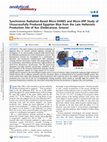
Anal. Chem., 2021
This paper examines the production technology of Egyptian blue, an ancient artificial pigment, th... more This paper examines the production technology of Egyptian blue, an ancient artificial pigment, through the investigation of an unsuccessfully produced pellet derived from the Hellenistic production site of Kos (Dodecanese, Greece). This heterogeneous material was investigated by a combination of laboratory and synchrotron radiation-based (SR) techniques: scanning electron microscopy coupled with energy-dispersive X-ray spectrometry, micro-Raman spectroscopy, high-resolution SR micro-X-ray fluorescence spectroscopy, and SR micro-X-ray absorption near-edge structure spectroscopy (XANES), at the ID21 beamline of the European Synchrotron Radiation Facility. Principal component analysis of a large dataset of 171 micro-XANES spectra acquired on the archaeological samples and on a series of reference copper compounds emphasizes high variations of XANES features due to different speciation and also orientation effects, as demonstrated by the simulated XANES spectra. The results indicate that, rather than inadequate firing temperatures that could have led to the reddish cuprite (Cu2O), unsuccessful production may occur due to the use of inappropriate starting materials, which contain an unusually high iron content. The contextual interpretation underlines the intertwined relationship between the production of Egyptian blue and metallurgy.

Egyptian Blue Pellets from the First Century BCE Workshop of Kos (Greece): Microanalytical Investigation by Optical Microscopy, Scanning Electron Microscopy-X-ray Energy Dispersive Spectroscopy and Micro-Raman Spectroscopy, 2020
This paper aims to expand our understanding of the processes involved in the production of the ar... more This paper aims to expand our understanding of the processes involved in the production of the artificial pigment Egyptian blue through the scientific examination of pigments found in the first century BCE workshop of the Greek island of Kos. There, 136 Egyptian blue pellets were brought to light, including successfully produced pellets, as well as partially successful and unsuccessful products. This study is based on the examination of eighteen samples obtained from pellets of various textures and tones of blue, including light and dark blue pigments, coarse and fine-grained materials, and one unsuccessful pellet of dark green/grey colour. The samples were
examined by optical microscopy, scanning electron microscopy coupled with energy-dispersive X-ray spectroscopy (SEM-EDS), and micro-Raman spectroscopy. These complementary microanalytical techniques provide localised information about the chemical and mineralogical composition of this multicomponent material, at a single-grain level. The results shed light on the firing procedure and indicate possible sources for raw materials (beach sand, copper alloys), as well as demonstrating the
use of a low-alkali starting mixture. Moreover, two diferent process for the production of light blue pigments were identified: (a) decreased firing time and (b) grinding of the initially produced pellet and mixing with cobalt-containing material.
This paper focuses on the various pottery groups of the eighth and seventh centuries BC produced ... more This paper focuses on the various pottery groups of the eighth and seventh centuries BC produced locally at the
indigenous settlement on Timpone della Motta near Francavilla Marittima (Calabria, Cosenza). Working
from recent years’ research conducted by the Groningen Institute of Archaeology (The Netherlands), it is
now possible to identify several specialized and non-specialized pottery workshops managed by indigenous
as well as Greek potters. Through an excursus of archaeometric results and technological innovation, as
well as typological and stylistic transformations, this paper presents evidence regarding the productions
from various workshops at the site of Francavilla Marittima in the period between ca. 800 BC and 650 BC.
Pottery, Peoples and Places. Study and Interpretation of Late Hellenistic Pottery (Black Sea Studies 16). Edited by Pia Guldager Bilde and Mark L. Lawall, 29-46., 2014
A Re-examination of some of the South Stoa Wells at Corinth 65
Manoledakis, M. (ed.). Exploring the Hospitable Sea Proceedings of the International Workshop on the Black Sea in Antiquity held in Thessaloniki, 21–23 September 2012, 1-18., Jun 2013
"According to ancient literary accounts, almost all of the early Greek colonies in the Black Sea ... more "According to ancient literary accounts, almost all of the early Greek colonies in the Black Sea area were founded by the Ionian city of Miletos. A connection to Ionia is indeed apparent from the large quantities of imported Ionian pottery at Black Sea sites.However, a substantial amount of local reduction-fired Grey Ware pottery that is closely related to Aeolian pottery can be identified in ceramic assemblages of the Archaic period in the early Milesian apoikiai. Moreover, recent archaeometric analyses have shown that a
substantial amount of Aeolian pottery was imported into the Black Sea area. This article stresses the need to recognize a more active involvement of the Aeolians in the Greek colonial venture around the Black Sea, and specifically the migration of Aeolian potters."

Alle origini della Magna Grecia Mobilità migrazioni fondazioni. Atti del cinquatesimo convegno di studi sulla Magna Grecia. Taranto 1-4 Ottobre 2010, 2012
Since the first identification in 2007 of a particular group of 8th century BC highly Euboeanizin... more Since the first identification in 2007 of a particular group of 8th century BC highly Euboeanizing “wheel-turned pottery” (the so-called Oinotrian-Euboean pottery) at Timpone della Motta, near ancient Sybaris, in Northern Calabria, the amount of fragments that can be ascribed to this production has steadily increased. The kerameikos, where this Oinotrian-Euboean pottery was most likely produced, has been identified on the southern slope of Timpone della Motta, and two 8th century BC huts situated near the kerameikos have been uncovered during excavations conducted in 2009 and 2010. These new finds, as well as the increasing amount of the Oinotrian-Euboean pottery, now preliminarily allow for a re-evaluation of the indigenous Iron Age site. A large concentration of Oinotrian-Euboean pottery was found in the area of the newly discovered huts, and a more detailed analysis of the distribution of this group of pottery indicates various consumption patterns among the different groups of inhabitants of the Iron Age settlement. This difference in consumption practices
might correspond to social differences among indigenous groups and a group of resident Euboean immigrants at the site.



Uploads
Edited Works by Søren Handberg
Books by Søren Handberg
Let us live, my Lesbia, and let us love…
Suns can set and rise again: we when once our brief light
has set must sleep through a perpetual night.
Give me a thousand kisses, and then a hundred…
Catullus 84–54 BC
A love poem. A reminder that everything must die. But also, that some things are eternal. Words are easy to understand, but emotions can also be retrieved from things. An image of a god or ruler conveys respect or reverence to those who have power. Funerary art reveals hope of an eternal life. A gift can be given out of love, and a drinking cup can bear witness to the joys of gathering around a table. This book is produced at the occasion of an exhibition with a table set with items that allow us to glimpse emotions from Antiquity and ancient Egypt. Some emotions can be understood across time and space, others are culturally defined. Emotions can be manipulated and controlled. They have overturned regimes and started wars. But it is in the small and everyday things that we come to meet the individual.
Norwegian version:
La oss leve, Lesbia, og elske…
Solen kan synke og gjenoppstå, mens
vi må dø med vårt korte lys, for vår søvn
er en evig natt. Gi meg tusen kyss,
og hundre til…
Catull 84-54 f.Kr.
Et kjærlighetsdikt. En påminnelse om at alt må dø. Men også om at noe er evig. Ordene er lette å forstå, men følelser kan også leses ut av ting. Et bilde av en gud eller hersker forteller om respekt eller ærefrykt for den som har makt. Gravkunst handler ofte om sorg, men også om håp om et liv etter døden. En gave kan bli gitt i kjærlighet, og et vinbeger vitner om bordets gleder. Denne boken er produsert i forbindelse med en utstilling der et bord er dekket med gjenstander som bærer med seg glimt av følelser fra antikken og det gamle Egypt. Noen følelser kan forstås på tvers av tid og rom, andre er kulturelt betinget. Følelser kan manipuleres og kontrolleres. De har veltet regimer og startet kriger. Men det er i de små og hverdagslige tingene vi kan møte det enkelte menneske.
The volume presents a detailed account of the influx of Greek pottery to the sanctuary during four centuries and includes Greek pottery ranging from the first imports in the middle of the 8th century BC to the last arriving vessels in the 4th century BC.
Kalydon by Søren Handberg
area of the ancient city of Kalydon in Aitolia conducted in the years 2015-2018. The fieldwork has resulted
in the creation of a new detailed topographical map of the city that includes all visible monuments within
the archaeological area. One of the main aims of the survey project was to document the city’s extensive necropoleis,
and three distinct burial areas dating to the Hellenistic period surrounding the city were identified.
Furthermore, the survey demonstrated the existence of graves situated on the slopes of the acropolis within
the fortified area of the city, which may date to the Classical period. The report also includes a presentation
of more detailed surveys of one of the city’s gates and a stretch of the fortification wall where ancient repairs
are visible. The first evidence ever found for olive oil production in the city and the discovery of Mycenaean
pottery are also discussed in the report.
Papers by Søren Handberg
examined by optical microscopy, scanning electron microscopy coupled with energy-dispersive X-ray spectroscopy (SEM-EDS), and micro-Raman spectroscopy. These complementary microanalytical techniques provide localised information about the chemical and mineralogical composition of this multicomponent material, at a single-grain level. The results shed light on the firing procedure and indicate possible sources for raw materials (beach sand, copper alloys), as well as demonstrating the
use of a low-alkali starting mixture. Moreover, two diferent process for the production of light blue pigments were identified: (a) decreased firing time and (b) grinding of the initially produced pellet and mixing with cobalt-containing material.
indigenous settlement on Timpone della Motta near Francavilla Marittima (Calabria, Cosenza). Working
from recent years’ research conducted by the Groningen Institute of Archaeology (The Netherlands), it is
now possible to identify several specialized and non-specialized pottery workshops managed by indigenous
as well as Greek potters. Through an excursus of archaeometric results and technological innovation, as
well as typological and stylistic transformations, this paper presents evidence regarding the productions
from various workshops at the site of Francavilla Marittima in the period between ca. 800 BC and 650 BC.
substantial amount of Aeolian pottery was imported into the Black Sea area. This article stresses the need to recognize a more active involvement of the Aeolians in the Greek colonial venture around the Black Sea, and specifically the migration of Aeolian potters."
might correspond to social differences among indigenous groups and a group of resident Euboean immigrants at the site.