Papers by stijn arnoldussen
Palaeohistoria 65/66 (2025/2026), 2026
This paper explores the historical and cultural significance of bog trackways in the Netherlands ... more This paper explores the historical and cultural significance of bog trackways in the Netherlands from 3200 BC to AD 200. For three case-study regions, it focuses on the construction, use, and depositions placed near bog trackways-wooden pathways built across marshes and peat bogs that were present in various parts of the Netherlands in prehistory. These trackways are not only seen as functional routes but also as integral parts of the cultural landscape, reflecting the social and ritual practices of Neolithic, Bronze Age, and Iron Age communities. The article challenges traditional perceptions of bog trackways as mere utilitarian structures, instead presenting them as complex cultural artifacts. It discusses how these trackways were constructed, maintained, and eventually abandoned, offering insights into the technological skills and social organization of prehistoric societies. The authors also examine the environmental context, highlighting how changes in climate and landscape influenced the development and use of these pathways. By revisiting existing archaeological data and incorporating recent finds, the study provides a comprehensive overview of the role of bog trackways in shaping the cultural and physical landscape of the Netherlands. It emphasizes the importance of interdisciplinary approaches in understanding these ancient structures, combining archaeological, environmental, and anthropological perspectives. The article concludes by underscoring the need for further research to fully uncover the multifaceted roles of bog trackways in prehistoric communities, suggesting that these pathways were more than just practical routes-they were symbolic and ritual spaces that played a significant role in the daily lives and cultural practices of ancient societies. Some Neolithic trackways, such as the Nieuw-Dordrecht trackway, required massive deforestation and labor, suggesting its significance lay in communal effort rather than practical use, as it never fully traversed the bog. Bronze Age trackways were generally narrow, and likely used for resource extraction or ritual purposes, with deposits being placed along and away from the paths. Iron Age trackways appear more focused on connectivity, with improvements like heather sods and sand to support wheeled transport, though their use was often short-lived due to peat growth. The paper highlights how trackway construction and associated deposits reflect both practical and symbolic purposes, with communal labor and ritual significance often outweighing logistical aims. Depositional patterns show a preference for placing objects away from trackways, emphasizing the bog's role as both resource-rich and sacred space, a space ideally ventured into via a bog trackway.
LUNULA. Archaeologia protohistorica, 2026
In 1989, Eugène Warmenbol published an overview of the Belgian winged axes, and listed an exampl... more In 1989, Eugène Warmenbol published an overview of the Belgian winged axes, and listed an example from P[i]etersheim that he could not study firsthand. It was deemed lost due to severe bombing of the museum that housed it in WW2. Seven years earlier, S.J. De Laet in his "La Belgique d’avant les Romains" similarly lamented that this winged axe may have originated from a hoard whose composition was unknown, but may also have comprised socketed axes (De Laet 1982, p. 496). Unknown to both authors, this axe – and two other Pietersheim axes – was however already "redisco vered" in 1976. It would take until 2025 for the last two axes to "reappear". In this contribution, we document the storyline of the Pietersheim axes and reflect on their association and composition.
Lunula 33, 2025
Jay Butler collected a lot of data on Belgian axes and hoards as part of his preparations for a P... more Jay Butler collected a lot of data on Belgian axes and hoards as part of his preparations for a PBF volume on the bronzes of the Low Countries (including northern France, Belgium and the Nertherlands), which however was never realised. In 2024, permission was obtained to share this data with other scholars. In this paper we present the nature of the data, its limitations, and extend an invitation to collaborate.
Heathlands Beyond Scenery Perspectives on Diachronic and Geographical Ecological and Anthropological Diversity, in: M. Løvschal & K. Grønneberg, A Place for Heathlands?, Jutland Archaeological Society Publications (ISBN: 978-87-93423-73-2), 2025
Are the Dutch heathlands truly the vast, timeless landscapes of purple that we imagine? Or do the... more Are the Dutch heathlands truly the vast, timeless landscapes of purple that we imagine? Or do these perceptions mask a richer and more complex ecological and cultural history? This contribution challenges the prevailing narrative of the Dutch heathlands as static and uniform, arguing instead for a more nuanced and localized understanding of their development over time. As we uncover the ecological and anthropological diversity embedded in these landscapes, we can move beyond simplistic tropes to explore the dynamic interplay between environmental, cultural, and socioeconomic factors that have shaped the heathlands’ evolution.
Arnoldussen, S., F. Ruiter, H. Steegstra, J. van der Laan, B. van Os & G. van Oortmerssen, 2024, A Tréboul type spearhead from Twisk, in: P. van de Geer, A. Müller, M.D.R. Schurmans & N. de Vries (eds.), Metaaltijden 11. Bijdragen in de studie van de metaaltijden, Leiden: Sidestone press, 11-24. Metaaltijden 11, 2024
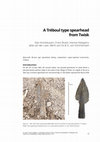
A detector find of a Tréboult type spearhead from Twist (West-Friesland) is discussed. It is date... more A detector find of a Tréboult type spearhead from Twist (West-Friesland) is discussed. It is dated by its wooden ash (Fraxinus) shaft preserved to to c. 1867-1542 BCE. The composition of the alloy was determined with pXRF analysis of the outside patina and a drilled core sample. The alloy fits well within the corpus of other Dutch Tréboul spearheads. Like other examples, the Twisk Tréboul spearhead is created from a tin-copper bronze, with other elements represented in minor quantities. After tin (c. 9.9 %wt), arsenic is the most prominent element (c. 0.45 %wt), with nickel (c. 0.29 %wt) as the only other element above 0.1 %wt. Antimony (c. 0.07 %wt), silver (c. 0.03 %wt) and lead (c. 0.02 %) are rare. Presumably, the Great Orme mine in Wales supplied the base ores. We suggest that this spearhead ended up in Twisk as part of the exchange systems upheld by (near)coastal communities in the northwestern Netherlands (and not overland from a Meuse-river / eastern coversand landscape origin). The decidedly non-local appearance of the Twisk and other Tréboul spearheads from the Netherlands, will have been an immediate and visual reminder of the ways in which local communities such as the Bronze Age farmers of Twisk were integrated into a much bigger supra-regional collective.
Grondsporen 75, 2024
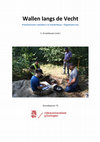
Het onderhavige archeologische onderzoek heeft aangetoond dat de op hoogtekaarten zichtbare morfo... more Het onderhavige archeologische onderzoek heeft aangetoond dat de op hoogtekaarten zichtbare morfologische structuur inderdaad een raatakkercomplex betreft. Niet alleen is de vorm en grootte van de door wallen omsloten velden passend bij raatakkers elders, maar zowel de bodemopbouw als het aangetroffen cultureel materiaal wijzen op een gebruik als raatakker in de late prehistorie. Het aantreffen van mogelijke eergetouwkrassen in een wal is hierbij een ondersteunend argument. Verder heeft het veldonderzoek aangetoond dat de aanvankelijke veronderstellingen ten aanzien van de geogenetische context (‘gelegen in een Vechtmeander’) bijgesteld moeten worden. Hoewel in de diepere ondergrond fluviatiele afzettingen van de (paleo)Vecht zijn vastgesteld, wijzen de veldwaarnemingen (lithologie en geochemie) erop dat de raatakkerwallen van Hardenberg - Engelandse bos zijn opgericht in een stuifzandlandschap. Meest plausibel hierbij is dat materiaal uit de direct ten westen gelegen meanders van het oerstroomdal van de Vecht oostwaarts als een serie van paraboolruggen is afgezet. Het is op deze ruggen, dat in de late prehistorie (vermoedelijk vanaf de Late Bronstijd, maar mogelijk al eerder) dat akkers worden aangelegd en ruggen zich ontwikkelen.
De Spieker, 2024
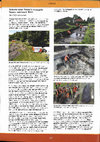
Tussen half mei en half juni waren 28 eerstejaarsstudenten archeologie weer actief op de leeropgr... more Tussen half mei en half juni waren 28 eerstejaarsstudenten archeologie weer actief op de leeropgraving te Klooster Yesse (Essen, Haren). Op het terrein van het cisterciënzer vrouwenklooster dat bestond tussen 1215 en 1594, leerden zij de veldtechnieken van de archeologie in de praktijk. it jaar werd tussen 13 mei en 9 juni opgegraven, waarbij er op diverse plaatsen in en rond de centrale clausuur (de kloostertuin met aangrenzende pandgangen en werkvertrekken) werd opgegraven. De belangrijkste vragen van dit jaar waren gericht op de vroegste bewoningsperioden van Yesse. In 2022 werd namelijk een houten paal aangetroffen die onder de steenbouwfase tevoorschijn kwam en te dateren was tussen 1047 en 1215 AD. Was dit de enige paal of waren er meer? Zou dit een houtbouwfase kunnen zijn die voorafging aan het klooster? En betreft het dan een boerderij of een houten clausuur?

Environmental Archaeology, 2024
185 pairs of δ 13 C and δ 15 N values for aurochs, cattle and sheep bones from the northern Nethe... more 185 pairs of δ 13 C and δ 15 N values for aurochs, cattle and sheep bones from the northern Netherlands were studied to establish the influence of salt marsh grazing on bone δ 13 C and δ 15 N values. The observed values proved significantly increased compared to livestock that grazed inland. The δ 13 C and δ 15 N values of animals grazing former salt marshes were significantly less increased than those grazing the unembanked salt marsh. Absent regular salt marsh flooding may explain the reduced δ 13 C increase in bones of animals grazing there. The δ 15 N values of ruminants grazing the embanked salt marshes continued to be increased, presumably due to persisting saline water at shallow depths. The δ 13 C values of the salt marsh grazing ruminants correspond with a δ 13 C increase of 5‰ compared to eleven modern salt marsh plants from Schiermonnikoog studied in this paper. The δ 15 N values of the eleven Schiermonnikoog salt marsh plants proved variable, on average too low to explain the observed 3.5‰ increase in δ 15 N values. This suggests that vegetation δ 15 N values cannot be the only cause of the high δ 15 N values observed in salt marsh ruminants. Other processes may be responsible for the high δ 15 N values of salt marsh grazing ruminants as well.
Die Kunde, 2021
In this article we describe the Late Bronze Age/Early Iron Age deposits from Nieuw-Weerdinge (Net... more In this article we describe the Late Bronze Age/Early Iron Age deposits from Nieuw-Weerdinge (Netherlands) and Getelo (Germany), each containing two identically shaped knobbed bronze arm rings. These arm rings were already found in the 19th (Getelo) and early 20th (Nieuw-Weerdinge) centuries. The bracelets from Nieuw-Weerdinge have a dark brown patina, those from Getelo a glossy dark green patina. In this contribution their find conditions are stated and parallels discussed. Zusammenfassung In diesem Artikel werden die spätbronzezeitlichen/früheisenzeitlichen Fundstellen von Nieuw-Weerdinge (Niederlande) und Getelo (Deutschland) beschrieben, die jeweils zwei identisch geformte Armringe aus Bronze mit Knauf enthalten. Diese Armringe wurden bereits im 19. (Getelo) und frühen 20. Jahrhundert (Nieuw-Weerdinge) gefunden. Die Armringe aus Nieuw-Weerdinge haben eine dunkelbraune Patina, die aus Getelo eine glänzende dunkelgrüne Patina. In diesem Beitrag werden die Fundbedingungen genannt und Parallelen diskutiert.
Tijdschrift van de Rijksdienst voor het Cultureel Erfgoed, 2024
De naam zegt het al. Onze voorouders in de bronstijd gebruikten van alles dat van brons vervaardi... more De naam zegt het al. Onze voorouders in de bronstijd gebruikten van alles dat van brons vervaardigd is, bijlen, zwaarden, armbanden. Maar in Nederland zit er geen koper in en tin in de grond, waar je dit metaal van maakt. Hoe kwamen deze prehistorische mensen aan hun brons? Dat wordt nu uitgezocht.
Paleohistoria 63/64 , 2022
In this contribution, we discuss the nearly two hundred later prehistoric pins from bronze and ir... more In this contribution, we discuss the nearly two hundred later prehistoric pins from bronze and iron that were found in the Netherlands, and range in date between the Late Neolithic and the Late Iron Age (2200-250 BCE). For all these pins, we provide information on form, dimensions and decoration, that help to identify local and supra-regional styles in dress-fasteners. Production techniques and compositions of the bronze alloys used are-where available-also discussed. The diachronic and systematic review of their contexts of recovery and object associations, allow to identify diachronic trends in pin use and pin deposition, which means that both local and supra-regional traditions in identity expression using pins can be identified.
Beyond Urnfields. New Perspectives on Late Bronze Age – Early Iron Age Funerary Practices in Northwest Europe, (Schriften des Museums für Archäologie Schloss Gottorf, Ergänzungsreihe 16),, 2023
For a series of 13 urnfields from the northern Netherlands, the roles of 'accessory vessels' in t... more For a series of 13 urnfields from the northern Netherlands, the roles of 'accessory vessels' in the urnfield funerary rites are studied. We propose that these accessory vessels were most likely used as drinking cups. While in some cases the fact that these drinking cups were interred with the human remains (in or without an urn) could suggest that these were personal items of the deceased, we argue that most cups recovered belonged to people attending the funeral. Based on the numbers (often more than one), the contexts in which these were recovered (often in the monuments' ditches or in pits beyond these) and their state (deliberately destroyed or placed inverted), we see these cups as reflecting rites offarewell or commemoration by the mourners. With handled cups, frequently the handle was removed prior to deposition, and the destruction of the vessel's base was common with cups of all types. These acts suggest a deliberate decommissioning ofdrinking cups as part ofthe urnfieldfunerary rites in the northern Netherlands.
Arnoldussen, S., Huisman, D.J., Geer, P. van de, Kleijne, J.P. & Os, B. van 2023. Shiny and strange: the introduction of glass in Dutch Later Prehistory in: Arnoldussen, S., Leije, J. van & Vries, K.M. de (eds.), Metaaltijden 10. Leiden: Sidestone, 115-140. Metaaltijden 10. Bijdragen in de studie van de Metaaltijden, 2023
Dutch ornament traditions in the Neolithic period focused on strung beads of amber, jet, stone an... more Dutch ornament traditions in the Neolithic period focused on strung beads of amber, jet, stone and bone (e.g. Piena & Drenth 2001; Van Gijn 2006; Verschoof 2011; DeVriendt 2013, 118-121). These materials remained in use for ornaments during the Bronze Age (2000-800 BCE) in the Netherlands, as is clear from finds of amber (Butler 1990, 48-68), jet (Van der Wal & Vermeulen 2021, 64-65) and bone ornaments (e.g. Glasbergen 1954, 103; Verwers 1966, 29; Lanting et al. 2000, 82) in funerary contexts. In the course of the Bronze Age, settlement finds indicate that the selection of raw materials used for ornaments is expanded with for example beads of copper, tin and lead (e.g. Butler & Hielkema 2002, 541-544: Van der Sanden & van Os 2021, 46), albeit that ornaments in both bone (e.g. Van Dijk et al. 2002, 593-595) and amber (e.g. Vons 1970; Kleijne 2015, 67) continued to be crafted as well.
In addition to new metals being incorporated into ornament traditions, other new materials are introduced as well. Amongst these, segmented beads of faience already get added to the repertoire around the 17th century BCE (cf. Van Heeringen 1978; Haverman & Sheridan 2006; Bulten & Boonstra 2013), presumably as part of the North Sea maritory exchange network (cf. Sheridan & Shortland 2004, esp. 369-270; Needham 2009). Presumably several centuries later, glass gets added as well. While glass (pyro)technology - used for ornaments - is extant in the Near East since final 3rd millennium BCE (e.g. Willvonseder 1937, 91; Nicholson & Henderson 2000; Shortland 2009; Henderson 2013, 3), it is produced in a regular and controlled manner in Egypt from the 16th century onwards (Shortland 2007, 261) with historic sources for both production (cf. Oppenheim et al. 1970) and consumption (in elite networks; Moran 1992, 235; 293; 347; 351-352; 355).
It is interesting to query at which point in time glass ornaments were introduced to north-west Europe Bronze Age communities. Rare Early Bronze Age associations may be the green glass bead reported by Piggott (1939, 193) found with three bronze daggers and a cremation in the Kerguevarec Breton tumulus. A well-furnished Aunjetitz grave at Wachberg (Melk, Austria) yielded a blue glass bead (Beninger 1935, 144; Willvonseder 1937, 91). By the 15th-14th century BCE, glass finds are known from different parts of Germany (Varberg et al. 2015, 174), as shown by the 15th century blue glass and amber beads from Schwarza (Ebner 2001, 99) and the 13th century Neustrelitz hoard (comprising 20 amber and 180 blue glass beads; Mildner et al. 2010, 44-45). As Varberg (et al. 2015, 175) could list at least seven examples of Per. II (1500-1300 BCE) blue glass beads from Danish funerary contexts, it is reasonable to assume that Dutch Bronze Age communities could have access to glass ornaments by the second half of the Dutch Middle Bronze Age (1500-1100 BCE).
In what follows, we will contextualize glass ornaments from Dutch later prehistory (2000-12 BCE; Bronze Age up to Late Iron Age) in the light of these wider European trends, with special attention to the chronology, the (functional) ways in which glass used in ornament traditions, the state and context of their deposition and (shifts in) composition and glass technology. In this, we decidedly not strive to present or discuss complete corpora, but rather provide and discuss a representative sample of glass ornaments that allows discussion of the aforementioned topics. First, a period-by-period overview is offered of representative glass ornaments for the temporal scope proposed, after which an integrated and diachronic synthesis of their composition is presented.
Archaeological Prospection, 2022
This paper discusses how the use of AI (artificial intelligence) detected later prehistoric field... more This paper discusses how the use of AI (artificial intelligence) detected later prehistoric field systems provides a more reliable base for reconstructing palaeodemographic trends, using the Netherlands as a case study. Despite its long tradition of settlement excavations, models that could be used to reconstruct (changes in) prehistoric land use have been few and often relied on (insufficiently mapped) nodal data points such as settlements and barrows. We argue that prehistoric field systems of field plots beset on all sides by earthen banks—known as Celtic fields—are a more suitable (i.e. less nodal) proxy for reconstructing later prehistoric land use.
For four 32.25 km2 case study areas in different geogenetic regions of the Netherlands, prehistoric land use surface areas are modelled based on conventional methods and the results are compared to the results we obtained by using AI-assisted detection of prehistoric field systems. The nationally available LiDAR data were used for automated detection. Geotiff DTM images were fed into an object detection algorithm (based on the YOLOv4 framework and trained with known Dutch sites), and resultant geospatial vectors were imported into GIS.
Our analysis shows that AI-assisted detection of prehistoric embanked field systems on average leads to a factor 1.84 increase in known surface areas of Celtic fields. Modelling the numbers of occupants from this spatial coverage, yields population sizes of 37–135 persons for the case study regions (i.e. 1.15 to 4.19 p/km2). This range aligns well with previous estimates and offers a more robust and representative proxy for palaeodemographic reconstructions. Variations in land use coverage between the regions could be explained by differences in present-day land use and research intensity. Particularly the regionally different extent of forestlands and heathlands (ideal for the (a) preservation and (b) automated LiDAR detection of embanked field systems) explains minor variations between the four case study regions.
De l'Escaut au Nil. Bric-a-brac en hommage à Eugène Warmenbol à l'occasion de son 65e anniversaire, 2022
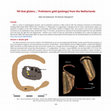
Gold is a rarity in archaeological research, and its prehistoric presence is often used to infer ... more Gold is a rarity in archaeological research, and its prehistoric presence is often used to infer the existence of persons of extraordinary standing (Warmenbol 2004: 208 & 219). It therefore is a fitting topic to congratulate a colleague that we hold in extraordinary regard; our questions to Eugène on the Later Prehistoric archaeology and bronze artefacts of Belgium were never posed in vain and his constructive comments on our publications never missed their mark. In his honor, we present an overview of the prehistoric gold from the Late Neolithic up to the Early Iron Age from the Netherlands – another case in point of how we could build on foundations put in place by Eugène (esp. Warmenbol 1989: 509; Warmenbol 2004). An open access dataset comprising the full descriptions for the individual objects can be found here: https://doi.org/10.34894/8SQK5F.
In this contribution we have discussed the few but notable gold finds datable from the Late Neolithic up to Early Iron Age from the Netherlands. Despite being low in numbers, a few trends come to the fore: both around 2300-2000 BCE and 1600-1400 BCE, gold ornaments are used in funerary context as markers of a special social standing, possibly related to interregional contacts and/or martial identities. The position of gold ornaments in both horizon 1 and 2 suggest that these are head-decorations, possible wrapped around locks or breads of hair, with the possible exception of the diadem (or neckring?) of Ede – Bennekom. In horizon 3, gold ornaments are no longer placed solely in graves, but – akin to their bronze counterparts – also deposited in wetland locations in the landscape. In this period, their association to weaponry (apart obviously of the gold inlay of the Oss sword; Van der Vaart-Verschoof 2017a: 122-124) appears to be lost, and small-diameter gold and gilded rings of unknown original usage (nose? ear? hair?) are added to cremated remains in urnfield period ceramic vessels. Their scarce occurrence in such contexts, suggests that gold had lost nothing of its exclusivity over the ages.
Terra Westerwolda. Tijdschrift voor de geschiedenis van Westerwolde, 2022
Grondradaronderzoek rond
Museum Klooster Ter Apel
Historische kring Ter Apel
Bij de afronding v... more Grondradaronderzoek rond
Museum Klooster Ter Apel
Historische kring Ter Apel
Bij de afronding van de restauratie van het klooster in Ter Apel in 1933
werden ten noordoosten van de huidige ingang onverwachts funderingsresten
gevonden van een bouwwerk van 15 x 20 meter. Op dat moment was die
vondst een onaangename verrassing, want het beschikbare restauratiebudget
was reeds verbruikt. Bovendien moest restauratie versneld afgerond worden
opdat de minister van Onderwijs, Kunst en Wetenschappen het gerestaureerde
klooster hoogstpersoonlijk zou kunnen openen. Zeer waarschijnlijk zijn
daarom de funderingsresten vlot weer uit het zicht gewerkt en werd daarna
nimmer archeologisch en/of bouwhistorisch onderzoek verricht.
Journal of Archaeological Science: Reports, 2022
Using a corpus of over 370 compositional analyses of Dutch Bronze Age and Iron Age (c. 2000 BCE A... more Using a corpus of over 370 compositional analyses of Dutch Bronze Age and Iron Age (c. 2000 BCE AD 0) copper alloy artefacts, long-term patterns in the types of alloys used for specific bronze objects are identified. As the Low Countries are devoid of copper ores and alloying elements, a combination of typo(chrono)logical and compositional analysis is used to identify through which European contact networks (such as Atlantic, Central European or Nordic exchange networks) these alloys were obtained. We employ a methodology that (following Bray et al., 2015) defines alloy groups by presence of As, Sb, Ag and Ni over 0.1 %wt, but expanded this classification to include Pb and to track high-impurity (>1%wt) alloys. Due to interfering soil-derived iron hydroxides, and preferent dissolution of copper from the objects' surface, the determination of tin is in most cases overestimated when using p-XRF, so Sn was not systematically reviewed. Objects were assigned a calendar age in years BCE to facilitate chronological sorting. Using this classification, we could show how different alloys (using different base ores) were used in different periods, and in different combinations. Moreover, particular alloys were used for different groups of functional types of objects. Also, we show diachronic differences in the influx of new (or less frequently mixed) alloys and chronological trends in the substitution of As by Sn as main alloying element in the Early Bronze Age as well as the rise of leaded alloys at the close of the Bronze Age. Combining information on the composition of the objects with their typological traits, allowed us to reconstruct the scales and geographic scopes of the European contact networks in which the copper alloys used throughout later prehistory were obtained.
Arnoldussen, S., J.E. Fries, H. Groenendijk, M. Heumüller, H. Peeters & W. Vuijk, 2022, De verdwenen Eems, een participatieproject in het grensgebied, Palaeo-aktueel 32, 101-107. Paleo-AKtueel 32, 2022
The lost Ems, a participatory project in the border region
Since 2017, the GIA and NLD have condu... more The lost Ems, a participatory project in the border region
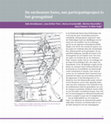
Since 2017, the GIA and NLD have conducted joint research into a fossil branch of the river Ems between Landegge (Ldkr. Emsland) and Sellingen (prov. Groningen), where this branch merged with the Runde system as the Ruiten Aa/Westerwoldsche Aa. As its flanking river dunes were intensively exploited by farming communities up to the middle/late Iron Age, this string of settlements became an umbilical cord linking the Westerwolde region with the Ems bank, especially after accelerated peat growth intensified the barrier posed by the Bourtanger Moor.
Mapping the fossil river, its regime and riverbank occupation as well as its abandonment
goes hand-in-hand with involving today’s landowners and local residents, explaining to them that there is more to the supposedly poor cultural history of this hinterland zone than the era of peatbog exploitation and the Emslandlager during WWII.
PALEO-AKTUEEL 32, 2022
A Bronze Age palstave found at Emmen
In 2019, a Bronze Age palstave was found in a field west of ... more A Bronze Age palstave found at Emmen
In 2019, a Bronze Age palstave was found in a field west of Emmen by a father-and-son team of metal detectorists. In agreement with the landowner, the find was reported to PAN. During the process of conservation, the opportunity presented itself to study the alloy using pXRF analysis. This suggested that the copper ores used in the bronze alloy ultimately derived from Swiss or Slovakian mines, but that the metal was cast locally into a form well-known in the sandy regions of the Low Countries. A review of the find in its topographical and cultural context indicated that it – like various other items in the Bronze Age – had been deposited in (the margin of) wetland parts of the landscape, not far from a contemporaneous settlement.



Uploads
Papers by stijn arnoldussen
In addition to new metals being incorporated into ornament traditions, other new materials are introduced as well. Amongst these, segmented beads of faience already get added to the repertoire around the 17th century BCE (cf. Van Heeringen 1978; Haverman & Sheridan 2006; Bulten & Boonstra 2013), presumably as part of the North Sea maritory exchange network (cf. Sheridan & Shortland 2004, esp. 369-270; Needham 2009). Presumably several centuries later, glass gets added as well. While glass (pyro)technology - used for ornaments - is extant in the Near East since final 3rd millennium BCE (e.g. Willvonseder 1937, 91; Nicholson & Henderson 2000; Shortland 2009; Henderson 2013, 3), it is produced in a regular and controlled manner in Egypt from the 16th century onwards (Shortland 2007, 261) with historic sources for both production (cf. Oppenheim et al. 1970) and consumption (in elite networks; Moran 1992, 235; 293; 347; 351-352; 355).
It is interesting to query at which point in time glass ornaments were introduced to north-west Europe Bronze Age communities. Rare Early Bronze Age associations may be the green glass bead reported by Piggott (1939, 193) found with three bronze daggers and a cremation in the Kerguevarec Breton tumulus. A well-furnished Aunjetitz grave at Wachberg (Melk, Austria) yielded a blue glass bead (Beninger 1935, 144; Willvonseder 1937, 91). By the 15th-14th century BCE, glass finds are known from different parts of Germany (Varberg et al. 2015, 174), as shown by the 15th century blue glass and amber beads from Schwarza (Ebner 2001, 99) and the 13th century Neustrelitz hoard (comprising 20 amber and 180 blue glass beads; Mildner et al. 2010, 44-45). As Varberg (et al. 2015, 175) could list at least seven examples of Per. II (1500-1300 BCE) blue glass beads from Danish funerary contexts, it is reasonable to assume that Dutch Bronze Age communities could have access to glass ornaments by the second half of the Dutch Middle Bronze Age (1500-1100 BCE).
In what follows, we will contextualize glass ornaments from Dutch later prehistory (2000-12 BCE; Bronze Age up to Late Iron Age) in the light of these wider European trends, with special attention to the chronology, the (functional) ways in which glass used in ornament traditions, the state and context of their deposition and (shifts in) composition and glass technology. In this, we decidedly not strive to present or discuss complete corpora, but rather provide and discuss a representative sample of glass ornaments that allows discussion of the aforementioned topics. First, a period-by-period overview is offered of representative glass ornaments for the temporal scope proposed, after which an integrated and diachronic synthesis of their composition is presented.
For four 32.25 km2 case study areas in different geogenetic regions of the Netherlands, prehistoric land use surface areas are modelled based on conventional methods and the results are compared to the results we obtained by using AI-assisted detection of prehistoric field systems. The nationally available LiDAR data were used for automated detection. Geotiff DTM images were fed into an object detection algorithm (based on the YOLOv4 framework and trained with known Dutch sites), and resultant geospatial vectors were imported into GIS.
Our analysis shows that AI-assisted detection of prehistoric embanked field systems on average leads to a factor 1.84 increase in known surface areas of Celtic fields. Modelling the numbers of occupants from this spatial coverage, yields population sizes of 37–135 persons for the case study regions (i.e. 1.15 to 4.19 p/km2). This range aligns well with previous estimates and offers a more robust and representative proxy for palaeodemographic reconstructions. Variations in land use coverage between the regions could be explained by differences in present-day land use and research intensity. Particularly the regionally different extent of forestlands and heathlands (ideal for the (a) preservation and (b) automated LiDAR detection of embanked field systems) explains minor variations between the four case study regions.
In this contribution we have discussed the few but notable gold finds datable from the Late Neolithic up to Early Iron Age from the Netherlands. Despite being low in numbers, a few trends come to the fore: both around 2300-2000 BCE and 1600-1400 BCE, gold ornaments are used in funerary context as markers of a special social standing, possibly related to interregional contacts and/or martial identities. The position of gold ornaments in both horizon 1 and 2 suggest that these are head-decorations, possible wrapped around locks or breads of hair, with the possible exception of the diadem (or neckring?) of Ede – Bennekom. In horizon 3, gold ornaments are no longer placed solely in graves, but – akin to their bronze counterparts – also deposited in wetland locations in the landscape. In this period, their association to weaponry (apart obviously of the gold inlay of the Oss sword; Van der Vaart-Verschoof 2017a: 122-124) appears to be lost, and small-diameter gold and gilded rings of unknown original usage (nose? ear? hair?) are added to cremated remains in urnfield period ceramic vessels. Their scarce occurrence in such contexts, suggests that gold had lost nothing of its exclusivity over the ages.
Museum Klooster Ter Apel
Historische kring Ter Apel
Bij de afronding van de restauratie van het klooster in Ter Apel in 1933
werden ten noordoosten van de huidige ingang onverwachts funderingsresten
gevonden van een bouwwerk van 15 x 20 meter. Op dat moment was die
vondst een onaangename verrassing, want het beschikbare restauratiebudget
was reeds verbruikt. Bovendien moest restauratie versneld afgerond worden
opdat de minister van Onderwijs, Kunst en Wetenschappen het gerestaureerde
klooster hoogstpersoonlijk zou kunnen openen. Zeer waarschijnlijk zijn
daarom de funderingsresten vlot weer uit het zicht gewerkt en werd daarna
nimmer archeologisch en/of bouwhistorisch onderzoek verricht.
Since 2017, the GIA and NLD have conducted joint research into a fossil branch of the river Ems between Landegge (Ldkr. Emsland) and Sellingen (prov. Groningen), where this branch merged with the Runde system as the Ruiten Aa/Westerwoldsche Aa. As its flanking river dunes were intensively exploited by farming communities up to the middle/late Iron Age, this string of settlements became an umbilical cord linking the Westerwolde region with the Ems bank, especially after accelerated peat growth intensified the barrier posed by the Bourtanger Moor.
Mapping the fossil river, its regime and riverbank occupation as well as its abandonment
goes hand-in-hand with involving today’s landowners and local residents, explaining to them that there is more to the supposedly poor cultural history of this hinterland zone than the era of peatbog exploitation and the Emslandlager during WWII.
In 2019, a Bronze Age palstave was found in a field west of Emmen by a father-and-son team of metal detectorists. In agreement with the landowner, the find was reported to PAN. During the process of conservation, the opportunity presented itself to study the alloy using pXRF analysis. This suggested that the copper ores used in the bronze alloy ultimately derived from Swiss or Slovakian mines, but that the metal was cast locally into a form well-known in the sandy regions of the Low Countries. A review of the find in its topographical and cultural context indicated that it – like various other items in the Bronze Age – had been deposited in (the margin of) wetland parts of the landscape, not far from a contemporaneous settlement.