Papers by Sueli S Fidalgo
ESPectialist, 2018
RESUMO: No presente artigo, visamos a ilustrar como uma proposta de formação de professores busca... more RESUMO: No presente artigo, visamos a ilustrar como uma proposta de formação de professores busca integrar o conhecimento local globalizado e o conhecimento global localizado, conceito a que Kumaravadivelu(2006) se refere como glocal. Assim, centradas nesse objetivo, descrevemos o curso integrado de Licenciatura em Português-Inglês da Universidade Federal de São Paulo (Unifesp), enfocando especificamente a formação de professores de inglês, área em que atuamos. Primeiramente, fazemos uma exposição geral do curso em foco e de seus princípios teóricos que o alicerçam. A seguir, apresentamos as disciplinas específicas de língua e literaturas de língua inglesa para então destacarmos as que tratam especificamente da formação de professores de inglês. Finalmente analisamos excertos de relatórios de estágio para verificar o que revelam sobre a articulação entre o local e global. ABSTRACT: In this paper, we aim at illustrating how a teacher education program searches for the integration between globalized local knowledge and localized global knowledge, referred to as "glocal" by Kumaravadivelu (2006). Having this aim in mind, we describe the Portuguese-English Teacher Education Program at the Federal University of São Paulo (Unifesp), focusing on English teacher education, part of the program in which we are involved. We begin by presenting an overview of the program and some of its theoretical underpinnings. We then comment on the courses that deal specifically with the English language and literatures and, following, focus on the English language teacher-education courses. We finally analyze students' report excerpts, verifying what they reveal about the merging of local and global.
Международная научно-практическая конференция ТРАНСФОРМАЦИЯ ЧЕЛОВЕЧЕСКОГО ПОТЕНЦИАЛА В КОНТЕКСТЕ СТОЛЕТИЯ, 2017
ГЕОГРАФИИ ДЕТСТВА: МЕЖДИСЦИПЛИНАРНЫЙ СИНТЕЗ ИССЛЕДОВАТЕЛЬСКИХ ПОДХОДОВ И ПРАКТИК Материалы международной молодежной научной школы-конференции, 2018
Адашова Т.А., Машкина И.В. Организация совместной проектной деятельности студентов и школьников п... more Адашова Т.А., Машкина И.В. Организация совместной проектной деятельности студентов и школьников по изучению вопросов развития экономики города на примере ТОСЭР Комсомольск .
DELTA, 2019
The field of Applied Linguistics has undergone several changes in the last years, and, in various... more The field of Applied Linguistics has undergone several changes in the last years, and, in various aspects, it can be considered today as movable praxis as Pennycook (2001:173) would put it; i.e., an area whose investigations are "constantly shifting", dynamically challenging itself in order to react to questions regarding language, education and other areas where social investigations are carried out, considering the current context of the globalized world in the face of migratory, economic, cultural and political changes. This considered, this text specifically reviews Critical Research Methodologies, by firstly looking at the history of the field, and analyzing how it has changed over the years, comparing such methodologies as Action Research (AR); Participative Research (PR) and Critical Collaborative Research (PCCol) considering that these, to a greater or lesser degree, intervene in the context where they organize the research carried out. We then deepen our discussion of PCCol-theory-methodology used by our research groups: LACE, ILCAE and GEICS 1 .
Introdução Este capítulo tem dois focos principais: por um lado, discutiremos algumas concepções ... more Introdução Este capítulo tem dois focos principais: por um lado, discutiremos algumas concepções epistemo-metodológicas de Vygotsky () quanto ao desenvolvimento de crianças deficientes ou com necessidades educativas específicas (NEE) 1. Discutiremos, principalmente, o conceito de compensação social em sua relação com o desenvolvimento das funções psicológicas superiores. Por outro lado, enfocaremos a formação docente que, no caso da inclusão, vem se revelando das questões mantenedoras da dicotomia exclusão-inclusão. Na verdade, vem ampliando o problema da exclusão que, de 1Ultimamente, após a aprovação da Lei de Inclusão 13.146/2015, o Brasil tem mais uma vez iniciado a discussão sobre como chamar as pessoas com deficiência. No passado, muitas foram as formas de se referir a pessoas deficientes-algumas seguiam uma visão bastante preconceituosa, outras eram mais aceitáveis. Por vários anos, a forma de referência era pela expressão 'pessoa com necessidades educacionais especiais' ou até 'portador de necessidades especiais'-este último bastante criticado já que aquele que porta algo, também deixa de portá-lo em algum momento; já a primeira expressão vem sendo questionada, dentre outros motivos, porque todos têm, de uma forma ou de outra, necessidades educativas especiais. Neste texto escolhemos usar o termo'necessidades educacionais específicas'-que também é passível de crítica semelhante, ou seja: todos têm uma necessidade específica. No entanto, como discutido em Fidalgo (prelo), há muitas crianças em escolas que têm necessidades específicas, mas não são deficientes, como, por exemplo,as crianças com dificuldades de aprendizagem e as crianças superdotadas. É importante lembrar que, no Brasil, seguindo a política educacional publicada no final da década de 1990 e pensada para permitir que as crianças tenham mais tempo para aprender a ler e escrever (ou seja, a progressão continuada ou progressão contínua), muitas crianças atingiram os últimos anos dos ensinos fundamental e médio ainda apresentando problemas quanto ao domínio dos processos de leitura e escrita e de letramento matemático. Ainda há muitas dessas crianças nas escolas; elas não são necessariamente deficientes, mas necessitam de atenção, por apresentarem necessidades educacionais específicas.
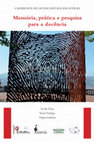
Há uma relação entre a alegria necessária à atividade educativa e a esperança Freire, 1996, p. 72... more Há uma relação entre a alegria necessária à atividade educativa e a esperança Freire, 1996, p. 72 Com o apoio do Projeto Prodocência financiado pela CAPES: Diálogos pertinentes -proposições para um projeto institucional de formação de professores da Educação Básica, os Cadernos de Licenciatura em Letras têm como objetivo pensar a relação teoria-prática das nossas licenciaturas, englobando, no presente volume, a problematização da relação memória, prática e pesquisa relativa à formação docente e ao ensino-aprendizagem de línguas e literaturas. Aos colegas que participaram deste volume foi solicitado que privilegiassem as práticas ou memórias de ensino-aprendizagem fundamentadas teoricamente, tendo como interlocutor o aluno de Licenciatura em Letras e/ou o professor da educação básica, incluindo, portanto, exemplos práticos e outros recursos explicativos, tais como comparações, definições e usos de imagens, tabelas, entre outros. O trabalho foi elaborado em um momento em que algumas mu-
The field of Applied Linguistics has undergone several changes in the last years, and, in various... more The field of Applied Linguistics has undergone several changes in the last years, and, in various aspects, it can be considered today as movable praxis (Pennycook, 2001:173). This text reviews Critical Research Methodologies, by fi rstly looking at the history of the fi eld, and analyzing how it has changed over the years, comparing such methodologies as Action Research (AR); Participative Research (PR) and Critical Collaborative Research (PCCol) considering that these, to a greater or lesser degree, intervene in the context where they organize the research carried out. We then deepen our discussion of PCCol-theory-methodology used by our research groups: LACE, ILCAE and GEICS 3 .

A perspectiva colaborativa na construção de conhecimentos em aulas de língua estrangeira em curso... more A perspectiva colaborativa na construção de conhecimentos em aulas de língua estrangeira em cursos de letras Solange Teresinha Ricardo de Castro Segunda parte: Outras questões de linguagem e método: A busca do método, o multiculturalismo, a ética. Biodatas Atividades no Contexto Escolar -LACEliderados pelas pesquisadoras Magalhães e Liberali, da PUC-SP -LAEL e alunos de MS, DO e IC, pesquisadores MS e professores Drs. de outras universidades.> -Fase 3, desenvolvido entre uma Universidade (PUC-SP) e uma Escola Estadual de Ensino Fundamental (1º a 5º anos)<4. Com a aprovação da Lei nº. 11.274/2006, foi instituído o Ensino Fundamental de nove anos de duração. Dessa forma, a criança de 6 anos ingressa no EF e as denominações letivas são alteradas: o atual 1º ano substitui a antiga série Pré-escolar; e o que se denomina, hoje, de 2º a 5º anos referem-se às 4 séries iniciais do Ensino Fundamental, tal como considerados nos PCN (BRASIL, 1997).> de tempo integral (EETI), localizada na Zona Norte, de São Paulo. Com base na Teoria da Atividade Sócio-Histórico-Cultural (Vygotsky, Leontiev e expansões de Engeström, entre outros), as escolhas metodológicas que organizam os projetos de extensão, conduzidos pelo GP Linguagem em Atividades no Contexto Escolar -LACE<5. Grupo de Pesquisa Lacecoordenado por Magalhães e Liberali.>, são crucialmente importantes, uma vez que se constituem como contextos de aprendizagem e transformação a todos os envolvidos, bem como lócus de estudo aos pesquisadores. Pesquisa Crítica de Colaboração: uma pesquisa de intervenção O projeto de extensão LEDA está organizado como uma pesquisa de intervenção formativa, isto é, voltada, desde seu início, para compreensão e transformação dos conceitos de leitura e escrita, bem como dos modos como ambas são enfocadas, nas práticas diárias das diversas áreas do conhecimento e nas discussões da equipe diretiva (direção e coordenação), com o colegiado. O foco está em criar, na escola, zpds mútuas (John-Steiner 2000) para a construção de relações intencionalmente colaborativas na produção recíproca de novos modos de compreender leitura e escrita como instrumentos para aprendizagem e desenvolvimento nas diferentes áreas do conhecimento e nos diversos anos do ensino fundamental. É importante salientar que o desenho e a organização da pesquisa, o curso e o formato das intervenções não são a priori conhecidos dos pesquisadores, mas negociados entre os participantes e construídos ao longo do desenvolvimento da pesquisa. Para entender as escolhas metodológicas na organização do LEDA, discuto, a seguir, os conceitos centrais que embasaram as escolhas feitas. Com base na Teoria da Atividade Sócio-Histórico-Cultural -TASHC , o processo de formação é entendido como sistemas de atividade, tal como definido por Engeström (2008, p.
Este capítulo tem dois focos principais: por um lado, discutiremos algumas concepções epistemo-me... more Este capítulo tem dois focos principais: por um lado, discutiremos algumas concepções epistemo-metodológicas de Vygotsky (1924a, 1924b, 1928, 1929, 1931a, 1931b, 1934/1935) quanto ao desenvolvimento de crianças deficientes ou com necessidades educativas específicas (NEE) . Discutiremos, principalmente, o conceito de compensação social em sua relação com o desenvolvimento das funções psicológicas superiores. Por outro lado, enfocaremos a formação docente que, no caso da inclusão, vem se revelando das questões mantenedoras da dicotomia exclusão-inclusão. Na verdade, vem ampliando o problema da exclusão que, de exclusão de alunos, passou a ser vivida na escola como exclusão de professores também.
My paper is in English and starts on page 47
This paper is based on Vygotsky´s discussions on t... more My paper is in English and starts on page 47
This paper is based on Vygotsky´s discussions on the development of children with special educational needs (SEN) in school contexts. It also focuses on the need to create a flexible environment that might provide alternative paths for such development. Focusing on Vygotsky’s work occurred due to his view that higher forms of behavior (i.e., higher psychological (or mental) functions) are key for the development of all children (VYGOTSKY, [n.d.]/1993, p.166).
This paper is based on Vygotsky´s discussions on the development of children with special educational needs (SEN) in school contexts. It also focuses on the need to create a flexible environment that might provide alternative paths for such development. Focusing on Vygotsky’s work occurred due to his view that higher forms of behavior (i.e., higher psychological (or mental) functions) are key for the development of all children (VYGOTSKY, [n.d.]/1993, p.166).
In Brazil, teaching-learning and development of children with specific educational needs are sti... more In Brazil, teaching-learning and development of children with specific educational needs are still dealt with by looking at what they lack – both in schools and in the policies that are published for these children. There is still very little work on how the children learn; how they deal with their specific needs. It is taken for granted that they can do very little – if anything – simply because they have a specific need. It is so serious that, In some schools, if they have a medical report which states that they have a disability, the school will say: “they have a report. We don’t need to do anything with them. We don’t need to worry.” So, no material is prepared for those children and no work is carried out with them. In the 'Fundaments of Defectology', Vygotsky is very clear when he states that the content, the syllabus used with children with disabilities and those with not disability must be the same. What must differ is the path taken, the method used in each case.
(texto publicado nos anais do I Congresso Internacional de Educação Especial e In, inclusiva e XI... more (texto publicado nos anais do I Congresso Internacional de Educação Especial e In, inclusiva e XIII Jornada de Educação Especial realizado na Unesp de Marília em maio de 2016 – ISSN: 21774013, pp. 1-6)
This paper is the result of research carried out in the outskirts of São Paulo as part of professional education work carried out by 2 research groups, which I lead or co-lead: GEICS - Studies on Deaf Identity and Culture - and ILCAE - Linguistic Inclusion in Educational Activity Settings. The paper focuses on the education of teachers to work with children and adolescents with special needs, supported by the principle that teachers need to become agents of their practice; scholars of their own realities and environments. In order to achieve this, the groups meet with public school teachers - some of which have become members of the research groups - in order to encourage and support them to investigate the needs of students in their classrooms so as to jointly prepare educational material for the children with special needs, maintaining, when possible, the same content as the regular school material.
This paper is the result of research carried out in the outskirts of São Paulo as part of professional education work carried out by 2 research groups, which I lead or co-lead: GEICS - Studies on Deaf Identity and Culture - and ILCAE - Linguistic Inclusion in Educational Activity Settings. The paper focuses on the education of teachers to work with children and adolescents with special needs, supported by the principle that teachers need to become agents of their practice; scholars of their own realities and environments. In order to achieve this, the groups meet with public school teachers - some of which have become members of the research groups - in order to encourage and support them to investigate the needs of students in their classrooms so as to jointly prepare educational material for the children with special needs, maintaining, when possible, the same content as the regular school material.
This paper is the result of research carried out in the outskirts of São Paulo as part of profess... more This paper is the result of research carried out in the outskirts of São Paulo as part of professional education work carried out by 2 research groups, which I lead or co-lead: GEICS - Studies on Deaf Identity and Culture - and ILCAE - Linguistic Inclusion in Educational Activity Settings. The paper focuses on the education of teachers to work with children and adolescents with special needs, supported by the principle that teachers need to become agents of their practice; scholars of their own realities and environments. In order to achieve this, the groups meet with public school teachers - some of which have become members of the research groups - in order to encourage and support them to investigate the needs of students in their classrooms so as to jointly prepare educational material for the children with special needs, maintaining, when possible, the same content as the regular school material.
Aiming at discussing an educational program, this paper focuses on four theoretical perspectives ... more Aiming at discussing an educational program, this paper focuses on four theoretical perspectives considered essential for the education of those involved in the creation of loci for the constitution of critical agents (here understood as students, teachers, parents, coordinators, and researchers, i.e., the other in general, including oneself). This theoretical framework is discussed within a program which is carried out in the outskirts of Sao Paulo, and assumes that, in order for schools to take on the role of promoting changes -inherent to this social context -, joint actions involving the university, the schools and the community (especially those whose family members or relatives attend the school) is needed, each of them fulfilling their part to re-think education and citizenship.
Describing and discussing a program for teacher education, this paper aims at displaying methodol... more Describing and discussing a program for teacher education, this paper aims at displaying methodological- critical research of collaboration (Magalhães, 2005) -as well as theoretical aspects (Freire, 1996, Vygotsky, 1930 & 1934; Bakthin/Volochinov, 1929; Gentili, 2001; Giroux, 1997) that support a theoretical-practival activity within the Applied Lingustic arena.
![Research paper thumbnail of Por uma linguagem como objeto-instrumento de avaliações inclusivas [For a language as object-instrument of inclusive assessments]](https://attachments.academia-assets.com/35581175/thumbnails/1.jpg)
Como procedimento que enfoca a sistematização processual de aprendizagem, a avaliação é ferrament... more Como procedimento que enfoca a sistematização processual de aprendizagem, a avaliação é ferramenta essencial para o entendimento não só do que se aprende na escola, mas também do que favorece a inclusão – seja de pessoas com necessidades especiais, seja dos que já estão excluídos pela crença social (embora absurda) de que pertencem a um grupo tido como privado de cultura. No entanto, para que a avaliação seja essa ferramenta de compreensão, é necessário que todos os que atuam na e com a escola conheçam as relações que ali se estabelecem; forças centrípetas e centrífugas (BAKHTIN, 1998) que ali atuam, sustentando ideologias – que não são poucas. Portanto, é necessário que conheçam as regras que são estabelecidas pelos agentes (ou mesmo para eles, no caso de algumas regras externas) e como essas regras são (ou podem ser) transformadas em práticas de ensino-aprendizagem.
Nesse sentido, a linguagem utilizada na escola – assim como em documentos escritos para a escola – se torna um importante objeto-instrumento de análise, já que, com ela, podemos perceber as práticas linguageiras que circulam no ambiente educacional, verificando até que ponto estas fomentam o processo de uma avaliação inclusiva ou excludente.
Nesse sentido, a linguagem utilizada na escola – assim como em documentos escritos para a escola – se torna um importante objeto-instrumento de análise, já que, com ela, podemos perceber as práticas linguageiras que circulam no ambiente educacional, verificando até que ponto estas fomentam o processo de uma avaliação inclusiva ou excludente.
![Research paper thumbnail of A exclusão na educação inclusiva [Exclusion in inclusive education]](https://attachments.academia-assets.com/35581015/thumbnails/1.jpg)
This paper discusses public policies of inclusion, showing that these often end up excluding stud... more This paper discusses public policies of inclusion, showing that these often end up excluding students and teachers from the educational process - which then results in social exclusion. It composes the papers and investigations carried out by the members of the ILCAE (Language Inclusion in Educational Activity Scenarios) research group, whose main aim is to study language produced and used in school contexts, challenging it with the purpose of producing true spaces of inclusion - through the reflection of what founds the language practices of those that act in and upon the school. The theoretical framework used by the group is based on the sócio-historical materialism, and the group finds in Vigotski and Bakhtin their key concepts: (1) the role of language in development and learning and (2) language as an arena of conflict. The text aims at discussing the language produced in laws and public policies, analysing the consequences of such policies when the teachers themselves do not receive the necessary education in order to put these policies into practice.
The general aim of this chapter is to discuss the importance of collaborative methodological-theo... more The general aim of this chapter is to discuss the importance of collaborative methodological-theoretical choices to research conducted in continuing teacher education. Specifically, we will discuss a collaborative locus of knowledge production and its theoretical implications based on the analysis of teacher and researcher interactions in a teacher education program carried out in a State School in Sao Paulo, Brazil. In this program, we stand in the position of applied linguists, from which we assume our roles of researchers and teacher educators: like many scholars (e.g., Pennycook 2001), we understand that the primary role of applied linguists is to tackle language-bound issues as a means for organizing critical thought, here defined in critical-reflective terms, i.e., as a type of thought that might allow individuals—actual agents of their own actions—to probe into their routine practices, rather than to take their actions as non-political. By using a critical-reflective-thought-organizing type of language, individuals as agents are able to take control of their own political standpoints and of their ethical perspectives, and, by investigating the effects of actions that derive from these points of view, may then transform the situations of inequity and oppression that they either experience or witness. As pointed out by Pennycook (2001, p. 28), a critical practice like this suggests the need to develop new conceptions of what constitutes knowledge and what is the politics of education; these two need to be considered together since, in actual fact, they go hand-in-hand.
O olhar para crianças com necessidades educativas especiais está presente, no Brasil, desde meado... more O olhar para crianças com necessidades educativas especiais está presente, no Brasil, desde meados do século XIX, quando, em 1854, D. Pedro II fundou o Imperial Instituto dos Meninos Cegos e, mais tarde, em 1857, o Imperial Instituto de Surdos-Mudos. As crianças com necessidades especiais devido a deficiências mentais, no entanto, teriam que esperar um pouco mais já que, influenciados por pesquisas européias, no período do Império, os estudos e as práticas para esses tipos de necessidades especiais, no Brasil, preocupavam-se mais com a possibilidade de comprovar que haveria uma ligação entre as deficiências e a miscigenação de raças. Dessa forma, os que tinham deficiências mentais eram incluídos em instituições cujos objetivos eram tratamento, cura e prevenção. Não havia preocupação educativa nesse caso. São Paulo, por exemplo, teve sua primeira escola para alunos com necessidades especiais por deficiências mentais criada só na década de 30, no século passado. Ainda assim, a exclusão que até hoje permeia as práticas que vislumbram possibilidades de inclusão estava fortemente presente, até mesmo no nome pelo qual se referiam a essa escola: “escola de anormais.”
Este artigo trata, portanto, de questões de inclusão escolar – termo entendido, hoje, como sinônimo de inclusão de pessoas com necessidades educativas especiais. Trata também de algumas conseqüências dessa compreensão quando, nas escolas, encontramos alunos com todos os tipos de necessidades – todas especiais, mas nem todas resultados de algum impedimento físico ou mental, o que nos leva a pensar, em primeiro lugar, no nome que damos a essa política educacional e a seus beneficiários: educação inclusiva para portadores de necessidades educativas especiais.
Este artigo trata, portanto, de questões de inclusão escolar – termo entendido, hoje, como sinônimo de inclusão de pessoas com necessidades educativas especiais. Trata também de algumas conseqüências dessa compreensão quando, nas escolas, encontramos alunos com todos os tipos de necessidades – todas especiais, mas nem todas resultados de algum impedimento físico ou mental, o que nos leva a pensar, em primeiro lugar, no nome que damos a essa política educacional e a seus beneficiários: educação inclusiva para portadores de necessidades educativas especiais.