Papers by Swetlana Torno
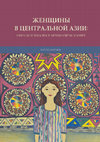
Женщины в Центральной Азии: Образы и вызовы в меняющемся мире, 2026
Брак - центральное событие во всех обществах Центральной Азии, имеющее огромное значение для жизн... more Брак - центральное событие во всех обществах Центральной Азии, имеющее огромное значение для жизни отдельных людей, родственных групп и общества в целом. Во всем мире общества развивают сложные идеи и практики, связанные с этим событием жизненного цикла, которые отражают социальную, политическую, экономическую и историческую динамику. Опираясь на этнографический материал, собранный авторами в ходе длительной полевой работы в двух населенных пунктах Таджикистана, в этом визуальном эссе анализируются роли женщин и государства в брачных практиках через призму заботы. В последние годы тема заботы стала центральной в изучении политической, экономической и социальной организации наших обществ. Феминистские и антропологические исследования анализируют заботу как жизнеобеспечивающую деятельность, поскольку она играет важную роль в создании социальных отношений и поддержании человеческого и нечеловеческого миров. Мы анализируем практики заботы, в которые вовлечены женщины и которые связаны со свадьбами в Таджикистане. Мы рассматриваем заботу государства о семье, организацию приданого дочери, сбор нарядов для невесты, приготовление еды и обслуживание гостей, заботу о воспроизводстве традиций, поддержание репутации и статуса семьи. Все эти практики заботы способствуют воспроизводству старых и формированию новых типов родства. Мы выбрали форму визуального эссе не только для того, чтобы продемонстрировать разнообразие современных свадебных ритуалов, но и для того, чтобы отобразить огромные аффективные и материальные вложения людей в это событие. Мы считаем, что визуальные репрезентации этого эмоционального и физического труда помогут нам лучше осмыслить как продуктивные, так и амбивалентные аспекты практик заботы.
Journal of Eurasian Studies, 2024
Marriage is a central event in all Central Asian societies and is particularly important for the ... more Marriage is a central event in all Central Asian societies and is particularly important for the lives of individuals, kinship groups, and society more broadly. Within the regional scholarship, it serves as an entry point for the study of a wide range of topics and the exploration of social, political, economic, and religious dynamics. This article aims to shift the perspective on Central Asian marriages from questions of political economy and identity to the circulation of care by scrutinising its role in social reproduction across the scales of the individual body, family, community, and the state. Drawing on the ethnographic material collected by the authors during extensive fieldwork in two localities in Tajikistan, this article analyzes care practices in several domains: organising the daughter's dowry, assembling the bride's fashions, preparing food and serving the guests, maintaining family's reputation and status, caring for the reproduction of tradition, and the state's care for families. We argue that feminist and anthropological studies that draw attention to care's productive as well as disruptive sides are helpful for understanding how these practices contribute to reproducing old and forging new types of relatedness and maintaining complex social worlds. Working with care practices visually, alongside textual representations, allows us to convey people's enormous affective, material, and labour investments in marriages and to draw attention to the visible and invisible aspects of these practices.
Problems of post-communism, May 29, 2024
This article examines the relationship between youth, the family, and the authoritarian state in ... more This article examines the relationship between youth, the family, and the authoritarian state in Tajikistan. We argue that the state works through both young people and the family in its attempts to produce loyal citizens through values education that focuses on patriotism, national identity, and allegiance to the state. We examine how the government frames this relationship through discourse analysis of 13 speeches by President Emomali Rahmon, an analysis of the content of laws on education and youth, a close reading of the official training program of the course “Family Education,” and an ethnographic study of a “Girls’ Competition.”
Adjusting to the digital age
UCL Press eBooks, Feb 26, 2024
Telefon gap zadan or ishk gap zadan, literally ‘to talk on the phone’ or ‘to [do] love talk’, ref... more Telefon gap zadan or ishk gap zadan, literally ‘to talk on the phone’ or ‘to [do] love talk’, refers to courtship practices of young people in Tajikistan. The length and emotional intensity of the relationship varies considerably between cases and at times, individuals can have several online dating partners simultaneously. Young men and women that engage in ‘love talk’ defy established societal norms of gender segregation and Islamic morality, and hence, in public discourses mobile phones are often blamed for ‘seducing young people’, and held responsible for their ‘moral decay’. Meanwhile, telefon gap zadan may – but most often does not – culminate in sexual involvement nor marriage.
Asie en care/Asia in care, edited by De Loenzien Myriam & Aurélie Varrel, 2025
The topic of eldercare has thus far received scant attention from anthropologists studying Centra... more The topic of eldercare has thus far received scant attention from anthropologists studying Central Asian societies. Much of the scholarly literature focused on this region tends to reproduce the normative claim that the youngest son invariably assumes the responsibility of caring for parents in later life, while the state welfare system is dysfunctional or lacks appropriate funding. Taking a case study of an elderly woman from Tajikistan, this study unpacks the minutiae of intergenerational care giving and sheds light on caring processes and experiences of older adults in a context marked by Soviet legacies. I will show that caring practices are far more complex and diverse than the normative ideal suggests; that it is not merely the youngest son and his wife, who care for parents in old age, but all children, daughters and sons, to differing degrees and depending on the specifics of their life trajectories; and that extended kinship networks offer high flexibility for securing care in later life. The paper is based on eleven months of extensive ethnographic fieldwork in a provincial town in Tajikistan on women’s life courses and the re-organization or public and private care arrangements.
Historical Social Research, 2023
The qualitative and quantitative study of life courses represents an important branch of sociolog... more The qualitative and quantitative study of life courses represents an important branch of sociological research and is an interesting case for Global Sociology. While characterized by thematic and methodological diversity, this wide research field has rarely looked beyond the countries of the Global North, and most of its key concepts were formulated based on studies in the Euro-American context. Taking an ethnographic research project on women's life courses in Tajikistan as its starting point, this paper examines how analytical concepts associated with the life-course paradigm can travel transnationally and asks what we can learn from transposing these concepts to a non-European setting. More specifically, it brings concepts such as linked lives and the intersection of individual, family, and historical time into conversation with empirical data collected through the genealogical method, biographical interviews, and participant observation. This paper focuses on women's life-course practices to secure care in later life in post-independence Tajikistan and advances the argument that women in advanced ages become central actors in safeguarding family livelihoods and old-age care by carefully shaping their own life trajectories and managing their children's.
The family as a social institution has survived most diverse political periods and appears resili... more The family as a social institution has survived most diverse political periods and appears resilient or at least able to reconstitute itself even in the aftermath of destructive events such as wars. Age at first marriage is one possibility to systematize the strategies that families follow in times of internal conflicts (e.g., civil wars), external interventions or peaceful times. The authors found that age at first marriage correlates with socio-political events whereas perceptions of insecurity lead to a decline in marital age. This paper is based on three case studies that the authors have conducted through ethnographic methods among Tajiks in the cities Kulob, Khujand, and Mazar-e Sharif in Tajikistan and Afghanistan. Combining Grounded Theory with the genealogical methods from social anthropology in order to generate demographic data, the authors introduce the method of grounded demography as a way to generate demographic data through ethnographic methods. Grounded demography o...
Anthropology & Aging, Mar 28, 2022
Most ethnographies of childbirth are situated in the field of medical anthropology and focus on t... more Most ethnographies of childbirth are situated in the field of medical anthropology and focus on the interplay of different medical traditions and power relations. A smaller number of works examine activities and rituals accompanying childbirth in the context of integrating new members into the community and constituting the “person” by means of creating or changing relations to the “socio-cosmological universe.” Following the latter, the paper analyzes rituals and practices surrounding childbirth and the socialization of children during their first year of life in Kyrgyzstan. I argue that personhood is established through careful work on relationships to entities situated in the social and cosmic domains of the society. The paper draws on ethnographic research in north Kyrgyzstan and explores ideas about conception, rules of conduct during pregnancy, and the life cycle rituals zhentek toĭ, beshik toĭ, and tushoo toĭ.
Mit Hilfe einschlägiger politischer Reden des Präsidenten untersucht dieser Beitrag die vorherrsc... more Mit Hilfe einschlägiger politischer Reden des Präsidenten untersucht dieser Beitrag die vorherrschenden Wertevorstellungen in Bezug auf die Rolle der Frau in der tadschikischen Gesellschaft. Inwiefern diese Normvorstellungen gelebt werden können und wo die gesellschaftlichen Ideale an ihre Grenzen stoßen, soll anhand der Geschichte einer jungen, geschiedenen Frau aus einer Kleinstadt im Süden Tadschikistans überprüft werden. Schließlich gehe ich der Frage nachgehen, wann gelebte Realitäten zu einem Ideologiewandel beitragen können.
Sophy Roche (ed.) The Family in Central Asia. New Perspectives, 2017
Careful attention to Tajik political discourse reveals at least two particular features: it is re... more Careful attention to Tajik political discourse reveals at least two particular features: it is repetitive and it circulates around the single persona of the president of the Republic of Tajikistan. Such observations led me to consider Tajik political practices not only for the content they convey but for their form. In the context of a political event that took place in the city of Kulob in April 2014, this paper examines the speeches delivered at this meeting as texts that belong to a particular genre and analyzes them on the basis of form and style. By understanding the speeches from within the society, the study sheds light on the social and historical circumstances that produced them and offers important insights into the hegemony of Tajik state discourse and the manner in which the government legitimizes its authority.
Virtualität - Eine Fallstudie über das Reale in virtuellen Welten am Beispiel von Habbo-Hotel
M.A. thesis by Swetlana Torno
Public Outreach by Swetlana Torno
Altern im Kontext von Arbeitsmigration
Max Planck Jahrbuch 2023, 2024
Wie wirkt sich die Mobilität jüngerer Generationen auf das Leben älterer Altersgruppen aus? Werde... more Wie wirkt sich die Mobilität jüngerer Generationen auf das Leben älterer Altersgruppen aus? Werden Eltern mobiler, wenn ihre Kinder temporär oder dauerhalft in einem anderen Land leben und arbeiten? Wer unterstützt die alternden Eltern im Alltag? Und wie erlebt die ältere Generation die Mobilität und weite Entfernung ihrer Kinder? In einer mobiler werdenden (Arbeits-)Welt verschieben sich auch die Vorstellungen und Erfahrungen des Alterns. Diesen Veränderungsprozessen gehe ich in meinem Forschungsprojekt anhand des Beispiels Tadschikistan nach.
Interview des Monats im Kontext des NAR-Seminars "Altern in verschiedenen Kulturen"
Netzwerk Alternsforschung, Universität Heidelberg, 2025
This interview focuses on the differential mobilities of men and women in Tajikistan over their l... more This interview focuses on the differential mobilities of men and women in Tajikistan over their life course and the transformations of ageing in the context of mass labour migration. The interview was conducted by Clara Cornaro in the context of the Seminar 'Ageing in Different Cultures' organized by the Network Ageing Research, Heidelberg University.
‘I am in Dushanbe now, selling apples at the market.’ Contemplating ageing and (im)mobilities in rural Tajikistan
IfL-Blog, 2024
This Blog explores the relational mobilities between Tajik senior citizens and their migrant chil... more This Blog explores the relational mobilities between Tajik senior citizens and their migrant children showing how older people maintain local social infrastructures in rural Tajikistan in the absence of the young.

Ageing and Gender amidst Labour Migration in Tajikistan
Interactive website: https://www.ageingandmobility.com/gender-ageing-tajikistan/, 2023
How does mass labour migration influence the everyday life and experiences of older adults in Taj... more How does mass labour migration influence the everyday life and experiences of older adults in Tajikistan? What new types of mobility and immobility arise in such contexts? How does it influence intergenerational care relations and gender-specific ways of growing old? Transforming ethnographic observations into illustrations and simple text, this interactive website introduces my research and provides insights into the intersection of ageing, mobility, gender and care in Tajikistan. It is the result of a collaboration with the Berlin based graphic anthropologist and designer Álvaro Gabriel Martínez, with whom the Max Planck Research Group 'Ageing in a Time of Mobility' worked to make our research accessible to the wider public. Read more about our global and interdisciplinary research project here: https://www.ageingandmobility.com
Care: moral and family obligation?
Workshop n°2 - Care: moral and family obligation? (Translated version into English) Discussant : ... more Workshop n°2 - Care: moral and family obligation? (Translated version into English) Discussant : Kanae Sarugasawa (Inalco/IFRAE) - Workshop chair : Hélène Le Bail (CNRS/Sciences Po CERI) The meanings of care: an anthropological approach to maternal care for a child with autism in Bangalore, Karnataka (South India) Marie Manganelli | Université de Paris - Centre d'anthropologie culturelle We reject egotism in the disguise of love": The ethics of care at the core of the Japanese Disability Right Movement Anne-Lise Mithout | Université de Paris - Research Center on East Asian Languages and Civilizations (CRCAO) Intergenerational care, rules transgression and sexual violence: Exploring (un)careful pathways into and out of an arranged marriage in Tajikistan Swetlana Torno | Heidelberg University An Event History Analysis of How Work and Care Balanced in Taiwan: Data From The Panel Study of Family Dynamics Lin Yijiun & Lee Shao-fen | Yulin Normal University & National Tsing Hua U...
Old Age Care as a Life Course Management Strategy: Perspectives from Women's Lives in Tajikistan
Questions of care link individual life courses and generations with each other in manifold ways a... more Questions of care link individual life courses and generations with each other in manifold ways across cultures and historical time. Similarly, strategies to secure “good” care at the end of life vary according to institutional settings of a given society and nation state. This paper provides perspectives on life course management strategies employed by Tajik women to gain the desired care in old age. In Tajikistan, one of the five former Central Asian post-soviet republics, women are primarily defined through their reproductive work within the family and household. With the dissolution of the Soviet Union, the economic security provided by socialist welfare system decreased and suffers from serious underfinancing. Against this background, care within the family gains more importance. Women react to this insecurity by consciously managing their own and reshaping their children’s life courses (marriage, birth, etc.) in order to increase their own old-age security. Based on biographies of Tajik women, the paper explores life course management strategies including early marriage, multiple motherhood, birth of sons, and acceptance of polygyny, among others. These strategies aim at securing subsistence and care in old age. The paper is based on eleven months of stationary fieldwork in a provincial town in Tajikistan on the re-organization of familial care arrangements and women’s life courses.



Uploads
Papers by Swetlana Torno
M.A. thesis by Swetlana Torno
Public Outreach by Swetlana Torno