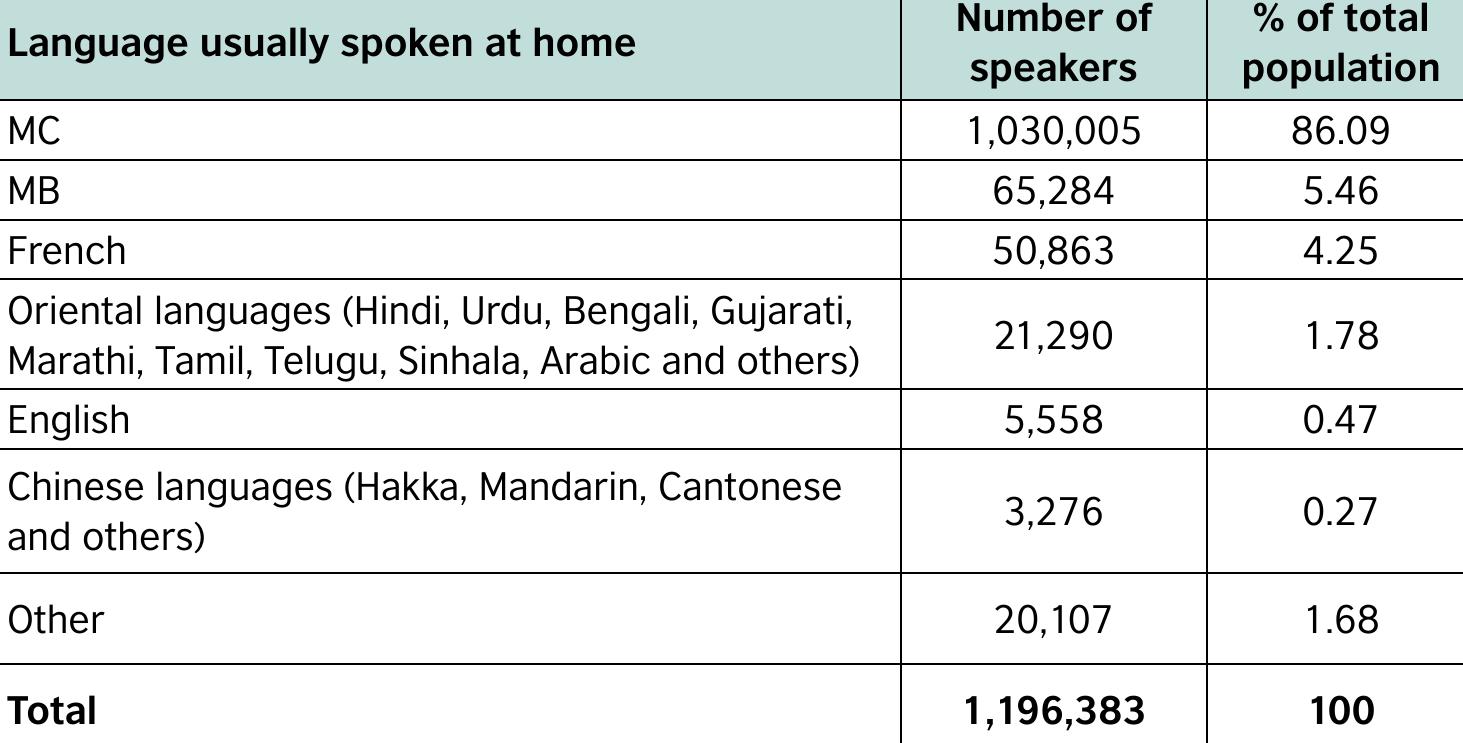
Figure 1 - from "Vernacular languages in an English-dominant education system: Mauritian Creole, Bhojpuri and the politics of ethnicity in multilingual Mauritius"
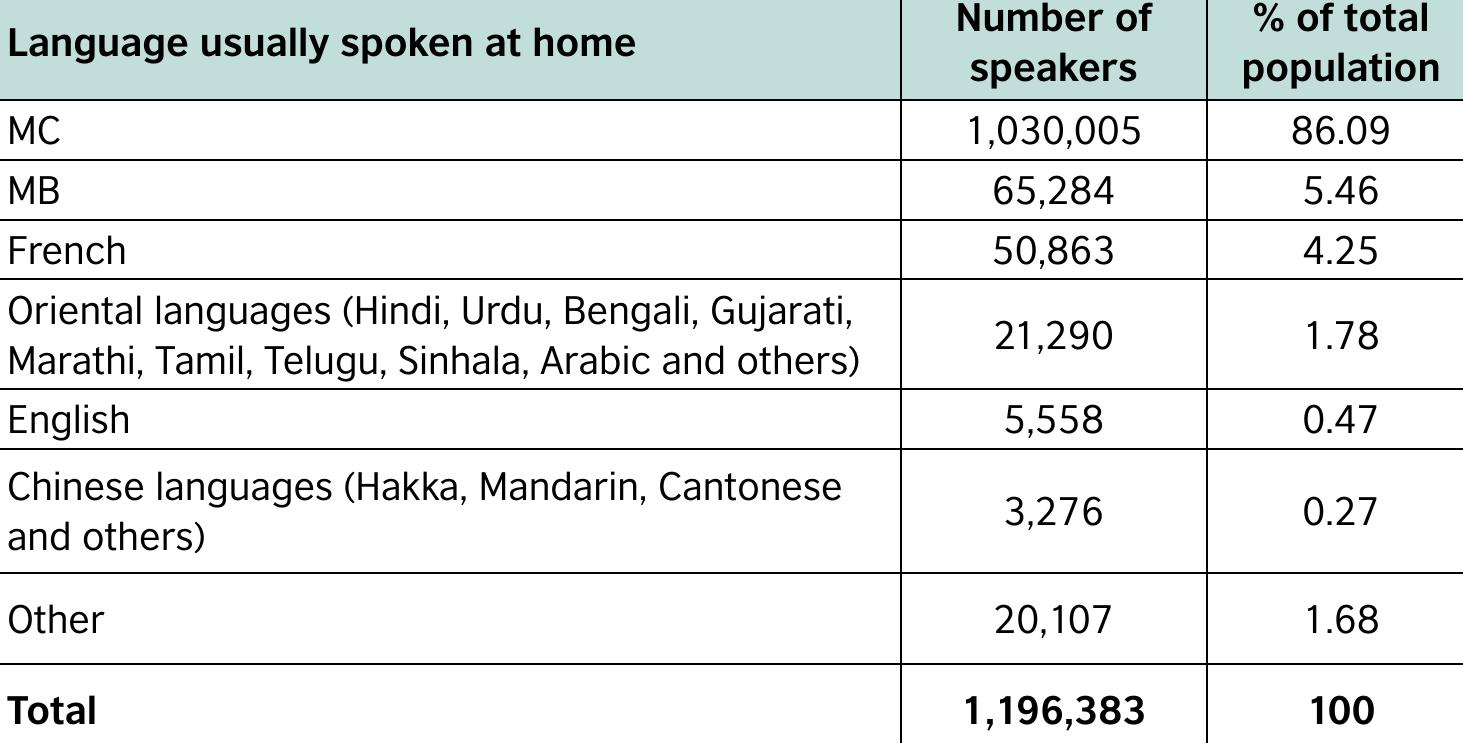
Table 1
Figure source:

Abstract: Following its independence from the United Kingdom in 1968, postcolonial Mauritius has maintained its commitment to an English-medium education system, paying scant consideration to the vernacular languages of Mauritian Creole and Bhojpuri. Consequently, the introduction of MC and Bhojpuri at primary level in 2011 was initially greeted with cautious optimism. However, as the country's latest contribution to UNESCO's International Bureau of Education (2011) reveals, official provision for the inclusion of these two subjects in the weekly timetable of primary school students is yet to be made. While the highest Weekly Time Allocated (WTA) of 500 hours is dedicated to the teaching of English, at the moment, despite the Government's purported aim to promote multilingualism in both the vernacular languages and English (Education and Human Resources Strategy Plan 2008-2020), in practice, this does not seem to be the case. The aim of this paper is, therefore, two-fold: firstly, following Ramanathan (2005: 2), it assesses the ways in which language policy and planning in postcolonial contexts such as Mauritius eventually end up pitting vernacular languages against English, thus creating "power/knowledge inequalities between those who have access to English and those who do not." Secondly, it explores the ethnic ramifications of such power differentials by focusing on the strategic benefits of the under-emphasis on vernacular languages for traditionally privileged ethno-linguistic groups in Mauritius. In keeping with Tollefson (1991: 7), therefore, this paper views the uneasy and unequal co-existence between vernacular languages and English as being the consequence of a language policy that prioritises MC and Bhojpuri alongside English while "simultaneously creat[ing] conditions which ensure that vast numbers of people will be unable to acquire that competence". Multilingualism, thus, remains a challenge that the Mauritian socio-educational landscape is yet to fully address.