Books by Thomas Schmidts
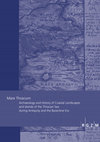
RGZM Tagungen 47 = Interdisziplinäre Forschungen zu den Häfen von der Römischen Kaiserzeit bis zum Mittelalter in Europa 12, 2022
Mare Thracium – the Thracian Sea – is the northernmost part of the Aegean Sea. It extends from th... more Mare Thracium – the Thracian Sea – is the northernmost part of the Aegean Sea. It extends from the east coast of Chalkidiki with the Athos peninsula till the west coast of the Thracian Chersonese and the island of Imbros to the south. Despite its peripheral location, the region was an integral part of the Mediterranean world. The wealth of mineral resources, such as the silver from Thasos or the Thasian and Samothracian marble, was also important as well as the rivers, such as Strymon and Hebros, which provided a connection to the Thracian inland. Numerous harbour cities along the coastlines contributed significantly to the development of the region since the Archaic period and often existed until the Byzantine era.
In order to appreciate this settlement and traffic area in its entirety, a workshop was held in Mainz in 2016 as part of the project "The Thracian harbour city Ainos in Roman and Byzantine times - the development of a hub in a changing environment" which was integrated in the Priority Programme of the German Research Foundation "Harbours from the Roman period to the Middle Ages". The contributions in this volume adress natural conditions for seafaring, historical developments and the remains of ports and harbour cities as well as underwater discoveries.
Der vorliegende Band ist Ergebnis des Workshops „Häfen als Orte der Repräsentation in Antike und ... more Der vorliegende Band ist Ergebnis des Workshops „Häfen als Orte der Repräsentation in Antike und Mittelalter“, der 2015 im Rahmen des DFG-Schwerpunktprogramms 1630 „Häfen von der römischen Kaiserzeit bis zum Mittelalter" in Mainz veranstaltet wurde. Die in ihm versammelten Beiträge gehen der Frage nach, ob und in welchem Maße Häfen repräsentative Funktionen erfüllten und nehmen unterschiedlichen Ebenen der Repräsentation in den Blick. Die architektonische Gestaltung von Häfen und Hafenstädten wird ebenso thematisiert wie ihre Rolle als Schauplatz herrschaftlicher Repräsentation. Geographisch und zeitlich weit gestreut, behandeln die Beiträge Plätze in Nord- und Mitteleuropa sowie auch im Mittelmeerraum, und zwar von der griechischen Antike bis zum Mittelalter. Neben archäologischen Zeugnissen bilden auch schriftliche und ikonographische Quellen den Ausgangspunkt für die Betrachtung verschiedener Aspekte der Repräsentation.
Ankündigung des Harrassowitz-Verlags:
Römische Militäreinheiten versahen die von ihnen hergest... more Ankündigung des Harrassowitz-Verlags:
Römische Militäreinheiten versahen die von ihnen hergestellten Ziegel häufig mit Stempeln. Seit dem späten 19. Jahrhundert ist bekannt, dass diese auch außerhalb der Legionslager und Kastelle vorkommen. Dieses Phänomen, das sich von Britannien bis nach Nordafrika nachweisen lässt, wurde unterschiedlich interpretiert und kontrovers diskutiert. Die Deutungen reichten vom Nachweis militäreigener Gebiete bis zur Einstufung der Ziegel als reguläres Handelsgut.
Thomas Schmidts hat die erste umfassende und überregionale Untersuchung zu diesem Thema verfasst. Im Mittelpunkt stehen dabei die germanischen Provinzen des Römischen Reiches, aus denen die größte Anzahl von relevanten Fundplätzen bekannt ist. Es zeigte sich, dass ein einziger Interpretationsansatz nicht zur Lösung beiträgt, sondern individuelle Erklärungen für die jeweiligen Provinzen bzw. Regionen notwendig sind. Die gestempelten Ziegel belegen eine militärische Beteiligung bei der Errichtung staatlicher und öffentlicher Bauten ebenso wie sekundäre Vorgänge, die zur Verbreitung der Baukeramik führten. Somit wird auch der Beitrag des Militärs zum zivilen Ausbau der Provinzen erörtert.

Häfen und Hafenstädte im östlichen Mittelmeerraum von der Antike bis in byzantinische Zeit. Neue Entdeckungen und aktuelle Forschungsansätze - Harbors and Harbor Cities in the Eastern Mediterranean from Antiquity to the Byzantine Period: Recent Discoveries and Current Approaches
Byzas 19 – ÖAI Sonderschriften 52
2 Bände, 836 Seiten
Band 1 464 Seiten
Band 2 372 Seiten, f... more Byzas 19 – ÖAI Sonderschriften 52
2 Bände, 836 Seiten
Band 1 464 Seiten
Band 2 372 Seiten, farbig und schwarz-weiß. Beiträge in Englisch, Deutsch und Türkisch (Zusammenfassungen in Englisch und Türkisch)
Band 1
Vorwort / S. Ladstätter – F. Pirson – Th. Schmidts
Einführung / S. Ladstätter – F. Pirson – Th. Schmidts
Geschichte und Perspektiven der Forschung
History of Research and Perspectives
Julia Daum – Nicola Daumann – Sarah Wolfmayr:
Karl Lehmann-Hartleben und die Erforschung antiker Häfen
Hannah Baader – Gerhard Wolf :
Ästhetiken der Schwelle. Sieben Aspekte der Morphologie und Topologie von Hafenstädten im nachantiken Mittelmeerraum
Neue Forschungen und Entdeckungen: Die Levante und Ägypten
New Research and Discoveries: The Levant and Egypt
Christopher J. Brandon:
The Herodian Harbour of Caesarea Maritima. Recent Research and Related Studies
Franck Goddio – David Fabre:
Heracleion-Thonis and Alexandria, Emporia of Egypt. New Researches and Recent Discoveries
Marianne Bergmann – Michael Heinzelmann:
Schedia – Zollstation und Flusshafen Alexandrias am Kanopischen Nil
Stefano De Luca – Anna Lena:
The Harbor of the City of Magdala/Taricheae on the Shores of the Sea of Galilee, from the Hellenistic to the Byzantine Times. New Discoveries and Preliminary Results
Eva Grossmann:
The Harbours of Tel Michal and Apollonia 1750 B.C.–A.D. 1265
Neue Forschungen und Entdeckungen: Türkei, Südküste
New Research and Discoveries: Turkey, South Coast
Hatice Pamir:
Recent Researches and New Discoveries in the Harbours of Seleucia Pieria
K. Levent Zoroğlu:
Kelenderis’in Limanları ve Çapalama Yerleri
Nevzat Çevik – Süleyman Bulut – Çakır Afşin Aygün:
Myra’nın Limanı Andriake
T. Mikail P. Duggan – Çakır Afşin Aygün:
The Medieval and Later Port of Myra/Stamira – Taşdibi
Havva Işkan – Mustafa Koçak, mit Beiträgen von Harun Özdaş, Nilhan Kızıldağ, Pascal Brengel, Frederik Berger:
Der Hafen von Patara. Altes Wissen, neue Forschungen
Neue Forschungen und Entdeckungen: Türkei, Westküste
New Research and Discoveries: Turkey, West Coast
Hayat Erkanal:
Klazomenai/Liman Tepe’nin Limanları
Akın Ersoy:
Smyrna: Yeni Keşfedilen Kamu Yapıları ve Alanlar (2007–2010) Çerçevesinde Bir Değerlendirme
Martin Steskal:
Ephesos and its Harbors: A City in Search of its Place
Felix Pirson:
Elaia, der (maritime) Satellit Pergamons
Winfried Held:
Häfen der Rhodischen Peraia
Neue Forschungen und Entdeckungen: Türkei, Marmarameer
New Research and Discoveries: Turkey, Marmara Sea
Rahmi Asal – Zeynep Kızıltan:
M.Ö. 7 – M.S. 12. Yüzyıllar Theodosius Limanı’nın 1900 Yılı
Şehrazat Karagöz:
Marmaray Kazıları ve Antik Liman Khrysopolis Limanı
Reyhan Körpe – Mehmet Fatih Yavuz:
Eski Çağlarda Gelibolu Yarımadası’nın Limanları
Şengül Aydıngün – Haldun Aydıngün – Hakan Öniz:
Küçükçekmece Lake’s Basin Antique Harbours
Neue Forschungen und Entdeckungen: Griechenland
New Research and Discoveries: Greece
Kalliopi Baika :
Ancient Harbour Cities – New Methodological Perspectives and Recent Research in Greece
Theotokis Theodoulou:
Recording the Harbour Network of Ancient Lesbos (2008–2009)
Band 2
Hafenbauten und Bautechnik
Harbour Installations and Building Techniques
John Peter Oleson:
The Evolution of Harbour Engineering in the Ancient Mediterranean World
David J. Blackman:
Ancient Shipsheds
Scott Redford:
Medieval Anatolian Arsenals at Sinop and Alanya
Wirtschaft und Politik
Economy and Politics
Mantha Zarmakoupi:
Die Hafenstadt Delos
Thomas Schmidts:
Der Einfluss der römischen Administration auf die Entwicklung der Hafenstädte im östlichen Mittelmeerraum
Caroline Autret – Matthew Dillon – John Lund – Nicholas Rauh – Levent Zoroğlu:
The Trading Networks of Ancient Rough Cilicia
Hafenstädte: Städtebau und Wahrnehmung
Harbour Cities: City Planning and Perception
Felix Pirson :
Antike Hafenstädte – Gestaltung, Funktion, Wahrnehmung
Martina Schupp:
Caput Ioniae. Zur Untersuchung römischer Hafenfassaden am Beispiel von Milet
Catherine Bouras.
On the Urbanism of Roman Harbours: the Evolution of Space Organization in Harbours of the Aegean Sea
Stefan Feuser:
Torbauten und Bogenmonumente in römischen Hafenstädten
Geowissenschaften und die Erforschung antiker Häfen
Geo-Sciences and the Exploration of Ancient Harbours
Christophe Morhange – Nick Marriner – Guénaelle Bony – Nicolas Carayon – Clément Flaux – Majid Shah-Hosseini:
Coastal Geoarchaeology and Neocatastrophism: a Dangerous Liaison?
Jean-Philippe Goiran – Nick Marriner – Christophe Morhange – Julien Cavero – Christine Oberlin – Jean-Yves Empereur:
Geoarchaeology of Alexandria (Egypt): 8,000 Years of Coastal Evolution
Andreas Vött – Hanna Hadler – Timo Willershäuser – Konstantin Ntageretzis – Helmut Brückner – Heinz Warnecke – Pieter M. Grootes – Franziska Lang –Oliver Nelle – Dimitris Sakellariou:
Ancient Harbours Used as Tsunami Sediment Traps – the Case Study of Krane (Cefalonia Island, Greece)
Helmut Brückner – Alexander Herda – Marc Müllenhoff –Wolfgang Rabbel – Harald Stümpel:
Der Löwenhafen von Milet – eine geoarchäologische Fallstudie
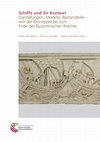
Byzanz zwischen Orient und Okzident 5, Feb 2017
In Antiquity and Middle Ages, Shipping was of utmost importance for economy and wielding of power... more In Antiquity and Middle Ages, Shipping was of utmost importance for economy and wielding of power. Furthermore it enabled exposure to distant spaces. Ships as significant objects on the one hand have been decorated and embroidered, on the other hand themselves became topics of artificial presentation. Thereby the span ranges from sketchy graffito to three-dimensional reproduction. The context of the artworks comprises as different fields as public and private representation and religion.
This volume contains 18 articles, which have been presented during an international workshop held in Mainz in 2013. Spaning the period from the Bronze Age to the end of the Byzantine realm, various groups of material have been researched and development, as well on shipbuilding as on nautics, is described. Thereby depictions of ships are focussed, which are rarely investigated so far.
Thomas Schmidts / Martin Marko Vučetić (eds.): Häfen im 1. Millennium AD. Bauliche Konzepte, herrschaftliche und religiöse Einflüsse (RGZM - Tagungen 22; Interdisziplinäre Forschungen zu den Häfen von der römischen Kaiserzeit bis zum Mittelalter 1) Mainz 2015.
Papers by Thomas Schmidts
Der marmorne Grabstein des Schiffseigners (naukleros) Aurelius Theogeiton aus dem syrischen Arado... more Der marmorne Grabstein des Schiffseigners (naukleros) Aurelius Theogeiton aus dem syrischen Arados zeigt den Verstorbenen und eine einfache Schiffsdarstellung, die auf Antriebs- und Steuerelemente verzichtet. In der Inschrift wird Italien als Ziel seiner Tätigkeit eindeutig vermerkt, was ansonsten selten nachweisbar ist. Es handelt sich wohl um einen jener Eigner, die selbst als Schiffsführer zwischen dem östlichen Mittelmeer und Italien unterwegs waren. Der Grabstein datiert in das frühe 3. Jahrhundert, wohl nach der constitutio Antoniniana im Jahr 212. Sein ursprünglicher Aufstellungsort und somit auch der Ausgangspunkt der Aktivitäten des Aurelius Theogeiton lag im östlichen Mittelmeerraum, wahrscheinlich in Kleinasien.
Mare Thracium – Archaeology and History of Coastal Landscapes and Islands of the Thracian Sea during Antiquity and the Byzantine Era. , 2022
Bibliografische Information der Deutschen Nationalbibliothek Die Deutsche Nationalbibliothek verz... more Bibliografische Information der Deutschen Nationalbibliothek Die Deutsche Nationalbibliothek verzeichnet diese Publikation in der Deutschen Nationalbibliografie: Detaillierte bibliografische Daten sind im Internet über http://dnb.d-nb.de abrufbar.
(mit T. Schmidts), Wirtschaft und Handel im Weströmischen Reich des 5. Jahrhunderts.
P. Henrich (Hrsg.), Der Untergang des Römischen Reiches. Begleitband zur Landesausstellung Trier 2022 im Rheinischen Landesmuseum Trier, Dommuseum und Stadtmuseum Simeonstift, 25. Juni - 27. November 2022. Schriftenreihe des Rheinischen Landesmuseums Trier 44 (Darmstadt 2022) 181–185.
HAL is a multidisciplinary open access archive for the deposit and dissemination of scientific re... more HAL is a multidisciplinary open access archive for the deposit and dissemination of scientific research documents, whether they are published or not. The documents may come from teaching and research institutions in France or abroad, or from public or private research centers. L'archive ouverte pluridisciplinaire HAL, est destinée au dépôt et à la diffusion de documents scientifiques de niveau recherche, publiés ou non, émanant des établissements d'enseignement et de recherche français ou étrangers, des laboratoires publics ou privés.
Arvid Göttlicher, Seefahrt in der Antike. Das Schiffswesen bei Herodot
Rezension zu: Arvid Göttlicher, Seefahrt in der Antike. Das Schiffswesen bei Herodot. Darmstadt: ... more Rezension zu: Arvid Göttlicher, Seefahrt in der Antike. Das Schiffswesen bei Herodot. Darmstadt: Wissenschaftliche Buchgesellschaft 2006, 192 S., 30 s/w-Abb.
Ein spätantiker Gürtelbeschlag mit figürlicher Verzierung
Archaologisches Korrespondenzblatt, 2002
Notice sur une applique de ceinture en argent appartenant a une collection privee dont la datatio... more Notice sur une applique de ceinture en argent appartenant a une collection privee dont la datation est comprise entre 360 et 400 apres J.-C.
Die kompakte Monographie, die mittlerweile auch in englischer Sprache erschienen ist, wurde von A... more Die kompakte Monographie, die mittlerweile auch in englischer Sprache erschienen ist, wurde von Arvid Göttlicher verfasst, der in den vergangenen gut 30 Jahren bereits mehrere Bücher zur antiken Seefahrt vorlegte und als einer der profundesten Kenner der Materie im deutschsprachigen Raum gelten darf. Bei dem hier zu besprechenden Werk aus dem Jahre 2006 wurde allerdings ein Titel gewählt, der nicht besonders treffend erscheint. Es handelt sich hier keineswegs um eine Einführung zur antiken Schifffahrt, wie der erste Titelteil suggeriert; vielmehr steht die Auseinandersetzung mit den Teilen von Herodots Werk im Vordergrund, die diverse Aspekte der Nautik behandeln. ..

The Supply of the Late Antique Imperial Residence Trier with Ceramic Building Material
The Late A... more The Supply of the Late Antique Imperial Residence Trier with Ceramic Building Material
The Late Antique brick and tile stamps from Trier form an important source for understanding the construction and expansion of the Imperial residence of Trier in the 4th century. Although a comprehensive modern edition of the stamps is still lacking, it is possible to make some statements on the structure of ceramic building material production and the building contexts on the basis of published pieces. A division into two phases becomes apparent: While in the first half of the 4th century four large companies contributed significantly to the supply of bricks for buildings, in the second half of the century they were probably no longer represented on the market. The demand was now met by more numerous manufacturers and was mainly supplemented by military ceramic building material, which suggests supply difficulties.

Archäologischer Anzeiger , 2020
The Thracian harbour city of Ainos – Results of an interdisciplinary research project
This artic... more The Thracian harbour city of Ainos – Results of an interdisciplinary research project
This article summarizes the results of a project funded by the German Research Foundation (DFG) under the umbrella of the SPP 1630 from 2012 to 2018. During the field campaigns archaeological, architectural, geoarchaeological and geophysical investigations were carried out. The research focus was on the topographical and economic development of Ainos in antiquity, especially during the Roman Empire, as well as during the Byzantine period. New findings were obtained regarding the development of the town and the localisation of possible harbour sites. It became clear that the Roman Empire in Ainos is not, as long assumed, to be considered as an epoch of decline. The landscape changes, esp. the sedimentation caused by the southwestward advancing delta of the Hebros, did not lead to restrictions regarding landing sites until the early Byzantine period.
Die Deutsche Bibliothek verzeichnet diese Publikation in der Deutschen Nationalbibliografie ; det... more Die Deutsche Bibliothek verzeichnet diese Publikation in der Deutschen Nationalbibliografie ; detaillierte bibliografische Daten sind im Internet über < http://dnb.ddb.de > abrufbar.
Rezension zu: Erich Hudeczek, Corpus Signorum Imperii Romani. Corpus der Skulpturen der Römischen... more Rezension zu: Erich Hudeczek, Corpus Signorum Imperii Romani. Corpus der Skulpturen der Römischen Welt. Österreich Band IV. Faszikel I. Die Rundskulpturen des Stadtgebietes von Flavia Solva. Verlag der Österreichischen Akademie der Wissenschaften, Wien 2008. 58 Seiten, 25 Tafeln



Uploads
Books by Thomas Schmidts
In order to appreciate this settlement and traffic area in its entirety, a workshop was held in Mainz in 2016 as part of the project "The Thracian harbour city Ainos in Roman and Byzantine times - the development of a hub in a changing environment" which was integrated in the Priority Programme of the German Research Foundation "Harbours from the Roman period to the Middle Ages". The contributions in this volume adress natural conditions for seafaring, historical developments and the remains of ports and harbour cities as well as underwater discoveries.
Römische Militäreinheiten versahen die von ihnen hergestellten Ziegel häufig mit Stempeln. Seit dem späten 19. Jahrhundert ist bekannt, dass diese auch außerhalb der Legionslager und Kastelle vorkommen. Dieses Phänomen, das sich von Britannien bis nach Nordafrika nachweisen lässt, wurde unterschiedlich interpretiert und kontrovers diskutiert. Die Deutungen reichten vom Nachweis militäreigener Gebiete bis zur Einstufung der Ziegel als reguläres Handelsgut.
Thomas Schmidts hat die erste umfassende und überregionale Untersuchung zu diesem Thema verfasst. Im Mittelpunkt stehen dabei die germanischen Provinzen des Römischen Reiches, aus denen die größte Anzahl von relevanten Fundplätzen bekannt ist. Es zeigte sich, dass ein einziger Interpretationsansatz nicht zur Lösung beiträgt, sondern individuelle Erklärungen für die jeweiligen Provinzen bzw. Regionen notwendig sind. Die gestempelten Ziegel belegen eine militärische Beteiligung bei der Errichtung staatlicher und öffentlicher Bauten ebenso wie sekundäre Vorgänge, die zur Verbreitung der Baukeramik führten. Somit wird auch der Beitrag des Militärs zum zivilen Ausbau der Provinzen erörtert.
2 Bände, 836 Seiten
Band 1 464 Seiten
Band 2 372 Seiten, farbig und schwarz-weiß. Beiträge in Englisch, Deutsch und Türkisch (Zusammenfassungen in Englisch und Türkisch)
Band 1
Vorwort / S. Ladstätter – F. Pirson – Th. Schmidts
Einführung / S. Ladstätter – F. Pirson – Th. Schmidts
Geschichte und Perspektiven der Forschung
History of Research and Perspectives
Julia Daum – Nicola Daumann – Sarah Wolfmayr:
Karl Lehmann-Hartleben und die Erforschung antiker Häfen
Hannah Baader – Gerhard Wolf :
Ästhetiken der Schwelle. Sieben Aspekte der Morphologie und Topologie von Hafenstädten im nachantiken Mittelmeerraum
Neue Forschungen und Entdeckungen: Die Levante und Ägypten
New Research and Discoveries: The Levant and Egypt
Christopher J. Brandon:
The Herodian Harbour of Caesarea Maritima. Recent Research and Related Studies
Franck Goddio – David Fabre:
Heracleion-Thonis and Alexandria, Emporia of Egypt. New Researches and Recent Discoveries
Marianne Bergmann – Michael Heinzelmann:
Schedia – Zollstation und Flusshafen Alexandrias am Kanopischen Nil
Stefano De Luca – Anna Lena:
The Harbor of the City of Magdala/Taricheae on the Shores of the Sea of Galilee, from the Hellenistic to the Byzantine Times. New Discoveries and Preliminary Results
Eva Grossmann:
The Harbours of Tel Michal and Apollonia 1750 B.C.–A.D. 1265
Neue Forschungen und Entdeckungen: Türkei, Südküste
New Research and Discoveries: Turkey, South Coast
Hatice Pamir:
Recent Researches and New Discoveries in the Harbours of Seleucia Pieria
K. Levent Zoroğlu:
Kelenderis’in Limanları ve Çapalama Yerleri
Nevzat Çevik – Süleyman Bulut – Çakır Afşin Aygün:
Myra’nın Limanı Andriake
T. Mikail P. Duggan – Çakır Afşin Aygün:
The Medieval and Later Port of Myra/Stamira – Taşdibi
Havva Işkan – Mustafa Koçak, mit Beiträgen von Harun Özdaş, Nilhan Kızıldağ, Pascal Brengel, Frederik Berger:
Der Hafen von Patara. Altes Wissen, neue Forschungen
Neue Forschungen und Entdeckungen: Türkei, Westküste
New Research and Discoveries: Turkey, West Coast
Hayat Erkanal:
Klazomenai/Liman Tepe’nin Limanları
Akın Ersoy:
Smyrna: Yeni Keşfedilen Kamu Yapıları ve Alanlar (2007–2010) Çerçevesinde Bir Değerlendirme
Martin Steskal:
Ephesos and its Harbors: A City in Search of its Place
Felix Pirson:
Elaia, der (maritime) Satellit Pergamons
Winfried Held:
Häfen der Rhodischen Peraia
Neue Forschungen und Entdeckungen: Türkei, Marmarameer
New Research and Discoveries: Turkey, Marmara Sea
Rahmi Asal – Zeynep Kızıltan:
M.Ö. 7 – M.S. 12. Yüzyıllar Theodosius Limanı’nın 1900 Yılı
Şehrazat Karagöz:
Marmaray Kazıları ve Antik Liman Khrysopolis Limanı
Reyhan Körpe – Mehmet Fatih Yavuz:
Eski Çağlarda Gelibolu Yarımadası’nın Limanları
Şengül Aydıngün – Haldun Aydıngün – Hakan Öniz:
Küçükçekmece Lake’s Basin Antique Harbours
Neue Forschungen und Entdeckungen: Griechenland
New Research and Discoveries: Greece
Kalliopi Baika :
Ancient Harbour Cities – New Methodological Perspectives and Recent Research in Greece
Theotokis Theodoulou:
Recording the Harbour Network of Ancient Lesbos (2008–2009)
Band 2
Hafenbauten und Bautechnik
Harbour Installations and Building Techniques
John Peter Oleson:
The Evolution of Harbour Engineering in the Ancient Mediterranean World
David J. Blackman:
Ancient Shipsheds
Scott Redford:
Medieval Anatolian Arsenals at Sinop and Alanya
Wirtschaft und Politik
Economy and Politics
Mantha Zarmakoupi:
Die Hafenstadt Delos
Thomas Schmidts:
Der Einfluss der römischen Administration auf die Entwicklung der Hafenstädte im östlichen Mittelmeerraum
Caroline Autret – Matthew Dillon – John Lund – Nicholas Rauh – Levent Zoroğlu:
The Trading Networks of Ancient Rough Cilicia
Hafenstädte: Städtebau und Wahrnehmung
Harbour Cities: City Planning and Perception
Felix Pirson :
Antike Hafenstädte – Gestaltung, Funktion, Wahrnehmung
Martina Schupp:
Caput Ioniae. Zur Untersuchung römischer Hafenfassaden am Beispiel von Milet
Catherine Bouras.
On the Urbanism of Roman Harbours: the Evolution of Space Organization in Harbours of the Aegean Sea
Stefan Feuser:
Torbauten und Bogenmonumente in römischen Hafenstädten
Geowissenschaften und die Erforschung antiker Häfen
Geo-Sciences and the Exploration of Ancient Harbours
Christophe Morhange – Nick Marriner – Guénaelle Bony – Nicolas Carayon – Clément Flaux – Majid Shah-Hosseini:
Coastal Geoarchaeology and Neocatastrophism: a Dangerous Liaison?
Jean-Philippe Goiran – Nick Marriner – Christophe Morhange – Julien Cavero – Christine Oberlin – Jean-Yves Empereur:
Geoarchaeology of Alexandria (Egypt): 8,000 Years of Coastal Evolution
Andreas Vött – Hanna Hadler – Timo Willershäuser – Konstantin Ntageretzis – Helmut Brückner – Heinz Warnecke – Pieter M. Grootes – Franziska Lang –Oliver Nelle – Dimitris Sakellariou:
Ancient Harbours Used as Tsunami Sediment Traps – the Case Study of Krane (Cefalonia Island, Greece)
Helmut Brückner – Alexander Herda – Marc Müllenhoff –Wolfgang Rabbel – Harald Stümpel:
Der Löwenhafen von Milet – eine geoarchäologische Fallstudie
This volume contains 18 articles, which have been presented during an international workshop held in Mainz in 2013. Spaning the period from the Bronze Age to the end of the Byzantine realm, various groups of material have been researched and development, as well on shipbuilding as on nautics, is described. Thereby depictions of ships are focussed, which are rarely investigated so far.
Papers by Thomas Schmidts
The Late Antique brick and tile stamps from Trier form an important source for understanding the construction and expansion of the Imperial residence of Trier in the 4th century. Although a comprehensive modern edition of the stamps is still lacking, it is possible to make some statements on the structure of ceramic building material production and the building contexts on the basis of published pieces. A division into two phases becomes apparent: While in the first half of the 4th century four large companies contributed significantly to the supply of bricks for buildings, in the second half of the century they were probably no longer represented on the market. The demand was now met by more numerous manufacturers and was mainly supplemented by military ceramic building material, which suggests supply difficulties.
This article summarizes the results of a project funded by the German Research Foundation (DFG) under the umbrella of the SPP 1630 from 2012 to 2018. During the field campaigns archaeological, architectural, geoarchaeological and geophysical investigations were carried out. The research focus was on the topographical and economic development of Ainos in antiquity, especially during the Roman Empire, as well as during the Byzantine period. New findings were obtained regarding the development of the town and the localisation of possible harbour sites. It became clear that the Roman Empire in Ainos is not, as long assumed, to be considered as an epoch of decline. The landscape changes, esp. the sedimentation caused by the southwestward advancing delta of the Hebros, did not lead to restrictions regarding landing sites until the early Byzantine period.